

Running Bitcoin
Bitcoiners are people who use Bitcoin as a peer-to-peer electronic cash system. Most people view Bitcoin as an investment. They think they give their fiat to a Bitcoin holding company so they can one day buy more fiat than they sold for sats. They seek fiat gains. They talk about the price of Bitcoin, not the peer-to-peer electronic cash it is. Bitcoiners use Bitcoin as cash money. Saving is part of this, but they also spend Bitcoin on goods and services. Many of them get paid in Bitcoin and use tools to pay bills.
We are activists, artists, musicians, writers, and technologists. We know Bitcoin is a set of rules that are enforced without any rulers. It does not need permission. Not your keys, not your Bitcoin, as Andreas Antonopoulos said, still applies. Bitcoin is a monetary network run by people, as in We the People, not corporations. I know this is difficult to understand in an inflationary monetary system with 2-hour financial news cycles. Most people are taught to measure Bitcoin with a fiat unit of account. Therefore, they do not yet understand that Bitcoin is a unit of account. Most people have heard the term “Buy Bitcoin,” but they are unaware that you can Buy With Bitcoin. Bitcoin is like that line from the movie Swingers: “You are so fucking money!”
Visit WTFhappenedIn1971.com again. Ask yourself: what actually did happen in 1971? What is money backed by? Does that $40 trillion national debt matter? Bitcoiners see Bitcoin as a movement of people working to create better money. Bitcoiners run nodes, mine Bitcoin, earn Bitcoin, spend Bitcoin, and save Bitcoin. Bitcoin is for anybody. Corporations can use Bitcoin and save in Bitcoin, but corporations don’t run Bitcoin. You allow yourself to buy soap or eat at a restaurant. You can use it to buy AI compute—not at some distant point in the future; you can do this today. Bitcoin is money. Most people only know how to buy fiat. The goal of this book is to change that mindset and help curious people discover that Bitcoin can be used as a monetary system.
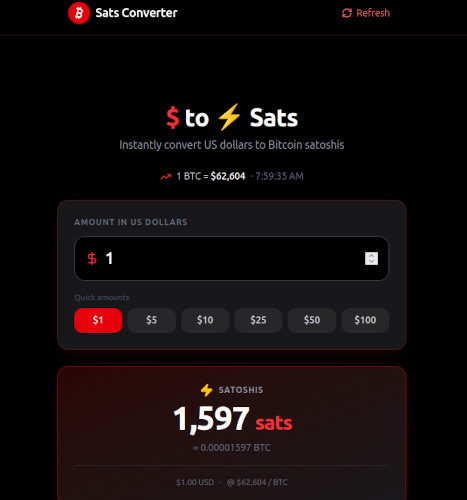
Bitcoin is a peer-to-peer electronic cash system. There is a small group of people who use it as such. This is different from the stuff the suits talk about on TV. It’s not about the price of 100,000,000 sats. It’s how many sats does a bar of soap cost? Sometimes it’s 7,000 sats. Sometimes it’s 14,000 sats. Notice how this is about the price of soap and not the price of 100,000,000 sats. Sats can be used as the standard. Here is a calculator I vibe-coded.
The purpose of this book is to teach people how to use Bitcoin as money instead of a day-trading gambling game. It is not financial advice. I have no idea if the masses will prefer buying fiat to Bitcoin in the future. Most people do not use it as money or even know this is possible, so they have exchanges hold it like a casino chip and try to buy low and sell high. This book is not about that. The concepts work regardless if Bitcoin is $1,000,000 or $1.00. Bitcoiners run Bitcoin.
What Is a Bitcoiner?
People wear suits, fancy pants, and orange ties to talk about Bitcoin on CNBC. The reporters are polite, but they only care about one thing: how many pieces of national Monopoly Money paper can they buy for 100 million satoshis, the smallest unit of Bitcoin? When you Google the term Bitcoin, you are presented with a price chart. It’s Bitcoin viewed through a fiat lens. This lens only focuses on the price in USD. How many dollars can you buy with one whole Bitcoin? You are not presented with information about Bitcoin. You see a chart and a price in USD. This has nothing to do with peer-to-peer electronic cash. This is not Bitcoin. It is Bitcoin viewed through a fiat lens.
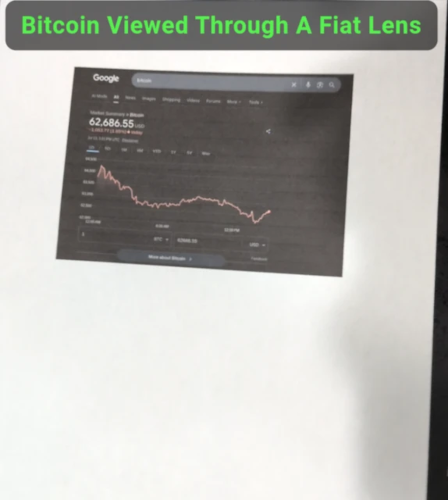
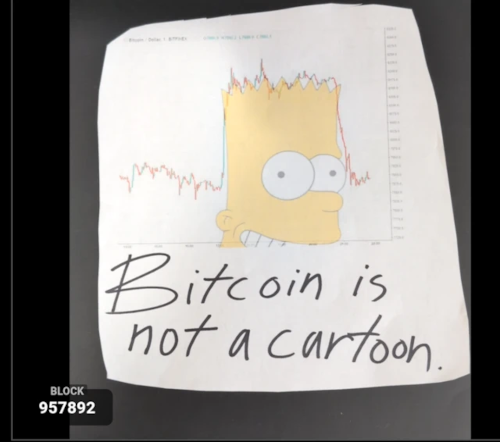
Of all the things that can be found on Clark Moody’s Dashboard, none are more popular than this metric. Most of the world only views Bitcoin through the lens they have been taught: an investment. They are putting money away in the hopes of getting more money in the future. YouTube is filled with crypto bros drooling over charts, telling you to buy this crypto and that crypto because of this “crap” and that “crap.” Most of them have no idea what cryptography is. Look at this cartoon pattern. It looks like Bart Simpson. Bart Simpson patterns matter. Look at the lines on this new meme coin. The meme coins are endorsed by a celebrity, pumped, and dumped. It’s a straight-up gambling game. They don’t even pretend anymore; they advertise it. Most people don’t know the difference between Bitcoin and 💩coin. They only hear about the price. “I heard the price of Bitcoin did this. The price of Bitcoin did that.” They have heard of the Bitcoin price, but have they ever heard of a Bitcoiner?
The true lifeblood of the Bitcoin timechain is the block height. If that number stops going up for any length of time, we can then assume the protocol is dead. Bitcoin is not dead, though.

A Bitcoiner is someone who runs Bitcoin. This means they use Bitcoin software, a peer-to-peer electronic cash system. We call this software running a node—a distributed computer on the network that shares the same ledger. Each node verifies the math produced in each block going back to January 3, 2009. This is the date of the Genesis Block. The block contained a secret message inside the scriptsig hex (click on details to see it). This secret message can be decoded like the Ovaltine commercial in A Christmas Story. To decode it, you can copy and paste it into this website. It is already prefilled if you don’t want to mess around copying and pasting.
radio-orphan-annie-decoder-ring.funwithfreedomtech.com
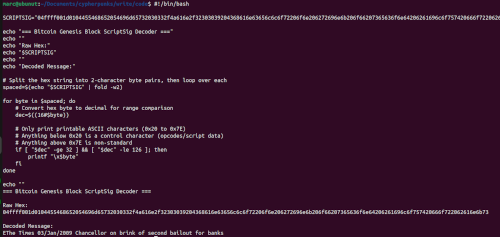
Raw Hex:
04ffff001d0104455468652054696d65732030332f4a616e2f32303039204368616e63656c6c6f72206f6e206272696e6b206f66207365636f6e64206261696c6f757420666f722062616e6b73
Decoded Message:
The Times 03/Jan/2009 Chancellor on brink of second bailout for banks
.jpg?raw=true)
Running Bitcoin
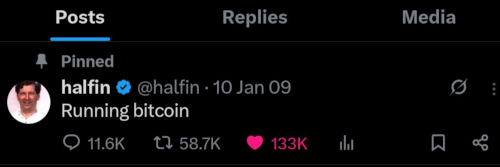
A Bitcoiner is someone who uses that software. This is different from the typical traders you see on YouTube talking about price-prediction patterns. This is real cryptography. The first person to run Bitcoin software was a man by the name of Hal Finney. He was the first person besides Satoshi Nakamoto to run the Bitcoin software. He wrote a tweet about it, but I took a screenshot of it and posted it on Nostr because I got tired of X deleting my likes.
Bitcoin is run by Bitcoiners. It’s not an investment. It’s money that cannot be debased. They know Bitcoin is a solution to the double-spending problem: a movement of people dedicated to showing the world the solution to the double-spending problem in a world that runs on credit and bubbles.
> “The root problem with conventional currency is all the trust that’s required to make it work. The central bank must be trusted not to debase the currency, but the history of fiat currencies is full of breaches of that trust. Banks must be trusted to hold our money and transfer it electronically, but they lend it out in waves of credit bubbles with barely a fraction in reserve. We have to trust them with our privacy, trust them not to let identity thieves drain our accounts. Their massive overhead costs make micropayments impossible.”
> — Satoshi Nakamoto, February 11, 2009
> Source
Bitcoin is not just an investment. It is a network run by people running nodes, mining Bitcoin, writing about Bitcoin, creating Bitcoin art, and more. It’s like a volunteer group working to make better money. Some people build businesses that accept Bitcoin. It’s like a mission: earn money that does not require permission. Have you ever noticed that banks often take days to transfer money through the legacy financial system? Bitcoin allows instant bank transfers. Tools like Strike allow you to instantly send money all over the world—including some traditional fiat banks. The service costs money, but so do overdraft fees. Notice how it does not take 10 minutes. That’s something else. Strike uses the Lightning Network, so the value can be transferred instantly. Final settlement happens faster than the time it takes to login to your banking app. You don’t wait for overdraft fees to pile up because of slow legacy banking transfers anymore.
That mission is often summed up in six words: Fix the money, fix the world.


Bitcoin is a full-reserve system. Some may try to build paper Bitcoin IOUs on top of that system, but the underlying software cannot be manipulated. Thus requires holding your own keys and keeping them secret. We use Bitcoin as peer-to-peer electronic cash. You earn some Bitcoin, spend some Bitcoin, and save some Bitcoin. That is not the same as “buying Bitcoin.” This is using Bitcoin as money. It takes time for the idea of buying Bitcoin to transform into spending Bitcoin or earning Bitcoin. Running Bitcoin gives you access to tools that make it apparent that Bitcoin is money. You can use BTCPayServer to make an online store or Shopstr.store and not worry about running servers. If BTCPayServer goes down, you have Shopstr as a backup. If Shopstr goes down, Conduit and Plebian Market back that up as well. In other words, Bitcoiners learn Bitcoin is money because they run tools that allow them to build stores that accept Bitcoin.
Bitcoiners Use Bitcoin as Cash Money
The Lightning Network is a method of using Bitcoin at the speed of light. This is the technology that enabled it to be used as a currency in El Salvador. That same technology is making its way into brick-and-mortar shops and restaurants in the United States. I paid for dinner at The Sensorio Light Show in Paso Robles using the Bitcoin option of a Square payment terminal.
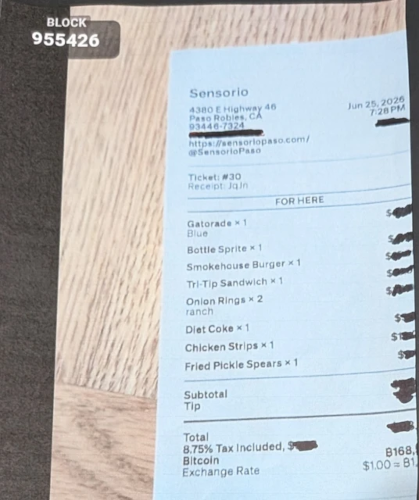
The hamburger stand did not advertise they accepted Bitcoin. The cashier didn’t even know this was possible. Some pleb touched the screen, scanned a QR code, and the meal was paid for. Nobody had to know my name, address, or phone number. This payment did not require a Social Security number. It is possible to pay for meals using my own wallet. That is exactly what I did. Notice how this differs from the fiat lens. The fiat lens makes Bitcoin enthusiasts believe they must buy dollars to buy a cheeseburger. When pandemics or wars happen, people panic and buy dollars to buy stuff. You can just buy stuff with Bitcoin. The fiat swings will continue until people understand that.
Bitcoin is cash money on the Internet. Cash money, like the California Condor, is an endangered species. Many places won’t accept that filthy legal tender for “all debts public or private” anymore. That means most payments are made from one corporation to another. Visa pays for your groceries. You pay Visa, with interest if you don’t pay them off within the first 30 days. The merchant pays Visa a fee: 1.5%–3.5%. The Lightning Network is much cheaper. Try it out. Send a tip here using your favorite exchange. The Cash App, Strike, and even Coinbase allow you to use the Lightning Network these days. Don’t trust, verify by sending sats to my LNBits tip jar.
Private Payment Systems Are Required for an Open Society
The quest for anonymous payment systems began in the early 1990s. Erik Hughes wrote a 9-paragraph essay entitled A Cypherpunk’s Manifesto. It begins with the sentence, “Privacy is necessary for an open society in the electronic age.” That’s a big idea. What’s an open society? How do we keep it? An open society is described as what you might think of as a liberal democracy where people have power to speak freely, do business with whomever they want, and own property. An open society is free from authoritarian control. Stephen West has an excellent podcast on Karl Popper’s An Open Society and Its Enemies. Here’s the summary from this transcript (used with permission):
> TODO: Publish a portion of the Philosophize This podcast if Stephen West gives me permission.
Bitcoiners run Bitcoin, a peer-to-peer electronic cash system, in case the government/corporation-to-pleb electronic credit system doesn’t work out for whatever reason. The goal of this series is to show people how to be a node-running, got-your-keys, got-your-Bitcoin Bitcoiner. It is not difficult, but it requires some skill. At the very least, you need to be able to operate a smartphone. We have a meme that says, “I’m new to Bitcoin and am here to change it.” Here’s the thing: unlike war, which can be essentially declared by one dude, Bitcoin cannot be changed by one dude. It requires consensus on a set of predetermined rules. Rules can be changed by anyone, but success depends on the number of people who agree to those rules.
Bitcoin Is Money Run by People
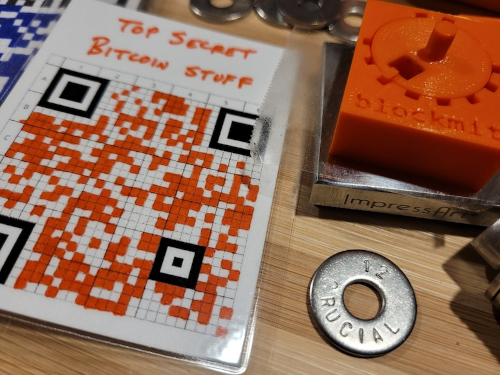
Bitcoin is money that does not require a government, corporation, or central bank. It’s cash money pre-programed with a limited supply: 21 million whole coins—actually, a little less. Bitcoiners use that peer-to-peer electronic cash system. We don’t need permission. We don’t need rulers because we enforce the rules using computers. Running Bitcoin is a great responsibility. You alone are responsible for your keys. Only you can prevent forest fires and keep your keys secret. Nobody else can do it for you. Hopefully, this guide can help.
Website: home.funwithfreedomtech.com
Block Height: 957896
Timestamp (UTC): 2026-07-13T18:51:49Z
Block Header: 0000000000000000000081519ae60ecc91a0a4a3df442cdffd553a7a2a76c462