
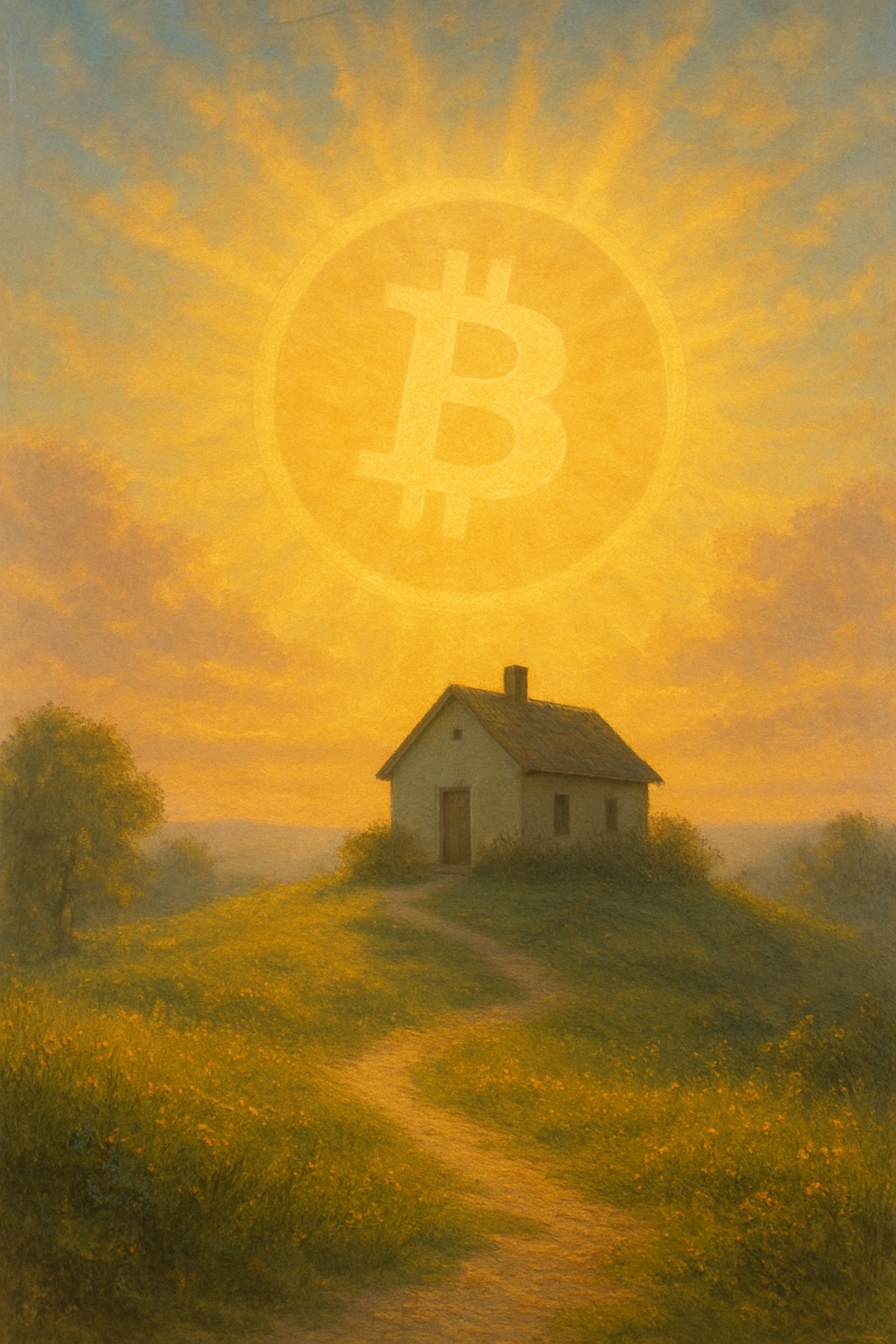
Andrew G. Stanton - Nov. 23, 2025
There is a reason the earliest Christians met on the first day of the week — the day of resurrection.
Not the end of the week.
Not the midpoint.
The beginning.
Resurrection is not simply the reversal of death.
It is the renewal of life.
A new start.
A new creation.
And in many ways, that pattern — renewal on the first day — is the pattern the modern world longs for. Because for all our wealth, speed, noise, and technology, we live in a society where people feel:
- crushed by debt
- alienated from ownership
- disconnected from each other
- uncertain about the future
- tied to obligations that never shrink
- unable to rise
The world we live in has systematically hollowed out real ownership:
- homes are mortgaged for decades
- savings evaporate through inflation
- property taxes never rest
- businesses rely on debt instead of profit
- money loses value faster than you can earn it
- governments treat citizens as collateral
We lost the foundation that allows life to grow.
We lost the soil that lets people rise.
Resurrection is not just a theological truth — it’s an economic need.
And Bitcoin, surprisingly, speaks directly to this.
This article is about the renewal of ownership — the resurrection of sovereignty — and how Bitcoin restores the foundations that allow individuals, families, and communities to stand again.
1. Ownership Has Been Replaced by Perpetual Dependence
What we call “ownership” today is often an illusion:
- you “own” your home, but you pay property tax forever
- you “own” your car, but it’s financed for 7 years or more
- you “own” your savings, but inflation drains them
- you “own” your business, but it survives on credit
- you “own” your future, but you can’t stop working
- you “own” your time, but debt dictates your decisions
We do not own.
We rent.
From:
- banks
- governments
- credit markets
- marketplaces
- employers
- inflation
We rent everything — even the value we create with our labor.
This is why people feel spiritually and emotionally exhausted.
It’s not weakness.
It’s not laziness.
It’s not “modern life.”
It’s the simple fact that we live in a system designed for:
- extraction
- dependence
- control
- perpetual payment
It is impossible to feel alive when your economic life is structured for slow death.
This is the world Bitcoin enters — not as a speculative asset, but as a resurrection technology.
2. Hard Money Is the Foundation of Real Ownership
Ownership dies under fiat because:
- money decays
- debt grows
- taxes never shrink
- interest compounds
- prices inflate
- savings evaporate
People cannot build anything solid in a world where the foundation is sand.
Bitcoin is the return to bedrock:
- fixed supply
- incorruptible issuance
- time-based security
- decentralized validation
- global portability
- neutral rules
In a system where money cannot be printed, real ownership becomes possible again:
- savings retain value
- down payments become reachable
- mortgages shrink
- debt becomes temporary
- businesses grow from profit, not leverage
- families can plan generationally
Bitcoin is not merely a store of value.
It is the restoration of the conditions that make ownership real.
It provides the soil in which life can grow again.
3. Resurrection Requires a Reckoning — and Bitcoin Forces That Reckoning
The resurrection narrative begins with a death — the death of the old world, the old structures, the old powers.
Similarly, a Bitcoin transition exposes which parts of our economic system were alive and which were already dead:
- zombie corporations that survive solely on cheap credit
- governments floating on unpayable debt
- banks dependent on artificial interest suppression
- real estate prices inflated far beyond reality
- entire sectors structured around financialization
Bitcoin does not kill these systems.
It simply refuses to lie for them.
Fiat economics is full of illusions:
- artificial growth
- debt-funded prosperity
- inflated asset prices
- suppressed risk
- endless money printing
Bitcoin reveals the truth.
And after the truth, resurrection becomes possible.
You cannot resurrect what you will not let die.
4. The Resurrection of Trust
In a fiat world, trust has decayed.
People trust:
- institutions less
- their money less
- their pensions less
- their government less
- their employer less
- even their communities less
This distrust is rational.
It’s what happens when the rules constantly change.
Bitcoin resurrects trust not by appealing to emotions, but by anchoring the world in unchangeable rules:
- 21M
- predictable issuance
- transparent ledger
- open verification
- no special access
- no manipulation
Trust becomes a property of the system, not the goodwill of its operators.
This is just the beginning.
Under Bitcoin:
- local lending circles re-emerge
- community treasuries form
- families save generational wealth
- contracts become clean and enforceable
- people lend based on reputation, not algorithmic credit scores
- businesses seek investors, not creditors
- people help each other without financial intermediaries
Trust resurrects.
And with trust, ownership becomes safe again.
5. The Resurrection of Families and Communities
What destroys family stability?
- debt
- inflation
- housing insecurity
- unstable jobs
- dependence on credit
- lack of savings
- perpetual financial stress
These are not moral failings.
They are structural failings.
Under a Bitcoin economy, families experience:
- lower cost of living
- homes priced in real terms
- shorter mortgages
- growing savings
- more margin and rest
- less financial pressure
- more time together
Stability resurrects.
And stable families create stable communities:
- more home ownership
- more local businesses
- more generational planning
- more mutual aid
- less dependence on the state
Bitcoin does not fix everything.
But it fixes the thing that makes everything else unstable.
6. The Resurrection of Work
Fiat economics turns work into:
- survival
- busywork
- compliance
- meaningless bureaucracy
- debt service
Work becomes something you use to stay afloat, not something you offer from creativity or calling.
Under Bitcoin, work shifts from survival to stewardship:
- savings grow
- wages retain value
- debt becomes optional
- ownership becomes attainable
- individuals have margin for creativity
Work resurrects as vocation — not as servitude.
People work because they are building something that lasts.
7. The Resurrection of Wealth
Under fiat, wealth is a mirage.
- Stocks go up because money is printed.
- Housing goes up because debt expands.
- Retirement accounts grow because inflation is hidden.
Everything is inflated — not enriched.
Real wealth is:
- assets that serve real needs
- savings that retain value
- homes owned outright
- families not in debt
- communities with margin
- businesses funded by profit
- governments that cannot print
Bitcoin resurrects wealth by restoring truth.
Truth about value.
Truth about risk.
Truth about cost.
Truth about ownership.
When wealth is truthful, it can be generational.
8. Ownership as Resurrection
In a very real sense, ownership itself undergoes resurrection under Bitcoin.
Ownership is:
- authority
- stewardship
- responsibility
- freedom
- the ability to shape your world
Ownership dies in a fiat system because nothing is stable.
It resurrects in a Bitcoin system because everything is grounded.
Just as resurrection declares:
“Death is not the final word,”
Bitcoin declares:
“Debt is not the final word.
Inflation is not the final word.
Extraction is not the final word.
Manipulation is not the final word.”
Ownership rises again — not as a privilege of the wealthy, but as a basic possibility for everyone willing to save, build, and steward wisely.
9. A New First Day
Sunday — the day of new creation — symbolizes the beginning of something that cannot be undone.
Bitcoin has that energy.
It feels like first-day economics:
- a new foundation
- a new trust structure
- a new relationship to money
- a new pattern for families
- a new path for nations
- a new possibility for freedom
The world is aching for resurrection.
Not a political resurrection.
Not a technological resurrection.
An economic one — grounded in truth, scarcity, fairness, and time.
Bitcoin doesn’t promise paradise.
But it promises integrity.
And from integrity, life rises.
The resurrection of ownership begins with the resurrection of money.
And from that foundation — everything else can rise.