
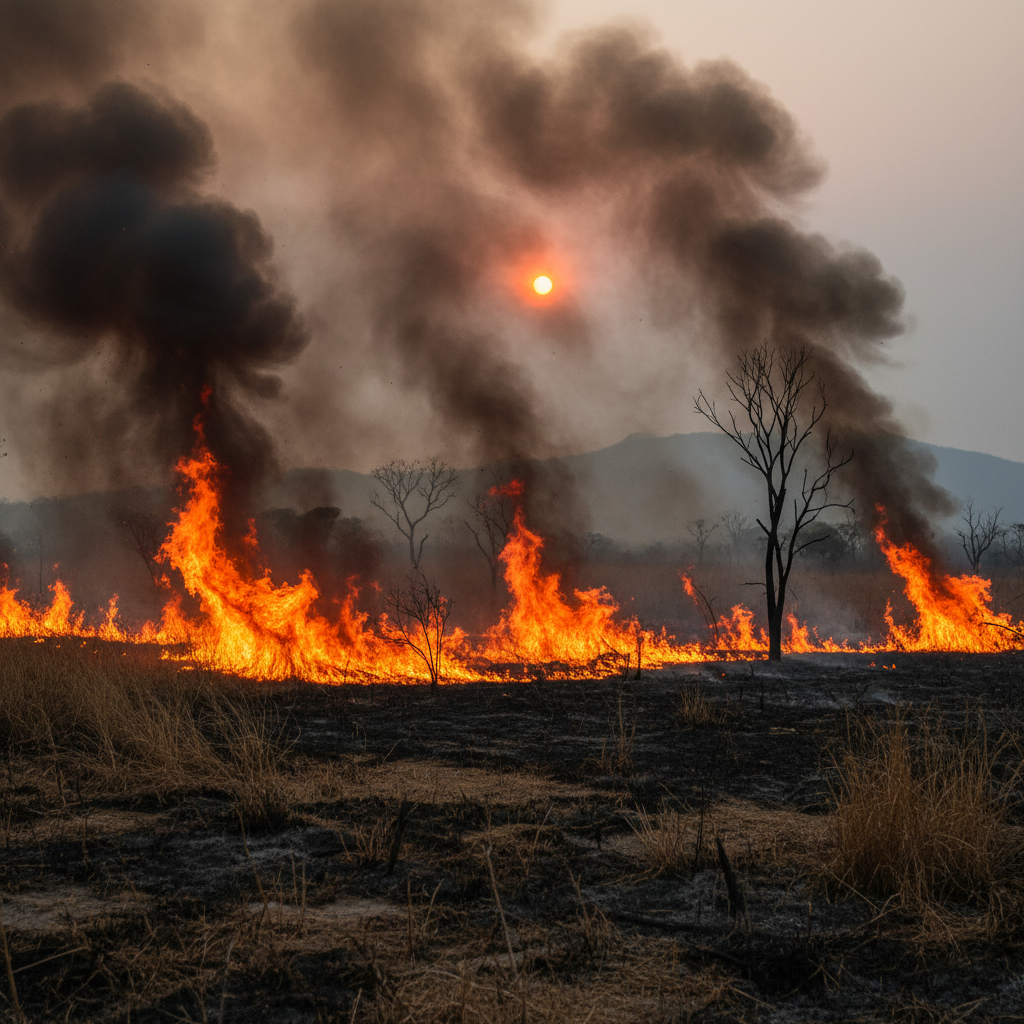
Nicaragua in Fire
In recent months, Nicaragua has found itself at the center of a storm—one not born of weather, but of tension, uncertainty, and rising flames both literal and symbolic. What is unfolding in the country is a complex collision of environmental disasters, political strain, and the growing frustrations of a population caught between hope and hardship.
A Land of Volcanoes, Now a Land of Flames
Nicaragua has long been known as the “land of lakes and volcanoes,” a nation where natural forces shape daily life. But in the last year, the country has faced an alarming surge in wildfires across protected forests and agricultural areas.
Prolonged drought, unusually high temperatures, and large-scale land clearing have created a perfect storm for uncontrolled burns. Entire stretches of forest—once rich with biodiversity—have vanished under thick waves of smoke.
Rural communities have been the most vulnerable. For farmers, fire is a tool for clearing land; but when dryness and wind combine, what begins as a controlled burn can rapidly become a catastrophe. The environmental cost is immense: endangered species habitats damaged, soil quality eroded, and air quality deteriorated across regions.
Political Heat Rising
Yet the phrase “Nicaragua in fire” is not only environmental—it is deeply political. Tensions continue to simmer between the current government and opposition groups. Years of strained relations, limited democratic space, and crackdowns on dissent have intensified the feeling of a country burning from the inside.
Civil society organizations have weakened, journalists face pressure, and many Nicaraguans have chosen exile rather than confrontation. Those who remain often navigate a reality where expressing discontent can be risky. Social frustration grows, even as public demonstrations remain limited.
Economic Pressures Fuel the Flames
Economic conditions have added another layer of heat. Rising inflation, fluctuating export markets, and reduced foreign investment have left many families struggling. Tourism—a once-promising pillar of the economy—still has not recovered fully after years of instability and global downturns.
With fewer opportunities at home, migration has become a lifeline. Thousands of Nicaraguans seek work abroad, sending remittances that have become essential to household survival.
The Human Face of the Fire
Behind every headline is the lived experience of ordinary people:
- Farmers losing entire harvests to drought and fire.
- Families coughing through smoke-filled mornings.
- Students uncertain about their future.
- Communities divided by politics.
- Workers leaving their homes behind in search of stability.
Whether environmental or political, the flames have a way of touching every corner of the nation.
A Path Forward
Despite the challenges, Nicaragua is not a country defined solely by crisis. It is a nation with a strong cultural identity, resilient people, and deep traditions that have carried it through decades of adversity. Local communities, environmental groups, and independent actors continue to push for sustainable land management, reforestation projects, and renewed civic engagement.
To extinguish the fires—both literal and figurative—will require transparency, cooperation, and a long-term vision that places people and environment at the center. The path is difficult, but not impossible.
Conclusion
“Nicaragua in Fire” captures a moment in history when the nation stands at a crossroads. Flames in the forests mirror flames in the social fabric. But just as land recovers after a burn, Nicaragua holds the potential to rise through renewal.
What comes next depends on the choices made today—by leaders, by communities, and by the global partners willing to support a country seeking stability in uncertain times.
nicaragua-hub.syndichain.com/articles/9494e6ad-6d2b-4fd4-947a-e13f3079bfbc
/app/nicaragua-hub/dashboard/articles/9494e6ad-6d2b-4fd4-947a-e13f3079bfbc