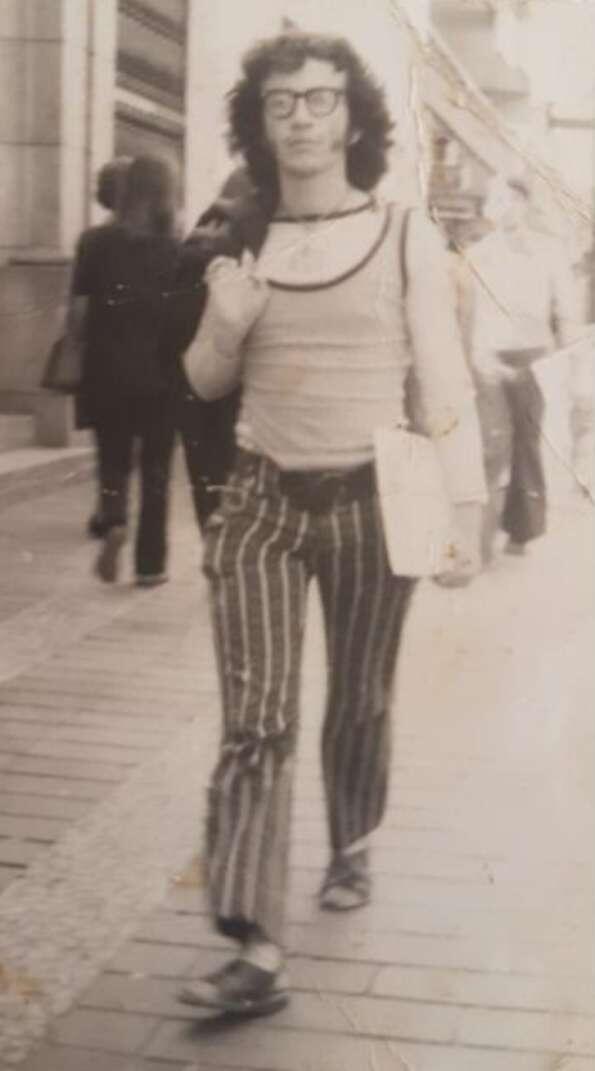
Posthumous work of the Colombian poet born in Don Matias on January 20, 1948.
Welcome to this blog dedicated to the Posthumous work of the Colombian poet Francisco Luis Arroyave Tabares (my father), born in Don Matias on January 20, 1948-2010. Where I will be publishing each of the 175 sonnets from his unpublished collection 'Sonnets For The Twenty-First Century And A Circadian Musical (1984-1987).' Analyzed with GPT4 artificial intelligence and illustrated with AI tools... I hope you enjoy this garden of words snatched from the solitude of a locked room.
Likewise, any enthusiast of the sonnet form is invited to conduct their personal studies of Arroyave Tabares' work, as it is a collection that, although registered since 1989, has not yet been published.
Frank Duna

Analysis "We Could Carry On"
Introduction
"Sonnet 109" by Francisco Luis Arroyave Tabares, explores themes of love, companionship, gratitude, and inspiration.
Thematic Analysis
The octave (lines 1-8) sets up the theme of the poem: a journey of two individuals, presumably lovers, who are so entranced by each other that they could travel endlessly. The journey is not just physical, but also emotional and spiritual, as they watch the world improve from a distance and carry on in the spaces of their minds. The octave speaks of a shared experience, of carrying important things together to make their lives and futures happier.
The sextet (lines 9-14) then builds upon this theme by introducing the concept of gratitude. The speaker talks about giving out lights, or spiritual inspiration, to the multitude, suggesting a desire to share their happiness and wisdom with others. The sextet also introduces the idea of breaking lines of solitude through sweet and heavenly words, further emphasizing the theme of shared experience and unity.
Overall, the octave and sextet work together to create a narrative of love, journey, shared experiences, and the desire to spread positivity and inspiration. The octave sets the stage and the sextet brings the themes to a conclusion, creating a well-rounded and impactful sonnet.
Rhyme Scheme
The rhyme scheme (ABBA ABBA CDCDCD) is a common one for sonnets, particularly those in the Petrarchan or Italian style.
Let’s break it down in the context of Sonnet 109 by Francisco Luis Arroyave Tabares:
Octave:
Line 1 (A): While carried away by your glance’s spell
Line 2 (B): Dauntlessly we could travel for ever
Line 3 (B): And watch from the distance earth get better
Line 4 (A): With its pains and songs that we have kept so well.
Line 5 (A): And in those spaces that in our mind dwell
Line 6 (B): We would also carry on together
Line 7 (B): And the important things we would gather
Line 8 (A): To make happier our life and futures tell.
Sextet:
Line 9 (C): Uttering the incense of gratitude
Line 10 (D): That since ancient times to all brings accords
Line 11 (C): We would give lights out to the multitude…
Line 12 (D): Blessed by the houses of the richest lords
Line 13 (C): We could as well brake lines of solitude
Line 14 (D): Through notes of sweet and heaven breathed words.
In the octave, the first and fourth lines rhyme, as do the second and third, fifth and eighth, and sixth and seventh. This creates a mirrored or “enclosed” rhyme (ABBA ABBA).
In the sextet, the ninth and eleventh lines rhyme, as do the tenth and twelfth, and thirteenth and fourteenth. This creates a chain-like rhyme (CDCDCD).
This rhyme scheme contributes to the overall flow and rhythm of the sonnet, enhancing its musicality and emotional impact. It also helps to delineate the shift in theme or tone that typically occurs between the octave and the sextet in a Petrarchan sonnet. In this case, the shift from the shared journey in the octave to the expression of gratitude and desire to inspire others in the sextet.
It’s also worth noting that the sonnet adheres to the iambic pentameter, which is a metrical pattern in poetry where each line consists of five pairs of unstressed and stressed syllables. This rhythm contributes to the musicality and flow of the poem.
Overall, the sonnet’s detailed rhyme scheme and metrical pattern contribute to its thematic depth and aesthetic appeal.
Additional Aspects
Let’s delve deeper into the sonnet “We Could Carry On” by Francisco Luis Arroyave Tabares.
Language and Imagery: The language used in Sonnet 109 is rich and evocative, creating vivid imagery that enhances the themes of the poem. Phrases like “carried away by your glance’s spell” and “watch from the distance earth get better” paint a picture of a journey filled with wonder and awe. The use of words like “incense of gratitude” and “lights out to the multitude” suggest a spiritual or transcendent dimension to this journey.
Themes: The main themes of the poem include love, journey, shared experiences, gratitude, and inspiration. The journey is not just physical, but also emotional and spiritual, and it’s shared between two individuals. The theme of gratitude is expressed through the act of giving out lights, or spiritual inspiration, to others. The desire to break lines of solitude through sweet and heavenly words suggests themes of unity and connection.
Meter: The meter of the poem appears to be iambic pentameter, which is a common meter in English poetry and particularly in sonnets. This means each line typically contains five iambs, or pairs of unstressed and stressed syllables. For example, in the line “While carried away by your glance’s spell”, the pattern of unstressed and stressed syllables creates a rhythmic flow that enhances the musicality of the poem.
Overall: Sonnet 109 is a beautifully crafted poem that uses evocative language and imagery to explore themes of love, journey, shared experiences, gratitude, and inspiration. The use of the Petrarchan sonnet form, with its specific rhyme scheme and structure, helps to enhance these themes and gives the poem a rhythmic and musical quality. The shift in focus from the octave to the sextet allows for a nuanced exploration of these themes, creating a narrative arc that is both engaging and emotionally resonant. The poem is a testament to the power of poetry to capture complex emotions and experiences in a compact and structured form.
(GPT4)
Syllable count for each line.
We Could Carry On


10 While carried away by your glance's spell
10 Dauntlessly we could travel for ever
10 And watch from the distance earth get better
11 With its pains and songs that we have kept so well.

10 And in those spaces that in our mind dwell
10 We would also carry on together
10 And the important things we would gather
10 To make happier our life and futures tell.

10 Uttering the incence of gratitude
10 That since ancient times to all brings accords
10 We would give lights out to the multitude...
10 Blessed by the houses of the richest lords
10 We could as well brake lines of solitude
9  Through notes of sweet and heaven breathed words.
                                           ***
Sonnets For The Twenty First Century And A Circadian Musical Written By Francisco Luis Arroyave Tabares (1984-1987)
Analyzed by GPT4; Image by leonardo.ai;
First published on Nostr Protocol by franciscoarroyavet@nostrplebs.com
 We Could Carry On