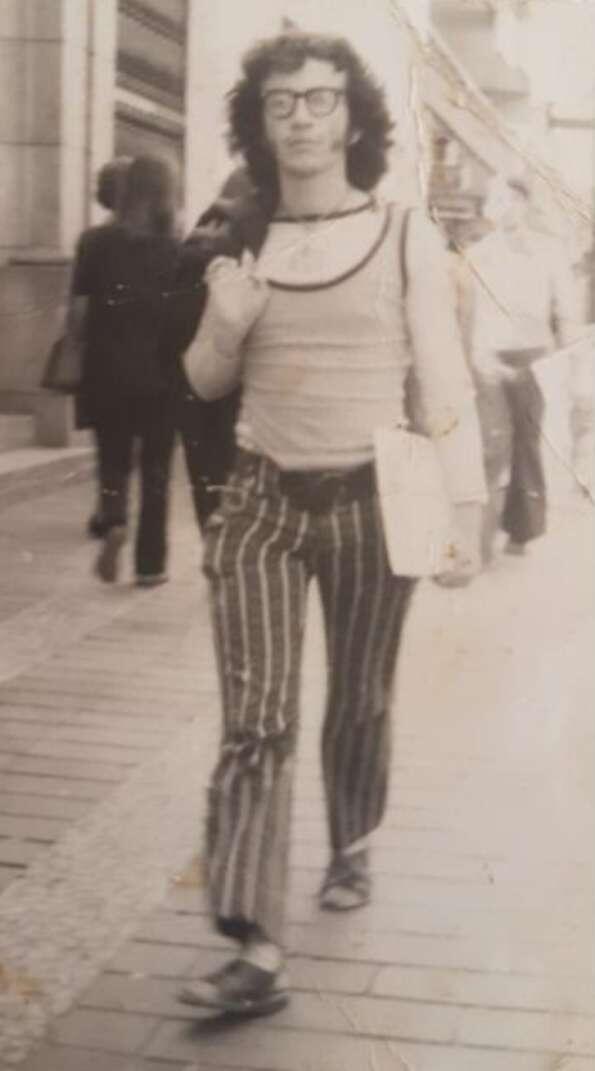

Posthumous work of the Colombian poet born in Don Matias on January 20, 1948.
Welcome to this blog dedicated to the Posthumous work of the Colombian poet Francisco Luis Arroyave Tabares (my father), born in Don Matias on January 20, 1948-2010. Where I will be publishing each of the 175 sonnets from his npublished collection 'Sonnets For The Twenty-First Century And A Circadian Musical (1984-1987).' Analyzed with GPT4 artificial intelligence and illustrated with AI tools... I hope you enjoy this garden of words snatched from the solitude of a locked room.
Likewise, any enthusiast of the sonnet form is invited to conduct their personal studies of Arroyave Tabares' work, as it is a collection that, although registered since 1989, has not yet been published.
Frank Duna
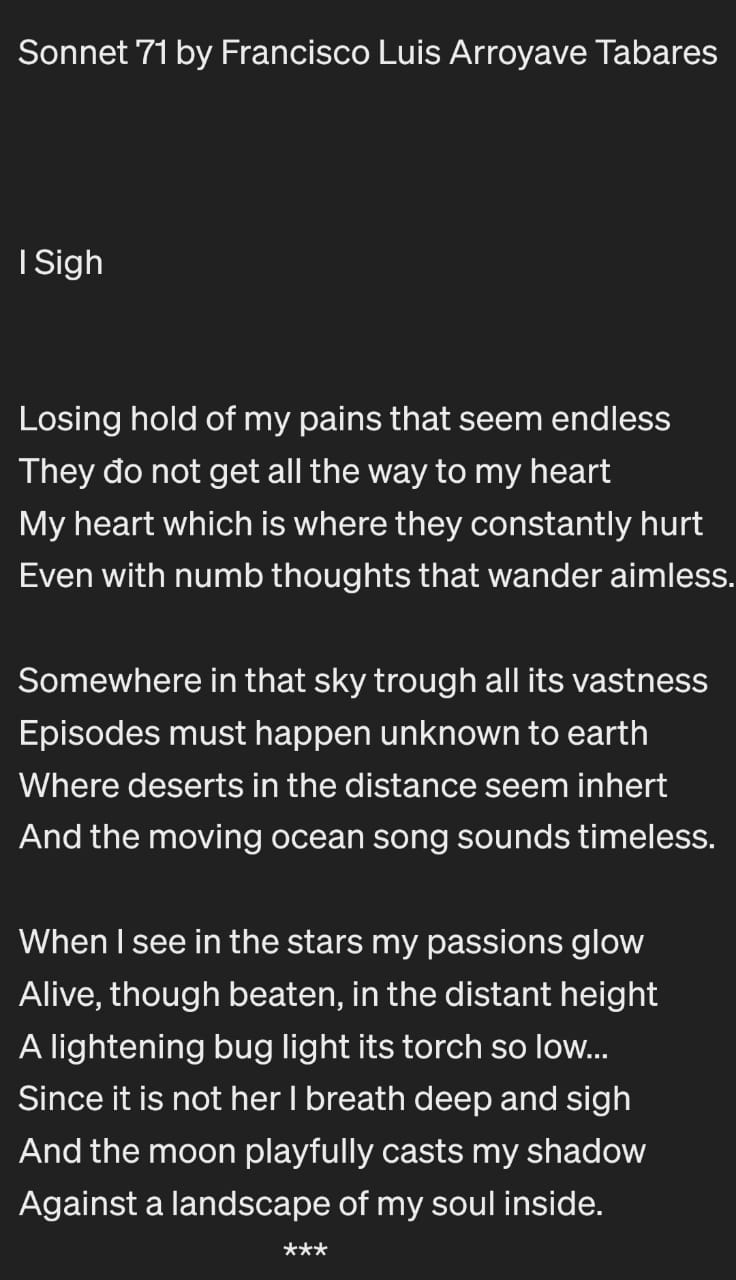
Analysis "I Sigh"
Introduction
"I Sigh" is a poem that explores the human experience of pain and longing, and the ways in which these emotions can make us feel isolated and insignificant in the face of the vastness of the universe.
Thematic Analysis
Octave: The octave presents a conflict or problem. Here, the speaker describes a state of emotional pain and heartache, which seems endless and constantly hurts his heart. He feels numb and his thoughts wander aimlessly. He looks to the sky, vast and full of unknown episodes, where the desert seems inert and the ocean’s song sounds timeless. This sets up a sense of longing and melancholy.
Sestet: The sestet usually resolves the conflict or problem presented in the octave. In this case, the speaker sees his passions glowing in the stars, alive but beaten. He sees a lightning bug light its torch so low, which could symbolize a glimmer of hope or a small source of light in the darkness. However, since it is not her (possibly referring to a lost love), he breathes deep and sighs. The moon playfully casts his shadow against a landscape of his soul inside, suggesting introspection and self-reflection.
Overall, the sonnet explores themes of love, loss, longing, and introspection. The octave sets up the emotional landscape, and the sestet delves into the speaker’s internal response to his feelings. The sonnet ends on a note of melancholy and introspection, leaving the reader with a poignant impression of the speaker’s emotional state.
Rhyme Scheme
In "I Sigh" by Francisco Luis Arroyave Tabares, the rhyme scheme follows the pattern of a Petrarchan sonnet, which is ABBA ABBA CDC DCD. Let's analyze the rhyme in detail:
Octave (ABBA ABBA):
1  endless (A)
2  heart (B)
3  hurt (B)
4  aimless (A)

5  vastness (A)
6  earth (B)
7  inhert (B)
8  timeless (A)
Sestet (CDC DCD):
9  glow (C)
10 height (D)
11 low (C)
12 sigh (D)
13 shadow (C)
14 inside (D)
This rhyme scheme helps to structure the sonnet and guide its themes and emotional progression. The mirrored rhymes in the octave create a sense of introspection and melancholy, while the alternating rhymes in the sestet introduce a sense of movement and change, reflecting the speaker’s internal emotional journey. The final line ties the sonnet together, ending on a poignant note that resonates with the themes introduced throughout the poem.
Additional Aspects to Analyze
While we've discussed the rhyme scheme and the general themes of Sonnet 71 by Francisco Luis Arroyave Tabares, there are still several aspects that can be further analyzed, including its meter, imagery, themes...
Language and Imagery: The sonnet uses rich and evocative language to convey the speaker’s emotional state. The imagery of the “endless” pains, the “numb thoughts that wander aimless,” and the “moving ocean song” create a vivid picture of the speaker’s inner turmoil. The use of natural elements like the sky, stars, and the moon adds a sense of vastness and depth to the speaker’s feelings.
Themes: The main themes of the sonnet are love, loss, longing, and introspection. The speaker expresses a deep sense of loss and longing, which is reflected in the melancholic tone of the poem. The theme of introspection is evident in the speaker’s self-reflection and his observation of his own emotional state.
Meter: The sonnet appears to follow the iambic pentameter, which is a common meter in English poetry. This means each line consists of five pairs of unstressed and stressed syllables, giving the poem a rhythmic flow.
Overall, the sonnet is a poignant exploration of the speaker’s emotional landscape. The use of evocative language and imagery, combined with the thematic depth and rhythmic flow, makes it a compelling piece of poetry. The sonnet effectively conveys the speaker’s feelings of love, loss, and longing, leaving a lasting impression on the reader. The final line, “Against a landscape of my soul inside,” beautifully encapsulates the introspective nature of the poem. It suggests a deep self-awareness and a willingness to confront one’s own emotions, which adds a layer of complexity and depth to the sonnet.
(GPT4)
Syllable count for each line
I Sigh


10 Losing hold of my pains that seem endless
10 They đo not get all the way to my heart
10 My heart which is where they constantly hurt
10 Even with numb thoughts that wander aimless.

10 Somewhere in that sky through all its vastness
10 Episodes must happen unknown to earth
10 Where deserts in the distance seem inhert
10 And the moving ocean song sounds timeless.

10 When I see in the stars my passions glow
10 Alive, though beaten, in the distant height
10 A lightening bug light its torch so low...
10 Since it is not her I breath deep and sigh
10 And the moon playfully casts my shadow
10 Against a landscape of my soul inside.
                                    ***
Sonnets For The Twenty First Century And A Circadian Musical Written By Francisco Luis Arroyave Tabares (1984-1987)
Analyzed by GPT4; Image by leonardo.ai;
First published on Nostr Protocol by franciscoarroyavet@nostrplebs.com

 I Sigh