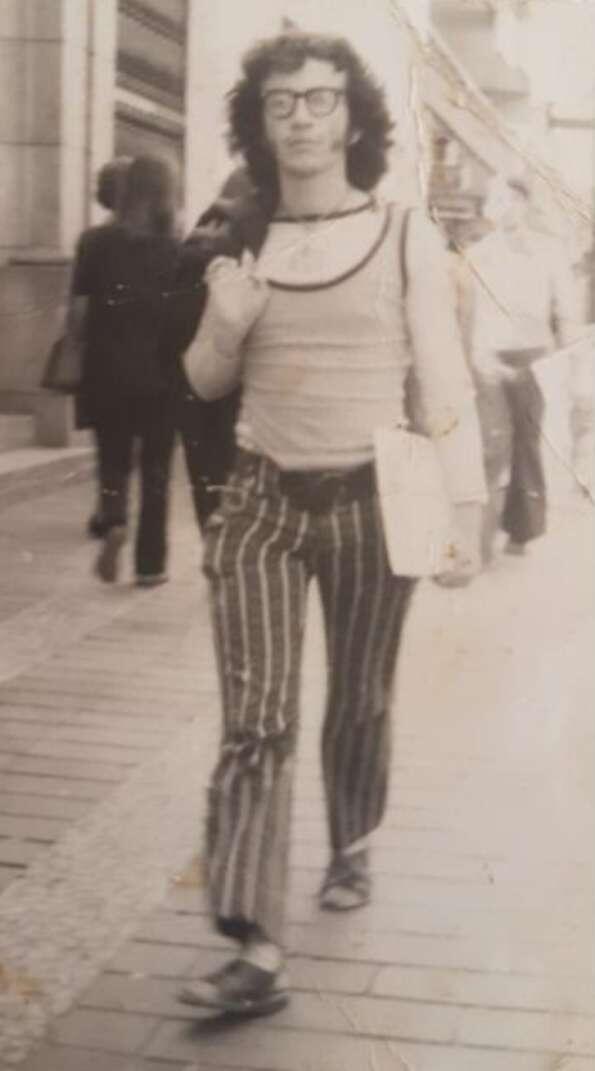
Posthumous work of the Colombian poet born in Don Matias on January 20, 1948.
Welcome to this blog dedicated to the Posthumous work of the Colombian poet Francisco Luis Arroyave Tabares (my father), born in Don Matias on January 20, 1948-2010. Where I will be publishing each of the 175 sonnets from his npublished collection 'Sonnets For The Twenty-First Century And A Circadian Musical (1984-1987).' Analyzed with GPT4 artificial intelligence and illustrated with AI tools... I hope you enjoy this garden of words snatched from the solitude of a locked room.
Likewise, any enthusiast of the sonnet form is invited to conduct their personal studies of Arroyave Tabares' work, as it is a collection that, although registered since 1989, has not yet been published.
Frank Duna
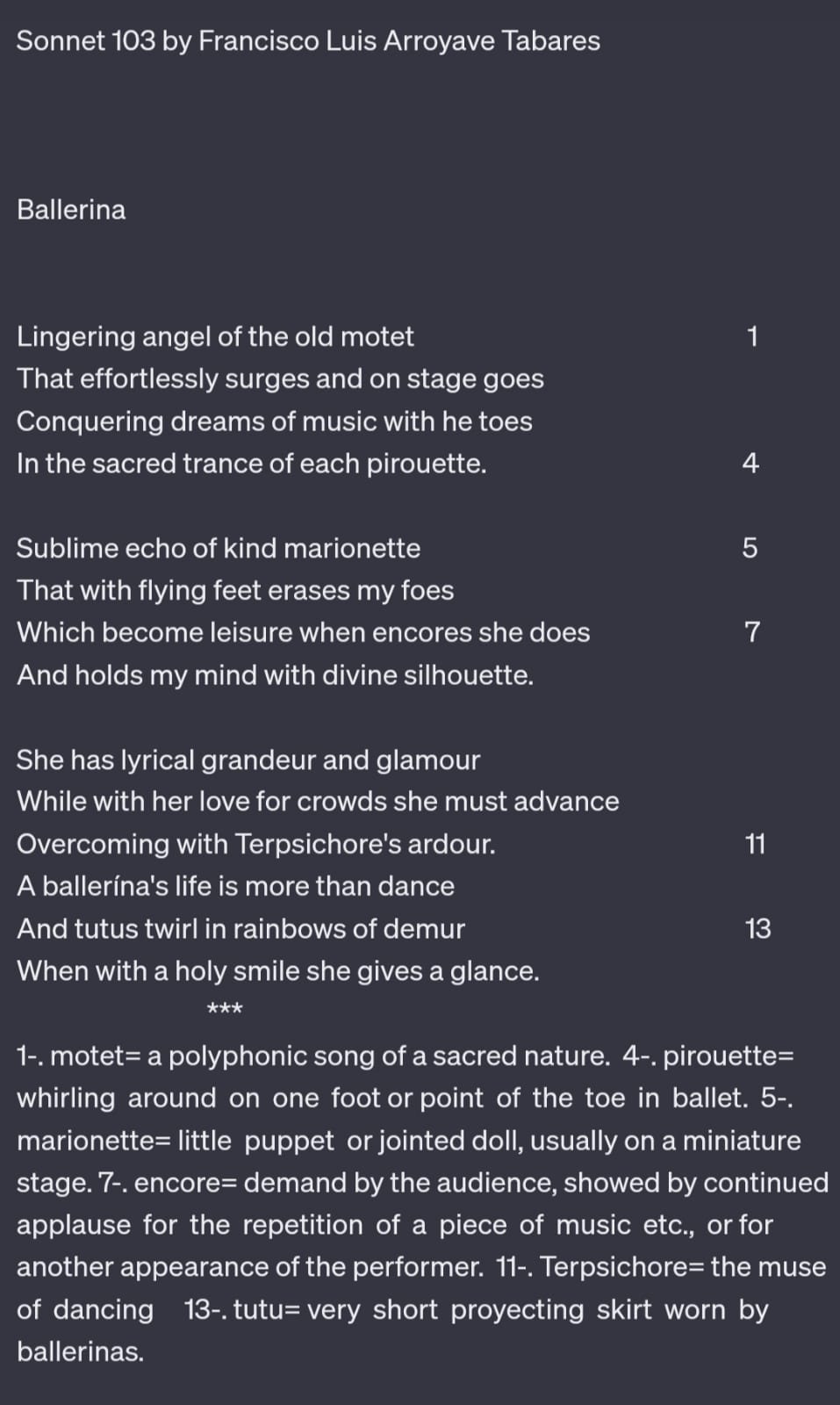
Analisis "Ballerina"
Introduction
The sonnet “Ballerina” by Francisco Luis Arroyave Tabares is a beautiful tribute to the art of ballet.
Thematic Analysis:
In the octave (the first eight lines), the poet describes the ballerina as an angelic figure who conquers dreams of music with her toes and holds the poet’s mind with her divine silhouette. The use of words such as “angel”, “sacred”, and “divine” elevates the ballerina to a celestial status. The poet also uses metaphors like “lingering angel of the old motet” and “sublime echo of kind marionette” to depict the ballerina’s graceful movements and her ability to captivate the audience.
The sestet (the last six lines) further explores the ballerina’s grandeur and glamour. It emphasizes that a ballerina’s life is more than just dance; it’s about overcoming challenges with passion (Terpsichore’s ardour) and advancing with love for the audience. The final lines beautifully capture the visual spectacle of a ballet performance with the image of tutus twirling in rainbows of demure when the ballerina gives a holy smile.
Overall, the sonnet presents a vivid and reverential portrayal of a ballerina, capturing both the physical beauty of the dance and the emotional resonance it creates in the audience. The octave and sestet together form a cohesive narrative that celebrates the art of ballet.
Rhyme Scheme
The rhyme scheme ABBA ABBA CDCDCD, is a common one for sonnets. Let’s analyze how it applies to the sonnet “Ballerina” by Francisco Luis Arroyave Tabares:
Octave:
Lingering angel of the old motet (A)
That effortlessly surges and on stage goes (B)
Conquering dreams of music with he toes (B)
In the sacred trance of each pirouette. (A)
Sublime echo of kind marionette (A)
That with flying feet erases my foes (B)
Which become leisure when encores she does (B)
And holds my mind with divine silhouette. (A)
Sestet:
She has lyrical grandeur and glamour (C)
While with her love for crowds she must advance (D)
Overcoming with Terpsichore’s ardour. (C)
A ballerína’s life is more than dance (D)
And tutus twirl in rainbows of demur (C)
When with a holy smile she gives a glance. (D)
As you can see, the sonnet follows the ABBA ABBA CDCDCD rhyme scheme perfectly. This structure contributes to the rhythm and flow of the poem, enhancing its musicality and lyrical quality. It also helps to delineate the thematic shift from the octave to the sestet, a key feature of the sonnet form. The octave typically presents a problem or question, while the sestet provides a resolution or answer. In this case, the octave describes the ballerina’s performance, and the sestet reflects on the meaning and impact of her art.
Additional Aspects to Analyze
let’s delve deeper into the sonnet’s use of language, imagery, themes, meter, and overall impact:
Language and Imagery: The sonnet uses rich and evocative language to create vivid imagery. The ballerina is described as a “lingering angel of the old motet” and a “sublime echo of kind marionette,” which paints a picture of her as a graceful and ethereal figure. The use of specific ballet terminology like “pirouette,” “encores,” and “tutus” adds authenticity to the depiction.
Themes: The main theme of the sonnet is the beauty and transcendence of ballet. It explores the physical grace of the ballerina, the emotional impact of her performance, and the dedication and passion behind her art. The sonnet also touches on themes of dreams, music, and divine inspiration.
Meter: The sonnet appears to follow the iambic pentameter, which is a common meter in English poetry and particularly in sonnets. This means each line consists of five metrical feet, each foot being made up of two syllables, the first unstressed and the second stressed.
Overall: The sonnet is a beautiful and reverential tribute to the art of ballet. It effectively uses language, imagery, and meter to convey the grace, beauty, and dedication of the ballerina, and to evoke the emotional resonance of her performance. The sonnet adheres to the traditional structure and rhyme scheme, which adds to its lyrical quality and musicality. The octave and sestet work together to present a cohesive narrative that celebrates the art of ballet. The sonnet is a testament to the power of poetry to capture and convey the beauty of art and performance.
(GPT4)
Syllable count for each line.
Ballerina


10 Lingering angel of the old motet
10 That effortlessly surges and on stage goes
10 Conquering dreams of music with he toes
10 In the sacred trance of each pirouette.

10 Sublime echo of kind marionette
10 That with flying feet erases my foes
10 Which become leisure when encores she does
10 And holds my mind with divine silhouette.

10 She has lyrical grandeur and glamour
10 While with her love for crowds she must advance
10 Overcoming with Terpsichore's ardour.
10 A ballerína's life is more than dance
10 And tutus twirl in rainbows of demur
10 When with a holy smile she gives a glance.
                                    ***
Sonnets For The Twenty First Century And A Circadian Musical Written By Francisco Luis Arroyave Tabares (1984-1987)
Analyzed by GPT4; Image leonardo.ai; First published on Nostr Protocol by franciscoarroyavet@nostrplebs.com
 Ballerina