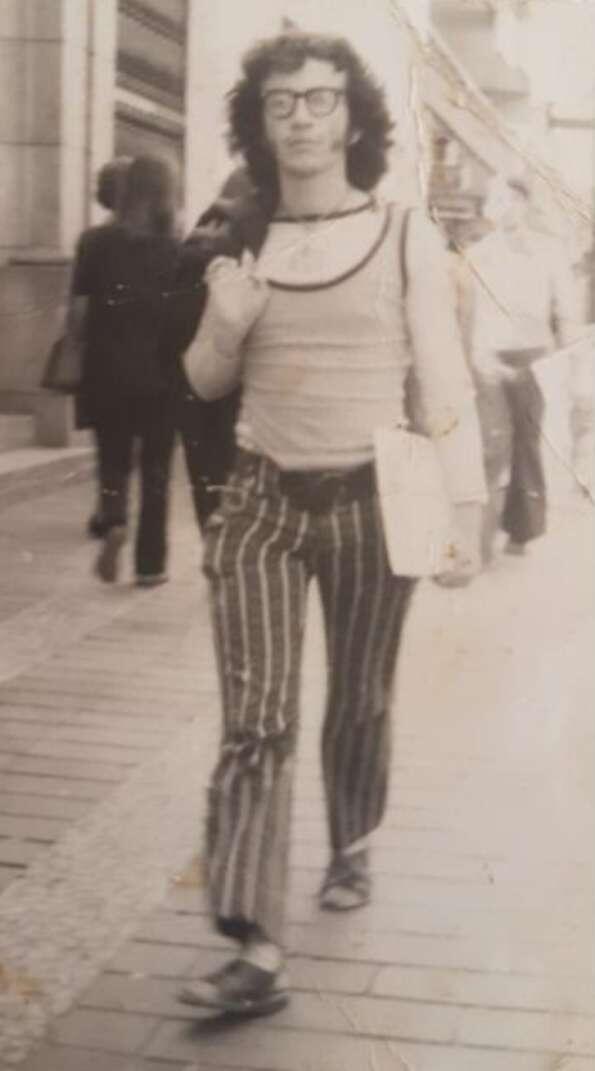
Posthumous work of the Colombian poet born in Don Matias on January 20, 1948.
Welcome to this blog dedicated to the Posthumous work of the Colombian poet Francisco Luis Arroyave Tabares (my father), born in Don Matias on January 20, 1948-2010. Where I will be publishing each of the 175 sonnets from his unpublished collection 'Sonnets For The Twenty-First Century And A Circadian Musical (1984-1987).' Analyzed with GPT4 artificial intelligence and illustrated with AI tools... I hope you enjoy this garden of words snatched from the solitude of a locked room.
Likewise, any enthusiast of the sonnet form is invited to conduct their personal studies of Arroyave Tabares' work, as it is a collection that, although registered since 1989, has not yet been published.
Frank Duna
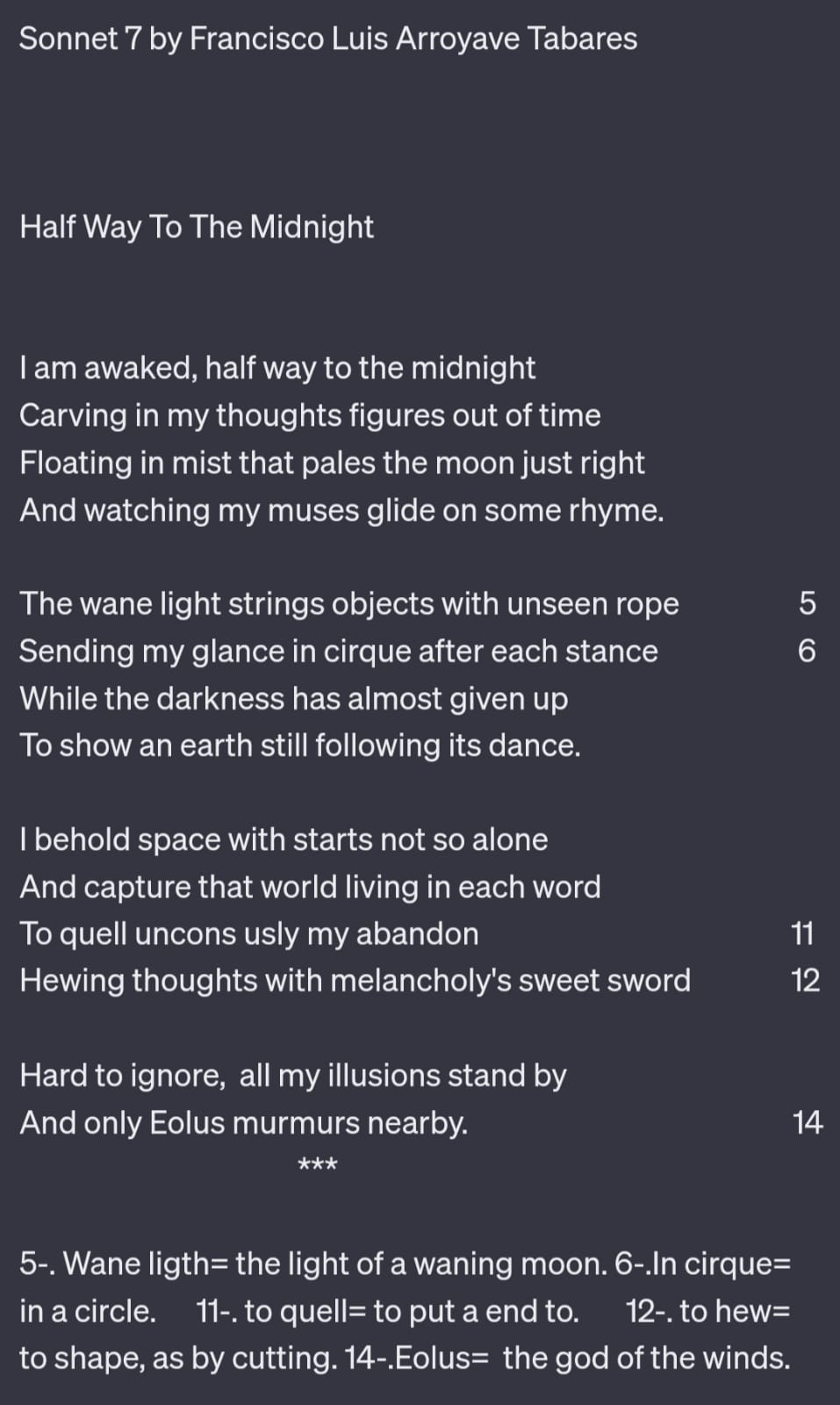
Analysis "Half Way To The Midnight"
Introduction
"Half Way To The Midnight" is a poignant exploration of solitude, introspection, and the therapeutic power of creativity.
Thematic Analysis
Quartet 1 (Lines 1-4): The speaker is awake in the middle of the night, carving figures out of time in his thoughts. He observes his muses gliding on some rhyme in the pale moonlight. This quartet sets the stage for the poem, introducing the speaker’s state of mind and the setting.
Quartet 2 (Lines 5-8): The speaker describes the waning moonlight that strings objects with an unseen rope, sending his glance in a circle after each stance. He notes that the darkness has almost given up, showing an earth still following its dance. This quartet continues the description of the night and introduces the idea of the earth’s dance.
Quartet 3 (Lines 9-12): The speaker beholds space with stars not so alone and captures that world living in each word. He seeks to end his unconscious abandonment by shaping thoughts with melancholy’s sweet sword. This quartet delves into the speaker’s inner world, exploring his feelings of loneliness and melancholy.
Couplet (Lines 13-14): The speaker finds it hard to ignore his illusions, which stand by him, and only the god of the winds, Eolus, murmurs nearby. This couplet concludes the poem with a sense of solitude and introspection.
Overall, the sonnet explores themes of solitude, introspection, and the power of the imagination in the quiet of the night. The speaker’s thoughts and feelings are beautifully expressed through the imagery of the night and the celestial bodies. The use of the god Eolus in the final line adds a mythical element to the poem, enhancing its depth and richness.
Structure and Rhyme Scheme
The sonnet “Half Way To The Midnight” by Francisco Luis Arroyave Tabares follows the Shakespearean sonnet rhyme scheme, which is ABABCDCDEFEFGG. Let’s break it down:
Line 1:   midnight (A)
Line 2:   time (B)
Line 3:   right (A)
Line 4:   rhyme. (B)
Line 5:   rope (C)
Line 6:   stance (D)
Line 7:   up (C)
Line 8:   dance. (D)
Line 9:   alone (E)
Line 10:  word (F)
Line 11: abandon (E)
Line 12:  sword (F)
Line 13:  by (G)
Line 14:  nearby. (G)
The first three quatrains (four-line stanzas) have alternating rhymes. The final two lines form a rhymed couplet. This structure allows for a clear progression of thought and argument, while the couplet offers a concise summary or conclusion. The rhyme enhances the musicality and rhythm of the poem, making it more enjoyable to read or listen to. It also helps to emphasize certain words and ideas, adding depth to the poem’s meaning.
Analysis of Aspects
The sonnet “Half Way To The Midnight” by Francisco Luis Arroyave Tabares is a rich piece of poetry with a lot to unpack. Let’s delve into the language, imagery, themes, meter, and overall impact of the poem:
Language: The language used in the poem is highly descriptive and evocative. The poet uses a variety of literary devices such as metaphor (“Carving in my thoughts figures out of time”), personification (“watching my muses glide on some rhyme”), and alliteration (“wane light strings objects with unseen rope”). The use of archaic language (“I am awaked”) adds a timeless quality to the poem.
Imagery: The poem is filled with vivid imagery that paints a picture of a quiet, introspective night. The “pale moonlight”, the “unseen rope” of the waning light, the “earth still following its dance”, and the “world living in each word” are all images that engage the senses and create a strong visual impact.
Themes: The main themes of the poem are solitude, introspection, and the power of imagination. The speaker is alone in the middle of the night, lost in his thoughts and feelings. The night and the celestial bodies serve as a backdrop for his introspection. The power of imagination is evident in the way the speaker carves figures out of time and captures a world in each word.
Meter: The poem follows the iambic pentameter, which is typical of a Shakespearean sonnet. This means each line consists of five pairs of unstressed and stressed syllables, giving the poem a rhythmic quality.
Overall, “Half Way To The Midnight” is a beautifully crafted sonnet that explores the inner world of the speaker. The use of language and imagery is skillful and evocative, drawing the reader into the speaker’s solitary, introspective night. The themes are universal and relatable, and the meter adds a rhythmic quality to the poem, enhancing its musicality and flow. The sonnet leaves a lasting impression with its depth and richness.
(GPT4)
Syllable count for each line.
Half Way To The Midnight


10 I am awaked, half way to the midnight
10 Carving in my thoughts figures out of time
10 Floating in mist that pales the moon just right
10 And watching my muses glide on some rhyme.

10 The wane light strings objects with unseen rope
10 Sending my glance in cirque after each stance
10 While the darkness has almost given up
10 To show an earth still following its dance.

10 I behold space with starts not so alone
10 And capture that world living in each word
10 To quell unconsciously my abandon
10 Hewing thoughts with melancholy's sweet sword

11 Hard to ignore, all my illusions stand by
10 And only Eolus murmurs nearby.
                   ***
Sonnets For The Twenty First Century And A Circadian Musical Written By Francisco Luis Arroyave Tabares (1984-1987)
Analyzed by GPT4; Image by leonardo.ai;
First published on Nostr Protocol by franciscoarroyavet@nostrplebs.com
 Half Way To The Midnight