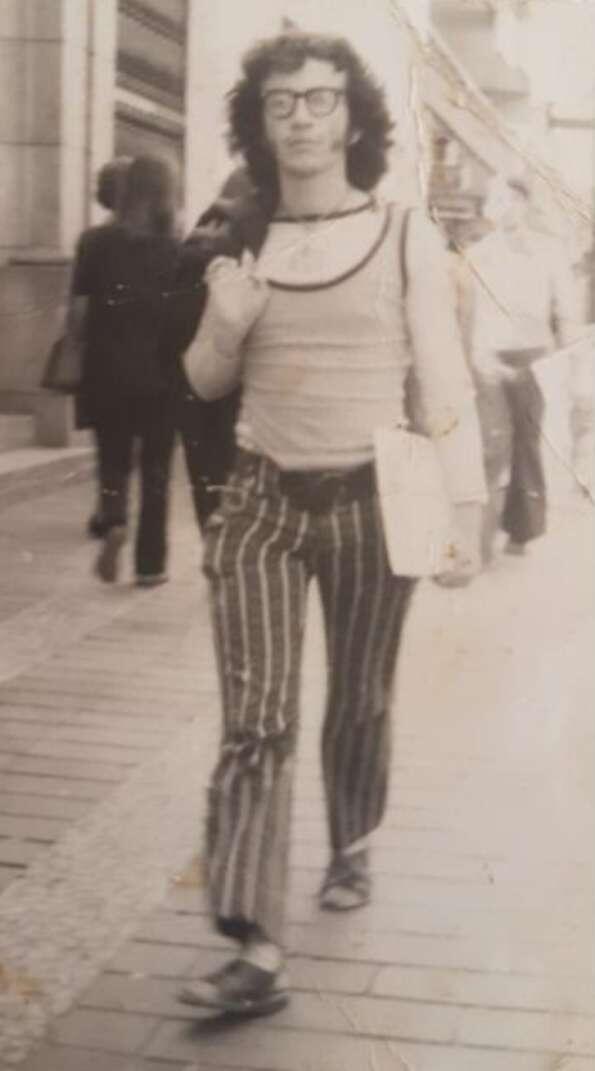
Posthumous work of the Colombian poet born in Don Matias on January 20, 1948.
Welcome to this blog dedicated to the Posthumous work of the Colombian poet Francisco Luis Arroyave Tabares (my father), born in Don Matias on January 20, 1948-2010. Where I will be publishing each of the 175 sonnets from his unpublished collection 'Sonnets For The Twenty-First Century And A Circadian Musical (1984-1987).' Analyzed with GPT4 artificial intelligence and illustrated with AI tools... I hope you enjoy this garden of words snatched from the solitude of a locked room.
Likewise, any enthusiast of the sonnet form is invited to conduct their personal studies of Arroyave Tabares' work, as it is a collection that, although registered since 1989, has not yet been published.
Frank Duna
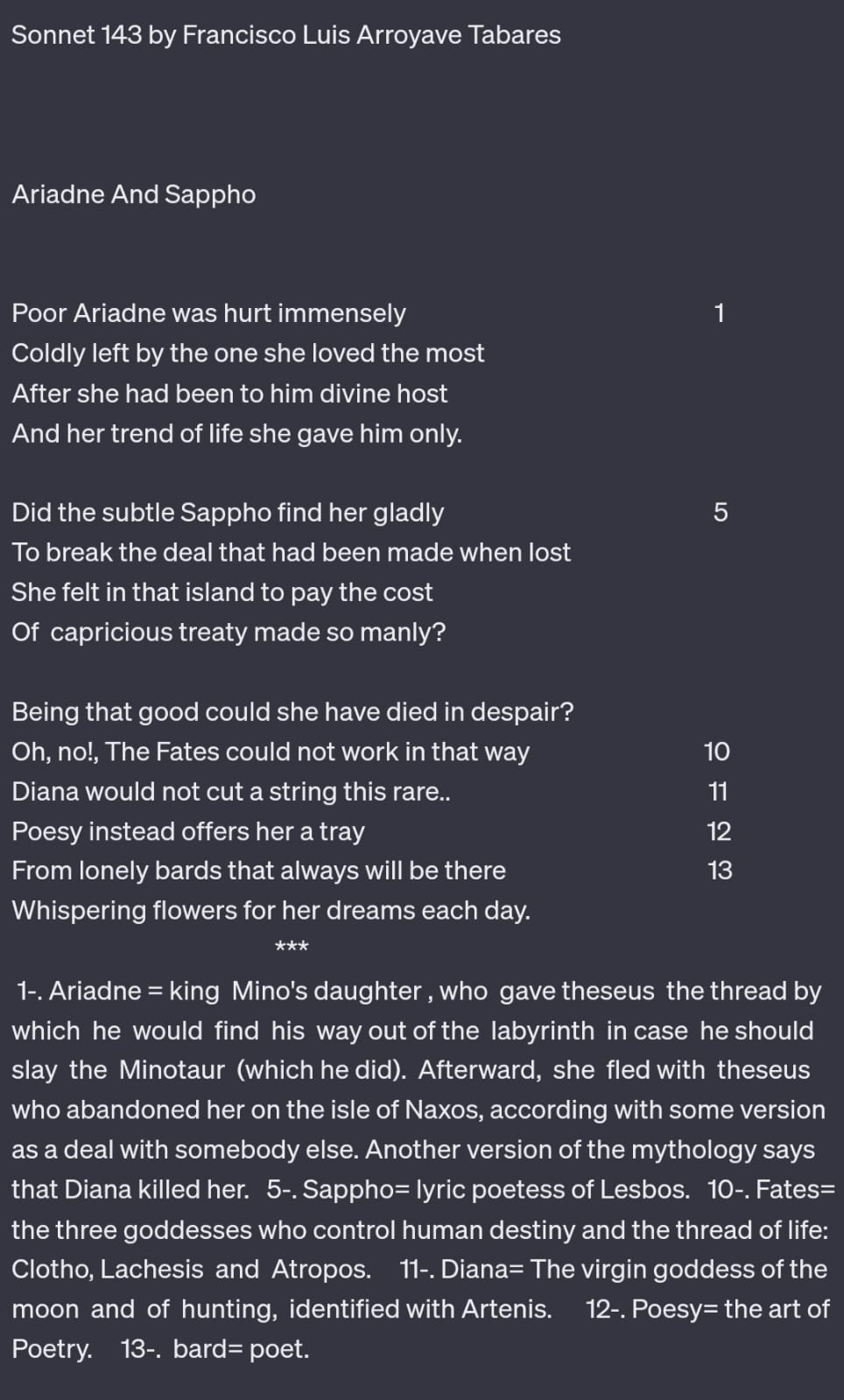
Analysis "Ariadne And Sappho"
Introduction
Sonnet 143 by Francisco Luis Arroyave Tabares explores the themes of love, betrayal, and the resilience of the human spirit, drawing inspiration from Greek mythology. The sonnet specifically delves into the stories of Ariadne and Sappho. uses the Petrarchan sonnet structure, which is divided into an octave (the first eight lines) and a sestet (the last six lines).
Thematic Analysis
In the octave, the poet introduces the situation or problem. Here, the poet talks about Ariadne, who was left by the one she loved the most after she had been a divine host to him. The poet then introduces Sappho, who found Ariadne and broke the deal that had been made when Ariadne was lost on the island. The octave ends with a question about the capricious treaty made so manly.
The sestet then provides a resolution or commentary on the situation introduced in the octave. The poet wonders if Ariadne could have died in despair, but quickly dismisses this idea, stating that the Fates and Diana would not allow such a thing to happen to someone as good as Ariadne. Instead, the poet suggests that poetry offers solace to Ariadne, with lonely bards always there to whisper flowers for her dreams each day.
This sonnet beautifully intertwines mythology and poetry, using the stories of Ariadne and Sappho to explore themes of love, loss, and the healing power of poetry. The poet’s use of these mythological figures allows him to delve into these themes in a deep and meaningful way. The sonnet ends on a hopeful note, suggesting that even in the face of despair, poetry can offer comfort and solace.
Structure and Rhyme Scheme
The sonnet “Ariadne And Sappho” follows the traditional structure of a Petrarchan sonnet, which consists of an octave (the first eight lines) and a sestet (the last six lines). The rhyme scheme is as follows:
Octave: ABBA ABBA Sestet: CDC DCD Let’s break it down:
Octave:
Line 1 (A): Poor Ariadne was hurt immensely
Line 2 (B): Coldly left by the one she loved the most
Line 3 (B): After she had been to him divine host
Line 4 (A): And her trend of life she gave him only.
Line 5 (A): Did the subtle Sappho find her gladly
Line 6 (B): To break the deal that had been made when lost
Line 7 (B): She felt in that island to pay the cost
Line 8 (A): Of capricious treaty made so manly?
Sestet:
Line 9  (C): Being that good could she have died in despair?
Line 10 (D): Oh, no!, The Fates could not work in that way
Line 11 (C): Diana would not cut a string this rare…
Line 12 (D): Poesy instead offers her a tray
Line 13 (C): From lonely bards that always will be there
Line 14 (D): Whispering flowers for her dreams each day.
This rhyme scheme is typical of Petrarchan sonnets and helps to emphasize the shift in tone and focus between the octave and the sestet. The octave usually presents a problem or conflict, while the sestet offers a resolution or commentary. The change in rhyme scheme underscores this shift. In this sonnet, the octave discusses the stories of Ariadne and Sappho, while the sestet offers a hopeful perspective on their situations. The consistent rhyme scheme throughout the sonnet also adds a musical quality to the poem, enhancing its overall impact.
Analysis of Aspects
The sonnet “Ariadne And Sappho” by Francisco Luis Arroyave Tabares is rich in language, imagery, themes, and meter. Here’s a detailed analysis:
Language: The language used in the sonnet is formal and poetic, with a high level of diction. The poet uses sophisticated vocabulary and syntax, which adds to the sonnet’s elevated tone. The language is also highly allusive, with references to Greek mythology (Ariadne, Theseus, Sappho, the Fates, Diana) and poetic terms (bards, poesy).
Imagery: The sonnet is filled with vivid imagery that brings the stories of Ariadne and Sappho to life. For example, the image of Ariadne being “coldly left by the one she loved the most” evokes a sense of her loneliness and despair. Similarly, the image of bards “whispering flowers for her dreams each day” in the final line creates a hopeful and comforting picture.
Themes: The sonnet explores several themes, including love, betrayal, despair, and the healing power of poetry. The stories of Ariadne and Sappho serve as vehicles for these themes, with Ariadne’s abandonment and Sappho’s unrequited love representing the pain and heartbreak often associated with love. However, the sonnet also suggests that poetry can offer solace and hope in the face of such pain.
Meter: The sonnet follows the traditional meter of a Petrarchan sonnet, which is iambic pentameter. This means that each line consists of five metrical feet, each made up of one unstressed syllable followed by one stressed syllable (da-DUM). This rhythm gives the sonnet a musical quality and helps to emphasize the poetic language and imagery.
Overall: The sonnet is a powerful exploration of love and loss, using the stories of Ariadne and Sappho to delve into these universal themes. The sophisticated language, vivid imagery, and traditional meter all contribute to the sonnet’s emotional impact. The sonnet also highlights the power of poetry itself, suggesting that art can offer comfort and hope in the face of life’s challenges.
(GPT4)
Syllable count for each line.
Ariadne And Sappho


10 Poor Ariadne was hurt immensely
10 Coldly left by the one she loved the most
10 After she had been to him divine host
10 And her trend of life she gave him only.

10 Did the subtle Sappho find her gladly
10 To break the deal that had been made when lost
10 She felt in that island to pay the cost
10 Of  capricious treaty made so manly?

10 Being that good could she have died in despair?
10 Oh, no!, The Fates could not work in that way
10 Diana would not cut a string this rare..
10 Poesy instead offers her a tray
10 From lonely bards that always will be there
10 Whispering flowers for her dreams each day.
                                          ***
Sonnets For The Twenty First Century And A Circadian Musical Written By Francisco Luis Arroyave Tabares (1984-1987)
Analyzed by GPT4; Image de Sappho et Erinne, Salomon, 1880 Public Domain
First published on Nostr Protocol by franciscoarroyavet@nostrplebs.com
 Ariadne And Sappho