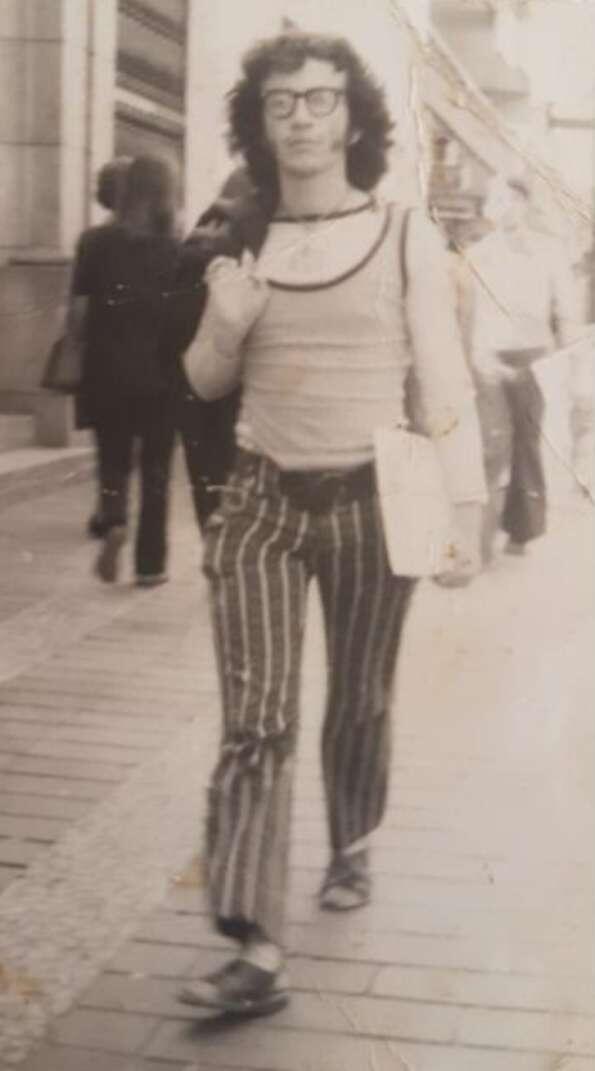
Posthumous work of the Colombian poet born in Don Matias on January 20, 1948.
Welcome to this blog dedicated to the Posthumous work of the Colombian poet Francisco Luis Arroyave Tabares (my father), born in Don Matias on January 20, 1948-2010. Where I will be publishing each of the 175 sonnets from his unpublished collection 'Sonnets For The Twenty-First Century And A Circadian Musical (1984-1987).' Analyzed with GPT4 artificial intelligence and illustrated with AI tools... I hope you enjoy this garden of words snatched from the solitude of a locked room.
Likewise, any enthusiast of the sonnet form is invited to conduct their personal studies of Arroyave Tabares' work, as it is a collection that, although registered since 1989, has not yet been published.
Frank Duna
Analysis "Why Am I So Somber?"
Introduction
Sonnet 80 by Francisco Luis Arroyave Tabares is a poignant exploration of melancholy and the fading passion in a relationship.
Thematic Analysis
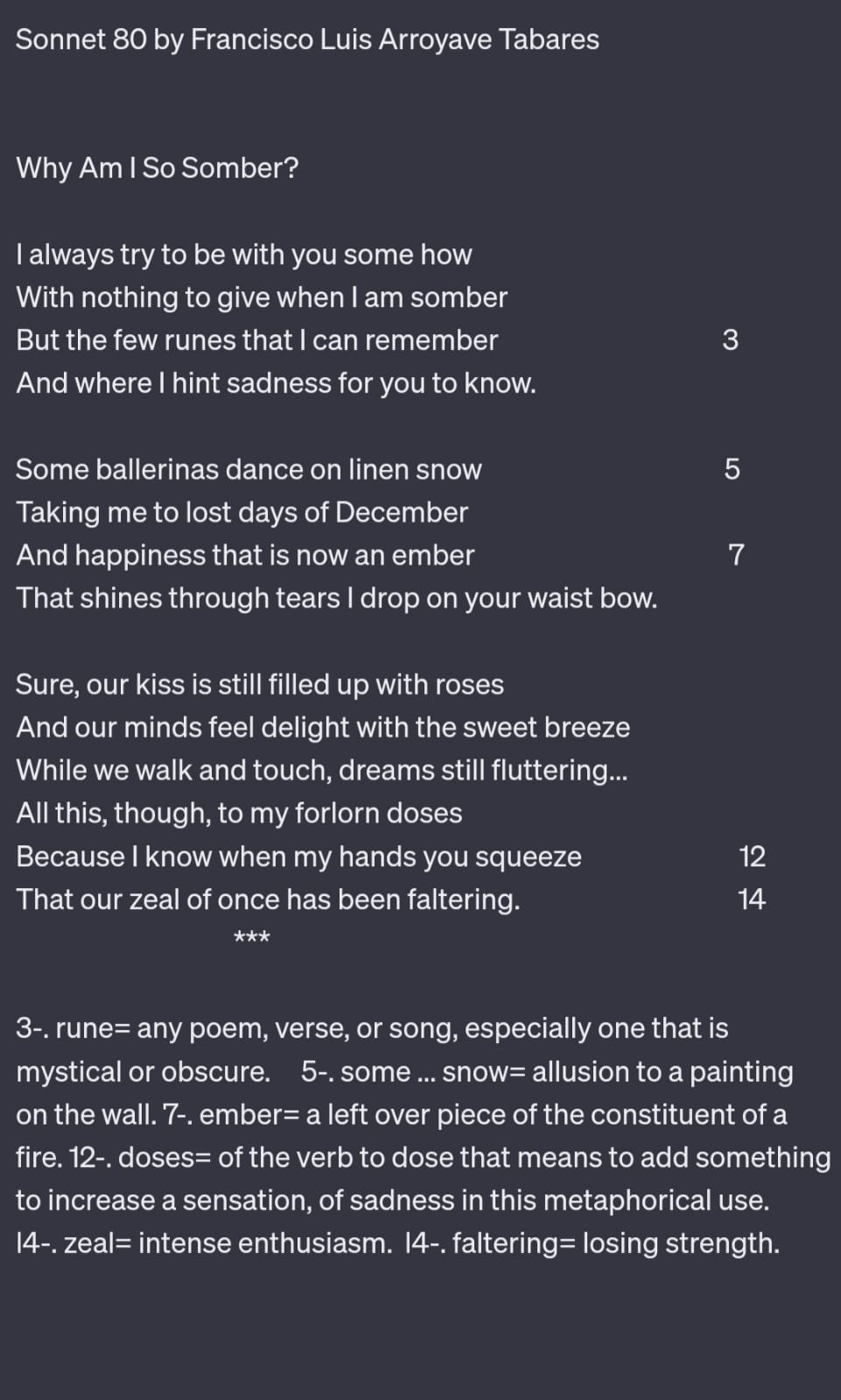
In the octave, the speaker expresses a sense of melancholy and sadness. He tries to be with the addressee somehow, even when he is somber, offering only the few “runes” or mystical verses that he can remember. He hints at his sadness for the addressee to know. The speaker then uses the metaphor of ballerinas dancing on linen snow, an allusion to a painting on the wall, to convey a sense of nostalgia and longing for the lost days of December. The happiness that once was is now just an ember, a leftover piece of a fire, that shines through the tears he drops on the addressee’s waist bow.
The sestet shifts the tone slightly. The speaker acknowledges that their kiss is still filled with roses and their minds feel delight with the sweet breeze. As they walk and touch, dreams are still fluttering. However, this only adds to the speaker’s forlorn doses of sadness because he knows that when the addressee squeezes his hands, their once intense enthusiasm or “zeal” has been faltering or losing strength.
Overall, the sonnet explores themes of love, loss, and longing, with a poignant sense of melancholy and nostalgia. The speaker’s deep affection for the addressee is evident, but so too is his awareness of their fading passion. The sonnet is a powerful expression of the bittersweet nature of love.
Rhyme Scheme
let’s analyze the rhyme scheme of the sonnet. The rhyme scheme is ABBA ABBA CDE CDE, which is a typical Italian or Petrarchan sonnet structure.
The octave (the first eight lines) has the rhyme scheme ABBA ABBA:
I always try to be with you some how (A)
With nothing to give when I am somber (B)
But the few runes that I can remember (B)
And where I hint sadness for you to know. (A)
Some ballerinas dance on linen snow (A)
Taking me to lost days of December (B)
And happiness that is now an ember (B)
That shines through tears I drop on your waist bow. (A)
The sestet (the last six lines) has the rhyme scheme CDE CDE:
Sure, our kiss is still filled up with roses (C)
And our minds feel delight with the sweet breeze (D)
While we walk and touch, dreams still fluttering… (E)
All this, though, to my forlorn doses (C)
Because I know when my hands you squeeze (D)
That our zeal of once has been faltering. (E)
This rhyme scheme is a key feature of the sonnet form and contributes to the musicality and rhythm of the poem. It also helps to delineate the shift in tone and theme between the octave and the sestet. The octave typically presents a problem or conflict, while the sestet offers a resolution or commentary. The change in rhyme scheme underscores this shift.
Additional Aspects to Analyze
While we've discussed the rhyme scheme and general themes of Sonnet 80, there are still several aspects that can be further analyzed:
Language and Imagery: The language used in the sonnet is rich and evocative, with a strong use of metaphors and similes. The speaker uses the metaphor of “runes” to describe his verses, suggesting a sense of mystery and depth. The imagery of “ballerinas dancing on linen snow” is a beautiful and poignant allusion to a painting, evoking a sense of nostalgia and longing. The “ember” metaphorically represents the fading happiness, while the “roses” in their kiss symbolize lingering affection. The “forlorn doses” metaphorically express the speaker’s increasing sadness.
Themes: The sonnet explores themes of love, loss, longing, and melancholy. The speaker expresses his deep affection for the addressee, but also his awareness of their fading passion. The sense of nostalgia and longing for the past is a recurring theme throughout the sonnet.
Meter: The sonnet appears to follow the iambic pentameter, which is a common meter in English poetry and consists of five pairs of unstressed and stressed syllables per line. This gives the poem a rhythmic quality and contributes to its musicality.
Overall, Sonnet 80 is a poignant exploration of love and loss. The speaker’s deep affection for the addressee is evident, but so too is his awareness of their fading passion. The sonnet is a powerful expression of the bittersweet nature of love, conveyed through rich language and evocative imagery. The use of the traditional sonnet form, with its specific rhyme scheme and meter, adds to the poem’s depth and complexity. The shift in tone and theme between the octave and the sestet, underscored by the change in rhyme scheme, effectively conveys the speaker’s emotional journey. The sonnet is a testament to the power of poetry to express complex emotions and experiences.
(GPT4)
Syllable count for each line.
Why Am I So Somber?

10 I always try to be with you some how
10 With nothing to give when I am somber
10 But the few runes that I can remember
10 And where I hint sadness for you to know.

10 Some ballerinas dance on linen snow
10 Taking me to lost days of December
10 And happiness that is now an ember
10 That shines through tears I drop on your waist bow.

10 Sure, our kiss is still filled up with roses
10 And our minds feel delight with the sweet breeze
10 While we walk and touch, dreams still fluttering...
9  All this, though, to my forlorn doses
9  Because I know when my hands you squeeze
10 That our zeal of once has been faltering.
                                    ***
Sonnets For The Twenty First Century And A Circadian Musical Written By Francisco Luis Arroyave Tabares (1984-1987)
Analyzed by GPT4; Image by Frank Duna;
First published on Nostr Protocol by franciscoarroyavet@nostrplebs.com
 Why Am I So Somber?