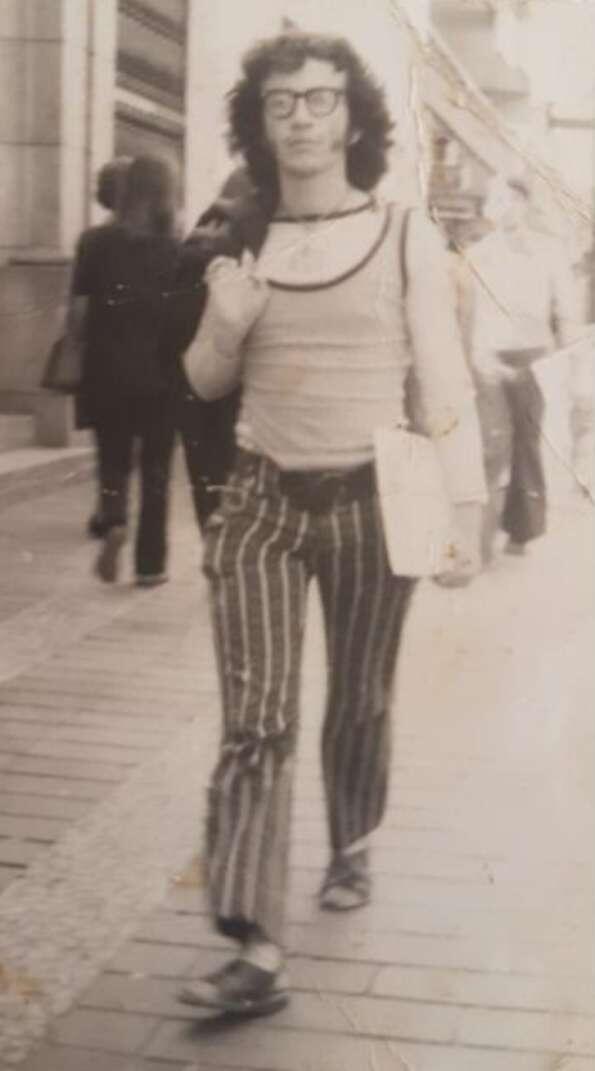
Posthumous work of the Colombian poet born in Don Matias on January 20, 1948.
Welcome to this blog dedicated to the Posthumous work of the Colombian poet Francisco Luis Arroyave Tabares (my father), born in Don Matias on January 20, 1948-2010. Where I will be publishing each of the 175 sonnets from his unpublished collection 'Sonnets For The Twenty-First Century And A Circadian Musical (1984-1987).' Analyzed with GPT4 artificial intelligence and illustrated with AI tools... I hope you enjoy this garden of words snatched from the solitude of a locked room.
Likewise, any enthusiast of the sonnet form is invited to conduct their personal studies of Arroyave Tabares' work, as it is a collection that, although registered since 1989, has not yet been published.
Frank Duna
Analysis "Without Knowing"
Introduction
Sonnet 25 by Francisco Luis Arroyave Tabares, titled "Without Knowing," explores the theme of secrets and their impact on our lives.
Thematic Analysis
First Quatrain: The poet speaks about secrets that are difficult to keep because they continue to grow within our hearts. These secrets have the power to control our lives, especially when we are waiting for circumstances to improve.
Second Quatrain: The poet discusses the futility of trying to solve problems with inconsistent words, hoping that time (symbolized by winter) will resolve them. However, the truth is always more persistent and cannot be avoided.
Third Quatrain: The poet describes the torment of being consumed by doubts, which control our actions. We fail to notice that our mental space is becoming scarce (air is rare), and our expressions of love are fragmented (spilled in fractions).
Couplet: The concluding lines reveal that we become prisoners without realizing it, and we come to understand facts that are difficult to accept.
Overall, the sonnet explores themes of secrecy, truth, doubt, and realization. It portrays the human struggle with internal conflicts and the eventual acceptance of harsh realities. The poet uses vivid imagery and metaphors to convey these complex emotions and experiences.
Structure and Rhyme Scheme
The sonnet “Without Knowing” by Francisco Luis Arroyave Tabares follows the ABAB CDCD EFEF GG rhyme scheme, which is typical of a Shakespearean sonnet. Here’s the detailed analysis:
First Quatrain (ABAB):
A: ever
B: building
A: better
B: living
Second Quatrain (CDCD):
C: solve
D: inconsistent
C: dissolve
D: persistent
Third Quatrain (EFEF):
E: mare
F: actions
E: rare
F: fractions
Couplet (GG):
G: become
G: overcome
This rhyme scheme creates a clear structure and rhythm to the poem, guiding the reader through the poet’s exploration of secrecy, truth, doubt, and realization. The final couplet (GG) provides a succinct conclusion or resolution to the themes developed in the quatrains. This is a common feature of Shakespearean sonnets. The rhyme enhances the musicality and memorability of the poem, while also reinforcing its thematic content.
Analysis of Aspects
Let’s delve deeper into the analysis of “Without Knowing ” by Francisco Luis Arroyave Tabares.
Language and Imagery: The language used in the sonnet is simple yet profound, making it accessible while still conveying deep emotions and experiences. The poet uses vivid imagery to illustrate abstract concepts. For instance, secrets are described as building within our hearts, doubts are likened to a mare (nightmare), and expressions of love are depicted as being spilled in fractions.
Themes: The sonnet explores several themes, including secrecy, truth, doubt, and realization. It delves into the human struggle with internal conflicts and the eventual acceptance of harsh realities. The theme of imprisonment, both literal and metaphorical, is also evident in the concluding couplet.
Meter: The sonnet follows the iambic pentameter, which is a common metrical form in traditional English poetry and verse drama. This means each line consists of five pairs of unstressed and stressed syllables, giving the poem a rhythmic quality.
Overall, the sonnet is a poignant exploration of human emotions and experiences. The poet skillfully uses language and imagery to convey complex themes, making the sonnet relatable and thought-provoking. The use of a traditional sonnet structure, including the ABAB CDCD EFEF GG rhyme scheme and iambic pentameter, adds to the sonnet’s musicality and memorability. The concluding couplet provides a powerful resolution, encapsulating the poem’s themes and leaving a lasting impression on the reader.
(GPT4)
Syllable count for each line.
Without Knowing


10 Some secrets are hard to guard for ever
10 Because in our heart they keep on building
10 And while we wait for things to get better
10 They get the chance to control our living.

10 Many times the problems we feign to solve
9  By sayng words that sound inconsistent
10 And which we think the winters will dissolve
10 But truth always shows up more persistent.

9  Sinking in doubts is a painful mare
10 As their strange forces control our actions
10 Not noticing our mind that air is rare
10 And that our love calls are spilled in fractions.

10 Prisoners without knowing we become
10 And realize facts hard to overcome.
                                   ***
Sonnets For The Twenty First Century And A Circadian Musical Written By Francisco Luis Arroyave Tabares (1984-1987)
Analyzed by GPT4; Image by leonardo.ai;
First published on Nostr Protocol by franciscoarroyavet@nostrplebs.com
 Without Knowing