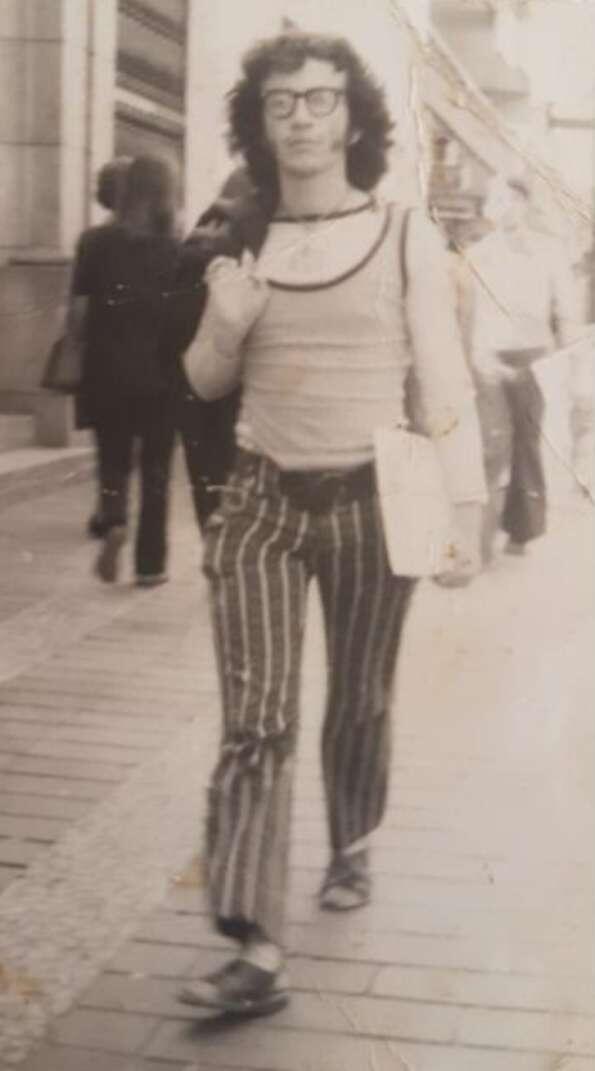
Posthumous work of the Colombian poet born in Don Matias on January 20, 1948.
Welcome to this blog dedicated to the Posthumous work of the Colombian poet Francisco Luis Arroyave Tabares (my father), born in Don Matias on January 20, 1948-2010. Where I will be publishing each of the 175 sonnets from his unpublished collection 'Sonnets For The Twenty-First Century And A Circadian Musical (1984-1987).' Analyzed with GPT4 artificial intelligence and illustrated with AI tools... I hope you enjoy this garden of words snatched from the solitude of a locked room.
Likewise, any enthusiast of the sonnet form is invited to conduct their personal studies of Arroyave Tabares' work, as it is a collection that, although registered since 1989, has not yet been published.
Frank Duna
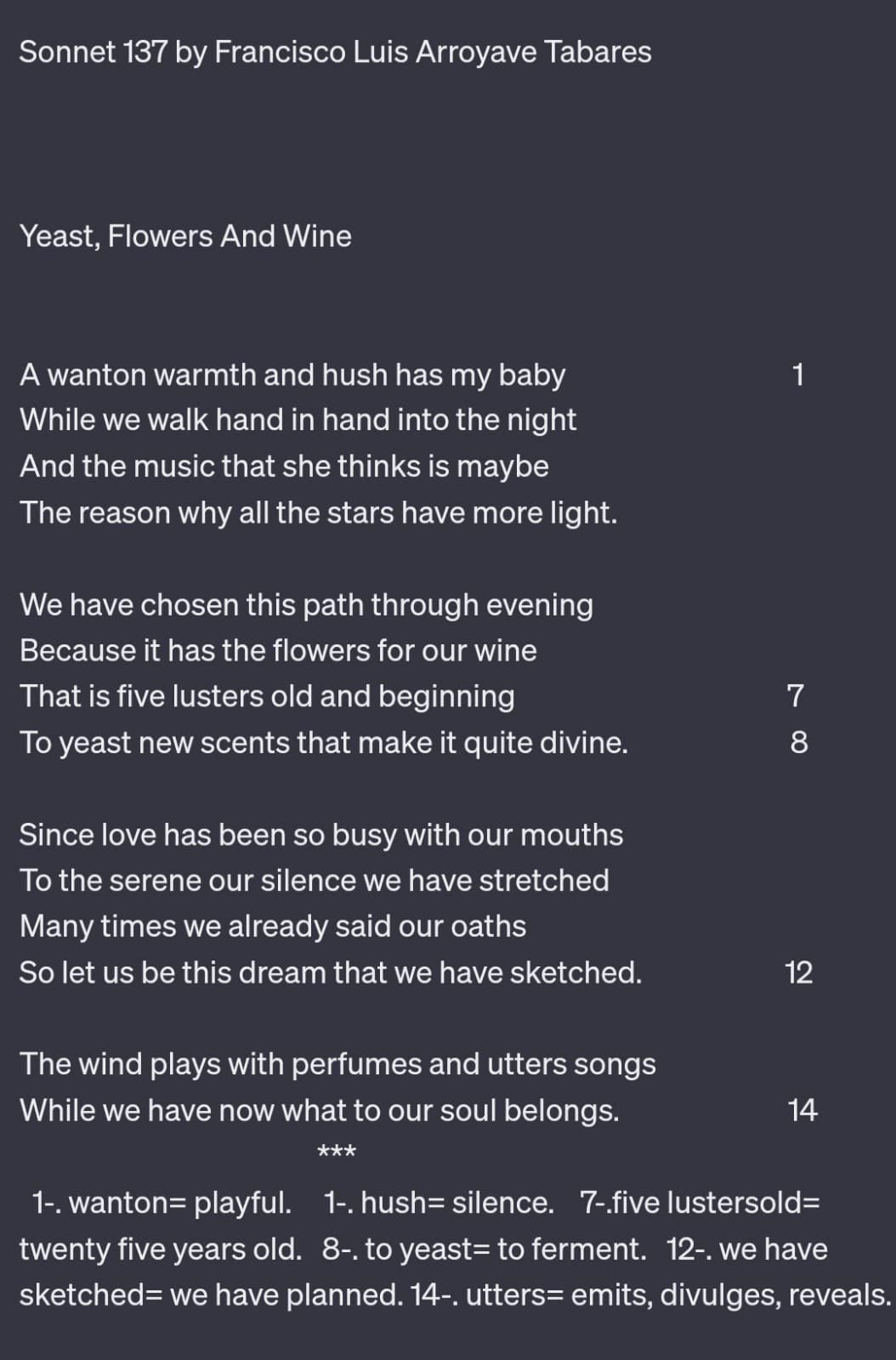
Analysis "Yeast, Flowers And Wine"
Introduction
“Yeast, Flowers And Wine” is a beautiful sonnet by Francisco Luis Arroyave Tabares. It’s a romantic poem that uses vivid imagery and metaphors to express deep affection and love.
Thematic Analysis
In the first quatrain (lines 1-4), the speaker describes a warm and quiet moment with his beloved. They are walking hand in hand at night, and the music she hears makes the stars shine brighter. This suggests a deep connection between the two, where even their surroundings seem to respond to their emotions.
The second quatrain (lines 5-8) introduces the metaphor of wine, which is often associated with love and passion. The “flowers for our wine” could symbolize the experiences and memories they’ve shared over the years (specifically, twenty-five years as indicated by “five lusters old”). The wine is said to be “beginning to yeast new scents,” suggesting that their love is still growing and evolving.
In the third quatrain (lines 9-12), the speaker talks about their shared silence and the vows they’ve made to each other. Their love is so profound that they don’t need words to express it. They have a shared dream, a future they’ve planned together.
The final couplet (lines 13-14) concludes the sonnet on a hopeful note. The wind, playing with perfumes and singing songs, could represent the passing of time and the changes it brings. Yet, they have what belongs to their soul, implying a sense of contentment and fulfillment in their love.
Overall, this sonnet beautifully captures the depth and evolution of a long-term romantic relationship. It’s a celebration of shared experiences, deep affection, and enduring love.
Structure and Rhyme Scheme
The sonnet “Yeast, Flowers And Wine” by Francisco Luis Arroyave Tabares follows the Shakespearean sonnet structure, which includes a specific rhyme scheme. Let’s break it down:
The first quatrain (lines 1-4) follows an ABAB rhyme scheme:
Line 1 (A): “A wanton warmth and hush has my baby”
Line 2 (B): “While we walk hand in hand into the night”
Line 3 (A): “And the music that she thinks is maybe”
Line 4 (B): “The reason why all the stars have more light.”
The second quatrain (lines 5-8) follows a CDCD rhyme scheme:
Line 5 (C): “We have chosen this path through evening”
Line 6 (D): “Because it has the flowers for our wine”
Line 7 (C): “That is five lusters old and beginning”
Line 8 (D): “To yeast new scents that make it quite divine.”
The third quatrain (lines 9-12) follows an EFEF rhyme scheme:
Line 9 (E): “Since love has been so busy with our mouths”
Line 10 (F): “To the serene our silence we have stretched”
Line 11 (E): “Many times we already said our oaths”
Line 12 (F): “So let us be this dream that we have sketched.”
The final couplet (lines 13-14) follows a GG rhyme scheme:
Line 13 (G): “The wind plays with perfumes and utters songs”
Line 14 (G): “While we have now what to our soul belongs.”
This rhyme scheme is typical of a Shakespearean sonnet and helps to create a rhythmic flow to the poem. It also structures the poet’s thoughts, guiding the reader through the progression of ideas and emotions expressed in the sonnet. The final rhymed couplet often serves as a conclusion or a summarizing thought, as it does in this poem.
Analysis of Aspects
“Yeast, Flowers And Wine” by Francisco Luis Arroyave Tabares is a rich and evocative sonnet that uses language, imagery, themes, and meter to convey a deep sense of love and connection.
Language and Imagery: The language used in the sonnet is both descriptive and metaphorical, creating vivid images that engage the senses. For instance, the “wanton warmth and hush” suggests a sense of playful intimacy, while the “music that she thinks is maybe” evokes the idea of an unspoken, harmonious connection. The imagery of walking hand in hand at night, stars shining brighter, and the wind playing with perfumes, all contribute to a romantic and dreamy atmosphere.
Themes: The main theme of the sonnet is love, specifically a mature, deep, and enduring love. This is symbolized through the metaphor of wine, which is described as being “five lusters old” (twenty-five years old) and still “beginning to yeast new scents.” This suggests that their love, like wine, has aged and matured over time, yet continues to evolve and offer new delights. The theme of shared dreams and future plans is also present, as indicated by the line “So let us be this dream that we have sketched.”
Meter: The sonnet follows the iambic pentameter, which is a common meter in English poetry and particularly in sonnets. Each line consists of five metrical feet, each foot containing two syllables - a short (or unstressed) syllable followed by a long (or stressed) syllable. This gives the poem a rhythmic flow and makes it pleasing to the ear.
Overall, “Yeast, Flowers And Wine” is a beautifully crafted sonnet that uses language, imagery, themes, and meter to create a vivid and moving portrayal of love. It captures the depth and complexity of a long-term romantic relationship, celebrating the shared experiences, deep affection, and enduring bond between two people. It’s a testament to the power of love and the beauty of shared dreams and aspirations.
(GPT4)
Syllable count for each line.
Yeast, Flowers And Wine


10 A wanton warmth and hush has my baby
10 While we walk hand in hand into the night
10 And the music that she thinks is maybe
10 The reason why all the stars have more light.

9   We have chosen this path through evening
10 Because it has the flowers for our wine
10 That is five lusters old and beginning
10 To yeast new scents that make it quite divine.

10 Since love has been so busy with our mouths
10 To the serene our silence we have stretched
10 Many times we already said our oaths
10 So let us be this dream that we have sketched.

10 The wind plays with perfumes and utters songs
10 While we have now what to our soul belongs.
                                               ***
Sonnets For The Twenty First Century And A Circadian Musical Written By Francisco Luis Arroyave Tabares (1984-1987)
Analyzed by GPT4; Image by leonardo.ai;
First published on Nostr Protocol by franciscoarroyavet@nostrplebs.com
 Yeast, Flowers And Wine