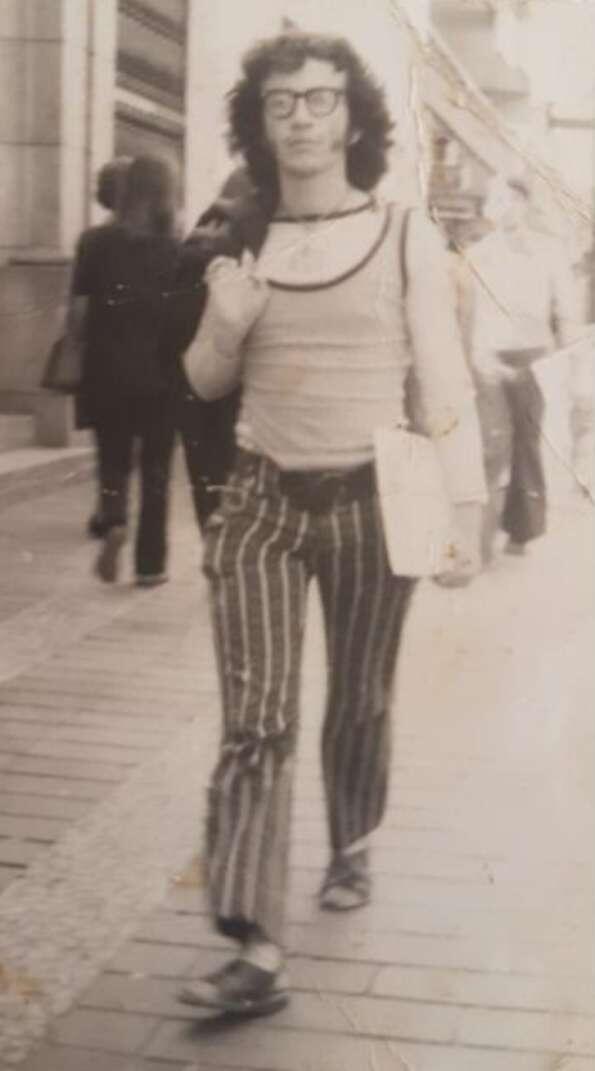
Posthumous work of the Colombian poet born in Don Matias on January 20, 1948.
Welcome to this blog dedicated to the Posthumous work of the Colombian poet Francisco Luis Arroyave Tabares (my father), born in Don Matias on January 20, 1948-2010. Where I will be publishing each of the 175 sonnets from his unpublished collection 'Sonnets For The Twenty-First Century And A Circadian Musical (1984-1987).' Analyzed with GPT4 artificial intelligence and illustrated with AI tools... I hope you enjoy this garden of words snatched from the solitude of a locked room.
Likewise, any enthusiast of the sonnet form is invited to conduct their personal studies of Arroyave Tabares' work, as it is a collection that, although registered since 1989, has not yet been published.
Frank Duna
Analysis "Loneliness"
Introduction
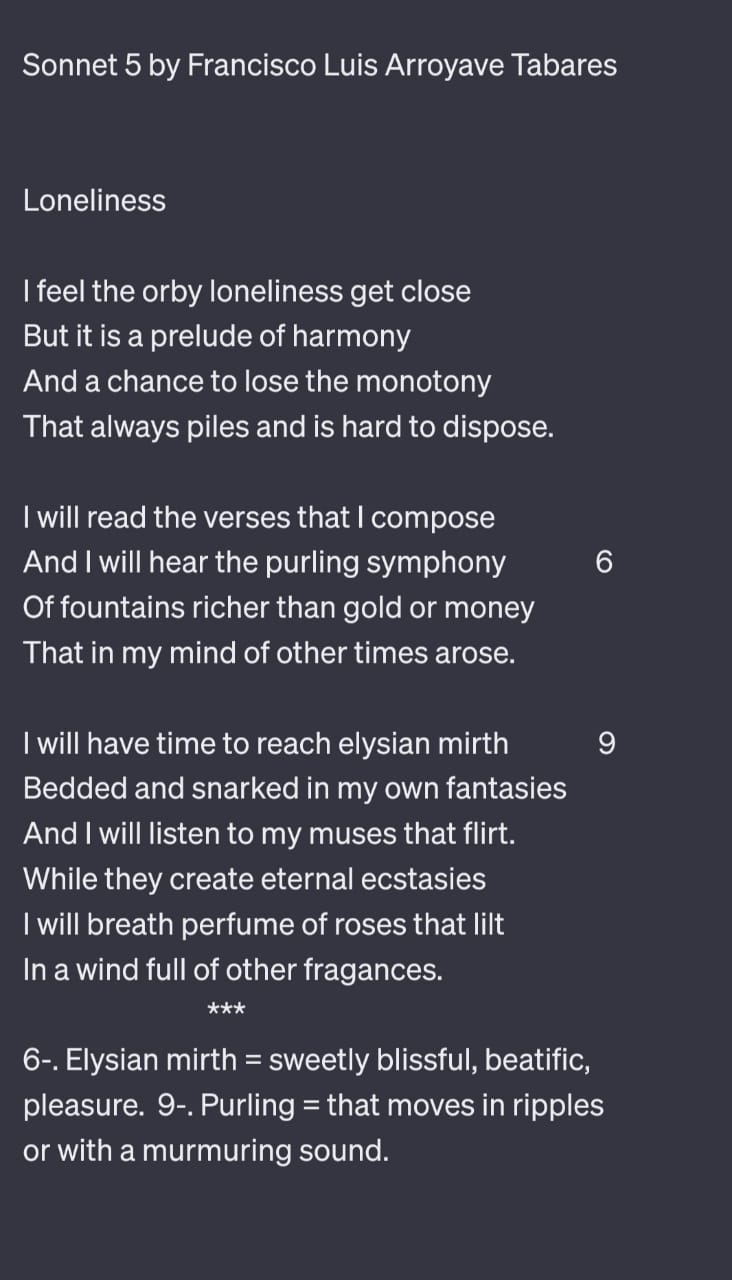
Sonnet 5 by Francisco Luis Arroyave Tabares, titled "Loneliness", is a beautiful exploration of solitude and the creative process.
Thematic Analysis
In the octave, the speaker describes his experience of loneliness. He perceives it as an orb that is getting closer, but he views this not as a negative experience, but as a prelude to harmony and a break from monotony. He plans to read his own verses and listen to the symphony of his thoughts, which he compares to the sound of fountains that are more valuable than gold or money.
In the sestet, the speaker expresses his desire to reach “Elysian mirth,” a term that refers to a state of perfect happiness. He plans to indulge in his own fantasies and listen to his muses. He anticipates creating eternal ecstasies and breathing in the perfume of roses carried by the wind, which is full of other fragrances.
Overall, the sonnet explores themes of solitude, introspection, and the joy of creativity. The speaker finds comfort and inspiration in his loneliness, using it as a catalyst for his creative process. The sonnet suggests that solitude can be a powerful tool for self-discovery and artistic expression. The use of rich, sensory language throughout the poem helps to convey these themes and create a vivid, immersive experience for the reader.
Structure and Rhyme Scheme
The sonnet follows the traditional Italian (Petrarchan) sonnet form in terms of its rhyme scheme.
The octave (the first eight lines) follows the rhyme scheme ABBA ABBA:
“I feel the orby loneliness get close” (A)
“But it is a prelude of harmony” (B)
“And a chance to lose the monotony” (B)
“That always piles and is hard to dispose.” (A)
“I will read the verses that I compose” (A)
“And I will hear the purling symphony” (B)
“Of fountains richer than gold or money” (B)
“That in my mind of other times arose.” (A)
The sestet (the last six lines) follows the rhyme scheme CDC DCD:
“I will have time to reach elysian mirth” (C)
“Bedded and snarked in my own fantasies” (D)
“And I will listen to my muses that flirt.” (C)
“While they create eternal ecstasies” (D)
“I will breath perfume of roses that lilt” (C)
“In a wind full of other fragances.” (D)
This rhyme scheme is typical of the Petrarchan sonnet form, which was popularized by the Italian poet Petrarch. The specific pattern of rhymes helps to create a sense of unity and coherence in the poem, while also allowing for a shift in tone or focus between the octave and the sestet. This shift is often referred to as the ‘volta’ or ‘turn’, and is a key feature of the sonnet form. In this poem, the volta occurs between the eighth and ninth lines, marking a shift from the description of solitude in the octave to the exploration of the pleasures of solitude in the sestet.
Analysis of Aspects
The sonnet by Francisco Luis Arroyave Tabares is a rich exploration of solitude, creativity, and sensory pleasure. Here’s a detailed analysis:
Language: The language used in the sonnet is highly descriptive and evocative. The poet uses words like “orby loneliness,” “purling symphony,” and “elysian mirth,” which not only create vivid images but also convey the emotional depth of the speaker’s experience. The use of such language helps to create a sense of intimacy and immediacy, drawing the reader into the speaker’s inner world.
Imagery: The sonnet is filled with striking imagery. The “purling symphony” of fountains and the perfume of roses carried on the wind are particularly vivid images that engage the senses and create a rich sensory experience for the reader. These images serve to illustrate the speaker’s inner world and the profound pleasure they derive from their solitude.
Themes: The main themes of the sonnet are solitude, creativity, and sensory pleasure. The speaker embraces their solitude, seeing it as a chance to break free from monotony and engage with their own creative process. They find great richness and value in their own thoughts and fantasies, and take deep pleasure in their sensory experiences.
Meter: The sonnet follows the traditional meter of a Petrarchan sonnet, which is iambic pentameter. This means that each line consists of five metrical feet, each made up of one short (or unstressed) syllable followed by one long (or stressed) syllable. This rhythm gives the poem a musical quality and helps to create a sense of flow and movement.
Overall, the sonnet is a beautiful and evocative exploration of the pleasures of solitude. The speaker finds great richness and value in their own inner world, and the poem invites the reader to share in this experience. The use of vivid imagery, evocative language, and traditional meter all contribute to the poem’s emotional depth and sensory richness. It’s a wonderful example of how solitude can be a source of creativity, introspection, and profound pleasure.
(GPT4)
Syllable count for each line.
Loneliness


10 I feel the orby loneliness get close
10 But it is a prelude of harmony
10 And a chance to lose the monotony
10 That always piles and is hard to dispose.

10 I will read the verses that I compose
10 And I will hear the purling symphony
10 Of fountains richer than gold or money
10 That in my mind of other times arose.

10 I will have time to reach elysian mirth
10 Bedded and snarked in my own fantasies
11 And I will listen to my muses that flirt.
10 While they create eternal ecstasies
10 I will breath perfume of roses that lilt
10 In a wind full of other fragances.
                        ***
Sonnets For The Twenty First Century And A Circadian Musical Written By Francisco Luis Arroyave Tabares (1984-1987)
Analyzed by GPT4; Image by leonardo.ai;
First published on Nostr Protocol by franciscoarroyavet@nostrplebs.com
 Loneliness