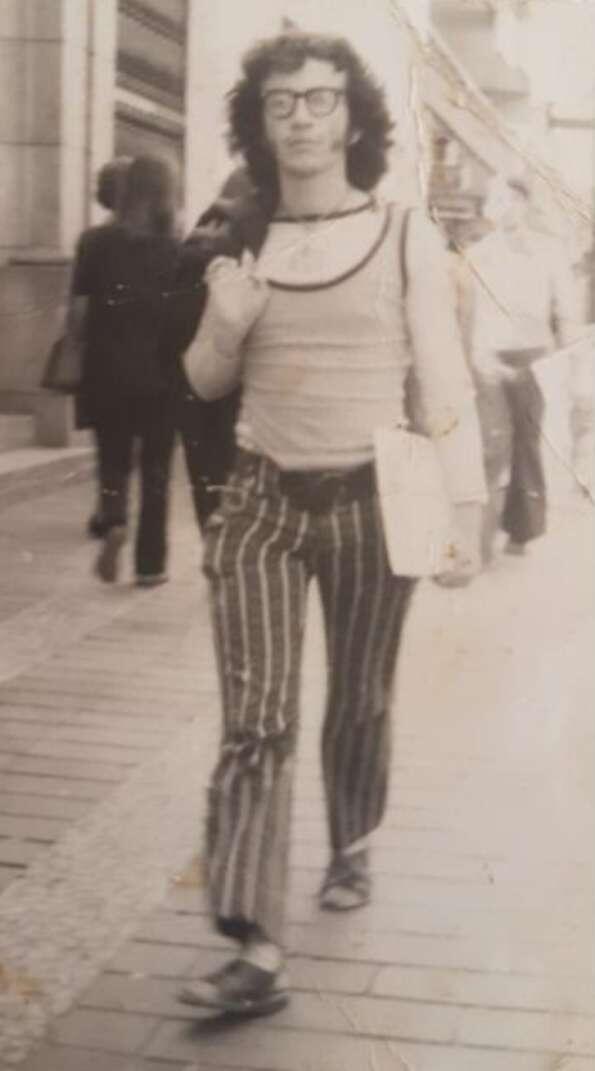
Posthumous work of the Colombian poet born in Don Matias on January 20, 1948.
Welcome to this blog dedicated to the Posthumous work of the Colombian poet Francisco Luis Arroyave Tabares (my father), born in Don Matias on January 20, 1948-2010. Where I will be publishing each of the 175 sonnets from his unpublished collection 'Sonnets For The Twenty-First Century And A Circadian Musical (1984-1987).' Analyzed with GPT4 artificial intelligence and illustrated with AI tools... I hope you enjoy this garden of words snatched from the solitude of a locked room.
Likewise, any enthusiast of the sonnet form is invited to conduct their personal studies of Arroyave Tabares' work, as it is a collection that, although registered since 1989, has not yet been published.
Frank Duna
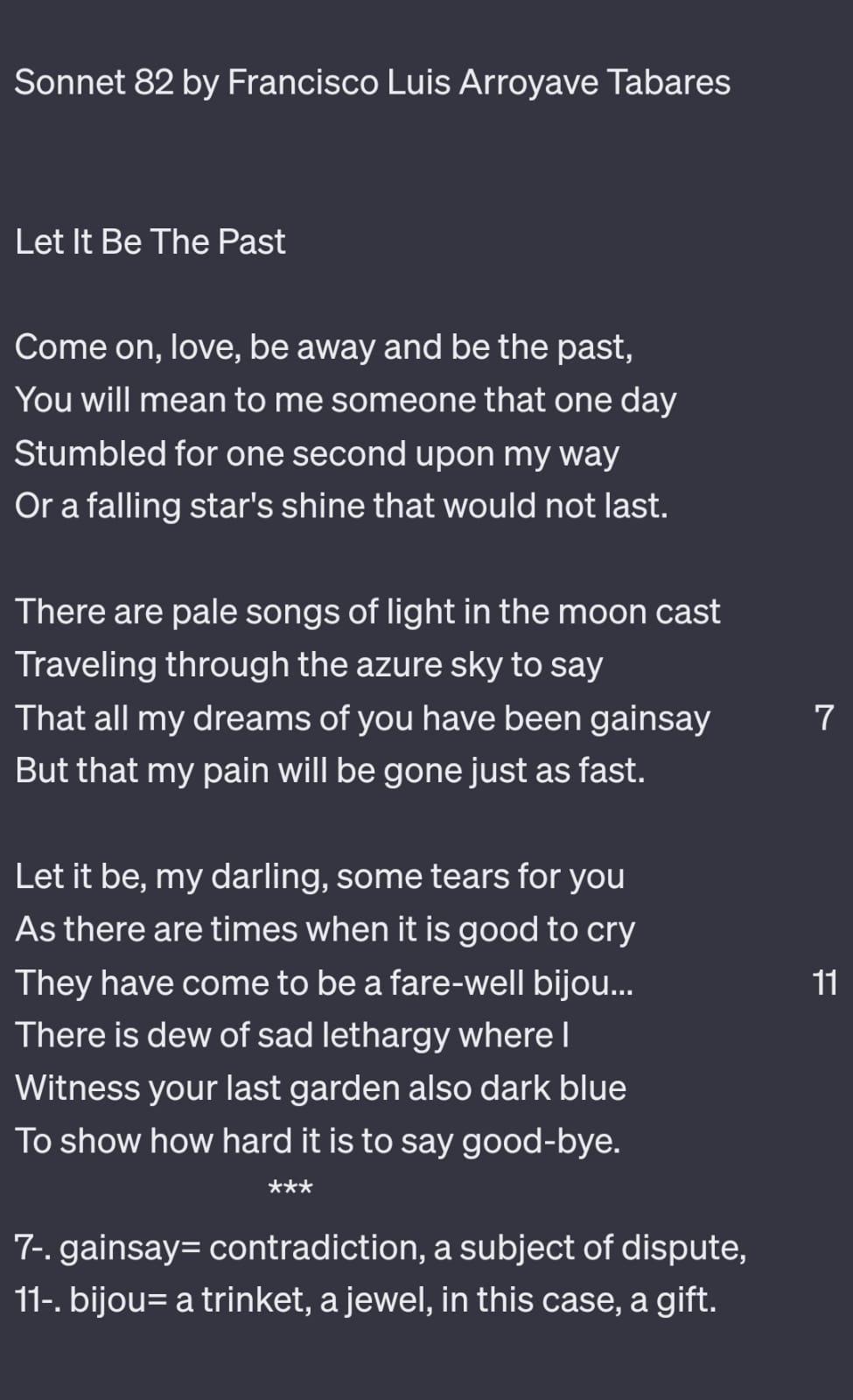
Analysis "Let It Be The Past"
Introduction
Sonnet 82 by Francisco Luis Arroyave Tabares, titled "Let It Be The Past," is a poignant exploration of love, loss, and the passage of time.
Thematic Analysis
Octave: The octave in this sonnet speaks of a past love. The speaker is asking their love to become a part of the past, comparing their fleeting encounter to a falling star’s shine that would not last. The speaker also mentions “pale songs of light in the moon cast,” which could symbolize memories or echoes of their love. The octave ends with the speaker acknowledging that their dreams of this love have been contradicted (gainsay), but they believe their pain will fade quickly.
Sextet: The sextet begins with the speaker suggesting that it’s okay to shed some tears for their love, as there are times when it’s good to cry. These tears are described as a farewell gift (bijou). The speaker then describes a scene of “dew of sad lethargy” where they witness their love’s last garden, which is also dark blue, symbolizing sadness or melancholy. The sonnet ends with the speaker expressing how hard it is to say goodbye.
Overall, this sonnet beautifully captures the bittersweet feelings associated with letting go of a past love. The speaker acknowledges their pain but also recognizes the importance of moving on. The use of celestial imagery (falling star, moonlight, azure sky) adds a layer of ethereal beauty to the emotional landscape of the poem.
Rhyme Scheme
let’s analyze the rhyme scheme of the sonnet (ABBA ABBA CDC DCD).
In a sonnet, the letters represent the end rhyme of each line. If two or more lines have the same letter, that means they rhyme with each other. Here’s how it works in this sonnet:
Octave:
Line 1 (A): Come on, love, be away and be the past,
Line 2 (B): You will mean to me someone that one day
Line 3 (B): Stumbled for one second upon my way
Line 4 (A): Or a falling star’s shine that would not last.
Line 5 (A): There are pale songs of light in the moon cast
Line 6 (B): Traveling through the azure sky to say
Line 7 (B): That all my dreams of you have been gainsay
Line 8 (A): But that my pain will be gone just as fast.
Sextet:
Line 9 (C): Let it be, my darling, some tears for you
Line 10 (D): As there are times when it is good to cry
Line 11 (C): They have come to be a fare-well bijou…
Line 12 (D): There is dew of sad lethargy where I
Line 13 ©: Witness your last garden also dark blue
Line 14 (D): To show how hard it is to say good-bye.
As you can see, the lines that share the same letter rhyme with each other. This specific rhyme scheme is a variant of the Petrarchan sonnet form, which typically has an ABBA ABBA octave, but can vary in the sextet. The CDC DCD rhyme scheme in the sextet provides a pleasing musicality and helps to emphasize the shift in tone from the octave. It’s a beautiful and complex form that adds depth to the poem.
Additional Aspects
Let’s delve deeper into the sonnet’s language, imagery, themes, meter, and overall impact.
Language: The language used in the sonnet is rich and evocative. The poet uses words like “pale songs of light,” “dew of sad lethargy,” and “last garden also dark blue” to create vivid images in the reader’s mind. The use of words like “gainsay” and “bijou” add a layer of complexity and sophistication to the poem. ** Imagery:** The sonnet is filled with beautiful and poignant imagery. The “falling star’s shine,” “pale songs of light in the moon cast,” and “dew of sad lethargy” are all images that evoke a sense of melancholy and longing. The “last garden also dark blue” is a powerful image that symbolizes the end of a relationship.
Themes: The main themes of the sonnet are love, loss, and the passage of time. The speaker is grappling with the end of a relationship and the pain that comes with it. However, there’s also a sense of acceptance and the hope of healing over time.
Meter: The sonnet follows the traditional iambic pentameter, which is a line of verse with five metrical feet, each consisting of one short (or unstressed) syllable followed by one long (or stressed) syllable. This gives the poem a rhythmic flow and musicality.
Overall: the sonnet is a poignant exploration of the pain of lost love. The use of sophisticated language, evocative imagery, and traditional meter all contribute to the sonnet’s emotional depth and beauty. The poet skillfully navigates the themes of love and loss, leaving the reader with a sense of melancholy and a deep appreciation for the fleeting nature of love. It’s a beautiful piece of poetry that resonates with anyone who has experienced the pain of saying goodbye.
(GPT4)
Syllable count for each line.
Let It Be The Past

10 Come on, love, be away and be the past,
10 You will mean to me someone that one day
10 Stumbled for one second upon my way
10 Or a falling star's shine that would not last.

10 There are pale songs of light in the moon cast
10 Traveling through the azure sky to say
10 That all my dreams of you have been gainsay
10 But that my pain will be gone just as fast.

10 Let it be, my darling, some tears for you
10 As there are times when it is good to cry
10 They have come to be a fare-well bijou...
10 There is dew of sad lethargy where I
10 Witness your last garden also dark blue
10 To show how hard it is to say good-bye.
                         ***
Sonnets For The Twenty First Century And A Circadian Musical Written By Francisco Luis Arroyave Tabares (1984-1987)
Analyzed by GPT4; Image by Frank Duna;
First published on Nostr Protocol by franciscoarroyavet@nostrplebs.com
 *Let It Be The Past