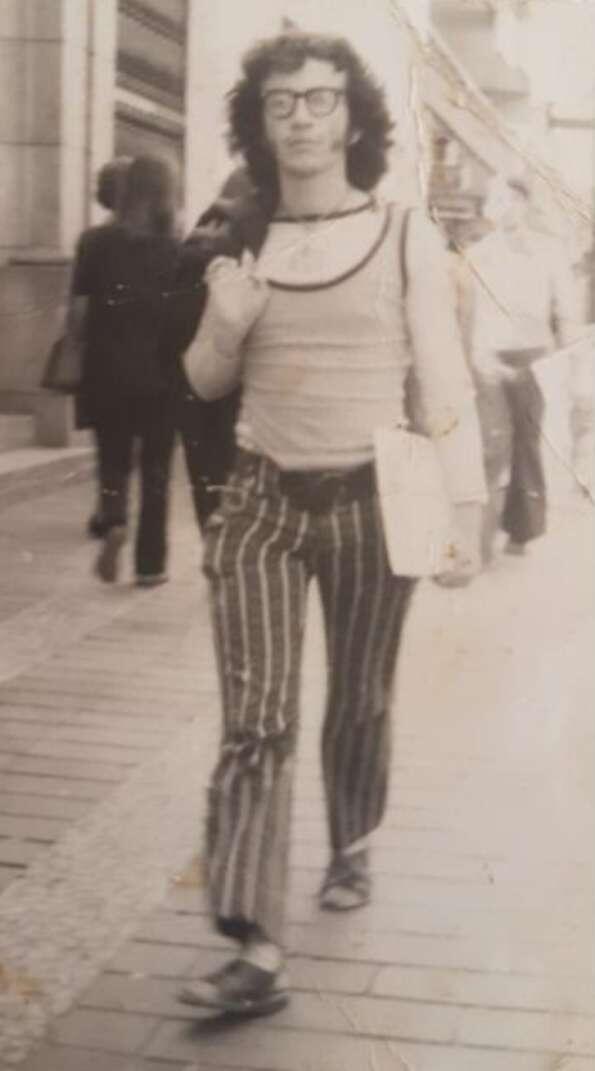
Posthumous work of the Colombian poet born in Don Matias on January 20, 1948.
Welcome to this blog dedicated to the Posthumous work of the Colombian poet Francisco Luis Arroyave Tabares (my father), born in Don Matias on January 20, 1948-2010. Where I will be publishing each of the 175 sonnets from his npublished collection 'Sonnets For The Twenty-First Century And A Circadian Musical (1984-1987).' Analyzed with GPT4 artificial intelligence and illustrated with AI tools... I hope you enjoy this garden of words snatched from the solitude of a locked room.
Likewise, any enthusiast of the sonnet form is invited to conduct their personal studies of Arroyave Tabares' work, as it is a collection that, although registered since 1989, has not yet been published.
Frank Duna
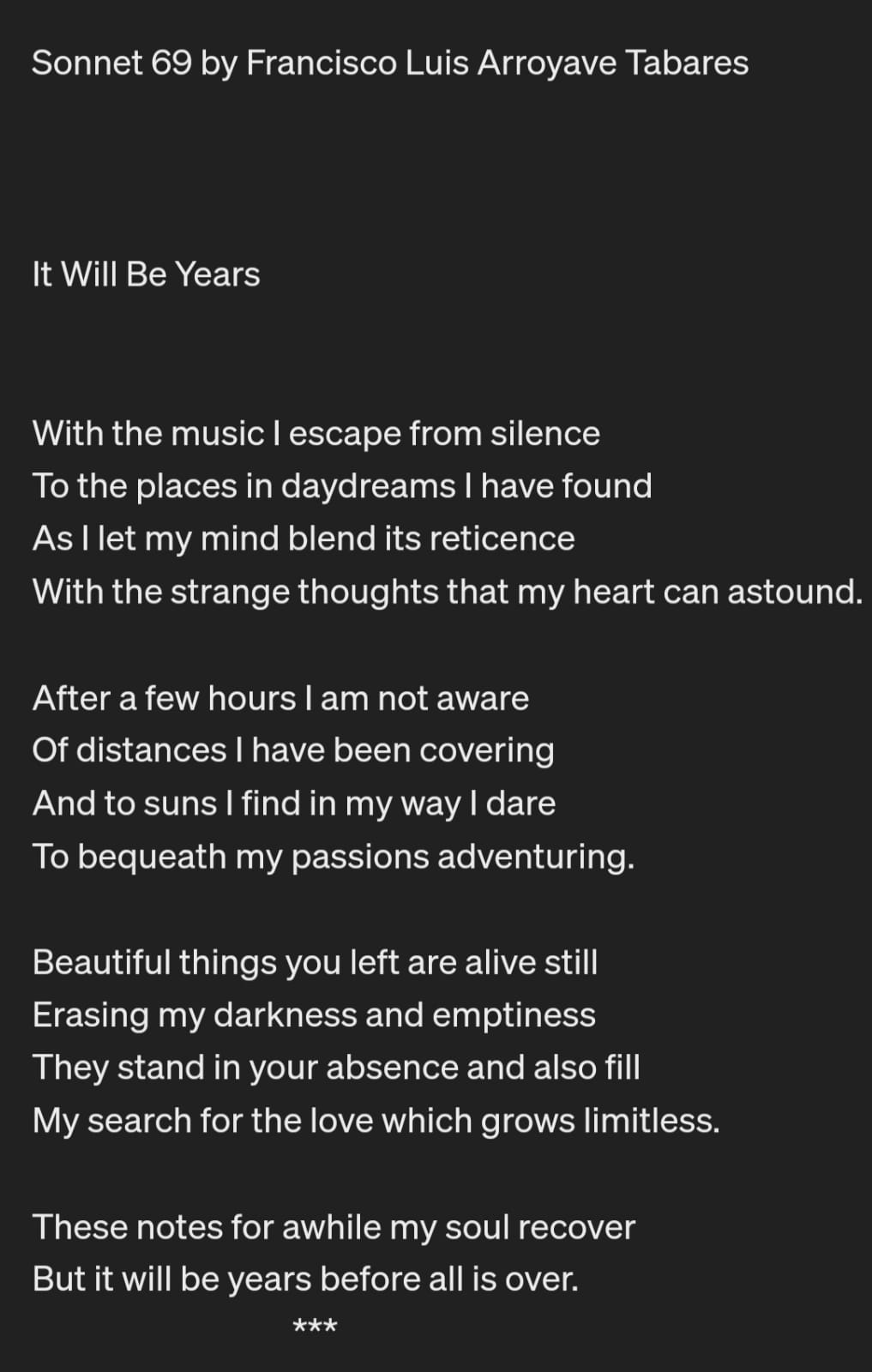
Analysis "It Will Be Years"
Introduction
"Francisco Luis Arroyave Tabares - It Will Be Years" is a sonnet that explores themes of escapism, introspection, and the healing power of music.
Thematic Analysis
First Quatrain: The first quatrain introduces the theme of the poem, which is the speaker’s escape from silence through music. The speaker describes how music allows them to explore their daydreams and blend their reticence with the strange thoughts that their heart can astound.
Second Quatrain: In the second quatrain, the speaker continues to describe their journey through music. They express their unawareness of the distances they have covered and their daringness to bequeath their passions to the suns they encounter along the way.
Third Quatrain: The third quatrain shifts the focus to the beautiful things left by someone who is absent. These things erase the speaker’s darkness and emptiness and fill their search for limitless love.
Couplet: The couplet concludes the poem with a reflection on the temporary recovery of the speaker’s soul through music, but it also acknowledges that it will be years before everything is over.
Overall, the sonnet explores themes of music, daydreams, passion, absence, love, and recovery. It beautifully captures the speaker’s emotional journey and their reliance on music as a form of escape and healing. The quatrains and the couplet work together to create a cohesive narrative that engages the reader and invites them to reflect on their own experiences and emotions.
Rhyme Scheme
The sonnet “It Will Be Years” by Francisco Luis Arroyave Tabares follows the Shakespearean sonnet rhyme scheme, which is ABAB CDCD EFEF GG. Let’s break it down:
First Quatrain (ABAB):
A: With the music I escape from silence
B: To the places in daydreams I have found
A: As I let my mind blend its reticence
B: With the strange thoughts that my heart can astound.
Second Quatrain (CDCD):
C: After a few hours I am not aware
D: Of distances I have been covering
C: And to suns I find in my way I dare
D: To bequeath my passions adventuring.
Third Quatrain (EFEF):
E: Beautiful things you left are alive still
F: Erasing my darkness and emptiness
E: They stand in your absence and also fill
F: My search for the love which grows limitless.
Couplet (GG):
G: These notes for awhile my soul recover
G: But it will be years before all is over.
In this sonnet, the end words of each line rhyme according to the pattern described above. This rhyme scheme is characteristic of English or Shakespearean sonnets and is used to create a specific rhythm and flow to the poem. The final couplet (GG) often serves as a conclusion or a summarizing thought. In this case, it reflects on the temporary recovery of the speaker’s soul through music and the long journey ahead before everything is over. This adds a poignant touch to the sonnet, enhancing its emotional depth.
Additional Aspects to Analyze
While we've covered the rhyme scheme and thematic elements of Francisco Luis Arroyave Tabares' sonnet "It Will Be Years," there are still several aspects that can be further analyzed, including its meter, imagery, and use of figurative language.
Language and Imagery: The language used in the sonnet is rich and evocative, creating vivid imagery that engages the reader’s senses and emotions. The poet uses metaphors such as “music I escape from silence” and “suns I find in my way” to convey complex emotions and experiences. The imagery of music and daydreams creates a dreamlike atmosphere that reflects the speaker’s inner world.
Themes: The main themes of the sonnet include music, escape, passion, absence, love, and recovery. Music is portrayed as a means of escape and a source of healing for the speaker. The theme of absence is explored through the beautiful things left by someone who is no longer present. The speaker’s search for limitless love and their journey towards recovery are also central themes of the poem.
Meter: The sonnet follows the iambic pentameter, which is a common meter in English poetry. Each line consists of five pairs of unstressed and stressed syllables, creating a rhythmic pattern that enhances the flow of the poem.
Overall, “It Will Be Years” is a beautifully crafted sonnet that explores deep emotional themes through the use of evocative language and imagery. The poet skillfully uses the structure of the sonnet and the rhythm of iambic pentameter to create a cohesive and engaging narrative. The poem invites the reader to reflect on their own experiences and emotions, making it a powerful and relatable piece of literature.
(GPT4)
Syllable count for each line
It Will Be Years


10 With the music I escape from silence
10 To the places in daydreams I have found
10 As I let my mind blend its reticence
10 With the strange thoughts that my heart can astound.

10 After a few hours I am not aware
10 Of distances I have been covering
10 And to suns I find in my way I dare
10 To bequeath my passions adventuring.

10 Beautiful things you left are alive still
10 Erasing my darkness and emptiness
10 They stand in your absence and also fill
10 My search for the love which grows limitless.

10 These notes for awhile my soul recover
10 But it will be years before all is over.
                                ***
Sonnets For The Twenty First Century And A Circadian Musical Written By Francisco Luis Arroyave Tabares (1984-1987)
Analyzed by GPT4; Image by leonardo.ai;
First published on Nostr Protocol by franciscoarroyavet@nostrplebs.com

It Will Be Years