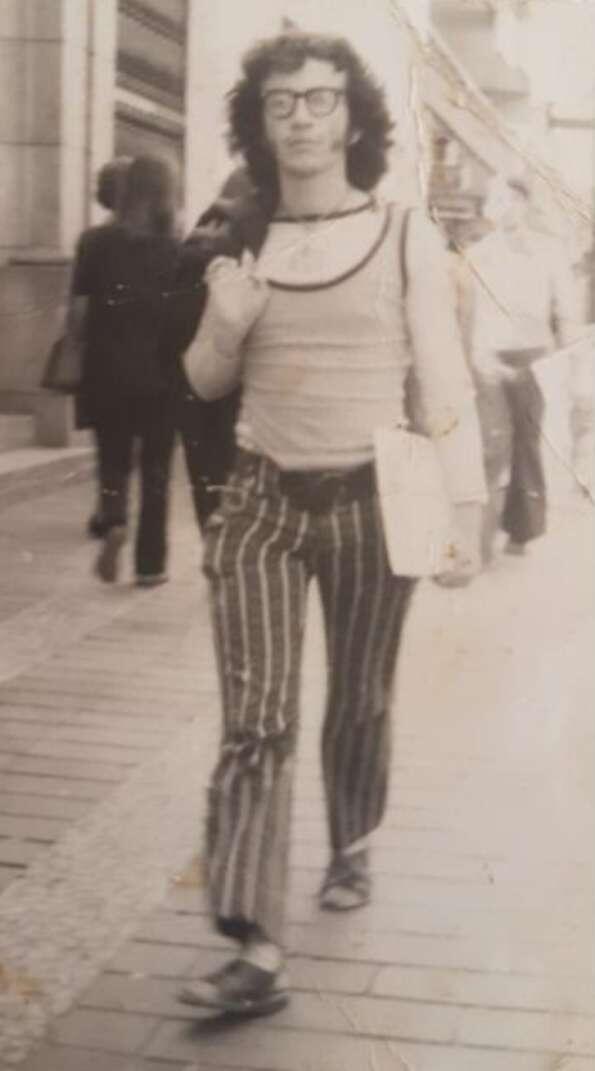
Posthumous work of the Colombian poet born in Don Matias on January 20, 1948.
Welcome to this blog dedicated to the Posthumous work of the Colombian poet Francisco Luis Arroyave Tabares born in Don Matias on January 20, 1948-2010. Where I will be publishing each of the 175 sonnets from his unpublished collection 'Sonnets For The Twenty First Century And A Circadian Musical (1984-1987).' Analyzed with GPT4 artificial intelligence and illustrated with AI tools... I hope you enjoy this garden of words snatched from the solitude of a locked room.
Likewise, any enthusiast of the sonnet form is invited to conduct their personal studies of Arroyave Tabares' work, as it is a collection that, although registered since 1989, has not yet been published.
Frank Duna
Sonnet 111 by Francisco Luis Arroyave Tabares
Tropical Nights


I can not forget the tropical night
Where the sea keeps the same temperature
As many creatures that have always light                            3
Roam through the depths, careless of the future.

When it offers its white bubbles in bloom
That beat against the patways and the rocks
The warm kiss of the water and the moon                           7
Continually covers people and flocks.

The footsteps of the light contour each shade                    9
And the waves have a wit of attraction                                 10
To mix with our tears that the stars make fade
While souls and hearts long for satisfaction.

After palms chide our dreams we lullaby
And with nature's passion hearts seem to fly.
                                     ***
 3-. light= either phosphorescent or bioluminescent
light  that  fishes  use under  water. 7-. water= this  is
water  in  the  form  of moisture.  9-. the  footsteps of
light= the  trend  or  feeling  of  light  to  the  eyes.
9-. shade= whatever  is  ghost  or  specterlike.
10-. wit= power.
Analysis "Tropical Nights"
Introduction
Sonnet 111 by Francisco Luis Arroyave Tabares is a beautiful poetic composition that reflects on tropical nights and the mystical ambiance of the sea.
Thematic Analysis
The sonnet vividly describes a tropical night where the sea’s temperature is akin to the creatures that inhabit it, who are depicted as being indifferent to the future.
The poem then moves on to describe the sea’s white bubbles that crash against pathways and rocks, symbolizing the relentless passage of time. The warm kiss of water and moonlight is a metaphor for nature’s nurturing and healing touch.
In the third quatrain, the poem speaks of light contouring each shade, possibly referring to how light reveals truth and dispels ignorance. The waves’ ‘wit of attraction’ could be a metaphor for the irresistible pull of nature and its ability to blend with our tears, making our sorrows seem insignificant.
The final couplet speaks of dreams being lulled by the rustling palms, and hearts taking flight with nature’s passion, suggesting a sense of peace and liberation found in nature.
The footnotes provided give further insight into the metaphors used in the poem. For instance, ‘light’ refers to the phosphorescent or bioluminescent light that fishes use underwater, ‘water’ refers to moisture, ‘the footsteps of light’ refers to the trend or feeling of light to the eyes, ‘shade’ refers to anything ghost or specter-like, and ‘wit’ refers to power.
Overall, this sonnet beautifully encapsulates the tranquility and healing power of nature, and how it can stir deep emotions within us.
Rhyme Scheme
The sonnet follows the traditional English (or Shakespearean) sonnet form, which consists of three quatrains (four-line stanzas) and a final rhymed couplet. The rhyme scheme is typically ABAB CDCD EFEF GG.
Let’s analyze the rhyme scheme of Sonnet 111:
Quatrain 1:

Line 1: night (A)
Line 2: temperature (B)
Line 3: light (A)
Line 4: future (B)

Quatrain 2:

Line 5: bloom (C)
Line 6: rocks (D)
Line 7: moon (C)
Line 8: flocks (D)

Quatrain 3:

Line 9: shade (E)
Line 10: attraction (F)
Line 11: fade (E)
Line 12: satisfaction (F)

Couplet:

Line 13: lullaby (G)
Line 14: fly (G)
So, the rhyme scheme of this sonnet is ABAB CDCD EFEF GG, which is consistent with the structure of an English sonnet. This structure allows for a build-up of an argument or idea over the three quatrains, which is then succinctly resolved or summarized in the final couplet.
Additional Aspects to Analyze
Let’s delve deeper into the analysis of Sonnet 111 by Francisco Luis Arroyave Tabares.
Meter and Rhythm: The sonnet appears to follow the iambic pentameter, which is a common metrical form in traditional English poetry and verse drama. This means each line consists of five pairs of unstressed and stressed syllables.
Imagery and Symbolism: The sonnet is rich in imagery and symbolism. The “tropical night” and “sea” symbolize mystery and depth, while the “creatures that have always light” could symbolize hope and guidance. The “white bubbles in bloom” could symbolize fleeting moments or ephemeral beauty. The “warm kiss of the water and the moon” is a beautiful image symbolizing comfort and tranquility. The “footsteps of light contour each shade” could symbolize the revealing power of truth, while the “waves” could symbolize change or motion.
Tone and Mood: The tone of the poem is contemplative and serene, reflecting the poet’s deep reverence for nature. The mood is peaceful and introspective, inviting the reader to reflect on their own experiences with nature.
Theme: The overarching theme of the sonnet is the healing power of nature. It explores how nature’s beauty and tranquility can stir deep emotions within us, offering comfort and peace.
Use of Literary Devices: The sonnet employs several literary devices such as metaphor (“the warm kiss of the water and the moon”), personification (“palms chide our dreams”), and alliteration (“footsteps of the light”). These enhance the sensory experience of the poem, making it more vivid and engaging.
In conclusion, Sonnet 111 is a beautifully crafted poem that uses vivid imagery, symbolic language, and traditional sonnet form to convey a deep appreciation for nature’s beauty and healing power.
(GPT4)
Count the syllables of each line of the Sonnet
Tropical Nights


10 I can not forget the tropical night
10 Where the sea keeps the same temperature
10 As many creatures that have always light
10 Roam through the depths, careless of the future.

10 When it offers its white bubbles in bloom
10 That beat against the patways and the rocks
10 The warm kiss of the water and the moon
10 Continually covers people and flocks.

10 The footsteps of the light contour each shade
10 And the waves have a wit of attraction
10 To mix with our tears that the stars make fade
10 While souls and hearts long for satisfaction.

10 After palms chide our dreams we lullaby
10 And with nature's passion hearts seem to fly.
                          ***
Analyzed by GPT4 and www.howmanysyllables.com; Image by leonardo.ai;
First published on Nostr Protocol by franciscoarroyavet@nostrplebs.com
