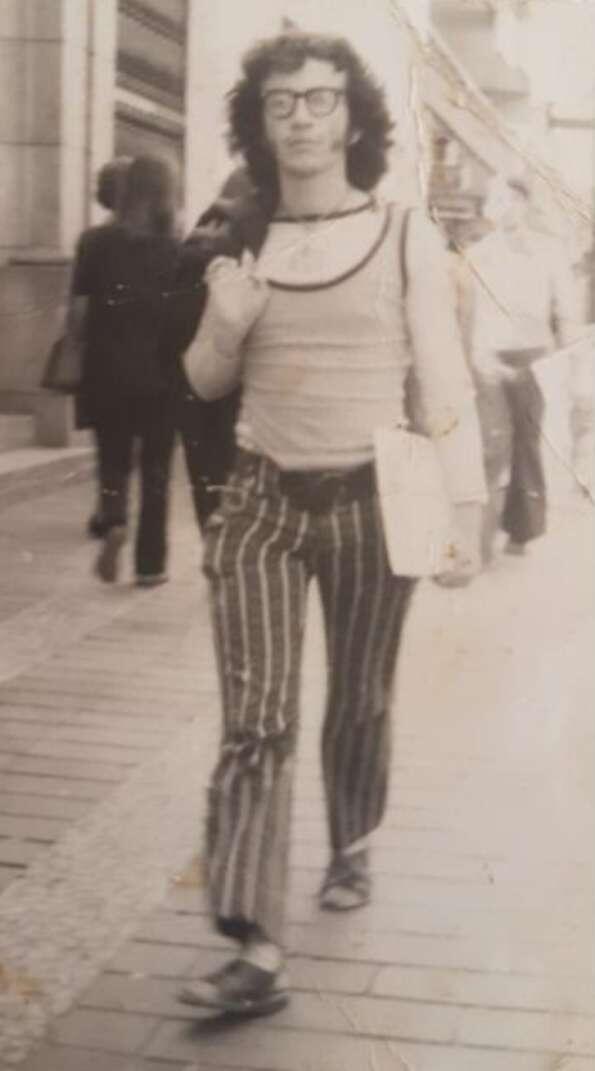
Posthumous work of the Colombian poet born in Don Matias on January 20, 1948.
Welcome to this blog dedicated to the Posthumous work of the Colombian poet Francisco Luis Arroyave Tabares (my father), born in Don Matias on January 20, 1948-2010. Where I will be publishing each of the 175 sonnets from his unpublished collection 'Sonnets For The Twenty-First Century And A Circadian Musical (1984-1987).' Analyzed with GPT4 artificial intelligence and illustrated with AI tools... I hope you enjoy this garden of words snatched from the solitude of a locked room.
Likewise, any enthusiast of the sonnet form is invited to conduct their personal studies of Arroyave Tabares' work, as it is a collection that, although registered since 1989, has not yet been published.
Frank Duna
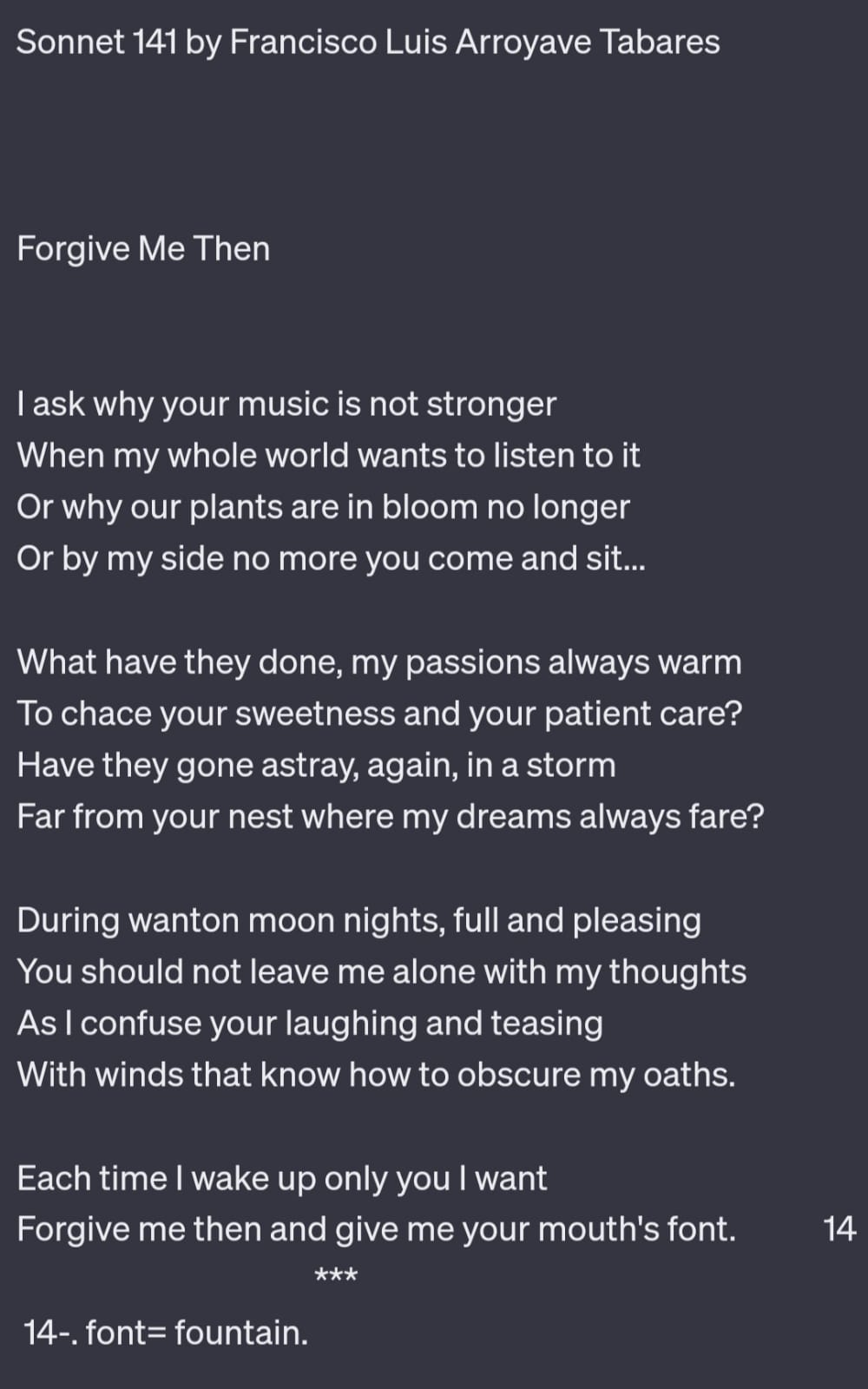
Analysis "Forgive Me Then"
Introduction
Sonnet 141 by Francisco Luis Arroyave Tabares, titled “Forgive Me Then,” is a beautiful piece of poetry that explores themes of love, longing, and forgiveness.
Thematic Analysis
First Quatrain (Lines 1-4): The speaker begins by questioning why the beloved’s music isn’t stronger when his entire world wants to listen to it. He also wonders why their plants no longer bloom and why the beloved no longer sits by his side. This could symbolize a sense of longing and a desire for the beloved’s presence.
Second Quatrain (Lines 5-8): The speaker asks what his passions, which are always warm, have done to chase away the beloved’s sweetness and patient care. He wonders if they have gone astray in a storm, far from the beloved’s nest where his dreams always fare. This could represent feelings of guilt or regret for actions that may have pushed the beloved away.
Third Quatrain (Lines 9-12): The speaker expresses his confusion during full moon nights, when he is left alone with his thoughts. He confuses the beloved’s laughter and teasing with winds that obscure his oaths. This could indicate a sense of confusion and uncertainty in the speaker’s emotions.
Couplet (Lines 13-14): The speaker ends the sonnet by expressing his desire for the beloved each time he wakes up. He asks for forgiveness and wishes for the beloved’s mouth’s font, which could be interpreted as a metaphor for a kiss or words of love.
This sonnet, like many others, follows the traditional structure of three quatrains and a concluding couplet, each exploring different aspects of the speaker’s emotions. The use of natural imagery (music, plants, storms, moon nights, and winds) adds a layer of depth to the speaker’s feelings, making the poem more vivid and relatable. The sonnet beautifully captures the complexities of love and the human emotions associated with it.
Structure and Rhyme Scheme
let’s analyze the rhyme scheme of Sonnet 141 by Francisco Luis Arroyave Tabares.
A sonnet traditionally consists of 14 lines and follows a specific rhyme scheme. In English literature, the two most common types are the Italian (Petrarchan) sonnet and the English (Shakespearean) sonnet, each with its own distinct rhyme scheme.
Looking at “Forgive Me Then,” it appears to follow the English (Shakespearean) sonnet structure, which typically has a rhyme scheme of ABABCDCDEFEFGG. Let’s break it down:
I ask why your music is not stronger (A) When my whole world wants to listen to it (B) Or why our plants are in bloom no longer (A) Or by my side no more you come and sit… (B) What have they done, my passions always warm (C) To chace your sweetness and your patient care? (D) Have they gone astray, again, in a storm (C) Far from your nest where my dreams always fare? (D) During wanton moon nights, full and pleasing (E) You should not leave me alone with my thoughts (F) As I confuse your laughing and teasing (E) With winds that know how to obscure my oaths. (F) Each time I wake up only you I want (G) Forgive me then and give me your mouth’s font. (G)
So, the rhyme scheme of this sonnet is ABABCDCDEFEFGG, which is characteristic of an English (Shakespearean) sonnet. The final couplet (GG) often presents a resolution or conclusion to the problem or question raised in the preceding quatrains. In this case, the speaker asks for forgiveness and expresses his longing for the beloved.
Please note that the analysis of rhyme can be subjective and interpretations can vary. This is just one possible interpretation of the sonnet’s rhyme scheme.
Analysis of Aspects
Let’s delve deeper into the language, imagery, themes, meter, and overall impact of Sonnet 141 by Francisco Luis Arroyave Tabares.
Language and Imagery: The sonnet uses rich and evocative language to convey the speaker’s emotions. The use of words like “music,” “plants,” “bloom,” “storm,” “nest,” “dreams,” “wanton moon nights,” and “winds” create vivid imagery that enhances the emotional depth of the poem. These images serve to symbolize various aspects of the speaker’s relationship with the beloved, such as longing, confusion, and desire.
Themes: The primary themes of the sonnet are love, longing, and forgiveness. The speaker expresses a deep longing for the beloved’s presence and music, a sense of guilt or regret for actions that may have pushed the beloved away, and a desire for forgiveness and reconciliation.
Meter: The sonnet appears to follow the traditional iambic pentameter, which is common in English sonnets. This means each line consists of five pairs of syllables, with the stress falling on the second syllable of each pair. However, there may be slight variations in some lines.
Overall Impact: The combination of evocative language, vivid imagery, relatable themes, and rhythmic meter creates a powerful emotional impact. The sonnet beautifully captures the complexities of love and the human emotions associated with it, making it relatable to many readers. The concluding couplet, where the speaker asks for forgiveness and expresses his longing for the beloved, leaves a lasting impression.
(GPT4)
Syllable count for each line.
Forgive Me Then


10 I ask why your music is not stronger
10 When my whole world wants to listen to it
10 Or why our plants are in bloom no longer
10 Or by my side no more you come and sit...

10 What have they done, my passions always warm
10 To chace your sweetness and your patient care?
10 Have they gone astray, again, in a storm
10 Far from your nest where my dreams always fare?

10 During wanton moon nights, full and pleasing
10 You should not leave me alone with my thoughts
10 As I confuse your laughing and teasing
10 With winds that know how to obscure my oaths.

10 Each time I wake up only you I want
10 Forgive me then and give me your mouth's font.
                            ***
Sonnets For The Twenty First Century And A Circadian Musical Written By Francisco Luis Arroyave Tabares (1984-1987)
Analyzed by GPT4; Image by leonardo.ai;
First published on Nostr Protocol by franciscoarroyavet@nostrplebs.com
 Forgive Me Then