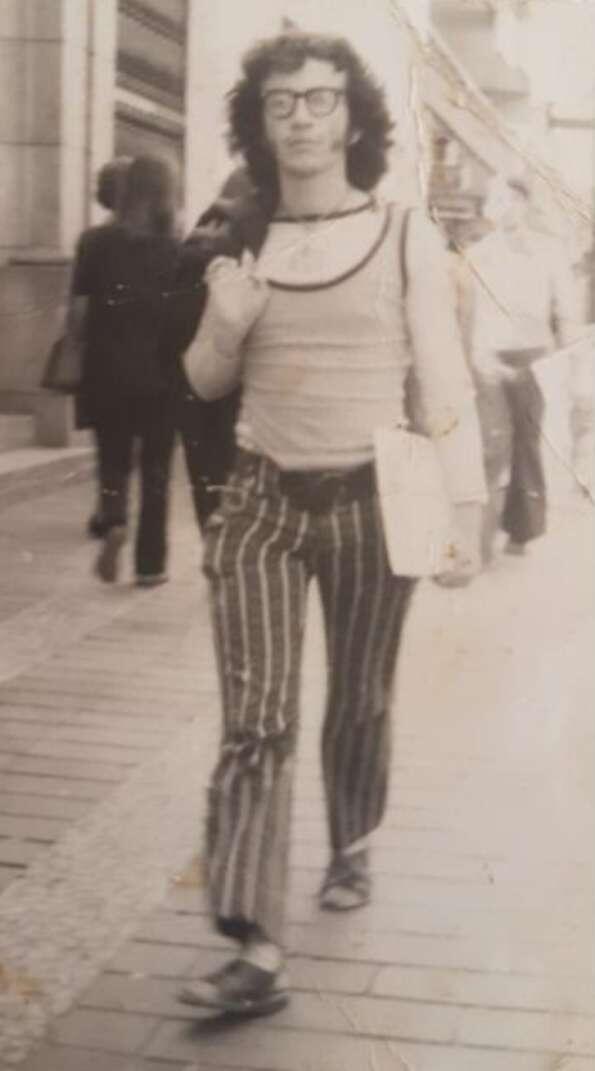
Posthumous work of the Colombian poet born in Don Matias on January 20, 1948.
Welcome to this blog dedicated to the Posthumous work of the Colombian poet Francisco Luis Arroyave Tabares (my father), born in Don Matias on January 20, 1948-2010. Where I will be publishing each of the 175 sonnets from his unpublished collection 'Sonnets For The Twenty-First Century And A Circadian Musical (1984-1987).' Analyzed with GPT4 artificial intelligence and illustrated with AI tools... I hope you enjoy this garden of words snatched from the solitude of a locked room.
Likewise, any enthusiast of the sonnet form is invited to conduct their personal studies of Arroyave Tabares' work, as it is a collection that, although registered since 1989, has not yet been published.
Frank Duna
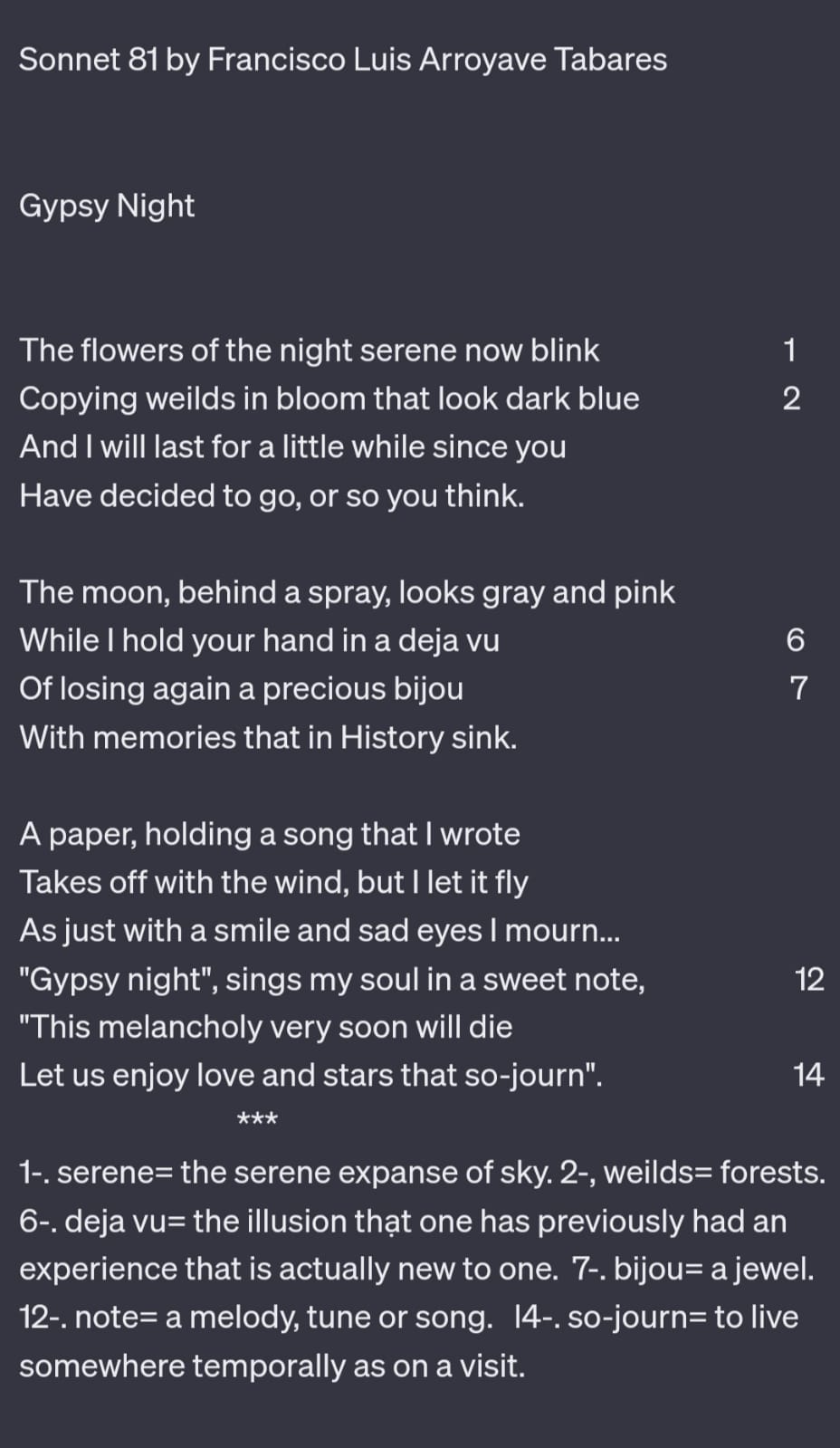
Analysis "Gypsy Nigtht?"
Introduction
Sonnet 81, "Gypsy Night," by Francisco Luis Arroyave Tabares is a beautiful piece of poetry that employs vivid imagery and metaphors to convey a sense of loss, longing, and the ephemeral nature of love and life.
Thematic Analysis
Octave (lines 1-8): The octave sets the scene and introduces the main theme of the poem. It describes a serene night where the flowers are blooming, and the moon is visible behind a spray. The speaker mentions holding someone’s hand, indicating a close relationship, but there’s a sense of loss and departure. The speaker seems to be dealing with the departure of a loved one, which is symbolized by the “precious bijou” that is lost again. The memories of this relationship are sinking into history, suggesting that it’s a thing of the past.
Sextet (lines 9-14): The sextet continues the narrative and introduces a change in the speaker’s emotional state. A paper with a song written by the speaker is carried away by the wind, symbolizing the release of emotions or letting go. Despite the sadness, the speaker finds solace in the beauty of the “Gypsy night” and the melody it sings. The speaker acknowledges the melancholy but believes it will soon pass. The final line encourages the enjoyment of love and the temporary nature of life (so-journ), suggesting a sense of acceptance and the ability to find beauty amidst sorrow.
Overall, the sonnet beautifully captures the complex emotions associated with love, loss, and acceptance. The octave and sextet work together to create a narrative that is both poignant and hopeful. The use of natural imagery and personal symbols adds depth to the emotional landscape of the poem.
Rhyme Scheme
let’s analyze the rhyme scheme of the sonnet “Gypsy Night” by Francisco Luis Arroyave Tabares. The rhyme scheme is ABBA ABBA CDE CDE, which is a common structure for a Petrarchan sonnet.
Octave (lines 1-8): The rhyme scheme for the octave is ABBA ABBA. Let’s see how it applies to the poem:
A: The flowers of the night serene now blink (1)
B: Copying weilds in bloom that look dark blue (2)
B: And I will last for a little while since you (3)
A: Have decided to go, or so you think. (4)

A: The moon, behind a spray, looks gray and pink (5)
B: While I hold your hand in a deja vu (6)
B: Of losing again a precious bijou (7)
A: With memories that in History sink. (8)
Sextet (lines 9-14): The rhyme scheme for the sextet is CDE CDE. Let’s see how it applies to the poem:
C: A paper, holding a song that I wrote (9)
D: Takes off with the wind, but I let it fly (10)
E: As just with a smile and sad eyes I mourn… (11)

C: “Gypsy night”, sings my soul in a sweet note, (12)
D: “This melancholy very soon will die (13)
E: Let us enjoy love and stars that so-journ”. (14)
As you can see, the poem follows the ABBA ABBA CDE CDE rhyme scheme perfectly. This structure contributes to the rhythm and flow of the poem, enhancing its musicality and emotional impact. It’s a testament to the poet’s skill and mastery of the sonnet form.
Additional Aspects
Let’s delve deeper into the analysis of “Gypsy Night” by Francisco Luis Arroyave Tabares:
Language: The language used in the poem is rich and evocative. The poet uses a mix of simple and complex words, creating a balance that makes the poem accessible yet profound. The use of words like “bijou”, “deja vu”, and “so-journ” adds a layer of sophistication to the poem. The poet also provides footnotes to explain some of the more complex terms, ensuring that the reader fully understands the intended meaning.
Imagery: The poem is filled with vivid imagery that appeals to the senses. The “flowers of the night serene”, the “moon behind a spray”, and the “paper holding a song” are all images that paint a vivid picture in the reader’s mind. This use of imagery enhances the emotional depth of the poem and helps the reader to connect with the speaker’s experiences.
Themes: The main themes of the poem are love, loss, and acceptance. The speaker expresses a deep sense of loss and longing for a loved one who has departed. However, there is also a theme of acceptance and moving on, as indicated by the speaker letting the paper fly away and the belief that the melancholy will soon pass.
Meter: The poem follows the meter typical of a Petrarchan sonnet, which is iambic pentameter. This means each line typically contains five pairs of syllables, with the stress falling on the second syllable of each pair. This gives the poem a rhythmic quality that enhances its musicality.
Overall: “Gypsy Night” is a beautifully crafted sonnet that explores complex emotions through rich language and vivid imagery. The poet skillfully uses the structure of the Petrarchan sonnet to convey a narrative of love, loss, and acceptance. The use of natural imagery and personal symbols adds depth to the emotional landscape of the poem, making it a poignant and moving piece of poetry. The meter and rhyme scheme contribute to the rhythm and flow of the poem, enhancing its musicality and emotional impact. It’s a testament to the poet’s skill and mastery of the sonnet form.
(GPT4)
Syllable count for each line.
Gypsy Night

10 The flowers of the night serene now blink
10 Copying weilds in bloom that look dark blue
11 And I will last for a little while since you
10 Have decided to go, or so you think.

10 The moon, behind a spray, looks gray and pink
10 While I hold your hand in a deja vu
10 Of losing again a precious bijou
10 With memories that in History sink.

10 A paper, holding a song that I wrote
10 Takes off with the wind, but I let it fly
10 As just with a smile and sad eyes I mourn...
10 "Gypsy night", sings my soul in a sweet note,
10 "This melancholy very soon will die
10 Let us enjoy love and stars that so-journ".
                                     ***
Sonnets For The Twenty First Century And A Circadian Musical Written By Francisco Luis Arroyave Tabares (1984-1987)
Analyzed by GPT4; Image by leonardo.ai;
First published on Nostr Protocol by franciscoarroyavet@nostrplebs.com
 Gypsy Night