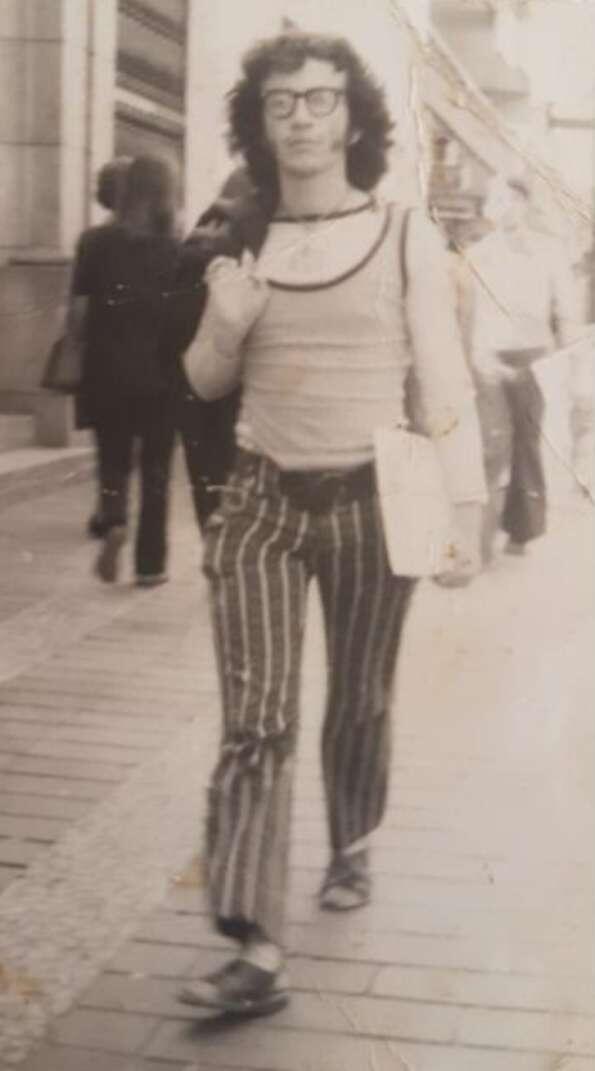
Posthumous work of the Colombian poet born in Don Matias on January 20, 1948.
Welcome to this blog dedicated to the Posthumous work of the Colombian poet Francisco Luis Arroyave Tabares (my father), born in Don Matias on January 20, 1948-2010. Where I will be publishing each of the 175 sonnets from his npublished collection 'Sonnets For The Twenty-First Century And A Circadian Musical (1984-1987).' Analyzed with GPT4 artificial intelligence and illustrated with AI tools... I hope you enjoy this garden of words snatched from the solitude of a locked room.
Likewise, any enthusiast of the sonnet form is invited to conduct their personal studies of Arroyave Tabares' work, as it is a collection that, although registered since 1989, has not yet been published.
Frank Duna
Analisis "Please Do Not Let Me Know"
Introduction
Sonnet 77 by Francisco Luis Arroyave Tabares, titled "Please Do Not Let Me Know," is a poignant exploration of love, vulnerability, and the fear of loss.
Thematic Analysis:
The first quatrain introduces the speaker's plea to his beloved: not to reveal if her love for him is false. This suggests a deep fear of losing the love he has come to depend on, even if it's not genuine. The dance metaphor used here ("my wounded heart keeps dancing the waltz") implies a sense of joy and rhythm that the speaker associates with his love, despite the potential pain it might cause him.
In the second quatrain, the speaker acknowledges the possibility of his beloved leaving him ("It does not matter if you left the floor"). The "magic wings" could symbolize the freedom and independence of his beloved, while the "pleasing moon" might represent the romantic love that doesn't always bring happiness to everyone.
The third quatrain uses nature imagery to further illustrate the speaker's fear and vulnerability. The deer, happy in its forest, becomes prey, and the proud tree is struck by lightning. These images serve as metaphors for the speaker's fear of sudden loss and devastation in love.
The concluding couplet brings the focus back to the beloved's smile, which the speaker cherishes above all. The phrase "forgetfully you accept my kiss" suggests a fear of being forgotten or overlooked, yet the speaker still finds solace in these moments of intimacy.
Overall, this sonnet is a heartfelt exploration of the complexities of love, the fear of loss, and the vulnerability that comes with deep emotional attachment. It highlights the speaker's willingness to live in blissful ignorance rather than face the potential pain of unrequited or lost love..
Rhyme Scheme
Sure, let’s analyze the rhyme scheme of this sonnet. A sonnet traditionally follows a specific rhyme scheme that helps to give it structure. Here’s how the rhyme scheme works in this sonnet:
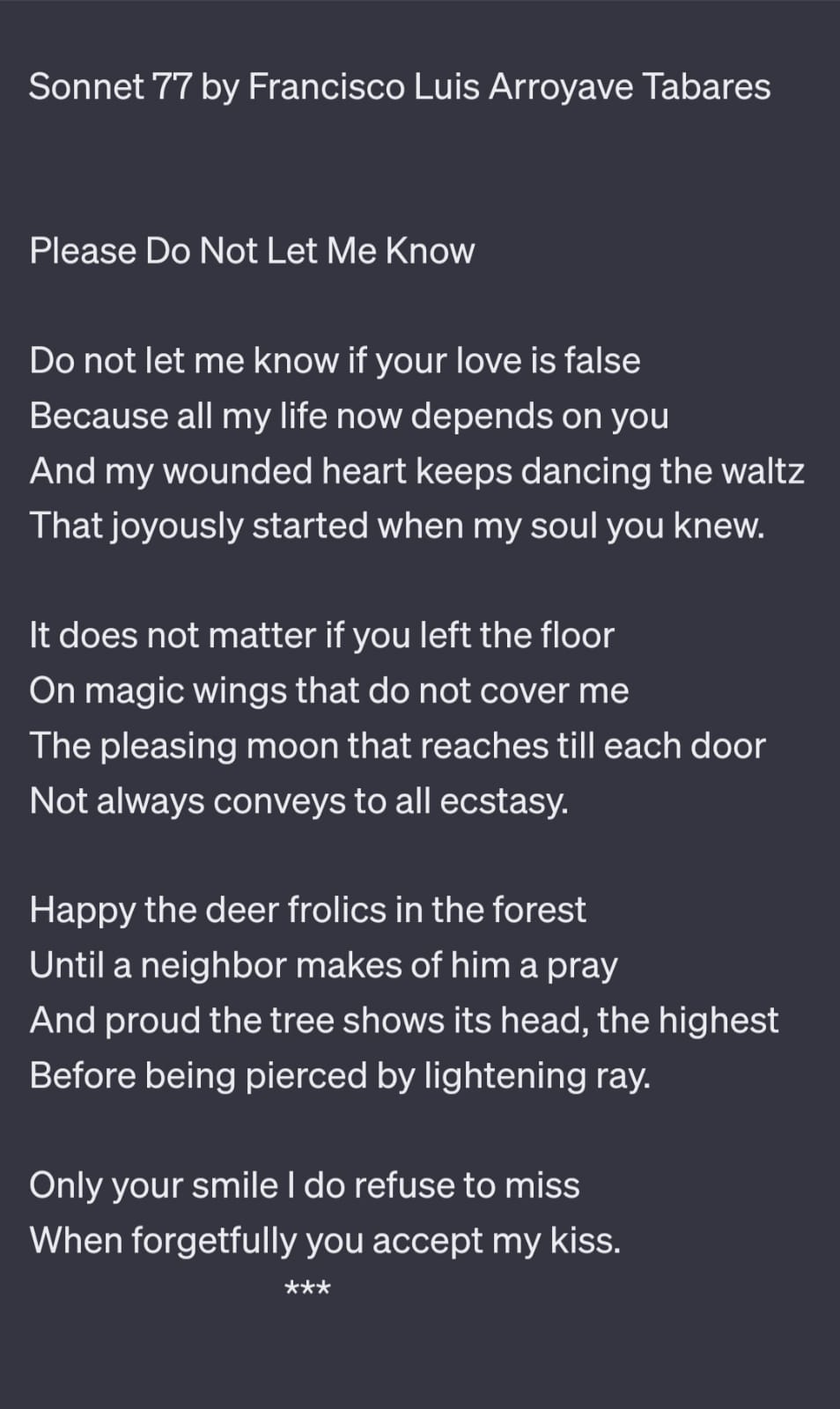
A: Do not let me know if your love is false
B: Because all my life now depends on you
A: And my wounded heart keeps dancing the waltz
B: That joyously started when my soul you knew.

C: It does not matter if you left the floor
D: On magic wings that do not cover me
C: The pleasing moon that reaches till each door
D: Not always conveys to all ecstasy.

E: Happy the deer frolics in the forest
F: Until a neighbor makes of him a pray
E: And proud the tree shows its head, the highest
F: Before being pierced by lightening ray.

G: Only your smile I do refuse to miss
G: When forgetfully you accept my kiss.
The rhyme scheme of this sonnet is ABAB CDCD EFEF GG. This is a typical rhyme scheme for an English (or Shakespearean) sonnet. Each letter represents the end rhyme sound of each line. So, lines with the same letter rhyme with each other. For example, “false” (A) rhymes with “waltz” (A), “you” (B) rhymes with “knew” (B), and so on. The final two lines (GG) form a rhymed couplet, which often provides a summary or a conclusion to the sonnet. In this case, the couplet emphasizes the speaker’s longing for the beloved’s smile and kiss.
This detailed rhyme scheme contributes to the musicality and rhythm of the sonnet, enhancing its emotional impact. It also provides a structure that guides the development of the sonnet’s themes and ideas.
Additional Aspects to Analyze
let’s delve deeper into the sonnet’s use of language, imagery, themes, meter, and overall impact:
Language: The language used in the sonnet is simple yet profound. The poet uses everyday words to express complex emotions, making the poem accessible while still conveying depth of feeling. The use of metaphors and similes adds layers of meaning to the text.
Imagery: The sonnet is rich in imagery, which serves to evoke emotions and create a vivid picture in the reader’s mind. For example, the “wounded heart dancing the waltz” is a powerful image that conveys the speaker’s joy mixed with pain. The “pleasing moon that reaches till each door” symbolizes the pervasive nature of love. The images of the deer and the tree in the third quatrain depict the transient nature of happiness and pride.
Themes: The main themes of the sonnet are love, longing, and the fleeting nature of happiness. The speaker expresses his deep affection for the beloved and his longing for her smile and kiss. He also acknowledges the transient nature of happiness, as symbolized by the deer and the tree.
Meter: The sonnet follows the traditional iambic pentameter, which is a meter in poetry consisting of five pairs of unstressed and stressed syllables. This gives the sonnet a rhythmic flow and musicality.
Overall, the sonnet is a poignant exploration of love and longing. The use of simple language, vivid imagery, and traditional meter makes it a compelling piece of poetry. The themes are universal and relatable, making the sonnet resonate with readers across different times and cultures. The final couplet leaves a lasting impact, encapsulating the speaker’s longing for the beloved’s smile and kiss.
(GPT4)
Syllable count for each line.
Please Do Not Let Me Know


10 Do not let me know if your love is false
10 Because all my life now depends on you
10 And my wounded heart keeps dancing the waltz
11 That joyously started when my soul you knew
.
10 It does not matter if you left the floor
10 On magic wings that do not cover me
10 The pleasing moon that reaches till each door
10 Not always conveys to all ecstasy
.
10 Happy the deer frolics in the forest
10 Until a neighbor makes of him a pray
10 And proud the tree shows its head, the highest
10 Before being pierced by lightening ray.

10 Only your smile I do refuse to miss
10 When forgetfully you accept my kiss.
Sonnets For The Twenty First Century And A Circadian Musical Written By Francisco Luis Arroyave Tabares (1984-1987)
Analyzed by GPT4; Image leonardo.ai; First published on Nostr Protocol by franciscoarroyavet@nostrplebs.com
 Please Do Not Let Me Know