
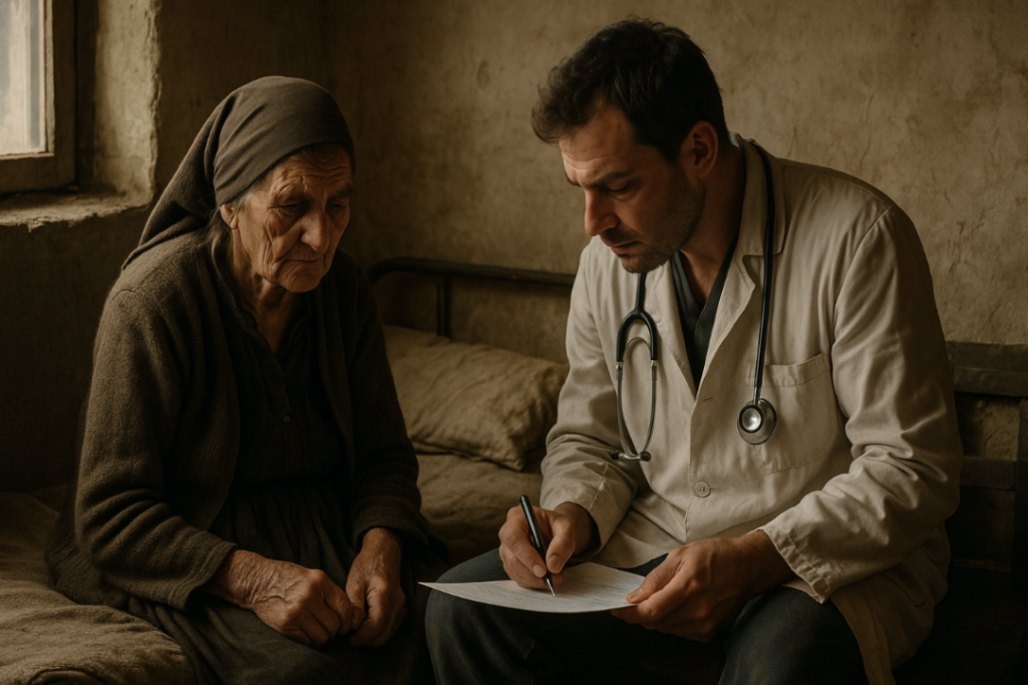
Diagnostics are Belief Systems
A diagnosis is not truth—it is branding. It is a label glued to symptoms, a shorthand for billing codes and drug regimens. The body does not speak in Latin abstractions. The body speaks in pain, heat, fatigue, and adaptation. To rename these signals as “disorders” is not medicine—it is marketing.
The Theater of Naming
Medical language gives the illusion of mastery. Complex names, acronyms, and classifications create a hierarchy where doctors appear as priests of hidden knowledge. The patient kneels under a diagnosis, convinced it is revelation. Yet the name explains nothing—it only restates the obvious with borrowed Greek.
A cough becomes “bronchitis.” Fatigue becomes “chronic fatigue syndrome.” Sadness becomes “major depressive disorder.” Each diagnosis is a mirror reflecting itself. It adds syllables but no substance. It rebrands the symptom as a condition, then sells treatment as salvation.
A renamed symptom is still a symptom.
Codes Over Causes
The diagnostic system was not built to heal—it was built to code. Insurance requires categories. Pharma requires targets. Hospitals require standardized scripts for profit. The body, infinitely complex, is forced into square boxes for bureaucratic convenience.
The absurdity is open. Two patients with identical causes can be split into different diagnoses based on arbitrary thresholds. The same patient can carry multiple labels for the same underlying terrain collapse. None of it touches cause. None of it restores sovereignty.
When cause is ignored, diagnosis is theater.
Belief as Control
Diagnosis is belief, not biology. Once a label is accepted, identity shifts. The patient becomes their disorder. Entire communities form around diagnostic categories, defending them as personal truths. Pharma then builds lifelong customers, not temporary patients.
The belief is enforced with authority. To question a diagnosis is to question the white coat, the institution, the consensus. Yet consensus is not reality. Consensus is marketing with better stationery. When the body adapts, shifts, or heals, the label often remains—a scar of words tattooed into identity.
A diagnosis that cannot leave is not medicine—it is a curse.
The Ancestral Counter
Ancestral man did not need a lexicon of disease. He read terrain. He knew that fatigue followed starvation, that infection followed wounds, that weakness followed poor soil. He saw cause in the field, not labels in a book. His “diagnosis” was environment, and his cure was restoration.
The ancestral way did not worship names. It read signals, responded with food, rest, ritual, and repair. The map was simple: the body reacts to inputs. No cult of acronyms was needed. The cause lived in the soil, water, and hearth.
The soil was diagnosis enough.
Closing the Ledger
Modern diagnostics are not carved truth. They are mutable scripts, revised every decade by committees, shifted by lobbyists, rewritten to fit drugs that already exist. The ledger of codes grows thicker, yet the bodies grow weaker. The system diagnoses endlessly but heals nothing.
What is left is clarity. The body adapts. The body signals. The name does not matter. The input does. A diagnosis is a tax receipt, not an explanation.
The final cut: symptoms are not disorders, and labels are not causes.