
You've likely heard the comment, "Bitcoin is just too expensive." While this might sound intuitive at first, as Bitcoin’s price is now way above the magic $ 100,000 mark, it might not be a helpful argument. Let's delve into the human biases that influence this perception and examine the reality behind this statement.
Buyer's Perspective
For many potential investors, the high dollar price of Bitcoin can be daunting. This is often due to the "anchoring bias," where individuals fixate on the initial price they encounter: "When I first saw Bitcoin's price, it seemed like an impossible investment." When you look back where Bitcoin came from, it can feel like standing at the edge of a cliff. How can it go higher than where we already are? Seems impossible. However, understanding Bitcoin's unique supply and demand properties can shift this perspective.
 ## Hard Money Facts
Bitcoin's fixed supply of 21 million coins is a crucial aspect of its value proposition. This scarcity is a fundamental driver of its price, yet it often contributes to the misconception that Bitcoin is overvalued simply because it is expensive. “Bitcoin's scarcity is what makes it valuable, just like gold.” This is close, but not quite true.
Supply Constraints of Gold
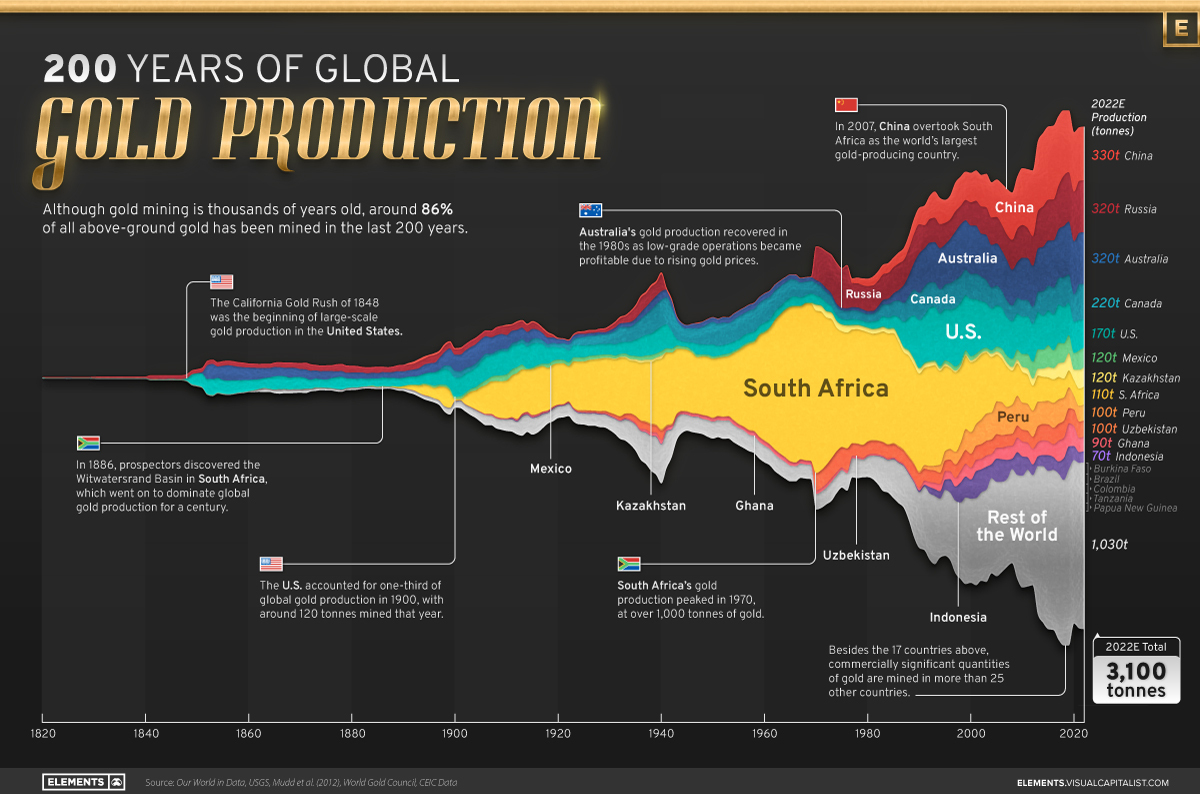
Gold's scarcity is influenced by geological factors and mining efficiency. As technology advances, it becomes more profitable to mine gold from previously unviable sources, potentially increasing supply over time. Thus, the average inflation rate of gold can vary significantly depending on the time frame and market conditions. According to the data of the World Gold Council, gold’s inflation rate is at around 1-2% annually over the long term.
However, the available supply dynamics of gold can fluctuate dramatically, as history has shown. A prime example of this phenomenon occurred during the colonial era when the Spaniards transported vast quantities of gold from the Americas to Europe. This sudden influx of gold led to a significant increase in its supply, causing the price of gold to plummet. The economic consequences were profound, resulting in massive inflation and effectively devaluing gold, which was previously considered a stable and valuable hard asset.
Advances in mining technology have significantly expanded the global capacity to extract gold, leading to an extension of its supply. Innovations such as improved drilling techniques, more efficient extraction methods, and the use of advanced geophysical surveys have allowed miners to access previously unreachable deposits.
 ### Supply Constraints of Bitcoin
Bitcoin’s scarcity however is mathematically fixed and a has a simple and verifiable distribution plan: On average very 10 minutes, 3,125 BTC will be added to the supply, and every 210,000 blocks, which is roughly every 4 years, this block reward will be reduced by 50%. Currently, the inflation rate of Bitcoin is around 1.7%, but this rate will continue to decline until it reaches zero, at which point Bitcoin will become completely deflationary.
 ## Rising Demand
The increasing demand for Bitcoin reflects its growing acceptance as a legitimate asset class and its potential as a global reserve currency. As retail buyers, institutional investors and nation states decision makers appreciate it unique supply characteristics, demand continues to rise, naturally pushing the price higher. This dynamic is often misunderstood, leading to the biased perception that Bitcoin is in a bubble.
Unlike gold, where rising demand spurs increased mining and supply, Bitcoin's supply remains fixed at 21 million coins, no matter how high or low the demand is. This inelasticity creates a scarcity-driven dynamic, as supply cannot adjust to demand, making Bitcoin a uniquely valuable asset.
Sources
-
World Gold Council. (2025, July 31). Gold supply and demand. World Gold Council. www.gold.org/goldhub/data/gold-supply-and-demand
-
Govind Bhutada. (2025, December 29). 200 Years of Global Gold Production, by Country. Visual Capitalist. elements.visualcapitalist.com/200-years-of-global-gold-production-by-country
-
Startusingbitcoin.com. (2025). What is Bitcoin? Startusingbitcoin.com. startusingbitcoin.com/blog/1-what-is-bitcoin
-
Onkar Singh. (2024, April 18). The mathematics of Bitcoin halvings: Cracking the equations and formulas. Cointelegraph. cointelegraph.com/explained/the-mathematics-of-bitcoin-halvings-cracking-the-equations-and-formulas