#

christianity

(50 articles)

King Joash: Is Your Faith Your Own?

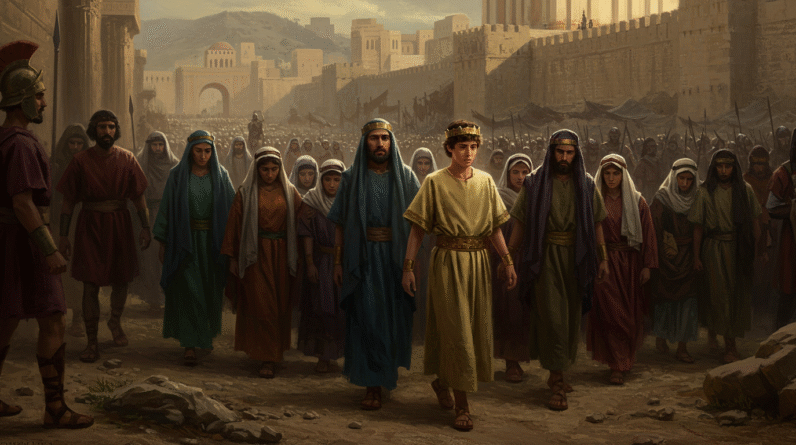
I don’t know why, but lately, reading 1 and 2 Chronicles, I’ve been seeing lots of application for us New Testament Christians. The story of King Joash is one more illustration of a truth that is applicable today. ## The Story of King Joash When King Jehoram died, his eldest son Ahaziah became king. Ahaziah soon allied with evil King Ahab’s heir, King Jehoram (not Ahaziah’s father). Jehu is called by God to exterminate the line of Ahab because of its evil actions. Ahaziah is killed in the process. Ahaziah’s mother, Athaliah, then rose, killed all the heirs she could find, and assumed power over Judah. Infant Joash was saved from this slaughter by his grandfather’s sister. When Joash was seven years old, the priest Jehoiada (who was also the husband of the woman who saved Joash) set Joash on the throne, ending the reign of the evil queen Athaliah. > Then Jehoiada made a covenant between himself and all the people and the king, that they would be the Lord’s people. (2 Chronicles 23:16) Since Joash was only seven years old when he began to reign, the priest Jehoiada acted as his advisor and representative. Jehoiada was faithful to God and worked to bring the people of Judah, including King Joash, back to God. Joash followed the leading of Jehoiada, the only father figure he really knew. > Joash was seven years old when he became king, and he reigned for forty years in Jerusalem; and his mother’s name was Zibiah from Beersheba. Joash did what was right in the sight of the Lord all the days of Jehoiada the priest. (2 Chronicles 24:1-2) At first Joash was basically doing what Jehoiada told him to do, but then he started doing the right thing on his own, as he had been taught. > Now it came about after this that Joash decided to restore the house of the Lord. (2 Chronicles 24:4) When his initial command was not obeyed, he solved the problem himself by collecting the funds to refurbish the temple. > So the king commanded, and they made a chest and set it outside by the gate of the house of the Lord. And they made a proclamation in Judah and Jerusalem to bring to the Lord the contribution commanded by Moses the servant of God on Israel in the wilderness. (2 Chronicles 24:8-9) He faithfully used the collection to refurbish the temple and then to restock the temple’s utensils. > When they had finished, they brought the rest of the money before the king and Jehoiada; and it was made into utensils for the house of the Lord, utensils for the service and the burnt offerings, and pans and utensils of gold and silver. And they offered burnt offerings in the house of the Lord continually, all the days of Jehoiada. (2 Chronicles 24:14) Unfortunately, all these godly actions don’t seem to have been led out of his own heart, but out of his devotion to and influence from Jehoida. > But after the death of Jehoiada, the officials of Judah came and bowed down to the king, and the king listened to them. And they abandoned the house of the Lord, the God of their fathers, and served the Asherim and the idols; so wrath came upon Judah and Jerusalem for this guilt of theirs. (2 Chronicles 24:17-18) Under the influence of the godly priest Jehoiada, Joash did all the right things and seemed to have all the right motivations, but as soon as this godly influence was gone, he was easily led astray by other strong and powerful leaders. We aren’t talking about slightly drifting astray. He went from calling the entire nation to serve God to worshipping false gods. > Then the Spirit of God covered Zechariah, the son of Jehoiada the priest like clothing; and he stood above the people and said to them, “This is what God has said, ‘Why do you break the commandments of the Lord and do not prosper? Because you have abandoned the Lord, He has also abandoned you.” So they conspired against him, and at the command of the king they stoned him to death in the courtyard of the house of the Lord. So Joash the king did not remember the kindness which Zechariah’s father Jehoiada had shown him, but he murdered his son. And as Zechariah died, he said, “May the Lord see and avenge!” (2 Chronicles 24:20-22) Joash was led so far astray that he murdered the son of the man who had protected him, guided him, and put him on the throne. Obviously, his service to God was not because of a personal relationship with God, but because of a desire to please his father figure. ## Application King Joash lived as a godly man for many years, but he did not have a real faith in and relationship with God. His actions seem to have been based on pleasing the man who raised him. Sadly, many people today claim to be Christians and even live “Christian” lives. They go to church. They try to do good deeds. They may even be involved in church leadership and read their Bibles, but their faith is based on the faith of their parents or their wife/husband, or their friends. They don’t have a personal relationship with Jesus. Outwardly they seem to be a shining example of godliness, but inside they are spiritually dead. As soon as the outside, godly influences disappear, the truth of their condition is likely to start showing because there isn’t an inward change of heart. Sometimes the godly people around them cause them to live seemingly godly lives for their entire lives. Unfortunately, they are the ones who will hear: > And then I will declare to them, ‘I never knew you; leave Me, you who practice lawlessness. (Matthew 7:23) Sometimes these people may realize they are just pretending, but I think many times these people really believe they are Christians, but they haven’t repented, believed in Jesus, and accepted Him as Lord of their lives. They are just playing “Christian,” and think that is what real Christianity looks like. When they face Jesus, they will be shocked. > “Not everyone who says to Me, ‘Lord, Lord,’ will enter the kingdom of heaven, but the one who does the will of My Father who is in heaven will enter. Many will say to Me on that day, ‘Lord, Lord, did we not prophesy in Your name, and in Your name cast out demons, and in Your name perform many miracles?’ And then I will declare to them, ‘I never knew you; leave Me, you who practice lawlessness.’ (Matthew 7:21-23) I do not want anyone who is saved to doubt their salvation, but I also don’t want people to think that some seemingly good works and calling themselves Christians makes them Christians. Have you repented of your sins, or do you think your good works outweigh your bad ones? Have you trusted in the death and resurrection of Jesus, or have you trusted in your own deeds? Have you submitted to Jesus as Lord of your life, or are you just trying to follow the rules of your church? Do you care what Jesus thinks of your thoughts, words, and actions, or do you care what those around you think of your words and actions? Sadly, there are many people pleasers who do good in order to be praised, instead of to please God. There are many people who are “Christians” because their parents were Christians or because their spouse is a Christian. Having godly parents and a godly spouse is a blessing, but it won’t make us have a right relationship with God. We must believe in the Lord Jesus. We must repent of our sins. We must submit to Jesus as Lord. I pray God will open your heart to Him, if you haven’t already. I pray God will guide you to lead your children, spouse, parents, friends, and coworkers to him and that He would help you reach those who are Christian in name only. May God draw you closer to Him and help you draw those around you to Him with all of their heart, soul, and mind. Trust Jesus If you do not yet know Jesus, I beg you to trust in Him. Below are some verses that will tell you what you need to know to be saved. If you have any questions, I’d love to answer them. Just message me on Substack. > for all have sinned and fall short of the glory of God, (Romans 3:23) . > For the wages of sin is death, but the free gift of God is eternal life in Christ Jesus our Lord. (Romans 6:23) . > But God demonstrates His own love toward us, in that while we were yet sinners, Christ died for us. (Romans 5:8) . > that if you confess with your mouth Jesus as Lord, and believe in your heart that God raised Him from the dead, you will be saved; (Romans 10:9) . > If we confess our sins, He is faithful and righteous to forgive us our sins and to cleanse us from all unrighteousness. If we say that we have not sinned, we make Him a liar and His word is not in us. (1 John 1:9-10) . > For I am convinced that neither death, nor life, nor angels, nor principalities, nor things present, nor things to come, nor powers, nor height, nor depth, nor any other created thing, will be able to separate us from the love of God, which is in Christ Jesus our Lord. (Romans 8:38-39) . > He made Him who knew no sin to be sin on our behalf, so that we might become the righteousness of God in Him. (2 Corinthians 5:21) . > But as many as received Him, to them He gave the right to become children of God, even to those who believe in His name, who were born, not of blood nor of the will of the flesh nor of the will of man, but of God. (John 1:12-13) All verses are NASB unless otherwise noted.

What Happens After Death?

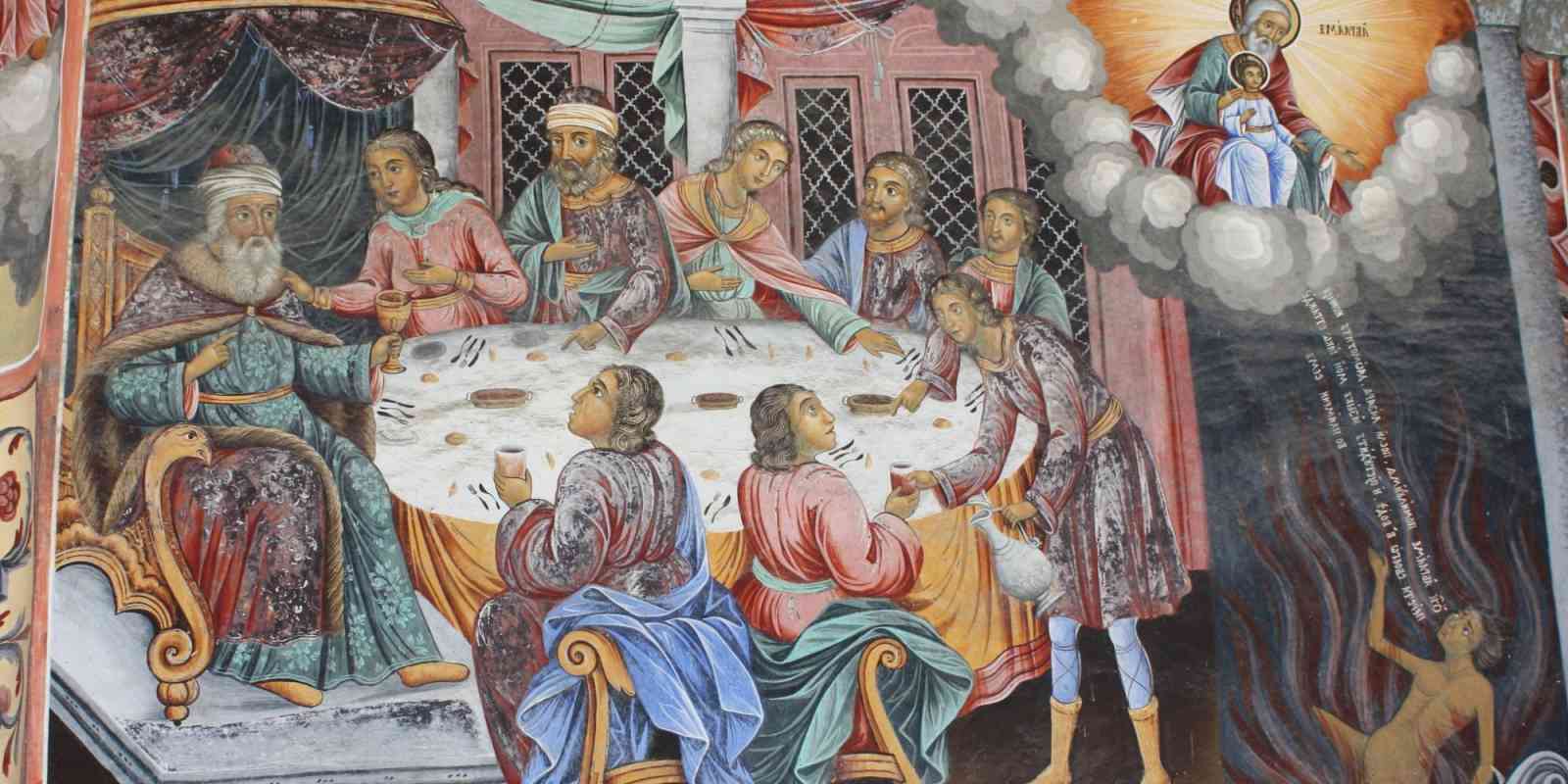
I recently posted a meme that got more interaction than anything I’ve ever posted. Most of it was positive, but several people questioned the premise of the meme. ![image](https://image.nostr.build/1d760a1b372f0e62d168046f47e7bd53e93dd1c9d8540c6e381756f3565a879e.jpg) The simple response to the complaints is that a meme is a meme, and a quick picture/comment can’t compare to an in-depth description of reality according to the Bible. A meme makes a point. It can never fully explain reality. I do, however, want to address the concerns of several people about what the Bible says happens after death. I'll be thorough on the subject and not just address the meme. The two concerns can be summarized as: - Do the dead think and respond to God? - Does 100% belief in God lead to salvation? ## Are the dead aware? Several people shared verses that seem to suggest that the dead are not aware of anything. ### Annihilation? > “But a man dies and lies prostrate. > A person passes away, and where is he? > “As water evaporates from the sea, > And a river becomes parched and dried up, > So a man lies down and does not rise. > Until the heavens no longer exist > He will not awake nor be woken from his sleep. > “Oh that You would hide me in Sheol, > That You would conceal me until Your wrath returns to You, > That You would set a limit for me and remember me! > “If a man dies, will he live again? > All the days of my struggle I will wait > Until my relief comes. (Job 14:10-14) It is hard to take these words of Job’s as absolute truth because they are a narrative of what happened rather than a statement of truth. We would never take the narrative of David and Bathsheba as a recommendation for David’s behavior. The story describes what really happened, but does not say it was right. In this passage, Job is suffering. His friends and he are speaking back and forth about why such awful things happened to Job. Once they finish speaking, God corrects their errors. Although God doesn’t specifically address Job’s talk about death, many of Job and his friends’ other statements are addressed as incorrect. Job also asks, “*If a man dies, will he live again*?” His assumption seems to be that the answer is “No!” In the New Testament, Jesus and the Apostles all talk about resurrection, so Job’s assumption is incorrect. Since that is a complex subject, I’ll go into more detail later. Another verse that was quoted to me as to why the meme was wrong is: > For the living know that they will die; but **the dead do not know anything**, nor do they have a reward any longer, for **their memory is forgotten**. Indeed their love, their hate, and their zeal have already perished, and they will **no longer have a share in all that is done under the sun**. (Ecclesiastes 9:5-6) {emphasis mine} At first this sounds like people don’t think after death, but we need to look at context again. What is Solomon talking about? > “Futility of futilities,” says the Preacher > “Futility of futilities! All is futility. > What advantage does a person have in all his work > Which he does under the sun > A generation goes and a generation comes > But the earth remains forever. (Ecclesiastes 1:2-4) Solomon is talking about our time “*under the sun*,” which is our time before death. He is discussing how most of our lives no longer matter after we die. The dead no longer know what is happening among the living. Building our understanding of what happens after death on this verse seems to be a major stretch. Although it says, “*the dead do not know anything*,” it also says, “*their memory is forgotten*,” and “*they will no longer have a share in all that is done under the sun*.” The passage seems to be more about how the dead have no effect on the living than about what the actual state of the dead is. There are many better passages to use to determine the state of the “dead.” This next verse, when taken by itself, sounds like it clearly contradicts the meme about the dead. > The dead do not praise the Lord, > Nor do any who go down into silence; (Psalm 115:17) It sounds a little less so when taken in context. > The heavens are the heavens of the Lord, > But the earth He has given to the sons of mankind. > The dead do not praise the Lord, > Nor do any who go down into silence; > **But as for us, we will bless the Lord > From this time and forever**. > Praise the Lord! (Psalm 115:16-18) {emphasis mine} How can we praise the Lord forever if we don’t live forever? It may seem like the dead no longer praise the Lord because the dead body does nothing, but that doesn’t mean that the soul doesn’t praise the Lord forever. It also doesn’t mean that we aren’t resurrected into new bodies where we praise God (as is clearly stated in Revelation and other places). One of the clearest indications that believers go straight to be with Jesus and are not annihilated is Jesus’s statement to the thief on the cross. > And he [thief on the cross] was saying, “Jesus, remember me when You come into Your kingdom!” And He [Jesus] said to him, “Truly I say to you, **today you will be with Me in Paradise**.” (Luke 23:42-43) [clarifications mine] {emphasis mine} Jesus basically said that the thief would go straight from the cross to His presence. The thief wouldn’t cease to exist. He wouldn’t go to sleep to wait for Jesus’s return. He would instantly be in the presence of Jesus. I’m pretty certain that thief showed up and immediately began praising God for his salvation and the awesomeness of God. To clarify our situation, humans have three states of their life. They have their initial physical body on earth which is what we typically think of as our life. They have the intermediate state, which is the state between the death of their physical body and their resurrection or transformation into their eternal state with eternal, perfect bodies like Jesus’s resurrection body. Our initial physical state is obvious. It doesn’t need any explanation. The intermediate state is more complicated. There are some things we can know for certain and others that are unclear, and people can have reasonable, biblical opinions that differ somewhat. Lastly, we have our eternal state. For believers, we receive an eternal, perfect, sinless body like Jesus’s. There is less detail on the body of the lost, but the Bible does clearly state that they live eternally in torment in hell. ### The Intermediate State When a person dies, they enter the intermediate state. Because of Jesus’s statement on the cross, we can know for certain that we do not cease to exist. Jesus told a story that tells us something about what happens to believers versus unbelievers. Many will call this story a parable, but it is more specific and uses a name in the story. Jesus does not use a name in any other parables. That tells us this story is different from a typical parable. > “Now there was a rich man, and he habitually dressed in purple and fine linen, enjoying himself in splendor every day. And a poor man named Lazarus was laid at his gate, covered with sores, and longing to be fed from the scraps which fell from the rich man’s table; not only that, the dogs also were coming and licking his sores. Now it happened that the poor man died and was carried away by the angels to Abraham’s arms; and the rich man also died and was buried. And in Hades he raised his eyes, being in torment, and saw Abraham far away and Lazarus in his arms. And he cried out and said, ‘Father Abraham, have mercy on me and send Lazarus, so that he may dip the tip of his finger in water and cool off my tongue, for I am in agony in this flame.’ But Abraham said, ‘Child, remember that during your life you received your good things, and likewise Lazarus bad things; but now he is being comforted here, and you are in agony. And besides all this, between us and you a great chasm has been set, so that those who want to go over from here to you will not be able, nor will any people cross over from there to us.’ And he said, ‘Then I request of you, father, that you send him to my father’s house— for I have five brothers—in order that he may warn them, so that they will not come to this place of torment as well.’ But Abraham said, ‘They have Moses and the Prophets; let them hear them.’ But he said, ‘No, father Abraham, but if someone goes to them from the dead, they will repent!’ But he said to him, ‘If they do not listen to Moses and the Prophets, they will not be persuaded even if someone rises from the dead.’ ” (Luke 16:19-31) Jesus tells us several things in this story. The godly believer, Lazarus, goes to one place of comfort, and the ungodly rich man goes to another place of torment. Both are aware of what happened, how they went to different places with different situations. The request for Lazarus to “*dip the tip of his finger in water and cool off my tongue*” suggests a body of some kind, but isn’t conclusive. It could be the thoughts of the soul that has recently separated from the body, but which still thinks in terms of the body. Some may still consider this solely a parable and not authoritative about the intermediate state, so let’s consider some additional passages. When Paul was considering his risk of dying, he wrote this: > For to me, to live is Christ, and to **die is gain**. But if I am to live on in the flesh, this will mean fruitful labor for me; and I do not know which to choose. But I am hard-pressed from both directions, having the desire to **depart and be with Christ**, for that is very much better; yet to remain on in the flesh is more necessary for your sakes. (Philippians 1:21-24) {emphasis mine} Paul desires to “*depart and be with Christ*.” He expects to be with Jesus immediately upon his death. Death is gain because he will be in the presence of Jesus at that moment. He won’t be annihilated nor will he be asleep. He will be enjoying the presence of Jesus. Paul once again talks about the change from our current state to our future states. > For we know that if our **earthly tent** which is our house is torn down, we have a **building from God**, a house not made by hands, eternal in the heavens. For indeed, in this tent we groan, longing to be clothed with our dwelling from heaven, since in fact after putting it on, we will not be found naked. For indeed, we who are in this tent groan, being burdened, because we do not want to be unclothed but to be clothed, so that what is mortal will be swallowed up by life. Now He who prepared us for this very purpose is God, who gave us the Spirit as a pledge. > > Therefore, being always of good courage, and knowing that while we are at home in the body we are absent from the Lord— for we walk by faith, not by sight— but we are of good courage and prefer rather **to be absent from the body and to be at home with the Lord**. Therefore we also have as our ambition, whether at home or absent, to be pleasing to Him. (2 Corinthians 5:1-9) {emphasis mine} His statement “*to be absent from the body and to be at home with the Lord*” clearly suggests entering God’s presence at the moment of death. He also talks about our “*earthly tent*,” which is our earthly, mortal bodies that will be “*torn down*,” or die. He says, “*we who are in this tent groan, being burdened, because we do not want to be unclothed but to be clothed*.” What a poetic way to say that we don’t want to die and lose our earthly body, but we don’t have to fear death because we will eventually be clothed, not in a tent, but in a “*building from God*” that is so much better than our earthly body. The one thing, from this verse, that isn’t fully clear is whether we are “*clothed*” during the intermediate state or if we are “*naked*.” Is it only our soul and spirit that are alive and interacting with Jesus, or do we have a body in the intermediate state. It is clear that we will eventually get a perfect, immortal, eternal body that is so much better than our earthly bodies, just as a building is better than a tent. It is not perfectly clear if we have a body in the intermediate state. In Revelation, there is a passage that talks about those who die during the seven-year tribulation period. > When the Lamb broke the fifth seal, I saw **underneath the altar the souls of those who had been killed because of the word of God**, and because of the testimony which they had maintained; and **they cried out with a loud voice**, saying, “How long, O Lord, holy and true, will You refrain from judging and avenging our blood on those who live on the earth?” And a white robe was given to each of them; and they were told that they were to rest for a little while longer, until the number of their fellow servants and their brothers and sisters who were to be killed even as they had been, was completed also. (Revelation 6:9-11) {emphasis mine} These martyrs in the intermediate state speak to God and are aware of what is happening in heaven and on earth. They are referred to as “*souls*.” Does this mean they are only in spirit form at this time? It also says that “*a white robe was given to each of them*.” Does this mean that they do have some form of body? It isn’t clear, so I don’t feel comfortable saying for sure. There are many Christians who believe that the intermediate state is a state of soul sleep, where the soul is alive, but asleep, knows nothing about what is happening, and can’t interact with anyone. I think the verses above prove this belief wrong, but this passage below is the only one that seems to suggest something like this. When the Bible talks about believers being asleep to describe physical death, (because other verses describe the dead communicating and doing other things), I believe the sleep described is not soul sleep, but body sleep. > But we do not want you to be uninformed, brothers and sisters, about **those who are asleep**, so that you will not grieve as indeed the rest of mankind do, who have no hope. For if we believe that Jesus died and rose from the dead, so also **God will bring with Him those who have fallen asleep through Jesus**. For we say this to you by the word of the Lord, that we who are alive and remain until the coming of the Lord will not precede those who have fallen asleep. For the Lord Himself will descend from heaven with a shout, with the voice of the archangel and with the trumpet of God, and **the dead in Christ will rise first**. Then we who are alive, who remain, **will be caught up together with them in the clouds to meet the Lord in the air**, and so we will always be with the Lord. Therefore, comfort one another with these words. (1 Thessalonians 4:13-18) {emphasis mine} This passage is important for another reason. It describes the rapture of the church. It describes people in the earthly state and the intermediate state being transformed, in an instant, into the eternal state. It describes the glorious moment when the church is rescued from this fallen world and from our fallen state into our sinless, glorious eternal state where we will be with Jesus forever. ### The Eternal State We know we will be raised to the eternal state because Jesus was raised from the earthly state to the eternal state. > But the fact is, Christ has been raised from the dead, the first fruits of those who are asleep. For since by a man death came, by a Man also came the resurrection of the dead. For as in Adam all die, **so also in Christ all will be made alive**. (1 Corinthians 15:20-22) {emphasis mine} When we are told that “in Christ all will be made alive,” we are being told that we will be made alive spiritually and physically. > Beloved, now we are children of God, and it has not appeared as yet what we will be. We know that **when He appears, we will be like Him**, because we will see Him just as He is. (1 John 3:2) {emphasis mine} We will receive an eternal body like his resurrection body. Jesus ate and drank. He could be touched and could manipulate physical objects. Jesus also could come and go in manners that we cannot. He entered a room with a locked door and rose to heaven, flying up and not needing oxygen as he got higher and higher. I believe our eternal bodies will be the same. I think some of these “abilities” will relate to being extra-dimensional. Right now we move in three physical dimensions and one time dimension. I think the ability of Jesus and angels to seemingly appear out of nowhere is due to them being able to move in dimensions that we cannot in our earthly bodies. > For our citizenship is in heaven, from which we also eagerly wait for a Savior, the Lord Jesus Christ; **who will transform the body of our lowly condition into conformity with His glorious body**, by the exertion of the power that He has even to subject all things to Himself. (Philippians 3:20-21) {emphasis mine} This is yet another description of us receiving our eternal bodies. Our eternal state will be amazing, but it will not compare to the joy of living in the presence of God. ## Does Complete Knowledge of God Guarantee Saving Faith? The meme I shared does seem to assume that if people truly knew that God exists, that He created the universe, that Jesus lived a perfect life, died, and rose again, and that He is all powerful, perfectly holy, and good beyond belief, that everyone would trust in Jesus and follow Him. Is this true? Honestly, no. Does knowing all of that cause more people to trust and follow Jesus? Yes! Does it cause everyone to trust and follow Jesus? Definitely not. It is unfortunate that some people are so proud that they will not submit to the Creator of the universe, the Savior of the world, or to the almighty God. They would rather be independent than worship the one who gave them breath and life, even if that means an eternity of torment. When some people were claiming to have great faith despite not having the works of a child of God, James said this: > You believe that God is one. You do well; the demons also believe, and shudder. (James 2:19) He pointed out that every demon believes God exists, created the universe, and made a way for people to be made right with God. They shudder at the presence of God. That knowledge and belief has not, however, led them to follow God. They have revolted against the Creator and actively work trying to thwart His plans despite knowing His power. Lucifer, now known mostly as Satan or the Devil, lived in the presence of the Almighty, and yet his pride caused him to revolt. > “How you have fallen from heaven, > You star of the morning, son of the dawn! > You have been cut down to the earth, > You who defeated the nations! > “But you said in your heart, > ‘I will ascend to heaven; > I will raise my throne above the stars of God, > And I will sit on the mount of assembly > In the recesses of the north. > ‘I will ascend above the heights of the clouds; > I will make myself like the Most High.’ > “Nevertheless you will be brought down to Sheol, > To the recesses of the pit. > “Those who see you will stare at you, > They will closely examine you, saying, > ‘Is this the man who made the earth tremble, > Who shook kingdoms, > Who made the world like a wilderness > And overthrew its cities, > Who did not allow his prisoners to go home?’ (Isaiah 14:12-17) Despite knowing the glory and power of God, Satan’s pride led him to revolt and try to take God’s place. His knowledge of who God is did not stop him from believing he could stand up to God. Everything he knew showed that God was bigger, better, holier, more powerful, more glorious, and unstoppable, but Satan’s pride led him to act contrary to the clear evidence that he knew. Today we see people believing things that are 100% contrary to the facts that they know or should know. Sometimes pride blinds. Revelation shows us the worst cases of mankind revolting against God, despite knowing God exists. > The rest of mankind, who were not killed by these plagues, did not repent of the works of their hands so as not to worship demons and the idols of gold, silver, brass, stone, and wood, which can neither see nor hear nor walk; and they did not repent of their murders, nor of their witchcraft, nor of their sexual immorality, nor of their thefts. (Revelation 9:20-21) By this point, it is clear to everyone alive that God is judging the world for rejecting Him and for all of the evil they have chosen to commit. Despite this, many (most?) choose to reject their Creator and their only source of salvation. > And the fourth angel poured out his bowl upon the sun, and it was given power to scorch people with fire. And the people were scorched with fierce heat; and **they blasphemed the name of God who has the power over these plagues, and they did not repent** so as to give Him glory. > > And the fifth angel poured out his bowl on the throne of the beast, and his kingdom became darkened; and they gnawed their tongues because of pain, and **they blasphemed the God of heaven because of their pain and their sores; and they did not repent** of their deeds. (Revelation 16:8-11) {emphasis mine} Everyone knew who was causing these plagues. They were no longer blaming climate change or anything else. They blamed God. They cursed God. They “*did not repent of their deeds*.” At the end of the seven year tribulation, those who reject God are all killed. The only people left on earth are those who trusted Jesus as Savior. The church, in its eternal state, returns with Jesus to earth to reign with Him for 1,000 years. The world is renewed and there is 1,000 years of peace under the perfect rule of Jesus. People once more live long, healthy lives. People live as originally intended, but over time more people are born and some of them do not have saving faith in Jesus. They live knowing Jesus, who He is, and what He did for them, and yet they don’t submit to Him in their hearts. They may live as if they are following Jesus, but they don’t love their savior. This is made clear when Jesus releases Satan for one last rebellion that exposes those who have not truly trusted in Jesus as Savior. > When the thousand years are completed, Satan will be released from his prison, and will come out to deceive the nations which are at the four corners of the earth, Gog and Magog, to gather them together for the war; the number of them is like the sand of the seashore. And they came up on the broad plain of the earth and surrounded the camp of the saints and the beloved city, and fire came down from heaven and devoured them. And the devil who deceived them was thrown into the lake of fire and brimstone, where the beast and the false prophet are also; and they will be tormented day and night forever and ever. (Revelation 20:7-10) It is hard to understand how someone can live seeing and knowing Jesus and still reject Him, but clearly many choose rejection of their God rather than admit that there is someone bigger, better, and stronger than themselves. They reject that anyone, even their Creator, may define right and wrong for them. ## What Happens to Those Who Reject Jesus? Although this post was inspired by feedback from the meme above, to be thorough about the subject of what happens after death, we need to directly address what happens to those who reject Jesus. Most of the above deals with what happens to believers. Before I go into details about the punishment of unbelievers, I think it is important to make one thing clear. Where we go at death is not determined by a spreadsheet with our “good” deeds canceling out our evil deeds. We don’t get to go to heaven because we are better than the “really bad people.” > Jesus said to him, “I am the way, and the truth, and the life; no one comes to the Father except through Me. (John 14:6) There is only one way to God and only one way to heaven—through repentance and faith in the Lord Jesus Christ who paid the price for our sins. If we don’t have faith in Jesus, we won’t be going to heaven. We will be judged for rejecting our Creator who came to earth as a man, lived the perfect life that we could not, died to pay the penalty for our sins, and rose again to prove that He had conquered sin and death. There is no other way. > And there is salvation in no one else; for there is no other name under heaven that has been given among mankind by which we must be saved.” (Acts 4:12) We don’t get to choose how we will approach God. We approach through faith in Jesus, or we are rejected. Period! What happens to unbelievers? > For if **God did not spare angels when they sinned, but cast them into hell** and committed them to pits of darkness, held for judgment; and did not spare the ancient world, but protected Noah, a preacher of righteousness, with seven others, when He brought a flood upon the world of the ungodly; and if He condemned the cities of Sodom and Gomorrah to destruction by reducing them to ashes, having made them an example of what is coming for the ungodly; and if He rescued righteous Lot, who was oppressed by the perverted conduct of unscrupulous people (for by what he saw and heard that righteous man, while living among them, felt his righteous soul tormented day after day by their lawless deeds), then **the Lord knows how to rescue the godly from a trial, and to keep the unrighteous under punishment for the day of judgment**, (2 Peter 2:4-9) {emphasis mine} God rescues those who trust in Jesus from punishment and the hour of trial (tribulation), but he keeps “*the unrighteous under punishment for the day of judgment*.” This suggests that those who reject Jesus will, upon death, immediately receive punishment for their sins, but their ultimate judgment comes at the Great White Throne Judgment (we’ll address this later). Jesus advised those around Him not to fear the evil around them, but to fear God. > “Now I say to you, My friends, do not be afraid of those who kill the body, and after that have nothing more that they can do. But I will warn you whom to fear: **fear the One who, after He has killed someone, has the power to throw that person into hell**; yes, I tell you, fear Him! (Luke 12:4-5) {emphasis mine} They should fear God because He has the power to *“throw that person into hell*.” Does this mean that God can throw people into hell, but probably won’t throw most people into hell? Definitely not! The Bible makes it clear that ALL who reject Jesus will be cast into hell. Hell is serious. It isn’t everyone who rejects Jesus hanging out with each other in a different location. It is eternal torment and loneliness. It is being without hope for all eternity. Jesus explains how serious hell is. > And if your foot is causing you to sin, cut it off; it is better for you to enter life without a foot, than, having your two feet, to be thrown into hell. And if your eye is causing you to sin, throw it away; it is better for you to enter the kingdom of God with one eye, than, having two eyes, to **be thrown into hell, where their worm does not die, and the fire is not extinguished**. (Mark 9:45-48) {emphasis mine} Ultimately, the Bible makes clear what happens to all who reject Jesus. The below passage describes what happens to those who reject Jesus: > Then I saw a great white throne and Him who sat upon it, from whose presence earth and heaven fled, and no place was found for them. And I saw the dead, the great and the small, standing before the throne, and books were opened; and another book was opened, which is the book of life; and the dead were judged from the things which were written in the books, according to their deeds. And the sea gave up the dead who were in it, and Death and Hades gave up the dead who were in them; and they were judged, each one of them according to their deeds. Then Death and Hades were thrown into the lake of fire. This is the second death, the lake of fire. And **if anyone’s name was not found written in the book of life, he was thrown into the lake of fire**. (Revelation 20:11-15) {emphasis mine} Only those who trust in Jesus as Lord and Savior will be written in the book of life. All others will be thrown into the lake of fire to endure punishment for all eternity. > “Then He will also say to those on His left, ‘Depart from Me, you accursed people, into the eternal fire which has been prepared for the devil and his angels; (Matthew 25:41) I hope this post has been useful to you, whether you saw the meme or whether you were just interested in one of the most important questions in life, “What happens when people die?” If you haven’t trusted in Jesus as Savior, I beg you to consider what He has done for you and to trust in Him, repent of your sins, and submit to Him as Lord. I’ve included some verses below to help you understand what salvation entails. I also encourage you to read your Bible, so you can know who the one true God is and know who Jesus really is. Trust Jesus --- If you do not yet know Jesus, I beg you to trust in Him. Below are some verses that will tell you what you need to know to be saved. If you have any questions, I’d love to answer them. Just message me on Substack. > for all have sinned and fall short of the glory of God, (Romans 3:23) . > For the wages of sin is death, but the free gift of God is eternal life in Christ Jesus our Lord. (Romans 6:23) . > But God demonstrates His own love toward us, in that while we were yet sinners, Christ died for us. (Romans 5:8) . > that if you confess with your mouth Jesus as Lord, and believe in your heart that God raised Him from the dead, you will be saved; (Romans 10:9) . > If we confess our sins, He is faithful and righteous to forgive us our sins and to cleanse us from all unrighteousness. If we say that we have not sinned, we make Him a liar and His word is not in us. (1 John 1:9-10) . > For I am convinced that neither death, nor life, nor angels, nor principalities, nor things present, nor things to come, nor powers, nor height, nor depth, nor any other created thing, will be able to separate us from the love of God, which is in Christ Jesus our Lord. (Romans 8:38-39) . > He made Him who knew no sin to be sin on our behalf, so that we might become the righteousness of God in Him. (2 Corinthians 5:21) . > But as many as received Him, to them He gave the right to become children of God, even to those who believe in His name, who were born, not of blood nor of the will of the flesh nor of the will of man, but of God. (John 1:12-13) --- All verses are NASB unless otherwise noted. the meme.

God Listens

There is a lot going on today that can be quite scary if you aren’t fully trusting in Jesus, our Savior. Sometimes, in the busyness of life, we can feel unheard and alone, but if you have trusted Jesus as Savior, you are never alone. He knows you. He is with you. He hears you and listens. > The humble have seen it and are glad; > You who seek God, let your heart revive. > **For the Lord hears the needy** > And does not despise His who are prisoners. (Psalm 69:32-33) {emphasis mine} I’m sure many of you are going through hard times. You’ve lost a loved one. You or loved ones are having health problems. The prices of everything, especially food and energy, have skyrocketed and are stretching many budgets to the limit. Many of you may be experiencing persecution for your belief in God. Persecution isn’t pleasant, whether it is just taunting or is severe persecution where you don’t know if you or your family will survive to see tomorrow. The important thing to remember is that God hears you. He knows what you are experiencing. He is using hardship to mold you into the godly man or woman He wants you to be. He is there to provide for you, in this life and/or in eternity. > This is the confidence which we have before Him, that, **if we ask anything according to His will, He hears us**. And if we know that He hears us in whatever we ask, we know that we have the requests which we have asked from Him. (1 John 5:14-15) {emphasis mine} I understand that in the middle of hardship, it can be hard to feel God’s presence. It can be hard to believe that God hears us. It can be hard to see how your current difficulties can serve any good purpose, but do not lose heart. God hears you. Continue to call on Him. Cast your hurts and needs on Him and trust Him to carry the burden and to make all things right in the end. In 1 John 5 above, it says, “*If we ask anything according to His will, He hears us*.” Many times, we think we know the best solution to our problems and pray for a particular outcome. We are told to pray “*according to His will*.” I know that I don’t always know exactly what God’s will is in a particular circumstance. I’ve learned the best response is to pray my problem and to leave the solution to God. His solution, although not necessarily what I want, is always the best solution in the long run. God looks at everything through an eternal perspective that we mortal humans cannot fully comprehend and especially can’t see in the midst of suffering. Share your hurts, doubts, concerns, and needs with God and leave the results to Him. He knows them all, but wants you to come to Him honestly and to lean on Him. > The Lord is near to all who call upon Him, > To all who call upon Him in truth. > **He will fulfill the desire of those who fear Him**; > He will also hear their cry and will save them. (Psalm 145:18-19) {emphasis mine} God says He will “*fulfill the desire of those who fear Him*.” Sometimes He fulfills the desires we have now, but often He fulfills our desires by changing our desires to be more in alignment with His own. He helps us to see from an eternal perspective. He helps us to desire what He desires,--not just what is pleasant in the moment, but what is best eternally. > **I love the Lord, because He hears > My voice and my supplications**. > Because He has inclined His ear to me, > Therefore I shall call upon Him as long as I live. > The cords of death encompassed me > And the terrors of Sheol came upon me; > I found distress and sorrow. > Then I called upon the name of the Lord: > “O Lord, I beseech You, save my life!” > Gracious is the Lord, and righteous; > Yes, our God is compassionate. > The Lord preserves the simple; > I was brought low, and He saved me. (Psalm 116:1-6) {emphasis mine} Too often we think God should give us certain things because we are serving Him. We need to love Him because of who He is and not just for what He does for us. We need to trust that He hears us and will provide for us, but sometimes we have to suffer to prepare us for the great things He has planned for us, i.e. Joseph. Never stop calling out to God. Never lose faith. Never doubt that He hears you and is working towards the fulfillment of His loving, very good plan. Sometimes we can have a brief separation from God because of our sins. God won’t bless us while we are in habitual, blatant sin. He won’t bless those who dishonor Him with their words and actions. This isn’t referring to the natural, occasional sins that everyone alive commits. This refers to blatant and continual disobedience, denial of God’s word, dishonoring His name before others, etc. Even in these cases, the moment we repent and cry out to Him, He draws us to Himself and leads us in the way we should go. > Now it came about in the course of those many days that the king of Egypt died. And the sons of Israel sighed because of the bondage, and **they cried out**; and their cry for help because of their bondage rose up to God. So **God heard their groaning**; and God remembered His covenant with Abraham, Isaac, and Jacob. God saw the sons of Israel, and God took notice of them. (Exodus 2:23-25) {emphasis mine} God hears our groaning. He knows our needs. Cry out to Him today. Jesus also set an example for us to follow. While on earth in human form, Jesus made a point of spending extended, regular time in prayer. Even when He was tired and/or busy, He stepped away and prayed. If Jesus needed to spend time in prayer with the Father, how much more do we need to do the same. > In the days of His flesh, He [Jesus] offered up both prayers and supplications with loud crying and tears to the One able to save Him from death, and **He was heard** because of His piety. Although He was a Son, He learned obedience from the things which He suffered. And having been made perfect, He became to all those who obey Him the source of eternal salvation, (Hebrews 5:7-9) {emphasis & clarification mine} Just as Jesus was heard, so also we are heard by the Father who loves us. May you never lose your desire for time talking to God, nor lose your honest prayer to God for your needs and concerns. May you trust God that He knows what is best and that He will provide what you really need in all situations. May you not lose faith and hope during trials, but grow in closeness and faith in your Savior, Jesus Christ our Lord. Trust Jesus. If you do not yet know Jesus, I beg you to trust in Him. Below are some verses that will tell you what you need to know to be saved. If you have any questions, I’d love to answer them. Just message me on Substack. > for all have sinned and fall short of the glory of God, (Romans 3:23) . > For the wages of sin is death, but the free gift of God is eternal life in Christ Jesus our Lord. (Romans 6:23) . > But God demonstrates His own love toward us, in that while we were yet sinners, Christ died for us. (Romans 5:8) . > that if you confess with your mouth Jesus as Lord, and believe in your heart that God raised Him from the dead, you will be saved; (Romans 10:9) . > If we confess our sins, He is faithful and righteous to forgive us our sins and to cleanse us from all unrighteousness. If we say that we have not sinned, we make Him a liar and His word is not in us. (1 John 1:9-10) . > For I am convinced that neither death, nor life, nor angels, nor principalities, nor things present, nor things to come, nor powers, nor height, nor depth, nor any other created thing, will be able to separate us from the love of God, which is in Christ Jesus our Lord. (Romans 8:38-39) > . > He made Him who knew no sin to be sin on our behalf, so that we might become the righteousness of God in Him. (2 Corinthians 5:21) . > But as many as received Him, to them He gave the right to become children of God, even to those who believe in His name, who were born, not of blood nor of the will of the flesh nor of the will of man, but of God. (John 1:12-13) All verses are NASB unless otherwise noted.

Thoughts & Connections: Jericho’s Curse

### FYI: *For the past several weeks, I’ve felt like most of my writing was more forcing writing according to a schedule rather than writing purely because I am inspired. I have been making sure that I post every Sunday and Wednesday. I may become less scheduled and more spirit-led, so hopefully I can provide a higher quality of content.* *I love looking at how different passages relate to each other and trying to determine what this could tell us about the passages. This post tries to do that. Having an engineering background, I also love where science and the Bible meet. I love showing how science actually supports the Bible as truth rather than disproving it (as is so often claimed). I also love studying the Bible to clarify the unpleasant truths and supposed contradictions in it. * *If anyone has a question about science and the Bible, what a difficult passage is saying, or about a difficult/unpleasant passage, I would love to do the research to come up with a biblical answer to your question. Please comment on any post or message me, and I will try to answer your question. Depending on the difficulty of the question, I may be able to make a quick response, or it may take me a while to do the research to find a thorough and well-supported answer. It doesn’t happen often, but you just might stump me. I’ll do my best in all situations and admit if I don’t know or if I’m unsure, including if I think I know the answer but don’t feel 100% confident.* ### The Inspiration: Last night I was reading about Elijah passing the mantle of prophet to Elisha. Right after Elijah was taken away, a bunch of people wanted to search for Elijah. Elisha originally said, “No,” but after being pressured, allowed them to search and waited in Jericho. The following happened. > They returned to him while he was staying at Jericho; and he said to them, “Did I not say to you, ‘Do not go’?” > > Then the men of the city said to Elisha, “Behold now, **the situation of this city is pleasant, as my lord sees; but the water is bad and the land is unfruitful**.” He said, “Bring me a new jar, and put salt in it.” So they brought it to him. He went out to the spring of water and threw salt in it and said, “Thus says the Lord, ‘I have purified these waters; there shall not be from there death or unfruitfulness any longer.’ ” So the waters have been purified to this day, according to the word of Elisha which he spoke. (2 Kings 2:18-22) {emphasis mine} The sentence in bold stood out to me. It caused me to wonder if the bad water and the unfruitful land were related to Joshua’s curse on Jericho. ### Connections: > Then Joshua made them take an oath at that time, saying, “**Cursed before the Lord is the man who rises up and builds this city Jericho**; with the loss of his firstborn he shall lay its foundation, and with the loss of his youngest son he shall set up its gates.” (Joshua 6:26) {emphasis mine} The explicit curse was exactly fulfilled decades later: > In his days Hiel the Bethelite built Jericho; he laid its foundations with the loss of Abiram his firstborn, and set up its gates with the loss of his youngest son Segub, according to the word of the Lord, which He spoke by Joshua the son of Nun. (1 Kings 16:34) My question was, “Is the bad water and the unfruitful land also part of the curse?” It is clear that the people of Jericho were evil and were worshipers of false gods. > Then the Lord spoke to Moses in the plains of Moab by the Jordan opposite Jericho, saying, “Speak to the sons of Israel and say to them, ‘When you cross over the Jordan into the land of Canaan, then you shall drive out all the inhabitants of the land from before you, and destroy all their figured stones, and** destroy all their molten images and demolish all their high places**; and you shall take possession of the land and live in it, for I have given the land to you to possess it. (Numbers 33:50-53) {emphasis mine} God did not want the people following the evil practices of the people in Canaan. Jericho was one of the most powerful cities. When God gave the city to the Israelites, He banned them from claiming any booty from the city. All things of value belonged to the Lord (except things that belonged to Rahab and her family). God specifically did not want the Israelites to covet the things of Jericho. > But as for you, only **keep yourselves from the things under the ban, so that you do not covet them** and take some of the things under the ban, and make the camp of Israel accursed and bring trouble on it. But all the silver and gold and articles of bronze and iron are holy to the Lord; they shall go into the treasury of the Lord.” (Joshua 6:18-19) {emphasis mine} ### Application: If we go back to the original passage that started this exploration, we see the people coveting the location. > Then the men of the city said to Elisha, “Behold now, the situation of this city is pleasant, as my lord sees; but the water is bad and the land is unfruitful.” (2 Kings 2:19) They liked the location of Jericho. They said, “*Behold now, the situation of this city is pleasant*.” They didn’t like that the water was bad and the land unfruitful, but they wanted the pleasant situation of the city. Do we act like this in our lives? Do we want to participate in the “pleasant” entertainment, but don’t want the unfruitfulness of it? Do we want the success that comes through cut-throat career moves, but don’t want the bad reputation that comes with it? Do we want to fit in with the crowd without being separated from God? The people were warned away from Jericho so they wouldn’t be misled and so they wouldn’t wander away from God, but the people just kept returning to Jericho. Hiel the Bethelite lost his firstborn and youngest sons because he chose to rebuild Jericho. The people living in Jericho at the time of Elisha had to deal with bad water and unfruitful land, but they remained in Jericho rather than going elsewhere. ### God’s Mercy: Despite the continual desire of God’s people for Jericho, He had mercy on them. God enabled Elisha to cleanse the water and the land for the people living in Jericho. > He said, “Bring me a new jar, and put salt in it.” So they brought it to him. He went out to the spring of water and threw salt in it and said, “Thus says the Lord, ‘I have purified these waters; there shall not be from there death or unfruitfulness any longer.’ ” (2 Kings 2:20-21) We later see Jesus doing ministry and miracles in and near Jericho. He ate dinner with the tax collector, Zaccheus, leading to his salvation. (Luke 19:1-10) He healed two blind men when leaving the city. (Matthew 20:29-34) Even in the darkest places, Jesus can still heal us body, mind, and soul. May God give you a desire for the things of God and turn your heart away from all things that are unfruitful. May He show you mercy when your heart leads you astray. May God give you an eternal perspective instead of a worldly, hear-and-now perspective in life so your focus remains on things that matter eternally rather than those which are pleasant in the moment. Trust Jesus --- If you do not yet know Jesus, I beg you to trust in Him. Below are some verses that will tell you what you need to know to be saved. If you have any questions, I’d love to answer them. Just message me on Substack. > for all have sinned and fall short of the glory of God, (Romans 3:23) . > For the wages of sin is death, but the free gift of God is eternal life in Christ Jesus our Lord. (Romans 6:23) . > But God demonstrates His own love toward us, in that while we were yet sinners, Christ died for us. (Romans 5:8) . > that if you confess with your mouth Jesus as Lord, and believe in your heart that God raised Him from the dead, you will be saved; (Romans 10:9) . > If we confess our sins, He is faithful and righteous to forgive us our sins and to cleanse us from all unrighteousness. If we say that we have not sinned, we make Him a liar and His word is not in us. (1 John 1:9-10) . > For I am convinced that neither death, nor life, nor angels, nor principalities, nor things present, nor things to come, nor powers, nor height, nor depth, nor any other created thing, will be able to separate us from the love of God, which is in Christ Jesus our Lord. (Romans 8:38-39) . > He made Him who knew no sin to be sin on our behalf, so that we might become the righteousness of God in Him. (2 Corinthians 5:21) . > But as many as received Him, to them He gave the right to become children of God, even to those who believe in His name, who were born, not of blood nor of the will of the flesh nor of the will of man, but of God. (John 1:12-13) All verses are NASB unless otherwise noted.

From Curse to Crown: The Journey of Thorns in Scripture

I was listening to a sermon by Don Perkins. As part of his talk on end times predictions, he mentioned Jesus’s crown of thorns. I’ve read about His crown of thorns at least a 100 times, but it struck me differently this time and sent me down a rabbit trail of what the Bible says about thorns. I originally thought I was going to do an exhaustive search, but the Bible mentions thorns so many times, I had to pare it down a lot, so my post didn’t get crazy long. The first time thorns are mentioned is after Adam and Eve first sinned and disobeyed God’s one and only law—to not eat of the tree of the knowledge of good and evil. God then gives His judgment to Satan, Eve, and Adam. > Then to Adam He said, “Because you have listened to the voice of your wife, and have eaten from the tree about which I commanded you, saying, ‘You shall not eat from it’; > > Cursed is the ground because of you; > In toil you will eat of it > All the days of your life. > **Both thorns and thistles it shall grow for you**; > And you will eat the plants of the field; > By the sweat of your face > You will eat bread, > Till you return to the ground, > Because from it you were taken; > For you are dust, > And to dust you shall return.” > (Genesis 3:17-19) {emphasis mine} In God’s very good creation, plants grew easily. There were no weeds, drought, or pests. Adam did some tending, but the work was pleasant and food was plentiful. After Adam sinned, things changed. The work became hard (“*By the sweat of your face you will eat bread*”). Thorns grew and choked out the food plants and caused pain when Adam and his descendants tried to pull them up or even accidentally brushed against them. > Truly is not my house so with God? > For He has made an everlasting covenant with me, > Ordered in all things, and secured; > For all my salvation and all my desire, > Will He not indeed make it grow? > But **the worthless, every one of them will be thrust away like thorns, > Because they cannot be taken in hand**; > But the man who touches them > Must be armed with iron and the shaft of a spear, > And they will be completely burned with fire in their place.” > (2 Samuel 23:5-7) {emphasis mine} When David gives his last words before dying, he praises God’s blessings on him and his descendants, but uses thorns as an analogy for those who are worthless and cause harm. The thorns are also an analogy for sin. - Sin is worthless. It causes nothing good. - Sin should be thrust away like thorns. Don’t even approach it because the thorns can grab and injure if you try to approach it. - Sin cannot be taken in hand. People think they can have a little sin without getting hurt, but once taken in a little, it frequently catches the sinner and hangs on to them. They get caught in the thorns of sin and cannot get loose. - We need to be armed offensively and defensively (see the armor of God, Ephesians 6:13-17) to defend against sin’s hold. Throughout the Bible, thorns are one of the primary signs used to illustrate God’s curse on mankind or a nation. For example, in Nahum’s oracle against Nineveh, about a century after Jonah, these words were spoken. > Whatever you devise against the Lord, > He will make a complete end of it. > Distress will not rise up twice. > **Like tangled thorns**, > And like those who are drunken with their drink, > **They are consumed** > As stubble completely withered. (Nahum 1:9-10) {emphasis mine} > Although Nineveh had repented at Jonah’s preaching, they had quickly returned to their sins and rebellion against God. They became useless, like tangled thorns that prevent anything good from growing or entering. The only way to get rid of thorns like this is to burn them. Proverbs compares humility and the fear of the Lord to thorns and snares. > The reward of humility and the fear of the Lord > Are riches, honor and life. > **Thorns and snares are in the way of the perverse**; > He who guards himself will be far from them. > (Proverbs 22:4-5) {emphasis mine} Once again, sin is compared to thorns. Thorns are not only painful, but they block the growth of good plants and block entry into an area. Likewise, sin causes pain to those who commit sin and to those around them. Sin also blocks us from doing what is right. Thorns catch on our clothing and don’t want to let go. Breaking loose of this grip typically causes tears in our clothing or our skin. In the same way, sin, once embraced, does not like to let go. Breaking loose can be painful. Sometimes it leaves only minor injury, like a tear in our clothing, but other times it cuts us worse. With that background, we get to what inspired this post. > The soldiers took Him away into the palace (that is, the Praetorium), and they called together the whole Roman cohort. They dressed Him up in purple, and **after twisting a crown of thorns, they put it on Him**; and they began to acclaim Him, “Hail, King of the Jews!” They kept beating His head with a reed, and spitting on Him, and kneeling and bowing before Him. After they had mocked Him, they took the purple robe off Him and put His own garments on Him. And they led Him out to crucify Him. (Mark 15:16-20) {emphasis mine} We’ve been reading how the thorns represent our sin and the curse of God. What did the soldiers put on Jesus’s head? They put on a crown of thorns. They figuratively put all of our sins (a crown of thorns representing all mankind’s sins) and the judgment of God, while God was actually putting our sins on Jesus and pouring out His judgment on Him. The crown of thorns was not just another cruel punishment. God was showing us physically what was happening spiritually. > and **He Himself bore our sins in His body on the cross**, so that we might die to sin and live to righteousness; for by His wounds you were healed. (1 Peter 2:24) {emphasis mine} Jesus took our sins upon His body, just like He took the crown of thorns upon His head. > **Christ redeemed us from the curse of the Law, having become a curse for us**—for it is written, “Cursed is everyone who hangs on a tree”— in order that in Christ Jesus the blessing of Abraham might come to the Gentiles, so that we would receive the promise of the Spirit through faith. (Galatians 3:13-14) {emphasis mine} Jesus took the curse of God, that we rightfully deserved, upon Himself, just as He allowed the crown of thorns upon His head. God controls every last detail exactly according to His plan. This wasn’t just some Jews and some Romans turning against the Son of God. This was God’s redemption plan from the very beginning, being fulfilled exactly according to God’s specifications and prediction. God is in control. >** Jesus then came out, wearing the crown of thorns and the purple robe**. Pilate said to them, “Behold, the Man!” So when the chief priests and the officers saw Him, they cried out saying, “Crucify, crucify!” Pilate said to them, “Take Him yourselves and crucify Him, for I find no guilt in Him.” The Jews answered him, “**We have a law, and by that law He ought to die** because He made Himself out to be the Son of God.” (John 19:5-7) {emphasis mine} Jesus took upon Himself our sin and the curse that we deserved as represented by the crown of thorns, but He also conquered sin and death and is, was, and will always be King of Kings and Lord of Lords as represented by the purple robe of royalty. > **For what the Law could not do, weak as it was** through the flesh, God did: sending **His own Son in the likeness of sinful flesh** and as an offering for sin, He condemned sin in the flesh, **so that the requirement of the Law might be fulfilled** in us, who do not walk according to the flesh but according to the Spirit. (Romans 8:3-4) {emphasis mine} I picked this verse because of the description of Jesus “*in the likeness of sinful flesh*,” but liked how John 19 and Romans 8 line up. In John 19, the Jews said, “*We have a law, and by that law He ought to die*.” We know Jesus died and on the third day rose again to live forever. Romans clarifies, “*For what the Law could not do, weak as it was*.” The Jewish leaders couldn’t keep Jesus dead. The Law was too weak. It could not keep our Creator and Savior in the grave. Jesus took our sins upon Himself. He experienced the curse of God that our sins deserved. He fulfilled all “*the requirement of the Law*” as our kinsman redeemer, so that we can know God’s mercy and love for all eternity. May you have a right view of your sinfulness and trust in the Savior for salvation from sin and the curse of sin. May His mercy cover you and draw you to Himself. May you faithfully follow Him all the days of your life on earth until He calls you home to Himself to be with Him in Heaven for all eternity. Trust Jesus If you do not yet know Jesus, I beg you to trust in Him. Below are some verses that will tell you what you need to know to be saved. If you have any questions, I’d love to answer them. Just message me on Substack. > for all have sinned and fall short of the glory of God, (Romans 3:23) . > For the wages of sin is death, but the free gift of God is eternal life in Christ Jesus our Lord. (Romans 6:23) . > But God demonstrates His own love toward us, in that while we were yet sinners, Christ died for us. (Romans 5:8) . > that if you confess with your mouth Jesus as Lord, and believe in your heart that God raised Him from the dead, you will be saved; (Romans 10:9) . > If we confess our sins, He is faithful and righteous to forgive us our sins and to cleanse us from all unrighteousness. If we say that we have not sinned, we make Him a liar and His word is not in us. (1 John 1:9-10) . > For I am convinced that neither death, nor life, nor angels, nor principalities, nor things present, nor things to come, nor powers, nor height, nor depth, nor any other created thing, will be able to separate us from the love of God, which is in Christ Jesus our Lord. (Romans 8:38-39) . > He made Him who knew no sin to be sin on our behalf, so that we might become the righteousness of God in Him. (2 Corinthians 5:21) . > But as many as received Him, to them He gave the right to become children of God, even to those who believe in His name, who were born, not of blood nor of the will of the flesh nor of the will of man, but of God. (John 1:12-13) All verses are NASB unless otherwise noted.

Dwelling and Practicing

It is so easy to get busy living life that we ignore the things of God. The burdens of life seem to overwhelm us. We may be doing nothing wrong, but we are not focused on what is best. If we are focused on this world, instead of the next, it is easy to slowly drift astray. How can we prevent this drift? > Finally, brethren, whatever is true, whatever is honorable, whatever is right, whatever is pure, whatever is lovely, whatever is of good repute, if there is any excellence and if anything worthy of praise, **dwell on these things**. (Philippians 4:8) {emphasis mine} What do you focus on in life? Your job? Your friendships? Your family? None of that is bad in itself, but none should be our primary focus. Do you focus on politics, the evil in the world, or what people are doing wrong? That is not where our focus should be. We should focus on the things of God. - whatever is true - whatever is honorable - whatever is right - whatever is pure - whatever is lovely - whatever is of good repute We need to be aware that there is evil in the world and even do our part to reduce the evil in the world, especially when it comes to protecting the innocent. That doesn’t, however, mean that we want to focus on the evil. God wants our minds focused on what is good. When we focus on evil, even with the intention to fight it, it can corrupt us and drag us down. When we focus on what is good, we draw closer to God and grow in peace, joy, and love. If we focus on the problems in our lives, we can become resentful and depressed. If we focus on the blessings in our lives, we grow in joy, peace, and thankfulness. If we focus on evil, we can be tempted, but if we focus on God, there is no room for sin. Studying the Bible daily helps us to stay focused on God, His work, and His plan. It helps us to stay grounded in the truth so we are not led astray by the deception and lies around us. It helps us to see how God has remained faithful to His promises and His love throughout history, so we can know that He will stay faithful to us today. It helps us to understand that God can guide us through any hardship. The Bible also helps us to know what to do and not to do. Most people, most of the time, focus on the “don’t” commands. If we focus more on the “do” commands, we won’t really need to worry about the “don’t” commands. If we are doing what we should do, we won’t have time or inclination to do what we should not be doing. > The things you have learned and received and heard and seen in me, **practice these things**, and the God of peace will be with you. (Philippians 4:9) {emphasis mine} God commands us to “*practice these things*” (Biblical commands). Many of God’s commandments don’t come naturally to us. We don’t instinctively “love our enemies” or similar commands. It takes practice. We need to: 1. Know what God commands 2. Pray for guidance in obedience 3. Attempt to obey faithfully 4. Repent when we fail 5. Seek accountability and encouragement from fellow believers 6. Never stop trying to obey because God loves us When we combine a focus on God, His Word, His commandments, and His plan with never giving up, we know He will guide us to be more like Him. > This you know, my beloved brethren. But everyone must be quick to hear, slow to speak and slow to anger; for the anger of man does not achieve the righteousness of God. Therefore, putting aside all filthiness and all that remains of wickedness, in humility receive the word implanted, which is able to save your souls. But prove yourselves doers of the word, and not merely hearers who delude themselves. For if anyone is a hearer of the word and not a doer, he is like a man who looks at his natural face in a mirror; for once he has looked at himself and gone away, he has immediately forgotten what kind of person he was. But one who looks intently at the perfect law, the law of liberty, and abides by it, not having become a forgetful hearer but an effectual doer, this man will be blessed in what he does. (James 1:19-25) > I see two errors that many Christians make. Some study the Bible and know it, but never seem to get past head knowledge. Their knowledge is never (or rarely) applied in their lives. There are others who want to obey and try to serve God, but they don’t study God’s Word. They are serving God their own way and not how God called them to serve. By serving in their own way, they frequently go astray from God and the truth. We need to be tethered to God’s Word in such a way that we faithfully obey and serve Him in our every thought, word, and action. Knowing God’s Word and living it out gives us the heart of God. > for it is not the hearers of the Law who are just before God, but the doers of the Law will be justified. (Romans 2:13) Having a deep understanding of God’s Word rarely comes about easily or quickly. It is a long process of deep Bible study and applying what is learned in our lives. It is having faith because of God’s faithfulness in the past. When we obey, even when we don’t understand or even when we don’t know how things can work out for good, we get to see God’s faithfulness. As we see more and more of God’s faithfulness, it becomes easier to have faith in difficult and confusing situations. As our knowledge and faith grow, we are called to share that knowledge and faith with others, building up the body of Christ—the Church. > Prescribe and teach these things. Let no one look down on your youthfulness, but rather in speech, conduct, love, faith and purity, show yourself an example of those who believe. Until I come, give attention to the public reading of Scripture, to exhortation and teaching. Do not neglect the spiritual gift within you, which was bestowed on you through prophetic utterance with the laying on of hands by the presbytery. **Take pains with these things; be absorbed in them, so that your progress will be evident to all**. Pay close attention to yourself and to your teaching; persevere in these things, for as you do this you will ensure salvation both for yourself and for those who hear you. (1 Timothy 4:11-16) {emphasis mine} Being faithful to God’s Word is not easy. It has to be intentional. I am inspired by these words, “Take pains with these things; be absorbed in them, so that your progress will be evident to all.” We need to “*take pains with these things” and “be absorbed in them*.” These are not suggestions, but commands to make every effort to obey and to be completely absorbed by the Word of God. Read the Bible. Memorize verses and passages. Study the Bible as a complete work and understand how every part relates to every other part. Ask - “What does this passage say about God?” - “What does this passage say about Jesus?” - “What does this passage say about mankind?” - “What does this passage say about salvation?” - “What does this passage say about God’s plan?” - “What does this passage say about God’s promises?” - “How does this passage relate to other passages in the Bible?” - “How can I live my life in alignment with this passage?” We are then called to meditate on God. > When I remember You on my bed, > I meditate on You in the night watches, > For You have been my help, > And in the shadow of Your wings I sing for joy. > (Psalm 63:6-7) We should meditate on: - God’s word - God’s promises - God’s faithfulness (over history and in our own lives) - God’s plan for mankind and history - The joy of Jesus’s return for His people - Eternity with God in Heaven Do you long for time to meditate on God? David did, and he was called “a man after God’s own heart.” > I rise before dawn and cry for help; > I wait for Your words. >** My eyes anticipate the night watches, > That I may meditate on Your word**. > (Psalm 119:147-148) {emphasis mine} Of course, it is easier to meditate on God’s word when we have memorized God’s word. Still, if you are a new Christian, new to Bible reading/memorization, or just need inspiration, you can read a passage or verse and then stop and meditate on it. (Keep in mind that Biblical meditation isn’t like most other meditation. With most religions, meditation means emptying your mind. Biblical meditation is filling your mind with God’s word, so it transforms your mind.) There is a major benefit to reading through the whole Bible to get the big picture and see how every part of the Bible relates to every other part of the Bible (I recommend a chronological Bible for this). It is also important to go deep and study a verse or passage closely. Meditating on it. Asking questions like those listed above. Searching for other Bible verses to bring clarity to the passage. I hope you will grow in your Bible study, including living it out, so you can have the joy of growing closer to your God, Savior, and Creator. > I have rejoiced in the way of Your testimonies, > As much as in all riches. > I will meditate on Your precepts > And regard Your ways. > I shall delight in Your statutes; > I shall not forget Your word. > (Psalm 119:14-16) May you have a hunger for the word of God. May you understand the full gospel and share it with others. May you so love the Word of God that you reflect God’s Word to everyone around you, drawing them to the Savior as a light draws moths. May you always find joy in knowing God. Trust Jesus If you do not yet know Jesus, I beg you to trust in Him. Below are some verses that will tell you what you need to know to be saved. If you have any questions, I’d love to answer them. Just message me on Substack. > for all have sinned and fall short of the glory of God, (Romans 3:23) . > For the wages of sin is death, but the free gift of God is eternal life in Christ Jesus our Lord. (Romans 6:23) . > But God demonstrates His own love toward us, in that while we were yet sinners, Christ died for us. (Romans 5:8) . > that if you confess with your mouth Jesus as Lord, and believe in your heart that God raised Him from the dead, you will be saved; (Romans 10:9) . > If we confess our sins, He is faithful and righteous to forgive us our sins and to cleanse us from all unrighteousness. If we say that we have not sinned, we make Him a liar and His word is not in us. (1 John 1:9-10) . > For I am convinced that neither death, nor life, nor angels, nor principalities, nor things present, nor things to come, nor powers, nor height, nor depth, nor any other created thing, will be able to separate us from the love of God, which is in Christ Jesus our Lord. (Romans 8:38-39) . > He made Him who knew no sin to be sin on our behalf, so that we might become the righteousness of God in Him. (2 Corinthians 5:21) . > But as many as received Him, to them He gave the right to become children of God, even to those who believe in His name, who were born, not of blood nor of the will of the flesh nor of the will of man, but of God. (John 1:12-13) All verses are NASB unless otherwise noted.

You Have Spoken, Therefore I Believed

I read this passage last night and got something different from what I’d gotten before. I had always just read it as history, but didn’t see the application to us today. > For You, O Lord of hosts, **the God of Israel, have made a revelation to Your servant**, saying, ‘I will build you a house’; **therefore Your servant has found courage to pray this prayer to You**. Now, O Lord God, You are God, and Your words are truth, and You have promised this good thing to Your servant. Now therefore, may it please You to bless the house of Your servant, that it may continue forever before You. For You, O Lord God, have spoken; and with Your blessing may the house of Your servant be blessed forever.” (2 Samuel 7:27-29) {emphasis mine} God spoke to David. He promised blessings to Israel and the house of David. He revealed His future plans. Because of these revelations, David “*found courage to pray this prayer to You*.” Because God promised blessings, David could pray for blessings. Because God promised good things, David could pray for good things. Because God was faithful to fulfill past promises, He could be trusted to fulfill future promises. Knowing God’s word gives us the faith and ability to draw close and ask our Father for blessings in hard times. This doesn’t mean that every little request will be given in the way we desire, but it does mean we can have faith that our requests, when aligned with His revealed will and plan, will be answered in the best way possible. We can know that we aren’t just throwing requests up in the air. God hears us. God loves us. God wants good things for us. The complication that can make us think God isn’t listening is that God has an eternal perspective. God is outside of time. He sees all of time. He has an eternal perspective. He knows what is best for us eternally, which frequently is not what is easiest or most fun in the moment. God is preparing us for eternity with Him. Sometimes that preparation can be painful or scary, but if we rest our faith on the Word of God, we can know that He is faithful in all things. When I think about how God prepares us for eternity with Him, I think of how I prepared my sons for life. Toddlers don’t initially understand how they can fall from a height. They might crawl up to a cliff and crawl right off, not understanding the consequences. A fall from a cliff can kill, therefore, I orchestrated situations where they could fall safely. I let them fall off a single step or maybe three steps. This was scary. They may have gotten a little bruise, but they weren’t going to be seriously injured. They did, however, learn to be careful of heights. They didn’t want to fall off anything. I allowed them to fail, have a very minor injury, or get scared, so they would learn skills that would keep them safe from serious harm. I think God does likewise. He allows us to go through hardships that train us to rely on Him. They train us to have faith. They train us to have peace and joy in God and not in our circumstances. These circumstances can be quite hard and even heartbreaking, but if we know who God is and His promises, we can navigate these hard times and exit them with more faith in God and a closer relationship to Him. We can learn to have peace and joy despite our circumstances because we have God, and we know that God and righteousness win in the end. May God grow your knowledge of Him through the Bible, so you can have an enduring faith in God. May you grow so close to God that you see Him and not your circumstances, and so you may have peace and joy even in the most horrible circumstances. May your faith, peace, and joy draw unbelievers to the Savior. Trust Jesus If you do not yet know Jesus, I beg you to trust in Him. Below are some verses that will tell you what you need to know to be saved. If you have any questions, I’d love to answer them. Just message me on Substack. > for all have sinned and fall short of the glory of God, (Romans 3:23) . > For the wages of sin is death, but the free gift of God is eternal life in Christ Jesus our Lord. (Romans 6:23) . > But God demonstrates His own love toward us, in that while we were yet sinners, Christ died for us. (Romans 5:8) . > that if you confess with your mouth Jesus as Lord, and believe in your heart that God raised Him from the dead, you will be saved; (Romans 10:9) . > If we confess our sins, He is faithful and righteous to forgive us our sins and to cleanse us from all unrighteousness. If we say that we have not sinned, we make Him a liar and His word is not in us. (1 John 1:9-10) . > For I am convinced that neither death, nor life, nor angels, nor principalities, nor things present, nor things to come, nor powers, nor height, nor depth, nor any other created thing, will be able to separate us from the love of God, which is in Christ Jesus our Lord. (Romans 8:38-39) . > He made Him who knew no sin to be sin on our behalf, so that we might become the righteousness of God in Him. (2 Corinthians 5:21) . > But as many as received Him, to them He gave the right to become children of God, even to those who believe in His name, who were born, not of blood nor of the will of the flesh nor of the will of man, but of God. (John 1:12-13) All verses are NASB unless otherwise noted. All verses are NASB unless otherwise noted.

Is Bible Reading Necessary?

I’ve read numerous posts recently that seemed to discourage large amounts of Bible reading or reading the Bible in a year plans. They frequently mention that reading too much leads to not taking in what we read, making Bible reading a box to be checked, or that relationship is more important than Bible reading. I’ve even seen one who said that daily Bible reading was idolatry. I don’t know how prioritizing God’s word is idolatry, but we can look at that later. It is true that Bible knowledge does not make one a Christian. I heard one pastor speak of a man who had memorized the entire Old Testament, but was neither a Christian nor a Jewish believer. He knew God’s word better than almost everyone else, but it had not changed his heart or given him a relationship with Jesus. This can happen, but this is not the norm. The Bible constantly describes the Word of God as critically important in our lives. > “You shall therefore **impress these words of mine on your heart and on your soul**; and you shall **bind them as a sign on your hand**, and they shall be as frontals on your forehead. You shall **teach them to your sons, talking of them when you sit in your house and when you walk** along the road and **when you lie down** and **when you rise up**. You shall **write them on the doorposts of your house** and on your gates, so that your days and the days of your sons may be multiplied on the land which the Lord swore to your fathers to give them, as long as the heavens remain above the earth. For if you are **careful to keep all this commandment which I am commanding you to do, to love the Lord your God, to walk in all His ways** and hold fast to Him.” (Deuteronomy 11:18-22) {emphasis mine} God’s word should be central to all you think, say, and do. It is necessary for your growth and your witness. It is necessary to guide your plans and reactions in life. It is necessary for seeing the world as God sees it. > Your word is a lamp to my feet > And a light to my path. > I have sworn and I will confirm it, > That I will keep Your righteous ordinances. > (Psalm 119:105-106) You should long for God’s Word, and sometimes you have to push through when feelings aren’t leading. Usually the feelings will follow. > How can a young man keep his way pure? > By keeping it according to Your word. > With all my heart I have sought You; > Do not let me wander from Your commandments. > Your word I have treasured in my heart, > That I may not sin against You. > Blessed are You, O Lord; > Teach me Your statutes. (Psalm 119:9-12) ### My Experience With Bible Reading I grew up in a non-Christian family. My mom on rare occasions took me to church because that is what “good” people did, but none of the churches she took me to valued the Bible and most of the teaching didn’t mention a single Bible verse. In middle school, my aunt took me to her church. The church had an altar call, so she marched me down the aisle, and she and one of the church officials cornered me in a cubicle in the back and told me I was being saved and needed to read the Bible. I wasn’t actually saved at that time, but I did start reading my Bible every single day (probably more than either of them). Reading the Bible eventually led me to faith in Jesus as Savior. > So will My word be which goes forth from My mouth; > It will not return to Me empty, > Without accomplishing what I desire, > And without succeeding in the matter for which I sent it. > (Isaiah 55:11) After my salvation, I continued reading the Bible daily. Pretty soon, I found a “read the Bible in a year” plan with four bookmarks, so I read from the Old Testament, the Psalms/Proverbs/Ecclesiastes, the Gospels, and the rest of the New Testament every day. It was great! True, there were days that my reading was less effective, but I got to know the Bible as a whole. When you read the whole Bible quickly, it helps you to see the big picture. You see how different, seemingly unrelated passages, make a whole. You see how the Old Testament is the foundation upon which the New Testament is built, and you see how the New Testament clarifies and fulfills the Old Testament. It is amazing! At one point I did start feeling like I was just reading the same thing over and over again, so I took a break and did some in-depth study of some short books in the New Testament. I would read the same book again and again for a month (usually reading the entire book in 1-3 days, depending on the length of the book). I would dwell on it. I would ask questions about it. I would look at how it applied to my life and my relationship with Jesus. It was a time of growth that differed from when I read through the whole Bible in a year. At another time, I found a chronological Bible setup for reading in a year. That really helped me to see how everything fit together and grew my excitement for God’s Word. It allowed me to see the order that things happened. It allowed me to see the different descriptions of the same events. I strongly recommend all people read through a chronological Bible at least once. With most books, the more times you read them, the less interesting they become. That is not the case with the Bible. The more I read the Bible; the more I love reading the Bible, and the more I get out of reading the Bible. Who’d have guessed? Now reading the Bible is exciting as I find connections throughout the Bible and as I see prophecies coming true before my eyes. I have changed my Bible reading plan again. I am now doing both deep and wide. I have the “Bible Study Together” app on my phone. I have it setup for twice a day Bible reading (I start my day in God’s word and end my day in God’s word). In addition to having the reading schedule, it also has links to maps, so you can see where the places are located that are mentioned in the passage, and it has thought provoking questions (admittedly I only use those sometimes). I also got myself a large print, note taking Bible. Large print makes reading less exhausting. It is more important as you age, but I actually think large print can make reading easier, so you can focus on the content instead of deciphering the words. I study this Bible every evening. I go slow. I take notes. I investigate and notate related passages. Most nights I only read one chapter. Sometimes I’ll read more if I have the time or if I get fascinated with a passage. Taking the time to investigate how the various passages relate to other passages or commands makes the word of God come alive. At this point, it is rare for a chapter to not reference at least one other passage that clarifies, parallels, or fulfills what is written. Because I intentionally prioritized God’s Word, it has become something I crave. It has become something that excites me. It has become something that I know. When I read a passage, God will bring to mind other passages that help me understand it better. When someone asks me a spiritual question, I can remember a passage or more that answers or clarifies their concern. The Bible has become the foundation of my life. It has grown my faith in God. It has helped me to follow Him better. It has given me joy in hardship. Bible reading may have started as a box to check, but over time, it became a habit and then became a passion. If I hadn’t pushed through the initial time, I wouldn’t have reached the point of passion for the word of God. ### Making Bible Reading Happen Can Bible reading become just a chore to check off? Of course, but pushing through that lack of excitement can help you be in the Word, so it can become exciting. Have you ever known you need to get some exercise? Sometimes it is so hard to motivate yourself to get up and move. Whether your exercise is going to the gym, going for a walk, or doing some jumping jacks, push-ups, and sit-ups at home, have you ever regretted the time you spent? I haven’t. The same is true with reading the Bible. Sometimes you’re tired and don’t feel like reading. Sometimes you’re distracted and have trouble focusing. If you actually push yourself to spend time with God, especially if you pray God would show you His Word and draw you close, you will not regret your time in God’s word. > For this reason we also constantly thank God that when you received the word of God which you heard from us, you accepted it not as the word of men, but for what it really is, the word of God, which also performs its work in you who believe. (1 Thessalonians 2:13) The Bible is not just a book. It is the Word of God spoken by God to man, so we can know Him and His commandments. People sacrificed and died so we can have the Bible in our own language and so we can know His words. Why do people value it so little? Paul admonished Timothy to do public Scripture reading. > Until I come, give attention to the public reading of Scripture, to exhortation and teaching. (1 Timothy 4:13) Most of the people of that day couldn’t read the Scriptures themselves, both because they couldn’t afford hand-copied books and because many/most could not read. The Scriptures were so important that they did regular public reading of the Scriptures, so everyone could know God’s word. Almost every Old Testament “revival” in Israel was accompanied by Bible reading by the leadership and to the people. > Jesus answered and said to him, “If anyone loves Me, he will keep My word; and My Father will love him, and We will come to him and make Our abode with him. He who does not love Me does not keep My words; and the word which you hear is not Mine, but the Father’s who sent Me. (John 14:23-24) How can we keep God’s word if we don’t know God’s word? ### Testing Teachings Using Scripture There are some outstanding Bible teachers out there who can really help us understand God’s word and know it, but there are also many false teachers and teachers that mean well, but don’t know God’s word well, who teach falsehoods. If you don’t know the Bible, then you don’t know if you are being taught truth or lies. We need to be like the Bereans: > Now these were more noble-minded than those in Thessalonica, for they received the word with great eagerness, **examining the Scriptures daily to see whether these things were so**. (Acts 17:11) {emphasis mine} Even the best Bible teachers can make mistakes. There are also many false teachers around, probably many more than the good teachers. We need to test every principle taught by man by using the Scriptures to see whether these things are so. ### Jesus’s Example The two things Jesus seemed to prioritize most in His life on earth were prayer and Scripture. We also need to value these two things and make them a part of our everyday. If the only way we can make it work is to schedule time for prayer and Bible reading, then that is what we must do. Another option is to add prayer and Bible reading to things we already do. Pray at meals; read the Bible before bed; etc. ### The Armor of God In Ephesians 6, we are told to “t*ake up the full armor of God*.” > Therefore, **take up the full armor of God**, so that you will be able to resist in the evil day, and having done everything, to stand firm. Stand firm therefore, having girded your loins with truth, and having put on the breastplate of righteousness, and having shod your feet with the preparation of the gospel of peace; in addition to all, taking up the shield of faith with which you will be able to extinguish all the flaming arrows of the evil one. And take the helmet of salvation, and **the sword of the Spirit, which is the word of God**. (Ephesians 6:13-17) {emphasis mine} We are commanded to put on the armor of God. It isn’t something we can do if we feel like it. It is a command from God. It is also arguable that every piece of the armor of God is connected to reading or knowing the Bible. - *Gird your loins with truth* – Where does truth come from? It is found in the Word of God—the Bible. - *Put on the breastplate of righteousness* – The Bible defines what is righteous and what is evil so we can choose to live righteously. - *Shod your feet with the preparation of the gospel of peace* – In the Gospels, we are shown exactly how Jesus proclaimed the gospel peacefully, and how it leads us to peace with God. - *Take up the shield of faith* – Reading in the Bible teaches us how God fulfilled all of His promises and protected His followers in inconceivable hardship, which grows our faith in Him because we know His power, His love, and His faithfulness. - *Take the helmet of salvation* – The Bible teaches us what is right and what is sinful. It shows us that all have sinned. It shows us our need for a Savior. It introduces us to the Savior. This leads to salvation through faith in Jesus. - *Take the sword of the Spirit, which is the word of God* – This piece of armor is specifically the word of God. When Jesus was tempted by Satan and when he was attacked by the Pharisees, He almost always started His reply with “Have you not heard …” or “It is written …” or some similar reference to Scripture. In all situations, we need to know the word of God, so we can use the word of God when tempted, when attacked, or when we experience hardship. The Bible is useful for everything in our lives, and Christians today need to prioritize Bible reading, Bible study, and Bible memorization, so we can faithfully follow and serve Jesus all the days of our lives. > All Scripture is inspired by God and profitable for teaching, for reproof, for correction, for training in righteousness; so that the man of God may be adequate, equipped for every good work. (2 Timothy 3:16-17) May God give you a hunger for His Word. May He give you understanding when you read His Word. May He help you bring to remembrance what you have read, so you can use it to guide your steps, defend the Gospel, and share God’s truth with others. Trust Jesus *FYI, I found this great verse after writing this post. It didn’t really fit in the flow, but was too good to pass up.* > Therefore, putting aside all malice and all deceit and hypocrisy and envy and all slander, like newborn babies, long for the pure milk of the word, so that by it you may grow in respect to salvation, if you have tasted the kindness of the Lord. (1 Peter 2:1-3) {emphasis mine} > All verses are NASB unless otherwise noted.