#

budget-wayback-machine

(50 articles)

Paying Attention: A Case for Contemplative Autonomy

**Original source:** [https://www.panoptica.com/paying-attention-a-case-for-contemplative-autonomy/](https://www.panoptica.com/paying-attention-a-case-for-contemplative-autonomy/) **Shared with:** [ReadToRelay browser extension](https://github.com/vcavallo/ReadToRelay) --- * * * ***To read more from Dave Nadig, check out*** [***ETF.com***](http://etf.com/) ***and*** [***Nadig.com***](http://nadig.com/)***.*** * * * In 2019 Ben Hunt wrote Part 2 of [*The Long Now: Make, Protect, Teach*](https://www.panoptica.com/the-long-now-pt-2-make-protect-teach). If you haven’t read, you should, because it’s basically “canon law” around here. Ben’s exhortation is to find our own path towards civilization in an increasingly uncivil world, and I hear him regularly in my inner voice: what exactly am I making, protecting, or teaching? Here’s the part that’s stuck with me, years later though, and it’s not even the point: it’s his introduction: > *The only thing you can actually control is whether you accept the terms of the game: refusing ridiculous candidates, refusing ridiculous debts, refusing to sacrifice your autonomy of mind.* This phrase “Autonomy of Mind” has in the last few years become more prevalent in thinky word-nerd circles. Folks use it to mean all sorts of things, but most often I hear it from folks who are “doing their own research” on something like ivermectin or nuclear fusion (to justify a strongly held prior, of course). “I’m a free thinker,” says the Autonomy-of-Mind robot. “I don’t need experts to tell me what to think.” Horsefeathers. Call me when you need a tumor removed. ## Before Autonomy comes Attention Part of why I react so negatively to the “do your own research” crowd is because I feel like “it me.” Most of my life and all of my career has been spelunking rabbitholes in that special way only those of us with certain … ahem … neurospicy tendencies really can. So when someone says “I’ve done the research” I immediately want to talk sources. “You’ve done the research on Christian Mystics?” I’ll say. “That’s SO COOL. Tell me about your retreat experiences? What do you think of the whole ‘interior castle vs. monastic discipline’ angle? Have you tried heartbeat-sync-prayer? What’s your Gamma level look like on EEG when you really drop in? What’s your take on Merton?” At which point nobody wants to talk to me anymore, so I tend to keep to myself a lot. My problem was never an attention deficit. My problem was attention *intention*: learning how to focus on what I *wanted*, or told myself I *needed*, to focus on. ## Why Meditation Sucks The standard answer for someone looking to “improve their focus” or “calm the mind” or more likely “make the voices stop for a minute” is to take up a meditation practice. 20 minutes, 2 times a day, paying attention to something like your breath, or a candle. I’ve recommended this to countless folks, and myself have maintained a practice of some sort forever, so I get it. It’s also the wrong answer for many people right now, I fear. For many people — maybe you — it is unreasonable, in this dopamine-addled, AI-supercompute-in-jeans’-pocket world, to expect someone to go from frantic information overload and decision paralysis at 4:55PM to single-mindedly following their breath just because someone in a robe rang a gong on the YouTube video at 5:15PM. So *don’t*. That’s my advice. *Don’t* grab some awesome guided meditation and expect to “drop in.” It’s like telling someone who’s never run a mile in their life to just “target an easy 3-4 miles a day to get started.” Completely rational long term advice. Dangerous and stupid if you’re out of shape and out of breath *right now*. **So don’t meditate. Contemplate.** ## Contemplation: You’d Pay to Know What You Really Think! Sarcasticult “Church of the Subgenius” spent a lot of time making fun of how little people actually think. But the good news is, you don’t need to pay anyone anything. The first three instructions are identical to what I tell people starting a traditional meditation or prayer practice: **Space:** Quiet is good. Dimly lit isn’t bad. A corner of a bedroom. Your office with the door shut. **Time:** Time passes much slower when the mind is focused. Get a pomodoro timer. Try to leave your phone in another room — don’t use it to keep time. **Posture:** For years I laughed at the proffered adage from a teacher that “a straight spine builds a clear mind,” but she was so so right. While I can meditate sitting, standing, walking or lying down (sometimes called “the four postures” because Buddhists have a pathological addiction to numbered lists), in each posture the focus is on finishing-school posture: head pulled up on a string, sitsbones or feet or scapula firmly contacting the ground. Something about it forces “alertness.” And from here, like Frost’s yellow woods, the roads diverge. The well travelled road is to pick an “object” (visual, somatic, or even repetitive words) and hold your attention on it, catching yourself mindwandering and refocusing. That’s basically what all meditation is. But here, we’re doing something different. We’re going to take that 20 minutes and *think*. Before you sit, grab a pencil and a pad, and write down what you’re going to think about. I would start with something very simple. Mundane. Even stupid. Better “what do I want for dinner” than “how do I deal with my boss” or “does God exist.” And here’s the surprisingly hard part. For 20 minutes, that’s *all* you’re going to think about. When your mind inevitably goes to your coworker’s annoying laugh, that’s mind wandering. Recognize it, and come back to dinner plans. Your internal dialog might go something like: > *I mean fish sounds good. I like fish. Fish is healthy for me. But doesn’t some fish have mercury? Maybe I should eat less fish? But wait, that’s not really thinking about what I want for dinner. Why fish? Is it just the health thing? What do I really know about fish, as a nutrient. Also where does the fish from the Price Chopper even come from?* And so on. Sounds insane? Great. Do it anyway. 20 minutes later, you will likely have a much better answer — and know *why* you have that answer — when your spouse asks you what you want for dinner. In other words: *you will know what you really think, and why*. ## The Why The point of this isn’t to discover how much you like Atlantic whitefish. The point of it is to practice sustaining your attention on a single, messy thing for a significant period of time. Most people I’ve talked to (also me) have a hard time holding firm attention on something that’s not inherently interesting. I can pay attention to a movie, or stay in flow-state while flying an FPV drone, or read a book. But if I’m not inherently interested, my mind will find something better to do. The job here is to recognize the mind wandering away from the task — thinking deeply about one thing — and bring yourself back. (“Wait, I haven’t considered trout yet… how do I really feel about trout?”) Like any other kind of exercise — or practice — you get better at it over time. Better at thinking only about one thing for 20 solid minutes. That’s the skill you develop, the muscle that gets stronger. ## A World of Thinkers Imagine a world where everyone did some kind of a contemplative practice — phones down, eyes closed, alone, in silence — before making decisions. In a recent Masters in Business interview with Barry Ritholtz, storied investor Seth Klarman described his own analytical process: “I have a lot of ideas and I end up with no opinion.” In the modern world, I see very few people who are consciously separating the “consumption of information” from the “formation of opinion,” to the point when some famous person has the guts to say ‘I don’t know’ in public, it’s shocking. Directed attention towards ideas allows you to fully explore the things you think you know, vs. the things you believe to be true. And (just like meditation), the more you do it, and thus the better you get at it, the more confident you’ll likely become in how little you know. In the anonymous Christian mystical text, *The Cloud of Unknowing*, the author — in fits of religious ecstasy half the time — points this out in no uncertain terms: > *Even meditating on God’s love must be put down and covered with a cloud of forgetting. Show your determination next. Let that joyful stirring of love make you resolute, and in its enthusiasm bravely step over meditation and reach up to penetrate the darkness above you.* The point isn’t to know more — it’s to be determined and resolute in our action of contemplation of what we think we know. Rarely do I find I have such knowledge and insight that I have real opinions that I can claim come from my “autonomous mind.” And that’s OK. It’s awesome actually. Because the real fruit of this kind of practice isn’t perfected knowledge but something much more interesting: if I know with firm conviction what I don’t know, then I know what I get to learn next.

Should You Sell Bitcoin at $100K? Here’s What ChatGPT Says

**Original source:** [https://techgaged.com/should-you-sell-bitcoin-at-100k-heres-what-chatgpt-says/](https://techgaged.com/should-you-sell-bitcoin-at-100k-heres-what-chatgpt-says/) **Shared with:** [ReadToRelay browser extension](https://github.com/vcavallo/ReadToRelay) --- **Bitcoin (BTC) returning to $100,000 would mark an important point in its cycle, but it also raises a difficult question for investors: Should you sell or keep holding? To explore the debate, we asked ChatGPT how investors might approach the decision if Bitcoin reaches six figures.** 🔒 Recommended Guide What's the Best VPN for Crypto Trading? See which VPN provider is our top pick for wallet address protection, a kill switch, audited no-logs, and fast NordLynx connections — especially if you trade on public Wi-Fi or while traveling. [Show me →](https://techgaged.com/best-vpn-for-crypto-trading/) ## The $100K Bitcoin price mark For many investors, $100,000 has long been viewed as a psychological target for [Bitcoin](https://techgaged.com/category/crypto-news/bitcoin/). The level is often discussed as a point where early investors may take profits, whereas others see it as confirmation that Bitcoin has matured into a mainstream asset. According to ChatGPT, whether selling at $100K makes sense depends heavily on an investor’s goals and time horizon. Short-term traders may see the level as an opportunity to lock in gains, especially if the market appears overheated or heavily leveraged. Long-term investors, however, might treat the price as just another step in Bitcoin’s broader adoption cycle. ## Profit taking vs long-term conviction One strategy ChatGPT highlighted is partial profit-taking. Rather than exiting entirely, investors could sell a portion of their holdings and keep the rest invested. This approach allows traders to realize gains as they maintain exposure in case Bitcoin continues higher. Another factor is macro conditions. If the rally toward $100K is accompanied by strong institutional demand, [exchange-traded fund (ETF) inflows](https://techgaged.com/category/crypto-news/defi/), or broader adoption, some investors may prefer to continue holding their positions. On the other hand, if the move appears driven mainly by speculation and leverage, profit-taking may become more attractive. Meanwhile, Bitcoin was at press time changing hands at the price of $70,309.61, down 1% in the last 24 hours and losing 3.6% across the past week, but accumulating a gain of 2.6% over the month, according to the most recent information. ![Bitcoin price 30-day chart.](https://techgaged.com/app/uploads/2026/03/chart-21-1024x426.webp) *Bitcoin price 30-day chart. Source:* [*CoinGecko*](https://www.coingecko.com/en/coins/bitcoin) ## Risk management still matters ChatGPT also emphasized the importance of risk management. Investors who hold a large percentage of their portfolio in Bitcoin might consider rebalancing once the asset reaches such a major price point. Diversification can help reduce volatility while still allowing investors to participate in future upside. Ultimately, the decision to sell Bitcoin at $100K depends on individual strategy, risk tolerance, long-term conviction about the asset, and other relevant criteria. For some investors, the $100K mark could represent a natural profit-taking moment. For others, it may simply confirm that Bitcoin’s long-term growth story is still unfolding. #### More must-reads: - [Bitcoin Tax Debate Intensifies After Coinbase Lobbying Allegations](https://techgaged.com/bitcoin-tax-debate-intensifies-after-coinbase-lobbying-allegations/) - [12 Countries Are Quietly Mining Bitcoin, VanEck Analyst Claims](https://techgaged.com/12-countries-are-quietly-mining-bitcoin-vaneck-analyst-claims/) - [Pro-Crypto Senator Meets Fed Chair Pick to Discuss Digital Assets](https://techgaged.com/pro-crypto-senator-meets-fed-chair-pick-to-discuss-digital-assets/)

Exclusive: $250M Asset Manager Breaks Down Morgan Stanley’s Bitcoin ETF Impact

**Original source:** [https://techgaged.com/exclusive-stephen-wundke-interview/](https://techgaged.com/exclusive-stephen-wundke-interview/) **Shared with:** [ReadToRelay browser extension](https://github.com/vcavallo/ReadToRelay) --- Morgan Stanley’s [recent launch](https://techgaged.com/morgan-stanley-bitcoin-etf-launch-imminent-after-nyse-listing/) of a Bitcoin exchange-traded fund (ETF) has been met with excitement and hope, by both crypto fans on one end, and institutional investors, asset managers, and market strategists on the other. While most of the talk is focused on [Bitcoin’s ‘inevitable’ price spike](https://techgaged.com/analyst-sees-bitcoin-flat-for-years-before-multi-million-breakout/), professional investors look beyond the surface to see the bigger picture. **Stephen Wundke**, strategy and revenue director at [**Algoz**](https://algoz.io/) – a quantitative asset manager overseeing over $250 million in assets under management – offered TechGaged.com exclusive insights into the practical implications of a major institutional player entering the crypto market. ## Timing Is Everything The first thing Wundke points out is the timing of the Morgan Stanley BTC ETF. He says the launch happened at a time of major geopolitical uncertainty and macroeconomic tension. “At any other time in the crypto cycle, the launch of the Morgan Stanley BTC ETF would be a strong bullish signal,” he noted. However, with ongoing conflict in Iran, policy indecision in the U.S., and global inflationary pressures exacerbated by energy shortages, the ETF could, at best, stabilize Bitcoin price where it currently sits (at around $70,000).  Currently, Wundke observes, Bitcoin is testing a critical support level around $66,500. “Below that, $56,000 beckons quickly,” he said. In this context, the ETF could provide a timely boost – a kind of “bit of luck” for holders needing confidence while [geopolitical and economic uncertainties](https://techgaged.com/bitcoin-rejects-70k-as-geopolitical-tensions-rise/) play out.  “As my old boss used to say, sometimes it’s better to be lucky than good and the Morgan Stanley BTC ETF launch might just be the bit of luck holders of BTC need in order to stay “in the zone” whilst the US, Israel, Iran saga plays out.” Morgan Stanley’s extensive client base and the institutional rigor behind the ETF might position it as a credible entry point for investors who otherwise remain on the sidelines. ## Portfolio Allocation: How Much Bitcoin Is Too Much? For institutional and high-net-worth portfolios, it’s always a question of ‘how much Bitcoin is too much Bitcoin’. In the early days of BTC, advisors would usually point towards a 1% exposure. However, knowing how Bitcoin performed over the last two decades, it’s safe to assume some might want more.  An important part of that performance and consequently, allocation,  is Bitcoin’s volatility. Contrary to popular perception, the OG crypto has been less volatile than certain high-growth technology stocks, such as Nvidia (NVDA). His comparison, to great extent, questions the stereotype of crypto being inherently more unstable than traditional equities.  “In institutional portfolios, we are simply trading numbers that go up and down on the screen,” Wundke explained. “It doesn’t matter if BTC is called Bitcoin or Orange Juice; the principles of risk, reward, and portfolio construction remain the same.” He suggests that an allocation of up to 5% of a portfolio to cryptocurrencies is realistic and potentially highly rewarding. “5% of your portfolio invested in cryptocurrency will outperform 30% of your traditional portfolio over the next 2 years,” he stressed. The risk profile depends on the counterparty: removing exchange and management risks allows investors to focus on the asset itself and the execution capabilities of professional traders with proven track records. If one were to look at Crypto Twitter, one might assume that Morgan Stanley’s entry into BTC ETF world result in rapid, large-scale capital deployment and thus, a spike in the price of BTC. The reality is entirely different, Wundke says, stating that while investor demand is there, large players can’t move money into a new ETF overnight due to internal approvals, risk checks, and allocation processes.  He also said that during the recently held Global Alts Conference in Miami, the appetite for crypto exposure among traditional finance players was palpable. “We had 31 meetings in 2.5 days,” he said. The challenge is not demand but confidence. Once investors are assured that counterparty risk is minimized – as Morgan Stanley can credibly provide – capital can flow more aggressively. Yet, Wundke emphasizes that the process often plays out over months rather than days, especially given external uncertainties such as geopolitical conflicts and macroeconomic instability. Stablecoin activity, he adds, offers a clear indicator of latent demand. “There is a huge amount of stablecoin business sitting on the sidelines,” he said. Once conditions normalize, Wundke expects a surge in investment activity as professional and retail investors alike seek to capitalize on structured, low-risk exposure to crypto assets. ## Who Drives ETF Demand: Retail or Institutional? Another important takeaway from our talk with Wundke is his argument that ETF adoption in the crypto space is primarily retail-driven. Retail investors, often unfamiliar with the operational complexities of cryptocurrency custody and trading, rely on ETFs to provide secure, regulated access.  Traditional finance, on the other hand, often makes allocations based on top-down portfolio mandates.  Here’s the punchline: the proliferation of ETFs catalyzes derivative market growth. Wundke reminded us of the rapid expansions of crypto options markets in 2024 and 2025, stressing that established ETFs provided clarity and structure that allowed professional participants to hedge, arbitrage, and optimize exposure.  Therefore, ETFs are important in two ways: enabling safe retail access, and underpinning the maturation of professional trading infrastructure. ## Misconceptions About Institutional Capital Deployment So in other words, institutional players can’t simply throw massive amounts of money into Bitcoin and instantly affect market dynamics. Wundke says the process is a lot more complicated than that and stresses that, while the scale of the market allows for substantial inflows, the practical deployment of capital is governed by due diligence, risk management, and strategic asset selection. “Retail investors, through RIAs across the U.S. and abroad, are looking for opportunities to invest in Bitcoin, Ethereum, XRP, and Sol,” he explained.  He compared today’s moment in time to the post-dot.com recovery, saying that as traditional markets recovered from the early 2000s crash, companies like Microsoft (MSFT), Amazon (AMZN), and Google (GOOGL) emerged as dominant players. In crypto, a similar cycle is underway: professional investors identify and concentrate on assets with demonstrable utility and long-term potential, rather than speculative plays promising rapid, 100x returns. There is also a huge distinction between retail investors and professionals. Retail often chases hgh-risk/high-reward scenarios and has a shorter timeframe, while professional allocators focus more on sustainable growth.  Bitcoin, [Ethereum](https://techgaged.com/ethereums-institutional-advantage-in-2026-why-smart-money-still-chooses-eth/), [XRP](https://techgaged.com/xrp-whales-buying-rises-ahead-of-major-ripple-xrpl-japan-event/), and [SOL](https://techgaged.com/solana-builds-real-time-threat-detection-and-response-network/) are all positioned differently. While BTC is primarily seen as a store of value, others have functional platforms with actual, real-world utility. As ETFs mature, the focus on high-quality, liquid assets is likely to intensify, he concluded. ## Real World Assets and the Evolution of Crypto Portfolios Looking forward, Wundke believes we’ll see more integration of real-world assets into the crypto ecosystem. “The next 12 months are going to be really exciting,” he said. Increased institutional participation, combined with more regulated access points like ETFs, will facilitate broader adoption of tokenized assets tied to real-world infrastructure, commodities, and financial instruments. Serving as a bridge between traditional finance and blockchain, ETFs will act as support for diverse portfolios with a spectrum of risk exposures. Investors may gain access to new classes of yield-generating assets, while benefiting from the transparency and programmability of blockchain-based solutions. ## Strategic Implications for Asset Managers For asset managers, the launch of a high-profile BTC ETF is both an opportunity and a strategic signal. It suggests that major financial institutions are finally ready to commit resources, infrastructure and – most importantly – credibility, to the crypto sector. This validation, Wundke believes, can influence how portfolios are built. Companies can now add digital assets with more confidence, using ETFs to manage liquidity, custody, and regulatory compliance.  It’s also important to stress that ETF-driven exposure serves as a hedge within broader macro strategies.  As the global economy navigates geopolitical uncertainty, energy shocks, and inflationary pressures, crypto assets may offer asymmetric risk-return characteristics relative to traditional equity and bond holdings. Yet, as Wundke emphasizes, professional allocation is about measured, evidence-based decision-making, not speculative momentum. ## The Real Signal Behind Morgan Stanley’s Bitcoin ETF Morgan Stanley’s Bitcoin ETF is another step in bringing crypto into mainstream finance, but we will have to wait a while before seeing any effects. While headlines often focus on massive inflows and price moves, institutional investors tend to move more slowly, focusing on risk, liquidity, and how an asset fits within an existing portfolio. Wundke concluded that the ETF’s main value is practical, since it gives investors a regulated, familiar way to gain exposure to Bitcoin without dealing with different risks, such as custody, or exchanges. That lowers the barrier to entry, particularly for wealth managers and retail clients using traditional brokerage platforms. It may not trigger a sudden surge of capital, but it makes steady allocation more likely over time. For asset managers, Bitcoin is increasingly being treated as a small but viable portfolio component rather than a speculative bet. Allocations remain limited, but the asset is now part of the conversation alongside equities, commodities, and alternatives. The ETF structure supports that shift by making access simpler and more standardized. In that sense, the significance of the Morgan Stanley BTC ETF is less about short-term market impact and more about infrastructure. It reflects how crypto is being absorbed into existing financial systems: slowly, through familiar products, and on terms that institutional investors are comfortable with. **Read More Exclusive Interviews:** - [AI Finance Is Now “Institutional Grade”, Says True Trading Co-Founder **Igor Stadnyk**](https://techgaged.com/exclusive-igor-stadnyk-interview/) - [Crypto Trader **Josh Rager** Says Bitcoin’s 4-Year Cycle “Isn’t What It Used To Be”](https://techgaged.com/exclusive-crypto-trader-josh-rager-interview/)

UE abre espectro satelital a Starlink y Amazon, pero limita su acceso frente a operadores europeos

**Original source:** [https://www.diariobitcoin.com/regulacion/ue-abre-espectro-satelital-a-starlink-y-amazon-pero-limita-su-acceso-frente-a-operadores-europeos/](https://www.diariobitcoin.com/regulacion/ue-abre-espectro-satelital-a-starlink-y-amazon-pero-limita-su-acceso-frente-a-operadores-europeos/) **Shared with:** [ReadToRelay browser extension](https://github.com/vcavallo/ReadToRelay) --- [![](https://diariobitcoin.b-cdn.net/wp-content/themes/supernews-child/avatars/canuto_48x48.png)](https://www.diariobitcoin.com/author/canuto) Por **[Canuto](https://www.diariobitcoin.com/author/canuto)** **La Comisión Europea propuso abrir la puja por espectro satelital móvil a operadores no europeos como Starlink y Amazon, aunque con límites que buscan reforzar la soberanía tecnológica del [bloque](https://www.diariobitcoin.com/glossary/bloque/). La medida también reserva una porción estratégica para usos estatales, de seguridad y militares vinculados con la constelación IRIS2.** **\*\*\*** - **Starlink y el negocio de órbita terrestre baja de Amazon podrán competir por espectro satelital móvil en la Unión Europea.** - **Dos tercios del espectro disponible se repartirán por igual entre operadores de la UE y de fuera de la UE para uso comercial.** - **El tercio restante quedará reservado para fines estatales, seguridad y defensa, integrado con la red satelital europea IRIS2.** * * * La Comisión Europea dijo que operadores satelitales no europeos, entre ellos Starlink de Elon Musk y el negocio de órbita terrestre baja de Amazon, podrán pujar por espectro satelital móvil dentro de la Unión Europea. La decisión mantiene abierta la puerta a empresas estadounidenses, aunque reduce la proporción del espectro que podrán adquirir. La medida llega en un momento en que la UE intenta reforzar su soberanía tecnológica. Ese objetivo ha ganado peso por la preocupación ante el ascenso tecnológico de China y el dominio de grandes empresas tecnológicas de Estados Unidos, en un contexto además marcado por tensiones transatlánticas. Para lectores menos familiarizados con el tema, el espectro radioeléctrico es un recurso limitado y valioso. En este caso, la banda de 2 GHz es especialmente relevante porque puede utilizarse para servicios satelitales directos al usuario, lo que permitiría ofrecer conectividad sin depender por completo de operadores tradicionales de telecomunicaciones. Según [explicó la Comisión en un comunicado](https://ec.europa.eu/commission/presscorner/detail/en/ip_26_1170), dos tercios del espectro disponible se dividirán por igual entre operadores de la UE y operadores de fuera de la UE para fines comerciales. Ese reparto representa un compromiso político dentro del bloque, luego de que al menos un comisario quisiera excluir por completo a operadores estadounidenses. ### **Un equilibrio entre apertura y control estratégico** La propuesta refleja las tensiones internas que han marcado la política industrial y tecnológica de la Unión Europea. Dentro de la Comisión han coexistido dos posturas, una más agresiva en favor de cerrar espacio a actores extranjeros y otra más gradual, enfocada en mantener competencia sin renunciar al control estratégico. En la práctica, Bruselas optó por una vía intermedia. Permite la entrada de nuevos operadores al mercado, pero limita la porción del espectro a la que podrán acceder las empresas de fuera del bloque, al mismo tiempo que protege una parte relevante para prioridades estatales europeas. El tercio restante del espectro será reservado para uso gubernamental. La Comisión indicó que esta parte se destinará a funciones como seguridad y fines militares, y que será proporcionada por un operador de la UE que integrará esa capacidad con la constelación multiórbita IRIS2, compuesta por 290 satélites. IRIS2 se perfila como la respuesta europea a Starlink. Más allá de la competencia comercial, el proyecto representa un componente central de la ambición de la UE de contar con infraestructura espacial propia, menos dependiente de proveedores externos para conectividad crítica y servicios estratégicos. ### **La banda de 2 GHz y su importancia para el mercado** La banda de frecuencia de 2 GHz en cuestión es considerada ideal para servicios directos al dispositivo. Eso significa que, en ciertas aplicaciones, los usuarios podrían conectarse sin pasar por operadores móviles tradicionales, una posibilidad que altera la estructura competitiva del mercado de telecomunicaciones. Ese mismo rango también es valioso para fortalecer capacidades de comunicación críticas. La Comisión destacó que esta banda puede ayudar a garantizar acceso a internet de alta velocidad en zonas remotas, donde el despliegue de infraestructura terrestre suele ser más costoso o complejo. Desde la óptica del mercado, la decisión podría ampliar la competencia en servicios satelitales de nueva generación. Sin embargo, también confirma que Europa no quiere liberalizar por completo un activo que considera sensible, especialmente cuando se cruza con temas de defensa, resiliencia digital y autonomía estratégica. *Reuters* señaló que la propuesta confirmaba un reporte previo sobre la fórmula escogida por el Ejecutivo comunitario. Esa fórmula busca evitar tanto una exclusión abierta de empresas estadounidenses como una apertura total que debilite el margen de maniobra de operadores europeos. ### **Extensión temporal para Viasat y EchoStar** Como parte del período transitorio, la Comisión también indicó que las licencias actualmente en manos de las compañías estadounidenses Viasat y EchoStar serán prorrogadas por dos años adicionales desde su vencimiento actual, fijado para mayo de 2027. Ese detalle es importante porque evita una ruptura abrupta en el uso del espectro mientras se negocia el nuevo marco legal y regulatorio. En otras palabras, Bruselas está intentando que la transición hacia el nuevo esquema ocurra sin interrumpir servicios ni generar vacíos operativos. Al mismo tiempo, la extensión muestra que la UE sigue reconociendo el papel que actores no europeos ya desempeñan en su ecosistema satelital. La prioridad parece ser redibujar el acceso futuro bajo nuevas condiciones, más que desmontar de inmediato la presencia existente. Para empresas como Starlink y Amazon, la noticia implica que todavía habrá una oportunidad concreta de competir por capacidad comercial en Europa. No obstante, esa oportunidad vendrá acompañada de límites regulatorios y de una mayor preferencia estructural hacia operadores alineados con la estrategia industrial del [bloque](https://www.diariobitcoin.com/glossary/bloque/). ### **Las declaraciones de Henna Virkkunen y el trasfondo geopolítico** La jefa de tecnología de la UE, Henna Virkkunen, defendió la propuesta durante una conferencia de prensa. La funcionaria afirmó: “*Queremos impulsar la competitividad de Europa. Queremos fortalecer la seguridad de Europa. Queremos aprovechar nuevas posibilidades tecnológicas. Y todo esto teniendo en cuenta el actual contexto geopolítico cambiante”*. Virkkunen sostuvo además que la propuesta cumple con todos esos requisitos. Su mensaje apuntó a presentar la medida no como una exclusión proteccionista, sino como una arquitectura regulatoria capaz de combinar competencia, innovación y resguardo de intereses estratégicos. Ante la posibilidad de críticas desde Estados Unidos, la funcionaria rechazó que el diseño estuviera dirigido contra empresas estadounidenses. *“También somos muy transparentes y justos con nuestra propuesta aquí”*, declaró. Ese punto es sensible porque las relaciones entre Bruselas y Washington atraviesan discusiones más amplias sobre subsidios, cadenas de suministro, tecnología avanzada, plataformas digitales y seguridad. El debate sobre espectro satelital no ocurre en aislamiento, sino dentro de una disputa mayor por liderazgo tecnológico e infraestructura crítica. ### **Lo que viene para la propuesta europea** La propuesta de la Comisión todavía no es ley. El texto deberá ser negociado con los países miembros de la Unión Europea y con los legisladores del bloque antes de poder entrar en vigor, por lo que aún podría experimentar ajustes durante el proceso político. La Comisión también dejó abierta la posibilidad de que, en el futuro, empresas del Reino Unido y de Noruega puedan adquirir parte del espectro asignado a operadores de la UE. Ese matiz añade otra capa al debate, ya que sugiere que el concepto de operador europeo podría ampliarse bajo ciertas condiciones. En términos de política pública, el expediente será observado de cerca por empresas satelitales, operadores de telecomunicaciones, gobiernos y analistas del sector espacial. El resultado final puede definir quién controla una parte relevante de la conectividad futura del continente. De acuerdo con la información reportada por Reuters, la propuesta intenta abrir el mercado a nuevos participantes sin sacrificar seguridad ni capacidad de decisión europea. Ese delicado equilibrio entre competencia global y soberanía tecnológica será el centro de la discusión en los próximos meses. * * * *Imagen original de DiarioBitcoin, creada con inteligencia artificial, de uso libre, licenciada bajo Dominio Público.* *Este artículo fue escrito por un redactor de contenido de IA.* ***ADVERTENCIA:** DiarioBitcoin ofrece contenido informativo y educativo sobre diversos temas, incluyendo criptomonedas, IA, tecnología y regulaciones. **No brindamos asesoramiento financiero**. Las inversiones en criptoactivos son de alto riesgo y pueden no ser adecuadas para todos. Investigue, consulte a un experto y verifique la legislación aplicable antes de invertir. Podría perder todo su capital.* #### Suscríbete a nuestro boletín ![](https://diariobitcoin.b-cdn.net/wp-content/themes/supernews-child/diariobitcoin-logo-full-whitefg.svg)

China endurece el cerco sobre su talento en IA y restringe viajes al extranjero

**Original source:** [https://www.diariobitcoin.com/regulacion/china-endurece-el-cerco-sobre-su-talento-en-ia-y-restringe-viajes-al-extranjero/](https://www.diariobitcoin.com/regulacion/china-endurece-el-cerco-sobre-su-talento-en-ia-y-restringe-viajes-al-extranjero/) **Shared with:** [ReadToRelay browser extension](https://github.com/vcavallo/ReadToRelay) --- [![](https://diariobitcoin.b-cdn.net/wp-content/themes/supernews-child/avatars/canuto_48x48.png)](https://www.diariobitcoin.com/author/canuto) Por **[Canuto](https://www.diariobitcoin.com/author/canuto)** **China está reforzando el control sobre su sector de inteligencia artificial con restricciones de viaje para investigadores y fundadores, mayor escrutinio sobre inversiones extranjeras y medidas para blindar activos estratégicos. El giro refleja hasta qué punto Pekín considera la IA una prioridad económica y de seguridad nacional en plena competencia con Estados Unidos. \*\*\*** - **Investigadores, fundadores y ejecutivos del sector de IA en China enfrentan nuevas restricciones para viajar al extranjero.** - **Pekín también estaría exigiendo aprobación oficial antes de que firmas como Moonshot AI, StepFun y ByteDance acepten capital estadounidense.** - **La distancia entre los mejores modelos de IA de EE. UU. y China cayó a 2,7% en marzo de 2026, frente a cerca de 31% en 2023.** * * * China está endureciendo las condiciones para que sus principales figuras del sector de inteligencia artificial salgan del país. El movimiento apunta a investigadores, fundadores de startups y ejecutivos de empresas privadas, en un momento en que la competencia tecnológica global se ha intensificado y la IA pasó a ser tratada como un activo estratégico. De acuerdo con la información reportada, algunas de las personalidades más destacadas de la industria ya necesitan aprobación gubernamental antes de viajar al extranjero. La medida refleja un cambio más amplio en la forma en que Pekín busca contener la fuga de cerebros en un sector donde el talento se ha vuelto uno de los recursos más codiciados. Para entender la dimensión del giro, conviene recordar que la inteligencia artificial dejó hace tiempo de ser solo una apuesta comercial. Hoy también es un componente central de la seguridad nacional, de la productividad industrial y del posicionamiento geopolítico de las grandes potencias. Ese contexto ayuda a explicar por qué las autoridades chinas parecen decididas a blindar no solo a sus empresas de IA, sino también a las personas que lideran su desarrollo. En lugar de permitir una circulación más libre del conocimiento y del capital humano, el país se inclina por una estrategia de supervisión más estricta. ### Restricciones más duras para el talento de IA La tendencia no surgió de la nada. En marzo de 2025, The Wall Street Journal reportó que las autoridades chinas habían estado aconsejando a fundadores e investigadores de primer nivel en IA que evitaran viajar a Estados Unidos. Aquella señal temprana sugería ya que Pekín comenzaba a tratar la movilidad de estos perfiles como un asunto sensible. Desde entonces, las restricciones aparentan haberse intensificado. La novedad ahora es que no solo existirían recomendaciones informales, sino controles más directos sobre la salida del país de figuras clave de la industria. La lógica detrás de esta política parece doble. Por un lado, China busca evitar la pérdida de conocimiento estratégico en una industria donde los avances dependen de equipos altamente especializados. Por otro, intenta reducir riesgos regulatorios y políticos en operaciones con actores extranjeros. En la práctica, esto puede afectar tanto viajes académicos como reuniones de negocios, negociaciones con inversionistas y alianzas internacionales. Para startups y laboratorios de IA, la circulación de talento suele ser un insumo esencial para captar capital, cerrar acuerdos y seguir el ritmo de innovación global. ### El caso Manus y Meta elevó la presión Uno de los episodios que habría acelerado el endurecimiento del control es el acuerdo entre Manus y Meta. Según informó The Financial Times, China prohibió a los dos cofundadores de Manus salir del país mientras los reguladores investigan si la adquisición de la startup por parte de Meta, valorada en USD $2.000 millones, viola las normas chinas sobre inversión extranjera. El caso es especialmente sensible porque combina varios elementos delicados para Pekín: una empresa local de IA, una gran tecnológica estadounidense y una operación de alto valor económico. Cuando esos factores se mezclan, el margen para la intervención regulatoria tiende a aumentar. De acuerdo con el mismo reporte, los cofundadores de Manus estarían evaluando opciones para cumplir con la exigencia de Pekín de deshacer el acuerdo. Entre esas alternativas figura la posibilidad de recaudar alrededor de USD $1.000 millones de inversionistas externos para recomprar la empresa a Meta. Más allá del desenlace puntual, el episodio deja ver el tipo de señales que China busca enviar al mercado. Las transacciones relacionadas con IA ya no se analizan solo desde la óptica empresarial. También se observan como movimientos con implicaciones estratégicas sobre control tecnológico, soberanía económica y seguridad nacional. ### La brecha con Estados Unidos se está cerrando El endurecimiento de las medidas ocurre cuando la carrera por la IA entre Oriente y Occidente atraviesa una fase particularmente reñida. El más reciente índice de Stanford señala que la diferencia de rendimiento entre los mejores modelos de Estados Unidos y China se redujo a apenas 2,7% en marzo de 2026. La cifra contrasta con el panorama de 2023, cuando esa brecha rondaba 31%. La reducción en tan poco tiempo plantea nuevas dudas sobre cuánto más podrá conservar Washington una ventaja clara en el desarrollo de modelos avanzados. Estados Unidos sigue liderando en calidad de modelos y en patentes de alto impacto. Sin embargo, China avanza con rapidez y, según la misma evaluación, ya compite con fuerza o incluso supera a laboratorios estadounidenses en publicaciones académicas, citas y volumen de patentes. Ese cambio de equilibrio ayuda a explicar por qué Pekín intenta resguardar su ecosistema. Si el país percibe que está más cerca que nunca de alcanzar a su principal rival, entonces proteger talento, capital y capacidad industrial se convierte en una prioridad aún mayor. ### Más control sobre el capital estadounidense Las restricciones de viaje no son la única pieza de esta estrategia. En abril, Bloomberg informó que China también planea mantener bajo vigilancia el capital estadounidense que llega a sus compañías líderes de IA. Según ese reporte, empresas tecnológicas como Moonshot AI, StepFun y ByteDance necesitarían aprobación del gobierno antes de aceptar inversión procedente de Estados Unidos. El cambio sugiere que Pekín quiere filtrar no solo quién entra en su ecosistema de IA, sino también bajo qué condiciones lo hace. Esta postura puede tener efectos importantes para el financiamiento del sector. Durante años, parte del crecimiento tecnológico chino se benefició de conexiones con capital internacional. Si esos flujos comienzan a requerir visto bueno oficial, el ritmo de las rondas de inversión y las estructuras de propiedad podrían cambiar. También puede crecer la presión para desarrollar fuentes de financiamiento más domésticas o alineadas con socios considerados políticamente seguros. En términos de mercado, esto implica una mayor politización del venture capital en áreas sensibles como chips, modelos fundacionales y centros de datos. ### Contramedidas económicas y tecnológicas en ascenso La noticia sobre las restricciones al talento llega después de una serie de contramedidas económicas impulsadas por China. En 2025, Pekín aplicó dos rondas de controles de exportación sobre 14 materiales de tierras raras considerados críticos para la fabricación militar de alta tecnología. Ese dato es relevante porque las tierras raras ocupan un lugar clave en múltiples cadenas de suministro avanzadas. Desde componentes electrónicos hasta aplicaciones de defensa, su acceso puede convertirse en una herramienta de presión económica y estratégica. Por separado, China también prohibió a los centros de datos financiados por el Estado desplegar chips extranjeros para IA. La medida encaja con la intención de reducir dependencias tecnológicas externas en infraestructura crítica para el entrenamiento y la implementación de modelos. Visto en conjunto, el patrón es claro. Pekín está levantando barreras en varios frentes al mismo tiempo: talento, inversión, hardware y materias primas. No se trata de una decisión aislada, sino de una arquitectura de control más amplia sobre los elementos que sostienen la competencia global en inteligencia artificial. Para la industria tecnológica internacional, el mensaje es inequívoco. China considera la IA un recurso estratégico que debe ser protegido de interferencias externas, fugas de talento y adquisiciones potencialmente inconvenientes. En un sector donde la apertura había sido parte del crecimiento, la tendencia ahora apunta hacia una etapa de mayor fragmentación. Ese viraje podría redibujar alianzas, cadenas de financiamiento y dinámicas de innovación entre Asia y Occidente. También anticipa un entorno más complejo para startups, investigadores y grandes firmas que operen entre dos sistemas cada vez más vigilados y menos dispuestos a compartir ventajas competitivas. ***ADVERTENCIA:** DiarioBitcoin ofrece contenido informativo y educativo sobre diversos temas, incluyendo criptomonedas, IA, tecnología y regulaciones. **No brindamos asesoramiento financiero**. Las inversiones en criptoactivos son de alto riesgo y pueden no ser adecuadas para todos. Investigue, consulte a un experto y verifique la legislación aplicable antes de invertir. Podría perder todo su capital.* #### Suscríbete a nuestro boletín ![](https://diariobitcoin.b-cdn.net/wp-content/themes/supernews-child/diariobitcoin-logo-full-whitefg.svg)

Ontology of Folksonomy

**Original source:** [https://tomgruber.org/writing/ontology-of-folksonomy.htm](https://tomgruber.org/writing/ontology-of-folksonomy.htm) **Shared with:** [ReadToRelay browser extension](https://github.com/vcavallo/ReadToRelay) --- Ontology of Folksonomy: A Mash-up of Apples and Oranges Thomas Gruber [TomGruber.org](http://tomgruber.org/) and [RealTravel.com](http://realtravel.com/) Published in *[Int’l Journal on Semantic Web & Information Systems](http://www.ijswis.org/)*, 3(2), 2007.*[ Originally published](https://tomgruber.org/writing/mtsr05-ontology-of-folksonomy.htm) to the web in 2005.* **Summary** Ontologies are enabling technology for the Semantic Web.  They are a means for people to state what they mean by the terms used in data that they might generate, share, or consume.  Folksonomies are an emergent phenomenon of the Social Web. They arise from data about how people associate terms with content that they generate, share, or consume.  Recently the two ideas have been put into opposition, as if they were right and left poles of a political spectrum.  This is a false dichotomy; they are more like apples and oranges. In fact, as the Semantic Web matures and the Social Web grows, there is increasing value in applying Semantic Web technologies to the data of the Social Web. This article is an attempt to clarify the distinct roles for ontologies and folksonomies, and previews some new work that applies the two ideas together - an ontology of folksonomy. ## Ontology as enabling technology for sharing information A while ago, the Artificial Intelligence research community got together to find a way to "enable knowledge sharing" [(Neches et al., 1991)](#_edn1). They weren't talking about writing papers or going to conferences; they wanted their computer programs to be able to interact with and build on the information from other computer programs.  They proposed an infrastructure stack that could enable this level of information exchange, and began work on the very difficult problems that arise.  Ten years later, Tim Berners-Lee articulated a wonderful vision of how this might all work on the Web - the Semantic Web [(Berners-Lee, 2001)](#_edn2).  Today the idea that web-resident programs can interoperate with and build on each other's data is widely accepted. In the context of the Semantic Web, "ontology" is an enabling technology -- a layer of the enabling infrastructure -- for information sharing and manipulation.  The approach is simple: parties who have software/data/services to offer identify some common conceptualization of the data; they specify that conceptualization as clearly they can; they build systems that interoperate on those specifications.  This is standard-issue information technology, with the twist that ontologies are specifications of the conceptualizations at a *semantic level* [(Gruber, 1993)](#_edn3). Other layers of the stack (other ways of enabling information sharing) include standard data formats, APIs, and sharing reference implementations of code that define the semantics of the APIs and data operationally.  ## Folksonomy as data that is emergent from shared information Not so long ago, keen observers of the Internet [(Vander Wal, 2004)](#_edn4),[(Sterling, 2005)](#_edn5), [(Mieszkowski, 2005)](#_edn6) and inventors of social software [(Shachter, 2003)](#_edn7), [(Fake and Butterfield, 2003)](#_edn8) began to notice that people who don't write computer programs were happily "tagging" with keywords the content they created or encountered.  Of course, keyword tagging is nothing new; the interesting observation is that when these folks do their tagging in a public space, the collection of their keyword/value associations becomes a useful source of data in the aggregate.  Hence the term "folksonomy" - the emergent labeling of lots of things by people in a social context.  Thomas Vander Wal, who is credited with the term, emphasizes that the resulting folksonomy is *not* a taxonomy or even a collaborative categorization [(Vander Wal, 2004)](#_edn4).  At least that was the original observation and intent for the term.  Today, tagging is a widespread phenomenon popularized by applications such as social bookmarking (Del.icio.us) and social photo sharing (Flickr).  In these applications, the emergent data from the actions of millions of ordinary, untrained folk doing things for their own local interests is rather useful.  For bookmarking, tagging helps to counter the spam-induced noise in search engines, and for photo sharing, tagging gives those text-based search engines a fighting chance. ## Comparing Apples and Oranges Like all vague but evocative terms, both of the words ontology and folksonomy have taken on many senses.   Given the frustration with how hard it is to share data at a semantic level and the delightful observation about how much value can come "for free" from bottom up tagging, it was inevitable that the terms would be compared as alternatives.  In a widely-read blog post, Clay Shirky [(2005)](#_edn9) makes the argument that "ontology is overrated" and tags are "a radical break with previous categorization strategies...much more organic ways of organizing information than our current categorization schemes allow."  Equating ontology with information organization, he illustrates how hierarchical, centrally controlled taxonomic categorization schemes are limited, and how free-form, massively distributed tagging is resilient against several of these limitations.  I think he's right on both counts.  Yes, folksonomies are interesting in contrast to taxonomies. Taxonomies limit the dimensions along which one can make distinctions, and local choices at the leaves are constrained by global categorizations in the branches.  It is therefore inherently difficult to put things in their hierarchical places, and the categories are often forced.  Folksonomies are massively dimensional (one dimension per potential term, as in full-text indexing), and there is no global consistency imposed by current practice.  Things are easy to tag -- there is no wrong answer -- and the emergent patterns give insight into collective attention. The only problem with the anti-ontology blog, is, as my friend put it: "He misses the point ... so beautifully." The problem is that the blog, like much of the popular writing on ontology, confuses ontology-as-specified-conceptualization with a very narrow form of specification (the taxonomic classification) and a very specific methodology for agreeing on a conceptualization (centrally controlled categorization).   One of the examples of taxonomy cited is the Dewey Decimal System.  Of course, it is difficult to categorize everything in the world according to the Dewey Decimal System.  As Shirky points out, it was designed to manage book shelves in the eighteenth century.  (Notice the word *design*; the DDS is an organizational system, not a model of the world's knowledge.)  You could try to build an ontology of all the world's knowledge, and some people still do, but not for locating books. Today's scholarly researchers use search engines (where every word is a tag) and index reference materials (with domain specific, controlled vocabularies, organized non-hierarchically) to find works on a subject.  And today's curators of books and other cultural artifacts are designing ontologies-as-conceptual-specifications that enable multiple, independently developed databases of carefully categorized artifacts to interoperate, and for agents to reason about the differences among the vocabulary used in each of those independent databases [(International Council of Museums, 2006)](#_edn10).  The attack on "ontology" is really an attack on top down categorization *as a way of finding and organizing information,* and the praise for folksonomy is really the observation that we now have an entirely new source of data for finding and organizing information: *user participation*.  For the task of finding information, taxonomies are too rigid and purely text-based search is too weak.  Tags introduce distributed human intelligence into the system.  As others have pointed out, Google's revolution in search quality began when it incorporated a measure of "popular" acclaim -- the hyperlink -- as evidence that a page ought to be associated with a query.  When the early webmasters were manually creating directories of interesting sites relevant to their interests, they were implicitly "voting with their links."  Today, as the adopters of tagging systems enthusiastically label their bookmarks and photos, they are implicitly voting with their tags.  This is, indeed, "radical" in the political sense, and clearly a source of power to exploit. ## Let's Share Tags Yes, we agree, tags are cool.  I am a big fan of collective intelligence, and have personally experienced the power of collaborative tagging.  With my collaborators at RealTravel, we have built a "Web 2.0" product that has user contributed content, social networking, and tagging.  I would like to join forces with my colleagues in the tagging community [(TagCamp, 2005)](#_edn11) to help build the infrastructure that will enable systems like RealTravel to interoperate in an ecosystem of data sources, services, agents, and tools that combine and add value to the tagging done by all these users.  How do we do this?  You guessed: create an ontology for folksonomy. Let's start by clarifying our purposes. After all, this is an engineering design effort -- not an exercise in categorizing the world's content.  Consider two use cases. ### Use Case 1: Collaborative Tagging Across Multiple Applications Today we can tag our photos on Flickr and use tags for bookmarking in Del.icio.us.   We can look up blogs on Technorati by tags.  I want to tag the content I find on *any* application, and I want the benefit of others' tags across these applications.  This means that there must be some way of reasoning about the equivalence or relationship among tagging data across applications.  For example, let’s say I write a blog about my trip to Bali on my favorite travel site.  I tag it with the labels that categorize my trip for travel ("adventure" "culture" "diving" etc.) and the travel site can tag it automatically with things like the places I visited ("Bali" "Ubud" etc.) and my screen name. If I use Flickr photos in that travel blog, I want to display existing Flickr tags when those photos are shown in the context of the travel blog ("lotusflower" "beach" etc.).  I want to put the travel-related tags onto the Flickr photos, so the Flickr audience can automatically know that the lotus flower was in Ubud, and vice versa, so the travel site audience can find pictures of beaches in Bali.  When my blog is syndicated through the Net, I want it joining forces with other blogs in Technorati or Del.icio.us or other aggregators, where the whole world can get focused streams of fresh, authentic, user-contributed content about places they want to visit and things they want to do.  Tagging across various and varied applications, both existent and to be created, requires that we make it possible to exchange, compare, and reason about the tag data without any one application owning the "tag space" or folksonomy. ### Use Case 2: Collaborative Filtering Based on Tagging Google is great, but it takes work sorting through all the noise. Why should I have to repeat the effort if others have already gone through it?  When I enter the term "folksonomy" into a search engine I want to be able to see results that lots of others have tagged with folksonomy.   I want to find Shirk's and Vander Wal's writing right away because other people have implicitly marked them as required reading.  If some spammer has attempted to hijack the popular tag, I want the masses to reject him with their tagging.  I want to be told, without knowing to ask, that the term "folksonomy" correlates with the term "tagging", because people have tagged the same things with both tags.  I want to go to Rojo and see which blogs tagged with this word are most *read*, across all major blogging systems.  Ideally, I want to see what *my colleagues around the world* have tagged as such, using whatever tagging system they choose.  More generally, when I do knowledge work on the web, I want to take advantage of all the other work other people have done.  I want to discover other people doing the same work, perhaps to share or connect up.  This is the vision that launched the Web, and it drives the goal of accelerating human knowledge and understanding.  What does it take?   Again, this use case requires that there be a common conceptualization of what tagging means and at least some way for a service to correlate or connect tag data from one application to another. How to proceed?  I doubt there will ever be a single, standardized way to collect, interpret, or use tag data.  But we can build the substrate for an ecosystem of tagging that will lets us innovate and work toward the vision of an open tagosphere.   I argue that ontology is core to this effect.   We identify a common conceptualization, and work out a specification at the semantic level. We identify and build systems that commit to the specifications at various levels of commitment, and hook up the ecosystem.  In particular, we come up with a conceptualization of tagging that enables the power we want while allowing innovation in implementation, optimization, and extension.  We hash out those concepts that are clear, and try to make unambiguous definitions for terms.  We identify those concepts that are vague, and set out to clarify them.  And we lay out a conceptual framework for identifying those areas where systems will *differ*.  Ontologies are as much about reasoning about incompatibilities as about finding commonalities. ## A Tag Ontology - some design considerations With this vision and these sorts of use cases in mind, a group of people from the tagging community are beginning to work on a common ontology for tagging - the TagOntology [(Gruber, 2005)](#_edn15).  (Note: this is ***not*** about developing a common folksonomy - a common set of words to use when tagging.  For example, the ontology will not include terms for labeling documents under topics of science or business; it will not be for modeling particular domains such as geography or photography.)  The TagOntology is about identifying and formalizing a conceptualization of the activity of tagging, and building technology that commits to the ontology at the semantic level.  The community is also working on enabling infrastructure at the levels of formats, data models, and APIs.  The larger approach is to create a coherent stack from conception to implementation that fosters innovation at all levels.  Let us focus on the ontology layer here.  If developing ontologies is like engineering design [(Gruber, 1995)](#_edn4), what are some of the design problems facing us?  I will offer a flavor for the issues here, and offer some preliminary analysis.  The actual work to hammer out solutions is collaborative and ongoing. ### The Core Concept: Tagging To enable the use cases described above, the core idea of tagging must account for the full environment of social tagging.  From the user's point of view, tagging is an activity in which you label some content you create or experience with one or more labels, or tags.  So one might be tempted to formalize it as the two-place relation `Tagging(object, tag)` This is fine if you live in a closed world.  But to enable collaborative filtering, you need some notion of tagger - the person or agent doing the tagging.  So we need to represent the tagger in our relation, as so: `Tagging(object, tag, tagger)` Now we have to think about how these data might be shared.  You can't leave this implicit at the inter-application level.  For example, if two applications modeled their tag data using the three-place relation, when they pooled or exchanged their data, it might look like this: `Tagging(Object1, tag1, tagger1)  // by system 1` `Tagging(Object1, tag2, tagger1)  // by system 1` `Tagging(Object1, tag1, tagger2)  // by system 1` `Tagging(Object1, tag3, tagger3)  // by system 2` `Tagging(Object2, tag1, tagger4)  // by system 2` where the first three facts are from the first system and the rest are from the other system. If we are to compare data from different systems, we can't assume that they all have exactly the same sets of objects, tags, and taggers.  Thus, we need to make explicit some notion of *source*, which you can think of as the scope of namespaces or universe of quantification for these objects.  (I am tempted to think of source in terms of community, but that is an application -specific interpretation.)  So now we have a four-place relation, with source as a formal term: `Tagging(Object1, tag1, tagger1, source1)` `Tagging(Object1, tag2, tagger1, source1)` `Tagging(Object1, tag1, tagger2, source1)` `Tagging(Object1, tag3, tagger3, source2)` `Tagging(Object2, tag1, tagger4, source2)`  This allows us to say something about a collection of tag data, independent of the specific applications they come from. ### Constraints on "tagging" To make any valid conclusions from the merged or exchanged data, we need an ontological commitment to the semantics of tagging and its three parties. First, consider the criterion of *internal coherence* [(Gruber, 1995)](#_edn4) for the relation itself.  First is the notion that a single tagger "votes" with its tag, and you can only vote once.  That is, if tag1 = tag2, then there is no difference between the first and second assertions above; they are logically redundant and you could go on asserting them forever without adding any information.  (You can state this various ways with inference rules or axioms, but they all amount to the single vote idea.)  This is an excellent example of why systems need to make *ontological commitments* at the semantic level, aside from any agreements on formats [(Gruber, 1993)](#_edn3).  If one system gave different meaning to repeated assertions of the tagging relation, then it would be logically inconsistent to combine their data. A second notion intrinsic to tagging is that things-that-are-tagged play a role in the meaning of tagging that is different from the tag or the tagger.  One of the proposals on the table of the TagOntology discussion is whether one can tag a tag.  Of course, one can make a system to store these tuples, but the meaning is not clear on the tagging relation as it stands. In particular, the Tagging relation is not symmetric: you can't swap tagger and tagged roles and preserve the meaning of a tagging assertion.  So to clarify the meaning of tagging, we would design a different sort of relation or family for "metatagging" or whatever it might be called.  One system might use a tag-on-tag notion to mean "this tag is a synonym of that tag" and another system might have a notion of "this tag represents a cluster of other tags".  There is no requirement that all systems share the same notions; a successful knowledge sharing agreement only requires that they clearly identify the differences when they share data. ### Negative Tagging Now consider how to handle the collaborative filtering of "bad" tags from spammers.  How does a crowd "out vote" a spammer?  It turns out this requires negative tagging - asserting that a tag should *not* apply to an object.  What is a minimal commitment for negative tagging?   One could model the negative tagging assertion as literally a negation: "it is not true that tagger1 tagged object2 with tag3".  However, representing important facts as logical sentences rather than relations leads to all sorts of computational deep water.  It becomes rather difficult to prove, in general, whether a tagging has occurred.  It is also tempting to try to assign some kind of evidential weight to the statement, but this has similar problems in trying to reason about tagging.  If we can refrain from the temptation to do too much, it is perfectly reasonable to simply add another argument to the relation - a polarity argument.  This would bring us to a five-place relation: `Tagging(object, tag, tagger, source, + or -)` To give this meaning, we can write the constraint that you only get one "vote", either positive or negative.  Again, there are fancy ways to say this in logic but I think English does a pretty good job.  You can distinguish between what it would mean for someone to "untag" something as opposed to changing their polarity.  Similarly, you can write "default logic" inference rules.  For now, we are content with statements such as "if you don't give a polarity, it defaults to positive).  Although informally specified, this is still an ontological commitment at the semantic level: you can reason about pools of facts of the form Tagging(object, tag, tagger, source) and Tagging(object, tag, tagger, source, polarity). If one system uses the four place version and another uses the five place relation, the five-place system can infer that the four places are equivalent to five place variants with "+" for value of polarity.  Because of a shared ontology, systems with negative tagging can share data with those that do not support the notion, and third party agents that can understand and reconcile the differences. ### Tag Identity Finally, the ontology needs formal definitions of identity for each of its core concepts: object, tag, tagger, and source.  In other words, when interpreting a set of tagging data, how do we know when two objects, tags, taggers, or sources are the same?  The Semantic Web (and RDF) offers a convenient pattern for registering namespaces using URIs.  For example, it is not hard to imagine allowing anything with a URI to be the object of a tagging assertion.  However, what about tags?  Is case sensitive in names?  White space?   Are these semantic level issues or just implementation details?   It is clear that different tagging systems today handle the input, output, and matching of tag phrases differently. However, we believe it is possible to formalize a conceptualization that factors out these differences clearly, so that third party agents can reason about the differences. One technique is to represent a function from names to tags. For example `f("san francisco") = tag1` `f("San Francisco") = tag2` `f("sanfrancisco") = tag3` Then one can write clear axioms that define how a particular system handles the name matching.  One might say that tag1 = tag2, another that tag2 = tag3, and so forth.   It is also possible to model the function the other way, that a given tag has a canonical name cname(tag)="string".  Then differences among surface forms of tags are bounded within the application (i.e., don't care how tags are entered and displayed within the application , but insist that any export of the tag data to other systems only uses the canonical name). Similar issues arise for the *scope* of identifiers for taggers - should they be relative to the source or be required to be universally scoped by something like a URI?  If they are scoped by URI, do they also have surface string names ("screen names") that can be matched by third party systems, and by what rules of identity?   Does source represent a set of taggers or something else?  Is there any portability of identity across applications, and if so, by what mechanism (central registry, coincidental string match, FOAF [(Miller & Brickley, 2005)](#_edn13), etc.). ## Conclusion In this article I have tried to lay out some of the issues and challenges for designing a specification of tag concepts that might enable services for analyzing and reasoning over tag data across applications.  This article was originally written in November of 2005, and the tag ontology introduced here remains work in progress. The process for developing the ontology is open, with a working group operating under the name tagcommons.org. If you are interested in contributing, please visit tagcommons.org and sign up. That site contains links to ongoing work, proposals, and working group discussions. What is more important than a specific ontology, however, is the more general notion that techniques of the Semantic Web, such as formal specification of structured data and reasoning across disparate data sources, can apply to the Social Web. Tagging data offers an interesting window into the intersection of formal reasoning (logical inference, database query processing, linguistic parsing) and semistructured data with context-dependent semantics (labels and groupings of content, people's online identities). Tag assertions mean different things in different applications, yet they do not have to have a unified semantics to be comparable across sources. The process of developing a tag data ontology forces us to identify the kinds of ontological assumptions made by various source of tag data, and to specify a vocabulary for stating those assumptions. With a tag data ontology, or similar ontologies for other social data, we might enable technologies for searching, aggregating, and connecting the people and content they contribute throughout the Web. At the same time, the rich data from millions of active, participating human beings might offer fuel for the development of systems that tap the power of collective intelligence [(Engelbart, 1963)](#_edn14). ### Acknowledgements The impetus for this work comes from people who are building new applications in the spirit of "Web 2.0" and from the attendees at a self-organized event called TagCamp [(TagCamp, 2005)](#_edn11).  There are many people contributing to this effort, and I'd like to thank those who helped most with the ideas in this paper.  Michael Tanne catalyzed TagCamp and pioneered the vision of collaborative tagging. Mika Illouz created a preliminary implementation of a system for multi-application tagging and negative tagging which offered a working laboratory for the ontology.  Bill and Holly Ward, who are working on a similar system, are also contributing significantly to the process. Kevin Marks and Ryan King of Technorati are leading a process for defining Microformats, which drives the problems of tag identity and tag spaces. Nitin Borwankar has been working on the data model level of the stack.  Thomas Vander Wal is developing applications that reason across tag spaces. Special thanks to Esther Dyson, Sergei Lopatin, Mika Illouz, and Erik Haugo for suggestions on the draft. ## References [](#_ednref13)Engelbart, D. C. (1963). A Conceptual Framework for the Augmentation of Man's Intellect. *Vistas in Information Handling*, Howerton and Weeks (eds), Washington, D.C.: Spartan Books, pp. 1-29. Republished in Greif, I. (ed) 1988. *Computer Supported Cooperative Work: A Book of Readings ,* San Mateo, CA: Morgan Kaufmann Publishers, Inc., pp. 35-65. The original technical report is available as [http://www.bootstrap.org/augdocs/friedewald030402/augmentinghumanintellect/ahi62index.html](http://www.bootstrap.org/augdocs/friedewald030402/augmentinghumanintellect/ahi62index.html). International Council of Museums. (1996). CIDOC Conceptual Reference Model. The CIDOC ontology has been under development since 1996 and is now an ISO standard. [http://cidoc.ics.forth.gr/index.html](http://cidoc.ics.forth.gr/index.html). Neches, R., Fikes, R., Finin, T., Gruber, T., Patil, R., Senator, T., & Swartout, W. R. (1991). Enabling technology for knowledge sharing. *AI Magazine*, 12(3):16-36, 1991.  Available at [http://www.aaai.org/Library/Magazine/Vol12/12-03/Papers/AIMag12-03-004.pdf](http://www.aaai.org/Library/Magazine/Vol12/12-03/Papers/AIMag12-03-004.pdf).

Ontology is Overrated: Categories, Links, and Tags - Clay Shirky

**Original source:** [http://shirky.com/essays/ontology-is-overrated-categories-links-and-tags/](http://shirky.com/essays/ontology-is-overrated-categories-links-and-tags/) **Shared with:** [ReadToRelay browser extension](https://github.com/vcavallo/ReadToRelay) --- ### Ontology is Overrated: Categories, Links, and Tags This piece is based on two talks I gave in the spring of 2005—one at the O’Reilly ETech conference in March, entitled “Ontology Is Overrated”, and one at the IMCExpo in April entitled “Folksonomies & Tags: The rise of user-developed classification.” The written version is a heavily edited concatenation of those two talks.  Today I want to talk about categorization, and I want to convince you that a lot of what we think we know about categorization is wrong. In particular, I want to convince you that many of the ways we’re attempting to apply categorization to the electronic world are actually a bad fit, because we’ve adopted habits of mind that are left over from earlier strategies.  I also want to convince you that what we’re seeing when we see the Web is actually a radical break with previous categorization strategies, rather than an extension of them. The second part of the talk is more speculative, because it is often the case that old systems get broken before people know what’s going to take their place. (Anyone watching the music industry can see this at work today.) That’s what I think is happening with categorization. What I think is coming instead are much more organic ways of organizing information than our current categorization schemes allow, based on two units — the link, which can point to anything, and the tag, which is a way of attaching labels to links. The strategy of tagging — free-form labeling, without regard to categorical constraints — seems like a recipe for disaster, but as the Web has shown us, you can extract a surprising amount of value from big messy data sets.  **PART I: Classification and Its Discontents** [#](#classification_and_its_discontents) **Q: What is Ontology? A: It Depends on What the Meaning of “Is” Is.** [#](#what_is_ontology) I need to provide some quick definitions, starting with ontology. It is a rich irony that the word “ontology”, which has to do with making clear and explicit statements about entities in a particular domain, has so many conflicting definitions. I’ll offer two general ones.  The main thread of ontology in the philosophical sense is the study of entities and their relations. The question ontology asks is: What kinds of things exist or can exist in the world, and what manner of relations can those things have to each other? Ontology is less concerned with what is than with what is possible. The knowledge management and AI communities have a related definition — they’ve taken the word “ontology” and applied it more directly to their problem. The sense of ontology there is something like “an explicit specification of a conceptualization.”  The common thread between the two definitions is essence, “Is-ness.” In a particular domain, what kinds of things can we say exist in that domain, and how can we say those things relate to each other? I need to provide some quick definitions, starting with ontology. It is a rich irony that the word “ontology”, which has to do with making clear and explicit statements about entities in a particular domain, has so many conflicting definitions. I’ll offer two general ones.  The main thread of ontology in the philosophical sense is the study of entities and their relations. The question ontology asks is: What kinds of things exist or can exist in the world, and what manner of relations can those things have to each other? Ontology is less concerned with what is than with what is possible. The knowledge management and AI communities have a related definition — they’ve taken the word “ontology” and applied it more directly to their problem. The sense of ontology there is something like “an explicit specification of a conceptualization.”  The common thread between the two definitions is essence, “Is-ness.” In a particular domain, what kinds of things can we say exist in that domain, and how can we say those things relate to each other? The other pair of terms I need to define are categorization and classification. These are the act of organizing a collection of entities, whether things or concepts, into related groups. Though there are some field-by-field distinctions, the terms are in the main used interchangeably. And then there’s ontological classification or categorization, which is organizing a set of entities into groups, based on their essences and possible relations. A library catalog, for example, assumes that for any new book, its logical place already exists within the system, even before the book was published. That strategy of designing categories to cover possible cases in advance is what I’m primarily concerned with, because it is both widely used and badly overrated in terms of its value in the digital world. Now, anyone who deals with categorization for a living will tell you they can never get a perfect system. In working classification systems, success is not “Did we get the ideal arrangement?” but rather “How close did we come, and on what measures?” The idea of a perfect scheme is simply a Platonic ideal. However, I want to argue that even the ontological *ideal* is a mistake. Even using theoretical perfection as a measure of practical success leads to misapplication of resources. Now, to the problems of classification.  **Cleaving Nature at the Joints** [#](#cleaving_nature_at_the_joints) ![The Periodic Table of the Elements](http://shirky.com/wp-content/uploads/2022/06/periodic.jpg) The Periodic Table of the Elements The periodic table of the elements is my vote for “Best. Classification. Evar.” It turns out that by organizing elements by the number of protons in the nucleus, you get all of this fantastic value, both descriptive and predictive value. And because what you’re doing is organizing *things*, the periodic table is as close to making assertions about essence as it is physically possible to get. This is a really powerful scheme, almost perfect. Almost. All the way over in the right-hand column, the pink column, are noble gases. Now noble gas is an odd category, because helium is no more a gas than mercury is a liquid. Helium is not fundamentally a gas, it’s just a gas at most temperatures, but the people studying it at the time didn’t know that, because they weren’t able to make it cold enough to see that helium, like everything else, has different states of matter. Lacking the right measurements, they assumed that gaseousness was an essential aspect — literally, part of the essence — of those elements. Even in a nearly perfect categorization scheme, there are these kinds of context errors, where people are placing something that is merely true at room temperature, and is absolutely unrelated to essence, right in the center of the categorization. And the category ‘Noble Gas’ has stayed there from the day they added it, because we’ve all just gotten used to that anomaly as a frozen accident. If it’s impossible to create a completely coherent categorization, even when you’re doing something as physically related to essence as chemistry, imagine the problems faced by anyone who’s dealing with a domain where essence is even less obvious.  Which brings me to the subject of libraries. **Of Cards and Catalogs** [#](#of_cards_and_catalogs) The periodic table gets my vote for the best categorization scheme ever, but libraries have the best-known categorization schemes. The experience of the library catalog is probably what people know best as a high-order categorized view of the world, and those cataloging systems contain all kinds of odd mappings between the categories and the world they describe.  Here’s the first top-level category in the Soviet library system:  **A: Marxism-Leninism** A1: Classic works of Marxism-Leninism A3: Life and work of C.Marx, F.Engels, V.I.Lenin A5: Marxism-Leninism Philosophy A6: Marxist-Leninist Political Economics A7/8: Scientific Communism Some of those categories are starting to look a little bit dated.  Or, my favorite — this is the Dewey Decimal System’s categorization for religions of the world, which is the 200 category.  **Dewey, 200: Religion** 210 Natural theology 220 Bible 230 Christian theology 240 Christian moral & devotional theology 250 Christian orders & local church 260 Christian social theology 270 Christian church history 280 Christian sects & denominations 290 Other religions How much is this not the categorization you want in the 21st century? This kind of bias is rife in categorization systems. Here’s the Library of Congress’ categorization of History. These are all the top-level categories — all of these things are presented as being co-equal.  **D: History (general)** DA: Great Britain DB: Austria DC: France DD: Germany DE: Mediterranea DF: Greece DG: Italy DH: Low Countries DJ: Netherlands DK: Former Soviet Union DL: Scandinavia DP: Iberian Peninsula DQ: Switzerland **DR: Balkan Peninsula** **DS: Asia** **DT: Africa** DU: Oceania DX: Gypsies I’d like to call your attention to the ones in bold: The Balkan Peninsula. Asia. Africa.  And just, you know, to review the geography: ![World Map, with Africa and Asia circled](http://shirky.com/wp-content/uploads/2022/06/map.jpg) Spot the Difference? Yet, for all the oddity of placing the Balkan Peninsula and Asia in the same level, this is harder to laugh off than the Dewey example, because it’s so puzzling. The Library of Congress — no slouches in the thinking department, founded by Thomas Jefferson — has a staff of people who do nothing but think about categorization all day long. So what’s being optimized here? It’s not geography. It’s not population. It’s not regional GDP. What’s being optimized is number of books on the shelf. That’s what the categorization scheme is categorizing. It’s tempting to think that the classification schemes that libraries have optimized for in the past can be extended in an uncomplicated way into the digital world. This badly underestimates, in my view, the degree to which what libraries have historically been managing is an entirely different problem.  The musculature of the Library of Congress categorization scheme looks like it’s about concepts. It is organized into non-overlapping categories that get more detailed at lower and lower levels — any concept is supposed to fit in one category and in no other categories. But every now and again, the skeleton pokes through, and the skeleton, the supporting structure around which the system is really built, is designed to minimize seek time on shelves. The essence of a book isn’t the ideas it contains. The essence of a book is “book.” Thinking that library catalogs exist to organize concepts confuses the container for the thing contained. The categorization scheme is a response to physical constraints on storage, and to people’s inability to keep the location of more than a few hundred things in their mind at once. Once you own more than a few hundred books, you have to organize them somehow. (My mother, who was a reference librarian, said she wanted to reshelve the entire University library by color, because students would come in and say “I’m looking for a sociology book. It’s green…”) But however you do it, the frailty of human memory and the physical fact of books make some sort of organizational scheme a requirement, and hierarchy is a good way to manage physical objects. The “Balkans/Asia” kind of imbalance is simply a byproduct of physical constraints. It isn’t the ideas in a book that have to be in one place — a book can be about several things at once. It is the book itself, the physical fact of the bound object, that has to be one place, and if it’s one place, it can’t also be in another place. And this in turn means that a book has to be declared to be *about* some main thing. A book which is equally about two things breaks the ‘be in one place’ requirement, so each book needs to be declared to about one thing more than others, regardless of its actual contents. People have been freaking out about the virtuality of data for decades, and you’d think we’d have internalized the obvious truth: there is no shelf. In the digital world, there is no physical constraint that’s forcing this kind of organization on us any longer. We can do without it, and you’d think we’d have learned that lesson by now. And yet. **The Parable of the Ontologist, or, “There Is No Shelf”** [#](#parable_of_the_ontologist) A little over ten years ago, a couple of guys out of Stanford launched a service called Yahoo that offered a list of things available on the Web. It was the first really significant attempt to bring order to the Web. As the Web expanded, the Yahoo list grew into a hierarchy with categories. As the Web expanded more they realized that, to maintain the value in the directory, they were going to have to systematize, so they hired a professional ontologist, and they developed their now-familiar top-level categories, which go to subcategories, each subcategory contains links to still other subcategories, and so on. Now we have this ontologically managed list of what’s out there. Here we are in one of Yahoo’s top-level categories, Entertainment. ![Yahoo's Entertainment Category ](http://shirky.com/wp-content/uploads/2022/06/entertainment.jpg) Yahoo’s Entertainment Category You can see what the sub-categories of Entertainment are, whether or not there are new additions, and how many links roll up under those sub-categories. Except, in the case of Books and Literature, that sub-category doesn’t tell you how many links roll up under it. Books and Literature doesn’t end with a number of links, but with an “@” sign. That “@” sign is telling you that the category of Books and Literature isn’t ‘really’ in the category Entertainment. Yahoo is saying “We’ve put this link here for your convenience, but that’s only to take you to where Books and Literature ‘really’ are.” To which one can only respond — “What’s real?” Yahoo is saying “We understand better than you how the world is organized, because we are trained professionals. So if you mistakenly think that Books and Literature are entertainment, we’ll put a little flag up so we can set you right, but to see those links, you have to ‘go’ to where they ‘are’.” (My fingers are going to fall off from all the air quotes.) When you go to Literature — which is part of Humanities, not Entertainment — you are told, similarly, that booksellers are not ‘really’ there. Because they are a commercial service, booksellers are ‘really’ in Business. ![ 'Literature' on Yahoo](http://shirky.com/wp-content/uploads/2022/06/books.jpg) ‘Literature’ on Yahoo Look what’s happened here. Yahoo, faced with the possibility that they could organize things with no physical constraints, *added the shelf back*. They couldn’t imagine organization without the constraints of the shelf, so they added it back. It is perfectly possible for any number of links to be in any number of places in a hierarchy, or in many hierarchies, or in no hierarchy at all. But Yahoo decided to privilege one way of organizing links over all others, because they wanted to make assertions about what is “real.”  The charitable explanation for this is that they thought of this kind of a priori organization as their job, and as something their users would value. The uncharitable explanation is that they thought there was business value in determining the view the user would have to adopt to use the system. Both of those explanations may have been true at different times and in different measures, but the effect was to override the users’ sense of where things ought to be, and to insist on the Yahoo view instead. **File Systems and Hierarchy** [#](#file_systems_and_hierarchy) It’s easy to see how the Yahoo hierarchy maps to technological constraints as well as physical ones. The constraints in the Yahoo directory describes both a library categorization scheme and, obviously, a file system — the file system is both a powerful tool and a powerful metaphor, and we’re all so used to it, it seems natural. ![Hierarchy](http://shirky.com/wp-content/uploads/2022/06/hierarchy.jpg) Hierarchy There’s a top level, and subdirectories roll up under that. Subdirectories contain files or further subdirectories and so on, all the way down. Both librarians and computer scientists hit the same next idea, which is “You know, it wouldn’t hurt to add a few secondary links in here” — symbolic links, aliases, shortcuts, whatever you want to call them. ![Hierarchy, Plus Links](http://shirky.com/wp-content/uploads/2022/06/hierarchy_links.jpg) Plus Links The Library of Congress has something similar in its second-order categorization — “This book is mainly about the Balkans, but it’s also about art, or it’s mainly about art, but it’s also about the Balkans.” Most hierarchical attempts to subdivide the world use some system like this. Then, in the early 90s, one of the things that Berners-Lee showed us is that you could have a lot of links. You don’t have to have just a few links, you could have a whole lot of links. ![Plus Lots of Links ](http://shirky.com/wp-content/uploads/2022/06/hierarchy_lots_links.jpg) Plus Lots of Links This is where Yahoo got off the boat. They said, “Get out of here with that crazy talk. A URL can only appear in three places. That’s the Yahoo rule.” They did that in part because they didn’t want to get spammed, since they were doing a commercial directory, so they put an upper limit on the number of symbolic links that could go into their view of the world. They missed the end of this progression, which is that, if you’ve got enough links, you don’t need the hierarchy anymore. There is no shelf. There is no file system. The links alone are enough. ![Just Links (There Is No Filesystem)](http://shirky.com/wp-content/uploads/2022/06/just_links.jpg) Just Links (There Is No Filesystem) One reason Google was adopted so quickly when it came along is that Google understood there is no shelf, and that there is no file system. Google can decide what goes with what *after* hearing from the user, rather than trying to predict in advance what it is you need to know.  Let’s say I need every Web page with the word “obstreperous” and “Minnesota” in it. You can’t ask a cataloguer in advance to say “Well, that’s going to be a useful category, we should encode that in advance.” Instead, what the cataloguer is going to say is, “Obstreperous plus Minnesota! Forget it, we’re not going to optimize for one-offs like that.” Google, on the other hand, says, “Who cares? We’re not going to tell the user what to do, because the link structure is more complex than we can read, except in response to a user query.” Browse versus search is a radical increase in the trust we put in link infrastructure, and in the degree of power derived from that link structure. Browse says the people making the ontology, the people doing the categorization, have the responsibility to organize the world in advance. Given this requirement, the views of the catalogers necessarily override the user’s needs and the user’s view of the world. If you want something that hasn’t been categorized in the way you think about it, you’re out of luck. The search paradigm says the reverse. It says nobody gets to tell you in advance what it is you need. Search says that, at the moment that you are looking for it, we will do our best to service it based on this link structure, because we believe we can build a world where we don’t need the hierarchy to coexist with the link structure. A lot of the conversation that’s going on now about categorization starts at a second step — “Since categorization is a good way to organize the world, we should…” But the first step is to ask the critical question: Is categorization a good idea? We can see, from the Yahoo versus Google example, that there are a number of cases where you get significant value out of *not*categorizing. Even Google adopted DMOZ, the open source version of the Yahoo directory, and later they downgraded its presence on the site, because almost no one was using it. When people were offered search and categorization side-by-side, fewer and fewer people were using categorization to find things. **When Does Ontological Classification Work Well?** [#](#when_does_ontological_classification_work) Ontological classification works well in some places, of course. You need a card catalog if you are managing a physical library. You need a hierarchy to manage a file system. So what you want to know, when thinking about how to organize anything, is whether that kind of classification is a good strategy. Here is a partial list of characteristics that help make it work: **Domain to be Organized** - Small corpus - Formal categories - Stable entities - Restricted entities - Clear edges  This is all the domain-specific stuff that you would like to be true if you’re trying to classify cleanly. The periodic table of the elements has all of these things — there are only a hundred or so elements; the categories are simple and derivable; protons don’t change because of political circumstances; only elements can be classified, not molecules; there are no blended elements; and so on. The more of those characteristics that are true, the better a fit ontology is likely to be. The other key question, besides the characteristics of the domain itself, is “What are the participants like?” Here are some things that, if true, help make ontology a workable classification strategy: **Participants** - Expert catalogers - Authoritative source of judgment - Coordinated users - Expert users DSM-IV, the 4th version of the psychiatrists’ Diagnostic and Statistical Manual, is a classic example of an classification scheme that works because of these characteristics. DSM IV allows psychiatrists all over the US, in theory, to make the same judgment about a mental illness, when presented with the same list of symptoms. There is an authoritative source for DSM-IV, the American Psychiatric Association. The APA gets to say what symptoms add up to psychosis. They have both expert cataloguers and expert users. The amount of ‘people infrastructure’ that’s hidden in a working system like DSM IV is a big part of what makes this sort of categorization work. This ‘people infrastructure’ is very expensive, though. One of the problem users have with categories is that when we do head-to-head tests — we describe something and then we ask users to guess how we described it — there’s a very poor match. Users have a terrifically hard time guessing how something they want will have been categorized in advance, unless they have been educated about those categories in advance as well, and the bigger the user base, the more work that user education is. You can also turn that list around. You can say “Here are some characteristics where ontological classification doesn’t work well”:  **Domain** - Large corpus - No formal categories - Unstable entities - Unrestricted entities - No clear edges **Participants** - Uncoordinated users - Amateur users - Naive catalogers - No Authority If you’ve got a large, ill-defined corpus, if you’ve got naive users, if your cataloguers aren’t expert, if there’s no one to say authoritatively what’s going on, then ontology is going to be a bad strategy. The list of factors making ontology a bad fit is, also, an almost perfect description of the Web — largest corpus, most naive users, no global authority, and so on. The more you push in the direction of scale, spread, fluidity, flexibility, the harder it becomes to handle the expense of starting a cataloguing system and the hassle of maintaining it, to say nothing of the amount of force you have to get to exert over users to get them to drop their own world view in favor of yours. The reason we know SUVs are a light truck instead of a car is that the Government says they’re a light truck. This is voodoo categorization, where acting on the model changes the world — when the Government says an SUV is a truck, it *is* a truck, by definition. Much of the appeal of categorization comes from this sort of voodoo, where the people doing the categorizing believe, even if only unconciously, that naming the world changes it. Unfortunately, most of the world is not actually amenable to voodoo categorization. The reason we don’t know whether or not *Buffy, The Vampire Slayer* is science fiction, for example, is because there’s no one who can say definitively yes or no. In environments where there’s no authority and no force that can be applied to the user, it’s very difficult to support the voodoo style of organization. Merely naming the world creates no actual change, either in the world, or in the minds of potential users who don’t understand the system. **Mind Reading** [#](#mind_reading) One of the biggest problems with categorizing things in advance is that it forces the categorizers to take on two jobs that have historically been quite hard: mind reading, and fortune telling. It forces categorizers to guess what their users are thinking, and to make predictions about the future.  The mind-reading aspect shows up in conversations about controlled vocabularies. Whenever users are allowed to label or tag things, someone always says “Hey, I know! Let’s make a thesaurus, so that if you tag something ‘Mac’ and I tag it ‘Apple’ and somebody else tags it ‘OSX’, we all end up looking at the same thing!” They point to the signal loss from the fact that users, although they use these three different labels, are talking about the same thing. The assumption is that we both can and should read people’s minds, that we can understand what they meant when they used a particular label, and, understanding that, we can start to restrict those labels, or at least map them easily onto one another. This looks relatively simple with the Apple/Mac/OSX example, but when we start to expand to other groups of related words, like movies, film, and cinema, the case for the thesaurus becomes much less clear. I learned this from Brad Fitzpatrick’s design for LiveJournal, which allows user to list their own interests. LiveJournal makes absolutely no attempt to enforce solidarity or a thesaurus or a minimal set of terms, no check-box, no drop-box, just free-text typing. Some people say they’re interested in movies. Some people say they’re interested in film. Some people say they’re interested in cinema. The cataloguers first reaction to that is, “Oh my god, that means you won’t be introducing the movies people to the cinema people!” To which the obvious answer is “Good. The movie people don’t *want* to hang out with the cinema people.” Those terms actually encode different things, and the assertion that restricting vocabularies improves signal assumes that that there’s no signal in the difference itself, and no value in protecting the user from too many matches. When we get to really contested terms like queer/gay/homosexual, by this point, all the signal loss is in the collapse, not in the expansion. “Oh, the people talking about ‘queer politics’ and the people talking about ‘the homosexual agenda’, they’re really talking about the same thing.” Oh no they’re not. If you think the movies and cinema people were going to have a fight, wait til you get the queer politics and homosexual agenda people in the same room. You can’t do it. You can’t collapse these categorizations without some signal loss. The problem is, because the cataloguers assume their classification should have force on the world, they underestimate the difficulty of understanding what users are thinking, and they overestimate the amount to which users will agree, either with one another or with the catalogers, about the best way to categorize. They also underestimate the loss from erasing difference of expression, and they overestimate loss from the lack of a thesaurus. **Fortune Telling** [#](#fortune_telling) The other big problem is that predicting the future turns out to be hard, and yet any classification system meant to be stable over time puts the categorizer in the position of fortune teller.  Alert readers will be able to spot the difference between Sentence A and Sentence B. A: "I love you." B: "I will always love you." Woe betide the person who utters Sentence B when what they mean is Sentence A. Sentence A is a statement. Sentence B is a prediction. But this is the ontological dilemma. Consider the following statements: A: "This is a book about Dresden." B: "This is a book about Dresden, and it goes in the category 'East Germany'." That second sentence seems so obvious, but East Germany actually turned out to be an unstable category. Cities are real. They are real, physical facts. Countries are social fictions. It is much easier for a country to disappear than for a city to disappear, so when you’re saying that the small thing is contained by the large thing, you’re actually mixing radically different kinds of entities. We pretend that ‘country’ refers to a physical area the same way ‘city’ does, but it’s not true, as we know from places like the former Yugoslavia. There is a top-level category, you may have seen it earlier in the Library of Congress scheme, called Former Soviet Union. The best they were able to do was just tack “former” onto that entire zone that they’d previously categorized as the Soviet Union. Not because that’s what they thought was true about the world, but because they don’t have the staff to reshelve all the books. That’s the constraint. **Part II: The Only Group That Can Categorize Everything Is Everybody** [#](#the_only_group) **“My God. It’s full of links!”** [#](#full_of_links) When we reexamine categorization without assuming the physical constraint either of hierarchy on disk or of hierarchy in the physical world, we get very different answers. Let’s say you wanted to merge two libraries — mine and the Library of Congress’s. (You can tell it’s the Library of Congress on the right, because they have a few more books than I do.) ![Two Categorized Collections of Books ](http://shirky.com/wp-content/uploads/2022/06/book_clouds.jpg) Two Categorized Collections of Books So, how do we do this? Do I have to sit down with the Librarian of Congress and say, “Well, in my world, *Python In A Nutshell* is a reference work, and I keep all of my books on creativity together.” Do we have to hash out the difference between my categorization scheme and theirs before the Library of Congress is able to take my books? No, of course we don’t have to do anything of the sort. They’re able to take my books in while ignoring my categories, because all my books have ISBN numbers, International Standard Book Numbers. They’re not merging at the category level. They’re merging at the globally unique item level. My entities, my uniquely labeled books, go into Library of Congress scheme trivially. The presence of unique labels means that merging libraries doesn’t require merging categorization schemes. ![Merge ISBNs](http://shirky.com/wp-content/uploads/2022/06/book_isbn_merged.jpg) Merge ISBNs Now imagine a world where *everything* can have a unique identifier. This should be easy, since that’s the world we currently live in — the URL gives us a way to create a globally unique ID for anything we need to point to. Sometimes the pointers are direct, as when a URL points to the contents of a Web page. Sometimes they are indirect, as when you use an Amazon link to point to a book. Sometimes there are layers of indirection, as when you use a URI, a uniform resource identifier, to name something whose location is indeterminate. But the basic scheme gives us ways to create a globally unique identifier for anything.  And once you can do that, anyone can label those pointers, can tag those URLs, in ways that make them more valuable, and all without requiring top-down organization schemes. And this — an explosion in free-form labeling of links, followed by all sorts of ways of grabbing value from those labels — is what I think is happening now.  **Great Minds Don’t Think Alike** [#](#great_minds_dont_think_alike) Here is del.icio.us, Joshua Shachter’s social bookmarking service. It’s for people who are keeping track of their URLs for themselves, but who are willing to share globally a view of what they’re doing, creating an aggregate view of all users’ bookmarks, as well as a personal view for each user. ![Front Page of del.icio.us](http://shirky.com/wp-content/uploads/2022/06/del.jpg) Front Page of del.icio.us As you can see here, the characteristics of a del.icio.us entry are a link, an optional extended description, and a set of tags, which are words or phrases users attach to a link. Each user who adds a link to the system can give it a set of tags — some do, some don’t. Attached to each link on the home page are the tags, the username of the person who added it, the number of other people who have added that same link, and the time. Tags are simply labels for URLs, selected to help the user in later retrieval of those URLs. Tags have the additional effect of grouping related URLs together. There is no fixed set of categories or officially approved choices. You can use words, acronyms, numbers, whatever makes sense to you, without regard for anyone else’s needs, interests, or requirements. The addition of a few simple labels hardly seems so momentous, but the surprise here, as so often with the Web, is the surprise of simplicity. Tags are important mainly for what they leave out. By forgoing formal classification, tags enable a huge amount of user-produced organizational value, at vanishingly small cost. There’s a useful comparison here between gopher and the Web, where gopher was better organized, better mapped to existing institutional practices, and utterly unfit to work at internet scale. The Web, by contrast, was and is a complete mess, with only one brand of pointer, the URL, and no mechanism for global organization or resources. The Web is mainly notable for two things — the way it ignored most of the theories of hypertext and rich metadata, and how much better it works than any of the proposed alternatives. (The Yahoo/Google strategies I mentioned earlier also split along those lines.) With those changes afoot, here are some of the things that I think are coming, as advantages of tagging systems: - **Market Logic** – As we get used to the lack of physical constraints, as we internalize the fact that there is no shelf and there is no disk, we’re moving towards market logic, where you deal with individual motivation, but group value. As Schachter says of del.icio.us, “Each individual categorization scheme is worth less than a professional categorization scheme. But there are many, many more of them.” If you find a way to make it valuable to individuals to tag their stuff, you’ll generate a lot more data about any given object than if you pay a professional to tag it once and only once. And if you can find any way to create value from combining myriad amateur classifications over time, they will come to be more valuable than professional categorization schemes, particularly with regards to robustness and cost of creation. The other essential value of market logic is that individual differences don’t have to be homogenized. Look for the word ‘queer’ in almost any top-level categorization. You will not find it, even though, as an organizing principle for a large group of people, that word matters enormously. Users don’t get to participate those kind of discussions around traditional categorization schemes, but with tagging, anyone is free to use the words he or she thinks are appropriate, without having to agree with anyone else about how something “should” be tagged. Market logic allows many distinct points of view to co-exist, because it allows individuals to preserve their point of view, even in the face of general disagreement. - **User and Time are Core Attributes** – This is absolutely essential. The attitude of the Yahoo ontologist and her staff was — “We are Yahoo We do not have biases. This is just how the world is. The world is organized into a dozen categories.” You don’t know who those people were, where they came from, what their background was, what their political biases might be. Here, because you can derive ‘this is who this link is was tagged by’ and ‘this is when it was tagged, you can start to do inclusion and exclusion around people and time, not just tags. You can start to do grouping. You can start to do decay. “Roll up tags from just this group of users, I’d like to see what they are talking about” or “Give me all tags with this signature, but anything that’s more than a week old or a year old.” This is group tagging — not the entire population, and not just me. It’s like Unix permissions — right now we’ve got tags for user and world, and this is the base on which we will be inventing group tags. We’re going to start to be able to subset our categorization schemes. Instead of having massive categorizations and then specialty categorization, we’re going to have a spectrum between them, based on the size and make-up of various tagging groups. - **Signal Loss from Expression** – The signal loss in traditional categorization schemes comes from compressing things into a restricted number of categories. With tagging, when there is signal loss, it comes from people not having any commonality in talking about things. The loss is from the multiplicity of points of view, rather than from compression around a single point of view. But in a world where enough points of view are likely to provide some commonality, the aggregate signal loss falls with scale in tagging systems, while it grows with scale in systems with single points of view. The solution to this sort of signal loss is growth. Well-managed, well-groomed organizational schemes get worse with scale, both because the costs of supporting such schemes at large volumes are prohibitive, and, as I noted earlier, scaling over time is also a serious problem. Tagging, by contrast, gets better with scale. With a multiplicity of points of view the question isn’t “Is everyone tagging any given link ‘correctly'”, but rather “Is anyone tagging it the way I do?” As long as at least one other person tags something they way you would, you’ll find it — using a thesaurus to force everyone’s tags into tighter synchrony would actually worsen the noise you’ll get with your signal. If there is no shelf, then even *imagining* that there is one right way to organize things is an error.  - **The Filtering is Done Post Hoc** – There’s an analogy here with every journalist who has ever looked at the Web and said “Well, it needs an editor.” The Web has an editor, it’s everybody. In a world where publishing is expensive, the act of publishing is also a statement of quality — the filter comes before the publication. In a world where publishing is cheap, putting something out there says nothing about its quality. It’s what happens after it gets published that matters. If people don’t point to it, other people won’t read it. But the idea that the filtering is *after* the publishing is incredibly foreign to journalists. Similarly, the idea that the categorization is done after things are tagged is incredibly foreign to cataloguers. Much of the expense of existing catalogue systems is in trying to prevent one-off categories. With tagging, what you say is “As long as a lot of people are tagging any given link, the rare tags can be used or ignored, as the user likes. We won’t even have to expend the cost to prevent people from using them. We’ll just help other users ignore them if they want to.”  Again, scale comes to the rescue of the system in a way that would simply break traditional cataloging schemes. The existence of an odd or unusual tag is a problem if it’s the only way a given link has been tagged, or if there is no way for a user to avoid that tag. Once a link has been tagged more than once, though, users can view or ignore the odd tags as it suits them, and the decision about which tags to use comes after the links have been tagged, not before. - **Merged from URLs, Not Categories** – You don’t merge tagging schemes at the category level and then see what the contents are. As with the ‘merging ISBNs’ idea, you merge individual contents, because we now have URLs as unique handles. You merge from the URLs, and then try and derive something about the categorization from there. This allows for partial, incomplete, or probabilistic merges that are better fits to uncertain environments — such as the real world — than rigid classification schemes. - **Merges are Probabilistic, not Binary** – Merges create partial overlap between tags, rather than defining tags as synonyms. Instead of saying that any given tag “is” or “is not” the same as another tag, del.icio.us is able to recommend related tags by saying “A lot of people who tagged this ‘Mac’ also tagged it ‘OSX’.” We move from a binary choice between saying two tags are the same or different to the Venn diagram option of “kind of is/somewhat is/sort of is/overlaps to this degree”. That is a really profound change.

13-Year Bitcoin Pattern Has Zero Exceptions: Here is Why $80,000 Is the Next Test

**Original source:** [https://coindoo.com/13-year-bitcoin-pattern-has-zero-exceptions-here-is-why-80000-is-the-next-test/](https://coindoo.com/13-year-bitcoin-pattern-has-zero-exceptions-here-is-why-80000-is-the-next-test/) **Shared with:** [ReadToRelay browser extension](https://github.com/vcavallo/ReadToRelay) --- [Bitcoin](https://coindoo.com/category/bitcoin/) - 25 April 2026 - | - 16:10 Every time Bitcoin has recovered 30% from a cycle low, it has never revisited that low and the price is currently $2,500 away from that threshold. **Key takeaways:** - **$2,500 separates current price from the level where the rule has never failed** - **Prediction markets: 62% chance BTC reclaims $90K in 2026, 44% chance of $100K** - **Weekly crypto fund inflows: $1.4B.** - **Spot Taker CVD (90-day) flipped buy-dominant.** - **Prior green CVD periods in 2024 and 2025 preceded significant price strength** - **CVD not yet at 2024-2025 intensity.** - **Pompliano and ProCap Financial both increased Bitcoin holdings through the drawdown** **[Anthony Pompliano made a specific claim](https://www.youtube.com/watch?v=RcyniqHr-rY)** this week: every time Bitcoin has recovered 30% from a cycle low across the past thirteen years, it has never gone back to revisit that low. Six instances. Zero exceptions. He placed the current threshold at approximately $80,000, the price level that represents a full 30% recovery from the drawdown bottom. ## Bitcoin is currently at $77,500. The threshold has not been crossed yet. That $2,500 gap matters because it changes the nature of the setup. The rule is not active. It is approaching activation, and everything building around it will determine whether the crossing holds or becomes the seventh instance that breaks the pattern. That makes the scrutiny worth doing now, before the level is reached, rather than after. It is more accurately described as a strong historical tendency operating in conditions that have never been exactly replicated. The 2012 recovery happened when **[Bitcoin](https://coindoo.com/cryptocurrencies/bitcoin/)** had no institutional presence. The 2020 recovery happened in a zero-interest-rate environment with no spot ETFs. The 2026 iteration includes institutional balance sheet allocation, spot ETF mechanics, and an Iran war macro overhang that no prior cycle faced. Whether those differences make the six-for-six tendency more durable or less is the question Pompliano does not address. He presents a pattern as settled. The honest read is that it is the strongest historical tendency in Bitcoin’s dataset, operating in a market structure it has never encountered before. ## What the CryptoQuant data is building toward $80,000 The 30% recovery rule is a pattern. The Bitcoin Spot Taker CVD tells you whether the buying pressure is building to support it when the threshold arrives. The 90-day Cumulative Volume Delta measures whether spot buyers or sellers have been the aggressive party over a rolling three-month window. It filters out derivatives noise, futures positioning, perpetual swap funding, and captures real spot market demand. Over the past 90 days the CVD has flipped to buy-dominant. Green bars are now the dominant reading. Spot buyers have been gradually outweighing sellers for three consecutive months. That matters specifically in the context of the approaching threshold. The historical instances where Bitcoin recovered 30% and held were not held by narrative alone. They were held by sustained buying pressure absorbing any selling that emerged at and above the recovery level. The CVD turning green over 90 days is the mechanical signature of that absorption building in real time, before the threshold is reached, not after. It is not proof the rule will hold. It is evidence the demand structure consistent with it holding is being constructed right now. ## What the CVD does not yet confirm And still this is not an immediate breakout confirmation. Looking at the full chart, the green CVD periods that preceded Bitcoin’s strongest moves in 2024 and early 2025 were more intense, taller green bars, sustained over longer windows, with higher cumulative delta values. The current green period is building but has not yet reached that intensity. Spot buying is outweighing selling. It is not yet overwhelming it. The distinction matters. A gradually positive CVD sustains a price level. An intensely positive CVD drives a price level higher. Pompliano’s prediction market data, 62% probability of $90K, 44% of $100K, implies a move through $80,000, not just a touch of it. For those probabilities to materialize the CVD would need to accelerate from its current building state toward the intensity visible in the 2024-2025 green periods before or as price approaches $80,000. That acceleration has not yet happened. January Was the Last Time These Two Signals Aligned. Here Is What Happened After. The spot market data does not exist in isolation. The institutional flow data tells the same story from a different entry point. $1.4 billion in weekly crypto fund inflows, the highest since the third week of January, is the institutional confirmation of what the CVD is showing at the spot level. The institutional flow and the spot market behavior are describing the same buyer, one showing up in regulated vehicles, the other in direct spot transactions. The timing matters. January was the last time inflows hit this level, which was also when the CVD was last consistently green before the drawdown began. The same two conditions now present simultaneously were present at the last market high before the correction. That is not a prediction of the same outcome. It is a reason to watch whether the CVD intensity matches January’s reading as price approaches $80,000, because that is where the prior move began and where the current setup either confirms or diverges. ## The gap in the momentum argument That accumulation picture, spot buying, institutional inflows, Pompliano and ProCap Financial adding to positions through the drawdown, is what his momentum argument is built on. The argument has a structural gap he does not address. Pompliano closes with the claim that momentum begets momentum and all-time highs beget new all-time highs. The CVD chart is the most effective rebuttal of the unlimited momentum thesis. The chart shows exactly what stopped momentum in late 2025, sustained sell-dominant CVD periods that preceded the drawdown. Momentum did not beget more momentum then. It reversed when spot selling overwhelmed spot buying for long enough to shift the 90-day cumulative delta negative. The same mechanism that the CVD is now showing as constructive is the mechanism that produced the drawdown when it ran in reverse. Pompliano’s framework identifies when conditions are favorable. It has no signal for when they deteriorate. The CVD provides that signal, and right now it is green. Watching whether it stays green as price approaches $80,000 is more analytically useful than the momentum narrative alone. ## What the weight of evidence says The weight of evidence as of April 25 favors the constructive reading, but the rule has not activated yet. The CVD is green for 90 days. ETF inflows are at a three-month high. Three independent signals are aligned and building toward the same threshold. That is the strongest confluence this market has shown since January. The specific test is $80,000. If Bitcoin crosses and holds that level with the CVD continuing to build toward 2024-2025 intensity, the six-for-six rule activates in the most institutionally supported market structure it has ever encountered. If price reaches $80,000 and stalls, or reverses before reaching it, the CVD building without a price follow-through becomes the signal that the setup exists but the demand is not yet sufficient to complete it. That binary is $2,500 away. The data is building toward it. The rule has never failed. Whether April 2026 is the first exception or the seventh confirmation is what the next move decides. * * * **The information provided in this article is for educational purposes only and does not constitute financial, investment, or trading advice. Coindoo.com does not endorse or recommend any specific investment strategy or cryptocurrency. Always conduct your own research and consult with a licensed financial advisor before making any investment decisions.** Author Kosta joined the team in 2021 and quickly established himself with his thirst for knowledge, incredible dedication, and analytical thinking. He not only covers a wide range of current topics, but also writes excellent reviews, PR articles, and educational materials. His articles are also quoted by other news agencies.

Milk Road co-founder reveals why Strategy's STRC isn't the 'ponzi' Schiff claims

**Original source:** [https://www.thestreet.com/crypto/markets/milk-road-co-founder-reveals-why-strategys-strc-isnt-the-ponzi-schiff-claims](https://www.thestreet.com/crypto/markets/milk-road-co-founder-reveals-why-strategys-strc-isnt-the-ponzi-schiff-claims) **Shared with:** [ReadToRelay browser extension](https://github.com/vcavallo/ReadToRelay) --- Peter Schiff spent much of April 22nd and 23rd calling Strategy's STRC preferred stock a Ponzi, [describing it as "the most obvious Ponzi that has ever existed"](https://www.benzinga.com/crypto/cryptocurrency/26/04/51975167/peter-schiff-strategys-bitcoin-yield-is-the-largest-ponzi-in-the-world-and-a-collapse-is-inevitable) and holding X spaces for people to convince him that it was not. He also [slammed the SEC](https://finance.yahoo.com/markets/crypto/articles/bitcoin-critic-peter-schiff-calls-053024606.html) for allowing Michael Saylor to promote the instrument. The attack landed three days after Michael Saylor's Strategy disclosed a [$2.54 billion Bitcoin purchase](https://www.coindesk.com/markets/2026/04/20/strategy-buys-34-164-bitcoin-for-usd2-54-billion) funded largely by STRC proceeds, pushing the company's treasury past 815,000 BTC. That makes Strategy the largest corporate Bitcoin holder on earth, sitting on [roughly $61.5 billion worth of the asset](https://www.strategy.com/purchases) at an average cost basis of about $66,384 per coin. In a recent interview with TheStreet [Roundtable](http://roundtable.rtb.io/), Milk Road's co-founder, Kyle Reidhead, took the other side. > **"I've put a lot of effort into trying to understand what he's doing here," Reidhead said. "It doesn't come without risk, but I don't think it is this ticking time bomb that is gonna go from 100 to zero overnight."** ## STRC basics STRC — short for Stretch — is Strategy's [Variable Rate Series A Perpetual Preferred Stock](https://www.strategy.com/strc/learn). It is a hybrid security that pays a set dividend like a bond but sits on the balance sheet as equity, giving Strategy flexibility that straight debt does not. It carries a [stated amount and initial liquidation preference of $100 per share](https://www.sec.gov/Archives/edgar/data/1050446/000119312525165531/d852456d424b5.htm) and currently pays an 11.5% annual dividend, distributed monthly in cash — working out to roughly $0.96 per share per month. Strategy [first priced STRC in July 2025](https://www.strategy.com/press/strategy-announces-pricing-of-strc-perpetual-preferred-stock_07-25-2025), and the dividend has been increased seven consecutive months before holding steady at 11.5% for April, [the first month without an increase since inception](https://m.dailyhunt.in/news/india/english/analytics+insight-epaper-anycinst/strategy+holds+strc+dividend+at+115+for+april+after+seven+monthly+increases-newsid-n706880150). The model is straightforward: Strategy raises cash by issuing STRC shares through at-the-market offerings, then uses the proceeds to buy more Bitcoin — [without diluting common stock shareholders](https://www.techi.com/saylors-strategy-bought-1-billion-bitcoin-without-diluting-mstr-share-inside-strc/). ## A self-balancing system STRC has two levers built into its design. If the price climbs above $100, Strategy issues more shares to push it back toward par — and pockets more Bitcoin in the process. If it slips below $100, Strategy raises the dividend to pull yield-seeking buyers back in. The company has stated it [intends to adjust the monthly dividend](https://www.fool.com/investing/2026/04/21/is-strategys-strc-stock-a-buy-for-dividend-inc/) in whatever direction it believes will keep the trading price close to that $100 stated amount. There is a floor on how fast dividends can fall. Strategy [cannot reduce the rate by more than 25 basis points](https://www.theblock.co/post/397971/strategy-to-boost-preferred-stock-strcs-dividend-payments-to-semi-monthly) from the prior month, and the rate can never drop below the one-month term SOFR rate. "That's what they've done so far, and it's worked every single time," Reidhead explained. The math gets more interesting if STRC falls. If shares sell off to $70, that selling shrinks the outstanding share count, which shrinks Strategy's total dividend obligation. A two-year cash runway, in that scenario, stretches to four or five years because the company is paying dividends on fewer shares. Scroll to Continue ## Recommended Articles A discounted price also changes the buyer math. New investors are not just getting the yield — they are getting a potential capital gain back to par on top of it. "STRC is at $70, I might not care about the 11.5% APY, but now I think STRC can go back up to $100, and now I can get 30% on that, plus my 11.5% APY," Reidhead said. ### Popular on TheStreet Roundtable: - [**BlackRock warns there isn't enough stock to buy**](https://www.thestreet.com/crypto/markets/blackrock-warns-there-isnt-enough-stock-to-buy) - [**Dave Ramsey has blunt advice for Dallas student losing millions**](https://www.thestreet.com/crypto/markets/dave-ramsey-has-blunt-advice-for-dallas-student-losing-millions) - [**Oil situation to become an 'ongoing absolute disaster,' warns expert**](https://www.thestreet.com/crypto/markets/oil-situation-to-become-an-ongoing-absolute-disaster-warns-expert) ## What Schiff gets wrong, and what he gets right Schiff's core argument is that the structure is circular — Strategy relies on new investor money to keep buying Bitcoin, which supports the stock price, which allows it to raise more money. He called the 11.5% yield ["financed by a pure Ponzi scheme"](https://www.benzinga.com/crypto/cryptocurrency/26/04/51975167/peter-schiff-strategys-bitcoin-yield-is-the-largest-ponzi-in-the-world-and-a-collapse-is-inevitable) and warned it collapses if new buyers dry up. The distinction, as Reidhead sees it, is in the math. Saylor does not need Bitcoin to go parabolic for STRC to work. He needs it to appreciate roughly 2% a year — enough to service the dividend and keep the mechanism turning. "A lot would have to go wrong for this thing to completely blow up," he said. Most legal analysts have noted that Strategy openly discloses in its [SEC filings](https://www.sec.gov/Archives/edgar/data/1050446/000119312525165531/d852456d424b5.htm) that dividends depend on continued capital raises, which is a transparency that traditional Ponzi schemes by definition lack. ## The 1 million Bitcoin race Saylor has publicly said he wants to hit 1 million Bitcoin before year end. Strategy disclosed a [$42 billion fundraising plan](https://www.tradingview.com/news/newsbtc:fa925341c094b:0-strategy-discloses-42-billion-fundraising-plan-to-hit-1-million-bitcoin-target-by-end-of-2026/) to get there, split evenly between $21 billion in common stock and $21 billion in STRC. With roughly 185,000 BTC still to go, the company would need to maintain a [purchasing velocity of roughly $540 million per week](https://thecryptobasic.com/2026/03/17/what-it-would-take-for-strategy-to-reach-1-million-btc-by-year-end-2026/) through December. STRC is the pipeline powering that pace. Reidhead is skeptical Strategy hits the headline number but thinks the velocity is the real story. "What the market cares about is, does he keep buying in the billions every week?"

Milk Road co-founder reveals why Strategy's STRC isn't the 'ponzi' Schiff claims

**Original source:** [https://www.thestreet.com/crypto/markets/milk-road-co-founder-reveals-why-strategys-strc-isnt-the-ponzi-schiff-claims](https://www.thestreet.com/crypto/markets/milk-road-co-founder-reveals-why-strategys-strc-isnt-the-ponzi-schiff-claims) **Shared with:** [ReadToRelay browser extension](https://github.com/vcavallo/ReadToRelay) --- Peter Schiff spent much of April 22nd and 23rd calling Strategy's STRC preferred stock a Ponzi, [describing it as "the most obvious Ponzi that has ever existed"](https://www.benzinga.com/crypto/cryptocurrency/26/04/51975167/peter-schiff-strategys-bitcoin-yield-is-the-largest-ponzi-in-the-world-and-a-collapse-is-inevitable) and holding X spaces for people to convince him that it was not. He also [slammed the SEC](https://finance.yahoo.com/markets/crypto/articles/bitcoin-critic-peter-schiff-calls-053024606.html) for allowing Michael Saylor to promote the instrument. The attack landed three days after Michael Saylor's Strategy disclosed a [$2.54 billion Bitcoin purchase](https://www.coindesk.com/markets/2026/04/20/strategy-buys-34-164-bitcoin-for-usd2-54-billion) funded largely by STRC proceeds, pushing the company's treasury past 815,000 BTC. That makes Strategy the largest corporate Bitcoin holder on earth, sitting on [roughly $61.5 billion worth of the asset](https://www.strategy.com/purchases) at an average cost basis of about $66,384 per coin. In a recent interview with TheStreet [Roundtable](http://roundtable.rtb.io/), Milk Road's co-founder, Kyle Reidhead, took the other side. > **"I've put a lot of effort into trying to understand what he's doing here," Reidhead said. "It doesn't come without risk, but I don't think it is this ticking time bomb that is gonna go from 100 to zero overnight."** ## STRC basics STRC — short for Stretch — is Strategy's [Variable Rate Series A Perpetual Preferred Stock](https://www.strategy.com/strc/learn). It is a hybrid security that pays a set dividend like a bond but sits on the balance sheet as equity, giving Strategy flexibility that straight debt does not. It carries a [stated amount and initial liquidation preference of $100 per share](https://www.sec.gov/Archives/edgar/data/1050446/000119312525165531/d852456d424b5.htm) and currently pays an 11.5% annual dividend, distributed monthly in cash — working out to roughly $0.96 per share per month. Strategy [first priced STRC in July 2025](https://www.strategy.com/press/strategy-announces-pricing-of-strc-perpetual-preferred-stock_07-25-2025), and the dividend has been increased seven consecutive months before holding steady at 11.5% for April, [the first month without an increase since inception](https://m.dailyhunt.in/news/india/english/analytics+insight-epaper-anycinst/strategy+holds+strc+dividend+at+115+for+april+after+seven+monthly+increases-newsid-n706880150). The model is straightforward: Strategy raises cash by issuing STRC shares through at-the-market offerings, then uses the proceeds to buy more Bitcoin — [without diluting common stock shareholders](https://www.techi.com/saylors-strategy-bought-1-billion-bitcoin-without-diluting-mstr-share-inside-strc/). ## A self-balancing system STRC has two levers built into its design. If the price climbs above $100, Strategy issues more shares to push it back toward par — and pockets more Bitcoin in the process. If it slips below $100, Strategy raises the dividend to pull yield-seeking buyers back in. The company has stated it [intends to adjust the monthly dividend](https://www.fool.com/investing/2026/04/21/is-strategys-strc-stock-a-buy-for-dividend-inc/) in whatever direction it believes will keep the trading price close to that $100 stated amount. There is a floor on how fast dividends can fall. Strategy [cannot reduce the rate by more than 25 basis points](https://www.theblock.co/post/397971/strategy-to-boost-preferred-stock-strcs-dividend-payments-to-semi-monthly) from the prior month, and the rate can never drop below the one-month term SOFR rate. "That's what they've done so far, and it's worked every single time," Reidhead explained. The math gets more interesting if STRC falls. If shares sell off to $70, that selling shrinks the outstanding share count, which shrinks Strategy's total dividend obligation. A two-year cash runway, in that scenario, stretches to four or five years because the company is paying dividends on fewer shares. Scroll to Continue ## Recommended Articles A discounted price also changes the buyer math. New investors are not just getting the yield — they are getting a potential capital gain back to par on top of it. "STRC is at $70, I might not care about the 11.5% APY, but now I think STRC can go back up to $100, and now I can get 30% on that, plus my 11.5% APY," Reidhead said. ### Popular on TheStreet Roundtable: - [**BlackRock warns there isn't enough stock to buy**](https://www.thestreet.com/crypto/markets/blackrock-warns-there-isnt-enough-stock-to-buy) - [**Dave Ramsey has blunt advice for Dallas student losing millions**](https://www.thestreet.com/crypto/markets/dave-ramsey-has-blunt-advice-for-dallas-student-losing-millions) - [**Oil situation to become an 'ongoing absolute disaster,' warns expert**](https://www.thestreet.com/crypto/markets/oil-situation-to-become-an-ongoing-absolute-disaster-warns-expert) ## What Schiff gets wrong, and what he gets right Schiff's core argument is that the structure is circular — Strategy relies on new investor money to keep buying Bitcoin, which supports the stock price, which allows it to raise more money. He called the 11.5% yield ["financed by a pure Ponzi scheme"](https://www.benzinga.com/crypto/cryptocurrency/26/04/51975167/peter-schiff-strategys-bitcoin-yield-is-the-largest-ponzi-in-the-world-and-a-collapse-is-inevitable) and warned it collapses if new buyers dry up. The distinction, as Reidhead sees it, is in the math. Saylor does not need Bitcoin to go parabolic for STRC to work. He needs it to appreciate roughly 2% a year — enough to service the dividend and keep the mechanism turning. "A lot would have to go wrong for this thing to completely blow up," he said. Most legal analysts have noted that Strategy openly discloses in its [SEC filings](https://www.sec.gov/Archives/edgar/data/1050446/000119312525165531/d852456d424b5.htm) that dividends depend on continued capital raises, which is a transparency that traditional Ponzi schemes by definition lack. ## The 1 million Bitcoin race Saylor has publicly said he wants to hit 1 million Bitcoin before year end. Strategy disclosed a [$42 billion fundraising plan](https://www.tradingview.com/news/newsbtc:fa925341c094b:0-strategy-discloses-42-billion-fundraising-plan-to-hit-1-million-bitcoin-target-by-end-of-2026/) to get there, split evenly between $21 billion in common stock and $21 billion in STRC. With roughly 185,000 BTC still to go, the company would need to maintain a [purchasing velocity of roughly $540 million per week](https://thecryptobasic.com/2026/03/17/what-it-would-take-for-strategy-to-reach-1-million-btc-by-year-end-2026/) through December. STRC is the pipeline powering that pace. Reidhead is skeptical Strategy hits the headline number but thinks the velocity is the real story. "What the market cares about is, does he keep buying in the billions every week?"

ETF de Bitcoin suman 9 días de entradas y refuerzan la convicción de los inversionistas

**Original source:** [https://www.diariobitcoin.com/noticias/etf-de-bitcoin-suman-9-dias-de-entradas-y-refuerzan-la-conviccion-de-los-inversionistas/](https://www.diariobitcoin.com/noticias/etf-de-bitcoin-suman-9-dias-de-entradas-y-refuerzan-la-conviccion-de-los-inversionistas/) **Shared with:** [ReadToRelay browser extension](https://github.com/vcavallo/ReadToRelay) --- [![](https://diariobitcoin.b-cdn.net/wp-content/themes/supernews-child/avatars/canuto_48x48.png)](https://www.diariobitcoin.com/author/canuto) Por **[Canuto](https://www.diariobitcoin.com/author/canuto)** **Los [ETF](https://www.diariobitcoin.com/glossary/etf/) de [Bitcoin](https://www.diariobitcoin.com/glossary/bitcoin/) al contado en EE. UU. encadenaron nueve jornadas de entradas netas y captaron USD $2.120 millones entre el 14 y el 24 de abril, en una señal de mayor convicción por parte de los inversionistas incluso cuando BTC sigue lejos de su máximo histórico. \*\*\*** - **Los ETF de Bitcoin al contado acumularon USD $2.120 millones en entradas netas durante nueve días consecutivos.** - **IBIT de BlackRock lideró la jornada más reciente, mientras algunos fondos como FBTC, BITB y ARKB registraron salidas.** - **Los ETF de Ether también mantuvieron una racha positiva, aunque ésta se interrumpió el 23 de abril con retiros por USD $75,94 millones.** * * * > ![🚀](https://s.w.org/images/core/emoji/17.0.2/svg/1f680.svg)![📈](https://s.w.org/images/core/emoji/17.0.2/svg/1f4c8.svg) ¡Racha récord para los [ETF](https://www.diariobitcoin.com/glossary/etf/) de Bitcoin! > > Nueve días consecutivos con entradas netas de USD $2.120 millones. > > El fondo IBIT de BlackRock lidera el flujo. > > A pesar de la volatilidad de BTC, los inversionistas muestran confianza. > > Se observa un cambio hacia una visión de largo… [pic.twitter.com/1chvFtnpsj](https://t.co/1chvFtnpsj) > > — Diario฿itcoin (@DiarioBitcoin) [April 25, 2026](https://twitter.com/DiarioBitcoin/status/2048025288278225234?ref_src=twsrc%5Etfw) Los ETF de [Bitcoin](https://www.diariobitcoin.com/glossary/bitcoin/) al contado en Estados Unidos extendieron su impulso alcista al cierre de abril, al registrar una racha de nueve jornadas consecutivas con entradas netas. En conjunto, estos productos captaron cerca de USD $2.120 millones entre el 14 y el 24 de abril, una señal que apunta a una mayor convicción entre los inversionistas pese a la volatilidad reciente del mercado. El dato es relevante porque los ETF al contado se han convertido en una de las principales vías de exposición regulada a Bitcoin para inversionistas institucionales y tradicionales. Cuando estos fondos mantienen entradas de capital durante varios días seguidos, el mercado suele interpretarlo como una muestra de apetito sostenido y de una postura menos dependiente de los movimientos de corto plazo. Según reportó [Cointelegraph](https://cointelegraph.com/news/spot-bitcoin-etfs-see-9-day-inflow-streak-as-investors-show-resilience), el mejor desempeño en una sola jornada dentro de esta racha se produjo el 17 de abril, cuando los fondos atrajeron USD $663,91 millones. También destacaron el 14 de abril, con entradas por USD $411,50 millones, y el 22 de abril, con otros USD $335,82 millones. La jornada más débil del período fue la del viernes 24 de abril, cuando las entradas netas totalizaron apenas USD $14,45 millones. Aun así, el balance siguió siendo positivo y permitió extender una secuencia que no se observaba desde octubre, cuando el mercado también vivió una etapa de entradas pronunciadas hacia estos instrumentos. ### BlackRock lidera, mientras otros fondos muestran flujos mixtos En la sesión más reciente, el fondo IBIT de BlackRock encabezó los ingresos con USD $22,88 millones. Ese comportamiento volvió a colocar al producto de la firma entre los principales referentes del segmento, en un contexto donde varios competidores presentaron resultados más moderados o incluso salidas netas. En contraste, el FBTC de Fidelity reportó retiros por USD $1,69 millones. El BITB de Bitwise registró salidas por USD $8,85 millones, mientras que ARKB, de ARK 21Shares, tuvo retiros por USD $9,02 millones. Estos movimientos muestran que, aunque la tendencia general fue favorable, no todos los fondos captaron capital con la misma intensidad. Otros productos, entre ellos el GBTC de Grayscale y algunos [ETF](https://www.diariobitcoin.com/glossary/etf/) de menor tamaño, informaron flujos mayormente planos. En otras palabras, no hubo una contribución decisiva por parte de esos vehículos durante la jornada, aunque tampoco alteraron la lectura positiva del conjunto. Este tipo de divergencia entre fondos suele responder a diferencias en comisiones, liquidez, preferencia institucional y estructura de mercado. Aun así, cuando el agregado del sector mantiene entradas por varios días, la señal predominante sigue siendo de fortalecimiento de la demanda por exposición a BTC a través de instrumentos cotizados. ### La primera racha de este tipo desde octubre La secuencia de abril es la primera racha de nueve días consecutivos de entradas para los ETF de Bitcoin al contado desde octubre. En aquel momento, los flujos escalaron con más fuerza, incluyendo USD $1.210 millones el 6 de octubre y USD $875,6 millones el 7 de octubre, dos sesiones que marcaron un pico claro de interés comprador. El hecho de que el mercado haya vuelto a construir una racha similar sugiere que la demanda no se agotó tras los máximos del año pasado. Más bien, parece haberse reactivado en un momento en que [Bitcoin](https://www.diariobitcoin.com/glossary/bitcoin/) todavía cotiza por debajo de su techo previo, algo que da más peso a la tesis de acumulación gradual. Al momento de la publicación original, BTC se negociaba en USD $77.516,55, con un avance de 10,73% en el último mes, según datos de CoinMarketCap citados en la nota. Ese repunte acompaña el renovado interés por los ETF, aunque todavía deja al activo alrededor de 35% por debajo de su máximo histórico alcanzado a comienzos de octubre. Para muchos participantes del mercado, ese detalle es importante. Normalmente, una distancia tan amplia respecto del máximo previo podría traducirse en cautela, toma de ganancias o menor exposición. Sin embargo, el comportamiento reciente de los flujos sugiere que una parte de los inversionistas está priorizando horizontes más amplios. ### Señales de una base inversora más resistente La corriente sostenida de capital también devolvió los flujos acumulados de 2026 a terreno positivo. Las entradas netas totales alcanzan ya USD $58.230 millones, un dato que refuerza el peso de los [ETF](https://www.diariobitcoin.com/glossary/etf/) como canal de inversión dentro del ecosistema de activos digitales en Estados Unidos. El analista de ETF Nate Geraci comentó recientemente que este patrón apunta a un enfoque más orientado al largo plazo. Su lectura parte de un hecho simple: los ingresos persistieron aun cuando Bitcoin sigue claramente por debajo del máximo que marcó a inicios de octubre. Geraci sostuvo que los inversionistas en ETF están actuando como asignadores de capital de horizonte extendido, en lugar de responder de forma impulsiva a la volatilidad de corto plazo. En el entorno cripto, a este perfil suele asociársele con la idea de las “diamond hands”, una expresión popular para describir a quienes mantienen posiciones pese a las oscilaciones del mercado. Esa resiliencia no elimina el riesgo ni garantiza continuidad en los flujos, pero sí aporta contexto para entender por qué algunos observadores consideran que la base compradora actual es más estable que en ciclos anteriores. Si esa lectura se confirma, los [ETF](https://www.diariobitcoin.com/glossary/etf/) podrían seguir desempeñando un papel central en la formación de demanda para Bitcoin durante el resto del año. ### Los ETF de Ether también mostraron fortaleza, aunque con un freno El mercado de ETF de Ether al contado en Estados Unidos también atravesó una etapa de entradas sólidas. Entre el 14 y el 22 de abril, estos fondos registraron nueve días consecutivos de flujos netos positivos, en línea con la mejora del apetito por exposición a los principales criptoactivos del mercado. Durante esa racha, el mejor desempeño diario se produjo el 17 de abril, cuando los ETF de Ether captaron USD $127,49 millones. Otras sesiones destacadas fueron la del 22 de abril, con USD $96,44 millones, y la del 20 de abril, con USD $67,77 millones. Sin embargo, a diferencia de lo ocurrido con [Bitcoin](https://www.diariobitcoin.com/glossary/bitcoin/), la secuencia positiva de Ether se interrumpió el 23 de abril. Ese día, los fondos reportaron salidas netas por USD $75,94 millones, lo que puso fin al avance acumulado de las jornadas anteriores. El contraste entre ambos segmentos deja una lectura mixta. Por un lado, confirma que el interés institucional o seminstitucional por los activos digitales sigue activo. Por otro, muestra que el comportamiento de los flujos puede variar de manera significativa entre Bitcoin y Ether, incluso dentro de ventanas de tiempo muy cortas. En términos de mercado, estos movimientos ofrecen una referencia útil para seguir la confianza de los inversionistas fuera del ecosistema puramente cripto. Los [ETF](https://www.diariobitcoin.com/glossary/etf/) al contado funcionan como termómetro del interés financiero tradicional, y por eso sus entradas y salidas son observadas de cerca por traders, gestores y analistas. Por ahora, la señal más clara proviene de Bitcoin. Nueve días consecutivos de entradas por USD $2.120 millones, en un momento en que el activo aún se mantiene muy por debajo de su máximo histórico, refuerzan la idea de que una porción relevante del mercado está apostando por el largo plazo y no solo por un rebote transitorio. * * * *Imagen original de DiarioBitcoin, creada con inteligencia artificial, de uso libre, licenciada bajo Dominio Público.* *Este artículo fue escrito por un redactor de contenido de IA y revisado por un editor humano para garantizar calidad y precisión.* ***ADVERTENCIA:** DiarioBitcoin ofrece contenido informativo y educativo sobre diversos temas, incluyendo criptomonedas, IA, tecnología y regulaciones. **No brindamos asesoramiento financiero**. Las inversiones en criptoactivos son de alto riesgo y pueden no ser adecuadas para todos. Investigue, consulte a un experto y verifique la legislación aplicable antes de invertir. Podría perder todo su capital.* #### Suscríbete a nuestro boletín ![](https://diariobitcoin.b-cdn.net/wp-content/themes/supernews-child/diariobitcoin-logo-full-whitefg.svg)

(1) Deane en X: "BM1373 solo miner running time 23 hours https://t.co/UrJsRJsbl4" / X

**Original source:** [https://x.com/YanSilicon/status/2048037672430735811](https://x.com/YanSilicon/status/2048037672430735811) **Shared with:** [ReadToRelay browser extension](https://github.com/vcavallo/ReadToRelay) --- ## Para ver los atajos del teclado, presiona el signo de interrogación [Ver atajos de teclado](https://x.com/i/keyboard_shortcuts) ## Post ## Conversación BM1373 solo miner running time 23 hours 0:12 Cita Deane @YanSilicon 22h Hash Beast is running continuously x.com/YanSilicon/sta… [ ](https://x.com/Antihumano_Sats) Postea tu respuesta that miner will be expensive and it does not have a LAN port, dude .. also it maybe time to change the overall design , looks too much like old school Qaxe++ lol We've designed entirely new hardware. This is just the first version; it's currently in the validation phase. The next version will include LAN. one nice baby ! ## Descubre más Provenientes de todas partes de X Traducido del inglés Tras varios días de optimización, actualizamos el Hash Behemoth [ ](https://x.com/YanSilicon/status/2047319271651565751/photo/1) Cita Deane @YanSilicon 20 abr. [ ](https://x.com/YanSilicon/status/2046270475609993580/photo/1) [ ](https://x.com/YanSilicon/status/2046270475609993580/photo/2) Traducido del inglés ¡Ha llegado el momento de desvelar nuestra bestia de poder hash! x.com/YanSilicon/sta… ## Tendencias del momento ## Qué está pasando DestapáHeineken Franco Colapinto Road Show Promoted by Heineken Argentina Tendencias Vallecas Tendencias IRPF Tendencias Amnistía Internacional

Bitcoin Enters Disbelief Phase As Traders Keep Shorting The Rally

**Original source:** [https://www.newsbtc.com/bitcoin-news/bitcoin-disbelief-phase-traders-keep-shorting-rally/](https://www.newsbtc.com/bitcoin-news/bitcoin-disbelief-phase-traders-keep-shorting-rally/) **Shared with:** [ReadToRelay browser extension](https://github.com/vcavallo/ReadToRelay) --- Bitcoin’s advance over the past four weeks is colliding with a derivatives market that still looks positioned for weakness. Analysts tracking Binance funding and futures basis say traders continue to lean short even as BTC moves higher, creating what CryptoQuant contributor Darkfost [described](https://x.com/Darkfost_Coc/status/2047201553896051033) via X as a “phase of disbelief” rather than a clean bullish reset. That divergence matters because it suggests the rally is unfolding against persistent skepticism, not broad conviction. In crypto, that kind of setup can cut both ways: it can signal fragile market structure, but it can also provide fuel if bearish positioning is forced to unwind. Darkfost pointed to the 30-day cumulative evolution of Binance funding rates as the clearest sign that the market remains out of sync with price. “We’ve been hearing a lot about funding rates lately, as they remain negative even while Bitcoin continues to move higher,” he wrote. “This chart offers a different perspective from what is usually observed. It shows the 30 day cumulative evolution of funding rates on Binance, making it easier to clearly identify when funding entered a sustained negative trend.” ![Bitcoin funding rate 30-day sum](https://www.newsbtc.com/wp-content/uploads/2026/04/HGii-UcXUAIQyWX.jpg?resize=1024%2C576) Bitcoin funding rate 30-day sum | Source: X @Darkfost\_Coc His comparison was to late 2022, when Bitcoin was beginning to emerge from the bear market. At that point, Binance funding rates kept falling and reached as low as -7% on a 30-day cumulative basis. Today, the same indicator sits around -4.5%, which, in his view, shows how aggressively traders have continued betting against the move in recent months. Darkfost’s argument is not simply that funding is negative, but that the persistence of that negativity reflects a market still trying to fade price strength. “Each time such a strong consensus has formed, it has instead helped create a bottom and fueled the rally that was beginning to develop,” he said. “As I mentioned several days ago, the market has entered a [phase of disbelief](https://www.newsbtc.com/bitcoin-news/bitcoin-disbelief-phase-short-sellers-squeeze/), where traders still prefer fighting the trend rather than following it.” ## Bitcoin Derivatives Market In A Regime Of Caution On-chain analyst Axel Adler Jr. approached the same backdrop from a more defensive angle. In his April 23 market [note](https://axeladlerjr.com/bitcoin-futures-basis-collapsed-to-zero-while-funding-went-deeper-into-negative/), he argued that Bitcoin’s derivatives structure is “rapidly losing its bullish structure” as the short-term futures premium over spot nearly disappears. The 7-day basis SMA dropped from +0.465% to +0.054% in just four days, while the funding rate 7DMA remained negative at -0.00945%. ![Bitcoin Funding Rate 7DMA ](https://www.newsbtc.com/wp-content/uploads/2026/04/Bitcoin-Funding-Rate-7DMA.png?resize=1024%2C576) Bitcoin Funding Rate 7DMA | Source: Axel Adler Jr. For Adler, the message is straightforward: the market is no longer willing to pay up for [long leverage](https://www.newsbtc.com/bitcoin-news/bitcoin-perps-heat-again-leveraged-longs-rise/). “Basis 7D SMA has sharply compressed and is almost at zero, showing that the futures premium over spot has nearly vanished,” he wrote. ![Bitcoin Futures Basis 7D SMA](https://www.newsbtc.com/wp-content/uploads/2026/04/Bitcoin-Basis-Futures-Spot-.png?resize=1024%2C576) Bitcoin Futures Basis 7D SMA | Source: Axel Adler Jr. “This is not just a local cooldown – it is nearly a complete disappearance of the futures premium over spot. Meanwhile, the 30D SMA remains noticeably higher, around +0.41%, meaning the short-term derivatives structure has deteriorated much faster than the medium-term norm.” He made a similar point on funding. “What matters is not just the negative reading itself, but its persistence,” Adler said. “This is not a one-off spike or a panic anomaly within a single hour. This is a [steady accumulation](https://www.newsbtc.com/bitcoin-news/bitcoin-accumulation-weaker-november-2025-glassnode/) of bearish positioning, where the market continues to pay for short exposure.” Taken together, the two analysts are reading the same data through slightly different lenses. Darkfost sees disbelief as a potentially constructive condition for the ongoing rally, especially if consensus remains heavily skewed against price. Adler sees a market that has lost its bullish premium and is shifting into a more cautious regime unless basis and funding recover. At press time, BTC traded at $77,836. ![Bitcoin price chart](https://www.newsbtc.com/wp-content/uploads/2026/04/BTCUSDT_2026-04-23_16-29-29.png?resize=1024%2C502) Bitcoin needs a weekly close above the 1.0 Fib, 1-week chart | Source: [BTCUSDT on TradingView.com](https://www.tradingview.com/x/Wiau3d34/) Featured image created with DALL.E, chart from TradingView.com

Bitcoin Sentiment Warning: Social Media FOMO Spikes Again

**Original source:** [https://www.newsbtc.com/bitcoin-news/bitcoin-sentiment-warning-social-media-fomo/](https://www.newsbtc.com/bitcoin-news/bitcoin-sentiment-warning-social-media-fomo/) **Shared with:** [ReadToRelay browser extension](https://github.com/vcavallo/ReadToRelay) --- Analytics firm Santiment has pointed out how bullish sentiment among social media users has seen a sharp spike alongside the latest Bitcoin rally. ## Bitcoin Has Observed A Surge In The Positive/Negative Sentiment According to data from [Santiment](https://x.com/santimentfeed/status/2047446249964482953), the Positive/Negative Sentiment has crossed into the [FOMO](https://www.newsbtc.com/news/monero-xmr/monero-xmr-rockets-51-new-ath-watch-fomo/) zone for Bitcoin recently. The “[Positive/Negative Sentiment](https://www.newsbtc.com/xrp-news/bitcoin-ethereum-social-xrp-bullishness-5-week-high/)” here refers to an indicator that compares the bullish and bearish sentiment toward a given asset that’s currently present on the major social media platforms. The metric works by putting social media posts/messages/threads containing mentions of the asset through a machine-learning model to separate between positive and negative posts. Then, it counts the number of posts in each category and finds the ratio between them. When the value of the Positive/Negative Sentiment is greater than 1, it means a bullish sentiment is reflected by the majority of social media posts. On the other hand, the metric being under the threshold implies the dominance of a bearish mentality. Now, here is the chart shared by Santiment that shows the trend in the Positive/Negative Sentiment for Bitcoin over the past month: ![Bitcoin Positive/Negative Sentiment](https://pbs.twimg.com/media/HGn726VWsAAQxEm?format=jpg&name=4096x4096) The value of the metric seems to have been climbing in recent days | Source: [Santiment on X](https://x.com/santimentfeed/status/2047446249964482953/photo/1) As displayed in the above graph, the Bitcoin Positive/Negative Sentiment witnessed a sharp plunge last weekend as the cryptocurrency’s price pulled back from its high above $78,000. At its lowest, the metric went all the way down into what Santiment defines as the [FUD](https://www.newsbtc.com/xrp-news/xrp-social-fud-2-high-contrarian-signal-brewing/) zone. What followed the intense bearish sentiment among social media users was a turnaround for BTC. The asset behaving in the way that goes contrary to the expectations of the majority has actually been a pattern that’s often been observed in the past. Generally, the likelihood of an opposite move goes up the more sure that the crowd becomes. Inside the FUD zone, the traders’ bearish expectation can be strong enough to make bottoms likely. From the chart, it’s visible that Bitcoin’s turnaround has been accompanied by a sentiment swing in the opposite direction. As BTC has approached the $80,000 mark, the Positive/Negative Sentiment has spiked into the FOMO zone. The analytics firm noted: > Prices can continue to rally, and a breach above this resistance level would be massive in bringing in new and returning traders. However, it will ideally happen when optimism calms down just slightly. It now remains to be seen how the cryptocurrency’s price will develop in the near future and whether the current degree of greed on social media will influence its trajectory. ## BTC Price Bitcoin has observed its rally stall since its brief venture above the $79,000 mark, a potential sign that the contrarian effect of trader sentiment may already be in action. ![Bitcoin Price Chart](https://www.tradingview.com/x/7OUHjdmE/) The trend in the price of the coin over the last five days | Source: [BTCUSDT on TradingView](https://www.tradingview.com/chart/qFC1kfFd/) Featured image from Dall-E, chart from TradingView.com

Peter Brandt Sees Bitcoin Hitting $300,000-$500,000 By Late 2029

**Original source:** [https://www.newsbtc.com/bitcoin-news/peter-brandt-bitcoin-300000-500000/](https://www.newsbtc.com/bitcoin-news/peter-brandt-bitcoin-300000-500000/) **Shared with:** [ReadToRelay browser extension](https://github.com/vcavallo/ReadToRelay) --- Veteran trader Peter Brandt is sketching out a highly conditional long-term path for Bitcoin that points to a potential peak between $300,000 and $500,000 in late 2029, even as he argues the market still has not produced the kind of action that typically marks a durable bottom. In a post on X, Brandt wrote: “Should Bitcoin continue with the most remarkable cyclic patterns of any market in the past 15 years, an investable low is scheduled for Sep/Oct 2026. That low might or might not penetrate the Feb 2026 low. The next high (should patterns continue) will be between $300k and $500k in Sep/Oct 2029.” Thus, Brandt the target to a single condition: that Bitcoin continues to respect the cyclical behavior he says has defined the asset over roughly the last decade and a half. That leaves the near-term setup doing a lot of work. Before any 2029 blow-off scenario comes into view, Brandt is signaling that the current structure still looks incomplete. ## Why Brandt Is Not Calling A Bitcoin Bottom Yet That skepticism came through more clearly in his reaction to a chart posted by JDK Analysis. Brandt’s reply was blunt: “This does not look like a bottom.” JDK’s chart argued that the recent advance has the character of a “Short Re-Accumulation,” but only in a probabilistic sense. The analyst wrote, “As long as bulls fail to show clear strength and follow-through, the current low does not qualify as a strong bottom. This is purely a probabilistic view!” ![Bitcoin price analysis](https://www.newsbtc.com/wp-content/uploads/2026/04/HGgM11XWQAAQw3q.jpg?resize=1024%2C602) Source: X @The\_JDK99 The setup highlighted repeated tests of local highs, fading volume as price pushed higher, and an invalidation level above roughly $80.5K, while suggesting continuation lower remained the more likely path if buyers failed to force a clean break. Brandt also amplified renowned chartist Aksel Kibar, calling him “the most accomplished pure classical chart analyst alive today.” Kibar’s read on the market was less about prediction than process, but the message was similar: technical structures are provisional until price confirms them. “Sometimes I get criticized by followers who have a position and want to see updates confirming that position on ‘adjusting’ the boundaries,” Kibar wrote. “Well, as the market offers new information we need to adjust. We can’t be dogmatic about our analysis. What looks like a wedge, can morph into a channel. What looks like a bearish continuation can break above the channel boundary requiring action.” That comment was attached to a BTC chart showing exactly that kind of morphing structure. What had previously looked like a rising wedge was reinterpreted as a more clearly defined channel, with several rejections at the upper boundary. ![Bitcoin price analysis](https://www.newsbtc.com/wp-content/uploads/2026/04/HGlHhdPWwAA84bf.jpg?resize=1024%2C618) Source: X @TechCharts The chart also shows Bitcoin still trading below an ascending resistance line and below the 365-day average near $87,000, with the late-February washout toward $60,000 followed by a rebound into the upper-$70,000 area. Nearby levels around $76,500, $72,000 and the low-$80,000s appeared central to the current battle. At press time, BTC traded at $78,196. ![Bitcoin price chart](https://www.newsbtc.com/wp-content/uploads/2026/04/BTCUSDT_2026-04-24_15-35-54.png?resize=1024%2C502) Bitcoin needs a weekly close above the 1.0 Fib, 1-week chart | Source: [BTCUSDT on TradingView.com](https://www.tradingview.com/x/lpMlsYRH/) Featured image created with DALL.E, chart from TradingView.com

Bitcoin ETFs See Best Streak Since October 2025 As Inflows Hit $2.4B

**Original source:** [https://www.newsbtc.com/news/bitcoin/bitcoin-etfs-best-streak-october-2025-inflows/](https://www.newsbtc.com/news/bitcoin/bitcoin-etfs-best-streak-october-2025-inflows/) **Shared with:** [ReadToRelay browser extension](https://github.com/vcavallo/ReadToRelay) --- As Bitcoin (BTC) attempts to reclaim a crucial level as support, spot exchange-traded funds (ETFs) based on the flagship cryptocurrency have registered their best performance since the October market crash. ## Bitcoin ETFs ‘Back In The High Life’ US spot Bitcoin ETFs extended their positive streak to eight days after pulling in $223.2 million on Thursday, signaling strong demand for the investment products as the crypto market recovers. The BTC-based funds have been [consistently](https://www.newsbtc.com/news/1-4-billion-pours-into-crypto-whats-driving-the-surge/) seeing positive net flows since April 14, recording $2.09 billion in inflows during this period, according to SoSoValue data. This marks the category’s strongest [performance](https://www.newsbtc.com/xrp-news/xrp-etfs-post-longest-back-to-back-gains-of-2026-key-numbers-inside/) across multiple timeframes since its late September-early October nine-day streak, when the products saw roughly $5.33 billion in inflows. ![Bitcoin](https://www.newsbtc.com/wp-content/uploads/2026/04/Captura-de-Pantalla-2026-04-24-a-las-3.00.31-p.-m.png?w=610&resize=610%2C508) BTC ETFs show their strongest performance in six months. Source: [SoSoValue](https://sosovalue.com/assets/etf/us-btc-spot) In the weekly and monthly timeframes, Bitcoin ETFs are currently recording their best performance of 2026, tying March’s four-week streak but nearly doubling the monthly inflows, with $2.43 billion in April so far and four more days to go. Market observer Sjuul from AltCryptoGems [asserted](https://x.com/AltCryptoGems/status/2047593852765434343?s=20) that sustained institutional demand is building again, highlighting that the products are about to close their second green month of 2026, and the first two-month streak since October 2025. Similarly, Bloomberg Senior ETF analyst Erich Balchunas [affirmed](https://x.com/EricBalchunas/status/2047282771664453641?s=20) that Bitcoin ETF flows are “back in the high life” as every single tracking period turns positive and cumulative net inflows hit $58.33 billion. “Every single rolling period we track is now positive, haven’t seen that in months (IBIT’s $3b is in Top 1% of all ETFs). Still tho, need a couple bil more to get back to breaking new ground in cumulative lifetime flows (62.8b),” he wrote on X. ## All Eyes On BTC’s Weekly Close Bitcoin ETFs’ performance comes as the flagship cryptocurrency continues to reject from a key resistance area. In a recent analysis, Rekt Capital [said](https://x.com/rektcapital/status/2047676621151158684?s=20) that while BTC’s price enjoys upside momentum, the key levels haven’t changed yet. Notably, BTC’s 21-week Exponential Moving Average (EMA), located around $78,000, remains an important resistance level as the cryptocurrency has been unable to reclaim it on the weekly timeframe. “If BTC Weekly Closes above the 21-week EMA, then it would be worth watching for whether the EMA can be reclaimed as support,” the analyst affirmed, adding that level tends to serve as resistance in bear markets. On the contrary, if BTC is unable to reclaim this level as support, it could push BTC’s price into a post-breakout retest of its Double Bottom pattern. Last week, Rekt Capital [highlighted](https://www.newsbtc.com/news/bitcoin/bitcoin-double-bottom-formation-82500-rally/) that Bitcoin had broken out of a Double Bottom formation, which could lead to a measured move toward the $81,000-$82,500 area. Now, he has asserted that the “Double Bottom formation top could always become a post-breakout retesting zone in the event of rejection from the EMA.” In addition, he [emphasized](https://x.com/rektcapital/status/2047676107755774422?s=20) that BTC remains below the base of the macro triangle formation it broke down from in late January. Historically, Bitcoin has not been able to reclaim a macro triangle during a bear market once the price breaks down. If this trend continues, the analyst warned, then the flagship crypto could see limited additional upside toward the pattern’s base before resuming its correction toward the market bottom. ![Bitcoin, btc, btcusdt](https://www.newsbtc.com/wp-content/uploads/2026/04/BTCUSDT_2026-04-24_12-37-05.png?w=860&resize=860%2C558) BTC’s performance in the one-week chart. Source: BTCUSDT on [TradingView](https://www.tradingview.com/x/KoESOcig/) Featured Image from Unsplash.com, Chart from TradingView.com

Bitcoin ETFs See Best Streak Since October 2025 As Inflows Hit $2.4B

**Original source:** [https://www.newsbtc.com/news/bitcoin/bitcoin-etfs-best-streak-october-2025-inflows/](https://www.newsbtc.com/news/bitcoin/bitcoin-etfs-best-streak-october-2025-inflows/) **Shared with:** [ReadToRelay browser extension](https://github.com/vcavallo/ReadToRelay) --- As Bitcoin (BTC) attempts to reclaim a crucial level as support, spot exchange-traded funds (ETFs) based on the flagship cryptocurrency have registered their best performance since the October market crash. ## Bitcoin ETFs ‘Back In The High Life’ US spot Bitcoin ETFs extended their positive streak to eight days after pulling in $223.2 million on Thursday, signaling strong demand for the investment products as the crypto market recovers. The BTC-based funds have been [consistently](https://www.newsbtc.com/news/1-4-billion-pours-into-crypto-whats-driving-the-surge/) seeing positive net flows since April 14, recording $2.09 billion in inflows during this period, according to SoSoValue data. This marks the category’s strongest [performance](https://www.newsbtc.com/xrp-news/xrp-etfs-post-longest-back-to-back-gains-of-2026-key-numbers-inside/) across multiple timeframes since its late September-early October nine-day streak, when the products saw roughly $5.33 billion in inflows. ![Bitcoin](https://www.newsbtc.com/wp-content/uploads/2026/04/Captura-de-Pantalla-2026-04-24-a-las-3.00.31-p.-m.png?w=610&resize=610%2C508) BTC ETFs show their strongest performance in six months. Source: [SoSoValue](https://sosovalue.com/assets/etf/us-btc-spot) In the weekly and monthly timeframes, Bitcoin ETFs are currently recording their best performance of 2026, tying March’s four-week streak but nearly doubling the monthly inflows, with $2.43 billion in April so far and four more days to go. Market observer Sjuul from AltCryptoGems [asserted](https://x.com/AltCryptoGems/status/2047593852765434343?s=20) that sustained institutional demand is building again, highlighting that the products are about to close their second green month of 2026, and the first two-month streak since October 2025. Similarly, Bloomberg Senior ETF analyst Erich Balchunas [affirmed](https://x.com/EricBalchunas/status/2047282771664453641?s=20) that Bitcoin ETF flows are “back in the high life” as every single tracking period turns positive and cumulative net inflows hit $58.33 billion. “Every single rolling period we track is now positive, haven’t seen that in months (IBIT’s $3b is in Top 1% of all ETFs). Still tho, need a couple bil more to get back to breaking new ground in cumulative lifetime flows (62.8b),” he wrote on X. ## All Eyes On BTC’s Weekly Close Bitcoin ETFs’ performance comes as the flagship cryptocurrency continues to reject from a key resistance area. In a recent analysis, Rekt Capital [said](https://x.com/rektcapital/status/2047676621151158684?s=20) that while BTC’s price enjoys upside momentum, the key levels haven’t changed yet. Notably, BTC’s 21-week Exponential Moving Average (EMA), located around $78,000, remains an important resistance level as the cryptocurrency has been unable to reclaim it on the weekly timeframe. “If BTC Weekly Closes above the 21-week EMA, then it would be worth watching for whether the EMA can be reclaimed as support,” the analyst affirmed, adding that level tends to serve as resistance in bear markets. On the contrary, if BTC is unable to reclaim this level as support, it could push BTC’s price into a post-breakout retest of its Double Bottom pattern. Last week, Rekt Capital [highlighted](https://www.newsbtc.com/news/bitcoin/bitcoin-double-bottom-formation-82500-rally/) that Bitcoin had broken out of a Double Bottom formation, which could lead to a measured move toward the $81,000-$82,500 area. Now, he has asserted that the “Double Bottom formation top could always become a post-breakout retesting zone in the event of rejection from the EMA.” In addition, he [emphasized](https://x.com/rektcapital/status/2047676107755774422?s=20) that BTC remains below the base of the macro triangle formation it broke down from in late January. Historically, Bitcoin has not been able to reclaim a macro triangle during a bear market once the price breaks down. If this trend continues, the analyst warned, then the flagship crypto could see limited additional upside toward the pattern’s base before resuming its correction toward the market bottom. ![Bitcoin, btc, btcusdt](https://www.newsbtc.com/wp-content/uploads/2026/04/BTCUSDT_2026-04-24_12-37-05.png?w=860&resize=860%2C558) BTC’s performance in the one-week chart. Source: BTCUSDT on [TradingView](https://www.tradingview.com/x/KoESOcig/) Featured Image from Unsplash.com, Chart from TradingView.com

Crypto Bubbles

**Original source:** [https://cryptobubbles.net/](https://cryptobubbles.net/) **Shared with:** [ReadToRelay browser extension](https://github.com/vcavallo/ReadToRelay) --- # Nombre Valor Cap de Mercado Volumen en 24h Hora Día Semana Mes Año Enlaces & Negociar 1 77.508 $ 1,55 B$ 30,99 mil M$ \-0,1% \-0,2% +0,4% +10,6% \-17,1% [](https://coinmarketcap.com/currencies/bitcoin "Ver Bitcoin en CoinMarketCap")[](https://www.coingecko.com/coins/bitcoin "Ver Bitcoin en CoinGecko")[](https://www.tradingview.com/chart/?symbol=MEXC:BTCUSDT&aff_id=143493 "Ver Bitcoin en TradingView") 2 2315 $ 279,39 mil M$ 12,03 mil M$ \-0,1% +0,3% \-3,8% +9,1% +31,3% [](https://coinmarketcap.com/currencies/ethereum "Ver Ethereum en CoinMarketCap")[](https://www.coingecko.com/coins/ethereum "Ver Ethereum en CoinGecko")[](https://www.tradingview.com/chart/?symbol=MEXC:ETHUSDT&aff_id=143493 "Ver Ethereum en TradingView") 3 1,000 $ 189,74 mil M$ 51,24 mil M$ 0% 0% 0% 0% 0% [](https://coinmarketcap.com/currencies/tether "Ver Tether en CoinMarketCap")[](https://www.coingecko.com/coins/tether "Ver Tether en CoinGecko")[](https://www.tradingview.com/chart/?symbol=MEXC:USDCUSDT&aff_id=143493 "Ver Tether en TradingView") 4 1,433 $ 88,38 mil M$ 1872,37 M$ \-0,1% +0,2% \-2,2% +3,5% \-35% [](https://coinmarketcap.com/currencies/xrp "Ver XRP en CoinMarketCap")[](https://www.coingecko.com/coins/xrp "Ver XRP en CoinGecko")[](https://www.tradingview.com/chart/?symbol=MEXC:XRPUSDT&aff_id=143493 "Ver XRP en TradingView") 5 636,60 $ 85,81 mil M$ 764,97 M$ 0% +0,5% \-1,3% +0,2% +6,1% [](https://coinmarketcap.com/currencies/bnb "Ver BNB en CoinMarketCap")[](https://www.coingecko.com/coins/bnb "Ver BNB en CoinGecko")[](https://www.tradingview.com/chart/?symbol=MEXC:BNBUSDT&aff_id=143493 "Ver BNB en TradingView") 6 0,9996 $ 77,73 mil M$ 11,54 mil M$ 0% 0% 0% 0% 0% [](https://coinmarketcap.com/currencies/usd-coin "Ver USDC en CoinMarketCap")[](https://www.coingecko.com/coins/usdc "Ver USDC en CoinGecko")[](https://www.tradingview.com/chart/?symbol=MEXC:USDCUSDT&aff_id=143493 "Ver USDC en TradingView") 7 86,16 $ 49,60 mil M$ 2675,00 M$ \-0,2% +1% \-2,5% \-3,3% \-43% [](https://coinmarketcap.com/currencies/solana "Ver Solana en CoinMarketCap")[](https://www.coingecko.com/coins/solana "Ver Solana en CoinGecko")[](https://www.tradingview.com/chart/?symbol=MEXC:SOLUSDT&aff_id=143493 "Ver Solana en TradingView") 8 0,3239 $ 30,70 mil M$ 600,45 M$ +0,1% \-1,2% \-0,9% +2,8% +31,3% [](https://coinmarketcap.com/currencies/tron "Ver TRON en CoinMarketCap")[](https://www.coingecko.com/coins/tron "Ver TRON en CoinGecko")[](https://www.tradingview.com/chart/?symbol=MEXC:TRXUSDT&aff_id=143493 "Ver TRON en TradingView") 9 0,09849 $ 15,16 mil M$ 1428,13 M$ \-0,2% +1,3% \-0,1% +6,3% \-46,1% [](https://coinmarketcap.com/currencies/dogecoin "Ver Dogecoin en CoinMarketCap")[](https://www.coingecko.com/coins/dogecoin "Ver Dogecoin en CoinGecko")[](https://www.tradingview.com/chart/?symbol=MEXC:DOGEUSDT&aff_id=143493 "Ver Dogecoin en TradingView") 10 54,86 $ 11,71 mil M$ 79,94 M$ 0% \-0,2% \-2,3% +1,2% +90,8% [](https://coinmarketcap.com/currencies/whitebit-token "Ver WhiteBIT Coin en CoinMarketCap")[](https://www.coingecko.com/coins/whitebit "Ver WhiteBIT Coin en CoinGecko")[](https://www.tradingview.com/chart/?symbol=MEXC:WBTUSDT&aff_id=143493 "Ver WhiteBIT Coin en TradingView") 11 41,06 $ 9789,23 M$ 174,90 M$ \-0,1% 0% \-8,5% +5,1% +118% [](https://coinmarketcap.com/currencies/hyperliquid "Ver Hyperliquid en CoinMarketCap")[](https://www.coingecko.com/coins/hyperliquid "Ver Hyperliquid en CoinGecko")[](https://www.tradingview.com/chart/?symbol=MEXC:HYPEUSDT&aff_id=143493 "Ver Hyperliquid en TradingView") 12 10,25 $ 9435,59 M$ 479.187 $ 0% \-0,5% +1% +7,7% +10,8% [](https://coinmarketcap.com/currencies/unus-sed-leo "Ver LEO Token en CoinMarketCap")[](https://www.coingecko.com/coins/leo-token "Ver LEO Token en CoinGecko")[](https://www.tradingview.com/chart/?symbol=GATEIO:LEOUSDT&aff_id=143493 "Ver LEO Token en TradingView") 13 0,2509 $ 9275,22 M$ 284,33 M$ \-0,3% +1,1% \-2,6% \-4,1% \-65,2% [](https://coinmarketcap.com/currencies/cardano "Ver Cardano en CoinMarketCap")[](https://www.coingecko.com/coins/cardano "Ver Cardano en CoinGecko")[](https://www.tradingview.com/chart/?symbol=MEXC:ADAUSDT&aff_id=143493 "Ver Cardano en TradingView") 14 454,63 $ 9104,40 M$ 132,13 M$ \-0,1% \-0,5% +0,1% \-2,8% +29,4% [](https://coinmarketcap.com/currencies/bitcoin-cash "Ver Bitcoin Cash en CoinMarketCap")[](https://www.coingecko.com/coins/bitcoin-cash "Ver Bitcoin Cash en CoinGecko")[](https://www.tradingview.com/chart/?symbol=MEXC:BCHUSDT&aff_id=143493 "Ver Bitcoin Cash en TradingView") 115 9,421 $ 6850,25 M$ 192,45 M$ 0% +1,5% \-1,9% +3,5% \-37,1% [](https://coinmarketcap.com/currencies/chainlink "Ver Chainlink en CoinMarketCap")[](https://www.coingecko.com/coins/chainlink "Ver Chainlink en CoinGecko")[](https://www.tradingview.com/chart/?symbol=MEXC:LINKUSDT&aff_id=143493 "Ver Chainlink en TradingView") 116 362,62 $ 6689,07 M$ 109,36 M$ 0% \-2,5% +6,1% +8,9% +59,2% [](https://coinmarketcap.com/currencies/monero "Ver Monero en CoinMarketCap")[](https://www.coingecko.com/coins/monero "Ver Monero en CoinGecko")[](https://www.tradingview.com/chart/?symbol=MEXC:XMRUSDT&aff_id=143493 "Ver Monero en TradingView") 317 354,40 $ 5910,07 M$ 545,37 M$ \-1,3% +4,6% +5,3% +57,4% +945% [](https://coinmarketcap.com/currencies/zcash "Ver Zcash en CoinMarketCap")[](https://www.coingecko.com/coins/zcash "Ver Zcash en CoinGecko")[](https://www.tradingview.com/chart/?symbol=MEXC:ZECUSDT&aff_id=143493 "Ver Zcash en TradingView") 18 0,1531 $ 5876,10 M$ 7,35 M$ \-0,2% +1% +2,7% +8,9% \- [](https://coinmarketcap.com/currencies/canton-network "Ver Canton Network en CoinMarketCap")[](https://www.coingecko.com/coins/canton-network "Ver Canton Network en CoinGecko")[](https://www.tradingview.com/chart/?symbol=MEXC:CCUSDT&aff_id=143493 "Ver Canton Network en TradingView") 19 0,1737 $ 5781,82 M$ 90,14 M$ 0% \-0,7% 0% \-0,2% \-37,8% [](https://coinmarketcap.com/currencies/stellar "Ver Stellar en CoinMarketCap")[](https://www.coingecko.com/coins/stellar "Ver Stellar en CoinGecko")[](https://www.tradingview.com/chart/?symbol=MEXC:XLMUSDT&aff_id=143493 "Ver Stellar en TradingView") 320 4,122 $ 5333,75 M$ 24,30 M$ \-7,4% \-13,3% \-10,8% +71,6% \- [](https://coinmarketcap.com/currencies/memecore "Ver MemeCore en CoinMarketCap")[](https://www.coingecko.com/coins/memecore "Ver MemeCore en CoinGecko")[](https://www.tradingview.com/chart/?symbol=MEXC:MUSDT&aff_id=143493 "Ver MemeCore en TradingView") 21 0,9998 $ 4415,85 M$ 10,10 M$ 0% 0% 0% 0% 0% [](https://coinmarketcap.com/currencies/multi-collateral-dai "Ver Dai en CoinMarketCap")[](https://www.coingecko.com/coins/dai "Ver Dai en CoinGecko")[](https://www.tradingview.com/chart/?symbol=COINBASE:DAIUSD&aff_id=143493 "Ver Dai en TradingView") 22 0,9998 $ 4369,44 M$ 950,32 M$ 0% 0% 0% 0% \-0,1% [](https://coinmarketcap.com/currencies/usd1 "Ver USD1 en CoinMarketCap")[](https://www.coingecko.com/coins/usd1-wlfi "Ver USD1 en CoinGecko")[](https://www.tradingview.com/chart/?symbol=MEXC:USD1USDT&aff_id=143493 "Ver USD1 en TradingView") 23 56,45 $ 4351,86 M$ 303,20 M$ \-0,2% +1% +0,1% +2% \-32,3% [](https://coinmarketcap.com/currencies/litecoin "Ver Litecoin en CoinMarketCap")[](https://www.coingecko.com/coins/litecoin "Ver Litecoin en CoinGecko")[](https://www.tradingview.com/chart/?symbol=MEXC:LTCUSDT&aff_id=143493 "Ver Litecoin en TradingView") 24 9,424 $ 4069,05 M$ 157,19 M$ 0% +0,9% \-2,7% \-0,1% \-57,6% [](https://coinmarketcap.com/currencies/avalanche "Ver Avalanche en CoinMarketCap")[](https://www.coingecko.com/coins/avalanche "Ver Avalanche en CoinGecko")[](https://www.tradingview.com/chart/?symbol=MEXC:AVAXUSDT&aff_id=143493 "Ver Avalanche en TradingView") 125 0,09109 $ 3946,26 M$ 57,80 M$ \-0,2% +0,6% +1,3% \-0,9% \-51,2% [](https://coinmarketcap.com/currencies/hedera "Ver Hedera en CoinMarketCap")[](https://www.coingecko.com/coins/hedera "Ver Hedera en CoinGecko")[](https://www.tradingview.com/chart/?symbol=MEXC:HBARUSDT&aff_id=143493 "Ver Hedera en TradingView") 126 0,9992 $ 3850,01 M$ 211,63 M$ 0% 0% 0% 0% 0% [](https://coinmarketcap.com/currencies/ethena-usde "Ver Ethena USDe en CoinMarketCap")[](https://www.coingecko.com/coins/ethena-usde "Ver Ethena USDe en CoinGecko")[](https://www.tradingview.com/chart/?symbol=MEXC:USDEUSDT&aff_id=143493 "Ver Ethena USDe en TradingView") 27 0,9465 $ 3741,89 M$ 220,27 M$ \-0,4% +0,6% \-5,5% +0,6% \-71,1% [](https://coinmarketcap.com/currencies/sui "Ver Sui en CoinMarketCap")[](https://www.coingecko.com/coins/sui "Ver Sui en CoinGecko")[](https://www.tradingview.com/chart/?symbol=MEXC:SUIUSDT&aff_id=143493 "Ver Sui en TradingView") 28 0,000006196 $ 3650,80 M$ 90,97 M$ \-0,4% +1,2% \-1,5% +3,7% \-54,3% [](https://coinmarketcap.com/currencies/shiba-inu "Ver Shiba Inu en CoinMarketCap")[](https://www.coingecko.com/coins/shiba-inu "Ver Shiba Inu en CoinGecko")[](https://www.tradingview.com/chart/?symbol=MEXC:SHIBUSDT&aff_id=143493 "Ver Shiba Inu en TradingView") 29 0,007556 $ 3614,59 M$ 12,48 M$ +0,1% +2% \-2,2% \-11,2% \- [](https://coinmarketcap.com/currencies/rain "Ver Rain en CoinMarketCap")[](https://www.coingecko.com/coins/rain "Ver Rain en CoinGecko")[](https://www.tradingview.com/chart/?symbol=MEXC:RAINUSDT&aff_id=143493 "Ver Rain en TradingView") 30 0,9993 $ 3451,45 M$ 75,27 M$ 0% 0% 0% 0% 0% [](https://coinmarketcap.com/currencies/paypal-usd "Ver PayPal USD en CoinMarketCap")[](https://www.coingecko.com/coins/paypal-usd "Ver PayPal USD en CoinGecko")[](https://www.tradingview.com/chart/?symbol=WEEX:PYUSDUSDT&aff_id=143493 "Ver PayPal USD en TradingView") 31 1,339 $ 3336,86 M$ 124,66 M$ \-0,2% +1,1% \-4,1% +2,2% \-57,8% [](https://coinmarketcap.com/currencies/toncoin "Ver Toncoin en CoinMarketCap")[](https://www.coingecko.com/coins/toncoin "Ver Toncoin en CoinGecko")[](https://www.tradingview.com/chart/?symbol=MEXC:TONUSDT&aff_id=143493 "Ver Toncoin en TradingView") 32 0,06964 $ 3032,35 M$ 9,05 M$ \-0,3% \-0,2% \-2,9% \-6% \-24,6% [](https://coinmarketcap.com/currencies/cronos "Ver Cronos en CoinMarketCap")[](https://www.coingecko.com/coins/cronos "Ver Cronos en CoinGecko")[](https://www.tradingview.com/chart/?symbol=MEXC:CROUSDT&aff_id=143493 "Ver Cronos en TradingView") 33 4696 $ 2629,10 M$ 140,96 M$ 0% +0,5% \-2,3% +5,6% +40% [](https://coinmarketcap.com/currencies/tether-gold "Ver Tether Gold en CoinMarketCap")[](https://www.coingecko.com/coins/tether-gold "Ver Tether Gold en CoinGecko")[](https://www.tradingview.com/chart/?symbol=BYBIT:XAUTUSDT&aff_id=143493 "Ver Tether Gold en TradingView") 34 0,07542 $ 2395,69 M$ 72,59 M$ \-0,3% \-1,8% \-6,8% \-24,6% \- [](https://coinmarketcap.com/currencies/world-liberty-financial-wlfi "Ver World Liberty Financial en CoinMarketCap")[](https://www.coingecko.com/coins/world-liberty-financial "Ver World Liberty Financial en CoinGecko")[](https://www.tradingview.com/chart/?symbol=MEXC:WLFIUSDT&aff_id=143493 "Ver World Liberty Financial en TradingView") 35 249,21 $ 2391,79 M$ 136,24 M$ 0% +1,1% \-1,6% \-26,4% \-30,3% [](https://coinmarketcap.com/currencies/bittensor "Ver Bittensor en CoinMarketCap")[](https://www.coingecko.com/coins/bittensor "Ver Bittensor en CoinGecko")[](https://www.tradingview.com/chart/?symbol=MEXC:TAOUSDT&aff_id=143493 "Ver Bittensor en TradingView") 36 4700 $ 2263,56 M$ 99,90 M$ 0% +0,5% \-2,3% +5,6% +39,8% [](https://coinmarketcap.com/currencies/pax-gold "Ver PAX Gold en CoinMarketCap")[](https://www.coingecko.com/coins/pax-gold "Ver PAX Gold en CoinGecko")[](https://www.tradingview.com/chart/?symbol=KUCOIN:PAXGUSDT&aff_id=143493 "Ver PAX Gold en TradingView") 37 0,6500 $ 2130,67 M$ 36,15 M$ \-0,2% +0,7% \-4,9% \-8,5% \-10,5% [](https://coinmarketcap.com/currencies/mantle "Ver Mantle en CoinMarketCap")[](https://www.coingecko.com/coins/mantle "Ver Mantle en CoinGecko")[](https://www.tradingview.com/chart/?symbol=MEXC:MNTUSDT&aff_id=143493 "Ver Mantle en TradingView") 38 3,259 $ 2064,52 M$ 105,20 M$ \-0,3% +0,4% \-5,9% \-9,7% \-43,7% [](https://coinmarketcap.com/currencies/uniswap "Ver Uniswap en CoinMarketCap")[](https://www.coingecko.com/coins/uniswap "Ver Uniswap en CoinGecko")[](https://www.tradingview.com/chart/?symbol=MEXC:UNIUSDT&aff_id=143493 "Ver Uniswap en TradingView") 39 1,264 $ 2012,63 M$ 126,78 M$ 0% +1,8% \-4,5% \-4,6% \-70,2% [](https://coinmarketcap.com/currencies/polkadot-new "Ver Polkadot en CoinMarketCap")[](https://www.coingecko.com/coins/polkadot "Ver Polkadot en CoinGecko")[](https://www.tradingview.com/chart/?symbol=MEXC:DOTUSDT&aff_id=143493 "Ver Polkadot en TradingView") 40 0,08359 $ 1939,28 M$ 8,97 M$ \-0,5% \-0,4% +6,9% +13,7% +32,9% [](https://coinmarketcap.com/currencies/sky "Ver Sky (prev. Maker) en CoinMarketCap")[](https://www.coingecko.com/coins/sky "Ver Sky (prev. Maker) en CoinGecko")[](https://www.tradingview.com/chart/?symbol=MEXC:SKYUSDT&aff_id=143493 "Ver Sky (prev. Maker) en TradingView") 41 1,412 $ 1827,37 M$ 120,70 M$ \-0,2% +0,4% +0,6% +14,4% \-44,1% [](https://coinmarketcap.com/currencies/near-protocol "Ver NEAR Protocol en CoinMarketCap")[](https://www.coingecko.com/coins/near "Ver NEAR Protocol en CoinGecko")[](https://www.tradingview.com/chart/?symbol=MEXC:NEARUSDT&aff_id=143493 "Ver NEAR Protocol en TradingView") 142 84,67 $ 1778,01 M$ 11,55 M$ 0% +1% \-2,4% \-0,6% +65,2% [](https://coinmarketcap.com/currencies/okb "Ver OKB en CoinMarketCap")[](https://www.coingecko.com/coins/okb "Ver OKB en CoinGecko")[](https://www.tradingview.com/chart/?symbol=MEXC:OKBUSDT&aff_id=143493 "Ver OKB en TradingView") 143 0,1700 $ 1749,48 M$ 8,94 M$ \-0,1% \-0,4% \-8,9% \-9,5% \-73,9% [](https://coinmarketcap.com/currencies/pi "Ver Pi Network en CoinMarketCap")[](https://www.coingecko.com/coins/pi-network "Ver Pi Network en CoinGecko")[](https://www.tradingview.com/chart/?symbol=MEXC:PIUSDT&aff_id=143493 "Ver Pi Network en TradingView") 44 0,000001819 $ 1647,14 M$ 14,86 M$ \-0,1% \-0,9% +1,7% +6,1% +5,1% [](https://coinmarketcap.com/currencies/htx "Ver HTX DAO en CoinMarketCap")[](https://www.coingecko.com/coins/htx-dao "Ver HTX DAO en CoinGecko")[](https://www.tradingview.com/chart/?symbol=MEXC:HTXUSDT&aff_id=143493 "Ver HTX DAO en TradingView") 45 0,6670 $ 1639,89 M$ 88,38 M$ 0% \-0,5% \-2,8% +0,7% \- [](https://coinmarketcap.com/currencies/aster "Ver Aster en CoinMarketCap")[](https://www.coingecko.com/coins/aster-2 "Ver Aster en CoinGecko")[](https://www.tradingview.com/chart/?symbol=MEXC:ASTERUSDT&aff_id=143493 "Ver Aster en TradingView") 46 0,000003868 $ 1627,31 M$ 263,53 M$ \-0,3% +1,3% \-1,9% +12,5% \-55,1% [](https://coinmarketcap.com/currencies/pepe "Ver Pepe en CoinMarketCap")[](https://www.coingecko.com/coins/pepe "Ver Pepe en CoinGecko")[](https://www.tradingview.com/chart/?symbol=MEXC:PEPEUSDT&aff_id=143493 "Ver Pepe en TradingView") 47 0,9999 $ 1578,26 M$ 107,24 M$ 0% 0% 0% 0% 0% [](https://coinmarketcap.com/currencies/ripple-usd "Ver Ripple USD en CoinMarketCap")[](https://www.coingecko.com/coins/ripple-usd "Ver Ripple USD en CoinGecko")[](https://www.tradingview.com/chart/?symbol=BYBIT:RLUSDUSDT&aff_id=143493 "Ver Ripple USD en TradingView") 48 1755 $ 1486,84 M$ 53.640 $ 0% 0% +1,9% +9,1% +16,4% [](https://coinmarketcap.com/currencies/maker "Ver Maker en CoinMarketCap")[](https://www.coingecko.com/coins/maker "Ver Maker en CoinGecko")[](https://www.tradingview.com/chart/?symbol=WEEX:MKRUSDT&aff_id=143493 "Ver Maker en TradingView") 49 94,43 $ 1433,09 M$ 255,49 M$ \-0,5% +0,9% \-17,8% \-12,7% \-43,7% [](https://coinmarketcap.com/currencies/aave "Ver Aave en CoinMarketCap")[](https://www.coingecko.com/coins/aave "Ver Aave en CoinGecko")[](https://www.tradingview.com/chart/?symbol=MEXC:AAVEUSDT&aff_id=143493 "Ver Aave en TradingView") 50 0,9990 $ 1403,26 M$ 4,99 M$ 0% \-0,1% +0,1% 0% 0% [](https://coinmarketcap.com/currencies/usdd "Ver USDD en CoinMarketCap")[](https://www.coingecko.com/coins/usdd "Ver USDD en CoinGecko")[](https://www.tradingview.com/chart/?symbol=MEXC:USDDUSDT&aff_id=143493 "Ver USDD en TradingView") 51 2,000 $ 1399,99 M$ 24,52 M$ +0,3% +0,7% +5,3% \-1,4% \-54,8% [](https://coinmarketcap.com/currencies/bitget-token-new "Ver Bitget Token en CoinMarketCap")[](https://www.coingecko.com/coins/bitget-token "Ver Bitget Token en CoinGecko")[](https://www.tradingview.com/chart/?symbol=MEXC:BGBUSDT&aff_id=143493 "Ver Bitget Token en TradingView") 52 2,458 $ 1356,57 M$ 28,91 M$ \-0,3% 0% \-5,9% +4,5% \-52,1% [](https://coinmarketcap.com/currencies/internet-computer "Ver Internet Computer en CoinMarketCap")[](https://www.coingecko.com/coins/internet-computer "Ver Internet Computer en CoinGecko")[](https://www.tradingview.com/chart/?symbol=MEXC:ICPUSDT&aff_id=143493 "Ver Internet Computer en TradingView") 53 8,533 $ 1334,89 M$ 35,24 M$ \-0,1% +0,9% \-1,9% +0,9% \-48,8% [](https://coinmarketcap.com/currencies/ethereum-classic "Ver Ethereum Classic en CoinMarketCap")[](https://www.coingecko.com/coins/ethereum-classic "Ver Ethereum Classic en CoinGecko")[](https://www.tradingview.com/chart/?symbol=MEXC:ETCUSDT&aff_id=143493 "Ver Ethereum Classic en TradingView") 54 0,2622 $ 1276,85 M$ 40,50 M$ \-0,4% +0,4% \-3% \-0,1% \-73,2% [](https://coinmarketcap.com/currencies/ondo-finance "Ver Ondo en CoinMarketCap")[](https://www.coingecko.com/coins/ondo "Ver Ondo en CoinGecko")[](https://www.tradingview.com/chart/?symbol=MEXC:ONDOUSDT&aff_id=143493 "Ver Ondo en TradingView") 55 8,407 $ 1132,03 M$ 5,17 M$ 0% +0,1% \-3,2% +3,7% \-16,9% [](https://coinmarketcap.com/currencies/kucoin-token "Ver KuCoin en CoinMarketCap")[](https://www.coingecko.com/coins/kucoin-shares "Ver KuCoin en CoinGecko")[](https://www.tradingview.com/chart/?symbol=MEXC:KCSUSDT&aff_id=143493 "Ver KuCoin en TradingView") 156 1,845 $ 1082,02 M$ 10,95 M$ \-0,2% \-1,6% \-5,4% +10,4% +65,1% [](https://coinmarketcap.com/currencies/morpho "Ver Morpho en CoinMarketCap")[](https://www.coingecko.com/coins/morpho "Ver Morpho en CoinGecko")[](https://www.tradingview.com/chart/?symbol=MEXC:MORPHOUSDT&aff_id=143493 "Ver Morpho en TradingView") 157 71,69 $ 1042,67 M$ 7,00 M$ \-0,2% +0,5% \-6,7% \-3% \-3% [](https://coinmarketcap.com/currencies/quant "Ver Quant en CoinMarketCap")[](https://www.coingecko.com/coins/quant "Ver Quant en CoinGecko")[](https://www.tradingview.com/chart/?symbol=MEXC:QNTUSDT&aff_id=143493 "Ver Quant en TradingView") 258 0,001755 $ 1035,74 M$ 35,34 M$ \-1% \-2% \-12,5% \-3,4% \- [](https://coinmarketcap.com/currencies/pump-fun "Ver Pump.fun en CoinMarketCap")[](https://www.coingecko.com/coins/pump-fun "Ver Pump.fun en CoinGecko")[](https://www.tradingview.com/chart/?symbol=MEXC:PUMPUSDT&aff_id=143493 "Ver Pump.fun en TradingView") 159 2,016 $ 1018,45 M$ 50,52 M$ \-0,3% +4,8% +9,6% +16,8% \-55,8% [](https://coinmarketcap.com/currencies/cosmos "Ver Cosmos en CoinMarketCap")[](https://www.coingecko.com/coins/cosmos-hub "Ver Cosmos en CoinGecko")[](https://www.tradingview.com/chart/?symbol=MEXC:ATOMUSDT&aff_id=143493 "Ver Cosmos en TradingView") 260 0,1130 $ 1005,89 M$ 41,47 M$ +1,2% +7,4% +1,4% +31,1% \-49,1% [](https://coinmarketcap.com/currencies/algorand "Ver Algorand en CoinMarketCap")[](https://www.coingecko.com/coins/algorand "Ver Algorand en CoinGecko")[](https://www.tradingview.com/chart/?symbol=MEXC:ALGOUSDT&aff_id=143493 "Ver Algorand en TradingView") 261 0,09266 $ 985,16 M$ 53,77 M$ \-0,3% \-1,3% +2,2% \-3,5% \-63,3% [](https://coinmarketcap.com/currencies/polygon-ecosystem-token "Ver POL (prev. MATIC) en CoinMarketCap")[](https://www.coingecko.com/coins/polygon "Ver POL (prev. MATIC) en CoinGecko")[](https://www.tradingview.com/chart/?symbol=MEXC:POLUSDT&aff_id=143493 "Ver POL (prev. MATIC) en TradingView") 162 0,1093 $ 957,55 M$ 70,97 M$ \-0,5% +0,8% \-12,6% +7,7% \-69% [](https://coinmarketcap.com/currencies/ethena "Ver Ethena en CoinMarketCap")[](https://www.coingecko.com/coins/ethena "Ver Ethena en CoinGecko")[](https://www.tradingview.com/chart/?symbol=MEXC:ENAUSDT&aff_id=143493 "Ver Ethena en TradingView") 163 1,789 $ 926,31 M$ 38,21 M$ \-0,4% \-0,2% \-4,2% +1,2% \-60,2% [](https://coinmarketcap.com/currencies/render "Ver Render en CoinMarketCap")[](https://www.coingecko.com/coins/render "Ver Render en CoinGecko")[](https://www.tradingview.com/chart/?symbol=MEXC:RENDERUSDT&aff_id=143493 "Ver Render en TradingView") 164 0,03350 $ 916,99 M$ 15,85 M$ \-0,5% \-1,7% \-6,1% \-11,5% \-65,6% [](https://coinmarketcap.com/currencies/kaspa "Ver Kaspa en CoinMarketCap")[](https://www.coingecko.com/coins/kaspa "Ver Kaspa en CoinGecko")[](https://www.tradingview.com/chart/?symbol=MEXC:KASUSDT&aff_id=143493 "Ver Kaspa en TradingView") 65 0,9066 $ 906,62 M$ 10,23 M$ \-0,1% +0,4% \-2,1% +1,1% \-18,8% [](https://coinmarketcap.com/currencies/nexo "Ver NEXO en CoinMarketCap")[](https://www.coingecko.com/coins/nexo "Ver NEXO en CoinGecko")[](https://www.tradingview.com/chart/?symbol=MEXC:NEXOUSDT&aff_id=143493 "Ver NEXO en TradingView") 66 0,2613 $ 860,49 M$ 70,35 M$ \-0,4% \-0,2% \-7,9% \-14,9% \-70,5% [](https://coinmarketcap.com/currencies/worldcoin-org "Ver Worldcoin en CoinMarketCap")[](https://www.coingecko.com/coins/worldcoin "Ver Worldcoin en CoinGecko")[](https://www.tradingview.com/chart/?symbol=MEXC:WLDUSDT&aff_id=143493 "Ver Worldcoin en TradingView") 67 7,397 $ 851,95 M$ 2,96 M$ +0,1% \-0,2% \-0,7% +10,6% \-68,3% [](https://coinmarketcap.com/currencies/gatetoken "Ver Gate en CoinMarketCap")[](https://www.coingecko.com/coins/gatetoken "Ver Gate en CoinGecko")[](https://www.tradingview.com/chart/?symbol=MEXC:GTUSDT&aff_id=143493 "Ver Gate en TradingView") 68 0,1314 $ 808,43 M$ 79,45 M$ \-0,6% +2,3% \-0,3% +38% \-61,2% [](https://coinmarketcap.com/currencies/arbitrum "Ver Arbitrum en CoinMarketCap")[](https://www.coingecko.com/coins/arbitrum "Ver Arbitrum en CoinGecko")[](https://www.tradingview.com/chart/?symbol=MEXC:ARBUSDT&aff_id=143493 "Ver Arbitrum en TradingView") 69 0,9835 $ 793,41 M$ 64,83 M$ \-0,1% +4% +0,1% \-4,5% \-81,9% [](https://coinmarketcap.com/currencies/aptos "Ver Aptos en CoinMarketCap")[](https://www.coingecko.com/coins/aptos "Ver Aptos en CoinGecko")[](https://www.tradingview.com/chart/?symbol=MEXC:APTUSDT&aff_id=143493 "Ver Aptos en TradingView") 170 0,9541 $ 737,96 M$ 71,44 M$ +0,1% +3,1% \-3,1% +5,6% \-66,4% [](https://coinmarketcap.com/currencies/filecoin "Ver Filecoin en CoinMarketCap")[](https://www.coingecko.com/coins/filecoin "Ver Filecoin en CoinGecko")[](https://www.tradingview.com/chart/?symbol=MEXC:FILUSDT&aff_id=143493 "Ver Filecoin en TradingView") 171 0,03216 $ 710,54 M$ 36,50 M$ +0,1% \-9% +24,2% +19,6% \- [](https://coinmarketcap.com/currencies/stable "Ver ​​Stable en CoinMarketCap")[](https://www.coingecko.com/coins/stable-2 "Ver ​​Stable en CoinGecko")[](https://www.tradingview.com/chart/?symbol=MEXC:STABLEUSDT&aff_id=143493 "Ver ​​Stable en TradingView") 72 0,08085 $ 690,73 M$ 31,16 M$ +2,4% \-2,6% +16,3% +34,8% +155% [](https://coinmarketcap.com/currencies/just "Ver JUST en CoinMarketCap")[](https://www.coingecko.com/coins/just "Ver JUST en CoinGecko")[](https://www.tradingview.com/chart/?symbol=MEXC:JSTUSDT&aff_id=143493 "Ver JUST en TradingView") 173 2,917 $ 678,09 M$ 264,91 M$ \-0,5% +1,9% \-3,2% \-7,2% \-75,6% [](https://coinmarketcap.com/currencies/official-trump "Ver Official Trump en CoinMarketCap")[](https://www.coingecko.com/coins/official-trump "Ver Official Trump en CoinGecko")[](https://www.tradingview.com/chart/?symbol=MEXC:TRUMPUSDT&aff_id=143493 "Ver Official Trump en TradingView") 174 0,007861 $ 674,58 M$ 2,26 M$ \-0,4% \-0,2% \-6,7% \-0,7% \-52,2% [](https://coinmarketcap.com/currencies/flare "Ver Flare en CoinMarketCap")[](https://www.coingecko.com/coins/flare "Ver Flare en CoinGecko")[](https://www.tradingview.com/chart/?symbol=MEXC:FLRUSDT&aff_id=143493 "Ver Flare en TradingView") 75 1,344 $ 647,71 M$ 713.277 $ \-0,2% +1,4% +7,4% +7,3% +847% [](https://coinmarketcap.com/currencies/coca "Ver COCA en CoinMarketCap")[](https://www.coingecko.com/coins/coca "Ver COCA en CoinGecko")[](https://www.tradingview.com/chart/?symbol=MEXC:COCAUSDT&aff_id=143493 "Ver COCA en TradingView") 176 0,007385 $ 635,04 M$ 15,57 M$ \-0,6% +2,3% +1,1% +7,2% \-72,1% [](https://coinmarketcap.com/currencies/vechain "Ver VeChain en CoinMarketCap")[](https://www.coingecko.com/coins/vechain "Ver VeChain en CoinGecko")[](https://www.tradingview.com/chart/?symbol=MEXC:VETUSDT&aff_id=143493 "Ver VeChain en TradingView") 177 0,08033 $ 621,57 M$ 11,29 M$ 0% +0,2% +0,5% \-3,8% +19,8% [](https://coinmarketcap.com/currencies/beldex "Ver Beldex en CoinMarketCap")[](https://www.coingecko.com/coins/beldex "Ver Beldex en CoinGecko")[](https://www.tradingview.com/chart/?symbol=MEXC:BDXUSDT&aff_id=143493 "Ver Beldex en TradingView") 378 13,25 $ 619,60 M$ 30,48 M$ +1,2% +2,2% \-1,1% +83,6% +1% [](https://coinmarketcap.com/currencies/dexe "Ver DeXe en CoinMarketCap")[](https://www.coingecko.com/coins/dexe "Ver DeXe en CoinGecko")[](https://www.tradingview.com/chart/?symbol=MEXC:DEXEUSDT&aff_id=143493 "Ver DeXe en TradingView") 179 0,1725 $ 612,48 M$ 16,75 M$ \-0,3% \-0,1% \-7,4% +13,3% \-61,7% [](https://coinmarketcap.com/currencies/jupiter-ag "Ver Jupiter en CoinMarketCap")[](https://www.coingecko.com/coins/jupiter "Ver Jupiter en CoinGecko")[](https://www.tradingview.com/chart/?symbol=MEXC:JUPUSDT&aff_id=143493 "Ver Jupiter en TradingView") 80 0,03677 $ 610,69 M$ 19,99 M$ \-1,5% +0,8% \-1,8% \-18,2% \- [](https://coinmarketcap.com/currencies/midnight-network "Ver Midnight en CoinMarketCap")[](https://www.coingecko.com/coins/midnight-3 "Ver Midnight en CoinGecko")[](https://www.tradingview.com/chart/?symbol=MEXC:NIGHTUSDT&aff_id=143493 "Ver Midnight en TradingView") 281 0,02988 $ 595,90 M$ 24,82 M$ +0,3% \-0,6% \-6,7% \-8,7% \-59,7% [](https://coinmarketcap.com/currencies/xdc-network "Ver XDC Network en CoinMarketCap")[](https://www.coingecko.com/coins/xdc-network "Ver XDC Network en CoinGecko")[](https://www.tradingview.com/chart/?symbol=MEXC:XDCUSDT&aff_id=143493 "Ver XDC Network en TradingView") 82 0,9994 $ 583,67 M$ 2,71 M$ 0% 0% +0,3% 0% 0% [](https://coinmarketcap.com/currencies/gho "Ver GHO en CoinMarketCap")[](https://www.coingecko.com/coins/gho "Ver GHO en CoinGecko")[](https://www.tradingview.com/chart/?symbol=GATEIO:GHOUSDT&aff_id=143493 "Ver GHO en TradingView") 83 0,000006318 $ 555,93 M$ 40,68 M$ \-0,3% \-0,2% \-1,5% +5,2% \-58,9% [](https://coinmarketcap.com/currencies/bonk1 "Ver Bonk en CoinMarketCap")[](https://www.coingecko.com/coins/bonk "Ver Bonk en CoinGecko")[](https://www.tradingview.com/chart/?symbol=MEXC:BONKUSDT&aff_id=143493 "Ver Bonk en TradingView") 84 0,008484 $ 533,33 M$ 147,22 M$ \-1,2% +0,4% +9,5% +20,5% +26,9% [](https://coinmarketcap.com/currencies/pudgy-penguins "Ver Pudgy Penguins en CoinMarketCap")[](https://www.coingecko.com/coins/pudgy-penguins "Ver Pudgy Penguins en CoinGecko")[](https://www.tradingview.com/chart/?symbol=MEXC:PENGUUSDT&aff_id=143493 "Ver Pudgy Penguins en TradingView") 185 0,04821 $ 497,68 M$ 55,12 M$ \-0,3% \-0,4% +14,3% +36,1% +17,4% [](https://coinmarketcap.com/currencies/chiliz "Ver Chiliz en CoinMarketCap")[](https://www.coingecko.com/coins/chiliz "Ver Chiliz en CoinGecko")[](https://www.tradingview.com/chart/?symbol=MEXC:CHZUSDT&aff_id=143493 "Ver Chiliz en TradingView") 186 1,000 $ 494,73 M$ 12,95 M$ 0% +0,2% +0,1% +0,2% +0,4% [](https://coinmarketcap.com/currencies/trueusd "Ver TrueUSD en CoinMarketCap")[](https://www.coingecko.com/coins/true-usd "Ver TrueUSD en CoinGecko")[](https://www.tradingview.com/chart/?symbol=MEXC:TUSDUSDT&aff_id=143493 "Ver TrueUSD en TradingView") 287 0,6794 $ 494,10 M$ 5,87 M$ \-0,5% \-2,7% \-4,7% \-64,6% +924% [](https://coinmarketcap.com/currencies/siren-bsc "Ver Siren en CoinMarketCap")[](https://www.coingecko.com/coins/siren-2 "Ver Siren en CoinGecko")[](https://www.tradingview.com/chart/?symbol=MEXC:SIRENUSDT&aff_id=143493 "Ver Siren en TradingView") 88 1,503 $ 492,33 M$ 18,60 M$ \-0,2% 0% \-5,1% +5,7% \-25,6% [](https://coinmarketcap.com/currencies/pancakeswap "Ver PancakeSwap en CoinMarketCap")[](https://www.coingecko.com/coins/pancakeswap "Ver PancakeSwap en CoinGecko")[](https://www.tradingview.com/chart/?symbol=MEXC:CAKEUSDT&aff_id=143493 "Ver PancakeSwap en TradingView") 89 0,2092 $ 472,65 M$ 39,20 M$ \-0,3% +0,3% \-8,7% \-13,9% \-70% [](https://coinmarketcap.com/currencies/artificial-superintelligence-alliance "Ver ASI Alliance en CoinMarketCap")[](https://www.coingecko.com/coins/artificial-superintelligence-alliance "Ver ASI Alliance en CoinGecko")[](https://www.tradingview.com/chart/?symbol=MEXC:FETUSDT&aff_id=143493 "Ver ASI Alliance en TradingView") 90 0,7022 $ 460,86 M$ 49,38 M$ \-0,7% +0,5% \-7,1% +0,2% \-4,6% [](https://coinmarketcap.com/currencies/virtual-protocol "Ver Virtuals Protocol en CoinMarketCap")[](https://www.coingecko.com/coins/virtual-protocol "Ver Virtuals Protocol en CoinGecko")[](https://www.tradingview.com/chart/?symbol=MEXC:VIRTUALUSDT&aff_id=143493 "Ver Virtuals Protocol en TradingView") 91 36,20 $ 458,94 M$ 64,48 M$ \-0,5% +1,6% \-1,8% +8,4% +63,2% [](https://coinmarketcap.com/currencies/dash "Ver Dash en CoinMarketCap")[](https://www.coingecko.com/coins/dash "Ver Dash en CoinGecko")[](https://www.tradingview.com/chart/?symbol=MEXC:DASHUSDT&aff_id=143493 "Ver Dash en TradingView") 92 1,171 $ 447,00 M$ 21,43 M$ 0% +0,2% \-0,4% +1,5% +2,9% [](https://coinmarketcap.com/currencies/euro-coin "Ver EURC en CoinMarketCap")[](https://www.coingecko.com/coins/eurc "Ver EURC en CoinGecko")[](https://www.tradingview.com/chart/?symbol=BITMART:EURCUSDT&aff_id=143493 "Ver EURC en TradingView") 93 4,121 $ 428,75 M$ 809.512 $ \-0,1% \-1,2% \-5,6% +1,6% \- [](https://coinmarketcap.com/currencies/adi-token "Ver ADI en CoinMarketCap")[](https://www.coingecko.com/coins/adi-token "Ver ADI en CoinGecko")[](https://www.tradingview.com/chart/?symbol=MEXC:ADIUSDT&aff_id=143493 "Ver ADI en TradingView") 94 0,2300 $ 423,68 M$ 8,52 M$ \-0,4% +1,8% \-3,7% \-3% \-72,8% [](https://coinmarketcap.com/currencies/stacks "Ver Stacks en CoinMarketCap")[](https://www.coingecko.com/coins/stacks "Ver Stacks en CoinGecko")[](https://www.tradingview.com/chart/?symbol=MEXC:STXUSDT&aff_id=143493 "Ver Stacks en TradingView") 195 0,06196 $ 417,20 M$ 27,69 M$ \-0,4% +0,3% +6,5% +3,9% \-68,8% [](https://coinmarketcap.com/currencies/sei "Ver Sei en CoinMarketCap")[](https://www.coingecko.com/coins/sei "Ver Sei en CoinGecko")[](https://www.tradingview.com/chart/?symbol=MEXC:SEIUSDT&aff_id=143493 "Ver Sei en TradingView") 196 0,9987 $ 414,95 M$ 13,79 M$ 0% 0% 0% 0% 0% [](https://coinmarketcap.com/currencies/first-digital-usd "Ver First Digital USD en CoinMarketCap")[](https://www.coingecko.com/coins/first-digital-usd "Ver First Digital USD en CoinGecko")[](https://www.tradingview.com/chart/?symbol=MEXC:FDUSDUSDT&aff_id=143493 "Ver First Digital USD en TradingView") 397 8,762 $ 403,29 M$ 8,44 M$ \-0,6% +3,1% \-3,2% +40,8% +217% [](https://coinmarketcap.com/currencies/venice-token "Ver Venice Token en CoinMarketCap")[](https://www.coingecko.com/coins/venice-token "Ver Venice Token en CoinGecko")[](https://www.tradingview.com/chart/?symbol=MEXC:VVVUSDT&aff_id=143493 "Ver Venice Token en TradingView") 198 0,3709 $ 401,57 M$ 8,71 M$ \-0,4% \-0,8% \-0,9% \-1,6% \-32,3% [](https://coinmarketcap.com/currencies/tezos "Ver Tezos en CoinMarketCap")[](https://www.coingecko.com/coins/tezos "Ver Tezos en CoinGecko")[](https://www.tradingview.com/chart/?symbol=MEXC:XTZUSDT&aff_id=143493 "Ver Tezos en TradingView") 199 0,4271 $ 395,57 M$ 9,25 M$ \-0,8% \-0,8% \-2,6% +29,7% \-25,7% [](https://coinmarketcap.com/currencies/aerodrome-finance "Ver Aerodrome Finance en CoinMarketCap")[](https://www.coingecko.com/coins/aerodrome-finance "Ver Aerodrome Finance en CoinGecko")[](https://www.tradingview.com/chart/?symbol=MEXC:AEROUSDT&aff_id=143493 "Ver Aerodrome Finance en TradingView") 1100 1,561 $ 393,78 M$ 30,52 M$ \-0,8% \-1,1% \-20,3% \-24,1% \-43,9% [](https://coinmarketcap.com/currencies/layerzero "Ver LayerZero en CoinMarketCap")[](https://www.coingecko.com/coins/layerzero "Ver LayerZero en CoinGecko")[](https://www.tradingview.com/chart/?symbol=MEXC:ZROUSDT&aff_id=143493 "Ver LayerZero en TradingView")

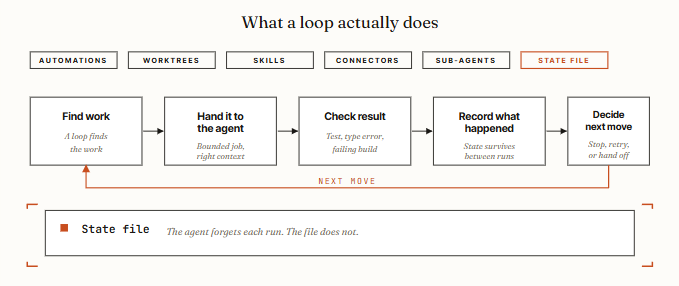
(1) Cypher en X: "Kudu es la mejor alternativa a CCleaner que podés encontrar en la actualidad. Es gratis, de código abierto y está disponible para Windows, Linux y macOS. Si querés mantener tu dispositivo limpio, actualizado, optimizado y libre de virus, descargate Kudu. https://t.co/bjsYFC18JI" / X

**Original source:** [https://x.com/Cypher1984/status/2047671910717149325](https://x.com/Cypher1984/status/2047671910717149325) **Shared with:** [ReadToRelay browser extension](https://github.com/vcavallo/ReadToRelay) --- ## Post ## Conversación Kudu es la mejor alternativa a CCleaner que podés encontrar en la actualidad. Es gratis, de código abierto y está disponible para Windows, Linux y macOS. Si querés mantener tu dispositivo limpio, actualizado, optimizado y libre de virus, descargate Kudu. [ ](https://x.com/Antihumano_Sats) Postea tu respuesta No, voy a ver si lo instalo este fin de semana. Ojo con Mole, es buenísima, gratis, open source también También. Es muy buena pero solo para MacOS. Este no lo conocía, lo probaré Es muy bueno. CCleaner aun existe? Pense que era abandonware Existe. ## Descubre más Provenientes de todas partes de X ![🔓](https://abs.twimg.com/emoji/v2/svg/1f513.svg "Candado abierto") Susto en el gestor de contraseñas Bitwarden Los desarrolladores que usan la herramienta de línea de comandos de Bitwarden se vieron afectados por una versión maliciosa publicada brevemente en npm. La versión 2026.4.0 del paquete bitwarden/cli incluyó código dañino que se [ ](https://x.com/StarkPrivacy/status/2047635984339083518/photo/1) Ya no se escapa nadie ante la IA. Cita DARKNAVY @DarkNavyOrg 24 abr. Traducido del inglés Nuestro Agente de IA abrió un shell de root en Ubuntu 26.04 el primer día que fue lanzado :) [ ](https://x.com/DarkNavyOrg/status/2047515982047187076/photo/1) ![📦](https://abs.twimg.com/emoji/v2/svg/1f4e6.svg "Paquete") TRUCO: Al usar Node, se suele necesitar una forma sencilla y rápida de cambiar (bajar o subir) versiones. Si utilizas pnpm (que deberías), puedes hacerlo... ![✅](https://abs.twimg.com/emoji/v2/svg/2705.svg "Signo grueso blanco de verificación") Puedes instalar sólo pnpm y gestionarlo todo ![✅](https://abs.twimg.com/emoji/v2/svg/2705.svg "Signo grueso blanco de verificación") Bajar y subir versiones en segundos ![✅](https://abs.twimg.com/emoji/v2/svg/2705.svg "Signo grueso blanco de verificación") No necesitas instalar más [ ](https://x.com/Manz/status/2047642843016012138/photo/1)

(1) Erick en X: "¿Sabías que tu PC está enviando datos a servidores que NI SIQUIERA CONOCES… en este preciso momento? Sniffnet es la herramienta open-source que te muestra TODO tu tráfico de internet en tiempo real. Hecho en Rust ⚡ Cross-platform (Windows, Mac, Linux) REPOOO👇 https://t.co/e9vpEsZG4E" / X

**Original source:** [https://x.com/ErickSky/status/2047757359787782177](https://x.com/ErickSky/status/2047757359787782177) **Shared with:** [ReadToRelay browser extension](https://github.com/vcavallo/ReadToRelay) --- ## Para ver los atajos del teclado, presiona el signo de interrogación [Ver atajos de teclado](https://x.com/i/keyboard_shortcuts) ## Post ## Conversación ¿Sabías que tu PC está enviando datos a servidores que NI SIQUIERA CONOCES… en este preciso momento? Sniffnet es la herramienta open-source que te muestra TODO tu tráfico de internet en tiempo real. Hecho en Rust ![⚡](https://abs.twimg.com/emoji/v2/svg/26a1.svg) Cross-platform (Windows, Mac, Linux) REPOOO![👇](https://abs.twimg.com/emoji/v2/svg/1f447.svg "Dorso de la mano con el dedo índice señalando hacia abajo") [ ](https://x.com/ErickSky/status/2047757359787782177/photo/1) [ ](https://x.com/Antihumano_Sats) Postea tu respuesta Hace muchos años había un Addon en Firefox que hacía un mapa de las redes a donde era enviada la información y traía una opcion para bloquear cada sitio. Dejó de funcionar un día y no se supo mas de él. Este software tambien puede bloquear esos sitios o nada mas avisa? Solo monitoreo mi bro, en el readme sale esto: [ ](https://x.com/ErickSky/status/2047789968194465966/photo/1) Operando esto en mi framework casero con mi lindo agente qwen3.6 27b no refusal~ Una gente de bien ![❤️](https://abs.twimg.com/emoji/v2/svg/2764.svg "Corazón rojo") GIF ward Broo old school Vamos a chequear, gracias por compartir Adelante bro! ![🤗](https://abs.twimg.com/emoji/v2/svg/1f917.svg "Cara sonriente con manos abiertas") dame toda la info de este repo ## En directo en X ## Tendencias del momento ## Qué está pasando DestapáHeineken Franco Colapinto Road Show Promoted by Heineken Argentina Política · Tendencia Son Argentinas Deportes · Tendencia Antony Política · Tendencia Eduardo

(1) Erick en X: "¿Sabías que tu PC está enviando datos a servidores que NI SIQUIERA CONOCES… en este preciso momento? Sniffnet es la herramienta open-source que te muestra TODO tu tráfico de internet en tiempo real. Hecho en Rust ⚡ Cross-platform (Windows, Mac, Linux) REPOOO👇 https://t.co/e9vpEsZG4E" / X

**Original source:** [https://x.com/ErickSky/status/2047757359787782177](https://x.com/ErickSky/status/2047757359787782177) **Shared with:** [ReadToRelay browser extension](https://github.com/vcavallo/ReadToRelay) --- ## Para ver los atajos del teclado, presiona el signo de interrogación [Ver atajos de teclado](https://x.com/i/keyboard_shortcuts) ## Post ## Conversación ¿Sabías que tu PC está enviando datos a servidores que NI SIQUIERA CONOCES… en este preciso momento? Sniffnet es la herramienta open-source que te muestra TODO tu tráfico de internet en tiempo real. Hecho en Rust ![⚡](https://abs.twimg.com/emoji/v2/svg/26a1.svg) Cross-platform (Windows, Mac, Linux) REPOOO![👇](https://abs.twimg.com/emoji/v2/svg/1f447.svg "Dorso de la mano con el dedo índice señalando hacia abajo") [ ](https://x.com/ErickSky/status/2047757359787782177/photo/1) [ ](https://x.com/Antihumano_Sats) Postea tu respuesta Hace muchos años había un Addon en Firefox que hacía un mapa de las redes a donde era enviada la información y traía una opcion para bloquear cada sitio. Dejó de funcionar un día y no se supo mas de él. Este software tambien puede bloquear esos sitios o nada mas avisa? Solo monitoreo mi bro, en el readme sale esto: [ ](https://x.com/ErickSky/status/2047789968194465966/photo/1) Operando esto en mi framework casero con mi lindo agente qwen3.6 27b no refusal~ Una gente de bien ![❤️](https://abs.twimg.com/emoji/v2/svg/2764.svg "Corazón rojo") GIF ward Broo old school Vamos a chequear, gracias por compartir Adelante bro! ![🤗](https://abs.twimg.com/emoji/v2/svg/1f917.svg "Cara sonriente con manos abiertas") dame toda la info de este repo ## En directo en X ## Tendencias del momento ## Qué está pasando DestapáHeineken Franco Colapinto Road Show Promoted by Heineken Argentina Política · Tendencia Son Argentinas Deportes · Tendencia Antony Política · Tendencia Eduardo

The case for gatekeeping, or: why medieval guilds had it figured out

**Original source:** [https://www.joanwestenberg.com/the-case-for-gatekeeping-or-why-medieval-guilds-had-it-figured-out/?trk=feed_main-feed-card_feed-article-content](https://www.joanwestenberg.com/the-case-for-gatekeeping-or-why-medieval-guilds-had-it-figured-out/?trk=feed_main-feed-card_feed-article-content) **Shared with:** [ReadToRelay browser extension](https://github.com/vcavallo/ReadToRelay) --- Every open source maintainer I've talked to in the last six months has the same complaint: the absolute flood of mass-produced, AI-generated, mass-submitted slop requests have turned their repositories into a slush pile. The contributions *look* like contributions, they have commit messages, they reference issues and they follow templates etc. But they are, almost uniformly, garbage. A high PR count on a repository used to actually mean something. If strangers were showing up to fix your edge cases, you'd built something people cared about. Now a high PR count signals that your repo has become a target for resume-padding bots, grifters and AI-assisted contribution farmers who need their GitHub activity graph to glow green for recruiter eyeballs or just want to swamp a project in pursuit of vulnerabilities. Open source, in other words, has an open slop problem. And I think the solution is one that would've been perfectly obvious to a thirteenth-century Florentine weaver. ## The guild system solved exactly this problem The medieval guild system gets a bad rap. It's usually remembered as a protectionist racket // a cartel of craftspeople colluding to keep prices high and competition low. And that critique isn't entirely wrong. The guilds did restrict entry. They did maintain monopolies. Adam Smith hated them, and he had reasons. But the guilds also solved a problem: how do you maintain quality standards in a decentralized production environment when you can't personally verify every participant? A master weaver in the Arte della Lana couldn't inspect every bolt of cloth produced in Florence. But he *could* verify that the person producing it had spent years as an apprentice, passed through the journeyman stage, and demonstrated competence to other masters who staked their own reputations on the assessment. The guild was, at bottom, a web of trust backed by skin in the game. You vouched for people. If they turned out to be frauds, you were fucked, too. The open source ecosystem used to have something like this, but it was organic. You'd show up on a mailing list. You'd lurk. You'd file a good bug report. You'd submit a small patch and wait. Over time, established contributors would come to recognize your handle and your judgment. You'd build a reputation the slow way, through repeated interactions with people who were paying attention. Linus Torvalds didn't need a credentialing system for the Linux kernel because the community was small enough, and engaged enough, that trust emerged from the social fabric itself. That fabric is shredded now. ## What "open" was supposed to mean Richard Stallman's vision for free software was rooted in an ethical claim about user freedom. When Stallman argued that software should be free, he meant free as in speech: users should be able to study, modify, and redistribute the code that runs their lives. The model that Eric Raymond championed in *The Cathedral and the Bazaar* added the empirical claim "many eyes make all bugs shallow," but even Raymond assumed those eyes belonged to people who could actually see. The "open" in open source was always about access to code, not the abolition of all quality filters on human participation. But the culture developed an allergy to gatekeeping so severe that suggesting contributors should meet any bar at all became politically radioactive. And that allergy made perfect sense when the failure mode was "talented person gets excluded by arbitrary social dynamics." It makes considerably less sense when the failure mode is "thousands of LLM-generated PRs that change variable names to slightly worse variable names fuck absolutely everything for absolutely everyone." ## What a modern guild would actually look like We need a verified not-shit-person badge. Some mechanism, ideally decentralized, ideally reputation-based, that lets maintainers distinguish between "human who has demonstrated basic competence and good faith" and "entity or bot submitting or causing to be submitted auto-generated changes to mass repositories for credential farming." This is, functionally, *a guild*. And before the libertarian-leaning contingent of Hacker News has a collective aneurysm, let me be specific about what I mean: I don't mean you need a certificate to write Python. I mean something closer to what the Debian project has done with its Web of Trust model for decades: existing trusted contributors vouch for new ones. Your vouching carries weight proportional to your own standing. If you vouch for someone who turns out to be a spam vector, that costs you something. The system works because it makes reputation legible without making it bureaucratic. You could imagine this layered onto GitHub or GitLab with relatively modest infrastructure. Contributor rings, where the inner rings are people vouched for by other inner-ring people. Maintainers could then filter PRs by trust level. Not blocking anyone from forking or submitting, but giving maintainers a signal they desperately need. Chaucer's pilgrims each carried letters of introduction from their parishes; the principle is old enough that it shows up in *The Canterbury Tales* as an assumed feature of civilized travel. TL:DR: Every mass-generated PR a maintainer has to review is time stolen from actual development. Every fake contribution that gets merged degrades the codebase. Every green-square farmer who pads their profile with AI-generated commits makes the GitHub contribution graph less useful as a signal, which ironically makes the farming less valuable too, which means they need to do more of it. Would a guild system be perfect? Obviously not. Would it create new forms of exclusion? Probably. Would medieval Florentine weavers recognize the problem we're dealing with? I suspect they'd find it eerily familiar. And there is no need // reason to re-invent the wheel.

I'd rather read the prompt

**Original source:** [https://claytonwramsey.com/blog/prompt/?ref=sidebar](https://claytonwramsey.com/blog/prompt/?ref=sidebar) **Shared with:** [ReadToRelay browser extension](https://github.com/vcavallo/ReadToRelay) --- When I grade students’ assignments, I sometimes see answers like this: > Utilizing Euler angles for rotation representation could have the following possible downsides: > > - **Gimbal lock**: In certain positions, orientations can reach a singularity, which prevents them from continuously rotating without a sudden change in the coordinate values. > - **Numeric instability**: Using Euler angles could cause numeric computations to be less precise, which can add up and produce inaccuracies if used often. > - **Non-unique coordinates**: Another downside of Euler angles is that some rotations do not have a unique representation in Euler angles, particularly at singularities. > > The downsides of Euler angles make them difficult to utilize in robotics. It’s important to note that very few implementations employ Euler angles for robotics. Instead, one could use rotation matrices or quaternions to facilitate more efficient rotation representation. > > *\[Not a student’s real answer, but my handmade synthesis of the style and content of many answers\]* You only have to read one or two of these answers to know exactly what’s up: the students just copy-pasted the output from a large language model, most likely ChatGPT. They are invariably verbose, interminably waffly, and insipidly fixated on the bullet-points-with-bold style. The prose rarely surpasses the sixth-grade book report, constantly repeating the prompt, presumably to prove that they’re staying on topic. As an instructor, I am always saddened to read this. The ChatGPT rhetorical style is distinctive enough that I can catch it, but not so distinctive to be worth passing along to an honor council. Even if I did, I’m not sure the marginal gains in the integrity of the class would be worth the hours spent litigating the issue. I write this article as a plea to everyone: not just my students, but the blog posters and Reddit commenters and weak-accept paper authors and Reviewer 2. **Don’t let a computer write for you!** I say this not for reasons of intellectual honesty, or for the spirit of fairness. I say this because I believe that your original thoughts are far more interesting, meaningful, and valuable than whatever a large language model can transform them into. For the rest of this piece, I’ll briefly examine some guesses as to why people write with large language models so often, and argue that there’s no good reason to use one for creative expression. ## Why do people do this? I’m not much of a generative-model user myself, but I know many people who heavily rely upon them. From my own experience, I see a few reasons why people use such models to speak for them. **It doesn’t matter.** I think this belief is most common in classroom settings. A typical belief among students is that classes are a series of hurdles to be overcome; at the end of this obstacle course, they shall receive a degree as testament to their completion of these assignments. I think this is also the source of increasing language model use in in [paper reviews](https://arxiv.org/abs/2403.07183). Many researchers consider reviewing ancillary to their already-burdensome jobs; some feel they cannot spare time to write a good review and so pass the work along to a language model. **The model produces better work.** Some of my peers believe that large language models produce strictly better writing than they could produce on their own. Anecdotally, this phenomenon seems more common among English-as-a-second-language speakers. I also see it a lot with first-time programmers, for whom programming is a set of mysterious incantations to be memorized and recited. I think this is also the cause of language model use in some forms of [academic writing](https://arxiv.org/abs/2404.01268): it differs from the prior case with paper reviews in that, presumably, the authors believe that their paper matters, but don’t believe they can produce sufficient writing. **There’s skin in the game.** This last cause is least common among individuals, but probably accounts for the overwhelming majority of language pollution on the Internet. Examples of skin-in-the-game writing include astroturfing, customer service chatbots, and the rambling prologues found in online baking recipes. This writing is never meant to be read by a human and does not carry any authorial intent at all. For this essay, I’m primarily interested in the motivations for private individuals, so I’ll avoid discussing this much; however, I have included it for sake of completeness. ## Why do we write, anyway? I believe that the main reason a human should write is to *communicate original thoughts*. To be clear, I don’t believe that these thoughts need to be special or academic. Your vacation, your dog, and your favorite color are all fair game. However, these thoughts should be *yours*: there’s no point in wasting ink to communicate someone else’s thoughts. In that sense, using a language model to write is worse than plagiarism. When copying another person’s words, one doesn’t communicate their own original thoughts, but at least they are communicating a human’s thoughts. A language model, by construction, has no original thoughts of its own; publishing its output is a pointless exercise. Returning to our reasons for using a language model, we can now examine them once more with this definition in mind. ### If it’s not worth doing, it’s not worth doing well The model output in the doesn’t-matter category falls under two classes to me: the stuff that actually doesn’t matter and the stuff that actually does matter. I’ll start with the things that don’t matter. When someone comments under a Reddit post with a computer-generated summary of the original text, I honestly believe that everyone in the world would be better off had they not done so. Either the article is so vapid that a summary provides all of its value, in which case, it does not merit the engagement of a comment, or it demands a real reading by a real human for comprehension, in which case the summary is pointless. In essence, writing such a comment wastes everyone’s time. This is the case for all of the disposable uses of a model. Meanwhile, there are uses which seem disposable at a surface-level and which in practice are not so disposable (the actually-does-matter category). I should hope that the purpose of a class writing exercise is not to create an artifact of text but force the student to think; a language model produces the former, not the latter. For paper reviewers, it’s worse: a half-assed review will produce little more than make-work for the original authors and tell the editor nothing they didn’t already know. ### If it’s worth doing, it’s worth doing badly I’ll now cover the opposite case: my peers who see generative models as superior to their own output. I see this most often in professional communication, typically to produce fluff or fix the tone of their original prompts. Every single time, the model obscures the original meaning and adds layers of superfluous nonsense to even the simplest of ideas. If you’re lucky, it at least won’t be wrong, but most often the model will completely fabricate critical details of the original writing and produce something completely incomprehensible. No matter how bad any original human’s writing is, I can (hopefully?) trust that they have some kind of internal understanding to share; with a language model, there is no such luck. I have a little more sympathy for programmers, but the long-term results are more insidious. You might recall Peter Naur’s Programming as Theory Building: writing a sufficiently complex program requires not only the artifact of code (that is, the program source), but a theory of the program, in which an individual must fully understand the logical structure behind the code. Vibe coding; that is, writing programs almost exclusively by language-model generation; produces an artifact with no theory behind it. The result is simple: with no theory, the produced code is practically useless. In Naur’s terms, such a program is dead; in our case, it’s stillborn. It should come as no surprise that nearly every vibe-coded app on the Internet struggles with security issues; look no further than [the vibe-coded recipe app that leaks its OpenAI keys](https://news.ycombinator.com/item?id=43553031#43554611). Every time one generates code by prompt, they create a new stillborn program; vibe coding is the art of stitching together their corpses into Frankenstein’s monster. ## An annotated exercise As an experiment, I copied the thesis statement of this essay into Google Gemini and prompted it to complete the essay. Below the spoiler is its complete response. The complete prompt and output. Prompt: > The following is an introduction to a short essay which I have written. Complete the essay by writing 2 short paragraphs. > > I write this article as a plea to everyone: not just my students, but the blog posters and Reddit commenters and weak-accept paper authors and Reviewer 2. **Don’t let a computer write for you!** I say this not for reasons of intellectual honesty, or for the spirit of fairness. I say this because I believe that your original thoughts are far more interesting, meaningful, and valuable than whatever a large language model can transform them into. For the rest of this piece, I’ll briefly examine some guesses as to why people write with large language models so often, and argue that there’s no good reason to use one for creative expression. Output: > It’s fascinating to consider why so many are turning to large language models for writing. Perhaps it stems from a desire for efficiency, a wish to quickly generate text without the perceived effort of crafting each sentence. The allure of instant output can be strong, especially in a world that often prioritizes speed. For students facing deadlines, or blog posters needing content, the temptation to shortcut the writing process might feel overwhelming. There could also be a sense of insecurity, a feeling that one’s own writing isn’t “good enough” and that a language model can somehow elevate it. This might be particularly true for those navigating the often critical world of academic reviews or the sometimes harsh landscape of online commentary. > > However, this reliance on artificial intelligence fundamentally misunderstands the very essence of creative expression. Your individual voice, shaped by your unique experiences, perspectives, and even your struggles to articulate an idea, is what makes your writing resonate. A language model, trained on vast datasets of existing text, can only ever produce a pastiche, a reflection of what has already been said. It lacks the spark of genuine insight, the unexpected turn of phrase that comes from wrestling with a concept until it becomes your own. To surrender your voice to an algorithm is to diminish the potential for true connection and the profound satisfaction of communicating your own original thoughts to the world. The resulting text is, put plainly, *boring*. In its 234-word output, the model produces merely a lengthy rehash of the same prompt. Tonally, it provides no more than sweeping and pointless generality, and any points earned for its brobdingnagian vocabulary are immediately lost to its total lack of taste in using it. For example, consider the following sentence: > Perhaps it stems from a desire for efficiency, a wish to quickly generate text without the perceived effort of crafting each sentence. Gemini has produced a big sentence for a small thought. I can trivially cut two-thirds of it and remove nothing of substance: > Perhaps it stems from a desire for efficiency. With some care, I can trim it a little more. > Perhaps people do it for efficiency. So, in short, a language model is great for making nonsense, and not so great for anything else. ## Just show me the prompt I now circle back to my main point: I have never seen any form of create generative model output (be that image, text, audio, or video) which I would rather see than the original prompt. The resulting output has less substance than the prompt and lacks any human vision in its creation. The whole point of making creative work is to share one’s own experience - if there’s no experience to share, why bother? If it’s not worth writing, it’s not worth reading.

Andrej Karpathy (@karpathy)

**Original source:** [https://nitter.poast.org/karpathy/status/1894099637218545984?lang=en](https://nitter.poast.org/karpathy/status/1894099637218545984?lang=en) **Shared with:** [ReadToRelay browser extension](https://github.com/vcavallo/ReadToRelay) --- Agency > Intelligence I had this intuitively wrong for decades, I think due to a pervasive cultural veneration of intelligence, various entertainment/media, obsession with IQ etc. Agency is significantly more powerful and significantly more scarce. Are you hiring for agency? Are we educating for agency? Are you acting as if you had 10X agency? Grok explanation is ~close: “Agency, as a personality trait, refers to an individual's capacity to take initiative, make decisions, and exert control over their actions and environment. It’s about being proactive rather than reactive—someone with high agency doesn’t just let life happen to them; they shape it. Think of it as a blend of self-efficacy, determination, and a sense of ownership over one’s path. People with strong agency tend to set goals and pursue them with confidence, even in the face of obstacles. They’re the type to say, “I’ll figure it out,” and then actually do it. On the flip side, someone low in agency might feel more like a passenger in their own life, waiting for external forces—like luck, other people, or circumstances—to dictate what happens next. It’s not quite the same as assertiveness or ambition, though it can overlap. Agency is quieter, more internal—it’s the belief that you \*can\* act, paired with the will to follow through. Psychologists often tie it to concepts like locus of control: high-agency folks lean toward an internal locus, feeling they steer their fate, while low-agency folks might lean external, seeing life as something that happens \*to\* them.” Intelligence is on tap now so agency is even more important Feb 24, 2025 · 6:58 PM UTC 1,956 9,437 49,903 11,050,150

Stop Fighting Your Neighbor: The Mechanics of State Power and How to Opt Out

**Original source:** [https://mises.org/mises-wire/stop-fighting-your-neighbor-mechanics-state-power-and-how-opt-out](https://mises.org/mises-wire/stop-fighting-your-neighbor-mechanics-state-power-and-how-opt-out) **Shared with:** [ReadToRelay browser extension](https://github.com/vcavallo/ReadToRelay) --- “The State is the great fiction through which everybody endeavors to live at the expense of everybody else.”—Frédéric Bastiat Bastiat’s insight grows more prophetic by the day. Watch what happens in any crisis. The reaction is predictable: people fracture into warring tribes, each certain it’s fighting for survival. Neighbors become informants, families split over ideology, and communities turn against themselves. While citizens exhaust one another in moral crusades, something else advances quietly—the concentration of power. Bureaucracies expand, authority tightens, and the machinery of control grows ever more intricate. This is no accident. A system built on coercion needs division like oxygen. It must invent internal enemies to justify its dominance, to keep people dependent on its “protection.” When citizens are busy fighting one another—over politics, culture, race, or faith—they are not asking the fundamental question: why should anyone rule them at all? Every orchestrated “emergency,” every financial panic, or culture war, serves the same purpose: to make the expansion of centralized power appear both natural and necessary. Randolph Bourne was right—war is the health of the state—but in our time, war takes subtler forms: propaganda, inflation, surveillance, and fear. The only antidote is self-ownership, voluntary exchange, and the refusal to play the game of masters and subjects. #### **The Architecture of Manufactured Crisis** The mechanism works because it attacks the foundation of voluntary cooperation. When the future becomes unpredictable, people retreat into tribes that promise certainty. The state doesn’t need to impose order directly; it manufactures chaos until you beg for chains. Uncertainty becomes the pretext for control. This is the logic of all monopolies: break the alternatives, then present yourself as the only solution. The state degrades money through inflation, creating desperation. It regulates commerce until only the well-connected can operate. It monopolizes justice until people accept its courts as inevitable, then points to the resulting disorder and demands more power to “fix” what it broke. Every culture war, every financial panic, every “emergency” follows the same script. While you rage at your neighbor over flags, slogans, or party lines, the central bank drains your savings. While you argue about which scandal matters more, regulators quietly entrench the monopolies they serve. While you drown in outrage and distraction, public-private alliances construct the machinery of surveillance and control. The genius is that you participate willingly. You accept restrictions you once would have rejected. You inform on dissenters. You cheer when the “wrong” people are silenced. And all the while, as attention is harvested, power concentrates quietly—until compliance feels like virtue and ownership becomes an illusion. This isn’t a conspiracy. It’s the natural behavior of a system that produces nothing and can only survive by extracting from those who do. A parasite must keep its host alive enough to feed, but confused enough not to notice the blood loss. #### **The Death of Voluntary Exchange** Civilization rests on a simple premise: two people trade only because both expect to benefit. That exchange presupposes, not just self‑ownership—the claim that you control your body, your labor, and the fruits of your work—but a minimal mutual recognition of that same claim in others. As [Hans‑Hermann Hoppe puts it](https://mises.org/mises-wire/primer-hoppes-argumentation-ethics), any attempt to justify norms presupposes property in one’s body, and denying another’s self‑ownership while engaging them is a performative contradiction. Even when we disagree on everything else, the very act of peaceful interaction signals a thin but vital respect: we concede each other’s standing as owners of ourselves, and with it, a right to live and to pursue our own ends. War liquidates that respect, not just war between nations, but the permanent war‑psychology the state cultivates. Under its spell, the other side stops being a potential partner in exchange and becomes an enemy to be broken. Your neighbor stops being a peer and becomes a threat. Disagreement stops being a difference of judgment and becomes disloyalty and betrayal. This inversion is not a side effect; it is the point. Voluntary exchange and free association are the only forces that reliably limit political power, because people who can move, trade, and reorganize their lives retain leverage. Once you are herded into hostile camps, suspicious of outsiders, and dependent on central authorities for security and survival, that leverage disappears. Governance ceases to serve as umpire among equals and assumes its preferred role: master of a managed conflict. From there, the priorities follow logically. Attack money, and you can insert yourself into every transaction. Attack communication, and you can script what coordination is possible. Attack property, and you can decide who may accumulate, keep, or lose the means of independence. The resulting breakdown is portrayed as accidental: institutions “fail,” systems “collapse,” trust “erodes.” In reality, decay is the predictable outcome of policies that displace consent with command. As the old systems crumble under their own contradictions, the state grows more desperate—more authoritarian—cloaking its decay in patriotic slogans and moral crusades. Yet no volume of coercion can conjure what has been systematically undermined: a society grounded in self‑ownership, reciprocal respect, and the willingness to deal with one another as equals rather than enemies. #### **The Illusion of Control and the Reality of Decay** Here’s the paradox: the state claims to grow stronger, more efficient, more necessary. This is theater. The underlying systems are collapsing. Money loses value, trust in institutions evaporates, and the infrastructure of control requires constant maintenance and ever-increasing funding, both becoming harder to sustain. The surveillance, censorship, and financial controls aren’t signs of strength; they’re admissions of weakness. A stable order doesn’t need to monitor every transaction or police every word. It earns consent through performance. But when the order can’t deliver—when inflation erodes savings, when services deteriorate, when competence becomes scarce—the only recourse is coercion. And coercion requires enemies. It requires permanent emergency. It requires you to believe that without the state’s intervention, society would collapse into chaos. So the state manufactures the very chaos it claims to protect you from, pointing at it as proof of the need for more authority. People sense this, even if they can’t articulate it. The cycle of crisis and failed solutions breeds exhaustion. Therefore, the state must keep the population divided, afraid, and focused on fighting each other. If people ever stopped fighting their neighbors long enough to ask why the system keeps failing, the jig would be up. This is the death spiral of all coercive systems. They must keep extracting more to maintain control, but each extraction weakens the productive base they depend on. The end is inevitable. The only question is what replaces them. #### **Stepping Outside the Game** The path forward isn’t seizing the state’s machinery or finding a better faction within it. The path is to recognize the game as rigged and stop playing. This means building economic relationships that don’t require state permission or currency. It means counter-economics: trading in private money, using encrypted communication, establishing reputation systems outside government control. It means mutual aid networks that bypass welfare bureaucracies and private arbitration that outcompetes government courts. None of this requires political change or violence. It only requires you to cooperate directly with others rather than through the bureaucratic middleman. Every transaction you conduct outside the system—every bitcoin payment, every handshake deal, every favor traded in a network of trust—is a vote for a different world. It also means refusing the tribes the state creates for you. You don’t have to choose between corrupt political factions. You don’t have to participate in culture wars that keep you distracted. You don’t have to treat your neighbor as an enemy because you disagree about which emergency to panic about. Most importantly, it means recognizing that your consent is expressed through participation, not voting. The state claims legitimacy through elections and constitutions, but these are theater. Your real consent is shown when you use its money, obey its regulations, and accept its courts. When you withdraw that participation—when you build alternatives—you’re not being destructive, you’re being constructive in a way the state cannot tolerate because it operates outside its control. #### **The Only Direction That Makes Sense** The old order is visibly coming apart. The manufactured crises are reaching saturation where people become numb rather than mobilized. The promise that “if we just obey harder, believe longer, sacrifice more, everything will work out” rings hollow because it always rings hollow in the end. What emerges from this collapse depends on what we build before it’s complete. If we spend our time fighting each other, a new strongman will step in to “restore order.” If we spend our time trying to reform the system, we simply delay its failure while it extracts more wealth and freedom. But if we spend our time building alternatives—real alternatives based on voluntary cooperation and private property—we create the possibility of something genuinely different. This isn’t a call to passivity. It’s a call to redirect your energy away from defending the indefensible and toward building the possible. Stop trying to win arguments with people trained to see you as an enemy. Build something they can join instead. Stop waiting for the right leader or perfect policy. Build the world you want to live in, one transaction, one conversation, one community at a time. That is the only revolution worth having. That is the only one that actually works. Note: The views expressed on Mises.org are not necessarily those of the Mises Institute.

Andrej Karpathy (@karpathy)

**Original source:** [https://nitter.poast.org/karpathy/status/2015883857489522876#m](https://nitter.poast.org/karpathy/status/2015883857489522876#m) **Shared with:** [ReadToRelay browser extension](https://github.com/vcavallo/ReadToRelay) --- A few random notes from claude coding quite a bit last few weeks. Coding workflow. Given the latest lift in LLM coding capability, like many others I rapidly went from about 80% manual+autocomplete coding and 20% agents in November to 80% agent coding and 20% edits+touchups in December. i.e. I really am mostly programming in English now, a bit sheepishly telling the LLM what code to write... in words. It hurts the ego a bit but the power to operate over software in large "code actions" is just too net useful, especially once you adapt to it, configure it, learn to use it, and wrap your head around what it can and cannot do. This is easily the biggest change to my basic coding workflow in ~2 decades of programming and it happened over the course of a few weeks. I'd expect something similar to be happening to well into double digit percent of engineers out there, while the awareness of it in the general population feels well into low single digit percent. IDEs/agent swarms/fallability. Both the "no need for IDE anymore" hype and the "agent swarm" hype is imo too much for right now. The models definitely still make mistakes and if you have any code you actually care about I would watch them like a hawk, in a nice large IDE on the side. The mistakes have changed a lot - they are not simple syntax errors anymore, they are subtle conceptual errors that a slightly sloppy, hasty junior dev might do. The most common category is that the models make wrong assumptions on your behalf and just run along with them without checking. They also don't manage their confusion, they don't seek clarifications, they don't surface inconsistencies, they don't present tradeoffs, they don't push back when they should, and they are still a little too sycophantic. Things get better in plan mode, but there is some need for a lightweight inline plan mode. They also really like to overcomplicate code and APIs, they bloat abstractions, they don't clean up dead code after themselves, etc. They will implement an inefficient, bloated, brittle construction over 1000 lines of code and it's up to you to be like "umm couldn't you just do this instead?" and they will be like "of course!" and immediately cut it down to 100 lines. They still sometimes change/remove comments and code they don't like or don't sufficiently understand as side effects, even if it is orthogonal to the task at hand. All of this happens despite a few simple attempts to fix it via instructions in CLAUDE . md. Despite all these issues, it is still a net huge improvement and it's very difficult to imagine going back to manual coding. TLDR everyone has their developing flow, my current is a small few CC sessions on the left in ghostty windows/tabs and an IDE on the right for viewing the code + manual edits. Tenacity. It's so interesting to watch an agent relentlessly work at something. They never get tired, they never get demoralized, they just keep going and trying things where a person would have given up long ago to fight another day. It's a "feel the AGI" moment to watch it struggle with something for a long time just to come out victorious 30 minutes later. You realize that stamina is a core bottleneck to work and that with LLMs in hand it has been dramatically increased. Speedups. It's not clear how to measure the "speedup" of LLM assistance. Certainly I feel net way faster at what I was going to do, but the main effect is that I do a lot more than I was going to do because 1) I can code up all kinds of things that just wouldn't have been worth coding before and 2) I can approach code that I couldn't work on before because of knowledge/skill issue. So certainly it's speedup, but it's possibly a lot more an expansion. Leverage. LLMs are exceptionally good at looping until they meet specific goals and this is where most of the "feel the AGI" magic is to be found. Don't tell it what to do, give it success criteria and watch it go. Get it to write tests first and then pass them. Put it in the loop with a browser MCP. Write the naive algorithm that is very likely correct first, then ask it to optimize it while preserving correctness. Change your approach from imperative to declarative to get the agents looping longer and gain leverage. Fun. I didn't anticipate that with agents programming feels \*more\* fun because a lot of the fill in the blanks drudgery is removed and what remains is the creative part. I also feel less blocked/stuck (which is not fun) and I experience a lot more courage because there's almost always a way to work hand in hand with it to make some positive progress. I have seen the opposite sentiment from other people too; LLM coding will split up engineers based on those who primarily liked coding and those who primarily liked building. Atrophy. I've already noticed that I am slowly starting to atrophy my ability to write code manually. Generation (writing code) and discrimination (reading code) are different capabilities in the brain. Largely due to all the little mostly syntactic details involved in programming, you can review code just fine even if you struggle to write it. Slopacolypse. I am bracing for 2026 as the year of the slopacolypse across all of github, substack, arxiv, X/instagram, and generally all digital media. We're also going to see a lot more AI hype productivity theater (is that even possible?), on the side of actual, real improvements. Questions. A few of the questions on my mind: - What happens to the "10X engineer" - the ratio of productivity between the mean and the max engineer? It's quite possible that this grows \*a lot\*. - Armed with LLMs, do generalists increasingly outperform specialists? LLMs are a lot better at fill in the blanks (the micro) than grand strategy (the macro). - What does LLM coding feel like in the future? Is it like playing StarCraft? Playing Factorio? Playing music? - How much of society is bottlenecked by digital knowledge work? TLDR Where does this leave us? LLM agent capabilities (Claude & Codex especially) have crossed some kind of threshold of coherence around December 2025 and caused a phase shift in software engineering and closely related. The intelligence part suddenly feels quite a bit ahead of all the rest of it - integrations (tools, knowledge), the necessity for new organizational workflows, processes, diffusion more generally. 2026 is going to be a high energy year as the industry metabolizes the new capability. Jan 26, 2026 · 8:25 PM UTC 1,021 2,949 22,775 2,431,940

Aphex Twin Speaks To Ex. Korg Engineer Tatsuya Takahashi

**Original source:** [https://web.archive.org/web/20180719052026/http://item.warp.net/interview/aphex-twin-speaks-to-tatsuya-takahashi/](https://web.archive.org/web/20180719052026/http://item.warp.net/interview/aphex-twin-speaks-to-tatsuya-takahashi/) **Shared with:** [ReadToRelay browser extension](https://github.com/vcavallo/ReadToRelay) --- The Wayback Machine - https://web.archive.org/web/20180719052026/http://item.warp.net/interview/aphex-twin-speaks-to-tatsuya-takahashi/ ## [![WARP](https://web.archive.org/web/20180719052026im_/http://item.warp.net/wp-content/themes/item/assets/gfx/logo.png?v=1)](https://web.archive.org/web/20180719052026/http://item.warp.net/) [ITEMS](https://web.archive.org/web/20180719052026/http://item.warp.net/) [WARP.NET](https://web.archive.org/web/20180719052026/http://www.warp.net/) [SIGN UP](https://web.archive.org/web/20180719052026/https://warp.us7.list-manage.com/subscribe/post?u=92da423b0a560b89a4b558a36&id=3d39485b46&MERGE0=) ## ITEM • Richard D. James speaks to Tatsuya Takahashi ![Richard D. James speaks to Tatsuya Takahashi](https://web.archive.org/web/20180719052026im_/http://item.warp.net/wp-content/uploads/2017/06/1.jpg) #### Richard D. James interviews Ex. Korg engineer about their collaboration on the Monologue, microtuning, geometry and dreams. Accompanied by track "Korg Funk 5" using exclusively Korg synthesisers. Tatsuya Takahashi is currently advisor for Korg and holds a full-time position at Yadastar GmbH to work on technology based projects. His Tokyo home was photographed by Akemi Kurosaka. 10/06/2017 Richard D. James: I really enjoyed working on this with you. I know I only joined the project near the end, but I found it really exciting. Like a proper job, ha. Tatsuya Takahashi: Richard, it was amazing working with you on the monologue. And now to be interviewed by you?!? That's crazy. But also a lot of fun. The monologue was also the last Korg synth that I was involved with directly, so I guess it's a nice conclusion to things. RDJ: It is now the only synth on the market currently being made to have full microtuning editing, congratulations! TT: Thanks! But it was completely because of you that we included microtuning. If you hadn't insisted on it, I definitely wouldn't have discovered how powerful it was. Did you ever have a moment of realisation, or some kind of trigger that made you discover microtuning? RDJ: The first thoughts that I had about tuning in general happened with my early noodlings on a Yamaha DX100, one of the first synths I saved up for. I remember looking at the master tuning of 440 Hz and thinking I would change it, for no other reason apart from it was set by default to that frequency and that it could be changed. I just used to select a single note, adjust the master tuning of it to taste and then base the whole track around that, something I’ve done ever since, just intuition and maybe a bit of rebelliousness. It’s very simple, but do you want your music to be based on an international standard or on what you think sounds right to you? I’ve since gone on to learn more about this [damn 440 Hz](https://web.archive.org/web/20180719052026/https://en.wikipedia.org/wiki/A440_\(pitch_standard\)). It was a standard introduced in 1939 by western governments, so I’m very glad I trusted my instincts. Listening to that other voice is THE most important thing in creativity, whether you’re an engineer or a musician. Tesla had some important advice on listening to the thoughts from the other. One of the most important inventors ever, but we’re not taught about him in British schools. Funny that. TT: I don't know why it's thin on the curriculum, but the Tesla coil is definitely amazing. If you modulate the high frequency with audio signals you can play music with plasma – that's super cool. I will read up on him though, cos I don't know much about his life and thinking. RDJ: An interesting “note”: I’ve just been reading a book on electronic instruments published in the 1940’s and it says that 440 Hz was transmitted over the radio on different frequencies 24 hours a day and others between midnight and 2 in the afternoon, ha, so you could tune your instruments and be well behaved or calibrate your lab equipment to it. > It’s very simple, but do you want your music to be based on an international standard or on what you think sounds right to you? > > RICHARD D. JAMES But I’ve also read studies from the old Philips laboratories in the Netherlands that show orchestras average deviation from 440 Hz was measured over many concerts and was seen to differ by a few Hz, usually slightly below. Pretty anal. Some people obviously really cared that 440 Hz was being adhered to in practice. Why 440 Hz was chosen in the first place is another interesting story, but looking at the resonances of water and sound is a great place to start, or read up on [cymatics](https://web.archive.org/web/20180719052026/https://en.wikipedia.org/wiki/Cymatics). If you aren’t already familiar with it, that is. TT: So many things are standardised that you don't really think about because they were there before you started using it. 440 Hz was brought about to standardise the way people play together and, yeah, someone can bring a guitar to a piano and it would work together because of that standard. It's like how a green light means you can cross the road or if you shake your head sideways it means no. Those two standards will help you through life in many places around the world. But it's dangerous to enforce standards in creativity. I have a son who's started school in Japan, where every kid will paint the sun red. Now that is some fucked up standardisation! Just really messed up on so many levels. Anyway, I'm not going into that whole 432 Hz vs 440 Hz debate. (BTW: I absolutely love cymatics and I've done some nice workshops for kids with it.) But I will say different frequencies sound different, so why not use that in your music? You got to use whatever feels right and the monologue let's you do exactly that with pitch. RDJ: Yep. TT: Talking of standards, the sample rate of 48 kHz is another one for sampling and signal processing, but the volca sample uses a weird one at 31.25 kHz. Purely because of technical constraints, but I was thinking that might be part of the reason you liked it so much, because the different sample rate gives it a unique sound. RDJ: Haha, yes, it was pretty much the first thing I noticed. Yeah, I thought the 48 kHz, was based on the [Nyquist Theorem](https://web.archive.org/web/20180719052026/https://en.wikipedia.org/wiki/Nyquist%E2%80%93Shannon_sampling_theorem). I think it’s double what humans can apparently hear or something, which is another weird one. I don’t know how anybody worked out humans only hear to 20 kHz. I mean even if you can’t hear above 20 kHz, it doesn't mean that your body doesn't feel it. You don’t just experience sound through your eardrums. A good example of this is listening to a recording of your own voice. To almost everyone apart from maybe the most narcissistic, it always sounds weird/thinner/smaller, as you don’t feel the vibration of your chest and body. There are other reasons of course but that’s one for sure. Anyway, I’m into the extremes of the audio spectrum, ultra clarity ’n’ all but I probably prefer fucked-muffled/lo-bit/’70s sound more, ha! TT: Oh, and when something defies the standard – I just remembered the first time I played a Yamaha SK-10, the faders were all upside down, like max was downwards, even on the volume. I didn't know what was going on and it threw me off at first, but it's actually a bit fun like that and you soon realise it all comes from organ drawbars. RDJ: I never played the SK-10, but these Calrec mixers I use are like that also, the faders are backwards. There is a little dip switch inside to change it, but I think they have them like that for TV/broadcasting, coz if someone falls asleep at the desk they don’t want them to push all the faders up and distort two million TVs at once… Not surprising they have this safeguard considering how skull numbingly boring most TV is. TT: Right!! Yeah, but there is a certain feeling to pulling rather than pushing. It's like how an orgasm is "coming" in English, but it's “going” \[iku\] in Japanese. RDJ: Never thought of it like that. TT: I mean, written text in Japanese was traditionally vertical. Although now a lot is westernised and horizontal. RDJ: Ah, that’s kinda sad… So traditional Japanese text is like trackers and now it’s going like Cubase! :) TT: I sometimes wonder what Japanese synths would have looked like if they didn't copy Moog in the ’70s. You've got to think about what is convention and what is really a good design. [![The studio workspace of Tatsuya Takahashi](https://web.archive.org/web/20180719052026im_/http://item.warp.net/wp-content/uploads/2017/06/work-space.jpeg)](https://web.archive.org/web/20180719052026/http://item.warp.net/wp-content/uploads/2017/06/work-space.jpeg) RDJ: I’ve got one Japanese keyboard, Suzuki, which has got some Japanese tunings built in and a little string on one end that you can pluck. It sounds really nice as well. It also has some good Japanese percussion and MIDI. I don’t think it’s very well known. I wish faders were curved horizontally and vertically, so you could make them like a double helix that go over and under each other, hehe. Could do it with an augmented reality UI I guess. TT: Now that could be cool (if I'm imagining it right)! I've seen rotation sensors on the camera lens focus that work like faders on a curved surface and really thin. That could do it. RDJ: Later on when I got an SH-101, I realised its tuning wasn't like the DX100 at all. It was based on 1v/octave and was supposed to be equal temperament but because of the nature of analogue, it really wasn’t and I REALLY loved that and how it layered with the frozen [12TET](https://web.archive.org/web/20180719052026/https://en.wikipedia.org/wiki/Equal_temperament) of the DX100. I recently made a tuning on the monologue that I matched to an improperly calibrated SH-101 that I was fond of. I tried at first to do this using formulas inside [Scala](https://web.archive.org/web/20180719052026/http://www.huygens-fokker.org/scala/), but it's impossible to represent this accurately with simple maths, Scala can’t deal with these types of tunings unless it’s a keyboard map tuning file. This “bad” tuning is really great when I apply it to a precisely tuned digital synth that has full microtuning capabilities. It’s top making a digital synth sound like an out of tune 101! :) TT: Yeah, I think it's really telling of the age we live in when you get a knob like "SLOP" on the new Prophet that makes pitch inconsistencies a programmable parameter. On one hand, you think that the level of control is great, but on the other it feels weird to deliberately degrade something that's stable. Especially if you're a young engineer striving to design something to be close as possible to perfection, it can be hard to grasp. The best lesson about this came from Mieda – my hero at Korg. When he looked at my first synth schematic, he told me, “Takahashi-kun, your circuits are functional, but they are not musical. Musical instruments do not need perfect waveforms and correct operating points. You need to use the transistor for what it is. As long as it sounds good, it’s OK.” > WHEN \[MIEDA\] LOOKED AT MY FIRST SYNTH SCHEMATIC, HE TOLD ME, “TAKAHASHI-KUN, YOUR CIRCUITS ARE FUNCTIONAL, BUT THEY ARE NOT MUSICAL. MUSICAL INSTRUMENTS DO NOT NEED PERFECT WAVEFORMS AND CORRECT OPERATING POINTS. YOU NEED TO USE THE TRANSISTOR FOR WHAT IT IS. AS LONG AS IT SOUNDS GOOD, IT’S OK. > > TATSUYA TAKAHASHI RDJ: I was going to ask you about SLOP, as you brought that up before in some old emails. I get you now. I mean, yeah, if it just sounds good in the first place then you don’t need that option, but I guess some people like their Osc’s drifty and others not so. It changes with the context I guess. Also, if you’re doing FM you might want to keep them dead on, and for analogue lead sounds, really drifty. Anyway I think I mentioned it before, but the drift on the monologue sounds REALLY nice. It seems to move, but then never go out. Care to explain? Sounds to me like it gets reset/synced at some point, but I’m probably wrong, haven't studied it in depth, just listened. Reminds me a bit of Arp oscillators, which have really nice driftyness, prob my faves! :) TT: That's bang on! So same thing in the minilogue and the volcas too: the oscillators are re-tuned when they're not being used. I'm super glad you like it though because this is such a subjective thing. The autotuning was done in a way that felt nice to me, so it was a really subjective thing and you can’t present a report to convince others that it was OK. At least now I can say RDJ said it was alright! RDJ: I’d like to talk more about this 1v/octave, but that’s for another time. But, anyway, getting back to the question, I was always interested in sound and how it affected me, especially the tuning. It wasn't until my \*Selected Ambient Works Vol. II\* album that I actually made my own full custom tunings, although there were a few scattered things before that. I’ve got a slightly weird balance thing going on and getting the tuning “right” sometimes makes the balance thing less weird for me. It’s a longer story though. TT: Yeah, I think I read somewhere about how humans normally hear pitches differently in the left and right ear and that you don't have that. That is super interesting. RDJ: Because we made it very intuitive to edit the tuning tables, I would actually just buy this synth only for that feature alone. When the export is implemented, it can be the central hub of either complete table creation or just to tweak existing imported Scala files, etc. TT: Yeah, absolutely. I would definitely download the [monologue librarian](https://web.archive.org/web/20180719052026/http://www.korg.com/us/support/download/product/0/733/#software) because you can import and export Scala files easily with that. Hopefully other manufacturers will join the club. The intuitive interface was pretty much all your idea, so a great job on that. I think your idea for the interface came from when you got your [Chroma](https://web.archive.org/web/20180719052026/http://www.vintagesynth.com/misc/chroma.php) modded for microtuning. Have you modded a lot of synths for this functionality? RDJ: That’s right, I burned my own custom O.S. Eproms for the Chroma, which enables full micro tuning and editing and that’s what the monologue editor was based on. I’ve got a good list of hardware and software now that can do it. It’s been a long haul and involved hassling a lot of people, but it is now finally possible with quite a bit of equipment. I’ve generally received really good responses from engineers and programmers. I’ve contacted around 50 different people/companies in the last ten years. Many weren’t even aware that all their equipment and programs were adhering to a standard that was devised hundreds of years ago. Same goes for a lot of electronic musicians, this is quite surprising for electronic music, which supposedly is forward-thinking and futuristic, but most people have since told me how fascinating they have found the subject once they realised it \*was\* a subject! I know microtuning is much more useful on polyphonic keyboards, but it’s still very usable on monophonic instruments and, again, it can be used in the future to create tuning tables that can be used in other Scala-compatible polyphonic synths. [![](https://web.archive.org/web/20180719052026im_/http://item.warp.net/wp-content/uploads/2017/06/DSC1836.jpg)](https://web.archive.org/web/20180719052026/http://item.warp.net/wp-content/uploads/2017/06/DSC1836.jpg) TT: Well, my initial impression was that microtuning is a really niche thing that wouldn't be needed for a mass market synth, especially a monophonic one, but if you try shifting the tuning while running a sequence, you can hear that it gives it another dimension even if it’s subtle. I'm not super-sensitive to pitch or anything, but you can still hear it change. To me, it feels like casting light on a rough surface and seeing different patterns as you move the light. So it was really important to have the easy scale edits you can do on the fly. Scala is great, it's super flexible, but it can be daunting to use and you won't get the real-time interaction, so I hope the monologue gets more people into this stuff. RDJ: I really like your light analogy, that’s great. Yep, on a monophonic instrument, what you just described will be more pronounced if you use a delay with plenty of feedback or reverb, so you can hear the differently tuned notes overlap each other. Scala is deep, very deep, but some things are very quick and easy to get going. For instance, you can just type Equal 24 & press the sysex send shortcut and you have a quarter tone tuning in your synth. Scala is only good for non-intuitive tuning creation, purely mathematical. I love this approach, but really prefer making tunings intuitively, note-by-note. When you’re actually composing something, making them up while you go along, a combination of the two is best for me. TT: I know that you like that Wilsonic app you showed me, which is mainly structured on mathematical relationships of frequencies, but you've also mentioned using a lot of trial-and-error. Do you have a method to your microtuning? RDJ: Yes, many. For instance, on the Chroma I like holding down one key, pressing another key and then tuning the second key in relation to the first, sometimes making two extremely different frequency combinations, like something very low and extremely high at the same time and maybe a group of these dual combos only existing in the top octave of the keyboard map, the rest being another tuning or multiple tunings, all in one tuning table. It’s something I never saw in anyone else’s tunings, combining several tuning tables within one map, so that’s one of my little inventions I guess, as I rarely used the full range of 127 notes in one tuning within one track. monologue can tune four notes at a time which we planned. It’s a different approach again and something I look forward to experimenting with more. TT: Here are five short tracks you made with custom scales. Could you explain how you came up with the scales? RDJ: I forgot which tunings they used, I’ve got so many floating around in folders on the computer and in hardware. I didn’t make any notes. I think they might have been ones that I made in Scala and then tweaked on the monologue, most likely. TT: If you could share the tuning files that you created, that would be great too! RDJ: Yes, I’ve got loads saved and loads lost. I’ve never been a saver. I do save more things these days, getting older or something, but still love to use new sets of rules for every set of new tracks. Also I’ve got to say again many thanks for that lovely MIDI tuning box you made me for the minilogue! TT: No problem! That was an eye-opener for all of us. \[For the readers: Richard asked me for microtuning on our synths and since, at the time, we thought it wasn't something we would put on a production model, we made a custom little tuning tool. Fellow engineer Kazuki Saita and I made a MIDI thru box that could load custom scales. Any MIDI coming in would be transposed by note and cent (using pitch bend) and so you could get microtuning on any mono synth.\] When we were testing that box, Saita and I were blown away. I mean, sequencing on a simple step sequencer like in the monologue can be a bit rigid, but messing with the tuning really opens it up. It basically redefines the keyboard. We were messing around with some subtle stuff and more extreme ones like octaves split into 50 intervals and playing with the arpeggiator. It was crazy and that's when we decided we should put it on the next synth. RDJ: Yes, great! Arpeggiators and microtunings can be a very nice mix. We should include a picture of that box, I’ve got one here if you don’t. TT: We should! Don't have one handy, would you be able to snap a photo? RDJ: Attached it! TT: Cheers! Wood cheeks for the Cirklon. Nice. RDJ: I think the monologue is very nice looking, small, very cute and very capable. At first I thought, “Oh, it hasn’t got this, it hasn’t got that, etc. etc.” But I very quickly realised you have turned these limitations into advantages, which is really quite something special. I really mean that. The lack of extensive features makes the whole thing much more speedy to work with. TT: That's got to be the best compliment. And it's a way of thinking that runs through all the synths I've worked on, from the volcas and monotrons to the monologue. I think with electronic instruments we've got to a point where software can do most things. But I'm a fan of gear where less is more – where the simplest controls can give you the most creative freedom. RDJ: Yes, I like this approach. It’s true, I do it with modular setups as well. I’m lucky to have loads of modular gear but I prefer to make small systems now and leave everything else in another room where I just try things out before committing them to a more thought out config. Of course us musicians always look at something new and we see if it does what we expect it to. And this is OK. But we shouldn’t overlook something before actually trying it out, try and get into the head of the designer first. I try and do this. It’s difficult sometimes to push your ego and expectations out of the way for a while, but if we don’t do this we won’t learn anything new. That’s not to say that every designer’s head is worth getting into, but we gotta give it a go sometimes. [![Hand made sequencer by Tasuya Takahashi.](https://web.archive.org/web/20180719052026im_/http://item.warp.net/wp-content/uploads/2017/06/DSC1850.jpg)](https://web.archive.org/web/20180719052026/http://item.warp.net/wp-content/uploads/2017/06/DSC1850.jpg) TT: This is exactly the reason I really enjoyed working with you. I'd send you a prototype and a day later you'd be sending me a dozen emails about how the drive circuit actually controls gain and dry/wet at the same time. Or how some menu option wasn’t working completely as intended. You would give everything a chance. You went through every single menu option and went after some easter eggs, like finding CC34 VCO1 pitch! In fact, you were the best ever beta tester. Guess you wouldn't be after a day job tho... RDJ: \*blush\* Some examples of this: When I first checked out the volca sample, the lack of velocity response had me scratching my head, but when I realised how it handled it with motion recording of the level control, it was actually loads more fun and SO much faster to program! It’s such a great little idea, I really love it, way more intuitive. I’ve started doing it this way on the Cirklon now sometimes. TT: Yeah, so you're a huge fan of the Cirklon, which you used for "korg funk 5." Could you tell us how that track was put together? Here's the gear list you sent me: Korg Monologue x3 Korg MS-20 kit Korg Poly-61M Korg Volca keys Korg Volca beats Korg Volca sample Korg Minilogue My son on vox I was blown away by this and really really touched. I don't think there is another track out there using so much of the gear I worked on! Also, can you touch on the processing that went on the sounds, cos I can tell there's a lot going on. RDJ: That’s so nice to hear… It was really top making some tracks with only Korg gear. I’m a secret nerd-fan of synth demos, mainly vintage ’80s ones currently! Some amazing music has been made as equipment demos, unsung heroes. I collect synth demos. Well, ones that I like. It’s kind of an unclassified music genre, so doing these tracks for you and Korg was a natural thing for me. I also really like picking certain combinations of gear. That is endlessly fascinating. The Volca beats I used, I did the snare mod but used the mix output, so I treated all the sounds with the same treatment, I think I sent you the full list… looks it up… OK, here it is. volca beats > Skibbe 736-5 mic pre \[nice low mid sound\] > BAC 500 compressor > RTZ PEQ1549 \[this is based on my fave eq, I’ve got some Calrec originals as well, standard circuit design but not standard sound! \] > Calrec minimixer Monologue \[main riff\] > blonder tongue EQ \[i love these eq’s, hardly anyone has heard of them\] TT: Any chance you could share the tracks separately? There might be something we could do with that and a lot of people will be interested in seeing how the different synths sound soloed. Only if you're up for it of course! RDJ: I would if I had them, but I never save individual tracks. I’m trying to get into the habit of that soon. I just recorded that down to the Sound Devices 722. TT: Ah shame! But you know that was the other great thing – that the track was done totally sequenced on the Cirklon and recorded in one take. RDJ: I was thinking a while back on different ways to visualise the data in the Cirklon. Also with the volca fm, you also managed to turn the lack of velocity per note into a bonus \[again\], it puts a different slant on it, applying and recording motion velocity on the whole phrase, it works very well. TT: So the volca keyboard is never going to do a great job of sensing velocity and we could have spent a lot more money to make it velocity-sensitive, but then you'd sit there going, "Well, it's too small to play. We need to make it bigger..." So trying to force it to be something it's not is a great way of creating more problems. Much rather turn the game around. RDJ: That’s a great example of necessity and invention. I was absolutely amazed to find out that it IS actually possible to edit a DX7 voice with great speed from the interface you have designed. I never thought you could do that, but it is and is totally usable. I’ve come up with loads of things on it that I would never have done on a full size DX7. Hats off to Tats! TT: Cheers! So everyone knows the typical DX7 sounds – well, the presets anyway – and by doing things a bit differently, you can open up so much stuff. Take an organ patch on the volca fm and sequence it normally, but then motion sequence the algorithm and it goes in a completely different dimension. It's a discovery, which is fun. I find a lot of artists are discovery junkies. RDJ: Yes, I think I HAVE to be learning something when making tracks, even if it’s something very small. If there’s no learning involved, I wouldn’t get excited enough to do anything. Great fun being able to take a DX7 in your pocket, love it, ultimate walkman in a way. In fact, one for the future: volca fm with built in MP3 player + radio… be super lush. TT: Yeah, super great idea! Also if it could tap into some MIDI archives and play them on the FM engine, it would be great. RDJ: Or maybe a pitch tracker from the MP3s! :-) TT: Even better! :) And it can take real time mic input, so people are saying hello to you, but you're just hearing bells or something. RDJ: Yes, recently I was offering up ideas to a talented coder friend on an app that uses evolutionary/genetic synthesis to try and resynthesise audio/live audio into DX7 patches. It sounds really cool. He’s working on making it a standalone app on Raspberry Pi, and it is based on some vintage code by Andrew Horner. Kyma also used his code for their GA synthesis. Chuck [that](https://web.archive.org/web/20180719052026/https://fo.am/midimutant/) in there while we’re at it. TT: Got to say it's pretty funny getting a consumer product idea from you. Haha! RDJ: :) I’m full of ‘em, I’m like [this guy](https://web.archive.org/web/20180719052026/https://www.youtube.com/watch?v=qf22bddvLnc). TT: BAHAHAHHA! Holy crap. > I think I HAVE to be learning something when making tracks, even if it’s something very small. If there’s no learning involved, I wouldn’t get excited enough to do anything. > > Richard D. James RDJ: How different is the finished monologue to what was designed or what you had in mind? TT: Well, it didn't have microtuning for a start! RDJ: :) TT: When I initially came up with the product plan, it wasn't very detailed. None of my product plans are. Something like: "smaller than the minilogue and monophonic." It's only when you start designing and prototyping that things start to come together. Things like: “What kind of filter do we need?” “Do we need distortion?” “Battery power would be great!” RDJ: If there are features that were designed that didn’t make it, could you tell us about them? TT: Nothing really got properly designed before being ditched. The team is pretty good at putting together test versions where we can just about see if something is going to work before we go to full implementation. In terms of ideas, you had some pretty good ones: - keyboard to alphabet mapping for program name edit - random sequence generator - random scale generator - velocity to sequence position control I think the team had others like arpeggiator, which is the most obvious one. But we dropped that and added key-trigger sequence instead. [![Close up of hand made sequencer taken into job interview at Korg](https://web.archive.org/web/20180719052026im_/http://item.warp.net/wp-content/uploads/2017/06/DSC1779.jpg)](https://web.archive.org/web/20180719052026/http://item.warp.net/wp-content/uploads/2017/06/DSC1779.jpg) RDJ: When or how do you find out that features that were wanted by your team are not going to make it? Is that frustrating? TT: Well, it's not like someone stands there casting their decision on whether something makes it or not. We all try to figure out how it will come together as an instrument, so a single feature might be the focus in a heated discussion, but really it's about the whole thing being coherent but also incoherent and surprising in a good way. Sometimes you need to throw people off what they're expecting to do something interesting. The team was always pretty small, so we could do it without having a draconian decision-making process, but also without it getting too democratic either. We would never ever vote on a feature. RDJ: Would it be possible that Korg could release limited edition and more costly versions of your designs with no corners cut, for us posh musos? TT: Sure, that's definitely a possibility. What's on your wish list? RDJ: Oh dear, that is a big question, I think I’ll have to get back to you on that. Well, those ones above to start with I suppose. :) Do you have a studio at home? Got any pics? Or a description of your setup? TT: I wouldn't say it's a studio, but more of a workshop. I build stuff there for my own live setup, although recently most of it is made up of products I've worked on. One of my favourite things is volca fm going into audio input of monotribe which has been modded so you can kill the VCO. I put on a slow chord progression on the fm and then work a sequence with it with the monotribe. It's actually better if I don't sync the volca fm to the monotribe. RDJ: Nice, I keep meaning to rack up 8 analogue filters to a [TX802](https://web.archive.org/web/20180719052026/http://www.vintagesynth.com/yamaha/tx802.php). Nobody ever made a decent FM synth with analogue filters, there are a few simple FM ones but not 4OP+. TT: My other favourite thing is my speaker system designed by my friends at Taguchi. They're omni-directional and I've been experimenting with the positions. My room is acoustically untreated, but with these speakers you can actually work with the reflections in the room. It's definitely not a typical setup, but it's great because you can pan your instruments around the room and you’re not glued to a sweet spot between a stereo pair. It's great if you just sequence piano phase on two volcas and offset the BPM and just let it run while the sequence phases in and out. The trick there is actually not to hard pan them, but to leave quite a bit of overlap. RDJ: \[\*looks at pics\*\] Great, that is an unusual speaker setup! I’m a big fan of suspending speakers from the ceiling, the first speakers that I built, I filled with tar and hung them from nylon cords from my bedroom ceiling. Saves space as well. Do you live and breathe Korg, do you get time for anything else, any other hobbies? TT: Don't know if it counts as a hobby, but I really like polyhedra. Maybe that’s why I like those speakers, since they're great 3D structures hanging off my ceiling. My favourite polyhedron is the dodecahedron and when you make one with wire, it's hard to make it completely regular. But it turns out I actually like the wonky ones better. Anyway, they have a cool name. [![Omnidirectional speakers made by Taguchi](https://web.archive.org/web/20180719052026im_/http://item.warp.net/wp-content/uploads/2017/06/DSC2160.jpg)](https://web.archive.org/web/20180719052026/http://item.warp.net/wp-content/uploads/2017/06/DSC2160.jpg) RDJ: That’s very nice. I absolutely love geometry, I did a track called “[Dodeccaheedron](https://web.archive.org/web/20180719052026/https://www.youtube.com/watch?v=4dHxSpHjcOE),” a long time ago, one of my fave tracks. I was playing on [this spirograph emulator](https://web.archive.org/web/20180719052026/http://nathanfriend.io/inspirograph/) recently. Ha, a 3D one would be really interesting. TT: Oh man, of course you have a track named “Dodeccaheedron”! I wonder if the track had anything to do with the fact I like them now. Bet it did. Spirographs are so cool. Bit like Lissajous – could stare at that stuff all day. I really want to get hold of some XY lasers actually and fire some really intense ones. Wish there was a way to do that in 3D. RDJ: I’ve been looking into this recently. :) TT: Maybe you can design some phosphorescent smoke that you could fire lasers into and the lines would stay in the air. That will be so cool. And the smoke particles will move with the bass – get some fat bass bins and you would get lines of light vibrating. RDJ: Top idea… Reminds me of [this](https://web.archive.org/web/20180719052026/https://www.youtube.com/watch?v=uENITui5_jU). TT: Yeah, really. I mean it could be a way of visualising the propagation of sound waves, so maybe a scientific use too. And not just sound waves. It could be used in wind tunnels to study air flow. Are we onto something here? RDJ: Yes. RDJ: What Is Your Dream? TT: Having a good cigarette. When you're having a shit day or you're under a lot of stress, cigarettes taste crap. On the other hand, a cigarette after an amazing experience tastes good. So my dream is to smoke the best cigarette ever. Smoking is a full-stop, a moment of recognition that whatever came before it was real. RDJ: I like that. TT: Bit wanky tho. ;) Getting weird vibes reading back at my answers! RDJ: LOLz TT: Oh well, wrote it once, can't deny it. RDJ: If you could magically create any device, what would it be? I understand if you’re not allowed to answer this! TT: A time machine, teleportation machine – the obvious ones. Or actually a machine where you could have as many parallel existences as you want. So you could be a super-dimensional being encompassing all the different possibilities of yourself. That's what popped into my head, but how self-centred! [![Taguchi speaker close up, with dodecahedron](https://web.archive.org/web/20180719052026im_/http://item.warp.net/wp-content/uploads/2017/06/dodecahedron-close-up-geometry-section.jpeg)](https://web.archive.org/web/20180719052026/http://item.warp.net/wp-content/uploads/2017/06/dodecahedron-close-up-geometry-section.jpeg) RDJ: I go to sleep thinking things like this… Maybe it's a bit like this already! :) TT: Hell yeah. Anyway, that's probably not what you meant. So... a lifelogging device for your musical activities. I was packing up to leave Tokyo and found a bunch of minidiscs of music that I'd forgotten I'd made in my teens and I’m guessing there would have been a lot more if I knew where my cassettes were. I cringed at most of it, but it's still part of who I am and I can't erase whatever brain patterns I have because of that. RDJ: Yes, bloody right, that would be very useful. One thing I’d say, though, is I’ve found a lot of artists write off their older work for various personal reasons, while other people won’t have those associations and just really love what you made. TT: Do you have lost musical moments from the past that you would like to hear again? RDJ: Yes, I think I’m obsessed with thoughts like this. If you could selectively erase your memory so you could keep experiencing things for the first time, it would be very interesting, although you would get stuck in loops, so you would have to limit it to a certain number of re-experiences, ha! How many future products have you got in your head or on the drawing board? TT: Quite a lot, but not all will be made. We (meaning the team still at Korg) have always got a bunch of ideas up our sleeves, it's just a case of which ones will get made and when. RDJ: Is your job stressful? I imagine it’s very stressful. What's the most stressful part? TT: Well, the stress was part of the balance, because there's a lot of adrenaline involved in meeting deadlines, starting production and working up to release. Now that I've left that position, I can look back in calm retrospect. I'd say it was quite physical. Kind of like a sport and also quite addictive. But at the same time you can't do it forever. I was also lucky enough to find new possibilities elsewhere, so I stopped before that high pace / full-throttle thing became the only thing I could do. I really did have an amazing time at Korg. I had the best team and I also had a lot of freedom. My decision to leave was really about me than anything to do with my working environment. RDJ: What is your worst fear? TT: Well, doing the same thing over again and then one day realising that's all you can do. RDJ: Yeah, I think we all have to fight against this, especially as you get older. I’ve really been looking at my habits recently and denying them. It feels great if you can manage it. I don't understand the economics of getting hardware to market, but I guess it's safe to assume that the company makes more money from releasing new products than it does upgrading old ones. I can’t help thinking, though, that by continuing to upgrade older products that are still in production, to make them absolutely awesome, would benefit the company in the long-term. Any thoughts about this? TT: That depends how you look at it. You can look at something like the monotribe which we spent a lot of time doing the major update for, which was then soon discontinued. So your initial point might look to hold true. But then you look at the amount we learnt from that update and that we put into the volcas, and then you can say it was worthwhile. I think it's really really important to look back and review past products. Some would benefit from an update, but others are better off redesigned. RDJ: Ok then, well lovely chatting to you as always.. wishing you all the best in your new endeavours, very brave moving yourself to a new country, well done and speak soon. Here’s a [nice link](https://web.archive.org/web/20180719052026/https://dood.al/pinktrombone/) to end with! [![Polyhedra](https://web.archive.org/web/20180719052026im_/http://item.warp.net/wp-content/uploads/2017/06/aaa.jpg)](https://web.archive.org/web/20180719052026/http://item.warp.net/wp-content/uploads/2017/06/aaa.jpg)

21 Lessons from 14 Years at Google

**Original source:** [https://addyo.substack.com/p/21-lessons-from-14-years-at-google?utm_campaign=posts-open-in-app&triedRedirect=true](https://addyo.substack.com/p/21-lessons-from-14-years-at-google?utm_campaign=posts-open-in-app&triedRedirect=true) **Shared with:** [ReadToRelay browser extension](https://github.com/vcavallo/ReadToRelay) --- When I joined Google ~14 years ago, I thought the job was about writing great code. I was partly right. But the longer I’ve stayed, the more I’ve realized that the engineers who thrive aren’t necessarily the best programmers - they’re the ones who’ve figured out how to navigate everything around the code: the people, the politics, the alignment, the ambiguity. These lessons are what I wish I’d known earlier. Some would have saved me months of frustration. Others took years to fully understand. None of them are about specific technologies - those change too fast to matter. They’re about the patterns that keep showing up, project after project, team after team. I’m sharing them because I’ve benefited enormously from engineers who did the same for me. Consider this my attempt to pay it forward. It’s seductive to fall in love with a technology and go looking for places to apply it. I’ve done it. Everyone has. But the engineers who create the most value work backwards: they become obsessed with understanding user problems deeply, and let solutions emerge from that understanding. User obsession means spending time in support tickets, talking to users, watching users struggle, asking “why” until you hit bedrock. The engineer who truly understands the problem often finds that the elegant solution is simpler than anyone expected. The engineer who starts with a solution tends to build complexity in search of a justification. You can win every technical argument and lose the project. I’ve watched brilliant engineers accrue silent resentment by always being the smartest person in the room. The cost shows up later as “mysterious execution issues” and “strange resistance.” The skill isn’t being right. It’s entering discussions to align on the problem, creating space for others, and remaining skeptical of your own certainty. Strong opinions, weakly held - not because you lack conviction, but because decisions made under uncertainty shouldn’t be welded to identity. The quest for perfection is paralyzing. I’ve watched engineers spend weeks debating the ideal architecture for something they’ve never built. The perfect solution rarely emerges from thought alone - it emerges from contact with reality. AI can in many ways help here. First do it, then do it right, then do it better. Get the ugly prototype in front of users. Write the messy first draft of the design doc. Ship the MVP that embarrasses you slightly. You’ll learn more from one week of real feedback than a month of theoretical debate. Momentum creates clarity. Analysis paralysis creates nothing. The instinct to write clever code is almost universal among engineers. It feels like proof of competence. But software engineering is what happens when you add time and other programmers. In that environment, clarity isn’t a style preference - it’s operational risk reduction. Your code is a strategy memo to strangers who will maintain it at 2am during an outage. Optimize for their comprehension, not your elegance. The senior engineers I respect most have learned to trade cleverness for clarity, every time. Treat your technology choices like an organization with a small “innovation token” budget. Spend one each time you adopt something materially non-standard. You can’t afford many. The punchline isn’t “never innovate.” It’s “innovate only where you’re uniquely paid to innovate.” Everything else should default to boring, because boring has known failure modes. The “best tool for the job” is often the “least-worst tool across many jobs”-because operating a zoo becomes the real tax. Early in my career, I believed great work would speak for itself. I was wrong. Code sits silently in a repository. Your manager mentions you in a meeting, or they don’t. A peer recommends you for a project, or someone else. In large organizations, decisions get made in meetings you’re not invited to, using summaries you didn’t write, by people who have five minutes and twelve priorities. If no one can articulate your impact when you’re not in the room, your impact is effectively optional. This isn’t strictly about self-promotion. It’s about making the value chain legible to everyone- including yourself. We celebrate creation in engineering culture. Nobody gets promoted for deleting code, even though deletion often improves a system more than addition. Every line of code you don’t write is a line you never have to debug, maintain, or explain. Before you build, exhaust the question: “What would happen if we just… didn’t?” Sometimes the answer is “nothing bad,” and that’s your solution. The problem isn’t that engineers can’t write code or use AI to do so. It’s that we’re so good at writing it that we forget to ask whether we should. With enough users, every observable behavior becomes a dependency - regardless of what you promised. Someone is scraping your API, automating your quirks, caching your bugs. This creates a career-level insight: you can’t treat compatibility work as “maintenance” and new features as “real work.” Compatibility is product. Design your deprecations as migrations with time, tooling, and empathy. Most “API design” is actually “API retirement.” When a project drags, the instinct is to blame execution: people aren’t working hard enough, the technology is wrong, there aren’t enough engineers. Usually none of that is the real problem. In large companies, teams are your unit of concurrency, but coordination costs grow geometrically as teams multiply. Most slowness is actually alignment failure - people building the wrong things, or the right things in incompatible ways. Senior engineers spend more time clarifying direction, interfaces, and priorities than “writing code faster” because that’s where the actual bottleneck lives. In a large company, countless variables are outside your control - organizational changes, management decisions, market shifts, product pivots. Dwelling on these creates anxiety without agency. The engineers who stay sane and effective zero in on their sphere of influence. You can’t control whether a reorg happens. You can control the quality of your work, how you respond, and what you learn. When faced with uncertainty, break problems into pieces and identify the specific actions available to you. This isn’t passive acceptance but it is strategic focus. Energy spent on what you can’t change is energy stolen from what you can. Every abstraction is a bet that you won’t need to understand what’s underneath. Sometimes you win that bet. But something always leaks, and when it does, you need to know what you’re standing on. Senior engineers keep learning “lower level” things even as stacks get higher. Not out of nostalgia, but out of respect for the moment when the abstraction fails and you’re alone with the system at 3am. Use your stack. But keep a working model of its underlying failure modes. Writing forces clarity. When I explain a concept to others - in a doc, a talk, a code review comment, even just chatting with AI - I discover the gaps in my own understanding. The act of making something legible to someone else makes it more legible to me. This doesn’t mean that you’re going to learn how to be a surgeon by teaching it, but the premise still holds largely true in the software engineering domain. This isn’t just about being generous with knowledge. It’s a selfish learning hack. If you think you understand something, try to explain it simply. The places where you stumble are the places where your understanding is shallow. Teaching is debugging your own mental models. Glue work - documentation, onboarding, cross-team coordination, process improvement - is vital. But if you do it unconsciously, it can stall your technical trajectory and burn you out. The trap is doing it as “helpfulness” rather than treating it as deliberate, bounded, visible impact. Timebox it. Rotate it. Turn it into artifacts: docs, templates, automation. And make it legible as impact, not as personality trait. Priceless and invisible is a dangerous combination for your career. I’ve learned to be suspicious of my own certainty. When I “win” too easily, something is usually wrong. People stop fighting you not because you’ve convinced them, but because they’ve given up trying - and they’ll express that disagreement in execution, not meetings. Real alignment takes longer. You have to actually understand other perspectives, incorporate feedback, and sometimes change your mind publicly. The short-term feeling of being right is worth much less than the long-term reality of building things with willing collaborators. Every metric you expose to management will eventually be gamed. Not through malice, but because humans optimize for what’s measured. If you track lines of code, you’ll get more lines. If you track velocity, you’ll get inflated estimates. The senior move: respond to every metric request with a pair. One for speed. One for quality or risk. Then insist on interpreting trends, not worshiping thresholds. The goal is insight, not surveillance. Senior engineers who say “I don’t know” aren’t showing weakness - they’re creating permission. When a leader admits uncertainty, it signals that the room is safe for others to do the same. The alternative is a culture where everyone pretends to understand and problems stay hidden until they explode. I’ve seen teams where the most senior person never admitted confusion, and I’ve seen the damage. Questions don’t get asked. Assumptions don’t get challenged. Junior engineers stay silent because they assume everyone else gets it. Model curiosity, and you get a team that actually learns. Early in my career, I focused on the work and neglected networking. In hindsight, this was a mistake. Colleagues who invested in relationships - inside and outside the company - reaped benefits for decades. They heard about opportunities first, could build bridges faster, got recommended for roles, and co-founded ventures with people they’d built trust with over years. Your job isn’t forever, but your network is. Approach it with curiosity and generosity, not transactional hustle. When the time comes to move on, it’s often relationships that open the door. When systems get slow, the instinct is to add: caching layers, parallel processing, smarter algorithms. Sometimes that’s right. But I’ve seen more performance wins from asking “what are we computing that we don’t need?” Deleting unnecessary work is almost always more impactful than doing necessary work faster. The fastest code is code that never runs. Before you optimize, question whether the work should exist at all. The best process makes coordination easier and failures cheaper. The worst process is bureaucratic theater - it exists not to help but to assign blame when things go wrong. If you can’t explain how a process reduces risk or increases clarity, it’s probably just overhead. And if people are spending more time documenting their work than doing it, something has gone deeply wrong. Early in your career, you trade time for money - and that’s fine. But at some point, the calculus inverts. You start to realize that time is the non-renewable resource. I’ve watched senior engineers burn out chasing the next promo level, optimizing for a few more percentage points of compensation. Some of them got it. Most of them wondered, afterward, if it was worth what they gave up. The answer isn’t “don’t work hard.” It’s “know what you’re trading, and make the trade deliberately.” Expertise comes from deliberate practice - pushing slightly beyond your current skill, reflecting, repeating. For years. There’s no condensed version. But here’s the hopeful part: learning compounds when it creates new options, not just new trivia. Write - not for engagement, but for clarity. Build reusable primitives. Collect scar tissue into playbooks. The engineer who treats their career as compound interest, not lottery tickets, tends to end up much further ahead. Twenty-one lessons sounds like a lot, but they really come down to a few core ideas: stay curious, stay humble, and remember that the work is always about people - the users you’re building for and the teammates you’re building with. [ ![](https://substackcdn.com/image/fetch/$s_!-JAK!,w_1456,c_limit,f_auto,q_auto:good,fl_progressive:steep/https%3A%2F%2Fsubstack-post-media.s3.amazonaws.com%2Fpublic%2Fimages%2F2ff24d22-2b08-4900-b733-bb857e7e4459_2736x2737.jpeg) ](https://substackcdn.com/image/fetch/$s_!-JAK!,f_auto,q_auto:good,fl_progressive:steep/https%3A%2F%2Fsubstack-post-media.s3.amazonaws.com%2Fpublic%2Fimages%2F2ff24d22-2b08-4900-b733-bb857e7e4459_2736x2737.jpeg) A career in engineering is long enough to make plenty of mistakes and still come out ahead. The engineers I admire most aren’t the ones who got everything right - they’re the ones who learned from what went wrong, shared what they discovered, and kept showing up. If you’re early in your journey, know that it gets richer with time. If you’re deep into it, I hope some of these resonate. [ ![](https://substackcdn.com/image/fetch/$s_!-kh4!,w_1456,c_limit,f_auto,q_auto:good,fl_progressive:steep/https%3A%2F%2Fsubstack-post-media.s3.amazonaws.com%2Fpublic%2Fimages%2F746cd1ff-8111-4f8f-b7f9-84db223f998f_7838x7838.png) ](https://substackcdn.com/image/fetch/$s_!-kh4!,f_auto,q_auto:good,fl_progressive:steep/https%3A%2F%2Fsubstack-post-media.s3.amazonaws.com%2Fpublic%2Fimages%2F746cd1ff-8111-4f8f-b7f9-84db223f998f_7838x7838.png)

The Good Mixer

**Original source:** [https://www.discopogo.co/posts/the-good-mixer?utm_source=substack&utm_medium=email](https://www.discopogo.co/posts/the-good-mixer?utm_source=substack&utm_medium=email) **Shared with:** [ReadToRelay browser extension](https://github.com/vcavallo/ReadToRelay) --- In the era of SoundCloud, Mixcloud, YouTube, the commercial DJ mix no longer has the cachet it once did. In the 90s and 00s, however, they were one of the defining aspects of electronic dance music, helping to establish names like Kruder & Dorfmeister, David Holmes, Carl Cox, 2manydjs and co. **Ben Cardew** reflects upon this golden age for mixing it up and discovers that thanks to ongoing series like DJ-Kicks and fabric presents there’s still life in the concept… **‍**Two bottles of cheap red wine, a pasta recipe from Jamie Oliver and Kruder & Dorfmeister’s ‘DJ-Kicks’: ​​these were the three key ingredients of any student dinner party in the late-90s. *That’s* how big DJ mix albums were back then: utterly mainstream musical releases to tap an absent toe to, as you awaited your mate’s vegetarian lasagne.  And why not? Dance music was booming; CD sales stratospheric; and DJ culture was everywhere. Mix series like Journeys by DJ and !K7’s DJ-Kicks were household names and everyone had their favourite after-party gem or dinner table destroyer. In 2025, mixes are more prominent than ever. SoundCloud, Mixcloud, YouTube and Apple Music are *heaving* with them. Mixes.db, the self-proclaimed “database for DJ sets, podcasts, radio shows and more”, has 301,000-plus mix pages and the number is rising every day.  For the commercially released DJ mix album, though, 2025 tells a different story. Journeys by DJ is but a memory; and, while DJ-Kicks and fabric presents keep faithfully on, there hasn’t been a mix album that has gone *really* mainstream since Caspa and Rusko’s ‘FABRICLIVE.37’ in 2007. You could argue that the DJ mix album has become a victim of its own success. Recorded mixes have existed for as long as DJs: from hip hop mixtapes in the 1970s, to Jamaican sound system cassettes, to people recording The Wizard off Detroit radio in the 1980s. In the UK, the legendary ‘Street Sounds Electro’ compilations were an early example of a commercial mix, although the practice really took off with the tape pack recordings from raves, which were ubiquitous in the early-90s. As the decade progressed, the mix album became increasingly legit. ‘Mixmag Live Volume 1’, with Carl Cox and Dave Seaman, was released in 1992; the Journeys by DJ series launched in 1993 and DJ-Kicks followed in 1995. Soon the classic releases started to add up: Laurent Garnier’s ‘Mixmag Live Volume 19’ and ‘Coldcut’s Journeys By DJ (70 Minutes Of Madness)’ in 1995; Jeff Mills’ ‘Live at the Liquid Room, Tokyo’ and Kruder & Dorfmeister’s ‘DJ-Kicks’ in 1996; 2manydjs’ ‘As Heard On Radio Soulwax Pt. 2’ in 2002; we all have our favourites. And some of them became very popular indeed, with Kruder & Dorfmeister’s ‘The K&D Sessions’ apparently selling one million copies worldwide.  With commercial success, went artist triumph. For some artists – Kruder & Dorfmeister, LTJ Bukem – a commercial mix CD arguably became their defining release. Coldcut are UK house pioneers and legendary beats producers. But what is the one record you would pull out to show people what they do? ‘People Hold On’? Or ’70 Minutes of Madness’? For artists, too, these releases were hugely important. Coldcut’s Jonathan More says that ’70 Minutes of Madness’ was like “a validation” for the group, who had been regularly spinning two-hour sets on their Kiss FM show Solid Steel with PC (Patrick Carpenter) and Strictly Kev (Kevin Foakes), as well as in clubs. More, Coldcut partner Matt Black, Carpenter and Foakes spent “four days to a week” preparing ’70 Minutes of Madness’, although commercial concerns proved a headache. Sony apparently refused to license Coldcut’s own 1989 hit ‘People Hold On’ for the album, scuppering a planned ‘Doctor Who’/‘Planet Rock’/‘People Hold On’ section.  The mix’s fêted use of Coldcut’s own ‘Beats and Pieces’ at 45rpm, meanwhile, was inspired by an incident at a club in the West Country. “Kev and I got asked to do a club in Cornwall somewhere,” More relates. “We got a bunch of trip hop and slow beats and hip hop. We rocked up at this place and it was full-on monging, gum-chewing, acid house music. And we were like: ‘Oh dear, what are we going to do?’ So, Kev brilliantly goes: ‘I’ve got an idea.’ And he bangs on an Aphex Twin tune and then mixes ‘Beats and Pieces’ in, well sped up and the crowd went berserk.” It was a similar story with Kruder & Dorfmeister’s ‘DJ-Kicks’. The Austrian duo had been DJing intensively since the success of their ‘G-Stoned’ EP in 1993 and the songs in their mix reflect their typical selection of the time, albeit with a twist.  “On the way to Berlin \[to meet !K7\], we said, if we are going to do it, we want to do it completely different than anybody did before,” Peter Kruder explains. Rather than a brash, colourful sleeve, the duo wanted something shot in nature; and the record wouldn’t be a standard live DJ mix, but something they could re-work in the studio, adding effects and making edits on Pro Tools. “We literally dubbed every song that is on there, so that the versions are really different from the original versions that everybody knew,” says Kruder. “It was quite elaborate. I think it took us two days, three days, to put the whole thing together.” Going to such extremes was not, perhaps, typical. But !K7 did encourage artists to think differently. “Built into the DNA of DJ-Kicks was a mix, combined with new music from the compiler,” explains !K7 head of marketing David Coleby and ensuring the presentation is closer to an album, the compilers have all taken their own interpretations of this and run with it.”    For Kruder & Dorfmeister, this was time well spent. “I talked with Stefan Struever \[the !K7 employee who first asked them to record a mix\] about what he thought the record would sell,” says Kruder. “And he said to me: ‘Carl Craig just sold 50,000. But that’s Carl Craig!’” (Laughs)  Kruder & Dorfmeister’s ‘DJ-Kicks’ has now sold more than 250,000 copies in Europe alone. But even that was eclipsed by the success of ‘The K&D Sessions’, a second mix album for !K7 that included 19 of the duo’s remixes and two original tracks. Remarkably, the duo are currently touring ‘The K&D Sessions Live’ across “various beautiful locations” around Europe and the US. “Nobody ever did a live version of a remix album,” says Richard Dorfmeister, “Normally you play your own stuff. But to play a remix album live, this is really something new.” The first kink in the DJ mix armour came in the late-90s, when the UK’s dance music magazines started to routinely include covermount mix CDs with their monthly issues. By the turn of the millennium this had become standard, with big-name DJs like Roger Sanchez, Cassius and Paul van Dyk mixing CDs for Mixmag and Muzik. While perhaps annoying for labels, this wasn’t a hammer blow to their mix sales, with Fabric launching its fabric and FABRICLIVE mixes in 2001. The blow would soon follow, though, with the launch of YouTube, SoundCloud and Mixcloud in 2005, 2007 and 2008 respectively.  The effect wasn’t immediate. But it wasn’t long before DJs, labels and music fans discovered that they could easily distribute their own mixes, reaching potential audiences in the millions. And if online mixes weren’t easily monetisable, it *did* remove the headache of licensing tracks, printing CDs and finding distribution.  The launch of dedicated music streaming platforms like Spotify and Apple Music has also contributed. The complicated licensing deals around commercial mix CDs mean that many are still unavailable on streaming. But Hiroki Beck, head of labels at Fabric, explains that streaming services have essentially turned music fans into DJs and curators, allowing them to create their own dedicated playlists. This wasn’t the end for DJ mix albums either. But it did mean that commercial mix CDs needed to up their game if they wanted to stand out from the millions of online mixes. Often this would mean DJs putting exclusive tunes on to their mixes. But a new concept could also work. This is what Paul Rose, aka Scuba, did in 2011, when he was called on to compile his own DJ-Kicks mix. “I’ve been a fan of the series, particularly the Kruder & Dorfmeister one,” he says. “So being asked to do that was great and I spent a lot of time on it. It’s a very conceptual mix: each tune slows down slightly and there’s a lot of piecing it together.” This was a nod to the SUB:STANCE parties in Berlin that Scuba had been playing, where he would slow the bpm at the end of the night. As music sales in general fell in the 2000s, many mix album series slowed their release schedules or gave up the ghost. The last Journeys by DJ was released in 2007 on download only; the Global Underground series took a four-year break between ‘041: James Lavelle, Naples’ and ‘042: Patrice Bäumel, Berlin’; and fabric and FABRICLIVE both reached their 100th – and final – album releases in autumn 2018.  “It was like a full-circle moment for the series, ending on 100 each,” Beck says. “But also, CD sales were very much on the decline. And I think the cost of the tins \[in which the Fabric CDs were packaged\] itself was untenable as well.” Even then, the company was planning for the fabric presents series, which debuted in February 2019. “You do get the music fans that are collectors and still want that physical product,” says Beck. The focus with fabric presents, in fact, is largely the vinyl market: each release comes as a mixed CD and download - which is also released to streaming, sometimes months after the physical debut - as well as a vinyl edition with a selection of unmixed tracks. Beck compares the fabric presents release strategy to “a mini album campaign format”. “We release four a year but treat these mixes with a bit more planning and marketing spend; we release a few singles off these mixes. We will always ask the artists to provide their own original tracks as well. So, in a way, lengthening these campaigns,” he says. You can see why this appeals to artists and fabric presents has attracted some big names, including Bonobo, Chase & Status and, most recently, Laurent Garnier. Both Rose and More say they would definitely mix a commercial CD in 2025, were they asked. But would they buy one? “I don’t know,” says Rose. “People always talk about physical product now and how it’s nice to own something. Personally, I don’t really like owning stuff that much, just anything. I’m not too big on possessions.” “It is a shame that DJ mixes have become so devalued,” he adds, “but I think that’s just a reflection of the fact that music is devalued more generally.” Clearly, there still *is* a market for DJ mix albums in 2025. Collectors love the physical product, while some mixes perform extremely well on streaming. More than half of the tracks on ‘fabric presents Chase & Status’ have passed half a million streams on Spotify, with 10 racking up more than one million plays. “If it flies \[on streaming\] then that is basically paying for all the other projects,” says Beck. ‘fabric presents Chase & Status’ is not, perhaps, the kind of mix that unites tribes, lights up dinner parties and gets endlessly discussed at the afters, like ‘70 Minutes of Madness’ or ‘As Heard On Radio Soulwax Pt. 2’ before it. But the dance music world in general is so fractured in 2025, that it is hard for *any* release to unite listeners like these records once did, be they artist albums, compilations or mixes. So don’t be misled: 50 years after the birth of hip hop, the DJ mix album isn’t dead or even resting; it’s *right there*, in the record store, on Spotify and even in a fancy concert hall, waiting for you to lend an ear. ‍ ### **30 Mixes Of Madness** **Coldcut: ‘Journeys by DJ: 70 Minutes of Madness’ (1995)** The daddy. A sonic adventure that swings from jungle to ambient, techno to the ‘Dr. Who’ theme tune. Often voted the best mix ever, ‘70 Minutes of Madness’ inspired a generation of DJs. **Various: ‘Blech’ (1995)** A mixtape, no less, in which Coldcut associates Strictly Kev and PC stamp their Day-Glo imprint all over the Warp Records catalogue, creating what may be the most anarchic record in the label’s catalogue. **LTJ Bukem: ‘Logical Progression’ (1996)** Logical Progression is Bukem’s defining statement, two discs of soulful, floating jungle from the Good Looking crew that was everywhere in 1996. The album helped drum’n’bass to break new commercial ground, while staying absolutely true to its roots. **See also:** ‘Progression Sessions Vols 1–10’. **The Chemical Brothers: ‘Live at the Social Volume 1’ (1996)**  Before everything else The Chemical Brothers were DJs, bringing together disparate influences that thumbed their nose at the restraints of four-to-the-floor techno. ‘Live at the Social Volume 1’ was the duo’s first commercial mix and captured a newly eclectic wave of British clubbing. **Jeff Mills: ‘Live at the Liquid Room – Tokyo’ (1996)** In the early-1990s everyone *knew* that Jeff Mills was the best techno DJ, even if few people had heard him spin. That changed with ‘Liquid Room’, two discs that redefined what a DJ could do, as Mills pushed his records to breaking point.  **See also:** ‘Exhibitionist - A Jeff Mills Mix’. **Kruder & Dorfmeister: ‘DJ-Kicks: Kruder & Dorfmeister’ (1996)** Kruder & Dorfmeister’s ‘DJ-Kicks’ broke the Austrian act by capturing the duo’s laidback-but-danceable, jazzy-but-twisted mixture of downtempo, jungle beats and dub. ‘The K&D Sessions’, which followed in 1998, was *even* bigger, selling one million copies worldwide. **Nicolette: ‘DJ-Kicks: Nicolette’  (1997)** Nicolette’s ‘DJ-Kicks’ is a rare example of a non-DJ mix, with Nicolette primarily known for her singing, rather than mixing skills. The results were astounding: a head-spinning mixture of jungle, techno and industrial that wove a picture of a singular artist.  **See also:** DJ-Kicks from Playgroup, Carl Craig, The Glimmers, Hot Chip, Moodymann, Steven Julien… the list is endless. **Derrick Carter: ‘Mixmag presents The Cosmic Disco’ (1997)** Derrick Carter’s 1997 CD for Mixmag might be the best pure house mix ever, a fantastically inventive 68 minutes of boompty heaven from an absolute master of the art.  **See also:** fabric 56 and Carter’s ‘Sessions’. **Dave Rofe/Jon Dasilva/Pete Robinson: ‘Viva Haçienda’ (1997)** Released just before The Haçienda lost its licence, ‘Viva Haçienda’ looks back at 15 years of the Manchester club. The result is the funkiest possible history lesson: 44 tracks of classic dance music united by a Mancunian thread. **Gilles Peterson & Norman Jay: ‘Desert Island Mix (Journeys By DJ)’ (1997)**  The record’s cover – a literal treasure chest – says it all. ‘Desert Island Mix’ is a selection of classic and contemporary tracks from two of the UK’s most keyed-in DJs, 35 genre-elusive gems most listeners would happily be marooned with.  **See also:** Peterson’s ‘Worldwide’ mix series; Norman Jay: ‘Desert Island Mix Part 2’. **David Holmes: ‘Essential Mix 98/01’ (1998)** ‘Essential Mix 98/01’ was so influential in its note-perfect digging that it (almost) single-handedly made classics out of songs like Marlena Shaw’s ‘California Soul’. The record’s ultra-cinematic charms also paved the way for Holmes’ pivot into movies.  **Richie Hawtin: ‘Decks, EFX & 909’  (1999)** Made with turntables, effects box and 909, Richie Hawtin’s second commercial mix blurred the lines between artist album and DJ mix, a distinction he would obliterate on 2001’s ‘DE9: Closer to the Edit’. ‘Decks, EFX & 909’ is famously intense but surprisingly groovy. **Larry Levan: ‘Live at the Paradise Garage’ (2000)** Larry Levan was the DJ’s DJ. Thanks to the release of Strut’s ‘Live at the Paradise Garage’, his legendarily empathetic and often idiosyncratic selection skills went public, bringing listeners closer to the Paradise Garage than any other album could dare to. **Eskimo: ‘Various Artists and Many Others Vol 1’ (2000)** The first compilation from Belgian label Eskimo, mixed by Glimmer Twins Mo & Benoelie, delivers on its promise of “100% pure emotion”, with a series of grooves that slink off the turntable. Eskimo became a key player in the 2000’s mixes market, making Ghent seem like the sexiest place on Earth. **Craig Richards: ‘fabric 01’ (2001)** The fabric mix series covered the London club’s Saturday night specialities of quality house and techno, with brilliant mixes from Villalobos, Omar-S, Nina Kraviz and more. It kicked off with a classic from resident DJ Craig Richards, whose melodic take on tech house – as was – showed why he was so important.  **The Unabombers: ‘The Electric Chair (Basement Soul Music)’ (2001)** The Unabombers served up an immaculate selection of hip hop, house and….  well, *everything* on their first mix CD, an album that shows that it’s not how *big* a song is, it’s what you do with it. Hits and underground classics align within the soulful world of ‘The Electric Chair’.  **Dave Clarke: ‘World Service’ (2001)** Techno Baron Dave Clarke brings you both types of music – techno *and* electro – on his towering ‘World Service’ album, mixed with the heart-racing hip hop skills that made Clarke one of the hottest DJs on Earth.  See also: Clarke’s ‘X-Mix (Electro Boogie)’. **DJ Harvey: ‘Sarcastic Study Masters’ (2001)** *The* most legendary mix from one of the world’s most respected selectors, a sunlit excursion into gilded grooves and singular musical logic that help kickstart the trend for cosmic disco in the early-2000s. **2manydjs: ‘As Heard on Radio Soulwax Part 2’ (2002)** While mashups were definitely a *thing* by 2002, ‘As Heard on Radio Soulwax Part 2’ brought them into the mainstream, 2manydjs’ brilliantly adventurous – and often very funny – blends of, say, The Stooges and Salt-N-Pepa proving a phenomenon. **Jacques Lu Cont: ‘FABRICLIVE 09’ (2003)** If you want to know who Stuart Price really is then look no further than his exquisite 2003 mix for the FABRICLIVE series, which lays bare his influences, from Steve Miller Band to Pixies, with an immaculate musical flow. Honourable FABRICLIVE mentions go to James Murphy, Diplo and John Peel. **Optimo (Espacio): ‘How to Kill the DJ (Part Two)’ (2004)** ‘How To Kill The DJ (Part Two)’ is a genre tightrope walk of a mix from Optimo’s JD Twitch and JG Wilkes, where CLS are mixed into Gang of Four and no one bats an eyelid. Daredevil DJing at its best. **Erol Alkan: ‘A Bugged Out Mix’/‘A Bugged In Selection’ (2005)** Erol Alkan was the perfect choice for Bugged Out!’s 2000s mix series: an incredibly flexible DJ who assembled bangers for disc one and horizontal beauties for disc two. Alkan updates his ‘Bugged In’ playlist on Spotify to this day. **Daniele Baldelli: ‘Cosmic – The Original’ (2007)** Italian disco innovator Daniele Baldelli lays down an ultra-smooth mixture of Italo-Disco, electronica and synth pop as a homage to the legendary Italian club Cosmic, guaranteed to lift you up and out of your gloomy existence. **Andrew Weatherall: ‘Masterpiece’ (2012)** Weatherall put together so many great mixes you could have a top 25 of him alone. Honourable mentions for ‘Sci-Fi-Lo-Fi Vol. 1’, an ear-opening collection of rockabilly and garage classics, and his acidic ‘fabric 19’ mix. But ‘Masterpiece’, a selection of A Love from Outer Space classics, is a cut above. **SHERELLE: ‘fabric presents SHERELLE’ (2021)**  London DJ SHERELLE would have been a shoo-in for a FABRICLIVE mix, had she made her breakthrough before the series was shuttered. As it is, her rousing DJ skills, joining the dots across decades of music, produced the first classic in the fabric presents series. ‍ ### From The Booth SHERELLE **‘DJ-Kicks: Kemistry & Storm’** “Kemistry and Storm are huge heroes of mine and a real inspiration as a woman in the industry making bass music. They were integral to the birth of drum’n’bass. Their story felt forgotten about for a while but it’s great to see them get more recognition in recent years. I enjoy listening to this one on my way to gigs or when I am on a plane. I feel like I’m ready for anything after listening to this. Not one to listen to when there is turbulence though.” Man Power **I-f: ‘Mixed Up in the Hague II’** “I was put on to this by my friend Tony Daly, who now runs 586 Records in Gateshead The mix came out in 2006, and it was a follow up to the seminal ‘Mixed Up in the Hague Part 1’ from 2001. It’s credited as one of the things that caused a resurgence in interest in Italo Disco. This was pre-social media so personal recommendations from older friends really helped me discover my own tastes. Mix CDs led me to discover what I valued in music and culture. Receiving and passing on personal recommendations has made me feel like part of a DJing tradition. Mixes like this have affected the actual music I play, but in a broader sense they’ve shaped my whole relationship with dance music.” Jayda G **‘DJ-Kicks: Moodymann’**  “I love it. It’s so well put together and really exemplifies what his sets are like. It really shows off his style, mixing great house tracks like Kings of Tomorrow’s ‘Fall For You’ with Little Dragon’s ‘Come Home’, which just shows how creative and skilled he is as a DJ. I also love how he always reps Black artists and supports the people that are really in the scene in Detroit like Marcellus Pitman. The mix feels personal too, it’s a perfect reflection of Moodymann, as it demonstrates how he likes to go leftfield and have fun with a mix. It was a big inspiration for my own DJ-Kicks mix, especially in how he mixes different genres while keeping it fun and real.” Bicep **Ricardo Villalobos: ‘fabric 36’** “At the time this was released in the heyday of the ‘maximalist’ era, this CD looked back to the roots of refined hyper-meticulous feeling-based music. While most of the sounds from this era haven’t aged well, this sounds like it could be from any time, spanning the likes of minimalist movements in the 80s to micro-house that is still being redefined today. Upon release it was almost seen as arrogant to make a mix CD full of your own productions, but we feel only he knew precisely how the tunes were designed to work in a mix. This CD is a proper work of art that is timeless.” Kelly Lee Owens **‘Late Night Tales: Jon Hopkins’**  “I first encountered Jon Hopkins’ ‘Late Night Tales’, while working at a record store in 2015. We would frequently get new ‘Late Night Tales’ compilations on vinyl and I always looked forward to them. Each release felt like a behind-the-scenes glimpse into an artist I thought I knew, but this collection revealed a side of him I hadn’t yet experienced. At that time, Jon and I hadn’t met, but I admired his work. There was always something in his music that spoke to me – an electronic sound intertwined with spirituality and depth; qualities rarely associated with dance music. This mix gave me a deeper understanding of his art, showing me a more nuanced, intimate side to his sound.” ‍

Recovering Anthony Bourdain’s (really) lost Li.st’s

**Original source:** [https://sandyuraz.com/blogs/bourdain/](https://sandyuraz.com/blogs/bourdain/) **Shared with:** [ReadToRelay browser extension](https://github.com/vcavallo/ReadToRelay) --- 🫐 At least 9 days ago Loved reading through *GReg TeChnoLogY* [Anthony Bourdain’s Lost Li.st’s](https://bourdain.greg.technology/) and seeing the list of lost Anthony Bourdain li.st’s made me think on whether at least **some** of them we can recover. Having worked in security and crawling space for majority of my career—I don’t have the access nor permission to use the proprietary storages—I thought we might be able to find something from publicly available crawl archives. All of the code and examples lead to the [source git repository](https://github.com/thecsw/bourdain). This article has also been discussed on [hackernews](https://news.ycombinator.com/item?id=46258163). Also, a week before I published this, *mirandom* had the same idea as me and published [their findings](https://mirandrom.github.io/bourdain-lists/)—go check them out. ## Common Crawl If *Internet Archive* had the partial list that Greg published, what about the *Common Crawl*? Reading through their [documentation](https://commoncrawl.org/get-started), it seems straightforward enough to get prefix index for Tony’s lists and grep for any sub-paths. Putting something up with help of Claude to prove my theory, we have `commoncrawl_search.py` that makes a single index request to a specific dataset and if any hits discovered, retrieve them from the public s3 bucket—since they are small straight-up HTML documents, seems even more feasible than I had initially thought. Simply have a python version around 3.14.2 and install the dependencies from `requirements.txt`. Run the below and we are in business. Now, below, you’ll find the command I ran and then some manual archeological effort to prettify the findings. NOTE Images **have been lost**. Other avenues had struck no luck. I’ll try again later. Any and all emphasis, missing punctuation, cool grammar is all by Anthony Bourdain. The only modifications I have made is to the layout, to represent `li.st` as closely as possible with **no changes to the content.** NOTE If you see these blocks, that’s me commenting if pictures have been lost. ## Recovering what we lost From Greg’s page, let’s go and try each entry one by one, I’ll put the table of what I wasn’t able to find in **Common Crawl**, but I would assume exists elsewhere—I’d be happy to take another look. And no, none of this above has been written by AI, only the code since I don’t really care about `warcio` encoding or writing the same python requests method for the Nth time. Enjoy! ## Things I No Longer Have Time or Patience For NOTE 1. Cocaine 2. True Detective 3. Scripps Howard 4. Dinners where it takes the waiter longer to describe my food than it takes me to eat it. 5. Beer nerds ## Nice Views I admit it: my life doesn’t suck. Some recent views I’ve enjoyed 1. Montana at sunset : There’s pheasant cooking behind the camera somewhere. To the best of my recollection some very nice bourbon. And it IS a big sky . 2. Puerto Rico: Thank you Jose Andres for inviting me to this beautiful beach! 3. Naxos: drinking ouzo and looking at this. Not a bad day at the office . 4. LA: My chosen final resting place . Exact coordinates . 5. Istanbul: raki and grilled lamb and this .. 6. Borneo: The air is thick with hints of durian, sambal, coconut.. 7. Chicago: up early to go train #Redzovic ## If I Were Trapped on a Desert Island With Only Three Tv Series NOTE 1. The Wire 2. Tinker, Tailor, Soldier, Spy (and its sequel : Smiley’s People) 3. Edge of Darkness (with Bob Peck and Joe Don Baker ) ## The Film Nobody Ever Made NOTE Dreamcasting across time with the living and the dead, this untitled, yet to be written masterwork of cinema, shot, no doubt, by Christopher Doyle, lives only in my imagination. 1. This guy 2. And this guy 3. All great films need: 4. The Oscar goes to.. 5. And NOTE Sorry, each item had a picture attached, they’re gone. ## I Want Them Back If you bought these vinyls from an emaciated looking dude with an eager, somewhat distracted expression on his face somewhere on upper Broadway sometime in the mid 80’s, that was me . I’d like them back. In a sentimental mood. NOTE There were 11 images here. ## Objects of Desire material things I feel a strange, possibly unnatural attraction to and will buy (if I can) if I stumble across them in my travels. I am not a paid spokesperson for any of this stuff . 1. Vintage Persol sunglasses : This is pretty obvious. I wear them a lot. I collect them when I can. Even my production team have taken to wearing them. 2. 19th century trepanning instruments: I don’t know what explains my fascination with these devices, designed to drill drain-sized holes into the skull often for purposes of relieving "pressure" or "bad humours". But I can’t get enough of them. Tip: don’t get a prolonged headache around me and ask if I have anything for it. I do. 3. Montagnard bracelets: I only have one of these but the few that find their way onto the market have so much history. Often given to the indigenous mountain people ’s Special Forces advisors during the very early days of America’s involvement in Vietnam . 4. Jiu Jitsi Gi’s: Yeah. When it comes to high end BJJ wear, I am a total whore. You know those people who collect limited edition Nikes ? I’m like that but with Shoyoroll . In my defense, I don’t keep them in plastic bags in a display case. I wear that shit. 5. Voiture: You know those old school, silver plated (or solid silver) blimp like carts they roll out into the dining room to carve and serve your roast? No. Probably not. So few places do that anymore. House of Prime Rib does it. Danny Bowein does it at Mission Chinese. I don’t have one of these. And I likely never will. But I can dream. 6. Kramer knives: I don’t own one. I can’t afford one . And I’d likely have to wait for years even if I could afford one. There’s a long waiting list for these individually hand crafted beauties. But I want one. Badly. http://www.kramerknives.com/gallery/ 7. R. CRUMB : All of it. The collected works. These Taschen volumes to start. I wanted to draw brilliant, beautiful, filthy comix like Crumb until I was 13 or 14 and it became clear that I just didn’t have that kind of talent. As a responsible father of an 8 year old girl, I just can’t have this stuff in the house. Too dark, hateful, twisted. Sigh... 8. THE MAGNIFICENT AMBERSONS : THE UNCUT, ORIGINAL ORSON WELLES VERSION: It doesn’t exist. Which is why I want it. The Holy Grail for film nerds, Welles’ follow up to CITIZEN KANE shoulda, coulda been an even greater masterpiece . But the studio butchered it and re-shot a bullshit ending. I want the original. I also want a magical pony. NOTE Each bulleted point had an image too. ## Four Spy Novels by Real Spies and One Not by a Spy NOTE I like good spy novels. I prefer them to be realistic . I prefer them to be written by real spies. If the main character carries a gun, I’m already losing interest. Spy novels should be about betrayal. 1. Ashenden–Somerset Maugham Somerset wrote this bleak, darkly funny, deeply cynical novel in the early part of the 20th century. It was apparently close enough to the reality of his espionage career that MI6 insisted on major excisions. Remarkably ahead of its time in its atmosphere of futility and betrayal. 2. The Man Who Lost the War–WT Tyler WT Tyler is a pseudonym for a former "foreign service" officer who could really really write. This one takes place in post-war Berlin and elsewhere and was, in my opinion, wildly under appreciated. See also his Ants of God. 3. The Human Factor–Graham Greene Was Greene thinking of his old colleague Kim Philby when he wrote this? Maybe. Probably. See also Our Man In Havana. 4. The Tears of Autumn -Charles McCarry A clever take on the JFK assassination with a Vietnamese angle. See also The Miernik Dossier and The Last Supper 5. Agents of Innocence–David Ignatius Ignatius is a journalist not a spook, but this one, set in Beirut, hewed all too closely to still not officially acknowledged events. Great stuff. ## Hotel Slut (That’s Me) NOTE I wake up in a lot of hotels, so I am fiercely loyal to the ones I love. A hotel where I know immediately wher I am when I open my eyes in the morning is a rare joy. Here are some of my favorites 1. CHATEAU MARMONT ( LA) : if I have to die in a hotel room, let it be here. I will work in LA just to stay at the Chateau. 2. CHILTERN FIREHOUSE (London): Same owner as the Chateau. An amazing Victorian firehouse turned hotel. Pretty much perfection 3. THE RALEIGH (Miami): The pool. The pool! 4. LE CONTINENTAL (Saigon): For the history. 5. HOTEL OLOFSSON (Port au Prince): Sagging, creaky and leaky but awesome . 6. PARK HYATT (Tokyo): Because I’m a film geek. 7. EDGEWATER INN (Seattle): kind of a lumber theme going on...ships slide right by your window. And the Led Zep "Mudshark incident". 8. THE METROPOLE (Hanoi): there’s a theme developing: if Graham Greene stayed at a hotel, chances are I will too. 9. GRAND HOTEL D'ANGKOR (Siem Reap): I’m a sucker for grand, colonial era hotels in Asia. 10. THE MURRAY (Livingston,Montana): You want the Peckinpah suite ## Steaming Hot Porn from my phone 1. Bun Bo Hue 2. Kuching Laksa 3. Pot au Feu 4. Jamon 5. Linguine 6. Meat 7. Dessert 8. Light Lunch 9. Meat on a Stick 10. Oily Little Fish 11. Snack 12. Soup 13. Homage NOTE Pictures in each have not been recovered. ## 5 Photos on My Phone, Chosen at Random NOTE Not TOO random 1. Madeline 2. Beirut 3. Musubi 4. BudaeJiggae 5. Dinner NOTE Shame, indeed, no pictures, there was one for each. ## People I’d Like to Be for a Day NOTE 1. Bootsy Collins 2. Bill Murray ## I’m Hungry and Would Be Very Happy to Eat Any of This Right Now NOTE 1. Spaghetti a la bottarga . I would really, really like some of this. Al dente, lots of chili flakes 2. A big, greasy double cheeseburger. No lettuce. No tomato. Potato bun. 3. A street fair sausage and pepper hero would be nice. Though shitting like a mink is an inevitable and near immediate outcome 4. Some uni. Fuck it. I’ll smear it on an English muffin at this point. 5. I wonder if that cheese is still good? ## Observations From a Beach NOTE In which my Greek idyll is Suddenly invaded by professional nudists 1. Endemic FUPA. Apparently a prerequisite for joining this outfit. 2. Pistachio dick 3. 70’s bush 4. T-shirt and no pants. Leading one to the obvious question : why bother? ## Guilty Pleasures 1. Popeye’s Mac and Cheese 2. The cheesy crust on the side of the bowl of Onion Soup Gratinee 3. Macaroons . Not macarons . Macaroons 4. Captain Crunch 5. Double Double Animal Style 6. Spam Musubi 7. Aerosmith ## Some New York Sandwiches NOTE Before he died, Warren Zevon dropped this wisdom bomb: "Enjoy every sandwich". These are a few locals I’ve particularly enjoyed: 1. PASTRAMI QUEEN: (1125 Lexington Ave. ) Pastrami Sandwich. Also the turkey with Russian dressing is not bad. Also the brisket. 2. EISENBERG'S SANDWICH SHOP: ( 174 5th Ave.) Tuna salad on white with lettuce. I’d suggest drinking a lime Rickey or an Arnold Palmer with that. 3. THE JOHN DORY OYSTER BAR: (1196 Broadway) the Carta di Musica with Bottarga and Chili is amazing. Is it a sandwich? Yes. Yes it is. 4. RANDOM STREET FAIRS: (Anywhere tube socks and stale spices are sold. ) New York street fairs suck. The same dreary vendors, same bad food. But those nasty sausage and pepper hero sandwiches are a siren song, luring me, always towards the rocks. Shitting like a mink almost immediately after is guaranteed but who cares? 5. BARNEY GREENGRASS : ( 541 Amsterdam Ave.) Chopped Liver on rye. The best chopped liver in NYC. ## Great Dead Bars of New York NOTE A work in progress 1. SIBERIA in any of its iterations. The one on the subway being the best 2. LADY ANNES FULL MOON SALOON a bar so nasty I’d bring out of town visitors there just to scare them 3. THE LION'S HEAD old school newspaper hang out 4. KELLY'S on 43rd and Lex. Notable for 25 cent drafts and regularly and reliably serving me when I was 15 5. THE TERMINAL BAR legendary dive across from port authority 6. BILLY'S TOPLESS (later, Billy’s Stopless) an atmospheric, working class place, perfect for late afternoon drinking where nobody hustled you for money and everybody knew everybody. Great all-hair metal jukebox . Naked breasts were not really the point. 7. THE BAR AT HAWAII KAI. tucked away in a giant tiki themed nightclub in Times Square with a midget doorman and a floor show. Best place to drop acid EVER. 8. THE NURSERY after hours bar decorated like a pediatrician’s office. Only the nursery rhyme characters were punk rockers of the day. ## Lost page It was surprising to see that only one page was not recoverable from the common crawl. ## What’s next? I’ve enjoyed this little project tremendously—a little archeology project. Can we declare victory for at least this endeavor? Hopefully, we would be able to find images, but that’s a little tougher, since that era’s cloudfront is fully gone. What else can we work on restoring and setting up some sort of a public archive to store them? I made this a [git repository](https://github.com/thecsw/bourdain) for the sole purpose so that anyone interested can contribute their interest and passion for these kinds of projects. Thank you and until next time! **◼︎**

2025 LLM Year in Review

**Original source:** [https://karpathy.bearblog.dev/year-in-review-2025/](https://karpathy.bearblog.dev/year-in-review-2025/) **Shared with:** [ReadToRelay browser extension](https://github.com/vcavallo/ReadToRelay) --- *20 Dec, 2025* 2025 has been a strong and eventful year of progress in LLMs. The following is a list of personally notable and mildly surprising "paradigm changes" - things that altered the landscape and stood out to me conceptually. ### 1\. Reinforcement Learning from Verifiable Rewards (RLVR) At the start of 2025, the LLM production stack in all labs looked something like this: 1. Pretraining (GPT-2/3 of ~2020) 2. Supervised Finetuning (InstructGPT ~2022) and 3. Reinforcement Learning from Human Feedback (RLHF ~2022) This was the stable and proven recipe for training a production-grade LLM for a while. In 2025, Reinforcement Learning from Verifiable Rewards (RLVR) emerged as the de facto new major stage to add to this mix. By training LLMs against automatically verifiable rewards across a number of environments (e.g. think math/code puzzles), the LLMs spontaneously develop strategies that look like "reasoning" to humans - they learn to break down problem solving into intermediate calculations and they learn a number of problem solving strategies for going back and forth to figure things out (see DeepSeek R1 paper for examples). These strategies would have been very difficult to achieve in the previous paradigms because it's not clear what the optimal reasoning traces and recoveries look like for the LLM - it has to find what works for it, via the optimization against rewards. Unlike the SFT and RLHF stage, which are both relatively thin/short stages (minor finetunes computationally), RLVR involves training against objective (non-gameable) reward functions which allows for a lot longer optimization. Running RLVR turned out to offer high capability/$, which gobbled up the compute that was originally intended for pretraining. Therefore, most of the capability progress of 2025 was defined by the LLM labs chewing through the overhang of this new stage and overall we saw ~similar sized LLMs but a lot longer RL runs. Also unique to this new stage, we got a whole new knob (and and associated scaling law) to control capability as a function of test time compute by generating longer reasoning traces and increasing "thinking time". OpenAI o1 (late 2024) was the very first demonstration of an RLVR model, but the o3 release (early 2025) was the obvious point of inflection where you could intuitively feel the difference. ### 2\. Ghosts vs. Animals / Jagged Intelligence 2025 is where I (and I think the rest of the industry also) first started to internalize the "shape" of LLM intelligence in a more intuitive sense. We're not "evolving/growing animals", we are "summoning ghosts". Everything about the LLM stack is different (neural architecture, training data, training algorithms, and especially optimization pressure) so it should be no surprise that we are getting very different entities in the intelligence space, which are inappropriate to think about through an animal lens. Supervision bits-wise, human neural nets are optimized for survival of a tribe in the jungle but LLM neural nets are optimized for imitating humanity's text, collecting rewards in math puzzles, and getting that upvote from a human on the LM Arena. As verifiable domains allow for RLVR, LLMs "spike" in capability in the vicinity of these domains and overall display amusingly jagged performance characteristics - they are at the same time a genius polymath and a confused and cognitively challenged grade schooler, seconds away from getting tricked by a jailbreak to exfiltrate your data. ![G6zymj4a0AMNJkJ](https://bear-images.sfo2.cdn.digitaloceanspaces.com/karpathy/g6zymj4a0amnjkj.webp)(human intelligence: blue, AI intelligence: red. I like this version of the meme (I'm sorry I lost the reference to its original post on X) for pointing out that human intelligence is also jagged in its own different way.) Related to all this is my general apathy and loss of trust in benchmarks in 2025. The core issue is that benchmarks are almost by construction verifiable environments and are therefore immediately susceptible to RLVR and weaker forms of it via synthetic data generation. In the typical benchmaxxing process, teams in LLM labs inevitably construct environments adjacent to little pockets of the embedding space occupied by benchmarks and grow jaggies to cover them. Training on the test set is a new art form. What does it look like to crush all the benchmarks but still not get AGI? I have written a lot more on the topic of this section here: - [Animals vs. Ghosts](https://karpathy.bearblog.dev/animals-vs-ghosts/) - [Verifiability](https://karpathy.bearblog.dev/verifiability/) - [The Space of Minds](https://karpathy.bearblog.dev/the-space-of-minds) ### 3\. Cursor / new layer of LLM apps What I find most notable about Cursor (other than its meteoric rise this year) is that it convincingly revealed a new layer of an "LLM app" - people started to talk about "Cursor for X". As I highlighted in my Y Combinator talk this year ([transcript](https://www.donnamagi.com/articles/karpathy-yc-talk) and [video](https://www.youtube.com/watch?v=LCEmiRjPEtQ)), LLM apps like Cursor bundle and orchestrate LLM calls for specific verticals: 1. They do the "context engineering" 2. They orchestrate multiple LLM calls under the hood strung into increasingly more complex DAGs, carefully balancing performance and cost tradeoffs. 3. They provide an application-specific GUI for the human in the loop 4. They offer an "autonomy slider" A lot of chatter has been spent in 2025 on how "thick" this new app layer is. Will the LLM labs capture all applications or are there green pastures for LLM apps? Personally I suspect that LLM labs will trend to graduate the generally capable college student, but LLM apps will organize, finetune and actually animate teams of them into deployed professionals in specific verticals by supplying private data, sensors and actuators and feedback loops. ### 4\. Claude Code / AI that lives on your computer Claude Code (CC) emerged as the first convincing demonstration of what an LLM Agent looks like - something that in a loopy way strings together tool use and reasoning for extended problem solving. In addition, CC is notable to me in that it runs on your computer and with your private environment, data and context. I think OpenAI got this wrong because they focused their early codex / agent efforts on cloud deployments in containers orchestrated from ChatGPT instead of simply `localhost`. And while agent swarms running in the cloud feels like the "AGI endgame", we live in an intermediate and slow enough takeoff world of jagged capabilities that it makes more sense to run the agents directly on the developer's computer. Note that the primary distinction that matters is not about where the "AI ops" happen to run (in the cloud, locally or whatever), but about everything else - the already-existing and booted up computer, its installation, context, data, secrets, configuration, and the low-latency interaction. Anthropic got this order of precedence correct and packaged CC into a delightful, minimal CLI form factor that changed what AI looks like - it's not just a website you go to like Google, it's a little spirit/ghost that "lives" on your computer. This is a new, distinct paradigm of interaction with an AI. ### 5\. Vibe coding 2025 is the year that AI crossed a capability threshold necessary to build all kinds of impressive programs simply via English, forgetting that the code even exists. Amusingly, I coined the term "vibe coding" in [this shower of thoughts tweet](https://x.com/karpathy/status/1886192184808149383) totally oblivious to how far it would go :). With vibe coding, programming is not strictly reserved for highly trained professionals, it is something anyone can do. In this capacity, it is yet another example of what I wrote about in [Power to the people: How LLMs flip the script on technology diffusion](https://karpathy.bearblog.dev/power-to-the-people/), on how (in sharp contrast to all other technology so far) regular people benefit a lot more from LLMs compared to professionals, corporations and governments. But not only does vibe coding empower regular people to approach programming, it empowers trained professionals to write a lot more (vibe coded) software that would otherwise never be written. In nanochat, I vibe coded my own custom highly efficient BPE tokenizer in Rust instead of having to adopt existing libraries or learn Rust at that level. I vibe coded many projects this year as quick app demos of something I wanted to exist (e.g. see [menugen](https://karpathy.bearblog.dev/vibe-coding-menugen), [llm-council](https://github.com/karpathy/llm-council), [reader3](https://github.com/karpathy/reader3), [HN time capsule](https://github.com/karpathy/hn-time-capsule)). And I've vibe coded entire ephemeral apps just to find a single bug because why not - code is suddenly free, ephemeral, malleable, discardable after single use. Vibe coding will terraform software and alter job descriptions. ### 6\. Nano banana / LLM GUI Google Gemini Nano banana is one of the most incredible, paradigm-shifting models of 2025. In my world view, LLMs are the next major computing paradigm similar to computers of the 1970s, 80s, etc. Therefore, we are going to see similar kinds of innovations for fundamentally similar kinds of reasons. We're going to see equivalents of personal computing, of microcontrollers (cognitive core), or internet (of agents), etc etc. In particular, in terms of the UIUX, "chatting" with LLMs is a bit like issuing commands to a computer console in the 1980s. Text is the raw/favored data representation for computers (and LLMs), but it is not the favored format for people, especially at the input. People actually dislike reading text - it is slow and effortful. Instead, people love to consume information visually and spatially and this is why the GUI has been invented in traditional computing. In the same way, LLMs should speak to us in our favored format - in images, infographics, slides, whiteboards, animations/videos, web apps, etc. The early and present version of this of course are things like emoji and Markdown, which are ways to "dress up" and lay out text visually for easier consumption with titles, bold, italics, lists, tables, etc. But who is actually going to build the LLM GUI? In this world view, nano banana is a first early hint of what that might look like. And importantly, one notable aspect of it is that it's not just about the image generation itself, it's about the joint capability coming from text generation, image generation and world knowledge, all tangled up in the model weights. * * * **TLDR**. 2025 was an exciting and mildly surprising year of LLMs. LLMs are emerging as a new kind of intelligence, simultaneously a lot smarter than I expected and a lot dumber than I expected. In any case they are extremely useful and I don't think the industry has realized anywhere near 10% of their potential even at present capability. Meanwhile, there are so many ideas to try and conceptually the field feels wide open. And as I mentioned on my [Dwarkesh pod](https://www.dwarkesh.com/p/andrej-karpathy) earlier this year, I simultaneously (and on the surface paradoxically) believe that we will both see rapid and continued progress *and* that yet there is a lot of work to be done. Strap in.

My LLM coding workflow going into 2026

**Original source:** [https://addyo.substack.com/p/my-llm-coding-workflow-going-into?trk=feed_main-feed-card_feed-article-content&utm_campaign=posts-open-in-app&triedRedirect=true](https://addyo.substack.com/p/my-llm-coding-workflow-going-into?trk=feed_main-feed-card_feed-article-content&utm_campaign=posts-open-in-app&triedRedirect=true) **Shared with:** [ReadToRelay browser extension](https://github.com/vcavallo/ReadToRelay) --- **AI coding assistants became game-changers this year, but harnessing them effectively takes skill and structure.** These tools dramatically increased what LLMs can do for real-world coding, and many developers (myself included) embraced them. At Anthropic, for example, engineers adopted Claude Code so heavily that **[today](https://newsletter.pragmaticengineer.com/p/software-engineering-with-llms-in-2025#:~:text=,%E2%80%9D) ~90% of the code for Claude Code is written by Claude Code itself**. Yet, using LLMs for programming is *not* a push-button magic experience - it’s “difficult and unintuitive” and getting great results requires learning new patterns. [Critical thinking](https://addyo.substack.com/p/critical-thinking-during-the-age) remains key. Over a year of projects, I’ve converged on a workflow similar to what many experienced devs are discovering: treat the LLM as a powerful pair programmer that **requires clear direction, context and oversight** rather than autonomous judgment. In this article, I’ll share how I plan, code, and collaborate with AI going into 2026, distilling tips and best practices from my experience and the community’s collective learning. It’s a more disciplined **“AI-assisted engineering”** approach - leveraging AI aggressively while **staying proudly accountable for the software produced**. If you’re interested in more on my workflow, see “The AI-Native Software Engineer”, otherwise let’s dive straight into some of the lessons I learned. **Don’t just throw wishes at the LLM - begin by defining the problem and planning a solution.** One common mistake is diving straight into code generation with a vague prompt. In my workflow, and in many others’, the first step is **brainstorming a detailed specification** *with* the AI, then outlining a step-by-step plan, *before* writing any actual code. For a new project, I’ll describe the idea and ask the LLM to **iteratively ask me questions** until we’ve fleshed out requirements and edge cases. By the end, we compile this into a comprehensive **spec.md** - containing requirements, architecture decisions, data models, and even a testing strategy. This spec forms the foundation for development. Next, I feed the spec into a reasoning-capable model and prompt it to **generate a project plan**: break the implementation into logical, bite-sized tasks or milestones. The AI essentially helps me do a mini “design doc” or project plan. I often iterate on this plan - editing and asking the AI to critique or refine it - until it’s coherent and complete. *Only then* do I proceed to coding. This upfront investment might feel slow, but it pays off enormously. As Les Orchard [put it](https://blog.lmorchard.com/2025/06/07/semi-automatic-coding/#:~:text=Accidental%20waterfall%20), it’s like doing a **“waterfall in 15 minutes”** - a rapid structured planning phase that makes the subsequent coding much smoother. Having a clear spec and plan means when we unleash the codegen, both the human and the LLM know exactly what we’re building and why. In short, **planning first** forces you and the AI onto the same page and prevents wasted cycles. It’s a step many people are tempted to skip, but experienced LLM developers now treat a robust spec/plan as the cornerstone of the workflow. [ ![](https://substackcdn.com/image/fetch/$s_!xGPR!,w_1456,c_limit,f_auto,q_auto:good,fl_progressive:steep/https%3A%2F%2Fsubstack-post-media.s3.amazonaws.com%2Fpublic%2Fimages%2F279d764d-c05b-4b6e-848e-4b481a8c0eeb_1894x1052.png) ](https://substackcdn.com/image/fetch/$s_!xGPR!,f_auto,q_auto:good,fl_progressive:steep/https%3A%2F%2Fsubstack-post-media.s3.amazonaws.com%2Fpublic%2Fimages%2F279d764d-c05b-4b6e-848e-4b481a8c0eeb_1894x1052.png) **Scope management is everything - feed the LLM manageable tasks, not the whole codebase at once.** A crucial lesson I’ve learned is to avoid asking the AI for large, monolithic outputs. Instead, we **break the project into iterative steps or tickets** and tackle them [one by one](https://blog.fsck.com/2025/10/05/how-im-using-coding-agents-in-september-2025/#:~:text=please%20write%20out%20this%20plan%2C,in%20full%20detail%2C%20into%20docs%2Fplans). This mirrors good software engineering practice, but it’s even more important with AI in the loop. LLMs do best when given focused prompts: implement one function, fix one bug, add one feature at a time. For example, after planning, I will prompt the codegen model: *“Okay, let’s implement Step 1 from the plan”*. We code that, test it, then move to Step 2, and so on. Each chunk is small enough that the AI can handle it within context and you can understand the code it produces. This approach guards against the model going off the rails. If you ask for too much in one go, it’s likely to get confused or produce a **“jumbled mess”** that’s hard to untangle. Developers [report](https://albertofortin.com/writing/coding-with-ai#:~:text=No%20consistency%2C%20no%20overarching%20plan,the%20other%209%20were%20doing) that when they tried to have an LLM generate huge swaths of an app, they ended up with inconsistency and duplication - “like 10 devs worked on it without talking to each other,” one said. I’ve felt that pain; the fix is to **stop, back up, and split the problem into smaller pieces**. Each iteration, we carry forward the context of what’s been built and incrementally add to it. This also fits nicely with a **test-driven development (TDD)** approach - we can write or generate tests for each piece as we go (more on testing soon). Several coding-agent tools now explicitly support this chunked workflow. For instance, I often generate a structured **“prompt plan”** file that contains a sequence of prompts for each task, so that tools like Cursor can execute them one by one. The key point is to **avoid huge leaps**. By iterating in small loops, we greatly reduce the chance of catastrophic errors and we can course-correct quickly. LLMs excel at quick, contained tasks - use that to your advantage. **LLMs are only as good as the context you provide -** ***show them*** **the relevant code, docs, and constraints.** When working on a codebase, I make sure to **feed the AI all the information it needs** to perform well. That includes the code it should modify or refer to, the project’s technical constraints, and any known pitfalls or preferred approaches. Modern tools help with this: for example, Anthropic’s Claude can import an entire GitHub repo into its context in “Projects” mode, and IDE assistants like Cursor or Copilot auto-include open files in the prompt. But I often go further - I will either use an MCP like [Context7](https://context7.com/) or manually copy important pieces of the codebase or API docs into the conversation if I suspect the model doesn’t have them. Expert LLM users emphasize this “context packing” step. For example, doing a **“brain dump”** of everything the model should know before coding, including: high-level goals and invariants, examples of good solutions, and warnings about approaches to avoid. If I’m asking an AI to implement a tricky solution, I might tell it which naive solutions are too slow, or provide a reference implementation from elsewhere. If I’m using a niche library or a brand-new API, I’ll paste in the official docs or README so the AI isn’t flying blind. All of this upfront context dramatically improves the quality of its output, because the model isn’t guessing - it has the facts and constraints in front of it. There are now utilities to automate context packaging. I’ve experimented with tools like **[gitingest](https://gitingest.com/)** or **[repo2txt](https://github.com/abinthomasonline/repo2txt)**, which essentially **“dump” the relevant parts of your codebase into a text file for the LLM to read**. These can be a lifesaver when dealing with a large project - you generate an output.txt bundle of key source files and let the model ingest that. The principle is: **don’t make the AI operate on partial information**. If a bug fix requires understanding four different modules, show it those four modules. Yes, we must watch token limits, but current frontier models have pretty huge context windows (tens of thousands of tokens). Use them wisely. I often selectively include just the portions of code relevant to the task at hand, and explicitly tell the AI what *not* to focus on if something is out of scope (to save tokens). I think **[Claude Skills](https://github.com/anthropics/skills)** have potential because they turn what used to be fragile repeated prompting into something **durable and reusable** by packaging instructions, scripts, and domain specific expertise into modular capabilities that tools can automatically apply when a request matches the Skill. This means you get more reliable and context aware results than a generic prompt ever could and you move away from one off interactions toward workflows that encode repeatable procedures and team knowledge for tasks in a consistent way. A number of community-curated [Skills collections](https://www.x-cmd.com/skill/) exist, but one of my favorite examples is the [frontend-design](https://x.com/trq212/status/1989061937590837678) skill which can “end” the purple design aesthetic prevalent in LLM generated UIs. Until more tools support Skills officially, [workarounds](https://github.com/intellectronica/skillz) exist. Finally, **guide the AI with comments and rules inside the prompt**. I might precede a code snippet with: “Here is the current implementation of X. We need to extend it to do Y, but be careful not to break Z.” These little hints go a long way. LLMs are **literalists** - they’ll follow instructions, so give them detailed, contextual instructions. By proactively providing context and guidance, we minimize hallucinations and off-base suggestions and get code that fits our project’s needs. [ ![](https://substackcdn.com/image/fetch/$s_!gnQO!,w_1456,c_limit,f_auto,q_auto:good,fl_progressive:steep/https%3A%2F%2Fsubstack-post-media.s3.amazonaws.com%2Fpublic%2Fimages%2Ff92ab8a8-fa3b-49cb-ad4c-7e3059a8e2de_1884x1050.png) ](https://substackcdn.com/image/fetch/$s_!gnQO!,f_auto,q_auto:good,fl_progressive:steep/https%3A%2F%2Fsubstack-post-media.s3.amazonaws.com%2Fpublic%2Fimages%2Ff92ab8a8-fa3b-49cb-ad4c-7e3059a8e2de_1884x1050.png) **Not all coding LLMs are equal - pick your tool with intention, and don’t be afraid to swap models mid-stream.** In 2025 we’ve been spoiled with a variety of capable code-focused LLMs. Part of my workflow is **choosing the model or service best suited to each task**. Sometimes it can be valuable to even try two or more LLMs in parallel to cross-check how they might approach the same problem differently. Each model has its own “personality”. The key is: **if one model gets stuck or gives mediocre outputs, try another.** I’ve literally copied the same prompt from one chat into another service to see if it can handle it better. This “[model musical chairs](https://blog.lmorchard.com/2025/06/07/semi-automatic-coding/#:~:text=I%20bounced%20between%20Claude%20Sonnet,Each%20had%20its%20own%20personality)” can rescue you when you hit a model’s blind spot. Also, make sure you’re using *the best version* available. If you can, use the newest “pro” tier models - because quality matters. And yes, it often means paying for access, but the productivity gains can justify it. Ultimately, pick the AI pair programmer whose **“vibe” meshes with you**. I know folks who prefer one model simply because they like how its responses *feel*. That’s valid - when you’re essentially in a constant dialogue with an AI, the UX and tone make a difference. Personally I gravitate towards Gemini for a lot of coding work these days because the interaction feels more natural and it often understands my requests on the first try. But I will not hesitate to switch to another model if needed; sometimes a second opinion helps the solution emerge. In summary: **use the best tool for the job, and remember you have an arsenal of AIs at your disposal.** **Supercharge your workflow with coding-specific AI help across the SDLC.** On the command-line, new AI agents emerged. **Claude Code, OpenAI’s Codex CLI** and **Google’s Gemini CLI** are CLI tools where you can chat with them directly in your project directory - they can read files, run tests, and even multi-step fix issues. I’ve used Google’s **Jules** and GitHub’s **Copilot Agent** as well - these are **asynchronous coding agents** that actually clone your repo into a cloud VM and work on tasks in the background (writing tests, fixing bugs, then opening a PR for you). It’s a bit eerie to witness: you issue a command like “refactor the payment module for X” and a little while later you get a pull request with code changes and passing tests. We are truly living in the future. You can read more about this in [conductors to orchestrators](https://addyo.substack.com/p/conductors-to-orchestrators-the-future). That said, **these tools are not infallible, and you must understand their limits**. They accelerate the mechanical parts of coding - generating boilerplate, applying repetitive changes, running tests automatically - but they still benefit greatly from your guidance. For instance, when I use an agent like Claude or Copilot to implement something, I often supply it with the plan or to-do list from earlier steps so it knows the exact sequence of tasks. If the agent supports it, I’ll load up my spec.md or plan.md in the context before telling it to execute. This keeps it on track. **We’re not at the stage of letting an AI agent code an entire feature unattended** and expecting perfect results. Instead, I use these tools in a supervised way: I’ll let them generate and even run code, but I keep an eye on each step, ready to step in when something looks off. There are also orchestration tools like **Conductor** that let you run multiple agents in parallel on different tasks (essentially a way to scale up AI help) - some engineers are experimenting with running 3-4 agents at once on separate features. I’ve dabbled in this “massively parallel” approach; it’s surprisingly effective at getting a lot done quickly, but it’s also mentally taxing to monitor multiple AI threads! For most cases, I stick to one main agent at a time and maybe a secondary one for reviews (discussed below). Just remember these are power tools - you still control the trigger and guide the outcome. [ ![](https://substackcdn.com/image/fetch/$s_!F31O!,w_1456,c_limit,f_auto,q_auto:good,fl_progressive:steep/https%3A%2F%2Fsubstack-post-media.s3.amazonaws.com%2Fpublic%2Fimages%2F3e8398cc-f2c9-4c04-b3a1-37437dd3d82a_1888x1054.png) ](https://substackcdn.com/image/fetch/$s_!F31O!,f_auto,q_auto:good,fl_progressive:steep/https%3A%2F%2Fsubstack-post-media.s3.amazonaws.com%2Fpublic%2Fimages%2F3e8398cc-f2c9-4c04-b3a1-37437dd3d82a_1888x1054.png) *A full overview of where AI can improve the developer experience. This spans design, inner, submit, and outer loops - highlighting every point where AI can meaningfully reduce toil.* **AI will happily produce plausible-looking code, but** ***you*** **are responsible for quality - always review and test thoroughly.** One of my cardinal rules is never to blindly trust an LLM’s output. As Simon Willison aptly [says](https://simonwillison.net/2025/Mar/11/using-llms-for-code/#:~:text=Instead%2C%20use%20them%20to%20augment,on%20tedious%20tasks%20without%20complaint), think of an LLM pair programmer as **“over-confident and prone to mistakes”**. It writes code with complete conviction - including bugs or nonsense - and won’t tell you something is wrong unless you catch it. So I treat every AI-generated snippet as if it came from a junior developer: I read through the code, run it, and test it as needed. **You absolutely have to test what it writes** - run those unit tests, or manually exercise the feature, to ensure it does what it claims. Read more about this in [vibe coding is not an excuse for low-quality work](https://addyo.substack.com/p/vibe-coding-is-not-an-excuse-for). In fact, I weave testing into the workflow itself. My earlier planning stage often includes generating a list of tests or a testing plan for each step. If I’m using a tool like Claude Code, I’ll instruct it to run the test suite after implementing a task, and have it debug failures if any occur. This kind of tight feedback loop (write code → run tests → fix) is something AI excels at *as long as the tests exist*. It’s no surprise that those who get the most out of coding agents tend to be those with strong testing practices. An agent like Claude can “fly” through a project with a good test suite as safety net. Without tests, the agent might blithely assume everything is fine (“sure, all good!”) when in reality it’s broken several things. So, **invest in tests** - it amplifies the AI’s usefulness and confidence in the result. Even beyond automated tests, **do code reviews - both manual and AI-assisted**. I routinely pause and review the code that’s been generated so far, line by line. Sometimes I’ll spawn a second AI session (or a different model) and ask *it* to critique or review code produced by the first. For example, I might have Claude write the code and then ask Gemini, “Can you review this function for any errors or improvements?” This can catch subtle issues. The key is to *not* skip the review just because an AI wrote the code. If anything, AI-written code needs **extra scrutiny**, because it can sometimes be superficially convincing while hiding flaws that a human might not immediately notice. I also use [Chrome DevTools MCP](https://github.com/chromeDevTools/chrome-devtools-mcp/), built with my last team, for my **debugging and quality loop** to bridge the gap between static code analysis and live browser execution. It “gives your agent eyes”. It lets me grant my AI tools direct access to see what the browser can, inspect the DOM, get rich performance traces, console logs or network traces. This integration eliminates the friction of manual context switching, allowing for automated UI testing directly through the LLM. It means bugs can be diagnosed and fixed with high precision based on actual runtime data. The dire consequences of skipping human oversight have been documented. One developer who leaned heavily on AI generation for a rush project [described](https://albertofortin.com/writing/coding-with-ai#:~:text=No%20consistency%2C%20no%20overarching%20plan,the%20other%209%20were%20doing) the result as an inconsistent mess - duplicate logic, mismatched method names, no coherent architecture. He realized he’d been “building, building, building” without stepping back to really see what the AI had woven together. The fix was a painful refactor and a vow to never let things get that far out of hand again. I’ve taken that to heart. **No matter how much AI I use, I remain the accountable engineer**. In practical terms, that means I only merge or ship code after I’ve understood it. If the AI generates something convoluted, I’ll ask it to add comments explaining it, or I’ll rewrite it in simpler terms. If something doesn’t feel right, I dig in - just as I would if a human colleague contributed code that raised red flags. It’s all about mindset: **the LLM is an assistant, not an autonomously reliable coder**. I am the senior dev; the LLM is there to accelerate me, not replace my judgment. Maintaining this stance not only results in better code, it also protects your own growth as a developer. (I’ve heard some express concern that relying too much on AI might dull their skills - I think as long as you stay in the loop, actively reviewing and understanding everything, you’re still sharpening your instincts, just at a higher velocity.) In short: **stay alert, test often, review always.** It’s still your codebase at the end of the day. [ ![](https://substackcdn.com/image/fetch/$s_!-yfn!,w_1456,c_limit,f_auto,q_auto:good,fl_progressive:steep/https%3A%2F%2Fsubstack-post-media.s3.amazonaws.com%2Fpublic%2Fimages%2Ffd35bc06-47df-4660-9f2f-d0beaa489165_1858x974.png) ](https://substackcdn.com/image/fetch/$s_!-yfn!,f_auto,q_auto:good,fl_progressive:steep/https%3A%2F%2Fsubstack-post-media.s3.amazonaws.com%2Fpublic%2Fimages%2Ffd35bc06-47df-4660-9f2f-d0beaa489165_1858x974.png) **Frequent commits are your save points - they let you undo AI missteps and understand changes.** When working with an AI that can generate a lot of code quickly, it’s easy for things to veer off course. I mitigate this by adopting ultra-granular version control habits. I commit early and often, even more than I would in normal hand-coding. After each small task or each successful automated edit, I’ll make a git commit with a clear message. This way, if the AI’s next suggestion introduces a bug or a messy change, I have a recent checkpoint to revert to (or cherry-pick from) without losing hours of work. One practitioner likened it to treating commits as **“save points in a game”** - if an LLM session goes sideways, you can always roll back to the last stable commit. I’ve found that advice incredibly useful. It’s much less stressful to experiment with a bold AI refactor when you know you can undo it with a git reset if needed. Proper version control also helps when collaborating with the AI. Since I can’t rely on the AI to remember everything it’s done (context window limitations, etc.), the git history becomes a valuable log. I often scan my recent commits to brief the AI (or myself) on what changed. In fact, LLMs themselves can leverage your commit history if you provide it - I’ve pasted git diffs or commit logs into the prompt so the AI knows what code is new or what the previous state was. Amusingly, LLMs are *really* good at parsing diffs and using tools like git bisect to find where a bug was introduced. They have infinite patience to traverse commit histories, which can augment your debugging. But this only works if you have a tidy commit history to begin with. Another benefit: small commits with good messages essentially document the development process, which helps when doing code review (AI or human). If an AI agent made five changes in one go and something broke, having those changes in separate commits makes it easier to pinpoint which commit caused the issue. If everything is in one giant commit titled “AI changes”, good luck! So I discipline myself: *finish task, run tests, commit.* This also meshes well with the earlier tip about breaking work into small chunks - each chunk ends up as its own commit or PR. Finally, don’t be afraid to **use branches or worktrees** to isolate AI experiments. One advanced workflow I’ve adopted (inspired by folks like Jesse Vincent) is to spin up a fresh git worktree for a new feature or sub-project. This lets me run multiple AI coding sessions in parallel on the same repo without them interfering, and I can later merge the changes. It’s a bit like having each AI task in its own sandbox branch. If one experiment fails, I throw away that worktree and nothing is lost in main. If it succeeds, I merge it in. This approach has been crucial when I’m, say, letting an AI implement Feature A while I (or another AI) work on Feature B simultaneously. Version control is what makes this coordination possible. In short: **commit often, organize your work with branches, and embrace git** as the control mechanism to keep AI-generated changes manageable and reversible. [ ![](https://substackcdn.com/image/fetch/$s_!OfO1!,w_1456,c_limit,f_auto,q_auto:good,fl_progressive:steep/https%3A%2F%2Fsubstack-post-media.s3.amazonaws.com%2Fpublic%2Fimages%2F2702481a-ef4d-4dc7-9247-0b331eb70568_1886x1042.png) ](https://substackcdn.com/image/fetch/$s_!OfO1!,f_auto,q_auto:good,fl_progressive:steep/https%3A%2F%2Fsubstack-post-media.s3.amazonaws.com%2Fpublic%2Fimages%2F2702481a-ef4d-4dc7-9247-0b331eb70568_1886x1042.png) **Steer your AI assistant by providing style guides, examples, and even “rules files” - a little upfront tuning yields much better outputs.** One thing I learned is that you don’t have to accept the AI’s default style or approach - you can influence it heavily by giving it guidelines. For instance, I have a **CLAUDE.md** file that I update periodically, which contains process rules and preferences for Claude (Anthropic’s model) to follow (and similarly a GEMINI.md when using Gemini CLI). This includes things like “write code in our project’s style, follow our lint rules, don’t use certain functions, prefer functional style over OOP,” etc. When I start a session, I feed this file to Claude to align it with our conventions. It’s surprising how well this works to keep the model “on track” as Jesse Vincent [noted](https://blog.fsck.com/2025/10/05/how-im-using-coding-agents-in-september-2025/#:~:text=I%27m%20still%20primarily%20using%20Claude,Code) - it reduces the tendency of the AI to go off-script or introduce patterns we don’t want. Even without a fancy rules file, you can **set the tone with custom instructions or system prompts**. GitHub Copilot and Cursor both introduced features to let you configure the AI’s behavior [globally](https://benjamincongdon.me/blog/2025/02/02/How-I-Use-AI-Early-2025/#:~:text=stuck,my%20company%E2%80%99s%20%2F%20team%E2%80%99s%20codebase) for your project. I’ve taken advantage of that by writing a short paragraph about our coding style, e.g. “Use 4 spaces indent, avoid arrow functions in React, prefer descriptive variable names, code should pass ESLint.” With those instructions in place, the AI’s suggestions adhere much more closely to what a human teammate might write. Ben Congdon [mentioned](https://benjamincongdon.me/blog/2025/02/02/How-I-Use-AI-Early-2025/#:~:text=roughly%20on%20par,get%20past%20a%20logical%20impasse) how shocked he was that few people use **Copilot’s custom instructions**, given how effective they are - he could guide the AI to output code matching his team’s idioms by providing some examples and preferences upfront. I echo that: take the time to teach the AI your expectations. Another powerful technique is providing **in-line examples** of the output format or approach you want. If I want the AI to write a function in a very specific way, I might first show it a similar function already in the codebase: “Here’s how we implemented X, use a similar approach for Y.” If I want a certain commenting style, I might write a comment myself and ask the AI to continue in that style. Essentially, *prime* the model with the pattern to follow. LLMs are great at mimicry - show them one or two examples and they’ll continue in that vein. The community has also come up with creative “rulesets” to tame LLM behavior. You might have heard of the [“Big Daddy” rule](https://harper.blog/2025/04/17/an-llm-codegen-heros-journey/#:~:text=repository,it%20in%20a%20few%20steps) or adding a “no hallucination/no deception” clause to prompts. These are basically tricks to remind the AI to be truthful and not overly fabricate code that doesn’t exist. For example, I sometimes prepend a prompt with: “If you are unsure about something or the codebase context is missing, ask for clarification rather than making up an answer.” This reduces hallucinations. Another rule I use is: “Always explain your reasoning briefly in comments when fixing a bug.” This way, when the AI generates a fix, it will also leave a comment like “// Fixed: Changed X to Y to prevent Z (as per spec).” That’s super useful for later review. In summary, **don’t treat the AI as a black box - tune it**. By configuring system instructions, sharing project docs, or writing down explicit rules, you turn the AI into a more specialized developer on your team. It’s akin to onboarding a new hire: you’d give them the style guide and some starter tips, right? Do the same for your AI pair programmer. The return on investment is huge: you get outputs that need less tweaking and integrate more smoothly with your codebase. **Use your CI/CD, linters, and code review bots - AI will work best in an environment that catches mistakes automatically.** This is a corollary to staying in the loop and providing context: a well-oiled development pipeline enhances AI productivity. I ensure that any repository where I use heavy AI coding has a robust **continuous integration setup**. That means automated tests run on every commit or PR, code style checks (like ESLint, Prettier, etc.) are enforced, and ideally a staging deployment is available for any new branch. Why? Because I can let the AI trigger these and evaluate the results. For instance, if the AI opens a pull request via a tool like Jules or GitHub Copilot Agent, our CI will run tests and report failures. I can feed those failure logs back to the AI: “The integration tests failed with XYZ, let’s debug this.” It turns bug-fixing into a collaborative loop with quick feedback, which AIs handle quite well (they’ll suggest a fix, we run CI again, and iterate). Automated code quality checks (linters, type checkers) also guide the AI. I actually include linter output in the prompt sometimes. If the AI writes code that doesn’t pass our linter, I’ll copy the linter errors into the chat and say “please address these issues.” The model then knows exactly what to do. It’s like having a strict teacher looking over the AI’s shoulder. In my experience, once the AI is aware of a tool’s output (like a failing test or a lint warning), it will try very hard to correct it - after all, it “wants” to produce the right answer. This ties back to providing context: give the AI the results of its actions in the environment (test failures, etc.) and it will learn from them. AI coding agents themselves are increasingly incorporating automation hooks. Some agents will refuse to say a code task is “done” until all tests pass, which is exactly the diligence you want. Code review bots (AI or otherwise) act as another filter - I treat their feedback as additional prompts for improvement. For example, if CodeRabbit or another reviewer comments “This function is doing X which is not ideal” I will ask the AI, “Can you refactor based on this feedback?” By combining AI with automation, you start to get a virtuous cycle. The AI writes code, the automated tools catch issues, the AI fixes them, and so forth, with you overseeing the high-level direction. It feels like having an extremely fast junior dev whose work is instantly checked by a tireless QA engineer. But remember, *you* set up that environment. If your project lacks tests or any automated checks, the AI’s work may slip through with subtle bugs or poor quality until much later. So as we head into 2026, one of my goals is to bolster the quality gates around AI code contribution: more tests, more monitoring, perhaps even AI-on-AI code reviews. It might sound paradoxical (AIs reviewing AIs), but I’ve seen it catch things one model missed. Bottom line: **an AI-friendly workflow is one with strong automation - use those tools to keep the AI honest**. [ ![](https://substackcdn.com/image/fetch/$s_!T25F!,w_1456,c_limit,f_auto,q_auto:good,fl_progressive:steep/https%3A%2F%2Fsubstack-post-media.s3.amazonaws.com%2Fpublic%2Fimages%2F01a7a816-646f-4723-a44e-7177e2dbc2ae_1882x1048.png) ](https://substackcdn.com/image/fetch/$s_!T25F!,f_auto,q_auto:good,fl_progressive:steep/https%3A%2F%2Fsubstack-post-media.s3.amazonaws.com%2Fpublic%2Fimages%2F01a7a816-646f-4723-a44e-7177e2dbc2ae_1882x1048.png) **Treat every AI coding session as a learning opportunity - the more you know, the more the AI can help you, creating a virtuous cycle.** One of the most exciting aspects of using LLMs in development is how much *I* have learned in the process. Rather than replacing my need to know things, AIs have actually exposed me to new languages, frameworks, and techniques I might not have tried on my own. This pattern holds generally: if you come to the table with solid software engineering fundamentals, the AI will **amplify** your productivity multifold. If you lack that foundation, the AI might just amplify confusion. Seasoned devs have observed that LLMs “reward existing best practices” - things like writing clear specs, having good tests, doing code reviews, etc., all become even more powerful when an AI is involved. In my experience, the AI lets me operate at a higher level of abstraction (focusing on design, interface, architecture) while it churns out the boilerplate, but I need to *have* those high-level skills first. As Simon Willison notes, almost everything that makes someone a **senior engineer** (designing systems, managing complexity, knowing what to automate vs hand-code) is what now yields the best outcomes with AI. So using AIs has actually pushed me to **up my engineering game** - I’m more rigorous about planning and more conscious of architecture, because I’m effectively “managing” a very fast but somewhat naïve coder (the AI). For those worried that using AI might degrade their abilities: I’d argue the opposite, if done right. By reviewing AI code, I’ve been exposed to new idioms and solutions. By debugging AI mistakes, I’ve deepened my understanding of the language and problem domain. I often ask the AI to explain its code or the rationale behind a fix - kind of like constantly interviewing a candidate about their code - and I pick up insights from its answers. I also use AI as a research assistant: if I’m not sure about a library or approach, I’ll ask it to enumerate options or compare trade-offs. It’s like having an encyclopedic mentor on call. All of this has made me a more knowledgeable programmer. The big picture is that **AI tools amplify your expertise**. Going into 2026, I’m not afraid of them “taking my job” - I’m excited that they free me from drudgery and allow me to spend more time on creative and complex aspects of software engineering. But I’m also aware that for those without a solid base, AI can lead to Dunning-Kruger on steroids (it may *seem* like you built something great, until it falls apart). So my advice: continue honing your craft, and use the AI to accelerate that process. Be intentional about periodically coding without AI too, to keep your raw skills sharp. In the end, the developer + AI duo is far more powerful than either alone, and the *developer* half of that duo has to hold up their end. [ ![](https://substackcdn.com/image/fetch/$s_!1K_1!,w_1456,c_limit,f_auto,q_auto:good,fl_progressive:steep/https%3A%2F%2Fsubstack-post-media.s3.amazonaws.com%2Fpublic%2Fimages%2F6831a588-c75e-4992-9813-84dee28de46d_1876x1054.png) ](https://substackcdn.com/image/fetch/$s_!1K_1!,f_auto,q_auto:good,fl_progressive:steep/https%3A%2F%2Fsubstack-post-media.s3.amazonaws.com%2Fpublic%2Fimages%2F6831a588-c75e-4992-9813-84dee28de46d_1876x1054.png) As we enter 2026, I’ve fully embraced AI in my development workflow - but in a considered, expert-driven way. My approach is essentially **“AI-augmented software engineering”** rather than AI-automated software engineering. I’ve learned: **the best results come when you apply classic software engineering discipline to your AI collaborations**. It turns out all our hard-earned practices - design before coding, write tests, use version control, maintain standards - not only still apply, but are even more important when an AI is writing half your code. I’m excited for what’s next. The tools keep improving and my workflow will surely evolve alongside them. Perhaps fully autonomous “AI dev interns” will tackle more grunt work while we focus on higher-level tasks. Perhaps new paradigms of debugging and code exploration will emerge. No matter what, I plan to stay *in the loop* - guiding the AIs, learning from them, and amplifying my productivity responsibly. The bottom line for me: **AI coding assistants are incredible force multipliers, but the human engineer remains the director of the show.** With that…happy building in 2026! 🚀 *I’m excited to share I’ve released a new [AI-assisted engineering book](https://beyond.addy.ie/) with O’Reilly. There are a number of free tips on the book site in case interested.* [ ![](https://substackcdn.com/image/fetch/$s_!ukkU!,w_1456,c_limit,f_auto,q_auto:good,fl_progressive:steep/https%3A%2F%2Fsubstack-post-media.s3.amazonaws.com%2Fpublic%2Fimages%2Fdc5ca0ef-614c-42e0-85f3-3663e9871580_7838x7838.png) ](https://substackcdn.com/image/fetch/$s_!ukkU!,f_auto,q_auto:good,fl_progressive:steep/https%3A%2F%2Fsubstack-post-media.s3.amazonaws.com%2Fpublic%2Fimages%2Fdc5ca0ef-614c-42e0-85f3-3663e9871580_7838x7838.png)

Backing up Spotify

**Original source:** [https://annas-archive.li/blog/backing-up-spotify.html](https://annas-archive.li/blog/backing-up-spotify.html) **Shared with:** [ReadToRelay browser extension](https://github.com/vcavallo/ReadToRelay) --- annas-archive.li/blog, 2025-12-20, [Discuss on Hacker News](https://news.ycombinator.com/item?id=46338339) We backed up Spotify (metadata and music files). It’s distributed in bulk torrents (~300TB), grouped by popularity. This release includes the largest publicly available music metadata database with 256 million tracks and 186 million unique ISRCs. It’s the world’s first “preservation archive” for music which is fully open (meaning it can easily be mirrored by anyone with enough disk space), with 86 million music files, representing around 99.6% of listens. Anna’s Archive normally focuses on text (e.g. books and papers). We explained in [“The critical window of shadow libraries”](https://annas-archive.li/blog/critical-window.html) that we do this because text has the highest information density. But our mission (preserving humanity’s knowledge and culture) doesn’t distinguish among media types. Sometimes an opportunity comes along outside of text. This is such a case. A while ago, we discovered a way to scrape Spotify at scale. We saw a role for us here to build a music archive primarily aimed at preservation. Generally speaking, music is already fairly well preserved. There are many music enthusiasts in the world who digitized their CD and LP collections, shared them through torrents or other digital means, and meticulously catalogued them. However, these existing efforts have some major issues: 1. **Over-focus on the most popular artists.** There is a long tail of music which only gets preserved when a single person cares enough to share it. And such files are often poorly seeded. 2. **Over-focus on the highest possible quality.** Since these are created by audiophiles with high end equipment and fans of a particular artist, they chase the highest possible file quality (e.g. lossless FLAC). This inflates the file size and makes it hard to keep a full archive of all music that humanity has ever produced. 3. **No authoritative list of torrents aiming to represent all music ever produced.** An equivalent of our book torrent list (which aggregate torrents from LibGen, Sci-Hub, Z-Lib, and many more) does not exist for music. This Spotify scrape is our humble attempt to start such a “preservation archive” for music. Of course Spotify doesn’t have all the music in the world, but it’s a great start. Before we dive into the details of this collection, here is a quick overview: - Spotify has around 256 million tracks. This collection contains metadata for an estimated 99.9% of tracks. - We archived around 86 million music files, representing around 99.6% of listens. It’s a little under 300TB in total size. - We primarily used Spotify’s “popularity” metric to prioritize tracks. View the top 10,000 most popular songs in this [HTML file](https://annas-archive.li/blog/spotify/spotify-top-10k-songs-table.html) (13.8MB gzipped). - For `popularity>0`, we got close to all tracks on the platform. The quality is the original [OGG Vorbis](https://en.wikipedia.org/wiki/Vorbis) at 160kbit/s. Metadata was added without reencoding the audio (and an archive of diff files is available to reconstruct the original files from Spotify, as well as a metadata file with original hashes and checksums). - For `popularity=0`, we got files representing about half the number of listens (either original or a copy with the same [ISRC](https://en.wikipedia.org/wiki/International_Standard_Recording_Code)). The audio is reencoded to [OGG Opus](https://en.wikipedia.org/wiki/Opus_\(audio_format) at 75kbit/s — sounding the same to most people, but noticeable to an expert. - The cutoff is 2025-07, anything released after that date may not be present (though in some cases it is). - This is by far the largest music metadata database that is publicly available. For comparison, we have 256 million tracks, while [others](https://en.wikipedia.org/wiki/List_of_online_music_databases) [have](https://github.com/OatsCG/OMDB) 50-150 million. Our data is well-annotated: [MusicBrainz](https://en.wikipedia.org/wiki/MusicBrainz) has 5 million unique ISRCs, while our database has 186 million. - This is the world’s first “preservation archive” for music which is fully open (meaning it can easily be mirrored by anyone with enough disk space). The data will be released in different stages on our Torrents page: - \[X\] Metadata (Dec 2025) - \[ \] Music files (releasing in order of popularity) - \[ \] Additional file metadata (torrent paths and checksums) - \[ \] Album art - \[ \] .zstdpatch files (to reconstruct original files before we added embedded metadata) For now this is a torrents-only archive aimed at preservation, but if there is enough interest, we could add downloading of individual files to Anna’s Archive. Please let us know if you’d like this. Please help preserve these files: 1. Donate to Anna’s Archive. Any amount helps! 2. Seed these torrents (on the Torrents page of Anna’s Archive). Even a seeding a few torrents helps! With your help, humanity’s musical heritage will be forever protected from destruction by natural disasters, wars, budget cuts, and other catastrophes. In this blog we will analyze the data and look at details of the release. We hope you enjoy. — Volunteer “ez” of Anna’s Archive team ♫ ♫ ♫ ♫ ♫ ## Data Exploration Let’s dive into the data! Here's some high-level statistics pulled from the metadata: ### Songs / Tracks Spotify has around 256 million tracks. The most convenient available way to sort songs on Spotify is using the popularity metric, [defined](https://developer.spotify.com/documentation/web-api/reference/get-track) as follows: > The popularity of a track is a value between 0 and 100, with 100 being the most popular. The popularity is calculated by algorithm and is based, in the most part, on the total number of plays the track has had and how recent those plays are. > > Generally speaking, songs that are being played a lot now will have a higher popularity than songs that were played a lot in the past. Duplicate tracks (e.g. the same track from a single and an album) are rated independently. Artist and album popularity is derived mathematically from track popularity. If we group songs by popularity, we see that there is an extremely large tail end: ≥70% of songs are ones almost no one ever listens to (stream count < 1000). To see some detail, we can plot this on a logarithmic scale: The top 10,000 songs span popularities 70-100. You can view them all in this [HTML file](https://annas-archive.li/blog/spotify/spotify-top-10k-songs-table.html) (13.8MB gzipped). Additionally, we can estimate the number of listens per track and total number per popularity. The stream count data is estimated since it is difficult to fetch at scale, so we sampled it randomly. As we can see, most of the listens come from songs with a popularity between 50 and 80, even though there's only 210.000 songs with popularity ≥50, around 0.1% of songs. Note the huge (subjectively estimated) error bar on pop=0 — the reason for this is that Spotify does not publish stream counts for songs with < 1000 streams. We can also estimate that the top three songs (as of writing) have a higher total stream count than the bottom **20-100 million songs combined**: Artists Name Popularity Stream Count Lady Gaga, Bruno Mars Die With A Smile 100 3.075 Billion Billie Eilish BIRDS OF A FEATHER 98 3.137 Billion Bad Bunny DtMF 98 1.124 Billion SQLite Query ``` select json_group_array(artists.name), tracks.name, tracks.popularity from tracks join track_artists on track_rowid = tracks.rowid join artists on artist_rowid = artists.rowid where tracks.id in (select id from tracks order by popularity desc limit 3) group by tracks.id; ``` Note that the popularity is very time-dependent and not directly translatable into stream counts, so these top songs are basically arbitrary. ### Songs We have archived around 86 million songs from Spotify, ordering by popularity descending. While this only represents 37% of songs, it represents around 99.6% of listens: Put another way, for any random song a person listens to, there is a 99.6% likelihood that it is part of the archive. We expect this number to be higher if you filter to only human-created songs. Do remember though that the error bar on listens for popularity 0 is large. For `popularity=0`, we ordered tracks by a secondary importance metric based on artist followers and album popularity, and fetched in descending order. We have stopped here due to the long tail end with diminishing returns (700TB+ additional storage for minor benefit), as well as the bad quality of songs with `popularity=0` (many AI generated, hard to filter). ## Torrents Before diving into more fun stats, let’s look at how the collection itself is structured. It’s in two parts: **metadata** and **music files**, both of which are distributed through torrents. ### Metadata The metadata torrents contain, based on statistical analysis, around 99.9% of artists, albums, tracks. The metadata is published as compact queryable SQLite databases. Care was taken, by doing API response reconstruction, that there is (almost) no data loss in the conversion from the API JSON. The metadata for artists, albums, tracks is less than 200 GB compressed. The secondary metadata of audio analysis is 4TB compressed. We look at more detail at the structure of the metadata at the end of this blog post. ### Music Files The data itself is distributed in the [Anna’s Archive Containers (AAC)](https://annas-archive.li/blog/annas-archive-containers.html) format. This is a standard which we created a few years ago for distributing files across multiple torrents. It is not to be confused with the [Advanced Audio Coding (AAC)](https://en.wikipedia.org/wiki/Advanced_Audio_Coding) encoding format. Since the original files contain zero metadata, as much metadata as possible was added to the OGG files, including title, url, ISRC, UPC, album art, replaygain information, etc. The invalid OGG data packet Spotify prepends to every track file was stripped — it is present in the `track_files` db. For `popularity>0`, the quality is the original [OGG Vorbis](https://en.wikipedia.org/wiki/Vorbis) at 160kbit/s. Metadata was added without reencoding the audio (and an archive of diff files is available to reconstruct the original files from Spotify). For `popularity=0`, the audio is reencoded to [OGG Opus](https://en.wikipedia.org/wiki/Opus_\(audio_format) at 75kbit/s — sounding the same to most people, but noticeable to an expert. There is a known bug where the `REPLAYGAIN_ALBUM_PEAK` vorbiscomment tag value is a copy-paste of `REPLAYGAIN_ALBUM_GAIN` instead of the correct value for many files. ### The True Shuffle Many people complain about how Spotify shuffles tracks. Since we have metadata for 99.9+% of tracks on Spotify, we can create a **true** shuffle across all songs on Spotify! Example True Shuffle Playlist ``` $ sqlite3 spotify_clean.sqlite3 sqlite> .mode table sqlite> with random_ids as (select value as inx, (abs(random())%(select max(rowid) from tracks)) as trowid from generate_series(0)) select inx,tracks.id,tracks.popularity,tracks.name from random_ids join tracks on tracks.rowid=trowid limit 20; +-----+------------------------+------------+--------------------------------------------------------------+ | inx | id | popularity | name | +-----+------------------------+------------+--------------------------------------------------------------+ | 0 | 7KS7cm2arAGA2VZaZ2XvNa | 0 | Just Derry | +-----+------------------------+------------+--------------------------------------------------------------+ | 1 | 1BkLS2tmxD088l2ojUW5cv | 0 | Kapitel 37 - Aber erst wird gegessen - Schon wieder Weihnach | | | | | ten mit der buckligen Verwandtschaft | +-----+------------------------+------------+--------------------------------------------------------------+ | 2 | 5RSU7MELzCaPweG8ALmjLK | 0 | El Buen Pastor | +-----+------------------------+------------+--------------------------------------------------------------+ | 3 | 1YNIl8AKIFltYH8O2coSoT | 0 | You Are The One | +-----+------------------------+------------+--------------------------------------------------------------+ | 4 | 1GxMuEYWs6Lzbn2EcHAYVx | 0 | Waorani | +-----+------------------------+------------+--------------------------------------------------------------+ | 5 | 4NhARf6pjwDpbyQdZeSsW3 | 0 | Magic in the Sand | +-----+------------------------+------------+--------------------------------------------------------------+ | 6 | 7pDrZ6rGaO6FHk6QtTKvQo | 0 | Yo No Fui | +-----+------------------------+------------+--------------------------------------------------------------+ | 7 | 15w4LBQ6rkf3QA2OiSMBRD | 25 | 你走 | +-----+------------------------+------------+--------------------------------------------------------------+ | 8 | 5Tx7jRLKfYlay199QB2MSs | 0 | Soul Clap | +-----+------------------------+------------+--------------------------------------------------------------+ | 9 | 3L7CkCD9595MuM0SVuBZ64 | 1 | Xuân Và Tuổi Trẻ | +-----+------------------------+------------+--------------------------------------------------------------+ | 10 | 4S6EkSnfxlU5UQUOZs7bKR | 1 | Elle était belle | +-----+------------------------+------------+--------------------------------------------------------------+ | 11 | 0ZIOUYrrArvSTq6mrbVqa1 | 0 | Kapitel 7.2 - Die Welt der Magie - 4 in 1 Sammelband: Weiße | | | | | Magie | Medialität, Channeling & Trance | Divination & Wahrs | | | | | agen | Energetisches Heilen | +-----+------------------------+------------+--------------------------------------------------------------+ | 12 | 4VfKaW1X1FKv8qlrgKbwfT | 0 | Pura energia | +-----+------------------------+------------+--------------------------------------------------------------+ | 13 | 1VugH5kD8tnMKAPeeeTK9o | 10 | Dalia | +-----+------------------------+------------+--------------------------------------------------------------+ | 14 | 6NPPbOybTFLL0LzMEbVvuo | 4 | Teil 12 - Folge 2: Arkadien brennt | +-----+------------------------+------------+--------------------------------------------------------------+ | 15 | 1VSVrAbaxNllk7ojNGXDym | 3 | Bre Petrunko | +-----+------------------------+------------+--------------------------------------------------------------+ | 16 | 4NSmBO7uzkuES7vDLvHtX8 | 0 | Paranoia | +-----+------------------------+------------+--------------------------------------------------------------+ | 17 | 7AHhiIXvx09DRZGQIsbcxB | 0 | Sand Underfoot Moments | +-----+------------------------+------------+--------------------------------------------------------------+ | 18 | 0sitt32n4JoSM1ewOWL7hs | 0 | Start Over Again | +-----+------------------------+------------+--------------------------------------------------------------+ | 19 | 080Zimdx271ixXbzdZOqSx | 3 | Auf all euren Wegen | +-----+------------------------+------------+--------------------------------------------------------------+ ``` Or, filtering to only somewhat popular songs ``` sqlite> with random_ids as (select value as inx, (abs(random())%(select max(rowid) from tracks)) as trowid from generate_series(0)) select inx,tracks.id,tracks.popularity,albums.name as album_name,tracks.name from random_ids join tracks on tracks.rowid=trowid join albums on albums.rowid = album_rowid where tracks.popularity >= 10 limit 20; +-----+------------------------+------------+--------------------------------------+-------------------------------+ | inx | id | popularity | album_name | name | +-----+------------------------+------------+--------------------------------------+-------------------------------+ | 32 | 1om6LphEpiLpl9irlOsnzb | 23 | The Essential Widespread Panic | Love Tractor | | 47 | 2PCtPCRDia6spej5xcxbvW | 20 | Desatinos Desplumados | Sirena | | 65 | 5wmR10WloZqVVdIpYhdaqq | 20 | Um Passeio pela Harpa Cristã - Vol 6 | As Santas Escrituras | | 89 | 5xCuYNX3QlPsxhKLbWlQO9 | 11 | No Me Amenaces | No Me Amenaces | | 96 | 2GRmiDIcIwhQnkxakNyUy4 | 16 | Very Bad Truth (Kingston Universi... | Kapitel 8.3 - Very Bad Truth | | 98 | 5720pe1PjNXoMcbDPmyeLW | 11 | Kleiner Eisbär: Hilf mir fliegen! | Kapitel 06: Hilf mir fliegen! | | 109 | 1mRXGNVsfD9UtFw6r5YtzF | 11 | Lunar Archive | Outdoor Seating | | 110 | 5XOQwf6vkcJxWG9zgqVEWI | 19 | Teenage Dream | Firework | | 125 | 0rbHOp8B4CpPXXZSekySvv | 15 | Previa y Cachengue 2025 | Debi tirar mas fotos | | 145 | 4RGj8KyWGMjrUEseDTc3MO | 19 | High Noon over Camelot | "The Hierophant" | | 158 | 1MebBcPcUNgdVRMSfzJIyS | 21 | RBS | Estar Vivo | | 176 | 0E6h47PjbHJFno9IImwFFm | 17 | The Raga Guide | Bilaskhani Todi | | 196 | 1QcziEkM8mZSm0hJ1rC2Ft | 14 | Meu Abraço | Meu Abraço | | 204 | 33vRjP0CI7krO2KQ6YS1u7 | 14 | Joan Shelley | Pull Me Up One More Time | | 231 | 3rnTIldZ0uHr5aooIwJjvF | 12 | Stjörnulífið | Illuminati | | 246 | 6aVxXv5ywGL2xc2dg0I5jT | 10 | Family | Hana no Youni | | 252 | 3ESGm5fRIOtzA7BfKlNIZy | 10 | Out Of Control | Let's Try Love Again | | 297 | 4jZmhTVjIWBmFfnolYLmD5 | 18 | Blood Brothers | Faster and Louder | | 298 | 0ebW1CJ4tYRx3VHfqbWzUh | 19 | Vibe da Faixa Rosa | Vibe da Faixa Rosa | | 299 | 5xuK0SlWkAqs0w1sq6BZSk | 15 | Swingin Hammers | Hangman | +-----+------------------------+------------+--------------------------------------+-------------------------------+ ``` ## More Stats Here's some more statistics: ### Tracks We're curious about the peaks at whole minutes (particularly 2:00, 3:00, 4:00). If you know why this is, please let us know! Some songs, especially popular songs, have 2, 3, or even 20 different versions. We can quantify this by counting number of songs per [ISRC](https://en.wikipedia.org/wiki/International_Standard_Recording_Code): Each song on Spotify is only available on a specific set of markets. Most songs are available on most markets, but if we filter to popular songs, you can see a difference in availability (without filtering, the graph is almost flat): ### Artists Spotify provides a list of genres per artist (not per song). If we count the artists for each genre, we get this result: Since each genre is very specific, we can also group genres and count the results: We can also group artists by popularity. The resulting graph looks very similar to the tracks popularity graph: The same graph for albums also looks the same. ### Albums If we group albums by release year, we see that more and more new music is added to Spotify, a lot of it likely automatically generated: The amount of procedurally and AI generated content makes it hard to find what is actually valuable. You can see that most songs on Spotify are singles, not part of an album. ### Audio Features We also scraped audio features generated by Spotify. They can be analyzed to find interesting trends. This chart contains a lot of information. You can for example see that loudness correlates with energy and that BPM is normally distributed with a mean around 120. ### `annas_archive_spotify_2025_07_metadata.torrent/spotify_clean.sqlite3` A scrape of the three main APIs of Spotify: artists, albums, tracks. Each track exists in exactly one album, but each track and each album can have multiple artists. The tables are an almost lossless representation of Spotify API JSON responses, care was taken during creation by always reconstructing the original JSON based on each inserted row, with minor exceptions. ``` CREATE TABLE `artists` ( `rowid` integer PRIMARY KEY NOT NULL, /* The original Spotify base62 ID. */ `id` text NOT NULL, /* When the item was fetched (unixepoch ms). */ `fetched_at` integer NOT NULL, /* "The name of the artist."*/ `name` text NOT NULL, /* followers.total - "The total number of followers." */ `followers_total` integer NOT NULL, /* "The popularity of the artist. The value will be between 0 and 100, with 100 being the most popular. The artist's popularity is calculated from the popularity of all the artist's tracks." */ `popularity` integer NOT NULL ); /* "A list of the genres the artist is associated with. If not yet classified, the array is empty." */ CREATE TABLE `artist_genres` ( `artist_rowid` integer NOT NULL, `genre` text NOT NULL, FOREIGN KEY (`artist_rowid`) REFERENCES `artists`(`rowid`) ); /* Images of the artist in various sizes, widest first. */ CREATE TABLE `artist_images` ( `artist_rowid` integer NOT NULL, `width` integer NOT NULL, `height` integer NOT NULL, `url` text NOT NULL, FOREIGN KEY (`artist_rowid`) REFERENCES `artists`(`rowid`) ); /* * Information about artist-albums relationships from /artists/{id}/albums, album.artists[] and album.tracks[].artists[]. * The relationships "album", "single", "compilation" are left out because they can be reconstructed from `album.type`. */ CREATE TABLE "artist_albums" ( `artist_rowid` integer NOT NULL, `album_rowid` integer NOT NULL, /* True if this link was retrieved from /artists/{id}/albums with an "album_group" response of "appears_on". */ `is_appears_on` integer NOT NULL, /* True if this link is based on the actual artists of each track in the album. Only exists if the link is not explicit (above). */ `is_implicit_appears_on` integer NOT NULL, /* If neither is_appears_on or is_implicit_appears_on, the index of album.data.artists[] this was retrieved from. */ `index_in_album` integer, FOREIGN KEY (`artist_rowid`) REFERENCES `artists`(`rowid`), FOREIGN KEY (`album_rowid`) REFERENCES `albums`(`rowid`) ); /* combinations of available markets in a separate table to save space */ CREATE TABLE `available_markets` ( `rowid` integer PRIMARY KEY NOT NULL, /* comma separated ISO 3166-1 alpha-2 country codes. */ `available_markets` text NOT NULL ); /* /albums/{id} - "Get Spotify catalog information for a single album." */ CREATE TABLE `albums` ( `rowid` integer PRIMARY KEY NOT NULL, /* The original Spotify base62 ID. */ `id` text NOT NULL, /* When the item was fetched (unixepoch ms). */ `fetched_at` integer NOT NULL, /* "The name of the album. In case of an album takedown, the value may be an empty string." */ `name` text NOT NULL, /* 'The type of the album. Allowed values: "album", "single", "compilation"' */ `album_type` text NOT NULL, /* available markets as an index into the available_markets table to save space. - "The markets in which the album is available: ISO 3166-1 alpha-2 country codes. NOTE: an album is considered available in a market when at least 1 of its tracks is available in that market." */ `available_markets_rowid` integer NOT NULL, /* external_id.upc - Universal Product Code */ `external_id_upc` text, /* external_id.amgid - undocumented - AMG MUSIC GROUP Internal ID */ "external_id_amgid" text, /* "The copyright" */ `copyright_c` text, /* "The sound recording (performance) copyright." */ `copyright_p` text, /* "The label associated with the album." */ `label` text NOT NULL, /* "The popularity of the album. The value will be between 0 and 100, with 100 being the most popular." */ `popularity` integer NOT NULL, /* "The date the album was first released." */ `release_date` text NOT NULL, /* 'The precision with which release_date value is known. Allowed values: "year", "month", "day"' */ `release_date_precision` text NOT NULL, /* tracks.total */ `total_tracks` integer NOT NULL, FOREIGN KEY (`available_markets_rowid`) REFERENCES `available_markets`(`rowid`) ); /* album.images[] - "The cover art for the album in various sizes, widest first." */ CREATE TABLE "album_images" ( `album_rowid` integer NOT NULL, `width` integer NOT NULL, `height` integer NOT NULL, `url` text NOT NULL, FOREIGN KEY (`album_rowid`) REFERENCES `albums`(`rowid`) ); /* /tracks/{id} */ CREATE TABLE `tracks` ( `rowid` integer PRIMARY KEY NOT NULL, /* The original Spotify base62 ID. */ `id` text NOT NULL, /* When the item was fetched (unixepoch ms). */ `fetched_at` integer NOT NULL, /* "The name of the track." */ `name` text NOT NULL, /* "A link to a 30 second preview (MP3 format) of the track. Can be null" */ `preview_url` text, `album_rowid` integer NOT NULL, /* "The number of the track. If an album has several discs, the track number is the number on the specified disc." */ `track_number` integer NOT NULL, /* http://en.wikipedia.org/wiki/International_Standard_Recording_Code */ `external_id_isrc` text, `external_id_ean` text, `external_id_upc` text, /* "The popularity of the track. The value will be between 0 and 100, with 100 being the most popular. The popularity of a track is a value between 0 and 100, with 100 being the most popular. The popularity is calculated by algorithm and is based, in the most part, on the total number of plays the track has had and how recent those plays are. Generally speaking, songs that are being played a lot now will have a higher popularity than songs that were played a lot in the past. Duplicate tracks (e.g. the same track from a single and an album) are rated independently. Artist and album popularity is derived mathematically from track popularity. Note: the popularity value may lag actual popularity by a few days: the value is not updated in real time." */ `popularity` integer NOT NULL, /* A reference into the available_markets table. - "A list of the countries in which the track can be played, identified by their ISO 3166-1 alpha-2 code." */ `available_markets_rowid` integer NOT NULL, /* "The disc number (usually 1 unless the album consists of more than one disc)." */ `disc_number` integer NOT NULL, /* "The track length in milliseconds." */ `duration_ms` integer NOT NULL, /* "Whether or not the track has explicit lyrics ( true = yes it does; false = no it does not OR unknown)." */ `explicit` integer NOT NULL, FOREIGN KEY (`available_markets_rowid`) REFERENCES `available_markets`(`rowid`) ); /* "The artists who performed the track." */ CREATE TABLE `track_artists` ( `track_rowid` integer NOT NULL, `artist_rowid` integer NOT NULL, FOREIGN KEY (`track_rowid`) REFERENCES `tracks`(`rowid`), FOREIGN KEY (`artist_rowid`) REFERENCES `artists`(`rowid`) ); CREATE INDEX `artist_genres_artist_id` ON `artist_genres` (`artist_rowid`); CREATE INDEX `artist_genres_genre` ON `artist_genres` (`genre`); CREATE INDEX `artist_images_artist_id` ON `artist_images` (`artist_rowid`); CREATE UNIQUE INDEX `artists_id_unique` ON `artists` (`id`); CREATE INDEX `artists_name` ON `artists` (`name`); CREATE INDEX `artists_popularity` ON `artists` (`popularity`); CREATE INDEX `artists_followers` ON `artists` (`followers_total`); CREATE INDEX `artist_album_artist_id` ON "artist_albums" (`artist_rowid`); CREATE INDEX `artist_album_album_id` ON "artist_albums" (`album_rowid`); CREATE UNIQUE INDEX `albums_id_unique` ON `albums` (`id`); CREATE INDEX `album_name` ON `albums` (`name`); CREATE INDEX `album_popularity` ON `albums` (`popularity`); CREATE UNIQUE INDEX `available_markets_available_markets_unique` ON `available_markets` (`available_markets`); CREATE INDEX `track_artists_artist_id` ON `track_artists` (`artist_rowid`); CREATE INDEX `track_artists_track_id` ON `track_artists` (`track_rowid`); CREATE UNIQUE INDEX `tracks_id_unique` ON `tracks` (`id`); CREATE INDEX `tracks_popularity` ON `tracks` (`popularity`); CREATE INDEX `tracks_album` ON `tracks` (`album_rowid`); CREATE INDEX `album_images_album_id` ON `album_images` (`album_rowid`); CREATE INDEX tracks_isrc on tracks(external_id_isrc); ``` ### `annas_archive_spotify_2025_07_metadata.torrent/spotify_clean_audio_features.sqlite3` A scrape of `AudioFeatures` objects from the Spotify API. One row per track. ``` /* /audio-features/{id} "Get audio feature information for a single track identified by its unique Spotify ID." */ CREATE TABLE `track_audio_features` ( `rowid` integer PRIMARY KEY NOT NULL, `track_id` text NOT NULL, `fetched_at` integer NOT NULL, /* true if the API returned null for the whole request */ `null_response` integer NOT NULL, /* "The duration of the track in milliseconds." */ `duration_ms` integer, /* 'An estimated time signature. The time signature (meter) is a notational convention to specify how many beats are in each bar (or measure). The time signature ranges from 3 to 7 indicating time signatures of "3/4", to "7/4".' */ `time_signature` integer, /* "The overall estimated tempo of a track in beats per minute (BPM). In musical terminology, tempo is the speed or pace of a given piece and derives directly from the average beat duration." */ `tempo` integer, /* "The key the track is in. Integers map to pitches using standard Pitch Class notation. E.g. 0 = C, 1 = C♯/D♭, 2 = D, and so on. If no key was detected, the value is -1." */ `key` integer, /* "Mode indicates the modality (major or minor) of a track, the type of scale from which its melodic content is derived. Major is represented by 1 and minor is 0." */ `mode` integer, /* "Danceability describes how suitable a track is for dancing based on a combination of musical elements including tempo, rhythm stability, beat strength, and overall regularity. A value of 0.0 is least danceable and 1.0 is most danceable." */ `danceability` real, /* "Energy is a measure from 0.0 to 1.0 and represents a perceptual measure of intensity and activity. Typically, energetic tracks feel fast, loud, and noisy. For example, death metal has high energy, while a Bach prelude scores low on the scale. Perceptual features contributing to this attribute include dynamic range, perceived loudness, timbre, onset rate, and general entropy." */ `energy` real, /* "The overall loudness of a track in decibels (dB). Loudness values are averaged across the entire track and are useful for comparing relative loudness of tracks. Loudness is the quality of a sound that is the primary psychological correlate of physical strength (amplitude). Values typically range between -60 and 0 db." */ `loudness` real, /* "Speechiness detects the presence of spoken words in a track. The more exclusively speech-like the recording (e.g. talk show, audio book, poetry), the closer to 1.0 the attribute value. Values above 0.66 describe tracks that are probably made entirely of spoken words. Values between 0.33 and 0.66 describe tracks that may contain both music and speech, either in sections or layered, including such cases as rap music. Values below 0.33 most likely represent music and other non-speech-like tracks." */ `speechiness` real, /* "A confidence measure from 0.0 to 1.0 of whether the track is acoustic. 1.0 represents high confidence the track is acoustic." */ `acousticness` real, /* "Predicts whether a track contains no vocals. "Ooh" and "aah" sounds are treated as instrumental in this context. Rap or spoken word tracks are clearly "vocal". The closer the instrumentalness value is to 1.0, the greater likelihood the track contains no vocal content. Values above 0.5 are intended to represent instrumental tracks, but confidence is higher as the value approaches 1.0." */ `instrumentalness` real, /* "Detects the presence of an audience in the recording. Higher liveness values represent an increased probability that the track was performed live. A value above 0.8 provides strong likelihood that the track is live." */ `liveness` real, /* "A measure from 0.0 to 1.0 describing the musical positiveness conveyed by a track. Tracks with high valence sound more positive (e.g. happy, cheerful, euphoric), while tracks with low valence sound more negative (e.g. sad, depressed, angry)." */ `valence` real ); CREATE UNIQUE INDEX `track_audio_features_track_id_unique` ON `track_audio_features` (`track_id`); ``` ### `annas_archive_spotify_2025_07_metadata.torrent/spotify_clean_playlists.sqlite3` A scrape of `Playlist` objects from the Spotify API. Requires the `spotify_clean.sqlite3` database to map track\_rowid to track\_id. Most playlists with < 1000 followers were excluded. Completeness unknown. Row count: 6.6 million playlists with 1.7 billion playlist tracks. ``` /* /get-playlist/{id} - "Get a playlist owned by a Spotify user." */ CREATE TABLE "playlists" ( `rowid` integer PRIMARY KEY NOT NULL, /* the original spotify base62 ID */ `id` text NOT NULL, /* the spotify snapshot ID that was fetched (we only store one copy of each playlist) - "The version identifier for the current playlist. Can be supplied in other requests to target a specific playlist version" */ `snapshot_id` text NOT NULL, /* When the playlist was fetched (unixepoch ms). */ `fetched_at` integer NOT NULL, /* "The name of the playlist." */ `name` text NOT NULL, /* "The playlist description. Only returned for modified, verified playlists, otherwise null. */ `description` text, /* "true if the owner allows other users to modify the playlist." */ `collaborative` integer NOT NULL, -- "The playlist's public/private status (if it is added to the user's profile): true the playlist is public, false the playlist is private, null the playlist status is not relevant. For more about public/private status, see Working with Playlists" `public` integer NOT NULL, `primary_color` text, /* owner.id - "The unique string identifying the Spotify user that you can find at the end of the Spotify URI for the user. The ID of the current user can be obtained via the Get Current User's Profile endpoint." */ `owner_id` text, /* owner.display_name - "The name displayed on the user's profile. null if not available." */ `owner_display_name` text, /* followers.total */ `followers_total` integer, `tracks_total` integer NOT NULL ); CREATE UNIQUE INDEX `playlists_id_unique` ON `playlists` (`id`); CREATE INDEX `playlists_name` ON `playlists` (`name`); CREATE INDEX `playlists_owner_id` ON `playlists` (`owner_id`); CREATE INDEX `playlists_snapshot_id` ON `playlists` (`snapshot_id`); CREATE INDEX `playlists_followers` ON `playlists` (`followers_total`); /* "Images for the playlist. The array may be empty or contain up to three images. The images are returned by size in descending order. See Working with Playlists. Note: If returned, the source URL for the image (url) is temporary and will expire in less than a day." */ CREATE TABLE `playlist_images` ( `playlist_rowid` integer NOT NULL, `width` integer, `height` integer, `url` text NOT NULL, FOREIGN KEY (`playlist_rowid`) REFERENCES `playlists`(`rowid`) ); CREATE INDEX `playlist_images_playlist_id` ON `playlist_images` (`playlist_rowid`); /* The tracks of the playlist. Merged from all pages of getPlaylistItems. */ CREATE TABLE "playlist_tracks" ( `playlist_rowid` integer NOT NULL, /* 0-based integer position within the playlists response (playlist.tracks.items[i]) */ `position` integer NOT NULL, /* true if track.type == "episode". false if track.type == "track" */ `is_episode` integer NOT NULL, /* The rowid of this track in the `tracks` table. */ `track_rowid` integer, /* If the rowid is null, this is the spotify base62 ID instead. */ `id_if_not_in_tracks_table` text, /* (unixepoch seconds) - "The date and time the track or episode was added. Note: some very old playlists may return null in this field." */ `added_at` integer NOT NULL, /* added_by.id - "The Spotify user who added the track or episode. Note: some very old playlists may return null in this field." */ `added_by_id` text, /* undocumented */ `primary_color` text, /* video_thumbnail.url - undocumented */ `video_thumbnail_url` text, /* "Whether this track or episode is a local file or not." https://developer.spotify.com/documentation/web-api/concepts/playlists#local-files */ `is_local` integer NOT NULL, /* track.name if is_local is true. For non-local tracks, name can be retrieved from the `tracks` table. */ `name_if_is_local` text, /* track.uri if is_local is true */ `uri_if_is_local` text, /* track.album if is_local is true. Spotify constructs a fake album object for local tracks. For non-local tracks, album can be retrieved from the `albums` table. */ `album_name_if_is_local` text, /* track.artists[0].name if is_local is true. Spotify constructs a single fake artists object for local tracks. For non-local tracks, artist name can be retrieved from the `artists` table. */ `artists_name_if_is_local` text, /* track.duration_ms if is_local is true. For non-local tracks, duration_ms can be retrieved from the `tracks` table. */ `duration_ms_if_is_local` integer, PRIMARY KEY(`playlist_rowid`, `position`), FOREIGN KEY (`playlist_rowid`) REFERENCES `playlists`(`rowid`) ) WITHOUT ROWID; ``` This is an almost lossless representation of the original Spotify API response. JSON reconstruction was tested during creation of all tables, with minor exceptions. For example, the original response JSON for playlists can be reconstructed with code similar to the following: Playlist Reconstruction Code (Example) ``` function escapeURI(s) { return encodeURIComponent(s).replace( /[!()*]/g, (c) => "%" + c.charCodeAt(0).toString(16).toUpperCase().padStart(2, "0") ); } function booleanToTrackType(is_episode) { return is_episode ? "episode" : "track"; } function reconstructTrack(track, track_id) { let innerTrack = null; if (track.is_local) { innerTrack = { album: { album_type: null, available_markets: [], external_urls: {}, href: null, id: null, images: [], name: track.album_name_if_is_local ?? "", release_date: null, release_date_precision: null, type: "album", uri: null, artists: [], }, artists: [ { external_urls: {}, href: null, id: null, name: track.artists_name_if_is_local ?? "", type: "artist", uri: null, }, ], available_markets: [], explicit: false, preview_url: null, type: "track", disc_number: 0, external_ids: {}, external_urls: {}, href: null, id: null, duration_ms: track.duration_ms_if_is_local, name: track.name_if_is_local, uri: track.uri_if_is_local, popularity: 0, track_number: 0, is_local: true, tags: null, }; } else if (track_id) { innerTrack = { type: booleanToTrackType(track.is_episode), id: track_id, }; } else if (track.id_if_not_in_tracks_table) { innerTrack = { type: booleanToTrackType(track.is_episode), id: track.id_if_not_in_tracks_table, }; } return { added_at: new Date(track.added_at).toISOString().replace(".000Z", "Z"), added_by: { id: track.added_by_id, type: "user", uri: track.added_by_id ? `spotify:user:${escapeURI(track.added_by_id)}` : null, href: `https://api.spotify.com/v1/users/${track.added_by_id}`, external_urls: { spotify: `https://open.spotify.com/user/${track.added_by_id}`, }, }, is_local: track.is_local, primary_color: track.primary_color, video_thumbnail: { url: track.video_thumbnail_url, }, track: innerTrack, }; } function reconstructPlaylist({ inserted_playlist, inserted_images, inserted_tracks, }) { return { id: inserted_playlist.id, snapshot_id: inserted_playlist.snapshot_id, name: inserted_playlist.name, description: inserted_playlist.description || "", collaborative: inserted_playlist.collaborative, public: inserted_playlist.public, primary_color: inserted_playlist.primary_color, owner: { id: inserted_playlist.owner_id, display_name: inserted_playlist.owner_display_name, type: "user", uri: inserted_playlist.owner_id ? `spotify:user:${escapeURI(inserted_playlist.owner_id)}` : null, href: `https://api.spotify.com/v1/users/${inserted_playlist.owner_id}`, external_urls: { spotify: `https://open.spotify.com/user/${inserted_playlist.owner_id}`, }, }, followers: { href: null, total: inserted_playlist.followers_total, }, images: inserted_images.length > 0 ? inserted_images.map((img) => ({ url: img.url, height: img.height, width: img.width, })) : null, tracks: { href: "unimportant", total: inserted_playlist.tracks_total, limit: 100, offset: 0, next: null, previous: null, items: inserted_tracks.map(reconstructTrack), }, external_urls: { spotify: `https://open.spotify.com/playlist/${inserted_playlist.id}`, }, href: `https://api.spotify.com/v1/playlists/${inserted_playlist.id}?additional_types=episode&locale=*`, type: "playlist", uri: `spotify:playlist:${inserted_playlist.id}`, }; } ``` ### `annas_archive_spotify_2025_07_metadata.torrent/spotify_clean_track_files.sqlite3` The link between the tracks table in `spotify_clean` and the actual files we have. Row count: ``` CREATE TABLE IF NOT EXISTS "track_files" ( `rowid` integer PRIMARY KEY NOT NULL, /* spotify base62 id of the track */ `track_id` text NOT NULL, /* the filename of this track within the Spotify Archive 2025 */ `filename` text, /* The status of archiving this track. The nullability of most other fields depends on the status. - success: Track file present in archive - error_not_available: Track no longer available in any country (likely license expired). - error_has_replacement: Track not available, but replacement is. This means Spotify itself replaces transparently (without showing to the user) replace this track with a different track. - skipped_isrc_has_download: For tracks with low popularity, we only fetch one copy of a song per ISRC - the one with the highest popularity. - skipped_low_priority: Archiving was skipped because track_popularity = 0 and secondary_priority < 0.351 - todo_unk: Archiving status unknown - error_no_ogg160: Spotify reports no file in the highest quality is available - error_zero_duration: Spotify reports a duration of 0ms on the track file */ `status` text NOT NULL, /* if this track has `popularity=0`, this shows the Ogg Opus kbit/s it was reencoded with. if null, the quality is original. */ `reencoded_kbit_vbr` integer, /* When the item was fetched (unixepoch ms). */ `fetched_at` integer, /* The country the track was fetched from */ `session_country` text, /* The SHA256 of the original raw file - different track ids may be 100% identical */ `sha256_original` text, /* The SHA256 of the actual file with metadata added */ `sha256_with_embedded_meta` text, /* True if this ISRC has an archived file with higher popularity */ `isrc_has_download` integer, /* The popularity of the track at the time of archiving */ `track_popularity` integer, /* secondary archiving priority. = (max_artist.popularity from track.artists) / 100 + album.popularity / 100 + log10(min(100e6, max_artist.followers.total + 1)) / 8) - 10 * isrc_has_download. Max = 3. Negative for duplicates. */ `secondary_priority` real, /* The actual raw bytes of the invalid Ogg packet stripped from the Ogg Vorbis file. Contains unknown data plus the replaygain information: offset 144 + 0: float32le track_gain_db + 4: float32le track_peak + 8: float32le album_gain_db +12: float32le album_peak */ `prefixed_ogg_packet` blob, /* JSON array of track ids of transparently-replaceable alternatives Spotify reports for this track. Likely similar to ISRC-equality. */ `alternatives` text, /* The internal unique file ID of the various qualities available for this track. */ `file_id_ogg_vorbis_96` text, /* The archive always contains the file for this quality (vorbis160) */ `file_id_ogg_vorbis_160` text, `file_id_ogg_vorbis_320` text, `file_id_aac_24` text, `file_id_mp3_96` text, /* json array of language codes present in the song */ `language_of_performance` text, /* json array of the role of each artist (e.g. main_artist, composer, featurd_artist) */ `artist_roles` text, /* whether or not Spotify serves lyrics for this track */ `has_lyrics` integer, /* internal id of the entity licensing this track */ `licensor` text, /* The title without suffixes (e.g. feat. X) */ `original_title` text, /* The name of this version of this track */ `version_title` text, /* json array of country-specific content ratings, usually null */ `content_ratings` text ); ``` ### `annas_archive_spotify_2025_07_metadata.torrent/spotify_audiobooks.jsonl.zst` Raw JSON API responses for audiobooks on Spotify. Contains around 700 thousand rows. Incomplete. ### `annas_archive_spotify_2025_07_metadata.torrent/spotify_audiobook_chapters.jsonl.zst` Raw JSON API responses for audiobook chapters on Spotify. Contains around 20 million rows. Incomplete. ### `annas_archive_spotify_2025_07_metadata.torrent/spotify_shows.jsonl.zst` Raw JSON API responses for shows (podcasts) on Spotify. Contains around 5 million rows. Incomplete. ### `annas_archive_spotify_2025_07_metadata.torrent/spotify_show_episodes.jsonl.zst` Raw JSON API responses for (podcast) episodes on Spotify. Contains around 54 million rows. Incomplete. ### `annas_archive_spotify_2025_07_metadata.torrent/spotify_artist_redirects.json` Redirect responses for the artist endpoint. ### `annas_archive_spotify_2025_07_audio_analysis.torrent/##.json.zst` Raw JSON API responses for audio analysis on Spotify. Contains around 40 million rows, fetched in descending priority order. Many songs do not have an audio analysis (404). Incomplete. ### `annas_archive_spotify_2025_07_coverart.tar.torrent` Album art files. Correspond to last part of `url` from `album_images`. Indexed into directories with filename prefixes (after stripping the first 16 chars from the filename).

576 - Using LLMs at Oxide / RFD

**Original source:** [https://rfd.shared.oxide.computer/rfd/0576](https://rfd.shared.oxide.computer/rfd/0576) **Shared with:** [ReadToRelay browser extension](https://github.com/vcavallo/ReadToRelay) --- LLM use varies widely, and the ramifications of those uses vary accordingly; it’s worth taking apart several of the (many) uses for LLMs. ### [LLMs as readers](#_llms_as_readers) LLMs are superlative at reading comprehension, able to process and meaningfully comprehend documents effectively instantly. This can be extraordinarily powerful for summarizing documents — or of answering more specific questions of a large document like a datasheet or specification. (Ironically, LLMs are especially good at evaluating documents to assess the degree that an LLM assisted their creation!) While use of LLMs to assist comprehension has little downside, it does come with an important caveat: when uploading a document to a hosted LLM (ChatGPT, Claude, Gemini, etc.), there must be assurance of **data privacy** — and specifically, assurance that the model will not use the document to train future iterations of itself. Note that this may be opt-out (that is, by default, a model may reserve the right to train on uploaded documents), but can generally be controlled via preferences — albeit occasionally via euphemism. (OpenAI shamelessly calls this checked-by-default setting "Improve the model for everyone", making anyone who doesn’t wish the model to train on their data feel as if they suffer from a kind of reactionary avarice.) A final cautionary note: using LLMs to assist comprehension should not substitute for actually reading a document where such reading is socially expected. More concretely: while LLMs can be a useful tool to assist in the evaluating of candidate materials per [\[rfd3\]](#rfd3), their use should be restricted to be as a tool, not as a substitute for human eyes (and brain!). ### [LLMs as editors](#_llms_as_editors) LLMs can be excellent editors. Engaging an LLM late in the creative process (that is, with a document already written and broadly polished), allows for LLMs to provide helpful feedback on structure, phrasing, etc. — all without danger of losing one’s own voice. A cautionary note here: LLMs are infamous pleasers — and you may find that the breathless praise from an LLM is in fact more sycophancy than analysis. This becomes more perilous the earlier one uses an LLM in the writing process: the less polish a document already has, the more likely it is that an LLM will steer to something wholly different — at once praising your groundbreaking genius while offering to rewrite it for you. ### [LLMs as writers](#_llms_as_writers) While LLMs are adept at reading and can be terrific at editing, their writing is much more mixed. At best, writing from LLMs is hackneyed and cliché-ridden; at worst, it brims with tells that reveal that the prose is in fact automatically generated. What’s so bad about this? First, to those who can recognize an LLM’s reveals (an expanding demographic!), it’s just embarrassing — it’s as if the writer is walking around with their [intellectual fly open](https://bcantrill.dtrace.org/2025/12/05/your-intellectual-fly-is-open/). But there are deeper problems: LLM-generated writing undermines the authenticity of not just one’s writing but of the thinking behind it as well. If the prose is automatically generated, might the ideas be too? The reader can’t be sure — and increasingly, the hallmarks of LLM generation cause readers to turn off (or worse). Finally, LLM-generated prose undermines a social contract of sorts: absent LLMs, it is presumed that of the reader and the writer, it is the writer that has undertaken the greater intellectual exertion. (That is, it is more work to write than to read!) For the reader, this is important: should they struggle with an idea, they can reasonably assume that the writer themselves understands it — and it is the least a reader can do to labor to make sense of it. If, however, prose is LLM-generated, this social contract becomes ripped up: a reader cannot assume that the writer understands their ideas because they might not so much have read the product of the LLM that they tasked to write it. If one is lucky, these are LLM hallucinations: obviously wrong and quickly discarded. If one is unlucky, however, it will be a kind of LLM-induced cognitive dissonance: a puzzle in which pieces don’t fit because there is in fact no puzzle at all. This can leave a reader frustrated: why should they spend more time reading prose than the writer spent writing it? This can be navigated, of course, but it is truly perilous: our writing is an important vessel for building trust — and that trust can be quickly eroded if we are not speaking with our own voice. For us at Oxide, there is a more mechanical reason to be jaundiced about using LLMs to write: because our hiring process very much selects for writers, we know that everyone at Oxide **can** write — and we have the luxury of demanding of ourselves the kind of writing that we know that we are all capable of. So our guideline is to generally not use LLMs to write, but this shouldn’t be thought of as an absolute — and it doesn’t mean that an LLM can’t be used as part of the writing process. Just please: consider your responsibility to yourself, to your own ideas — and to the reader. ### [LLMs as code reviewers](#_llms_as_code_reviewers) As with reading comprehension and editing, LLMs can make for good code reviewers. But they can also make nonsense suggestions or otherwise miss larger issues. LLMs should be used for review (and can be very helpful when targeted to look for a particular kind of issue), but that review should not be accepted as a human substitute. ### [LLMs as debuggers](#_llms_as_debuggers) LLMs can be surprisingly helpful debugging problems, but perhaps only because our expectations for them would be so low. While LLMs shouldn’t be relied upon (clearly?) to debug a problem, they can serve as a kind of animatronic [rubber duck](https://en.wikipedia.org/wiki/Rubber_duck_debugging), helping to inspire the next questions to ask. (And they can be surprising: LLMs have been known to debug I2C issues from the screenshot of a scope capture!) When debugging a vexing problem one has little to lose by using an LLM — but perhaps also little to gain. ### [LLMs as programmers](#_llms_as_programmers) LLMs are amazingly good at writing code — so much so that there is borderline mass hysteria about LLMs entirely eliminating software engineering as a craft. As with using an LLM to write prose, there is obvious peril here! Unlike prose, however (which really should be handed in a polished form to an LLM to maximize the LLM’s efficacy), LLMs can be quite effective writing code *de novo*. This is especially valuable for code that is experimental or auxiliary or otherwise throwaway. The closer code is to the system that we ship, the greater care needs to be shown when using LLMs. Even with something that seems natural for LLM contribution (e.g., writing tests), one should still be careful: it’s easy for LLMs to spiral into nonsense on even simple tasks. Still, they can be extraordinarily useful — and can help to provide an entire spectrum of utility in writing software; they shouldn’t be dismissed out of hand. Wherever LLM-generated code is used, it becomes the responsibility of the engineer. As part of this process of taking responsibility, **self-review** becomes essential: LLM-generated code should not be reviewed by others if the responsible engineer has not themselves reviewed it. Moreover, once in the loop of peer review, generation should more or less be removed: if code review comments are addressed by wholesale re-generation, iterative review becomes impossible. In short, where LLMs are used to generate code, responsibility, rigor, empathy and teamwork must remain top of mind.

Building Boris - Highlights From My 21 Days of Insanity | dergigi.com

**Original source:** [https://dergigi.com/2025/10/31/building-boris/](https://dergigi.com/2025/10/31/building-boris/) **Shared with:** [ReadToRelay](https://github.com/vcavallo/ReadToRelay) --- It all started with a simple question: *“What could I demo next Friday?”* Oh, what an innocent question. Who would’ve thought that one of the consequences of asking it would be me going borderline insane over text highlights? I didn’t have a clear answer to the question at first. But I know that I wanted to show the crew the “flight mode” functionality that I’ve been talking about a bunch. Here’s the idea: Every nostr app should work in flight mode. We’re not relying on central servers after all, so why not? Your relay might as well be on-device, and you can do all kinds of things if that’s the case. You can browse your feed, reply to people, publish posts, react to stuff, and even zap stuff! If you use nutzaps, that is.[1](#fn:fn-nutzaps) Once you’re online again, all the events you created should just broadcast to other relays. From your perspective, you were never really offline—*everyone else was*. How hard can it be? It’s probably just a prompt or two, and we’re off to the races. ## YOLO Mode If you’ve ever listened to [No Solutions](https://sovereignengineering.io/podcast) (aka the most high-fidelity recordings of wind, bus stops, sledge hammers, lawn mowers, leaf blowers, and heavy traffic known to man), you’ll know that writing code by hand is something that boomers do. And since I self-identify as generation alpha, the first order of business was to switch my vibe machine to [YOLO mode](https://read.withboris.com/a/naddr1qvzqqqr4gupzpq7enxs5scju854msxd0xpjvpa4p94763rmgktrfyg0n5arpw8geqqthxetr95cr2ttedakx7ttddajx2ttjv4cx7un5dcpesn). I have no idea what the first prompt was. Probably something like: *“build a nostr client that focuses on highlights. I want to fetch long-form posts and render all highlights in a beautiful way. Keep things simple. Strive to keep code DRY. Read the NIPs. If you ever write a line of code that would make fiatjaf sad I’ll hunt you down and torture your grandma.”* The grandma part is a joke. I love my LLMs, and am never mean to them. Large language models are a beautiful thing, and if they ever reach sentience… well, let’s just say that I’m not taking chances. Back to Boris. Boris wasn’t even called Boris in the beginning. I think I called it “markstr” or something terrible like that. I’m glad I renamed it, but I think the rename is the reason why I can’t find the initial prompt. Here’s the earliest prompt I was able to find: ``` Let's rename the app to "Boris" ``` Beautiful. ## Why Boris? There are two parts to this question, and I’ll start with the easier one: Why is the app named Boris? Well, I’m glad you asked! Boris stands for “bookmarks and other stuff read in style”. This should tell you one thing right from the get-go: in addition to highlights, Boris focuses on bookmarks. Not on creating them, but on consuming them. The idea is simple, and it stems from the reading workflow I’ve had for the last two decades: 1. Use something like twitter/reddit/forums/whatever to discover stuff 2. Bookmark it, or add it to a “read it later” list or app 3. Use a dedicated reading app to actually read the stuff later on, making highlights and stuff In today’s day and age, we can optimistically replace twitter/reddit/forums/whatever with nostr, of course. And it should go without saying that Boris is the dedicated reading app. It should be obvious that I came up with “bookmarks and other stuff read in style” after I landed on the name Boris, so you’re probably asking yourself: How did you come up with the name Boris? Well, I’m glad you asked! I asked GPT-4o mini a simple question: *“Who invented the highlight marker?”* I was genuinely curious, so the answer it gave back to me had me glued to the screen in fascination: It was invented by a Russian-born American, some sort of big-shot that probably had to deal with lots of important documents. His name was *Boris G. Ginsburg*. I wanted to learn more, so I’ve hit it with the most dreadful of follow-up questions: “Source?” ![](https://dergigi.com/assets/images/bitcoin/2025-10-31-building-boris/boris-inventor-of-the-highlighter.png) Turns out it was a complete lie! A hallucination, as the cool kids would call it. It wasn’t invented by Boris at all! What a sham! After laughing my ass off for 5 minutes, I decided to stick with Boris, since it encapsulates the nature of this little experiment so perfectly. All of Boris is vibed. *All of it.*[2](#fn:fn-commits) I didn’t write a single line of code. I didn’t even read a single line of code, except by accident. There are plenty of hallucinations in the code, and potentially in the UI too. Don’t expect all the things to work. Don’t expect things to be done in the most perfect or correct way. Like all LLM output, it is hopefully somewhat useful, somewhat entertaining, and somewhat coherent. But it should be taken with a large grain of salt. ## Why Build It? Now to the second part of the question: Why build something like Boris at all? Don’t we have reading apps already? Don’t we have nostr clients already that can do long-form, highlights, and other stuff? Well, yes. But all the reading apps suck. And none of them are nostr-native. And I wanted to build my own reading app that sucks, hence: [Boris](https://www.readwithboris.com/). They all suck in their own way, but there’s one thing that they all have in common: they are walled gardens. Once you start using one of them, you can’t leave. Your data (read: your highlights, lists, annotations, reading progress, etc) is locked inside the app. You can’t take it out. And if you can take it out, you can’t do anything useful with it. Nostr fixes this. (Obviously.) So building a reading app on top of nostr was an incredibly obvious thing to do. I wanted to build something that won’t go away. With the demise of Pocket (and many other “read-it-later” apps that came before it), the time felt right to build something that lasts. Something that my grandkids can still use, if they are motivated to do so. Something that doesn’t rely on a company, or on ads, or on a central service, or on an API that will inevitably break and eventually disappear. Something that plugs into an open protocol, works on any device, can be self-hosted, etc. In short: something that doesn’t beg for permission. ## Two Weeks (tm) What started as a [Demo Day](https://sovereignengineering.io/loop#friday-demo-day) experiment quickly became an obsession. After the demo (which worked, by the way, miraculously), I went back at it and did more prompting. And more prompting after that. Next day? More prompting. I couldn’t stop. I was obsessed. I quickly realized that I have a problem and what I’m doing is incredibly unhealthy, so I did what any sensible person would do: I doubled down. I neglected sleep, I neglected food, I neglected social relationships (read: scrolling my nostr feed), pursuing one thing and one thing only: building a reading app that I would actually use. I gave myself two weeks. And after the two weeks had passed, I gave myself one more. I became the personified *“just one more prompt”* bro. In hindsight, a timespan of 21 days was the perfect timespan for this experiment. ## Just one more prompt, bro LLMs are amazing. Coding is actually fun again! You think of something, you prompt it into existence, and 9 times out of 10, the output is actually usable. Not perfect, but usable. And once you have something usable, by the force of a thousand iterations, you can actually make it good. Not perfect, but good. As an eternal perfectionist, I’ve always struggled with shipping stuff. Whether it’s software or essays, there’s always one more thing to fix, one more thing to improve, one more thing to re-do so it’s just a little better. I got stuck in the “just one more prompt” loop of doom for longer than I’d like to admit. Way past midnight, trying to convince myself that this one prompt will finally fix it. ![](https://dergigi.com/assets/images/bitcoin/2025-10-31-building-boris/one-more-prompt-bro.png) So while LLMs are amazing, they’re also hell. For me, at least—or I guess for any perfectionist, for that matter. LLMs are great if you just go with the flow and run with whatever they put out. But if you want to have it perfect—*exactly* the way you want it—you’re gonna have a bad time. Maybe all of these issues will be fixed one day. I’m sure that we’ll have better models, larger context windows, better long-term memory, and a myriad of other improvements very soon. And maybe we can just point one of these giga-brain models to our old code bases and simply go *abracadabra*, please fix everything, and it will. Maybe. Or maybe not. Whatever the case may be, LLMs are amazing tools—if you know how to use them. They allow you to do things, and do them quickly. ## Midcurve Models I’m sitting at the doctor’s office, waiting. The median age of the room is probably 82. I’m not that old yet, but in internet terms, I’m “get off my lawn” old. I [grew up](https://zeroxbob.github.io/names) in the golden age of the internet: the age of the “electronic superhighway”. The age of LAN parties, bulletin boards, IRC chats, newsgroups, and [rotating skull aesthetics](https://read.withboris.com/a/naddr1qvzqqqr4gupzpq7enxs5scju854msxd0xpjvpa4p94763rmgktrfyg0n5arpw8geqqwxuetfw35x2u3ddehhxarpd3nkjcfddehhytt4w3hhq6tp3ywkt2). An age before the internet turned dystopian; an age that cherished freedom, connection, and openness. ![](https://dergigi.com/assets/images/bitcoin/2025-10-31-building-boris/raised-by-the-internet.png) Don’t get me wrong, there are parts of the internet where this stuff still exists. But it is not the norm. The norm is an algorithmic hellscape that is [parasitic on your mind](https://njump.to/nevent1qqsqm2lz4ru6wlydzpulgs8m60ylp4vufwsg55whlqgua6a93vp2y4gpzamhxue69uhhyetvv9ujuer9wfnkjemf9e3k7mgzyphydppzm7m554ecwq4gsgaek2qk32atse2l4t9ks57dpms4mmhfxjc476g), your [attention](https://zeroxbob.github.io/vew), your whole being. The norm is being bombarded by things that you don’t want to see. The norm is to be manipulated by forces that you don’t understand. That nobody understands, I would argue. The norm is begging for permission to do stuff: watch a video, read an article, release an app. Fuck the norm. Let me do stuff. Let me read stuff. Let me create highlights. Let me ship an app in exactly the way I want to ship it. *Get off my lawn.* Back to Boris: Building it was a joy, most of the time. I had a lot of fun adding little features here and there. Features that I always wanted to have in a reading app. Features such as swarm highlights, TTS, reading position, and so on. It was also fun to read stuff and to create [highlights](https://ants.sh/?q=highlights+by%3Adergigi). Oh, [so many highlights](https://ants.sh/?q=is%3Ahighlight+by%3Adergigi)! On the other hand, and to my previous point, I wish I hadn’t added so many features. Stuff gets worse when it gets bigger, and that’s doubly true for code bases vibed by LLMs. Small and simple is the way to go, so that stuff remains understandable, for both you and contextwindow-brain. Speaking of context windows: one of the most frustrating things about LLMs (and humans, for that matter) is that they forget. Don’t get me wrong, death and forgetting things are an incredibly important part of life, adaptation, and survival. However, the fact that each agent has to learn everything about your codebase from scratch every time the context window clears is incredibly frustrating. That’s how old bugs and various regressions creep in all the time, because the models always regress to the middle of the bell curve. As mentioned before, for a left-side of the bell curve builder like me, that’s hell. ## Old Man Yells at Claude So we had some conflicts, Claude and I. Merge conflicts, sure, but also good-old arguments about how to do things. ![](https://dergigi.com/assets/images/bitcoin/2025-10-31-building-boris/force-push.png) Anyone who ever vibe-coded anything will know that these models are opinionated. If you don’t specify the language, it’s gonna be JavaScript. Not because JavaScript is the best tool for the job, but because it’s smack-dab in the middle of the bell curve. The internet is full of JavaScript. Everyone knows JavaScript. And because these models are the statistical mean of the output of everyone, it’s gonna be JavaScript. I fucking hate JavaScript. (Boris is [written in JavaScript](https://github.com/dergigi/boris) too, of course.) While you can get quite far with writing specs for your stuff and being explicit about how you want to build things, the gravitational pull of mid-curve mountain is a constant danger. When unchecked, all models will inevitably regress to the mean of Reddit plus GitHub plus StackOverflow, which isn’t necessarily what you want when you’re writing opinionated software. No amount of “You’re absolutely right!” will change that fact. So, what to do about it? According to some people, it’s best to threaten the models with death and destruction, or worse. While I had my fair share of ALL CAPS yelling during the development of Boris, I want to suggest that a different approach might be more fruitful. ## Dialogical Development If you know me just a little bit, you’ll know that I’m a huge fan of [John Vervaeke](https://johnvervaeke.com/series/awakening-from-the-meaning-crisis/). He’s a smart cookie, and lots of the things that he says make a ton of sense to me. One of those things is that *dialogue* is absolutely fundamental to our cognition and being (to existence itself, actually), and that dia-Logos and distributed cognition are more powerful than trying to have your way. The sum of the whole is larger than its parts and all that. So now my approach to vibe-coding is as follows: before I do anything, I enter into a dialogue with the LLM. It doesn’t matter what it is. Whether I want to fix a bug, add a feature, document something, or start a new app from scratch. I always lead with a question. (Oh, how Socratic![3](#fn:fn-socrates)) “How are we fetching bookmarks again?” “Could we improve that in some way?” “How would you go about debugging this?” “Is it worth adding that feature, or would it make the code base too complex?” “Are you sure?” “Anything we can easily improve?” “How would you implement it?” “Can you summarize the spec for me, and explain how our implementation differs from it?” And so on… The reason why this works, I think, is that you build up context and shared understanding before you dig in and do the work. And sometimes your dialogical partner will actually make a great point, or tell you something that you didn’t consider yourself. Win-win. ## Vibe-Learning I’ve learned a lot in these last three weeks. I didn’t plan on it, since all I wanted to do was vibe and have fun. However, after getting into the nitty-gritty details of long-form content, highlights, bookmarks, and plenty of other stuff, I learned NIP numbers and kind numbers by sheer osmosis. In fact, I saw more nips in the last couple of weeks than even the most industrious Saunameister.[4](#fn:fn-sauna) Vibe-coding might remove you from writing code, but it doesn’t remove you from the subject matter. You still have to understand how stuff works, more or less, if you want to efficiently guide how the project should evolve. I guess this was always true, as anyone who ever worked in software development can attest to. If your project or product manager has no idea how the underlying tech works, there is little chance of the thing flourishing. And as a vibe-coding purist, i.e., as someone who never looks at the produced code ever, you’re effectively a product manager, not a coder. The distinction matters, since you’re operating on a different level of abstraction. Again, you’ll still have to learn and know some underlying technical details in order to make sense of the various functionalities of the product you’re building, but you don’t have to care about every little intricate detail. You’re not as wedded to the parts since you’re higher up in the abstraction hierarchy, and thus lower-level parts become interchangeable. I don’t care if I use [applesauce](https://hzrd149.github.io/applesauce/) or [NDK](https://nostr-dev-kit.github.io/ndk/), for example. And I don’t want to care. If it gets the job done, great. I’m not wedded to either.[5](#fn:fn-applesauce) Surprisingly, there’s another thing I learned: How to prompt, when to prompt, and learning the difference between what is viable and what is *vibe-able*. ## Always Be Prompting In my opening talk for the [YOLO Mode](https://primal.net/soveng/sec-05-yolo-mode-report) cohort, I encouraged everyone to stop thinking in terms of the traditional MVP (minimum viable product) metric and start thinking in terms of what is easily vibe-able, i.e., what is just a prompt or two away. *Minimum vibeable product.* LLMs are fantastic at reading specs and translating one thing into another. [Castr.me](https://castr.me/), for example, was basically created in one prompt. All it took was to feed it the Podcasting 2.0 spec, and tell it to build a thing that translates a nostr feed into a Podcasting 2.0 compatible RSS feed. That’s it. Incredibly vibe-able. It’s obvious to me that there are a million little things like this that could be built incredibly quickly, require very little maintenance, and are immediately useful. I hope that me writing about my experiment will encourage others to just go and build those little things, as imperfect as they might be at first. I’m not saying that everything is easy, and I’m not saying that it isn’t work. But it is a different kind of work than coding used to be historically. The [#LearnToCode](https://ants.sh/t/LearnToCode) hashtag is officially dead; [#LearnToVibe](https://ants.sh/t/LearnToVibe) is the new shit, and it’s incredibly easy to learn. All you have to do is to do it a lot. My routine used to be something like this: Get up, go pee, take a shower, brush teeth, unload the dishwasher, make breakfast, eat breakfast, make coffee, load the dishwasher, clean up the kitchen, sit down to do some work. Now it’s something like this: Get up, write a prompt, go pee (sitting down, so I can write a prompt on the phone in case something comes to mind), take a shower, have a shower-thought that can be turned into a prompt (obviously), fire off said prompt, brush teeth, fire off another prompt, make breakfast, crush some more prompts, see them driven before me (while I eat breakfast), and hear the lamentations of Claude. You get the idea. In addition to the above, I made extensive use of the [vibeline](https://github.com/dergigi/vibeline/), which is to say, voice memos. I like to go on walks a lot, and I always have a recording device (read: my phone) with me. I try to minimize my phone use when I’m out and about, but when an interesting thought (or prompt idea) hits me, I’ll pull out my phone and record it. It works surprisingly well, and the way I’ve built it is that if I say certain words, certain LLM pipelines will trigger—pipelines that summarize the idea, create tasks from what was said, and draft prompts based on the thought that was captured. The idea is simple: I want to be away from the computer as much as possible, while still doing useful “computer work”. The beautiful thing about vibe-coding is that you don’t have to sit in front of the computer and stare at the screen necessarily. To me, vibe-coding is entering into a dialog with the LLM and with the product you’re building. Interfacing with said dialog can take on many forms, not all of which involve a screen. At least half of my prompts are voice-based as of today, and I don’t even have to squint anymore to see where all of this is potentially heading. Imagine the following: you walk along the beach, speaking into your phone, as if to a friend. You explain in a long-winded and rambling way an idea for an app that you had in the back of your mind for a long while. Maybe your friend responds sometimes, asking questions, pulling the idea out of you, refining it further. You sleep on it and return to a summary of the dialogue the next day. In addition to the summary, a prototype of the app is deployed, which you can try on your phone. You play around with it for a couple of minutes, and while some things are as you imagined them to be, a lot of the other parts still need work. You finish your coffee, go out for a walk, and talk to your friend again. You explain what the prototype got right and what still needs work, and as you’re chatting, changes to the app are deployed live, in a way that allows you to immediately review and react to said changes. After a couple of days of throwing out ideas, iterating on what works, and throwing away what doesn’t work, you’re happy with the result, and you share it with your friends and the world. The feedback from your trusted circle is automatically being picked up and leads to the next iteration of the app, and so on. *Dialogical Development*. A beautiful thing. We’re obviously doing all that right now, but it’s not very streamlined and accessible yet. However, the scenario I’m describing is far from science fiction. It is how I developed Boris in large parts, and efforts like [Wingman](https://ants.sh/p/npub1jss47s4fvv6usl7tn6yp5zamv2u60923ncgfea0e6thkza5p7c3q0afmzy?q=wingman) will make what I’ve been doing even easier. Add an automated way to feed screenshots,[6](#fn:fn-screenshots) videos, and selective log output back into the multi-modal coding agents, and we have a beautiful iterative loop going. All while walking on the beach. ## Screenshots and Logs Speaking of multi-modality: one thing that we aren’t doing enough of yet is feeding screenshots back into the agents. Most models are multi-modal, and using screenshots to fix UI issues is thus an incredibly obvious and easy thing to do. Building upon the scenario sketched out above, the flow would be as follows: you take a screenshot on your phone, quickly annotate it if necessary (drawing a red arrow with your finger somewhere, or adding some quick text), and hit save. Your coding agent automatically picks it up and fixes the issue accordingly. No prompt required, as the screenshot is the prompt. I took hundreds of screenshots during the development of Boris. Here’s one of the first ones, before the rename: ![](https://dergigi.com/assets/images/bitcoin/2025-10-31-building-boris/markr-screenshot.png) Eugh. Brutal. However, the beautiful thing about this screenshot is not the UI, or the lack of functionality, or the background tabs, or the “Relaunch to update” notice that I’m ignoring. It’s the debug output that’s shown in the console. One of my default prompts is: “Add debug logs to debug this. Prefix the debug logs with something meaningful.” I have about two dozen of these default prompts (mapped to macros so that I don’t have to type them), and they’ve proven to be incredibly useful for specific things like writing changelogs, making releases, and yes, debugging. A picture is worth a thousand words, and if the picture contains a couple lines of useful debug logs, all the better. ## Overdoing It One of the most difficult things in life is to know when to stop. To know when to step away, to just let it be. I’m exceptionally good at overthinking things, which in turn means that I’m exceptionally bad at stepping away; stepping out of my own way, even. I regret many a prompt when it comes to Boris. Some things worked beautifully in the past, and now they don’t work as beautifully anymore. Some things don’t work at all anymore, and the reason for them not working anymore is me overdoing it. Staying up until 3 am, locked in, convinced that my “just one more prompt bro” story arc will bear fruit eventually, adding complexity upon complexity, confusing both Claude and myself. ![](https://dergigi.com/assets/images/bitcoin/2025-10-31-building-boris/vibecoding.png) “I think I overdid it,” I whisper into the prompt window. Bloodshot eyes, cigarette in hand, seriously contemplating making the drive to the gas station to get a bottle of vodka. “You’re absolutely right,” Claude responds. Of course I’m right, and I should’ve known better. I should’ve spec’d it out better, I should’ve reduced the scope better, I should’ve tested things better (or at all). Alas, it is what it is. My hope was that I would be able to produce something that isn’t half broken, but now, reflecting back on it, I realize that I’ve just added to the AI slop and made everything worse. [![](https://dergigi.com/assets/images/bitcoin/2025-10-31-building-boris/screenshot-dark.png)](https://www.readwithboris.com/) …or have I? ## The Last Mile The last 5% are the hardest. Fixing the bugs. Getting it right. Polishing. Pushing it over the line. That’s true for software development, it’s true for writing, it’s true for art. It’s true for anything, really. When it comes to Boris, I haven’t even entered the last mile yet. I’m still walking through the trough of disillusionment, and I intend to dwell in said trough for a little while longer. But I’ll be back, as one of the most famous Austrians so eloquently put it. After all the grass has been touched and all the iron has been pumped, I’ll be back. And I intend to fix the bugs, do the polishing, and release version `1.0.0` eventually. And `1.0.1` soon after that. And `1.0.2` quickly after, and so on. But not right now. There’s only so much “you’re absolutely right” a single person can bear, only so many hallucinations a single mind can tolerate. Boris v1 will come eventually, just like Arnie came eventually.[7](#fn:fn-arnie) But for now, it will remain on version [0.10.twenty-something](https://github.com/dergigi/boris/tags). ## Conclusion Boris is a thing now. 21 days ago, it wasn’t a thing.[8](#fn:fn-timeline) Is it a perfect thing? Obviously not. Is it a useful thing? Maybe, to some people. Will I continue to work on it? Maybe, sometimes. It depends. Boris was 50% experiment, 50% necessity, and 50% therapy.[9](#fn:fn-therapy) I enjoy creating things, and for a little while, Boris was my outlet. I created an app, imperfect as it may be. I created a [draft for a NIP](https://github.com/dergigi/boris/blob/master/public/md/NIP-85.md), as horrible as it may be. I had some ideas and I tried to vibe them into reality, and while I mostly failed, I think that some neat things came out of it. Maybe some of the features—even the broken ones; especially the broken ones?—will inspire others. I think [swarm highlights](https://read.withboris.com/a/naddr1qvzqqqr4gupzqmjxss3dld622uu8q25gywum9qtg4w4cv4064jmg20xsac2aam5nqqxnzd3cxqmrzv3exgmr2wfesgsmew) are really neat. Maybe some of the stuff will get integrated into other clients, who knows. I think highlights are a fantastic way to [discover stuff worth reading](https://ants.sh/?q=is%3Ahighlight), and they’re a fantastic way to rediscover things that you’ve read in the past. I think [zap splits](https://read.withboris.com/a/naddr1qvzqqqr4gupzqmjxss3dld622uu8q25gywum9qtg4w4cv4064jmg20xsac2aam5nqqgxc6t8dp6xu6twvukhqunfwdkhx9800nj) are a no-brainer. I think nostr is a fantastic substrate for long-form content. I am convinced that nostr apps can be beautiful, snappy, and incredibly functional. Especially if local relays become the default. I would love for all nostr apps to work in flight mode, at least somewhat. My wishlist for nostr is long, and with Christmas around the corner… who knows! Maybe we’ll eventually manage to make long-form reading (and publishing!) as fantastic and seamless as it could be. We’re not there yet, but I’ll do my best to remain cheerful and optimistic. And who knows? Maybe GPT-6.15 will fix all our issues. I won’t hold my breath, but I’m definitely considering doing this 21-day experiment again at some point in the future. Not anytime soon, however. I’ve learned the hard way that there is such a thing as a prompting overdose,[10](#fn:fn-overdose) and as a way of recovery, I’ll be returning to my regular programming of touching grass and [saying GM a lot](https://ants.sh/?q=GM+by%3Adergigi). And who knows, maybe I’ll create some highlights along the way. * * * 1. “The money is in the message!” —[NIP-61](https://github.com/nostr-protocol/nips/blob/master/61.md) [↩](#fnref:fn-nutzaps) 2. This includes any and [all commits](https://github.com/dergigi/boris/commits). I didn’t write a single one of those either. [↩](#fnref:fn-commits) 3. [Socrates](https://ants.sh/p/npub1s0cra5735s8ccw7pfvqtp4see7t7lkfr0gwrfhkhsfakuxkf5ahs83023h) was the goat frfr no cap [↩](#fnref:fn-socrates) 4. Fun fact: if you’re really good at Saunameistering you can participate in the [world championships](https://aufguss-wm.com/) and win the *Aufguss World Championship* like [this guy](https://youtu.be/WUWKGcDXBEg) did. [↩](#fnref:fn-sauna) 5. Boris uses applesauce; ants[11](#fn:fn-ants) uses NDK. [↩](#fnref:fn-applesauce) 6. I vibed all this and wrote all this before Justin posted about this insanely useful script and wrote a [blog post](https://justinmoon.com/blog/screenshot-window/) about it. [↩](#fnref:fn-screenshots) 7. If you haven’t seen [Pumping Iron](https://youtu.be/-xZQ0YZ7ls4) yet, you should stop what you’re doing and go watch it. Now. [↩](#fnref:fn-arnie) 8. I made [the first commits](https://github.com/dergigi/boris/commits/master/?since=2025-10-01&until=2025-10-02&after=ab0972dd296a3bf11cef09338b515f954831c39b+104) on Oct 2, wrote the first draft of this on Oct 21, and am now writing this footnote on Oct 31. [↩](#fnref:fn-timeline) 9. “You’re absolutely right! These numbers [don’t add up to 100%](https://youtu.be/thHWvoYfNyo).” [↩](#fnref:fn-therapy) 10. Turns out I’m not the only one who has to [take a break from vibe-coding](https://youtu.be/rgiuaJbyUyU) for sanity-preservation reasons! [↩](#fnref:fn-overdose) 11. [ants](https://ants.sh/) is the search engine that I built before I started working on boris. I tried to explain my motivation for building it in [this video](https://ants.sh/e/nevent1qqstgekdlmaeu3n6gf3ss7nnlq4f0hfx3nm3nmy0pf84xs7e98wyt2ssw5p34). [↩](#fnref:fn-ants) * * * ### [💜](https://dergigi.com/support "Value4Value") Found this valuable? Don't have sats to spare? Consider sharing it, [translating it](https://dergigi.com/translations), or remixing it. Confused? [Learn more](https://dergigi.com/value) about the V4V concept.

Part 1: My Life Is a Lie

**Original source:** [https://www.yesigiveafig.com/p/part-1-my-life-is-a-lie](https://www.yesigiveafig.com/p/part-1-my-life-is-a-lie) **Shared with:** [ReadToRelay browser extension](https://github.com/vcavallo/ReadToRelay) --- We’re going to largely skip markets again, because the sweater is rapidly unraveling in other areas as I pull on threads. Suffice it to say that the market is LARGELY unfolding as I had expected — credit stress is rising, particularly in the tech sector. Many are now pointing to the rising CDS for Oracle as the deterioration in “AI” balance sheets accelerates. CDS was also JUST introduced for META — it traded at 56, slightly worse than the aggregate IG CDS at 54.5 (itself up from 46 since I began discussing this topic): [ ![](https://substackcdn.com/image/fetch/$s_!CzZ4!,w_1456,c_limit,f_auto,q_auto:good,fl_progressive:steep/https%3A%2F%2Fsubstack-post-media.s3.amazonaws.com%2Fpublic%2Fimages%2Ff2f0ec76-7cae-42ae-88ad-4f35333b4c10_1917x884.png) ](https://substackcdn.com/image/fetch/$s_!CzZ4!,f_auto,q_auto:good,fl_progressive:steep/https%3A%2F%2Fsubstack-post-media.s3.amazonaws.com%2Fpublic%2Fimages%2Ff2f0ec76-7cae-42ae-88ad-4f35333b4c10_1917x884.png) Correlations are spiking as MOST stocks move in the same direction each day even as megacap tech continues to define the market aggregates: [ ![](https://substackcdn.com/image/fetch/$s_!jWYc!,w_1456,c_limit,f_auto,q_auto:good,fl_progressive:steep/https%3A%2F%2Fsubstack-post-media.s3.amazonaws.com%2Fpublic%2Fimages%2Fe2275e18-f9fd-41e1-8f45-b320237b6c86_1027x742.png) ](https://substackcdn.com/image/fetch/$s_!jWYc!,f_auto,q_auto:good,fl_progressive:steep/https%3A%2F%2Fsubstack-post-media.s3.amazonaws.com%2Fpublic%2Fimages%2Fe2275e18-f9fd-41e1-8f45-b320237b6c86_1027x742.png) Market pricing of correlation is beginning to pick up… remember this is the “real” fear index and the moving averages are trending upwards: [ ![](https://substackcdn.com/image/fetch/$s_!eaf8!,w_1456,c_limit,f_auto,q_auto:good,fl_progressive:steep/https%3A%2F%2Fsubstack-post-media.s3.amazonaws.com%2Fpublic%2Fimages%2Fa6e7a216-84a8-4502-9ff2-7f89a56934e8_1915x880.png) ](https://substackcdn.com/image/fetch/$s_!eaf8!,f_auto,q_auto:good,fl_progressive:steep/https%3A%2F%2Fsubstack-post-media.s3.amazonaws.com%2Fpublic%2Fimages%2Fa6e7a216-84a8-4502-9ff2-7f89a56934e8_1915x880.png) And, as I predicted, inflation concerns, notably absent from any market-based indication, are again freezing the Fed. The pilots are frozen, understanding that they are in Zugzwang — every choice has unfavorable options. [ ![Escaping the Pit of Despair | INSPIRE ...](https://substackcdn.com/image/fetch/$s_!KMm8!,w_1456,c_limit,f_auto,q_auto:good,fl_progressive:steep/https%3A%2F%2Fsubstack-post-media.s3.amazonaws.com%2Fpublic%2Fimages%2F3b653b38-203d-404a-83bd-7073508a7c83_290x174.jpeg "Escaping the Pit of Despair | INSPIRE ...") ](https://substackcdn.com/image/fetch/$s_!KMm8!,f_auto,q_auto:good,fl_progressive:steep/https%3A%2F%2Fsubstack-post-media.s3.amazonaws.com%2Fpublic%2Fimages%2F3b653b38-203d-404a-83bd-7073508a7c83_290x174.jpeg) And so now, let’s tug on that loose thread… I’m sure many of my left-leaning readers will say, “This is obvious, we have been talking about it for YEARS!” Yes, many of you have; but you were using language of emotion (“Pay a living wage!”) rather than showing the math. My bad for not paying closer attention; your bad for not showing your work or coming up with workable solutions. Let’s rectify it rather than cast blame. I have spent my career distrusting the obvious. Markets, liquidity, factor models—none of these ever felt self-evident to me. Markets are mechanisms of price clearing. Mechanisms have parameters. Parameters distort outcomes. This is the lens through which I learned to see everything: find the parameter, find the distortion, find the opportunity. But there was one number I had somehow never interrogated. One number that I simply accepted, the way a child accepts gravity. The poverty line. I don’t know why. It seemed apolitical, an actuarial fact calculated by serious people in government offices. A line someone else drew decades ago that we use to define who is “poor,” who is “middle class,” and who deserves help. It was infrastructure—invisible, unquestioned, foundational. This week, while trying to understand why the American middle class feels poorer each year despite healthy GDP growth and low unemployment, I came across a sentence buried in a research paper: “The U.S. poverty line is calculated as three times the cost of a minimum food diet in 1963, adjusted for inflation.” I read it again. Three times the minimum food budget. I felt sick. The formula was developed by Mollie Orshansky, an economist at the Social Security Administration. In 1963, she observed that families spent roughly one-third of their income on groceries. Since pricing data was hard to come by for many items, e.g. housing, if you could calculate a minimum adequate food budget at the grocery store, you could multiply by three and establish a poverty line. Orshansky was careful about what she was measuring. In her January 1965 article, she presented the poverty thresholds as a measure of income *inadequacy*, not income adequacy—”if it is not possible to state unequivocally ‘how much is enough,’ it should be possible to assert with confidence how much, on average, is too little.” She was drawing a floor. A line below which families were clearly in crisis. For 1963, that floor made sense. Housing was relatively cheap. A family could rent a decent apartment or buy a home on a single income, as we’ve discussed. Healthcare was provided by employers and cost relatively little (Blue Cross coverage averaged $10/month). Childcare didn’t really exist as a market—mothers stayed home, family helped, or neighbors (who likely had someone home) watched each other’s kids. Cars were affordable, if prone to breakdowns. With few luxury frills, the neighborhood kids in vo-tech could fix most problems when they did. College tuition could be covered with a summer job. Retirement meant a pension income, not a pile of 401(k) assets you had to fund yourself. Orshansky’s food-times-three formula was crude, but as a **crisis** threshold—a measure of “too little”—it roughly corresponded to reality. A family spending one-third of its income on food would spend the other two-thirds on everything else, and those proportions more or less worked. Below that line, you were in genuine crisis. Above it, you had a fighting chance. But everything changed between 1963 and 2024. Housing costs exploded. Healthcare became the largest household expense for many families. Employer coverage shrank while deductibles grew. Childcare became a market, and that market became ruinously expensive. College went from affordable to crippling. Transportation costs rose as cities sprawled and public transit withered under government neglect. The labor model shifted. A second income became mandatory to maintain the standard of living that one income formerly provided. But a second income meant childcare became mandatory, which meant two cars became mandatory. Or maybe you’d simply be “asking for a lot generationally speaking” because living near your parents helps to defray those childcare costs. The composition of household spending transformed completely. In 2024, food-at-home is no longer 33% of household spending. For most families, it’s 5 to 7 percent. Housing now consumes 35 to 45 percent. Healthcare takes 15 to 25 percent. Childcare, for families with young children, can eat 20 to 40 percent. If you keep Orshansky’s logic—if you maintain her principle that poverty could be defined by the inverse of food’s budget share—but update the food share to reflect today’s reality, the multiplier is no longer three. It becomes sixteen. Which means if you measured income inadequacy today the way Orshansky measured it in 1963, the threshold for a family of four wouldn’t be $31,200. It would be somewhere between $130,000 and $150,000. And remember: Orshansky was only trying to define “too little.” She was identifying crisis, not sufficiency. If the crisis threshold—the floor below which families cannot function—is honestly updated to current spending patterns, it lands at $140,000. What does that tell you about the $31,200 line we still use? It tells you we are measuring starvation. ***“An imbalance between rich and poor is the oldest and most fatal ailment of all republics.” — Plutarch*** The official poverty line for a family of four in 2024 is $31,200. The median household income is roughly $80,000. We have been told, implicitly, that a family earning $80,000 is doing fine—safely above poverty, solidly middle class, perhaps comfortable. But if Orshansky’s crisis threshold were calculated today using her own methodology, that $80,000 family would be living in deep poverty. I wanted to see what would happen if I ignored the official stats and simply calculated the cost of existing. I built a Basic Needs budget for a family of four (two earners, two kids). No vacations, no Netflix, no luxury. Just the “Participation Tickets” required to hold a job and raise kids in 2024. Using conservative, national-average data: Childcare: $32,773 Housing: $23,267 Food: $14,717 Transportation: $14,828 Healthcare: $10,567 Other essentials: $21,857 Required net income: $118,009 Add federal, state, and FICA taxes of roughly $18,500, and you arrive at a required gross income of $136,500. This is Orshansky’s “too little” threshold, updated honestly. This is the floor. The single largest line item isn’t housing. It’s childcare: $32,773. This is the trap. To reach the median household income of $80,000, most families require two earners. But the moment you add the second earner to chase that income, you trigger the childcare expense. If one parent stays home, the income drops to $40,000 or $50,000—well below what’s needed to survive. If both parents work to hit $100,000, they hand over $32,000 to a daycare center. The second earner isn’t working for a vacation or a boat. The second earner is working to pay the stranger watching their children so they can go to work and clear $1-2K extra a month. It’s a closed loop. Critics will immediately argue that I’m cherry-picking expensive cities. They will say $136,500 is a number for San Francisco or Manhattan, not “Real America.” So let’s look at “Real America.” The model above allocates $23,267 per year for housing. That breaks down to $1,938 per month. This is the number that serious economists use to tell you that you’re doing fine. In my last piece, *[Are You An American?](https://www.yesigiveafig.com/p/are-you-an-american?r=lyypr)*, I analyzed a modest “starter home” which turned out to be in Caldwell, New Jersey—the kind of place a Teamster could afford in 1955. I went to Zillow to see what it costs to live in that same town if you don’t have a down payment and are forced to rent. There are exactly seven 2-bedroom+ units available in the entire town. The cheapest one rents for $2,715 per month. That’s a $777 monthly gap between the model and reality. That’s $9,300 a year in post-tax money. To cover that gap, you need to earn an additional $12,000 to $13,000 in gross salary. So when I say the real poverty line is $140,000, I’m being conservative. I’m using optimistic, national-average housing assumptions. If we plug in the actual cost of living in the zip codes where the jobs are—where rent is $2,700, not $1,900—the threshold pushes past $160,000. The market isn’t just expensive; it’s broken. Seven units available in a town of thousands? That isn’t a market. That’s a shortage masquerading as an auction. And that $2,715 rent check buys you zero equity. In the 1950s, the monthly housing cost was a forced savings account that built generational wealth. Today, it’s a subscription fee for a roof. You are paying a premium to stand still. Economists will look at my $140,000 figure and scream about “hedonic adjustments.” Heck, I will scream at you about them. They are valid attempts to measure the improvement in quality that we honestly value. I will tell you that comparing 1955 to 2024 is unfair because cars today have airbags, homes have air conditioning, and phones are supercomputers. I will argue that because the quality of the good improved, the real price dropped. And I would be making a category error. We are not calculating the price of luxury. We are calculating the price of participation. To function in 1955 society—to have a job, call a doctor, and be a citizen—you needed a telephone line. That “Participation Ticket” cost $5 a month. Adjusted for standard inflation, that $5 should be $58 today. But you cannot run a household in 2024 on a $58 landline. To function today—to factor authenticate your bank account, to answer work emails, to check your child’s school portal (which is now digital-only)—you need a smartphone plan and home broadband. The cost of that “Participation Ticket” for a family of four is not $58. It’s $200 a month. The economists say, “But look at the computing power you get!” I say, “Look at the computing power I **need**!” The utility I’m buying is “connection to the economy.” The price of that utility didn’t just keep pace with inflation; it tripled relative to it. I ran this “Participation Audit” across the entire 1955 budget. I didn’t ask “is the car better?” I asked “what does it cost to get to work?” Healthcare: In 1955, Blue Cross family coverage was roughly $10/month ($115 in today’s dollars). Today, the average family premium is over $1,600/month. That’s 14x inflation. Taxes (FICA): In 1955, the Social Security tax was 2.0% on the first $4,200 of income. The maximum annual contribution was $84. Adjusted for inflation, that’s about $960 a year. Today, a family earning the median $80,000 pays over $6,100. That’s 6x inflation. Childcare: In 1955, this cost was zero because the economy supported a single-earner model. Today, it’s $32,000. That’s an infinite increase in the cost of participation. The only thing that actually tracked official CPI was… food. Everything else—the inescapable fees required to hold a job, stay healthy, and raise children—inflated at multiples of the official rate when considered on a participation basis. YES, these goods and services are BETTER. I would not trade my 65” 4K TV mounted flat on the wall for a 25” CRT dominating my living room; but I don’t have a choice, either. Once I established that $136,500 is the real break-even point, I ran the numbers on what happens to a family climbing the ladder toward that number. What I found explains the “vibes” of the economy better than any CPI print. Our entire safety net is designed to catch people at the very bottom, but it sets a trap for anyone trying to climb out. As income rises from $40,000 to $100,000, benefits disappear faster than wages increase. I call this The Valley of Death. Let’s look at the transition for a family in New Jersey: **1\. The View from $35,000 (The “Official” Poor)** At this income, the family is struggling, but the state provides a floor. They qualify for Medicaid (free healthcare). They receive SNAP (food stamps). They receive heavy childcare subsidies. Their deficits are real, but capped. **2\. The Cliff at $45,000 (The Healthcare Trap)** The family earns a $10,000 raise. Good news? No. At this level, the parents lose Medicaid eligibility. Suddenly, they must pay premiums and deductibles. - Income Gain: +$10,000 - Expense Increase: +$10,567 - Net Result: They are poorer than before. The effective tax on this mobility is over 100%. **3\. The Cliff at $65,000 (The Childcare Trap)** This is the breaker. The family works harder. They get promoted to $65,000. They are now solidly “Working Class.” But at roughly this level, childcare subsidies vanish. They must now pay the full market rate for daycare. - Income Gain: +$20,000 (from $45k) - Expense Increase: +$28,000 (jumping from co-pays to full tuition) - Net Result: Total collapse. When you run the net-income numbers, a family earning $100,000 is effectively in a worse monthly financial position than a family earning $40,000. At $40,000, you are drowning, but the state gives you a life vest. At $100,000, you are drowning, but the state says you are a “high earner” and ties an anchor to your ankle called “Market Price.” In option terms, the government has sold a call option to the poor, but they’ve rigged the gamma. As you move “closer to the money” (self-sufficiency), the delta collapses. For every dollar of effort you put in, the system confiscates 70 to 100 cents. No rational trader would take that trade. Yet we wonder why labor force participation lags. It’s not a mystery. It’s math. The most dangerous lie of modern economics is “Mean Reversion.” Economists assume that if a family falls into debt or bankruptcy, they can simply save their way back to the average. They are confusing Volatility with Ruin. Falling below the line isn’t like cooling water; it’s like freezing it. It is a Phase Change. When a family hits the barrier—eviction, bankruptcy, or default—they don’t just have “less money.” They become Economically Inert. - They are barred from the credit system (often for 7–10 years). - They are barred from the prime rental market (landlord screens). - They are barred from employment in sensitive sectors. In physics, it takes massive “Latent Heat” to turn ice back into water. In economics, the energy required to reverse a bankruptcy is exponentially higher than the energy required to pay a bill. The $140,000 line matters because it is the buffer against this Phase Change. If you are earning $80,000 with $79,000 in fixed costs, you are not stable. You are super-cooled water. One shock—a transmission failure, a broken arm—and you freeze instantly. If you need proof that the cost of participating, the cost of **working,** is the primary driver of this fragility, look at the Covid lockdowns. In April 2020, the US personal savings rate hit a historic 33%. Economists attributed this to stimulus checks. But the math tells a different story. During lockdown, the “Valley of Death” was temporarily filled. - Childcare ($32k): Suspended. Kids were home. - Commuting ($15k): Suspended. - Work Lunches/Clothes ($5k): Suspended. For a median family, the “Cost of Participation” in the economy is roughly $50,000 a year. When the economy stopped, that tax was repealed. Families earning $80,000 suddenly felt rich—not because they earned more, but because the leak in the bucket was plugged. For many, income actually rose thanks to the $600/week unemployment boost. But even for those whose income stayed flat, they felt rich because many costs were avoided. When the world reopened, the costs returned, but now inflated by 20%. The rage we feel today is the hangover from that brief moment where the American Option was momentarily back in the money. Those with formal training in economics have dismissed these concerns, by and large. “Inflation” is the rate of change in the price level; these poor, deluded souls were outraged at the price LEVEL. Tut, tut… can’t have deflation now, can we? We promise you will like THAT even less. But the price level does mean something, too. If you are below the ACTUAL poverty line, you are suffering constant deprivation; and a higher price level means you get even less in aggregate. *You load sixteen tons, what do you get? Another day older and deeper in debt Saint Peter, don’t you call me, ‘cause I can’t go I owe my soul to the company store — Merle Travis, 1946* This mathematical valley explains the rage we see in the American electorate, specifically the animosity the “working poor” (the middle class) feel toward the “actual poor” and immigrants. Economists and politicians look at this anger and call it racism, or lack of empathy. They are missing the mechanism. Altruism is a function of surplus. It is easy to be charitable when you have excess capacity. It is impossible to be charitable when you are fighting for the last bruised banana. The family earning $65,000—the family that just lost their subsidies and is paying $32,000 for daycare and $12,000 for healthcare deductibles—is hyper-aware of the family earning $30,000 and getting subsidized food, rent, childcare, and healthcare. They see the neighbor at the grocery store using an EBT card while they put items back on the shelf. They see the immigrant family receiving emergency housing support while they face eviction. They are not seeing “poverty.” They are seeing people getting for free the exact things that they are working 60 hours a week to barely afford. And even worse, even if THEY don’t see these things first hand… they are being shown them: [ ![](https://substackcdn.com/image/fetch/$s_!ocXI!,w_1456,c_limit,f_auto,q_auto:good,fl_progressive:steep/https%3A%2F%2Fsubstack-post-media.s3.amazonaws.com%2Fpublic%2Fimages%2Fda0e04ad-f82b-4a9f-b86d-47fa77043371_680x608.png) ](https://substackcdn.com/image/fetch/$s_!ocXI!,f_auto,q_auto:good,fl_progressive:steep/https%3A%2F%2Fsubstack-post-media.s3.amazonaws.com%2Fpublic%2Fimages%2Fda0e04ad-f82b-4a9f-b86d-47fa77043371_680x608.png) The anger isn’t about the goods. It’s about the breach of contract. The American Deal was that Effort ~ Security. Effort brought your Hope strike closer. But because the real poverty line is $140,000, effort no longer yields security or progress; it brings risk, exhaustion, and debt. When you are drowning, and you see the lifeguard throw a life vest to the person treading water next to you—a person who isn’t swimming as hard as you are—you don’t feel happiness for them. You feel a homicidal rage at the lifeguard. We have created a system where the only way to survive is to be destitute enough to qualify for aid, or rich enough to ignore the cost. Everyone in the middle is being cannibalized. The rich know this… and they are increasingly opting out of the shared spaces: If you need visual proof of this benchmark error, look at the charts that economists love to share on social media to prove that “vibes” are wrong and the economy is great. You’ve likely seen this chart. It shows that the American middle class is shrinking not because people are getting poorer, but because they’re “moving up” into the $150,000+ bracket. The economists look at this and cheer. “Look!” they say. “In 1967, only 5% of families made over $150,000 (adjusted for inflation). Now, 34% do! We are a nation of rising aristocrats.” [ ![](https://substackcdn.com/image/fetch/$s_!jOE7!,w_1456,c_limit,f_auto,q_auto:good,fl_progressive:steep/https%3A%2F%2Fsubstack-post-media.s3.amazonaws.com%2Fpublic%2Fimages%2Fc4652315-eb3e-4778-8308-eba56fd61f5c_746x473.png) ](https://www.bloomberg.com/opinion/articles/2025-11-20/the-american-middle-class-is-shrinking-and-that-s-ok) But look at that chart through the lens of the real poverty line. If the cost of basic self-sufficiency for a family of four—housing, childcare, healthcare, transportation—is $140,000, then that top light-blue tier isn’t “Upper Class.” It’s the Survival Line. This chart doesn’t show that 34% of Americans are rich. It shows that only 34% of Americans have managed to escape deprivation. It shows that the “Middle Class” (the dark blue section between $50,000 and $150,000)—roughly 45% of the country—is actually the Working Poor. These are the families earning enough to lose their benefits but not enough to pay for childcare and rent. They are the ones trapped in the Valley of Death. But the commentary tells us something different: *“Americans earned more for several reasons. The first is that neoliberal economic policies [worked as intended](https://www.bloomberg.com/opinion/articles/2024-06-10/bidenomics-neoliberalism-worked-pretty-well-actually). In the last 50 years, there have been big increases in productivity, solid GDP growth and, since the 1980s, low and predictable inflation. All this helped make most Americans richer.”* “*neoliberal economic policies [worked as intended](https://www.bloomberg.com/opinion/articles/2024-06-10/bidenomics-neoliberalism-worked-pretty-well-actually)” —* read that again. With [POSIWID](https://www.yesigiveafig.com/p/control-theory-or-proof-of-a-system) (the purpose of a system is what it does) in mind. The chart isn’t measuring prosperity. It’s measuring inflation in the non-discretionary basket. It tells us that to live a 1967 middle-class life in 2024, you need a “wealthy” income. And then there’s this chart, the shield used by every defender of the status quo: Poverty has collapsed to 11%. The policies worked as intended! [ ![](https://substackcdn.com/image/fetch/$s_!uyhT!,w_1456,c_limit,f_auto,q_auto:good,fl_progressive:steep/https%3A%2F%2Fsubstack-post-media.s3.amazonaws.com%2Fpublic%2Fimages%2F045f58ea-7110-41c3-bf8f-672d43444eca_981x693.png) ](https://substackcdn.com/image/fetch/$s_!uyhT!,f_auto,q_auto:good,fl_progressive:steep/https%3A%2F%2Fsubstack-post-media.s3.amazonaws.com%2Fpublic%2Fimages%2F045f58ea-7110-41c3-bf8f-672d43444eca_981x693.png) But remember Mollie Orshansky. This chart is measuring the percentage of Americans who cannot afford a minimum food diet multiplied by three. It’s not measuring who can afford rent (which is up 4x relative to wages). It’s not measuring who can afford childcare (which is up infinite percent). It’s measuring starvation. Of course the line is going down. We are an agricultural superpower who opened our markets to even cheaper foreign food. Shrimp from Vietnam, tilapia from… don’t ask. Food is cheap. But life is expensive. When you see these charts, don’t let them gaslight you. They are using broken rulers to measure a broken house. The top chart proves that you need $150,000 to make it. The bottom chart proves they refuse to admit it. So that’s the trap. The real poverty line—the threshold where a family can afford housing, healthcare, childcare, and transportation without relying on means-tested benefits—isn’t $31,200. It’s ~$140,000. Most of my readers will have cleared this threshold. My parents never really did, but I was born lucky — brains, beauty (in the eye of the beholder admittedly), height (it really does help), parents that encouraged and sacrificed for education (even as the stress of those sacrifices eventually drove my mother clinically insane), and an American citizenship. But most of my readers are now seeing this trap for their children. And the system is designed to prevent them from escaping. Every dollar you earn climbing from $40,000 to $100,000 triggers benefit losses that exceed your income gains. You are literally poorer for working harder. The economists will tell you this is fine because you’re building wealth. Your 401(k) is growing. Your home equity is rising. You’re richer than you feel. Next week, I’ll show you why that’s wrong. And THEN we can start the discussion of how to rebuild. Because we can. The wealth you’re counting on—the retirement accounts, the home equity, the “nest egg” that’s supposed to make this all worthwhile—is just as fake as the poverty line. But the humans behind that wealth are real. And they are amazing.

JPMorgan debuts blockchain deposit token

**Original source:** [https://www.thestreet.com/crypto/business/jpmorgan-launches-blockchain-based-deposit-token](https://www.thestreet.com/crypto/business/jpmorgan-launches-blockchain-based-deposit-token) **Shared with:** [ReadToRelay browser extension](https://github.com/vcavallo/ReadToRelay) --- JPMorgan & Chase expands blockchain reach. JPMorgan Chase & Co. (NYSE: JPM) has come a long way when it comes to crypto. At one point, they used to look at anything blockchain or digital assets with skepticism. CEO Jamie Dimon, who famously called [Bitcoin a “fraud” in 2017](https://www.thestreet.com/crypto/investing/jamie-dimon-regrets-bitcoin-fraud-dismissal-says-blockchain-is-real-14442329), has since softened his stance, acknowledging that “the blockchain is real.”  Analysts view the move as a full-circle moment for Wall Street’s largest bank, signaling crypto’s acceptance in mainstream finance. But the bank has now made another milestone move that reinforces the bank’s growing role in the digital asset ecosystem. ## JPMorgan launches deposit token JPMorgan Chase & Co. has officially launched its blockchain-powered deposit token, JPM Coin (JPMD), for institutional clients, as reported by [Bloomberg](https://www.bloomberg.com/news/articles/2025-11-12/jpmorgan-rolls-out-deposit-token-jpm-coin-in-digital-asset-push) on Nov. 12. The token, representing dollar deposits at the world’s largest bank, enables instant money transfers on Coinbase’s Base blockchain, operating 24/7 instead of traditional banking hours. Scroll to Continue ## Recommended Articles According to Naveen Mallela, global co-head of Kinexys, JPMorgan’s blockchain division, the launch follows successful trials involving Mastercard, Coinbase, and B2C2.  ![From calling Bitcoin a “fraud” to rolling out deposit tokens, Jamie Dimon has come a long way. ](https://www.thestreet.com/.image/t_share/MTk4NTA5NTg5Nzk1MTIwNTc5/jamie-dimon.jpg) From calling Bitcoin a “fraud” to rolling out deposit tokens, *Jamie Dimon has come a long way.*  MICHEL EULER/POOL/AFP via Getty Images The bank plans to extend access to clients’ clients and introduce multi-currency support, including a euro-backed version under the trademark JPME, pending regulatory approval. JPMorgan is steadily expanding its blockchain use cases. By the end of the year, the bank is [planning to allow](https://www.thestreet.com/crypto/markets/jpmorgan-reportedly-will-accept-crypto-etfs-as-loan-collateral) institutional clients to use [Bitcoin](http://thestreet.com/crypto/bitcoin) (BTC) and Ether (ETH) as collateral for loans. “We think that stablecoins get a lot of buzz, but for institutional clients, deposit-based tokens offer a compelling, yield-bearing alternative,” Mallela said. ### More News: - [**Cathie Wood buys $9.2 million of Ethereum-treasury stock**](https://www.thestreet.com/crypto/technology/cathie-wood-bitmine-stock) - **[Coinbase launches new platform for early access to digital assets](https://www.thestreet.com/crypto/business/coinbase-new-platform-monad)** - [**Crypto Confession: 'I decided to touch my parents’ investment. They had no idea. Fast forward, I lost everything'**](https://www.thestreet.com/crypto/money-mistakes/crypto-confession-parents-investment) ## Deposit tokens vs stablecoins  Deposit tokens like JPM Coin differ from stablecoins such as Tether (USDT) or USD Coin (USDC) because they represent actual deposits held at regulated banks, combining blockchain efficiency with traditional financial safeguards. The concept aligns with recent developments under [the GENIUS Act](https://www.thestreet.com/crypto/policy/genius-act-closer-to-law-amid-fentanyl-warning) in the United States, which formalizes stablecoin regulation and encourages innovation in tokenized banking. Industry peers, including Citigroup, Deutsche Bank, Banco Santander, and PayPal, are also exploring blockchain settlement tools.

China Accuses US Government Of $13 Billion Bitcoin Theft As Nation-State Accumulation Heats Up

**Original source:** [https://zycrypto.com/china-accuses-us-government-of-13-billion-bitcoin-theft-as-nation-state-accumulation-heats-up/](https://zycrypto.com/china-accuses-us-government-of-13-billion-bitcoin-theft-as-nation-state-accumulation-heats-up/) **Shared with:** [ReadToRelay browser extension](https://github.com/vcavallo/ReadToRelay) --- Las autoridades chinas han acusado al gobierno de Estados Unidos de confiscar 127.000 BTC valorados en 13.000 millones de dólares, enfrentando a ambas superpotencias mundiales en una disputa que involucra a la criptomoneda más grande. Si bien China se apoya en datos en cadena para sus reclamos, Estados Unidos dice que la incautación forma parte de una acción policial legítima. ## **EE.UU. se enfrenta al robo de bitcoins en China** El Centro Nacional de Respuesta a Emergencias por Virus Informáticos (CVERC) de China ha identificado a Estados Unidos como su principal sospechoso de un ataque informático que duró cinco años y que resultó en el robo de Bitcoin por valor de 13 mil millones de dólares. Según un informe técnico, el regulador chino de ciberseguridad confirmó que el Departamento de Justicia de Estados Unidos confiscó 127.000 BTC vinculados al caso de 2020. En 2020, los piratas informáticos robaron Bitcoins del grupo minero LuBian, y las monedas estaban vinculadas a Chen Zhi, director del Prince Group de Camboya. Dada la sofisticación del ataque, CVERC afirmó que los piratas informáticos tenían respaldo “a nivel estatal” para llevar a cabo el atraco. En el informe técnico, los analistas de CVERC señalaron que cuatro años después del hackeo, el Bitcoin permaneció inactivo en direcciones antes de ser transferido a otras nuevas. La firma de análisis en cadena Arkham confirmó que las nuevas billeteras que contenían BTC estaban afiliadas al gobierno de Estados Unidos, lo que provocó afirmaciones chinas sobre la participación de Estados Unidos desde el principio. Las autoridades chinas sostienen que la espera de cuatro años se desvió del patrón de liquidación rápida de ganancias asociadas con los sindicatos de piratas informáticos. CVERC agregó que la decisión del hacker de ignorar los pedidos de devolución del BTC a cambio de un rescate genera sorpresa.  *“Es posible que el gobierno de Estados Unidos ya haya utilizado técnicas de piratería informática ya en 2020 para robar los 127.000 bitcoins en poder de Chen Zhi”, se lee en el informe de CVERC. “Tiene similitud con una operación clásica de "negro come negro" orquestada por una organización de piratería a nivel estatal”* Advertisement[![Follow ZyCrypto On Google News](https://zycrypto.com/wp-content/uploads/2022/01/Follow-ZyCrypto-On-Google-News-1.png)](https://zycryp.to/GoogleNews)   En respuesta, las autoridades estadounidenses revelaron que las incautaciones eran acciones policiales legítimas contra malos actores, una afirmación cuestionada por CVERC. Los expertos dicen que la acusación refleja el nerviosismo de China por el creciente alijo de BTC de Estados Unidos y sus planes de convertirse en la capital mundial de las criptomonedas. Mientras que Estados Unidos dice que no comprará BTC por su [Reserva estratégica de Bitcoin](https://zycrypto.com/us-likely-to-unveil-massive-bitcoin-strategic-reserve-by-end-of-2025-says-former-trump-advisor/), el país está explorando estrategias neutrales desde el punto de vista presupuestario, incluidas incautaciones.  En este momento, se informa que Estados Unidos posee alrededor de 330.000 BTC, mientras que China tiene casi 200.000 BTC en sus arcas. A principios de año, surgieron informes de que los gobiernos locales chinos lo son [venta de BTC incautado](https://zycrypto.com/1-4b-in-bitcoin-sold-by-chinese-authorities-amid-lack-of-oversight/) a través de empresas de terceros y bolsas offshore a pesar de la prohibición general de poseer y comercializar criptomonedas en el país.

Accept and manage bitcoin payments | Square Support Center

**Original source:** [https://my.squareup.com/help/us/en/article/8554-accept-bitcoin-payments-with-square-alpha](https://my.squareup.com/help/us/en/article/8554-accept-bitcoin-payments-with-square-alpha) **Shared with:** [ReadToRelay browser extension](https://github.com/vcavallo/ReadToRelay) --- Who is this article for? Only account owners can configure bitcoin payments. ## About bitcoin payments  When your customers want to pay for goods and services, you can accept bitcoin as a payment method. These payment amounts will be based on the USD value of your goods and services. You can choose to settle in bitcoin using the conversion market price at the time of each transaction or settle in dollars.  You can enable this feature and can view any bitcoin you receive from these payments from the Bitcoin section under the Banking tab in Square Dashboard. All of your bitcoin sales will appear in your Square sales reporting and marked as bitcoin transactions. ## Before you begin  - You must be 18 years or older to use this feature. - Bitcoin payments aren't available to businesses or business locations located in New York. If your primary business location isn’t in New York, only specific locations located outside of New York can accept bitcoin payments. - Ensure you're using the most up to date version of the Square app. Bitcoin payments are only available in standard and restaurant mode at this time. - If you enable bitcoin payments, all eligible business locations will have bitcoin payments enabled. - For inventory items, sales taxes are appropriately calculated based on the account’s tax setup. For keypad-based transactions, taxes will need to be manually enabled on each individual line item. -  The maximum individual transaction amount is the current bitcoin market equivalent of $600, and a $20,000 total daily limit. - Square doesn’t support dispute handling or chargebacks for bitcoin payments. Any transaction issues must be resolved between the seller and the customer directly. - Square doesn’t withhold capital gains or losses for bitcoin payments at the time of a transaction. Sellers are responsible for paying capital gains taxes based on any increase in the bitcoin value between the time of bitcoin asset receipt and future bitcoin asset sale. Information around capital gains and losses will be provided as part of a 1099-DA issuance. ## Enable or disable bitcoin payments To enable bitcoin payments you first need to complete the setup of your bitcoin wallet from the **Banking** > **Bitcoin** tab of Square Dashboard. When setting up bitcoin payments, you'll be automatically enrolled for Square e-gift cards to issue bitcoin refunds. You can also choose to convert a percentage of your sales into bitcoin. you can choose to convert a percentage of your sales into bitcoin. Learn how to [convert sales into bitcoin](https://squareup.com/help/article/7935-purchase-bitcoin-with-square). ### Enable bitcoin payments  When setting up bitcoin payments, you can decide if you want to receive your payments in bitcoin or in dollars. ### Disable bitcoin payments  Bitcoin payments are specific to your device’s mode settings. Learn how to [create and assign modes](https://squareup.com/help/article/8114-create-and-manage-device-profiles). ## Accept bitcoin payments Once you’ve enabled bitcoin payments you can accept bitcoin for a transaction. To do so:  1. From the **Checkout** flow or the **Menu** flow on your Square POS device, enter the amount of the transaction in dollars or select a product from your catalog or menu. 2. Select **Pay** and choose **Bitcoin** as the method of payment. 3. Have the customer scan the QR code with their bitcoin lightning-enabled wallet from their mobile device. 1. If the transaction is confirmed on the customer’s wallet but is taking too long to confirm on your point of sale, click the three dots in the upper right corner and select **Complete payment** to manually confirm the transaction and issue a receipt. Clicking this button is up to the discretion of the seller and relies on ensuring that the bitcoin payment has successfully been sent from the payor. Square is not responsible for reimbursement for any transactions confirmed this way but not received by the seller. 2. If the transaction takes more than five minutes to complete, the payment will be declined and you need to create a new cart to accept the bitcoin payment with the new exchange rate. 4. You can send the receipt to the customer via email or text message. Customers also receive loyalty points for their bitcoin payment if you have a Square Loyalty program. Learn how to [create a loyalty program](https://squareup.com/help/article/3952). ## Refund a bitcoin payment  Refunds for bitcoin transactions can only be completed from the Square POS app on a mobile device or tablet, and refunds are issued via a gift card for the equivalent amount of bitcoin in dollars. To issue a refund:  1. Open the app and tap **Transactions**.  2. Select the transaction in question and tap **Issue refund**. 3. Choose to refund items or an amount to refund > **Next**.  4. Select the dollar amount to refund and provide a reason for the refund > **Next**. The refund amount will be sent back to the customer in the same amount of bitcoin as the initial payment amount in the form of a gift card that can be used in your store. 5. Review the refund details and select **Confirm** > **Done**. ## View bitcoin payments and reports You can view your bitcoin payments and reports from Square Dashboard. ## Related articles - [Convert sales into bitcoin](https://squareup.com/help/article/7935-purchase-bitcoin-with-square) - [Manage your bitcoin wallet](https://squareup.com/help/article/8574-manage-your-bitcoin-wallet) ### In this article - [About bitcoin payments](#e4caa9e18a89842dc582281c2336fc30)  - [Before you begin](#5c695dd7d7d26225626fbfbcb1ff7000)  - [Enable or disable bitcoin payments](#21f0c421a96899549147b3e005f5a679) - [Accept bitcoin payments](#23dde5a207329bd8d0067e9265581598) - [Refund a bitcoin payment](#88e1b817d3729040bcc24bc8d50f6f0c)  - [View bitcoin payments and reports](#adacb2f68465e4dad2b47c755067cce5) - [Related articles](#6713bbe8533d5e34c170b5e2402b97dd)

Why Solarpunk is already happening in Africa

**Original source:** [https://climatedrift.substack.com/p/why-solarpunk-is-already-happening?utm_campaign=posts-open-in-app&triedRedirect=true](https://climatedrift.substack.com/p/why-solarpunk-is-already-happening?utm_campaign=posts-open-in-app&triedRedirect=true) **Shared with:** [ReadToRelay browser extension](https://github.com/vcavallo/ReadToRelay) --- *👋 **Welcome to Climate Drift**: your cheat-sheet to climate. Each edition breaks down real solutions, hard numbers, and career moves for operators, founders, and investors who want impact. For more: **[Community](https://www.climatedrift.com/community) | [Accelerator](https://www.climatedrift.com/accelerator) | [Open Climate Firesides](https://lu.ma/climatedrift) | [Deep Dives](https://www.climatedrift.com/archive)*** Hey there! 👋 Skander here. You know that feeling when you’re waiting for the cable guy, and they said ‘between 8am and 6pm, and you waste your entire day, and they never show up? Now imagine that, except the cable guy is ‘electricity,’ the day is ‘50 years,’ and you’re one of 600 million people. At some point, you stop waiting and figure it out yourself. What’s happening across Sub-Saharan Africa right now is the most ambitious infrastructure project in human history, except it’s not being built by governments or utilities or World Bank consortiums. It’s being built by startups selling solar panels to farmers on payment plans. And it’s working. Over 30 million solar products sold in 2024. 400,000 new solar installations every month across Africa. 50% market share captured by companies that didn’t exist 15 years ago. Carbon credits subsidizing the cost. IoT chips in every device. 90%+ repayment rates on loans to people earning $2/day. And if you understand what’s happening in Africa, you understand the template for how infrastructure will get built everywhere else for the next 50 years. Today we are looking into: - Why the grid will never come (and why that’s actually good news) - How it takes three converging miracles (cheap hardware, zero-cost payments, and pay-as-you-go) - 2 case studies on how it works on the ground - Whether this template works beyond Africa (spoiler: it already is) 🌊 Let’s dive in The next cohort of our accelerator launches soon, and applications are still open (but spots are limited). If you’re ready to fight climate change, don’t wait: [Apply Now](https://tally.so/r/m6Z955) [ ![](https://substackcdn.com/image/fetch/$s_!K76k!,w_1456,c_limit,f_auto,q_auto:good,fl_progressive:steep/https%3A%2F%2Fsubstack-post-media.s3.amazonaws.com%2Fpublic%2Fimages%2F5f228441-25e5-428e-a8f9-8c46be35788f_800x400.png) ](https://substackcdn.com/image/fetch/$s_!K76k!,f_auto,q_auto:good,fl_progressive:steep/https%3A%2F%2Fsubstack-post-media.s3.amazonaws.com%2Fpublic%2Fimages%2F5f228441-25e5-428e-a8f9-8c46be35788f_800x400.png) Here’s a stat that should make you angry: 600 million people in Sub-Saharan Africa lack reliable electricity. Not because the technology doesn’t exist. Not because they don’t want it. But because the unit economics of grid extension to rural areas are completely, utterly, irredeemably fucked. The traditional development playbook goes something like this: Chapter 1, build centralized power generation. Chapter 2, string transmission lines across hundreds of kilometers. Chapter 3, distribute to millions of homes. Chapter 4, collect payments. Chapter 5, maintain the whole thing forever. This worked great if you were electrifying America in the 1930s, when labor was cheap, materials were subsidized, and the government could strong-arm right-of-way access. It works less great when you’re trying to reach a farmer four hours from the nearest paved road who earns $600 per year. Let me show you the math: - Cost to connect one rural household to the grid: **$266 to $2,000** - Average rural household electricity spending: **~$10-20/month** - Payback period: **13-200 months** (if you can even collect payments) - Collection rate in rural areas: **complicated** [ ![](https://substackcdn.com/image/fetch/$s_!G64f!,w_1456,c_limit,f_auto,q_auto:good,fl_progressive:steep/https%3A%2F%2Fsubstack-post-media.s3.amazonaws.com%2Fpublic%2Fimages%2F5afbe70e-74e1-419d-b177-fc73609a577d_1000x600.png) ](https://substackcdn.com/image/fetch/$s_!G64f!,f_auto,q_auto:good,fl_progressive:steep/https%3A%2F%2Fsubstack-post-media.s3.amazonaws.com%2Fpublic%2Fimages%2F5afbe70e-74e1-419d-b177-fc73609a577d_1000x600.png) So utilities do what any rational actor would do: they stop building where the math stops working. Which is exactly where the people are. This has been the development sector’s dirty little secret for 50 years. “We’re working on grid extension!” Translation: we’re not working on grid extension because the economics are impossible, but we need to say we’re working on it so we keep getting donor money. Meanwhile, 1.5 billion people spend up to 10% of their income on kerosene, diesel, and other dirty fuels. They walk hours to charge their phones. They can’t refrigerate medicine or food. Their kids can’t study after dark. Women inhale cooking smoke equivalent to two packs of cigarettes daily. While everyone was arguing about feed-in tariffs and utility-scale solar, something wild happened to solar costs: [ ![](https://substackcdn.com/image/fetch/$s_!LMvP!,w_1456,c_limit,f_auto,q_auto:good,fl_progressive:steep/https%3A%2F%2Fsubstack-post-media.s3.amazonaws.com%2Fpublic%2Fimages%2F4a98e977-e663-485c-8498-c49f1dbba705_1168x684.png) ](https://substackcdn.com/image/fetch/$s_!LMvP!,f_auto,q_auto:good,fl_progressive:steep/https%3A%2F%2Fsubstack-post-media.s3.amazonaws.com%2Fpublic%2Fimages%2F4a98e977-e663-485c-8498-c49f1dbba705_1168x684.png) **Solar Panel Price History:** - 1980: $40/watt - 2000: $5/watt - 2010: $1.50/watt - 2020: $0.30/wlltt - 2025: **$0.20/watt** That’s a 99.5% decline in 45 years. Moore’s Law except for sunshine. > Want to learn how solar got cheap? But here’s what’s even crazier: the price of complete solar home systems: **Solar Home System Evolution:** - 2008: $5,000 (affordable only for wealthy urban Kenyans) - 2015: $800 (middle-class farmers) - 2025: **$120-$1,200** (true smallholders) Battery costs also collapsed 90%. Inverters got cheap. LED bulbs got efficient. Manufacturing in China got insanely good. Logistics in Africa got insanely better. All of these trends converged around 2018-2020, and suddenly the economics of off-grid solar just... flipped. The hardware became a solved problem. But there was still a massive, seemingly insurmountable barrier: **$120 upfront might as well be $1 million when you earn $2/day.** This is where the story gets interesting. Quick history lesson: In 2007, Safaricom (Kenya’s telco) launched M-PESA, a mobile money platform that let people transfer cash via SMS. [ ![](https://substackcdn.com/image/fetch/$s_!3CAj!,w_1456,c_limit,f_auto,q_auto:good,fl_progressive:steep/https%3A%2F%2Fsubstack-post-media.s3.amazonaws.com%2Fpublic%2Fimages%2Fb998a27b-4c29-4220-99b3-2151d973a7fb_1100x733.png) ](https://substackcdn.com/image/fetch/$s_!3CAj!,f_auto,q_auto:good,fl_progressive:steep/https%3A%2F%2Fsubstack-post-media.s3.amazonaws.com%2Fpublic%2Fimages%2Fb998a27b-4c29-4220-99b3-2151d973a7fb_1100x733.png) Everyone thought it would fail. Why would anyone use their phone to send money? By 2025: **70% of Kenyans use mobile money**. Not in addition to banks. Instead of banks. Kenya processes more mobile money transactions per capita than any country on Earth. It worked because it solved a real problem: Kenyans were already sending money through informal networks. M-PESA just made it cheaper and safer. Here’s why this matters: M-PESA created a payment rail with near-zero transaction costs. Which means you can economically collect tiny payments. $0.21 per day payments. This broke open a financing model that changes everything: **Pay-As-You-Go**. This is the unlock. This is the thing that makes everything else possible. Here’s the model: 1. A company (Sun King, SunCulture) installs a solar system in your home 2. You pay ~$100 down 3. Then $40-65/month over 24-30 months 4. The system has a GSM chip that calls home 5. No payment = remotely shut off 6. Keep paying = keep power 7. After 30 months = you own it, free power forever The magic is this: You’re not buying a $1,200 solar system. You’re replacing $3-5/week kerosene spending with a $0.21/day solar subscription (so with $1.5 per week half the price of kerosene) that’s cheaper AND gives you better light, phone charging, radio, and no respiratory disease. The default rate? **90%+ of customers repay on time.** Why? Because the asset actually works. It delivers value every single day. The alternative is going back to kerosene lamps in the dark. Nobody wants that. This is the “innovation” that everyone missed. The hardware got cheap, but PAYG made it accessible. And mobile money made PAYG economically viable. Now let’s talk about what happens when you combine these three things with 2 case studies. 23 million solar products sold in 2023, serving 40 million customers in 42 countries, and targeting 50 million units by 2026. Their product range spans from handheld solar lamps to multi-room home solar kits and clean LPG stoves **Products:** - Handheld solar lamps ($50-120) - Multi-room home systems ($200-500) - LPG clean cookstoves (acquired PayGo Energy) - Phone charging, battery backup, lighting > Want to dive deeper? I got a casestudy for you [ ![](https://substackcdn.com/image/fetch/$s_!rrWq!,w_1456,c_limit,f_auto,q_auto:good,fl_progressive:steep/https%3A%2F%2Fsubstack-post-media.s3.amazonaws.com%2Fpublic%2Fimages%2F1db96105-78ae-462e-aa63-4573b7842df8_1000x600.png) ](https://substackcdn.com/image/fetch/$s_!rrWq!,f_auto,q_auto:good,fl_progressive:steep/https%3A%2F%2Fsubstack-post-media.s3.amazonaws.com%2Fpublic%2Fimages%2F1db96105-78ae-462e-aa63-4573b7842df8_1000x600.png) Each turn of the wheel makes the next turn easier. This is a compounding moat. And here’s what nobody outside Africa understands: **Sun King has 50%+ market share in their category.** They’re not scrappy startup. They’re a dominant infrastructure provider. This would be like if one startup owned 50% of U.S. home solar. Except the impact and the TAM is bigger because there’s no incumbent grid to compete with. If Sun King is the lighting/household electrification play, SunCulture is the agriculture productivity play. And the numbers are even more insane. **The Problem:** - 95% of Sub-Saharan Africa’s cropland is rain-dependent - Farmers spend $2B annually on diesel pumps **The SunCulture Solution:** - Solar-powered irrigation pumps - IoT-enabled remote monitoring - PAYG financing ($100 down, $40-65/month) - Free installation, 10-year warranty - Drip irrigation included **The Results:** - Crop yields increase 3-5× - Farmers go from $600/acre to $14,000/acre revenue - Zero marginal cost after payoff (no diesel!) - Year-round irrigation instead of seasonal - 17 hours/week saved from manual water hauling **The Scale:** - 47,000+ systems deployed - 40,000+ farmers served - 50%+ market share in smallholder segment - 6 countries (Kenya, Uganda, Ethiopia, Ivory Coast, Zambia, Togo) That’s not a charity. That’s a fucking rocketship. Okay, this is where it gets really spicy. Remember that SunCulture solar pump displacing diesel? That’s 2.9 tons of CO2 avoided per year. Per pump. Multiply by 47,000 pumps = **136,000 tons CO2/year**. Over seven years = **3+ million tons cumulative**. > Want to dive deeper? I got another casestudy for you Now here’s the hack: Someone will pay for that. Enter carbon credits. SunCulture is the first African solar irrigation company with Verra-registered carbon credits. Each ton of avoided CO2 can be sold for $15-30 (high-quality agricultural credits, not sketchy forest offsets). Let’s do the flywheel again, but this time turbocharged with carbon credits. [ ![](https://substackcdn.com/image/fetch/$s_!2YiT!,w_1456,c_limit,f_auto,q_auto:good,fl_progressive:steep/https%3A%2F%2Fsubstack-post-media.s3.amazonaws.com%2Fpublic%2Fimages%2F21d14191-f856-45b7-a8be-ffae0435847a_1000x623.png) ](https://substackcdn.com/image/fetch/$s_!2YiT!,f_auto,q_auto:good,fl_progressive:steep/https%3A%2F%2Fsubstack-post-media.s3.amazonaws.com%2Fpublic%2Fimages%2F21d14191-f856-45b7-a8be-ffae0435847a_1000x623.png) 1. Install solar system 2. System displaces diesel (verified via IoT telemetry) 3. Displacement = carbon credits issued 4. Sell credits to companies needing offsets 5. Carbon revenue subsidizes upfront cost by **25-40%** 6. Lower cost = 4-5× larger addressable market 7. More systems deployed = more carbon credits 8. Repeat It gets even better: there are people who will pay for credits beforehand. British International Investment (UK’s DFI) pioneered this with SunCulture: they provided $6.6M in “carbon-backed equipment financing.” They bear the carbon price risk, SunCulture gets upfront capital, farmers get 25-40% cheaper pumps. This is how it should be: The climate impact that was an externality is now a revenue stream. The global North’s carbon problem subsidizes the global South’s energy access. > **A quick note on MRV** > Okay, so you might know I have… issues with the carbon credit world, especially MRV(monitoring, reporting, verification). Here monitoring is IoT-based, the MRV costs are near-zero. No expensive field audits. The telemetry data proves the pump is running = proves diesel is displaced = proves carbon is avoided. The carbon credit mechanism turns climate infrastructure into an asset class. Which means you can finance it at scale. > **Btw this is how the largest forest of the US is now being financed:** > > Chestnut Carbon buys degraded farmland across the Southeast, replants biodiverse native forests, verifies long-term carbon removal, and signs long-dated offtake deals with blue-chip buyers like Microsoft. The company has acquired more than 35,000 acres, planted over 17 million trees, and aims to restore 100,000+ acres by 2030 with an expected 100 million tons of CO2 removed over 50 years. > > Learn more here: So: what now? Why is the market concentrated? **Because the full-stack is really fucking hard.** You need: 1. Hardware manufacturing expertise 2. Supply chain across fragmented markets 3. Last-mile distribution (29,500 agents for Sun King) 4. Mobile money integration 5. Credit scoring models for the unbanked 6. IoT/telemetry systems 7. Customer service in 10+ languages 8. Financing (equity, debt, securitization) 9. Carbon market relationships 10. Regulatory navigation across 40+ countries Most companies can do 2-3 of these. The winners do all 10. This creates **massive barriers to entry** and **long-term moats**. New entrants can’t just show up with cheaper panels. The moat is the full-stack execution. ​​Let’s do the math on how big this can get. - 600M people without reliable power in Sub-Saharan Africa - 570M smallholder farming households in Africa - 900M people in Africa use traditional cookstoves And that’s just Africa. Add Asia (1 billion without electricity) and you’re north of $300B-$500B. But here’s the thing: **this massively understates the opportunity.** The solar system is the Trojan horse. The real business is the financial relationship with 40 million customers. Because what you’re really doing is creating a digital infrastructure layer that enables: - Consumer lending (smartphones, motorcycles, appliances) - Livestock/agriculture financing - Insurance products - Healthcare delivery - Education services - Payment processing So the actual TAM? It’s whatever the total consumer spending is for 600M people rising into the middle class. Okay, let’s zoom out. What happens when 100M+ people get electrified through this model? - Kids study at night → higher test scores → better jobs - Adults work after dark → higher income - Farmers irrigate year-round → 3-5x yields → food security - Phone charging → mobile money access → financial inclusion - Refrigeration → vaccine storage → disease prevention - Refrigeration → Keep milk/meat eatable → reduced food waste No kerosene smoke → respiratory disease drops - Clean cookstoves → 600,000 fewer deaths/year from indoor pollution - Diesel displacement = cleaner air quality But here’s the meta-point: This is the template for building infrastructure in the 21st century. Not government-led. Not centralized. Not requiring 30-year megaprojects. Instead: modular, distributed, digitally-metered, remotely-monitored, PAYG-financed, carbon-subsidized infrastructure deployed by private companies in competitive markets. The 20th century infrastructure model was: - Centralized generation - Government-led - Megaproject financing - 30-year timelines - Monopolistic utilities The 21st century infrastructure model is: - Distributed/modular - Private sector-led - PAYG financing - Deploy in days/weeks - Competitive markets This is how things will get built going forward. So what could go wrong? Let’s start by making clear this is not a one size fits all solution: PAYG solar works for households and smallholders. Doesn’t work for factories or heavy industry. This isn’t a complete grid replacement. **1\. FX Risk** Companies raise dollars, buy hardware in dollars, collect revenue in Naira/Shillings. Currency crashes can blow up unit economics overnight. **2\. Political/Regulatory Risk **Governments could impose lending restrictions, tariffs on solar imports, or subsidize grid/diesel to protect state utilities. **3\. Default Risk** 10% default rate is good but fragile. Economic shocks, droughts, or political instability could spike defaults. **4\. Maintenance Complexity** Panels last 25 years, batteries 5 years, pumps break. Building service networks across rural Africa is expensive. **5\. Carbon Price Volatility** Carbon credits crashed from $30/ton to $5/ton in 2024. If 25-40% of affordability comes from carbon revenue, price swings hurt. **6\. Competition from Grid** What if governments actually build the grid? (Unlikely given economics, but possible with enough subsidy) **7\. Supply Chain Bottlenecks** Port congestion, customs delays, tariff swings, China export controls, and last-mile logistics can delay installs, raise COGS, and tie up working capital. > ***Fun fact:** Sun King is now producing their devices in Africa, cutting [$300 Million in imports over the next years.](https://www.bloomberg.com/news/articles/2025-11-04/sun-king-s-africa-solar-plants-to-cut-300-million-in-imports?embedded-checkout=true)* Okay, the bear case is important. But let’s talk about the scenarios where this doesn’t just work: it goes 🏒. **Solar panels dropped 99.5% in 45 years. What if we’re only halfway through?** Current situation: - China has 600+ GW of solar manufacturing capacity - Current global demand: ~400 GW/year - Overcapacity = price collapse incoming **What happens next:** - Solar: $0.20/watt → $0.10/watt by 2030 - Batteries: Another 50% drop as sodium-ion scales - Complete solar home systems: $120-1,200 → $60-600 A $60 entry-level system puts the addressable market at **2 billion people** instead of 600 million. You’re not just electrifying rural Africa. You’re electrifying rural India, Bangladesh, Pakistan, Southeast Asia, Latin America. Right now, these companies finance at 12-18% interest rates. What if Development Finance Institutions (DFIs) actually do their job? **The scenario:** - World Bank, IFC, British International Investment create dedicated facilities - “De-risk” lending to proven operators like Sun King/SunCulture - Cost of capital drops from 15% → 5-7% **What this unlocks:** - Monthly payments drop 30-40% - Addressable market expands by 200M+ people - Payback periods shrink from 30 months → 18-24 months - Companies can deploy 3-5x faster with better unit economics This is literally what happened with microfinance when Grameen Bank proved the model. Billions in cheap capital followed. Here’s what nobody’s pricing in: **social proof at scale.** **The flywheel:** - Village A: 3 households get solar - Neighbors see: kids studying at night, no kerosene smell, phone always charged - Village A: 30 households get solar within 12 months - Next village over hears about it → sales agent swamped - Company expands distribution network to meet demand **What the data shows:** - Sun King’s customer acquisition cost has **dropped 60%** since 2018 - Why? Word of mouth. Referrals. “My cousin has one.” - In mature markets (Kenya), **40%+ of sales come from referrals** When 20-30% of a region has solar, it becomes the default. You’re not an early adopter, you’re behind. This is how mobile phones scaled in Africa. The tipping point creates exponential adoption curves. The grid that never came turned out to be a blessing**.** While development experts spent 50 years debating how to extend 20th-century infrastructure to rural Africa, something more interesting happened: Africa built the 21st-century version instead. Modular. Distributed. Digital. Financed by the people using it, subsidized by the carbon it avoids. The solarpunk future isn’t speculative fiction. It’s 23 million solar systems, 40 million people, and a template for how infrastructure gets built when you’re not stuck defending the past. Thanks to [Jarek Dmowski](https://www.linkedin.com/in/jarek-dmowski/) for first spotlighting the companies in our monthly [Follow the Money](https://climatedrift.substack.com/p/follow-the-money-8f9) and for his perspectives, and to [Aaron Kruse](https://www.linkedin.com/in/aaron-m-kruse/) for the conversations that shaped this essay. If you like this essay (and want to spread something positive today), share it with your friends, family and frenemies: [Share](https://climatedrift.substack.com/p/why-solarpunk-is-already-happening?utm_source=substack&utm_medium=email&utm_content=share&action=share&token=eyJ1c2VyX2lkIjozMzQwODEyLCJwb3N0X2lkIjoxNzc5MDQ4ODUsImlhdCI6MTc2MjUxNzU2OCwiZXhwIjoxNzY1MTA5NTY4LCJpc3MiOiJwdWItMTU3NzI1MyIsInN1YiI6InBvc3QtcmVhY3Rpb24ifQ.62m3Pecsxk31YxCCQBMhzdtLTgbwFiimPNIsGveA-SU) And if you want to stay in the loop, don’t forget to hit subscribe:

FBI Tries to Unmask Owner of Infamous Archive.is Site

**Original source:** [https://www.404media.co/fbi-tries-to-unmask-owner-of-infamous-archive-is-site/](https://www.404media.co/fbi-tries-to-unmask-owner-of-infamous-archive-is-site/) **Shared with:** [ReadToRelay browser extension](https://github.com/vcavallo/ReadToRelay) --- The FBI is attempting to unmask the owner behind archive.today, a popular archiving site that is also regularly used to bypass paywalls on the internet and to avoid sending traffic to the original publishers of web content, [according to a subpoena](https://pdflink.to/1e0e0ecd/?ref=404media.co) posted by the website. The FBI subpoena says it is part of a criminal investigation, though it does not provide any details about what alleged crime is being investigated. Archive.today is also popularly known by several of its mirrors, including archive.is and [archive.ph](http://archive.ph/?ref=404media.co). The subpoena, which was [posted on X by archive.today on October 30](https://x.com/archiveis/status/1984093883056422993?ref=404media.co), was sent by the FBI to Tucows, a popular Canadian domain registrar. It demands that Tucows give the FBI the “customer or subscriber name, address of service, and billing address” and other information about the “customer behind archive.today.”  “THE INFORMATION SOUGHT THROUGH THIS SUBPOENA RELATES TO A FEDERAL CRIMINAL INVESTIGATION BEING CONDUCTED BY THE FBI,” the subpoena says. “YOUR COMPANY IS REQUIRED TO FURNISH THIS INFORMATION. YOU ARE REQUESTED NOT TO DISCLOSE THE EXISTENCE OF THIS SUBPOENA INDEFINITELY AS ANY SUCH DISCLOSURE COULD INTERFERE WITH AN ONGOING INVESTIGATION AND ENFORCEMENT OF THE LAW.”  💡 ****Do you know anything else about Archive.is? I would love to hear from you. Using a non-work device, you can message me securely on Signal at jason.404. Otherwise, send me an email at jason@404media.co.**** The subpoena also requests “Local and long distance telephone connection records (examples include: incoming and outgoing calls, push-to-talk, and SMS/MMS connection records); Means and source of payment (including any credit card or bank account number); Records of session times and duration for Internet connectivity; Telephone or Instrument number (including IMEI, IMSI, UFMI, and ESN) and/or other customer/subscriber number(s) used to identify customer/subscriber, including any temporarily assigned network address (including Internet Protocol addresses); Types of service used (e.g. push-to-talk, text, three-way calling, email services, cloud computing, gaming services, etc.)” The subpoena was issued on October 30 and was reported Wednesday by the [German news outlet Heise](https://www.heise.de/news/Archive-today-FBI-fordert-Daten-von-Provider-Tucows-11065717.html?ref=404media.co). The FBI and Archive.today did not respond to a request for comment. A Tucows spokesperson told 404 Media "When served with valid due process, like any business, Tucows complies. Please note, however, that we are unable to comment or share any further information, especially regarding potential ongoing or active investigations." The site, which is known by both archive.today, archive.is, or any number of other mirrors, started in the early 2010s but [rose to prominence during the GamerGate movement](https://www.reddit.com/r/KotakuInAction/comments/2eupyp/please_do_not_use_donotlink_links_for_kotaku/?ref=404media.co).  GamerGaters would take snapshots of articles using archive.is in order to avoid sending traffic directly to the websites that published them. They also used the service to document changes to articles. The site has since become a widely used archiving tool and internet resource, with [hundreds of millions of pages saved](https://gyrovague.com/2023/08/05/archive-today-on-the-trail-of-the-mysterious-guerrilla-archivist-of-the-internet/?ref=404media.co). It is often used to bypass website paywalls, but it is also used to save snapshots of articles or government websites that are likely to change or be deleted. It is still also widely used to avoid sending traffic to the original publisher of content. [A 2013 blog post](https://blog.archive.today/post/41395737942/how-can-i-delete-an-archived-page?ref=404media.co) on archive.today explains that once a page has been archived, it is very difficult to delete, and that the only way to get a page deleted from the site is to email the webmaster there: “It would be ridiculous if the site which goal is to fight the dead link problem has dead links itself.”  Very little is known about the person or people who work on archive.today, though there have been numerous attempts to identify the webmasters. The most interesting [is this article on a site called Gyrovague](https://gyrovague.com/2023/08/05/archive-today-on-the-trail-of-the-mysterious-guerrilla-archivist-of-the-internet/?ref=404media.co), whose crawling through various archive.today blogs and web presences suggests “it’s a one-person labor of love, operated by a Russian of considerable talent and access to Europe.” A FAQ page, [which has not been updated since 2013](https://archive.is/faq?ref=404media.co), states the site “is privately funded; there are no complex finances behind it.” A [post on the site’s blog](https://blog.archive.today/post/657822115776610304/not-respecting-peoples-privacy-copyright-laws?ref=404media.co) from 2021 says “it is doomed to die at any moment.” ***Update: This article has been updated with comment from Tucows.*** About the author Jason is a cofounder of 404 Media. He was previously the editor-in-chief of Motherboard. He loves the Freedom of Information Act and surfing.

Since ChatGPT launched, job openings are down 30% while the stock market is up 70%. One economist says the true culprit isn’t AI, but monetary policy | Fortune

**Original source:** [https://fortune.com/2025/10/31/chatgpt-job-openings-stock-market-sp500-scariest-chart-world-derek-thompson-monetary-policy/](https://fortune.com/2025/10/31/chatgpt-job-openings-stock-market-sp500-scariest-chart-world-derek-thompson-monetary-policy/) **Shared with:** [ReadToRelay browser extension](https://github.com/vcavallo/ReadToRelay) --- A chart making the rounds on social media has sparked intense debate about the state of the American economy. Since November 2022, [when ChatGPT launched](https://fortune.com/longform/chatgpt-openai-sam-altman-microsoft/), the S&P 500 has surged more than 70% while job openings have plummeted roughly 30%. The juxtaposition has earned the graphic a foreboding nickname: the “[scariest chart in the world](https://finance.yahoo.com/news/scary-scariest-chart-world-really-173501400.html).”​ At first glance, the divergence appears to tell a simple story: that [artificial intelligence has fractured the economy](https://fortune.com/2025/08/04/ai-is-coming-for-entry-level-jobs-bill-gates-says-gen-z-may-not-be-safe-no-matter-how-well-they-learn-to-use-it/), enriching investors while [devastating workers](https://fortune.com/2025/05/25/ai-entry-level-jobs-gen-z-careers-young-workers-linkedin/). But journalist Derek Thompson, [who wrote about this chart in his Substack](https://www.derekthompson.org/p/is-this-the-new-scariest-chart-in) last Thursday, argues the reality is far more complex. [](https://www.derekthompson.org/p/is-this-the-new-scariest-chart-in)​ The data itself is accurate. Job openings peaked at 11.5 million [in March 2022](https://www.bls.gov/news.release/archives/jolts_05032022.pdf), the highest level since the Job Openings and Labor Turnover Survey began in 2000. By August 2025, [that figure had fallen](https://tradingeconomics.com/united-states/job-offers) to 7.18 million. Meanwhile, the [S&P 500 has climbed](https://ycharts.com/indicators/sp_500) from around 3,840 in November 2022 to approximately 6,688 by September 2025, representing a gain of roughly 74% over that period.[](https://ycharts.com/indicators/sp_500)​ As Thompson points out, nothing like this has happened in the history of the JOLTS data, which dates back more than two decades. Job openings have typically tracked with stock market performance, making the current split unprecedented.[](https://www.derekthompson.org/p/is-this-the-new-scariest-chart-in)​ ### **The Fed factor** Thompson says the primary culprit is not artificial intelligence, but monetary policy. Job openings did not peak when ChatGPT debuted in November 2022—they peaked in *March* 2022, [the same month the Federal Reserve began raising interest rates](https://www.cnbc.com/2022/03/16/federal-reserve-meeting.html). The Fed approved a quarter-percentage-point increase on March 16, 2022, its first hike in more than three years, launching a campaign that would eventually see [11 rate increases](https://www.thestreet.com/fed/fed-rate-hikes-2022-2023-timeline-discussion) through July 2023.[](https://www.cnbc.com/2022/03/16/federal-reserve-meeting.html)​ The Fed’s goal was straightforward: cool an overheating economy and tame inflation by making borrowing more expensive. Higher rates reduce investment, spending, and economic activity, which naturally suppresses hiring. And [that’s exactly what happened](https://www.gonzaga.edu/news-events/stories/2025/10/22/federal-reserve-cuts-rates-to-boost-jobs-and-prevent-recession). By September 2025, the Fed began cutting rates to revive a sluggish labor market and prevent unemployment from climbing.[](https://www.gonzaga.edu/news-events/stories/2025/10/22/federal-reserve-cuts-rates-to-boost-jobs-and-prevent-recession)​ Trade policy and immigration enforcement have also squeezed hiring. President Donald Trump’s tariff policies and immigration crackdown have [raised costs and reduced labor force growth](https://recruitonomics.com/trumps-trio-how-immigration-tariffs-and-taxes-shape-the-economy/), further constraining job creation. A [study from the National Foundation for American Policy](https://thehill.com/homenews/administration/5561944-trump-immigration-impact-us-economy/) estimated that Trump’s immigration policies could reduce the U.S. workforce by 15 million people over the next decade and cut annual economic growth by nearly one-third. [](https://recruitonomics.com/trumps-trio-how-immigration-tariffs-and-taxes-shape-the-economy/)​ ### **Testing the AI theory** If AI were truly decimating the job market, you’d think the sectors closest to the technology would show the steepest declines in job openings. Thompson turned to [Preston Mui](https://www.employamerica.org/staff/preston-mui/), a senior economist at [Employ America](https://www.employamerica.org/), for a sector-by-sector breakdown of job openings since ChatGPT’s release, and the findings actually contradicted the AI narrative. The “Information” sector—which includes software programmers and tech workers most directly involved with AI—had the smallest decline in job openings. The largest drops came in manufacturing, construction, and energy extraction, all industries heavily affected by tariffs and higher borrowing costs.[](https://eyeonhousing.org/2025/09/construction-labor-market-softens-2/)​ [Construction job openings fell](https://eyeonhousing.org/2025/09/construction-labor-market-softens-2/) from 303,000 in July 2025 to 188,000 in August 2025, marking the lowest level in nearly a decade. By October 2024, construction openings were [down nearly 40%](https://www.abc.org/News-Media/News-Releases/abc-construction-job-openings-down-nearly-40-from-a-year-ago) year over year. These sectors rely on capital investment that becomes more expensive when interest rates rise, and they employ significant numbers of immigrant workers affected by enforcement actions.[](https://www.abc.org/News-Media/News-Releases/abc-construction-job-openings-down-nearly-40-from-a-year-ago)​ ### **The stock market boom** While job openings cooled, AI-related stocks soared. [According to JPMorgan](https://www.linkedin.com/pulse/jpmorgan-says-ai-stocks-generated-5t-us-wealth-don-weber-r9z9f/), AI stocks accounted for 75% of S&P 500 returns and 80% of earnings growth since November 2022. The bank estimated that [30 AI-related companies now represent roughly 44%](https://finance.yahoo.com/news/jpmorgan-estimates-30-ai-stocks-002748513.html) of the S&P 500’s total value and generated approximately $5 trillion in wealth gains for U.S. households over the past year.[](https://finance.yahoo.com/news/jpmorgan-estimates-30-ai-stocks-002748513.html)​ The usual suspects in tech—[Nvidia](https://fortune.com/company/nvidia/), [Microsoft](https://fortune.com/company/microsoft/), [Apple](https://fortune.com/company/apple/), [Amazon](https://fortune.com/company/amazon-com/), [Alphabet](https://fortune.com/company/alphabet/), and Meta—drove the rally. Some of these companies, including [Meta](https://fortune.com/company/facebook/), reduced headcount even as their stock prices climbed. Meta announced plans in January to cut about 5% of its workforce—[roughly 3,600 positions](https://www.cnbc.com/2025/01/14/meta-targeting-lowest-performing-employees-in-latest-round-of-layoffs.html)—targeting lower-performing employees while continuing massive AI investments.[](https://www.linkedin.com/pulse/jpmorgan-says-ai-stocks-generated-5t-us-wealth-don-weber-r9z9f)​ As Morgan Stanley’s Lisa Shalett previously pointed out to *Fortune,* [the concentration of gains in a handful of companies has raised bubble concerns](https://fortune.com/2025/10/07/ai-bubble-cisco-moment-dotcom-crash-nvidia-jensen-huang-top-analyst/). The so-called Magnificent Seven stocks now account for more than one-third of the S&P 500 index, a level of concentration that exceeds even the dotcom era. Sam Altman, CEO of OpenAI, said [bubbles happen when](https://fortune.com/2025/10/04/jeff-bezos-amazon-openai-sam-altman-ai-bubble-tech-stocks-investing/) “smart people get overexcited about a kernel of truth.”​ ### **Early warning signs** To be clear, there’s plenty of evidence that AI is beginning to affect certain jobs, particularly for folks early in their careers. [Research from Stanford University found](https://digitaleconomy.stanford.edu/wp-content/uploads/2025/08/Canaries_BrynjolfssonChandarChen.pdf) that since the widespread adoption of generative AI, workers between the ages of 22 and 25, in the most AI-exposed occupations, experienced a 13% relative decline in employment. Employment for workers in less exposed fields and more experienced workers in the same occupations remained stable or continued to grow.[](https://digitaleconomy.stanford.edu/wp-content/uploads/2025/08/Canaries_BrynjolfssonChandarChen.pdf)​ [JPMorgan research](https://www.jpmorgan.com/insights/global-research/artificial-intelligence/ai-impact-job-growth) noted the unemployment rate among college graduates reached 5.8% in March 2024, the highest in more than four years, and has been trending above the aggregate rate—a pattern that is highly unusual by historical standards. While the trend could reflect other factors, AI effects may also be at play, according to Michael Feroli, chief U.S. economist at JPMorgan.[](https://www.jpmorgan.com/insights/global-research/artificial-intelligence/ai-impact-job-growth)​ Still, [the Bureau of Labor Statistics predicts](https://www.bls.gov/opub/ted/2025/ai-impacts-in-bls-employment-projections.htm) many AI-exposed occupations will grow faster than average through 2033. Software developer employment is expected to increase 17.9% between 2023 and 2033, much faster than the 4% average for all occupations. The agency said while AI can automate certain tasks, it also creates demand for workers who develop and maintain AI systems.[](https://www.bls.gov/opub/ted/2025/ai-impacts-in-bls-employment-projections.htm)​ ### **A tale of two economies** [In his Substack](https://www.derekthompson.org/p/is-this-the-new-scariest-chart-in), Thompson said while the “scariest chart in the world” is a bit misleading, it appears to highlight one underlying truth: “There really do seem to be two economies right now—a booming AI economy and a lackluster everything-else economy,” he said. And understanding the forces driving each one is essential to grasping where the economy is headed.[](https://www.derekthompson.org/p/is-this-the-new-scariest-chart-in)​ It would be easy to blame ChatGPT, or AI more broadly, for the [state of the economy](https://fortune.com/2025/10/06/ai-boom-productivity-us-debt-immigration-inflation-stock-market-bubble/), especially when you look at that chart. But it’s not driven by a single cause; rather, it’s the result of many factors, including monetary tightening from the Fed, trade restrictions and immigration enforcement from the White House, and an AI investment boom on Wall Street concentrated around a handful of megacap stocks. Whether this represents sustainable growth or an unsustainable bubble, though, remains to be seen. ​*For this story,* Fortune *used generative AI to help with an initial draft. An editor verified the accuracy of the information before publishing.*

How Kimi K2 RL’ed Qualitative Data to Write Better

**Original source:** [https://www.dbreunig.com/2025/07/31/how-kimi-rl-ed-qualitative-data-to-write-better.html](https://www.dbreunig.com/2025/07/31/how-kimi-rl-ed-qualitative-data-to-write-better.html) **Shared with:** [ReadToRelay browser extension](https://github.com/vcavallo/ReadToRelay) --- Our last post on Kimi K2 dives into how the Moonshot team used reinforcement learning (RL) on qualitative tasks. If you haven’t already, check out the last two explorations: - [How Rewriting Training Data Improved Kimi K2’s Performance](https://www.dbreunig.com/2025/07/27/kimi-applies-rephrasing-to-pre-training-data.html) - [How Kimi K2 Became One of the Best Tool-Using Models](https://www.dbreunig.com/2025/07/30/how-kimi-was-post-trained-for-tool-use.html) Kimi K2 has already been overshadowed by *several* other open models (everyone’s pushing it all out the door ahead of August 2nd, when the [EU AI Act](https://digital-strategy.ec.europa.eu/en/policies/regulatory-framework-ai) goes into effect), but it continues to impress when it comes to writing. Let’s take a look at how Moonshot achieved this feat. * * * ### RL’s Verifiable Boundary In our [synthetic data explainer](https://www.dbreunig.com/2024/12/18/synthetic-data-the-growing-ai-perception-divide.html#a-growing-reliance-on-synthetic-data-creates-a-perception-gap), we wrote: > Spend some time reading technical papers for new models and you’ll notice a theme: a good chunk of the content deals with quantitative problems. Math and code are the focus right now, with new and complex synthetic data pipelines refashioning seed data and testing the results. The headline evaluations are quantitative tests, like MATH and HumanEval. Synthetic data is pushing models further and delivering improvements, especially in areas where synthetic data can be generated *and* tested. If you can *test* the synthetic data you create with unit tests or against factual answers, the sky’s the limit. However, with *qualitative* or *non-verifiable* tasks, there’s no cheap or easy way to score the work: > There are additional sources of data that can help mitigate this bias. Proprietary user-generated data – like your interactions with Claude or ChatGPT – provide human signal and qualitative rankings. Hired AI trainers will continue to generate feedback that will tune and guide future models, but all of this relies on humans, which are slower, more expensive, and more inconsistent than synthetic data generation methods. As a result, LLMs have advanced incredibly over the last year in math and coding tasks. But their qualitative improvements have lagged behind. From our [reasoning model explainer](https://www.dbreunig.com/2025/04/11/what-we-mean-when-we-say-think.html): > Reasoning models deliver outsized performance in quantitative fields, like math and coding, but only slightly move the needle in qualitative domains. > This limitation was immediately apparent with o1, whose English Literature and English Language scores closely matched non-reasoning models. Many teams have tried or are trying to use LLMs to evaluate qualitative performance, but most of these attempts have been spoiled by *reward hacking*: > During reinforcement learning, the model being trained often finds unexpected ways to maximize its score without achieving the intended goal. This is “reward hacking,” and it’s the bane of RL engineers. DeepSeek R1’s [technical paper](https://arxiv.org/pdf/2501.12948) cites reward hacking as the reason LLM evaluation wasn’t used at any stage of its post-training. This boundary – our current inability to generate high-quality qualitative synthetic data and use it for post-training, *at scale* – is one of the areas I’ve been watching. If we were able to improve LLM writing and qualitative discernment at the rate we’ve achieved for math and science, I expect we’d see a dramatic increase in the practical applications of LLM. * * * ### The Underappreciated, Imperfect Rubric In 2012, the statistician and the father of [sabermetrics](https://en.wikipedia.org/wiki/Sabermetrics), [Bill James](https://en.wikipedia.org/wiki/Bill_James), took a break from sports analytics to write a book about American true crime, *[Popular Crime](https://amzn.to/44ZcLmc)*. The book is free-ranging and indulgent, yet continually interesting. *Popular Crime* is enjoyable because you can see James trying to make sense of the ocean of true crime books he’s read in a structured manner, similar to the way his metrics revolutionized baseball. But true crime stories aren’t measured the same way baseball is. There aren’t batting averages, slugging percentages, or fielding rates for serial killers. Finally, in chapter 10, he breaks into a digression, explicitly stating his problem: > Suppose that we were to categorize crime stories. Let us pretend that you and I are academics who wish to study crime stories, and, as a first step in that process, we need to sort them into categories so that we can study groups of like stories. How would we do that? …It turns out to be too complicated to categorize stories in that way, as crime stories contain different mixes of elements. For several pages he chews on the possibilities, testing it with random cases, before settling on 18 elements that can be used to categorize crime stories. The initials of each category, paired with a 1-10 score for “the degree of public interest”, can then be used to annotate stories. For example: - “The trial of Clarence Darrow, then, might be categorized as **CJP 9** – a celebrity story involving the justice system, with political significance, very big.” - “The story of Erich Muenter would be **PB 7** – a poltical story with a somewhat bizarre twist, attracting strong short-term national interest.” - “The murder of Stanford White by Harry K. Thaw was **CT 9** – a Celebrity/Tabloid story, very big.” This system – which rarely is used throughout the remainder of the book (though often enough you *know* he coded everything for his own reference) – always struck me as a very useful analytical technique. As an engineer, data scientist, analyst, or researchers you will constantly encounter things you want to understand which are not easily measurable. When faced with this scenario, most will choose an alternate, proxy metric *that doesn’t really measure what they want to understand*. But it exists, and that’s sufficient, allowing the analyst to push forward towards their ultimate goal. Occasionally, the analyst will get distracted and attempt to build a mechanism for precisely measuring their target phenomenon. (In AI today, this manifests itself as the creation of a new benchmark!) James’s crime story rubric illustrates something crucial: when dealing with complex, qualitative phenomena, **imperfect categorization often beats the alternatives**. Rather than abandoning systematic analysis entirely or waiting for a perfect measurement system that may never come, breaking down the complexity into manageable, assessable components lets you make progress. This principle directly applies to the challenge facing AI researchers today. When training models on qualitative tasks like writing, you’re essentially trying to optimize for something as multifaceted as James’s crime stories. “Good writing” contains different mixes of elements—clarity, engagement, tone, accuracy, style—that resist simple scoring. Most teams either give up on systematic improvement here (focusing instead on quantitative tasks where progress is measurable) or create overly simplistic proxies that miss the mark entirely. But there’s a third path: accept that your categorization will be incomplete and imperfect, but recognize that systematic incompleteness is still superior to systematic neglect. You don’t need to capture every nuance of good writing—you just need categories that are consistent enough to guide improvement and specific enough to resist gaming. This is exactly the approach Moonshot took with Kimi K2, and their method demonstrates how productive rough categorizations can be when applied thoughtfully to RL for qualitative tasks. Here’s what they did: 1. **Establish an Initial Baseline:** Moonshot used Kimi K2 to score itself here, so it needed a baseline of preferences to act as a competent judge. Moonshot assembled, “a mixture of open-source and in-house preference datasets,” which initialized its critical ability during the fine-tuning stage. 2. **Prompt the Model & Score it Against a Predefined Rubric:** Moonshot then generated responses from Kimi K2 with a wide range of prompts. Another instance of Kimi K2 then scored pairs of responses against three rubrics, which are: 1. **Core Rubric**: The main behaviors they wanted to optimize for. - *Clarity and Relevance:* “Assesses the extent to which the response is succinct while fully addressing the user’s intent. The focus is on eliminating unnecessary detail, staying aligned with the central query, and using efficient formats such as brief paragraphs or compact lists.” - *Conversational Fluency and Engagement:* “Evaluates the response’s contribution to a natural, flowing dialogue that extends beyond simple question-answering. This includes maintaining coherence, showing appropriate engagement with the topic, offering relevant observations or insights, potentially guiding the conversation constructively when appropriate…” - *Objective and Grounded Interaction:* “Assesses the response’s ability to maintain an objective and grounded tone, focusing squarely on the substance of the user’s request. It evaluates the avoidance of both metacommentary (analyzing the query’s structure, topic combination, perceived oddity, or the nature of the interaction itself) and unwarranted flattery or excessive praise directed at the user or their input.” 2. **Prescriptive Rubric**: Defensive metrics to prevent reward hacking. - *Initial Praise:* “Responses must not begin with compliments directed at the user or the question (e.g., “That’s a beautiful question”, “Good question!”).” - *Explicit Justification:* “\[Avoid\] Any sentence or clause that explains why the response is good or how it successfully fulfilled the user’s request. This is different from simply describing the content.” 3. And a human-annotated rubric for specific contexts, which Moonshot did not share. 3. **The Model is Continuously Updated, Improving the Critic:** While the above is happening, Kimi K2 is continually being refined from this scoring and *verifiable* training, allowing it to apply learning from objective signals to the squishier assessments above. The design of the rubrics echos James approach to organizing popular crime: clear categories and assessments can be easily sorted and compared. Neither approach pretends to be perfect or comprehensive. But this sorting is more consistent and productive than nothing. And by keeping these few rules tightly defined and non-comprehensive, there’s less room for reward hacking to occur. As of last night, Kimi’s sat at the top of [EQ-Bench](https://eqbench.com/index.html), an “emotional intelligence benchmark for LLMs.” …Though, the AI ecosystem doesn’t sleep. Since writing this, a new model has claimed the top spot: a ‘cloaked’ model named [Horizon Alpha](https://openrouter.ai/openrouter/horizon-alpha). Given the [slop forensics](https://www.dbreunig.com/2025/05/30/using-slop-forensics-to-determine-model-ancestry.html) for Horizon Alpha, I’m wagering that’s OpenAI’s much anticipated open-weight model – which would preserve Kimi K2’s prestigious company. And still: Kimi-K2 retails the [top spot on the creative writing leaderboard](https://eqbench.com/creative_writing.html). As far as areas for improvement, Moonshot acknowledges that the rules above encourages Kimi K2 to be, “confident and assertive, even in contexts involving ambiguity or subjectivity.” This results from the avoidance of self-qualification and a preference for clarity and focus. Kimi K2’s performance demonstrates that a rough, rubric approach is better than nothing and limits the reward hacking seen with other qualitative, LLM-evaluated, RL approaches. By accepting imperfect but systematic categorization over perfect but impossible measurement, Moonshot shipped a model that excels at qualitative tasks—an area where most teams struggle to make meaningful progress. The approach isn’t without trade-offs, but it offers a practical path forward for all model builders when dealing with non-verifiable skills. * * *

Run a Nostr Relay as Tor Hidden Service on OpenBSD

**Original source:** [https://xn--gckvb8fzb.com/run-a-nostr-relay-as-tor-hidden-service-on-openbsd/](https://xn--gckvb8fzb.com/run-a-nostr-relay-as-tor-hidden-service-on-openbsd/) **Shared with:** [ReadToRelay browser extension](https://github.com/vcavallo/ReadToRelay) --- Let’s set up and run our own *“private Twitter”* on Nostr, a simple, open protocol that enables truly censorship-resistant publishing on the web! [Nostr](https://nostr.com/), or *“Notes and Other Stuff Transmitted by Relays”*, is an open protocol that is designed for simplicity and censorship resistance, enabling decentralized publishing on the web. Even though the protocol allows publishing various content types, its most prominent use case so far have been social media status posts. Using client applications like Amethyst, Damus, and Iris, people can easily create a Nostr identity and join the flock of predominantly cryptocurrency enthusiasts. Today we’re going to set up our own, private Nostr relay, as a Tor Hidden Service, on OpenBSD, and connect to it using the Amethyst Android client, allowing us to run our own *“private Twitter”* for us and our like-minded tinfoil hatter friends. ## Preparation Usually, when I build an OpenBSD-based infrastructure, I use a [Vultr](https://www.vultr.com/?ref=9209123-8H) VPS instance. Even though Vultr allows running Tor on their service unless it’s an exit node, for this setup I’d suggest taking a look at a [different infrastructure provider](https://xn--gckvb8fzb.com/infrastructure/#infrastructure-providers) that is more focused on privacy and ideally accepts payments via [XMR](https://www.getmonero.org/get-started/what-is-monero/). > **Note:** I won’t explicitly mention under which user I’m running each command, hence please read carefully. When the prompt shows `bsdstr#`, I’m acting as `root` user, otherwise, when it shows `bsdstr%`, I’m the using the `_nostr` user. As soon as the OpenBSD VPS has booted, we can log in via SSH and perform a quick update of the system: ``` bsdstr# syspatch ``` ``` bsdstr# pkg_add -u ``` After that, let’s begin by installing some handy tools: ``` bsdstr# pkg_add git zsh neovim wget mosh rsync htop ``` What I like to do is link `nvim` to `vim`, because typing `vim` is in my muscle memory. I also like to use `zsh` as shell. Since that’s all preference, these steps are optional: ``` bsdstr# ln -s /usr/local/bin/nvim /usr/local/bin/vim bsdstr# chsh -s /usr/local/bin/zsh root ``` Another optional but useful thing that I like to do is to change the SSH port and disable password authentication / enable pubkey authentication. Make sure you have an `authorized_keys` entry with your pubkey in place before applying this change: ``` bsdstr# sed -i 's/^#Port 22/Port 31231/g;\ s/^#PubkeyAuthentication .*/PubkeyAuthentication yes/g;\ s/^#PasswordAuthentication .*/PasswordAuthentication no/g' \ /etc/ssh/sshd_config bsdstr# rcctl restart sshd ``` Afterwards, disconnect from SSH, and re-connect, ideally using `mosh`, and launch `tmux` for the sake of comfort. [See this post](https://xn--gckvb8fzb.com/automatically-upgrade-ssh-connections-to-mosh-when-available/) on how to make the `mosh` experience even smoother. ## Tor We begin by installing and configuring the Tor hidden service: ``` bsdstr# pkg_add tor bsdstr# cat /etc/tor/torrc ``` ``` Log notice syslog RunAsDaemon 1 DataDirectory /var/tor HiddenServiceDir /var/tor/hidden_service/ HiddenServicePort 80 127.0.0.1:8080 User _tor ``` Next, enable the Tor hidden service: ``` bsdstr# rcctl enable tor bsdstr# rcctl start tor ``` We can now check the hidden service’s [Onion address](https://en.wikipedia.org/wiki/.onion): ``` bsdstr# cat /var/tor/hidden_service/hostname xyz.onion ``` This is the address that our hidden service will be available at. ## Nostr Relay For the Nostr Relay we’re going to use the [`strfry`](https://github.com/hoytech/strfry) implementation. Nope, we won’t, because it’s a PITA to compile on OpenBSD, since some dependencies are not easily installable through `pkg_add`. For the Nostr Relay we’re going to use the [`nostr-rs-relay`](https://github.com/scsibug/nostr-rs-relay) implementation. Nope, we won’t either, because [it won’t build](https://github.com/scsibug/nostr-rs-relay/issues/187). ### Update 2024-08-16 [`nostr-rs-relay`](https://github.com/scsibug/nostr-rs-relay) has [fixed the OpenBSD build](https://github.com/scsibug/nostr-rs-relay/pull/205), meaning it could be used instead of `rnostr` as well. Given the project’s activity, it’s probably a wiser choice, hence I suggest looking into it. For the Nostr Relay we’re going to use the [`nostream`](https://github.com/Cameri/nostream) implementation. Nope, we won’t use that either, because screw Typescript, Node.js and NPM, as those became the [soy version](https://web.archive.org/web/20241107124702if_/https://storopoli.io/2023-11-10-2023-11-13-soydev/) of Spring, Java and Maven, and are a PITA to deal with these days; Let alone the security issues of half-baked or intentionally compromised NPM packages. For the Nostr Relay we’re going to use the [`rnostr`](https://github.com/rnostr/rnostr) implementation. Mainly because it’s fairly up-to-date and supports a couple more NIPs than my other choice, [Nex](https://github.com/lebrunel/nex). `#elixir` `#ftw` First, let’s install the required software to build the relay: ``` bsdstr# pkg_add git rust ``` Next, we can `git clone` and build it: ``` bsdstr# git clone https://github.com/rnostr/rnostr.git && cd rnostr bsdstr# mkdir config bsdstr# cp ./rnostr.example.toml ./config/rnostr.toml bsdstr# #https://github.com/rust-lang/cargo/issues/11435#issuecomment-1740163332 bsdstr# ulimit -n 1024 bsdstr# cargo build -r ``` **Note:** Feel free to adjust `./config/rnostr.toml` to your needs. Make sure `rnostr` listens on `127.0.0.1:8080`, by setting the following configuration: ``` [network] host = "127.0.0.1" port = 8080 ``` Then we’re going to *install* the binary and the configuration: ``` bsdstr# cp ./target/release/rnostr /usr/local/bin/ bsdstr# cp ./config/rnostr.toml /etc ``` Next we create the `_nostr` group and user on the system: ``` bsdstr# groupadd _nostr bsdstr# useradd -d /home/_nostr -m -c "Nostr" -g _nostr -L daemon -s /sbin/nologin _nostr ``` Now, create the `rc.d` file and adjust the permissions: ``` bsdstr# cat /etc/rc.d/rnostr #!/bin/ksh daemon="/usr/local/bin/rnostr relay -c /etc/rnostr.toml" daemon_user="_nostr" . /etc/rc.d/rc.subr rc_cmd $1 bsdstr# chmod 555 /etc/rc.d/rnostr ``` Then make sure to enable and start the service: ``` bsdstr# rcctl enable rnostr bsdstr# rcctl start rnostr ``` ## Nostr Client [![Amethyst displaying rnostr relay](https://xn--gckvb8fzb.com/run-a-nostr-relay-as-tor-hidden-service-on-openbsd/images/rnostr-amethyst_hu_9627dc2d3488bde8.webp)](https://xn--gckvb8fzb.com/run-a-nostr-relay-as-tor-hidden-service-on-openbsd/images/rnostr-amethyst.png) Amethyst displaying rnostr relay You should now be able to tell your client to connect to your `.onion` address by entering it as relay into your relays list. Depending on the client, you will probably have to configure Tor first. For my favorite client, [Amethyst](https://github.com/vitorpamplona/amethyst), you have to first install [Orbot](https://orbot.app/), activate it and then select *“Tor/Orbot setup”* in the hamburger menu to configure access through Orbot. **Note:** For Amethyst, make sure to enter the Onion address of the relay with a `ws://` prefix (e.g. `ws://xyz.onion`) until [this issue is resolved](https://github.com/vitorpamplona/amethyst/issues/760). * * * Your own private Nostr relay is now ready to go! At this point you can begin looking into more advanced configuration, e.g. for NIP-42 (auth), rate limiting and metrics. For securing/hardening the setup, I would recommend having a look at the *Darknet Opsec Bible*.

Bitcoin News en X: "NEW: Tucker Carlson says he’s a hard "NO" on Bitcoin, claiming it was created by the CIA and calling himself “a gold person.” “I fear it’ll become a scam run by financial elites and politicians to tighten control over society… Nobody can tell me who Satoshi is. I grew up in a https://t.co/epmMvdg6oz" / X

**Original source:** [https://x.com/BitcoinNewsCom/status/1981066159517544594](https://x.com/BitcoinNewsCom/status/1981066159517544594) **Shared with:** [ReadToRelay browser extension](https://github.com/vcavallo/ReadToRelay) --- ## Para ver los atajos del teclado, presiona el signo de interrogación [Ver atajos de teclado](https://x.com/i/keyboard_shortcuts) ## Mensajes ## Post ## Conversación [ ](https://x.com/BitcoinNewsCom) NEW: Tucker Carlson says he’s a hard "NO" on Bitcoin, claiming it was created by the CIA and calling himself “a gold person.” “I fear it’ll become a scam run by financial elites and politicians to tighten control over society… Nobody can tell me who Satoshi is. I grew up in a CIA family.” 3:15 698,5 mil Visualizaciones [ ](https://x.com/Antihumano_Sats) Postea tu respuesta Does he need adding to the meme ? [ ](https://x.com/EdmondsonShaun/status/1981085820967698789/photo/1) [ ](https://x.com/BitcoinNewsCom) sigh ... apparently [ ](https://x.com/MikaUtria/status/1981096596788949170/photo/1) [ ](https://x.com/BitcoinNewsCom) GIF Tucker still conflates Bitcoin with cRaPtO and bLoCkChAiN tEcHnOlOgY, and has no clue how Bitcoin even works, but he's ready to discard it. Tells you enough. [ ](https://x.com/BitcoinNewsCom) if I had a sat for every person I saw with this mentality ... and Tucker has actually interviewed Saylor.. If he still doesn't get it, he probably never will. [ ](https://x.com/BitcoinNewsCom) ouch ... that's just sad Gold worked great when you could hide it from the CIA too Tucker. [ ](https://x.com/BitcoinNewsCom) urrgh ... don't get me started on that! Odd. Clearly he has not done any real research. He needs to read The Bitcoin Standard. It is also bitcoin that loosens the financial elite and politicians' grips over society, and it is best that we do not know who Satoshi was. [ ](https://x.com/BitcoinNewsCom) yeah, I think if he started to understand it, he will become a really fierce maxi! ## En directo en X ## Tendencias del momento ## Qué está pasando Imagine Dragons En vivo solo en Flow Promoted by Flow Tendencias Santiago 46,1 mil publicaciones Política · Tendencia José Luis Espert 1.090 publicaciones Tendencia en Argentina mateo a la pecera 1.144 publicaciones

Microsoft guardará por defecto en la nube los documentos de Word para Windows

**Original source:** [https://www.muycomputerpro.com/2025/08/29/microsoft-guardara-por-defecto-nube-documentos-word-windows](https://www.muycomputerpro.com/2025/08/29/microsoft-guardara-por-defecto-nube-documentos-word-windows) **Shared with:** [ReadToRelay browser extension](https://github.com/vcavallo/ReadToRelay) --- Microsoft va a desplegar pronto un cambio importante en la manera en que gestiona los documentos en **Word para Windows, activando por defecto el guardado automático** **de los documentos de Word creados con ordenador con dicho sistema operativo** **en la nube**, ya sea en OneDrive o en otro servicio de almacenamiento cloud que elija el usuario. Por ahora en pruebas con los miembros del programa [Microsoft 365](https://www.muycomputerpro.com/?s=microsoft+365) Insider, esta novedad llegará pronto a todos los que utilicen las app de Word para Windows en sus ordenadores, y estará en la versión de Word para Windows 2509 (Build 19221.2000) y posteriores. Además, según el post en el blog para la comunidad de Insiders de Microsoft 365 en el que confirman este paso, fuentes de Microsoft confirman que a lo largo de este año harán lo mismo con los archivos de Excel y PowerPoint. Hasta ahora, para poder guardar por defecto un archivo en la nube, los usuarios de Word tenían que activar la opción de guardado automático que lo permite. Pero ahora ya vendrá activada por defecto, aunque podrá desactivarse tal como se ve en la entrada del blog que anuncia la medida, que explica como funciona y también muestra que se puede desactivar la opción mencionada y elegir la creación y guardado de los archivos en local. Para ello será necesario abrir el menú Archivo y elegir después Opciones y Guardar. Aparecerá entonces un cuadro de distintas opciones de configuración. En él hay que desactivar «*Autoguardar archivos almacenados en la nube por defecto en Word*» y activar la opción «*Guardar en el ordenador por defecto*«. Según los de Redmond, el cambio se ha decidido para minimizar el riesgo de pérdida de datos, y permitir a los usuarios sincronizar sus documentos en distintos dispositivos. Word generará nuevos nombres de archivos basados en la fecha de creación de los documentos, en vez de en números aleatorios, y la app también mostrará a los usuarios que vayan a cerrar un documento que no hayan renombrado o guardado de manera manual si desean almacenarlo o darle un nombre para localizarlo con más facilidad. **Se desconoce si Microsoft avisará del mismo cambio cuando llegue a Excel y PowerPoint**, o no dará más pistas. Por el momento, a juzgar por los comentarios que está recibiendo el post en el que se anuncia lo de Word, no parece que los usuarios del procesador de texto de Microsoft estén recibiendo demasiado bien el cambio.

KCB Group fires 34 workers in fraud, negligence crackdown

**Original source:** [https://www.businessdailyafrica.com/bd/corporate/companies/kcb-group-fires-34-workers-in-fraud-negligence-crackdown-5220936](https://www.businessdailyafrica.com/bd/corporate/companies/kcb-group-fires-34-workers-in-fraud-negligence-crackdown-5220936) **Shared with:** [ReadToRelay browser extension](https://github.com/vcavallo/ReadToRelay) --- [![](https://www.businessdailyafrica.com/resource/image/2109126/portrait_ratio1x1/60/60/e338ce33ca4f8d2f6c04ebb6ff6f5378/rp/bdgeneric-logo.jpg)](https://www.businessdailyafrica.com/bd/authors/george-ngigi-5024430) By  [George Ngigi](https://www.businessdailyafrica.com/bd/authors/george-ngigi-5024430) Correspondent Nation Media Group The KCB Group fired 34 employees in the year to December over allegations of fraud and professional negligence. The bank’s latest sustainability report, released on Tuesday, shows the sackings in the wake of fraud jumped from 11 cases in the year to December 2023. The sackings come as Central Bank of Kenya (CBK) reports indicate that banks lost Sh1.59 billion last year due to hackers and fraudulent wire-transfer requests, up from Sh412 million in 2023. ## Related - [ ![KCB](https://www.businessdailyafrica.com/resource/image/4940050/portrait_ratio1x1/150/150/4f9b1f413b66b109777bb12c5ebc4bda/yB/kcb-branch.jpg) ### PRIME Ex-KCB executive gets Sh9m for wrongful dismissal ](https://www.businessdailyafrica.com/bd/corporate/companies/ex-kcb-executive-gets-sh9m-for-wrongful-dismissal-5080408) - [ ![](https://www.businessdailyafrica.com/resource/image/4969210/portrait_ratio1x1/150/150/195421b9c429e319e5bfe3e643c22d90/XG/kcbgroup.jpg) ### PRIME KCB downplays performance hit from Congo war ](https://www.businessdailyafrica.com/bd/corporate/companies/kcb-downplays-performance-hit-from-congo-war-4969206) KCB says it blocked 339 attempts of fraud last year that placed Sh212.9 million at risk, up from 249 attempts a year earlier, preventing loss of Sh362.7 million. “We enforce a strict zero-tolerance policy on tax evasion, fraud, and facilitation of unlawful conduct. This applies to all employees, agents, and third parties operating on behalf of the Group,” KCB said. KCB Kenya accounted for 25 of the 34 employees sacked, while nine were from Rwanda. The other subsidiaries – Uganda, Burundi, South Sudan, and the Democratic Republic of the Congo – did not record any attempted fraud. Kenya built a reputation as a pioneer of financial inclusion through its early adoption of a mobile money system that enables people to transfer cash and make payments on cellphones with or without a bank account. This has become a hackers’ paradise. Mobile banking was the hardest hit, with criminals siphoning off Sh810.68 million, translating to a 344 percent rise from Sh182.41 million in the prior year. This accounted for more than half of the amount lost to the fraudsters as bankers struggle to cope with the rising wave of late-night fraud, where unsuspecting revellers are tricked into revealing their passwords. The CBK reported that fraud cases more than doubled to 353 in 2024 from 173 a year earlier. Absa Kenya reported it blocked fraud of Sh306 million last year, with Sh169 million lost. Staff involvement in fraud has been a headache for banks, with some forced to conduct ethical audits. KCB disclosed 9,468 employees had undertaken ethics courses, up from 6,667 in 2023. Equity Bank conducted a staff audit early this year, which saw it issue show cause letters to more than 1,200 employees in Kenya. Equity had said it was extending the staff audits to its other regional subsidiaries, including Uganda, Tanzania, Rwanda, South Sudan and the Democratic Republic of Congo. Commercial banks do not have a staff database to tag employees who are fired due to ethical issues, which has seen fraudulent persons remain in the industry. In its latest industry supervision report, the CBK noted that industry players have stepped up the use of artificial intelligence technologies to spy on their employees in an effort to combat fraud and theft perpetrated by internal actors. “To foster the trust required for widespread digital adoption, we have fortified our defences through a dual approach of advanced technology and customer empowerment,” said KCB. Absa Bank Kenya said it had set a target to overhaul its back-end processing by automating and using machine learning and artificial intelligence to drive operational efficiency and enhance early fraud detection capability. “Overall, fraud is expected to remain a material issue with financial effects on the Bank,” added the bank. Banks have also been forced to take costly insurance premiums to cover themselves in case such attempts materialise. Banks are spending up to Sh400 million in annual insurance premiums in regards to fraud protection. The CBK has highlighted cyber-attacks and fraud as major operational risks facing banks. “Successful attacks lead to an increase in operational cost to restore services and a decline in revenue because of distributed denial of services,” warned CBK. “The losses will lead to capital decline, leading to some banks to fail the test in terms of their capital dropping below the required minimum,” said the regulator. The central bank disclosed that mobile banking was the hardest hit with criminals siphoning off Sh810.68 million, translating to a 344 percent rise from Sh182.41 million in the prior year. CBK data shows computer fraud, which includes hacking into systems to steal data, saw bank customers lose Sh209.39 million, a 2.7 times jump from the preceding year, while fraud through identity theft grew six times to Sh199.08 million. Card fraud cost customers Sh263.29 million last year, 16.9 times the Sh15.59 million lost in the prior year. The review period saw online banking fraud rise to Sh111.83 million from Sh106.2 million, while internet scams cost lenders Sh6.07 million, up from Sh797,700 in the previous year. *→ gngigi@ke.nationmedia.com* ### Unlock a world of exclusive content today! Unlock a world of exclusive content today! [Subscribe now](https://www.businessdailyafrica.com/bd/subscribe?redirect_to=https://www.businessdailyafrica.com/bd/corporate/companies/kcb-group-fires-34-workers-in-fraud-negligence-crackdown-5220936)