#

faith

(50 articles)

Perspectives: Seeing the World Through God's Eyes

Part of living the Christian life is learning perspective. We all need to see the world through the lens of Scripture and of God’s eternal plan. When we are solely focused on the things of earth and the here and now, we will miss so much. Our decision-making will be based on faulty data. When we focus on God, heaven, Scripture, and eternity, we can have the right perspective on life, one in alignment with truth and with God. I’m going to go through a couple of examples to show how to have a right perspective on everything in our lives, but especially a right perspective on the hardship we see around us and experience personally. ### Twelve Spies: Focusing on problems or God After God led His chosen people out of Egypt and to the promised land, He gave this command before leading the people into Canaan. > Then the Lord spoke to Moses saying, “Send out for yourself men so that they may spy out the land of Canaan, which I am going to give to the sons of Israel; you shall send a man from each of their fathers’ tribes, every one a leader among them.” (Numbers 13:1-2) This was a test to see if the people were ready to trust God and receive the blessings that He had prepared for them. Conquering Canaan would be difficult to impossible based on their own power, but for their God, who had sent plagues on Egypt, parted the Red Sea, and created the universe, conquering Canaan was as good as done. > When Moses sent them to spy out the land of Canaan, he said to them, “Go up there into the Negev; then go up into the hill country. See what the land is like, and whether the people who live in it are strong or weak, whether they are few or many. How is the land in which they live, **is it good or bad?** And how are the cities in which they live, **are they like open camps or with fortifications?** How is the land, is it fat or lean? **Are there trees in it or not?** Make an effort then to **get some of the fruit of the land**.” Now the time was the time of the first ripe grapes. (Numbers 13:17-20) {emphasis mine} God, through Moses, sent a representative of each of the 12 tribes into the land to see what it was like. They were to see the blessings that God had prepared for them, but they would also see the dangers that existed. Seeing the dangers would require the people to trust in God’s providence and power rather than their own power. How did the men respond? What kind of report did they bring back? What was their focus? > When they returned from spying out the land, at the end of forty days, they proceeded to come to Moses and Aaron and to all the congregation of the sons of Israel in the wilderness of Paran, at Kadesh; and they brought back word to them and to all the congregation and showed them the fruit of the land. Thus they told him, and said, “We went in to the land where you sent us; and **it certainly does flow with milk and honey**, and this is its fruit. Nevertheless, **the people who live in the land are strong, and the cities are fortified** and very large; and moreover, we saw **the descendants of Anak there**. Amalek is living in the land of the Negev and the Hittites and the Jebusites and the Amorites are living in the hill country, and the Canaanites are living by the sea and by the side of the Jordan.” (Numbers 13:25-29) {emphasis mine} Ten of the spies saw how blessed the land was, but they focused on the problems, not on God. They trusted in their own strength, not God’s strength. They didn’t trust in God’s promises. > Then Caleb quieted the people before Moses and said, “We should by all means go up and take possession of it, for we will surely overcome it.” (Numbers 13:30) Caleb saw the blessings and remembered God’s promises, and eagerly sought to follow God’s plan. “*We should by all means go up and take possession of it, for we will surely overcome it*.” As we will see, Caleb wasn’t trusting in his own strength or the strength of the people. He was trusting in the strength and promises of God. > But the men who had gone up with him said, “We are not able to go up against the people, for **they are too strong for us**.” So they gave out to the sons of Israel a bad report of the land which they had spied out, saying, “The land through which we have gone, in spying it out, is **a land that devours its inhabitants**; and all the people whom we saw in it are **men of great size**. (Numbers 13:31-32) {emphasis mine} These spies rightly saw that the people of the land were too strong for the Hebrew people, but they were not going in alone. They had the creator of the universe on their side. If God willed the land to them, then there was no enemy that could defeat them. Unfortunately, they only saw how large the men were and not how powerful and faithful their God is. > Joshua the son of Nun and Caleb the son of Jephunneh, of those who had spied out the land, tore their clothes; and they spoke to all the congregation of the sons of Israel, saying, “The land which we passed through to spy out is an exceedingly good land. **If the Lord is pleased with us, then He will bring us into this land and give it to us**—a land which flows with milk and honey. Only **do not rebel against the Lord**; and **do not fear the people of the land**, for they will be our prey. **Their protection has been removed from them**, and **the Lord is with us**; do not fear them.” (Numbers 14:6-9) {emphasis mine} > Joshua and Caleb had the right perspective. They knew God would safely bring them into the land just as He had safely brought them out of Egypt, through the Red Sea, and across the wilderness. They knew failure to trust God was rebellion. They knew that if God was with them, they couldn’t lose. So it is in our lives. If God is with us, no one can defeat us. Failure to trust God is rebellion. We do not need to fear, no matter what our circumstances. ### Focus on Jesus in the Storm: Fear or Faith Similarly, in the New Testament, we read about the disciples frantically rowing a boat across the Sea of Galilee. They were struggling because of a storm. Jesus easily walks across the water to meet them on the other side, but they see Him. > When the disciples saw Him walking on the sea, they were terrified, and said, “It is a ghost!” And they cried out in fear. But immediately Jesus spoke to them, saying, “Take courage, it is I; do not be afraid.” (Matthew 14:26-27) As they were fighting the storm, they saw what they thought was a ghost because normally people don’t walk on water. Of course, Jesus isn’t just a man; He is the son of God who created the water upon which He was walking. As He does so many other times, He says, “*do not be afraid*.” > Peter said to Him, “Lord, if it is You, command me to come to You on the water.” And He said, “Come!” And Peter got out of the boat, and walked on the water and came toward Jesus. **But seeing the wind, he became frightened**, and beginning to sink, he cried out, “Lord, save me!” Immediately Jesus stretched out His hand and took hold of him, and said to him, “You of little faith, why did you doubt?” When they got into the boat, the wind stopped. (Matthew 14:28-32) {emphasis mine} Peter is impulsive, but Peter had more faith than the rest of the disciples. He trusted Jesus and said, “*Lord, if it is You, command me to come to You on the water*.” Jesus told him to come and Peter, with total faith in Jesus and without hesitation, climbed out of the boat onto the stormy water. In faith, Peter walked on water like no other mortal had ever done. Unfortunately, Peter didn’t stay focused on Jesus. He looked away. He changed his focus from Jesus to the storm and he began to sink. When he started sinking, he turned back to Jesus and cried, “*Lord, save me!*” Immediately at Peter’s cry, Jesus took hold of Peter and led him to the boat. Jesus asked Peter, “*Why did you doubt?*” The basic answer is that Peter doubted because he focused on the storm instead of focusing on Jesus. When we are wholly focused on Jesus, it is impossible to doubt. When we split our focus or focus on our circumstances, we almost always fall into doubt. Keep your focus on Jesus. ### Joseph: Seeing God’s Plan For Good In his youth, Joseph was sold into slavery by his brothers. He was a slave for years and then was falsely accused when he had acted honorably. He was then a prisoner for many more years. After interpreting Pharaoh’s dream, he was then promoted to 2nd in command and was put in charge of collecting grain for 7 years of plenty and then selling it during 7 years of famine. The same brothers, who had sold him into slavery, came and bowed down to him to try to buy grain from him. Joseph could have been vindictive after all he had gone through, but instead, he took care of his brothers and his extended family. His guilty brothers thought Joseph was only kind because of their father, so when their father died, they feared for their lives. > But Joseph said to them, “Do not be afraid, for **am I in God’s place?** As for you, **you meant evil against me, but God meant it for good in order to bring about this present result**, to preserve many people alive. So therefore, do not be afraid; I will provide for you and your little ones.” So he comforted them and spoke kindly to them. (Genesis 50:19-21) {emphasis mine} Joseph could be merciful because he had a godly perspective. He had seen how God used what was meant for harm to Joseph, to not only bless Joseph, but to provide for all of the people in the wider region, including the brothers who had desired to kill him, but instead had sold him into slavery. Joseph understood God is the only one who has the right to punish evil. He knew God had used his brother’s evil intentions to do great good. His hardship had taught him to truly trust God in all things, and he knew God had chosen the descendants of Abraham, Isaac, and his father Jacob (Israel) to be His chosen nation as a witness to the world. Joseph trusted God’s very good plan and not only did not act in vengeance against those who had hurt him, but also blessed and took care of them. We also, when we are focused on God and his plan, can be merciful to those who have mistreated us. We can use our experience in hardship to grow in faith in God. We can see the world and others as God sees them. We can have the right perspective. ### Concluding Verses We can read this prophecy/blessing of Balak to help guide our faith and perspective: > God is not a man, that He should lie, > Nor a son of man, that He should repent; > Has **He said, and will He not do it?** > Or has He spoken, and will He not make it good? > Behold, I have received a command to bless; > When **He has blessed, then I cannot revoke it.** > (Numbers 29:19-20) {emphasis mine} We can always trust God’s blessings. When He says it, He will do it; it is certain. When God promises blessings, no one can take away that blessing. > “**Remember this, and be assured**; > Recall it to mind, you transgressors. > Remember the former things long past, > For I am God, and there is no other; > I am God, and there is no one like Me, > **Declaring the end from the beginning**, > And from ancient times things which have not been done, > Saying, ‘My purpose will be established, > And I will accomplish all My good pleasure’; > (Isaiah 46:8-10) {emphasis mine} We need to always remember what God has done in the past. We should remember how God has protected and blessed us in our past, but we also should remember what God has done in the past. We need to study our Bible to remind us of God’s promises, God’s prophecies, and God’s fulfillment of past promises and prophecies. Understanding that everything that has happened, is happening, and will happen is all according to God’s plan helps us to have a right perspective. > For **I know the plans that I have for you**,’ declares the Lord, **‘plans for welfare and not for calamity to give you a future and a hope**. Then you will call upon Me and come and pray to Me, and **I will listen to you**. You will seek Me and find Me when you search for Me with all your heart. **I will be found by you**,’ declares the Lord, ‘and I will restore your fortunes and will gather you from all the nations and from all the places where I have driven you,’ declares the Lord, ‘and I will bring you back to the place from where I sent you into exile.’ (Jeremiah 29:11-14) {emphasis mine} Knowing that any hardship we experience is part of God’s plan and that it has a very good purpose helps us to have faith in all situations. It helps us to see things differently. Faith in and knowledge of God gives us a new perspective, an eternal perspective. > Trust in the Lord with all your heart > And do not lean on your own understanding. > In all your ways acknowledge Him, > And He will make your paths straight. > Do not be wise in your own eyes; > Fear the Lord and turn away from evil. > It will be healing to your body > And refreshment to your bones. > (Proverbs 3:5-8) May God help you to see the world as He sees it, and to see people as He sees them. May He guide you to act in accordance to His very good plan. May He give you a right perspective and an eternal perspective, so you can be His ambassadors in this world, calling many to repentance and faith in Him, so you may bring many with you when you enter heaven. May you live life with God’s perspective, so you hear, “Well done! Good and faithful servant.” Trust Jesus If you do not yet know Jesus, I beg you to trust in Him. Below are some verses that will tell you what you need to know to be saved. If you have any questions, I’d love to answer them. Just message me on Substack. > for all have sinned and fall short of the glory of God, (Romans 3:23) . > For the wages of sin is death, but the free gift of God is eternal life in Christ Jesus our Lord. (Romans 6:23) . > But God demonstrates His own love toward us, in that while we were yet sinners, Christ died for us. (Romans 5:8) . > that if you confess with your mouth Jesus as Lord, and believe in your heart that God raised Him from the dead, you will be saved; (Romans 10:9) . > If we confess our sins, He is faithful and righteous to forgive us our sins and to cleanse us from all unrighteousness. If we say that we have not sinned, we make Him a liar and His word is not in us. (1 John 1:9-10) . > For I am convinced that neither death, nor life, nor angels, nor principalities, nor things present, nor things to come, nor powers, nor height, nor depth, nor any other created thing, will be able to separate us from the love of God, which is in Christ Jesus our Lord. (Romans 8:38-39) . > He made Him who knew no sin to be sin on our behalf, so that we might become the righteousness of God in Him. (2 Corinthians 5:21) . > But as many as received Him, to them He gave the right to become children of God, even to those who believe in His name, who were born, not of blood nor of the will of the flesh nor of the will of man, but of God. (John 1:12-13) All verses are NASB unless otherwise noted.

A Bundle Of Social Contradictions: Both Steves

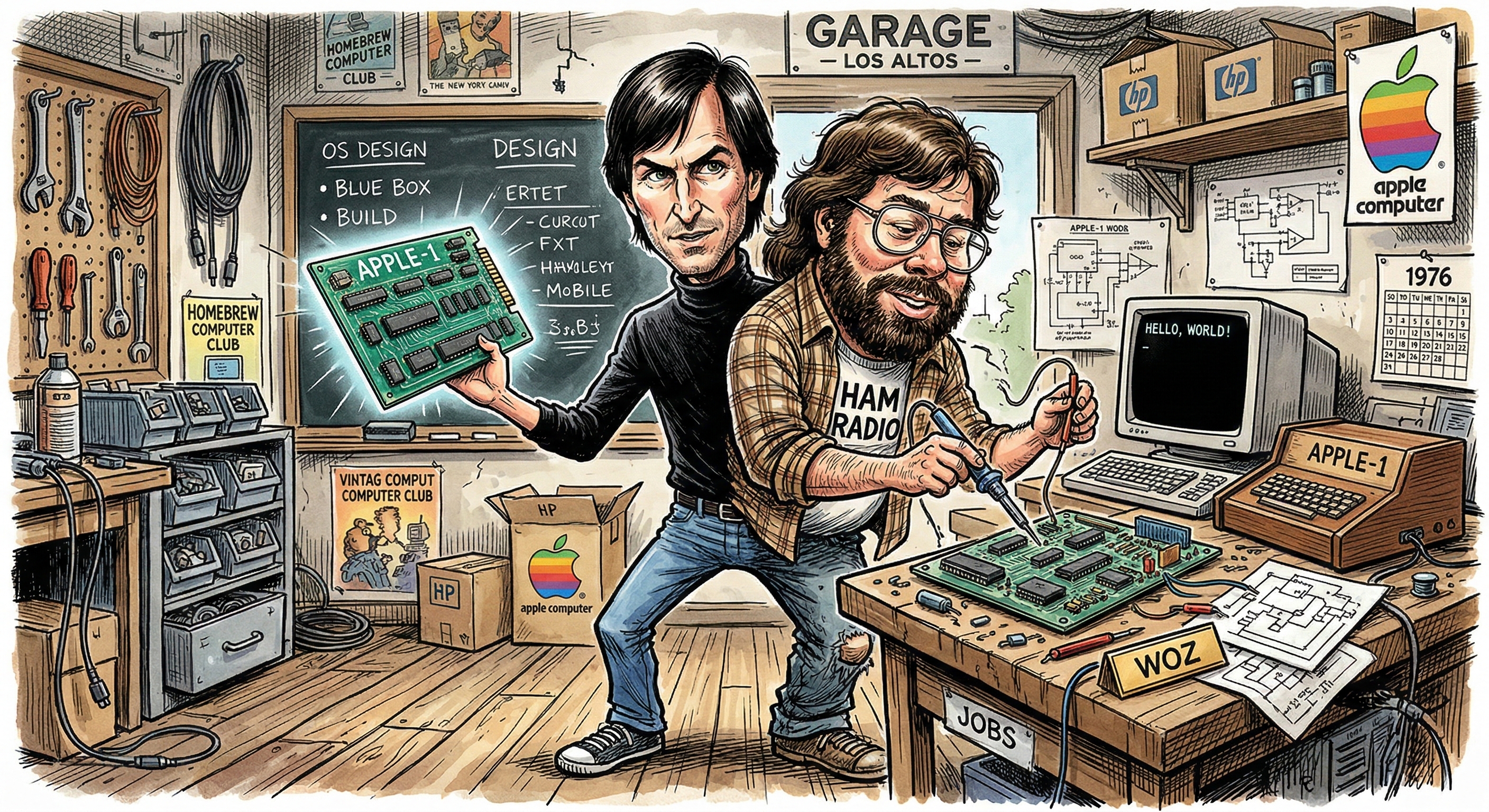
I don't fit labels well. I know this about myself. It's partly because of my attitude toward the status quo, but it's also because of the way I was raised. How can I be naturally charismatic but really rather be a hermit? How can I be good at pitching and selling and at the same time discuss and apply highly technical concepts? I love hooping, but I also love board games and role play. How can I feel so humble, yet be full of enough confidence to do what I want? How am I the happiest man alive, and then feel overwhelmed with the weight of others' grief at funerals? A capitalist with socialist thoughts. These contradictions have been a part of me forever, and they make me, me. But sometimes they get in the way. It takes longer for folks to understand me. I've found that it makes me interesting to some people, but I've also found that people tend to despise or fear what they don't understand. For most of my life, I haven't cared. That's not toughness talking — it's just how I'm built. I've always moved on what I believed, not what others expected. But as I get older, I think less about what people think of me and more about how the world thinks in general. The boxes. The categories. The way society needs you to be one thing so it knows where to put you. --- If I had to name the contradiction that fascinates me the most, it's this: I feel like both Steves. Jobs and Wozniak. The vision and the build. The stage and the garage. The tech world runs on a binary. You're either the builder or the talker. The one writing code at 3 a.m. or the one selling the dream to a room full of suits. Woz or Jobs. Pick one. I never could. Not because I'm indecisive, but because I genuinely am both. I can hold a room like a Sunday sermon and architect the system I'm preaching about. I can make something deeply complex make sense to your grandmother, and then go home and write the code that makes it work. You'd think that would be useful. And it is. But it confuses people something fierce. --- There is a mythology about what a technical person is supposed to look like. We've been marinating in it for decades. The genius is awkward. The genius is quiet. The genius struggles to explain what they've built because their brain operates on a frequency the rest of us can't tune into. That's the story we tell ourselves. It's in the movies, the biopics, the funding pitches. The hoodie. The stammer. The whiteboard full of equations no one else can read. And the genius is a white male. Or Indian. Or Asian. That's the template. That's who gets the benefit of the doubt when they walk into a room and say "I built this." Everyone else has to prove it. Some of us have to prove it twice. That mythology does real work in the world. It decides who gets taken seriously before they open their mouth. It creates a template, and if you don't match it, people fill in their own story about who you must actually be. I've watched it happen in real time. Not from the outside — from inside my own skin. I walk into a room, and before I've said a word about architecture or code, I've already been sorted. The energy. The size. The way I talk. People see the communicator and assume that's all there is. The community guy. The evangelist. The face. Those aren't bad roles. I'm great at them. But when that's the only box they'll let you stand in, you start to realize the box was never about your skill set. It was about their comfort. --- When I coded my first wallet — late nights, teaching myself, breaking things and rebuilding them until the logic clicked — Lafe handled the UI and we made a great team. But the architecture, the logic, the guts of the thing? That was me. The first person I showed it to said it was good. Real good. Then he asked who I stole it from. I laughed. What else can you do? The thing was good, so it couldn't be mine. That was his math. The better I am at explaining what I built, the less people believe I built it. Like being the cook and having someone compliment the waiter on the meal. --- The funding tells the story too. I've received grants for social causes. Community building, education, outreach — people will fund that version of me all day long. And I'm grateful. That work matters to me deeply. But when I apply for grants for the open-source programming work I'm doing? Crickets. Same mind. Same hands. Different box. I published an idea openly once, because that's what I do. I share. I've always shared. And then I watched someone else package that same idea, present it through a face the system recognizes as "technical," and the check cleared. That one sat with me for a while. Not because I was angry — I really wasn't. But because it was so clean. So perfect in what it revealed. You can do the thinking, do the sharing, do the work of putting something into the world — and the world will still wait for a certain kind of person to pick it up before it calls the idea legitimate. It's a strange thing to witness about yourself. Like watching someone else get credit for your reflection in the mirror. But where I've been and where I'm going was supposed to happen this way. I believe that. The path may have been harder, but all of it was necessary. God doesn't waste a single step. I just observe the terrain as I walk it. --- And the terrain reveals a tension I carry every day. I want to help the people around me. That's not a line. That's the deepest thing in me. Sharing what I know, lifting folks into rooms they didn't know existed, making the complex plain so somebody else can eat — that's my ministry. But I also want to be recognized for building dope things. And I wrestle with that. Because the helper in me says, "It's not about you." And the builder in me says, "But I made this. With these hands. And it matters that people know that." Honestly? I'd love to just build in a cave. To disappear into the work the way my mind already wants to — heads down, no distractions, just creation. As a kid, I looked up to inventors who had patrons. Da Vinci had the Medicis. Tesla had Westinghouse, at least for a time. Someone who believed in what they were building enough to say, "Here. Go make it. I'll handle the rest." They didn't have to prove they were technical enough. They didn't have to perform. They just built, and someone trusted the building. I think about that sometimes. What I could create if I didn't have to spend half my energy convincing people that I'm the one creating. --- I think about Apple a lot. It only worked because Jobs and Woz trusted each other completely. Two halves, one whole. But what happens when you're both halves in one body? Who trusts that you can hold both? That's the space I've lived in my whole life. Not just in tech — everywhere. The hermit who can work a room. The humble one confident enough to bet everything on a vision nobody else can see yet. The man who wants to serve and also wants his work to be seen for what it is. I used to think these contradictions were something to explain away. But the older I get, the more I realize they were never contradictions at all. They're just me. And tomorrow I'll wake up and be both Steves again. I'll write the code and explain the code and watch someone try to figure out which one is the "real" me. And I'll keep going. Not because I've resolved anything — but because the work doesn't wait for the world to catch up. It never has.

Unnamed But Not Unnoticed (Part 3)

*FYI, this is part 3 of a three-part series. I strongly recommend reading [part 1](https://trustjesus.substack.com/p/unnamed-but-not-unnoticed-part-1) and [part 2](https://trustjesus.substack.com/p/unnamed-but-not-unnoticed-part-2?r=1r70jj), if you haven’t, before reading part 3.* I hope you have been inspired by the many unnamed heroes of the Bible. I also hope you will use this inspiration to shine the light of Jesus for all to see. Whatever your circumstances, there is something you can do. There are many unnamed prayer warriors, many of whom have health issues that don’t allow them to do much else, but who are also important to the growth of the kingdom. ### The Church Caring For Its Own In addition to supporting those who are in the ministry to both the saved and unsaved, we can also make a difference by showing the love of Jesus to the world by the way we love and support the fellow members of the body of Christ. > And **all those who had believed were together and had all things in common; and they began selling their property and possessions and were sharing them with all, as anyone might have need**. Day by day continuing with one mind in the temple, and breaking bread from house to house, they were taking their meals together with gladness and sincerity of heart, praising God and having favor with all the people. And the Lord was adding to their number day by day those who were being saved. (Acts 2:44-47) {emphasis mine} We are supposed to be known for our love for one another. This means we don’t just live as an island, supporting ourselves and our immediate family and not worrying about anybody else. One sign of being a Christian is our love for fellow believers. The early church was known for supporting each other. This was very important because many of the believers were very poor, and becoming believers in Jesus hurt their ability to provide for themselves. Many unnamed believers not only gave out of their excess, but even sold their property (property was considered key to the long term well-being of a Jewish family). They sold what was most valuable to them personally to help provide for those who were in need. This generosity was seen by others and drew others to Jesus. > And the congregation of those who believed were of one heart and soul; and not one of them claimed that anything belonging to him was his own, but all things were common property to them. And with great power the apostles were giving testimony to the resurrection of the Lord Jesus, and abundant grace was upon them all. For there was not a needy person among them, for **all who were owners of land or houses would sell them and bring the proceeds of the sales and lay them at the apostles’ feet, and they would be distributed to each as any had need**. (Acts 4:32-35) {emphasis mine} The generosity of these early believers was key in the growth of the early church. We don’t know their names, but we will see them in heaven wearing many crowns. ### Christian Witnesses In the early church, we saw well-to-do believers taking care of their poor brethren. We also see many believers who were “scattered because of the persecution.” > So then **those who were scattered because of the persecution** that occurred in connection with Stephen made their way to Phoenicia and Cyprus and Antioch, speaking the word to no one except to Jews alone. But there were **some of them, men of Cyprus and Cyrene, who came to Antioch and began speaking to the Greeks also, preaching the Lord Jesus**. And the hand of the Lord was with them, and **a large number who believed turned to the Lord**. The news about them reached the ears of the church at Jerusalem, and they sent Barnabas off to Antioch. Then when he arrived and witnessed the grace of God, he rejoiced and began to encourage them all with resolute heart to remain true to the Lord; for he was a good man, and full of the Holy Spirit and of faith. **And considerable numbers were brought to the Lord**. And he left for Tarsus to look for Saul; and when he had found him, he brought him to Antioch. And for an entire year they met with the church and taught considerable numbers; and **the disciples were first called Christians in Antioch**. (Acts 11:19-26) {emphasis mine} These believers had to flee their land and possessions to escape persecution, leading to imprisonment or death. They spread throughout the Middle East trying to escape the deadly persecution they were experiencing. In the process, the gospel was spread beyond Israel and to many Gentile nations, including to the Greeks. These many unnamed believers shared Jesus with everyone wherever they went. They shared with Jew and Gentile. Their faithful sharing of the gospel led to “*a large number who believed turned to the Lord*.” They had lost their possessions, their homeland, friends, and family, but because they stayed faithful to Jesus and told others about the great things Jesus had done for them, they spread the gospel far and wide. As a group, they probably spread the gospel as much as the big-named teachers because more people sharing lets more people know about Jesus. God may use certain believers to reach big numbers, but God can use all faithful believers to lead people to Himself. The cool thing is that these faithful servants, who were escaping horrific persecution, were so faithful that they were the first ones called Christians. ### We Can All Be Used By God We are all given different gifts, skills, talents, and opportunities. We are not judged on the result of our actions, but on the faithful use of what God has given us. God expects more from those who received more and less from those who received less, but we are all called to faithfulness. Some may get fame and accolades on earth. Some may seem unseen and unknown, but we are all part of the body of Christ and should all be doing what is in our power to do to further the kingdom. > Do all things without grumbling or disputing; so that you will prove yourselves to be blameless and innocent, children of God above reproach in the midst of a crooked and perverse generation, among whom you **appear as lights in the world**, holding fast the word of life, so that in the day of Christ I will have reason to glory because I did not run in vain nor toil in vain. (Philippians 2:14-16) {emphasis mine} May God use you for His glory. May you use all the blessings God has given you to reach others for Jesus. May you use all the hardships you experience to give you a kind and merciful heart, so your joy in hardship will be a light to those around you. May God give you the courage to step out in faith, even in persecution, hardship, weakness, and when you seem to be alone. Trust Jesus All verses are NASB unless otherwise noted.

The Wall

Today, I found myself speaking with my oldest son. We were discussing goal setting and execution. As we talked, I began to think about the things that I have been able to accomplish. My entire life has been amazing. That is not to say I haven't had failures. I have had heartbreak, been betrayed, and lost things I felt were valuable. But I can say, I regret nothing. Everything I am, I owe to God. My faith precedes me. As we were having this conversation, I tried to explain the type of faith you need to accomplish what many would think impossible. You see, to me, faith is running without a map. You have a destination, but you don't know exactly how you are going to get there. You've been given this destination. You know it's been given to you because it's all you can think about. As a matter of fact, you can't see the destination, but you have evidence that it's there. There's a small glimmer of light that guides you—a light that shines in the darkness. You don't know what ground you have to cover between you and the light, but you know you have to get there. So you take off running. It's the substantive hope that drives you. So you run. And you run. You run until you see a wall, and that small glimmer of light is out of view. You know it's still there, but you can't seem to see it because the faster you run, the larger the wall becomes. Next, you do what any sane person does: You stop. You don't want to run headfirst into the wall. The thought of the eventual pain and hurt slows your ability to keep moving forward. You know what it's like to hit a wall. You've smashed into a wall before, you've lost sight of where you were headed, and you remember how bad you felt. So, you think twice before running headfirst into this enormous slab of rock. You almost turn around to go back where you came from. But then you remember how you felt the last time you gave up, and that pain hurt worse than hitting the wall. So you step back, and say, "Let me be smart. Let me look for a door." You search all over. You look high. You look low. You try to see if you can get around it. But all you find in the middle of this monstrosity are some words printed at heart level. They say: "Keep Running." Run where? There is nowhere to go. There is no door. There is nowhere to go but back, but you ain't going back. Not this time. You walk back a few steps, and then you run. You run just as hard as you did before. And as you get closer to the wall, you feel a sense of concern, but you fight through it because whatever is on the other side of that wall has been pulling at you most of your life. So you run, until you get close enough to see the instructions again, but this time you don't stop—you keep running. Full speed ahead. And suddenly, the wall lifts, and you continue under it. You made it to the other side, with no door, no shortcut. Because the wall was the door. > "But without faith it is impossible to please God." > — Hebrews 11:6 Go. Run.