Pyramids and Cathedrals Rethinking Architecture and Collaboration
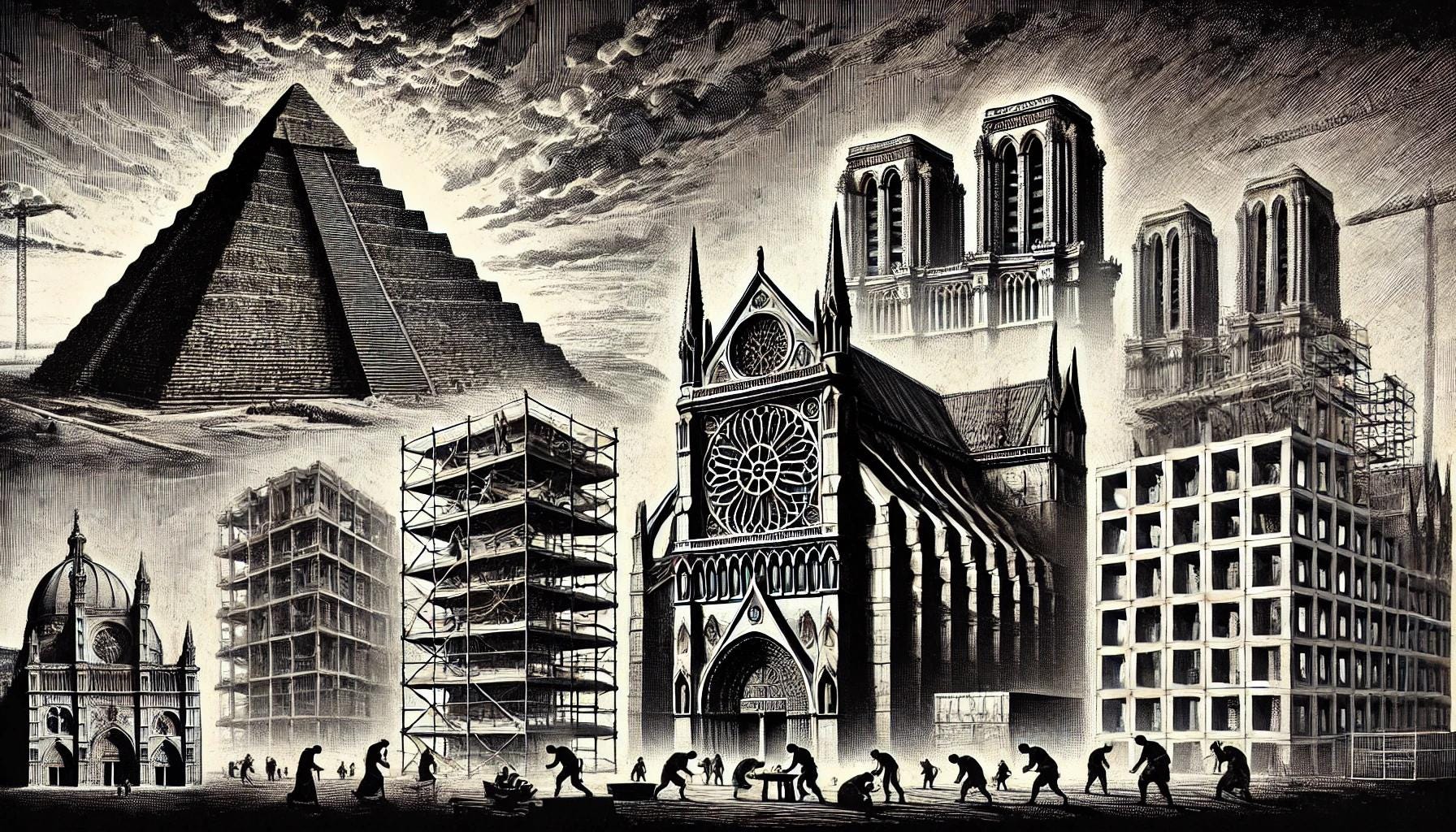
Architecture is one of humanity’s most profound achievements, not just in its physical structures but in the way it reflects organizational thinking. From the pyramids of ancient Egypt to the soaring cathedrals of the Middle Ages, and finally to today’s modular and distributed approaches, architectural endeavors reveal much about how people collaborate — or fail to do so.
This article draws parallels between these three eras of architecture, exploring how their underlying philosophies can inspire modern organizations to rethink collaboration, decision-making, and leadership.
## The Pyramid: A Hierarchical Approach
The Egyptian pyramid stands as a monument to engineering and an entire worldview. Built under the supervision of an architect close to the pharaoh — often seen as a divine figure — the pyramid was the result of a strictly hierarchical system. A single, centralized vision drove the project, with workers, resources, and plans subordinated to one person's will or a small elite group.
This approach mirrors the hierarchical structures found in many enterprises today. Decisions are made at the top, with clear instructions passed down to those tasked with execution. Such a system has undeniable advantages: clarity, speed, and accountability. One person or a small group takes full responsibility for success and failure.
However, this approach relies heavily on an almost limitless supply of resources, whether human, material, or financial. It assumes that the leader’s vision is infallible and that the workforce can be endlessly commanded. While this might work for organizations with vast resources, it can stifle creativity, discourage individual contribution, and fail to adapt to changing circumstances.
## The Cathedral: A Collaborative Chain of Effort
In the Middle Ages, the construction of cathedrals introduced a shift in architectural thinking. These projects often spanned centuries, requiring the participation of multiple generations. The original architect might design the foundation, but later architects and builders adapted and expanded the design based on new technologies, styles, and knowledge.
Unlike the pyramid, the cathedral could not rely on a single leader’s vision. Instead, it became a shared effort — a chain of ideas and contributions. Workers, architects, and benefactors collaborated across time, passing down their knowledge and adapting to challenges as they arose. This collaborative approach allowed for evolution and resilience, as seen in the stylistic and technological differences often visible in different parts of a single cathedral.
This model resonates with modern organizations that embrace collaboration. By involving more voices in the decision-making process, these organizations create systems that are adaptable and resilient. However, collaboration is not without its challenges. Aligning diverse perspectives requires consensus-building, which can slow decision-making. Yet, the end result — a structure or system that reflects the strengths and insights of many — is often worth the effort.
## The Modular Cathedral: A Modern Vision
Today, architecture is evolving once again. Modular buildings and prefabricated structures embody a new level of complexity and cooperation. These projects are no longer confined to a single site or team; components are designed and built by specialists in different locations and then assembled into a cohesive whole.
This modular approach reflects the complexity of modern projects, which often require expertise from vastly different domains. A single person or team cannot possess all the necessary knowledge and skills. Success depends on collaboration, where every contributor — whether a designer, engineer, or builder — plays a critical role.
The “modular cathedral” concept builds on the collaborative model of the Middle Ages but adapts it for today’s interconnected, fast-moving world. It emphasizes not only the value of cooperation but also the importance of empowering contributors at every level to influence the final product. In this model, builders and architects share ideas, insights, and feedback, resulting in structures that are both innovative and functional.
## Lessons for Modern Organizations
## 1\. The Value of Cooperation
While hierarchical models may offer clarity and efficiency, modern challenges demand broader collaboration. The complexity of today’s projects requires input from diverse perspectives and areas of expertise. Organizations that foster cooperation can tap into the collective intelligence of their teams, resulting in more innovative and resilient solutions.
## 2\. Involving Builders in Architecture
In traditional hierarchies, architects make decisions, and builders execute them. But in a cooperative model, builders — those closest to the practical challenges — are given a voice in the design process. This approach improves the final product and increases all contributors' buy-in and engagement.
## 3\. Embracing Complexity
Collaboration can make decision-making more challenging. Consensus takes time, and balancing competing priorities takes work. However, organizations that embrace this complexity often find that the results — more adaptive, inclusive, and robust systems — justify the effort.
## 4\. Shared Success and Accountability
Hierarchical systems concentrate both success and failure in the hands of a few. Collaborative systems distribute these outcomes more broadly, which can make it harder to identify responsibility but also creates a shared sense of ownership and pride.
## The Future is Cooperative
The challenges of modern projects far exceed those of pyramids or cathedrals. They require expertise in areas as diverse as software development, sustainability, and data privacy. No single leader or team can master all these domains. Cooperation, though difficult, is the only viable path forward.
Like the great cathedrals of the past, modern endeavors should aim to bring together diverse voices and expertise. By involving everyone — from architects to builders, from planners to doers — we can create systems that stand the test of time. The future of architecture, both literal and metaphorical, lies not in pyramids but in modular cathedrals: collaborative, inclusive, and resilient.