Why Anonymity Is Essential for Freedom of Expression?
Imagine a large public square, illuminated by intense spotlights, where every individual who dares to approach the center is immediately recognized, photographed, and cataloged. In this square, every word spoken becomes indelibly tied to its speaker. Under such conditions, many would hesitate before speaking, fearing not only the disapproval of the audience but also the potential punishments that could follow the mere act of expressing an idea. Now, imagine a second square, where anyone can cover their face with a mask, allowing their voice to echo without revealing their identity. It is in this second square that true freedom of expression flourishes, and this metaphorical mask represents anonymity.
https://www.fountain.fm/episode/MweciiR21hySxjdsNa7u
In debates about freedom of expression—one of the fundamental pillars of democratic societies—anonymity often emerges as a controversial element. For some, it serves as a refuge for digital criminals or slanderers. For others, it is an indispensable tool, capable of protecting dissenting voices and inspiring authentic debates, with ideas judged on their merits rather than the messenger’s reputation. This article aims to explain, in a clear and instructive manner, why anonymity is essential to genuine freedom of expression, illustrating its value with metaphors, real-life examples, and historical references.
## **The Protective Mask: Avoiding Retaliation and Threats**
Just as a navigator uses guiding instruments to avoid jagged rocks at sea, anonymity functions like a shield, allowing bold voices to navigate oppressive reefs without foundering. There are countless examples of individuals who have risked their lives to expose crimes and injustices—from whistleblowers in authoritarian governments to investigative journalists uncovering the complex machinations of organized crime. Without the possibility of anonymity, many of these stories would never have come to light.
Organizations like the Electronic Frontier Foundation (EFF) and other digital rights advocacy groups emphasize that the ability to speak without revealing one’s identity is crucial when the cost of speaking out is dangerously high. In censorship-ridden regimes, criticizing the government can lead to imprisonment, torture, or even death. Human rights activists, LGBTQIA+ communities in hostile countries, and journalists investigating illicit dealings all rely on anonymity to continue their work without putting their own lives at immediate risk. In this context, anonymity is not a whim—it’s the chance to survive one’s own opinion.
## **The Voice of the Invisible: Empowering Marginalized Groups**
Think of anonymity as an invisible microphone placed at the disposal of those who, without it, would never dare to take the stage. Historically, marginalized groups have always faced additional barriers to making their voices heard. Women in patriarchal societies, ethnic minorities facing discrimination, or individuals persecuted for their sexual orientation find in anonymity a safe space to speak out, claim their rights, and share their experiences without fearing public humiliation or physical violence.
This “invisible microphone” not only gives voice to those who once remained silent but also transforms the arena of public debate into a more equitable space. By removing the link between idea and identity, it reduces the risk of immediate prejudice against the messenger. As a result, society can assess arguments more impartially. Here, ideas are judged on their content, not on the face that speaks them.
## **The Strength of History: The Precedent of the Federalist Papers**
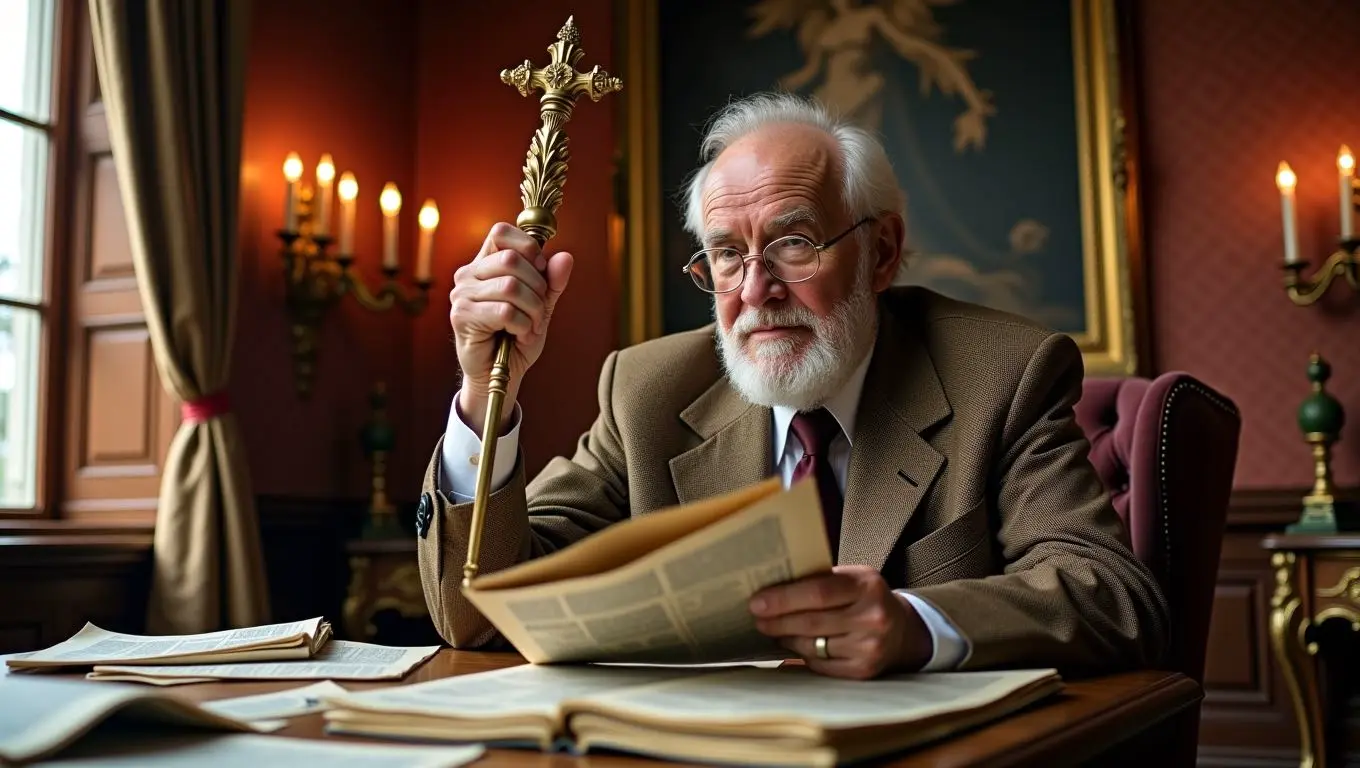
History offers a famous example of the power of anonymous words: the Federalist Papers. Published between 1787 and 1788, these essays supported the ratification of the United States Constitution and were written under the pseudonym “Publius” by Alexander Hamilton, James Madison, and John Jay. The reason for concealing their identities was clear: to ensure that their ideas would be judged on their argumentative strength rather than the prestige or fame of the authors.
The precedent set by the Federalist Papers is emblematic. It shows that, in the building of one of the first modern democracies, anonymity was used as a legitimate tool to establish fundamental concepts. If the founders of the nation that prides itself on its First Amendment—the one that protects freedom of expression—resorted to anonymity, we should recognize that this resource is not only defensible but also an essential part of the framework of healthy public debate.
## **Faceless Messages: The Democracy of Pure Ideas**
In an ideal world, we would judge a message purely on its content. In reality, however, names, faces, social status, and economic position influence how we receive and interpret a person’s words. Anonymity removes these superficial layers, allowing the message to present itself bare, subject to rational evaluation without the veils of prejudice.
In this sense, anonymity acts as a “filter of equality”: by concealing the source, it prevents us from assigning credibility (or discredit) based on stereotypes, prejudices, or personal rivalries. Thus, ideas previously dismissed out of hand can now be heard with greater attention, opening paths to social innovation, political reflection, and challenges to the status quo. A contemporary example is online forums that allow anonymous posts. While we acknowledge that such spaces can be misused, we cannot ignore their potential to give voice to those who would never feel safe speaking under their own name in public.
## **Privacy, Intimacy, and the Freedom to Whisper**
Anonymity is not limited to the public or political sphere. In personal and professional relations, the ability to speak anonymously can allow someone to seek help or reveal extremely sensitive matters. Imagine a patient who needs to consult a doctor about a stigmatized health issue, or a person seeking legal advice in a delicate situation. The “mask” of anonymity offers a safe haven for sharing information without the anguish of being judged or exposed.
Thus, anonymity also safeguards our “right to whisper,” that is, the ability to exchange information, secrets, and confessions without the constant glare of a spotlight. Real or perceived surveillance can stifle communication and inhibit creativity, reporting, and the exchange of ideas. By shielding individuals from forced exposure, anonymity reinforces the very fabric of freedom of expression, preventing the fear of identification from silencing words before they are spoken.
## **Anonymity in the Digital Age: Between Encryption and Censorship**
In the digital age, the issue of anonymity becomes even more relevant. With the expansion of online surveillance and the growth of social networks, maintaining anonymity can be challenging. Social media platforms increasingly request personal data, and governments attempt to impose barriers against anonymity, often justifying them as measures of national security or crime prevention.
However, according to reports and documents from human rights organizations, such as the UN High Commissioner for Human Rights and the Association for Progressive Communications (APC), encryption and anonymity are key tools for freedom of expression in the digital environment. Without these resources, citizens and journalists, for instance, become more vulnerable to persecution. In various countries, the existence of anonymous and encrypted channels enables information to circulate, grievances to be reported, and societies to remain informed, even in the face of heavy censorship.
## **Legal Protection: Judicial Recognition of Anonymity**
The United States Supreme Court, as well as other constitutional courts around the world, recognizes anonymity as an integral part of the right to free expression. In the United States, the First Amendment has been applied in cases that defended the right to anonymous speech, viewing it as a bulwark against the tyranny of the majority. When minorities are protected by anonymity, personal reprisals against those who dare to question dogmas or denounce abuses are prevented.
This judicial understanding reinforces the legitimacy of anonymity and its direct association with the strengthening of democracy. After all, a robust democracy requires not only the absence of formal censorship but also the guarantee that minority or unpopular voices can speak out without fear.
## **Conclusion: The Cloak That Protects Freedom**
If freedom of expression is the heart of democracy, anonymity is the cloak that shields that heart from the poisoned darts of fear, persecution, and prejudice. It creates the right environment for ideas to flourish freely, for courageous voices to emerge from silence, and for society to debate its most complex issues in the light of reason rather than beneath the shadow of intimidation.
In a world where surveillance and political tensions are ever-present, anonymity preserves the essence of free speech: humanity’s ability to question, propose, denounce, criticize, and create without shackles. By recognizing the importance of this resource, we safeguard not only individual voices but also the very principle that makes democracy worthy of its name.
## **Selected References:**
- Electronic Frontier Foundation (EFF): <https://www.eff.org/issues/anonymity>
- Freedom Forum: <https://www.freedomforum.org/anonymous-speech/>
- Association for Progressive Communications (APC): <https://www.apc.org/>
- The First Amendment Encyclopedia: Anonymous Speech: <https://firstamendment.mtsu.edu/article/anonymous-speech/>
- The Federalist Papers: Historical context available at [Library of Congress](https://www.loc.gov/) and various printed and digital compilations.
---
Cover Photo by [Redd Francisco](https://unsplash.com/@reddfrancisco?utm_source=ghost&utm_medium=referral&utm_campaign=api-credit) / [Unsplash](https://unsplash.com/?utm_source=ghost&utm_medium=referral&utm_campaign=api-credit)