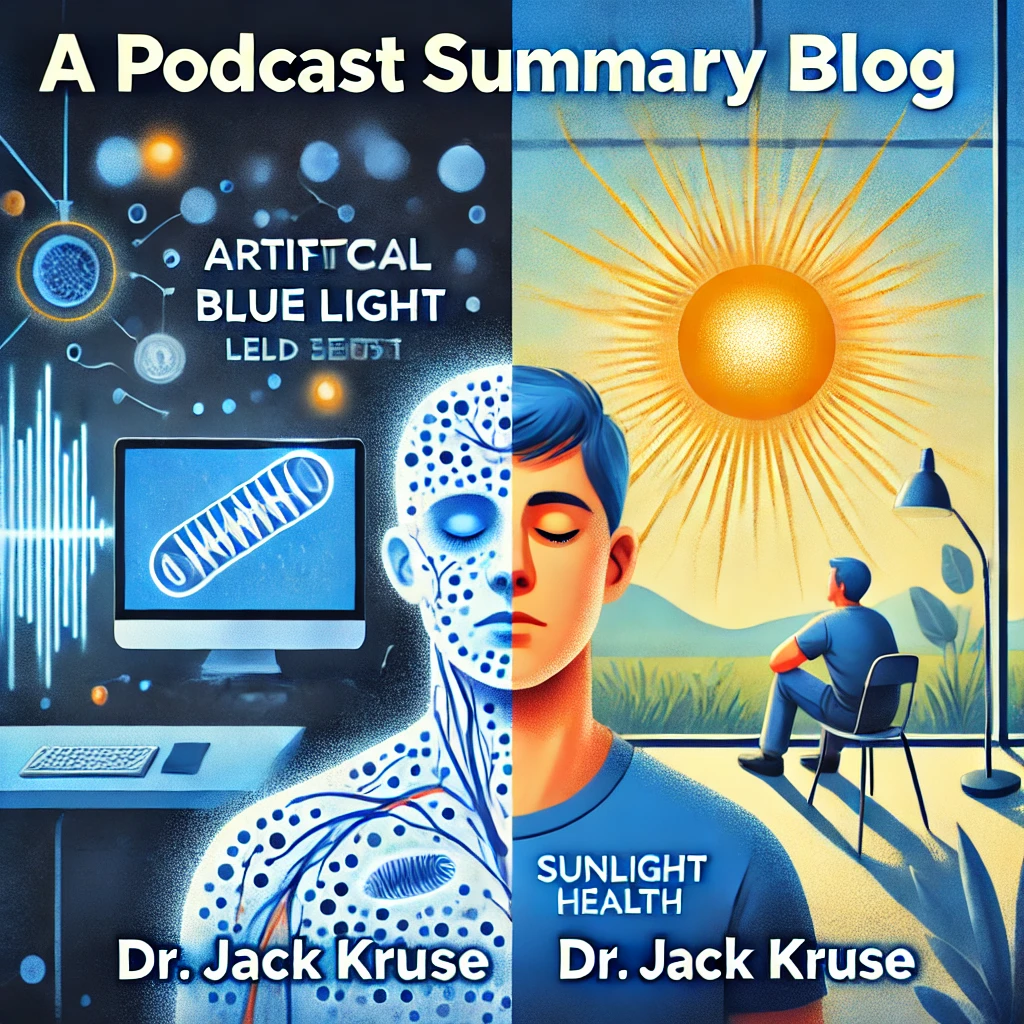
Dr. Jack Kruse on Artificial Light, Sunlight, and Health: Podcast Summary
# Dr. Jack Kruse on Artificial Light, Sunlight, and Health: Podcast Summary
*A comprehensive breakdown of Dr. Jack Kruse's perspectives on how light affects our health and wellbeing as discussed on the Breath Podcast*
## Introduction
In this fascinating podcast, Dr. Jack Kruse shares his controversial and thought-provoking perspectives on how artificial light impacts our health, why sunlight is crucial for wellbeing, and how our modern lifestyle may be fundamentally misaligned with our biology. Below is a summary of the key points discussed.
**Watch the full interview here: [Dr. Jack Kruse on The Breath Podcast](https://www.youtube.com/watch?v=luMHcGTAhA8)**
## Key Ideas on Artificial Light
1. **Artificial Light Fundamentally Disrupts Natural Systems**
- The sun is an external source of energy and information that all life on Earth has evolved to connect with
- Artificial light, especially blue light, disrupts our natural biological processes
- Blue light specifically alters two key chemicals: dopamine and melatonin
- Blue light destroys melatonin production in mitochondria, which is essential for cellular recycling and repair
2. **Blue Light and Control**
- Blue light has been deliberately chosen for screens and devices because it's "easier to govern people" who are affected by it
- Blue light technology creates addiction and steals people's time
- Dr. Kruse claims DARPA transferred patents to tech companies like Google and Meta that are used in most tech devices
3. **Blue Light Reception**
- Since 2017, research shows blue light detectors are present not just in our eyes but throughout our skin, fat, and arteries
- Blue light blocking glasses only protect the eyes, not the rest of the body
- Blue blockers should block light from 400-550 nanometers to be effective
4. **Government Policy and Lighting**
- Dr. Kruse mentions the banning of incandescent bulbs (which contain more red and purple light) as problematic
- Modern replacement lights lack the beneficial purple and red light frequencies that he believes are essential for health
## Natural Light and Health
1. **Light Stability and Geographic Location**
- People living at higher latitudes (further from the equator) face "light instability" problems
- Living closer to the equator provides more consistent daily light/dark cycles
- Cruz recommends people at high latitudes see the sunrise every day and embrace cold
2. **Nighttime Light Practices**
- For those at high latitudes: turn off all lights when the sun sets
- Candles are preferable to artificial lighting, including red light
- The constant light cycle at equatorial latitudes (like El Salvador) creates a natural rhythm
3. **Sunlight and Sex Hormones**
- UV light affects sex steroid hormones
- Lack of UV light exposure can contribute to hormonal issues
- Light exposure regulates cortisol, which controls waking cycles
4. **Disease Patterns and Light**
- Cruz connects geographic latitude with disease patterns (e.g., higher MS rates at higher latitudes)
- He suggests relocating to lower latitudes could help with certain conditions
- The quality of decisions made is linked to optimized dopamine and melatonin, which require proper light exposure
## Vitamin D and Sunlight
1. **Vitamin D Supplements vs. Sunlight**
- Cruz strongly advises against vitamin D supplements
- Vitamin D pills are soaked in seed oils, while natural vitamin D from sunlight is made from cholesterol in skin
- Vitamin D supplements can raise LDL cholesterol and lower HDL cholesterol
- Supplements can affect people with darker skin worse than those with lighter skin
- Instead of supplements, he recommends proper sun exposure or specialized lighting
2. **Building Solar Callus**
- Developing a "solar callus" allows better sun tolerance without burning
- Preconditioning with infrared light (600-1000nm) helps protect skin from UV
- Melanin is the body's natural sunscreen
- Sunscreens, sunglasses, and sun-avoidance decrease natural melanin production
- Cruz recommends against sunscreen, sunglasses, and sun-blocking products
## Grounding/Earthing
1. **Connection to Earth**
- Grounding connects humans to the Earth's electrons
- The sun (cathode) hitting Earth (anode) creates free electrons on the surface
- Humans have sweat glands on hands and feet to improve this connection
2. **Grounding Practices**
- Avoid grounding sheets that plug into electrical outlets
- Use copper wires connected to ground outside instead
- Be cautious about grounding in cities due to electromagnetic pollution
- Cruz recommends grounding directly on grass or in natural water
3. **Health Effects of Grounding**
- Grounding provides free electrons without eating food
- Sickness represents positive charge; health represents negative charge
- Cold water has more electrons than warm water (reason for cold exposure benefits)
- Grounding improves respiratory efficiency and oxygen utilization
## Other Health Recommendations
1. **EMF Protection**
- Cautions against relying on EMF blockers and Faraday cages as primary solutions
- These are band-aids for a bigger problem (living in high-EMF environments)
- Better to relocate to lower-EMF areas when possible
2. **Saunas**
- Avoid electric saunas due to EMF concerns
- Recommends traditional saunas using water, heat, and fire
- Sauna is essentially "near infrared therapy"
- Suggests geothermal heating as ideal
3. **Decentralized Living**
- Advocates for sovereignty in medicine, money, and lifestyle
- Recommends disconnecting from centralized systems and reconnecting with nature
- Suggests investing in natural environments and resources that support health
- Emphasizes making health decisions based on natural principles rather than mainstream medical advice
## Core Message
Dr. Kruse's fundamental philosophy is that optimal health comes from living in alignment with natural light cycles and Earth's electromagnetic properties. He views modern technological environments as fundamentally at odds with human biology and advocates for "decentralized" approaches to health that prioritize natural light, grounding, and geographic location over conventional medical interventions.
## Conclusion
While Dr. Kruse's perspectives may be considered controversial by some in the mainstream medical community, they offer an intriguing alternative view on health optimization through environmental factors. His emphasis on the importance of natural light, geographic location, and connection to the Earth presents a holistic approach that challenges conventional thinking about health and wellness.
Whether you agree with all his theories or not, his ideas invite us to reconsider our relationship with technology, artificial light, and our natural environment.
---
*Disclaimer: This blog post summarizes Dr. Jack Kruse's views as expressed in the podcast and does not constitute medical advice. Readers should consult with healthcare professionals before making significant changes to their health routines.*
*Source: This summary is based on Dr. Jack Kruse's appearance on The Breath Podcast. [Watch the full interview here](https://www.youtube.com/watch?v=your-video-id-here).*