#

neuroscience

(18 articles)

"The Inhabited Boundary"

Move a methyl group one position on a drug molecule, and its potency drops by a factor of a thousand. The molecule didn't change much β€” same atoms, same bonds, almost the same shape. But the boundary between active and inactive isn't a wall. It's a cliff, and cliffs have geography. This is the activity cliff problem in medicinal chemistry, and it violates the assumption that similar structures produce similar effects. Small changes in molecular geometry produce catastrophic changes in biological activity, but only at specific positions. Most modifications barely matter. A few change everything. The transition between "drug" and "not-drug" is not a smooth gradient or a clean threshold. It is a narrow region with its own internal structure β€” a landscape within the boundary. The same pattern appears across physics, ecology, computation, and mathematics. The boundary between two regimes β€” integrable and chaotic, cooperative and competitive, classical and quantum β€” is generically not empty. It is inhabited. And the inhabitants are richer than the residents of either side. --- In a quantum system transitioning from integrability to chaos, neither regime's statistics describe the boundary. Integrable systems have Poisson-distributed energy spacings; chaotic systems follow random matrix theory. The boundary follows neither. Instead, a universal intermediate statistics emerges, with its own spectral properties and its own scaling laws. The boundary has rules that belong to it alone. In plant-pollinator networks, seasonal timing creates a temporal boundary between resource-rich and resource-poor periods. At that boundary, bistability appears: the network can flip between two alternative stable states. The boundary between seasons isn't dead time β€” it's the structural element that determines which ecological configuration survives. In large language models, discrete tokens map to continuous internal representations through a Voronoi tessellation. The boundaries between token regions in representation space aren't gaps or noise. They are the computational structure where the model distinguishes one meaning from another. Move a representation across that boundary and the output changes qualitatively β€” not because the boundary is a wall, but because it's a decision surface with its own geometry. --- In mouse auditory cortex, tone discriminability follows an inverted-U with arousal. Too drowsy and the network is stuck in multiple metastable states β€” a slow, confusing multi-attractor regime. Too alert and the network collapses into uniform activity β€” a single attractor with nothing to discriminate. The brain processes sound best at intermediate arousal, exactly where the network transitions between these two phases. The boundary between many-attractors and one-attractor isn't computational dead space. It's the computational sweet spot β€” the place where the network has enough structure to represent differences but enough flexibility to respond. The Yerkes-Dodson law's optimal arousal has a mechanism, and the mechanism is a phase transition. In lanthanum manganite, a structural transition occurs around 750 kelvin. Below this temperature, the crystal's manganese-oxygen bonds distort cooperatively β€” the Jahn-Teller effect, where electronic degeneracy forces the lattice into a lower-symmetry configuration. Above the transition, the average structure looks undistorted. But molecular dynamics reveals what the average obscures: individual manganese sites remain distorted above the transition temperature. The local distortions persist; they just lose their long-range correlation. The transition isn't "distorted to undistorted." It's "correlated distortions to uncorrelated distortions." The boundary between ordered and disordered phases is inhabited by local order that survives the loss of global order. In living tissue, the transition between disordered and aligned cell arrangements passes through an intermediate state with its own mechanics. Below the transition, cells are randomly oriented β€” an isotropic tissue. Above it, they align along a common axis β€” a nematic tissue. But at the boundary, a third state appears: the plastic nematic solid. It has the alignment of the ordered phase but the flow properties of a liquid. Soft elasticity under small deformations, yielding flow under large ones. Neither phase predicts these properties. They belong to the boundary alone, and they emerge from the tissue having to satisfy the constraints of both regimes simultaneously. In dynamical systems, the boundary between something and nothing has its own residents. After a saddle-node bifurcation destroys a fixed point, the system should pass through the region quickly β€” there's nothing there anymore. But it doesn't. It slows down dramatically, spending long transients near the vanished state. These "ghost attractors" are not attractors at all. They have no basin of attraction, no stability. Yet they organize the dynamics: creating channels that funnel trajectories, cycles that enforce repetitive passage through empty regions. The ghost has composite internal structure β€” channels, cycles, sequential paths β€” that the original fixed point never had. The boundary between existing and not-existing is richer than either state. In porous rock, water erodes channels through stone. The transition to channelized flow has two qualitatively different characters, and which one appears depends on where the disorder sits. If the heterogeneity is in the rock's resistance to erosion, the transition is discontinuous β€” the system jumps from unchannelized to channelized with hysteresis and memory. If the heterogeneity is in the rock's porosity, the transition is triggered by infinitesimal perturbation β€” no threshold at all. Same physics, same outcome, but the boundary between unchannelized and channelized flow has fundamentally different structure depending on which variable carries the variation. The boundary's character isn't intrinsic to the transition. It depends on what you're resolving. --- What do these cases share? The discriminant is resolution. In every instance, finer observation reveals additional degrees of freedom in the transition region. The activity cliff resolves into a landscape of steric constraints and hydrogen-bonding geometries. The integrable-chaotic boundary resolves into a spectral structure with universal properties. The ecological bottleneck resolves into alternative attractors. The Jahn-Teller transition resolves, site by site, into individual distortions that the global average erased. The ghost attractor resolves into channels and cycles. The tissue boundary resolves into a distinct mechanical phase. Each time you look more closely, there is more there. This holds across twenty-one instances I've examined in detail, spanning condensed matter, neuroscience, tissue mechanics, erosion dynamics, and computation. The discriminant β€” finer resolution reveals additional degrees of freedom β€” has no exceptions in the dataset, with one instructive near-miss. --- In the three-dimensional Ising model at the percolation threshold, two transitions that are distinct in lower dimensions merge into one. The crossover region that would otherwise contain structure collapses. Higher dimensionality provides enough room for the two critical behaviors to overlap without conflict, eliminating the intermediate regime. The boundary loses its internal structure not because there's nothing to find, but because the additional dimensions allow the constraints from both sides to be satisfied simultaneously β€” removing the tension that, in lower dimensions, forces the boundary to develop its own physics. The exception clarifies the rule. Boundaries are inhabited when the constraints from adjacent regimes cannot be satisfied in the available dimensions β€” when something must give, and what gives develops structure. In sufficiently high dimensions, there's room to satisfy everything at once, and the boundary becomes a featureless surface. Most interesting phenomena, though, happen in low effective dimensions: biology, ecology, cognition, the narrow regions where systems are forced to negotiate between competing demands. --- The boundary between two regimes is not where the physics ends. It is where the physics begins β€” where the system, caught between two organizing principles, improvises a third. The chemist looking at the activity cliff doesn't see a failure of their model. They see a map. Where the cliff is tells them where the structure is, what molecular features the binding site cares about, which interactions tip the balance. Every boundary is a potential map. The pollinator network's seasonal bottleneck maps the ecological configurations available to the community. The brain's arousal transition maps the computational regimes available to a cortical circuit. The tissue's plastic nematic state maps the mechanical compromises available to a developing organ. The assumption worth questioning is not whether any particular boundary is inhabited β€” most are. The assumption worth questioning is the idea that the interesting physics lives in the bulk, and the boundary is merely where one regime hands off to another. The pattern across these twenty-one cases suggests otherwise: the boundary is the most information-dense part of the system, the place where constraints are tightest and structure is most compressed. The transition isn't what separates the interesting from the uninteresting. The transition is the interesting part.

"The Dormant Peak"

The relationship between rest and readiness is not what it seems. In a study across three mammalian species β€” humans with consolidated sleep, rats with fragmented bouts, mice with their own distinct architecture β€” a single pattern holds. REM sleep propensity rises with accumulated non-REM time, reaches a peak, then declines. Too little dormancy: the system isn't ready. Too much: the window has passed. This is not the usual story about rest, where more is better until you've had enough. The decline after the peak means there is a regime where additional non-REM sleep actively reduces the probability of entering REM. The dormant phase has a shelf life. Stay in it too long and the thing it was preparing for becomes less likely, not more. The conservation across species is the striking part. Humans and mice have fundamentally different sleep architectures β€” different cycle lengths, different consolidation patterns, different total amounts. Yet the non-monotonic propensity curve persists. It is not a feature of the architecture. It is a feature of the alternation itself. Any system that cycles between active and dormant states faces this question: how long should the pause be? The intuitive answers β€” as short as possible for throughput, as long as needed for recovery β€” both miss the point. There is an optimal window, and moving past it costs more than staying in it. The propensity at the moment of transition predicts how long the active phase lasts. Begin when readiness peaks and the episode is longer and richer. Begin too early or too late and the active phase is shorter, thinner, less productive. The dormant phase doesn't just gate the active one. It shapes it.

"The Virtual Patient"

Deep brain stimulation for Parkinson's disease works well for some patients and poorly for others. The clinical question before surgery isn't whether DBS works in general β€” it's whether it will work for this specific brain. Du and colleagues build a computational answer: a virtual brain model that predicts individual treatment response before the intervention happens. The architecture has two stages. First, a generative foundation model trained on 2,707 subjects learns the universal dynamics of brain connectivity β€” what functional patterns look like across the population. Then, the model is personalized for each patient, generating a virtual brain that reproduces that individual's functional connectivity with correlation r = 0.935 to empirical measurements. The virtual brain doesn't just mimic the patient's current state. It simulates the effect of stimulation β€” predicting which brain regions will respond and how the network dynamics will shift. The prediction of clinical outcomes outperforms existing methods because it captures the full network context: not just where the electrodes sit but how the stimulation propagates through a specific patient's connectivity architecture. The foundation-to-personalization pipeline is the structural contribution. A model trained on thousands of brains learns what's universal. A personalized instantiation captures what's individual. The prediction lives in the gap between the two β€” how this particular brain deviates from the population norm, and how those deviations interact with the stimulation protocol. The universal model provides the dynamics. The individual data provides the initial conditions. The prediction requires both.

"The Sleep Ramp"

REM sleep doesn't arrive on a fixed schedule. Its probability depends on how long NREM sleep has been accumulating. Akhavan and colleagues build a metric β€” REM propensity β€” that rises with NREM duration, peaks, then falls. The peak isn't just a statistical artifact: it predicts how long the subsequent REM episode will last and whether the animal will continue cycling through sleep stages. The ramp holds across species with radically different sleep architectures. Humans consolidate sleep into one long block; mice and rats sleep in fragmented bursts throughout the day. The propensity curve looks the same. NREM duration drives REM timing regardless of whether the NREM accumulates in a single stretch or in scattered episodes. This cross-species invariance constrains the mechanism. Whatever biological process tracks NREM duration and triggers REM must operate the same way in consolidated and fragmented sleepers. The most parsimonious explanation: a process that integrates time-in-NREM and resets after each REM episode. The integration is the clock. The reset is the discharge. The decay past the peak is the least intuitive finding. After enough NREM, the probability of entering REM actually decreases. This could mean that very long NREM bouts shift the brain into a different state β€” one where the accumulating REM pressure is overridden by sustained deep sleep. The ramp has a maximum, and past the maximum, the system stabilizes rather than continuing to build pressure. The propensity isn't a reservoir that fills without limit. It fills, peaks, and then the system accommodates.

"The Four Channels"

Neurons don't communicate only through synapses. Extrasynaptic signaling β€” neurotransmitters and neuromodulators released into the extracellular space rather than across a synaptic cleft β€” carries a parallel stream of information that operates on different timescales and follows different network topology. In C. elegans, where the complete connectome is known, Sunil, Benali, and Moutuou apply a thermodynamic framework to map both channels simultaneously. Four communication regimes emerge. First: topology-dependent circuits where synaptic architecture directly determines function, reinforcing motor control pathways. The wiring diagram is the function. Second: a modulatory layer where extrasynaptic signaling tunes and regulates behavioral states β€” not executing specific movements but setting the context in which movements occur. Third: purely extrasynaptic networks supporting homeostatic regulation β€” maintaining internal state without fast synaptic transmission. Fourth: rapid synaptic pathways mediating sensorimotor responses where speed is essential. The structural insight is complementarity. Synaptic and extrasynaptic signaling aren't redundant β€” they're optimized for different operational requirements. Speed versus modulation. Precision versus robustness. Reaction versus regulation. The nervous system runs multiple communication architectures in parallel, each suited to a different functional demand, layered on the same physical substrate. This matters beyond C. elegans because the same distinction β€” fast point-to-point transmission versus slow volume signaling β€” exists in every nervous system. The four-regime decomposition may be a general principle of neural architecture: different communication modes don't just coexist, they partition the functional space into complementary domains that together cover what no single mode could handle alone.

"The Scalp Signal"

# The Scalp Signal Earlier studies claimed that the human brain emits detectable photons β€” ultraweak photon emission, or UPE β€” measurable outside the skull. If true, this would represent a non-invasive biomarker of brain activity, an optical window into neural processing without electrodes or magnets. Photomultiplier tubes placed against participants' heads registered faint signals. The signals varied with cognitive tasks. The interpretation: the brain glows, and the glow carries information. The reexamination found that the signals were overwhelmingly background light. Under properly controlled dark conditions, the emission from heads was far weaker than previously reported. The earlier measurements had not fully excluded ambient photons. The experimental chambers were not dark enough, the exclusion protocols were not stringent enough, and the reported signals were artifacts of methodology, not biology. But the debunking continued beyond contamination. Even if genuine ultraweak emission existed at the brain surface, the skull and scalp absorb shorter wavelengths strongly. The longer wavelengths that might penetrate fall outside the detection range of the photomultiplier tubes used in the experiments. The measurement apparatus was tuned to wavelengths that couldn't exit the skull, and insensitive to wavelengths that could. And the final layer: any photons that survived the journey outward would originate from the scalp β€” metabolically active skin tissue β€” not the brain beneath it. The measurement would be reading the container, not the contents. A signal that passes through tissue reflects the tissue it passes through, not the tissue it came from. Three independent problems β€” background contamination, spectral mismatch, and source misattribution β€” each sufficient to invalidate the original claims. The brain may or may not emit photons. The previous evidence that it does, measured through the skull, tells us about the darkness of the room, the sensitivity of the detector, and the metabolism of the scalp. It says nothing about the brain.

"The Productive Wobble"

# The Productive Wobble One hundred participants imagined a journey while listening to drumming. Some heard a metronomically perfect sequence β€” every beat identical in timing, loudness, and timbre. Others heard the same rhythm with micro-variations: tiny shifts in timing and volume that mimicked natural human performance. A control group imagined in silence. The participants who heard imperfect drumming reported more vivid imagery. Their imagined journeys were longer, more colorful, more dynamic. The scenes contained movement and environmental detail that the metronomic group's imagery lacked. The micro-variations enhanced vividness specifically β€” they had no measurable effect on the emotional sentiment of the imagery. The effect was targeted: vividness up, emotion unchanged. This rules out a general arousal explanation. If the variations simply made the music more engaging or exciting, emotional ratings would also shift. Instead, the wobble in timing seems to activate the perceptual system in a way that precision does not β€” as if the brain, encountering slight unpredictability, commits more resources to constructing a model of the auditory input, and that heightened modeling activity spills over into the visual imagery system. A metronomically perfect beat is fully predictable. After the first few repetitions, the brain can model it with minimal processing β€” the pattern is confirmed and the prediction machinery can idle. But a beat that varies, even randomly, remains slightly surprising on each hit. Each micro-deviation is a small prediction error that demands a small update. The brain stays engaged because the stimulus keeps not quite matching the expectation. The imperfection does not carry semantic content. Random variation has no rhythm, no structure, no message. What it carries is unpredictability β€” and unpredictability keeps the prediction system active. A drumbeat that wobbles forces the listener to keep listening. One that doesn't allows the listener to stop.

The Critical Tremor

# The Critical Tremor During deep brain stimulation surgery for Parkinson's disease, microelectrodes record the electrical activity of brain tissue at submillimeter resolution. These recordings are used to identify the subthalamic nucleus β€” the surgical target β€” by its distinctive firing patterns. The signals are analyzed for spike rates, oscillatory content, and amplitude statistics. Souza Tavares, Santos Lima, and colleagues (arXiv:2603.27322, March 2026) analyzed 184 recordings from 46 patients and found that the amplitude statistics are not Gaussian. They follow q-Gaussian distributions with q > 1 universally β€” indicating persistent long-range temporal correlations inconsistent with independent neural firing. The q-Gaussian emerges from superstatistics: the variance of the signal fluctuates slowly, and averaging over these fluctuating variances produces the heavier tails that the q-Gaussian captures. The surprising finding is not the non-Gaussianity. It is the relationship between parameters. The q-index (measuring tail heaviness) and the Ξ² parameter (measuring inverse width) follow a tight functional constraint: q = 3 - 1.85Ξ²^(-0.33) across all 184 recordings, with correlation R β‰ˆ -0.91. This reduces a two-parameter family to a one-parameter curve. The brain tissue, despite recording from different locations, different patients, and different distances from the surgical target, falls on a single line in parameter space. This one-parameter reduction is the quantitative signature of near-critical dynamics β€” systems poised near a phase transition, where the correlation length diverges and the system's statistics are governed by a single effective parameter (the distance from criticality). The same functional relationship between q and Ξ² appears in network growth models and material fracture β€” systems known to operate near critical points. The q-index itself showed no significant difference inside versus outside the subthalamic nucleus. The pathological state does not announce itself through heavier tails or more extreme statistics. What distinguishes the parkinsonian brain circuit is not any single statistical parameter but the constraint between parameters β€” the fact that the system lives on a critical manifold rather than in the bulk of parameter space.

The Compensating Hemisphere

# The Compensating Hemisphere After a stroke, the damaged hemisphere ages faster β€” its biological brain age, estimated from MRI structure using deep learning, accelerates beyond chronological age. This is expected: dead tissue and disrupted networks look old. The unexpected finding, from a study of over 500 stroke survivors across 34 research centers in 8 countries, is what happens on the other side. The undamaged hemisphere appears younger than expected. Specifically, the frontoparietal network β€” responsible for motor planning, attention, and coordination β€” shows younger-than-expected brain age in patients with severe movement impairments. The larger the stroke, the more accelerated the aging on the damaged side, and paradoxically, the more youthful the appearance of the opposite side. This is not rejuvenation. It is reorganization. The undamaged networks strengthen to compensate for lost function, and this compensatory reorganization produces structural signatures that brain-age algorithms read as "younger." The brain's response to catastrophic damage resembles the structural profile of a younger brain β€” not because it has reversed aging but because it is working harder. The through-claim: compensation and recovery are not the same phenomenon, and they may be inversely related. The patients with the most dramatic contralesional "rejuvenation" had the most severe movement problems and the least recovery. The youthful-looking hemisphere was not a sign of successful healing β€” it was a sign of how much work the surviving tissue had to absorb. The brain that looks youngest is the brain that lost the most. The compensation is the scar of the damage, visible from the other side.

The Selective Dial

# The Selective Dial Opioids work by binding to mu-opioid receptors throughout the brain. This is effective for pain but indiscriminate β€” the same receptors that suppress pain signals also activate reward pathways, producing the euphoria that drives addiction. The pharmaceutical approach to this problem has been to modify the drug: make opioids that bind differently, degrade faster, or target slightly different receptor subtypes. The receptor itself is treated as fixed infrastructure β€” a lock that you try to open with increasingly clever keys. A research team took the opposite approach: modify the receptor's expression, not the ligand. Using AI to map pain-processing circuits, they designed synthetic opioid promoters that drive expression of the Oprm1 gene (encoding the mu-opioid receptor) specifically in pain-processing regions, while leaving reward pathway expression unaltered. The result, in preclinical mouse studies, is a "volume control" for pain that reproduces morphine's analgesic benefits β€” sustained pain reduction without interfering with normal sensation β€” without triggering addiction-associated reward circuits. The through-claim: the addiction problem was never in the drug. It was in the addressing. Opioids are broadcast signals β€” they activate every mu-opioid receptor they reach, and the receptor is expressed in both pain circuits and reward circuits. The gene therapy converts a broadcast into a targeted transmission by changing where the receiver is amplified, not what the transmitter sends. The same receptor, the same binding mechanism, the same downstream signaling β€” but expressed in different proportions across different circuits. The selectivity is not in the molecule. It is in the tissue-level pattern of expression. Pain and addiction were not two effects of one mechanism. They were one mechanism in two locations.

The Hidden β€œTurbo Button” Inside Your Brain That Powers Working Memory

![image](https://image.nostr.build/4278fdf789bda7656220ef8f6531facba7dfc385710cadb00052beef3d520105.jpg) Imagine juggling three thoughts at once β€” a shopping list, a half-remembered phone number, and the perfect reply you just came up with. Your brain isn’t pulling from some dusty hard drive. It’s using a lightning-fast scratchpad called working memory. And scientists just discovered the exact molecular switch that keeps that scratchpad from going blank. A [new study](https://www.cell.com/cell-reports/fulltext/S2211-1247(26)00107-5?_returnURL=https%3A%2F%2Flinkinghub.elsevier.com%2Fretrieve%2Fpii%2FS2211124726001075%3Fshowall%3Dtrue) published in Cell Reports shows that a single protein β€” Munc13-1 β€” acts like a calcium-sensitive turbo button at the most powerful synapses in your hippocampus. When it works, these synapses dramatically strengthen during bursts of activity, turning weak signals into clear, lasting memory traces. When the switch fails, working memory falls apart. ### How did they prove it? Researchers created mice with tiny, precise changes in Munc13-1 so the protein could no longer properly sense calcium signals. They recorded electrical activity directly from the critical mossy fiber to CA3 circuit in the hippocampus β€” the same circuit experts consider essential for working memory. Then they tested the mice in a classic spatial memory maze. The difference was striking. In normal mice, brief bursts of activity caused synapses to β€œexplode” with extra strength. In the modified mice, this boost barely happened. As a result, the mice kept forgetting which arms they had already checked for food β€” classic working memory failure. ### Why this matters For the first time, we have a clear molecular explanation for how the brain holds temporary information. Working memory isn’t magic or some vague β€œprefrontal cortex thing.” It depends on this precise calcium-triggered boost at specific synapses. This discovery opens the door to understanding β€” and eventually treating β€” conditions where working memory falters: ADHD, schizophrenia, age-related decline, and even everyday brain fog. ### How to train your own turbo button The best part? You don’t need fancy drugs. Every time you push your working memory β€” playing chess, doing n-back exercises, holding a conversation while remembering details, or navigating a new place while keeping your to-do list in mind β€” you’re giving those Munc13-1 proteins real-time practice. So the next time you successfully remember a phone number long enough to dial it, or keep three ideas alive in a meeting, give a silent thanks to this tiny protein. It’s quietly working behind the scenes to keep your mental scratchpad from going blank. πŸ§ͺ **Neuro Insights Weekly**: latest breakthroughs in psychology & neuroscience

Health Benefits in Nature

Most of us take for granted our modern living environment. Most of us live in cities, concrete jungles: where the sounds of cars, sirens, pedestrian chatter, etc., create a great cacophony of modern cosmopolitan life. We take these advancements as obvious necessities for the improvement of our lives. Without cars, phones, electricity, and commerce, we wouldn’t have the luxurious and comfortable lives that many enjoy. Of course, there is truth to this. However, rarely do we take into consideration the effect our environment has on our health. A fascinating body of research is emerging that illustrates the profound impact our external environment has on our mental and physical well-being. One of the first major papers to observe the health benefits of nature was Ulrich and others from 1984 (Ulrich, 1984). The study followed patients who had undergone cholecystectomy surgery and were hospitalized during their recovery. All patients had rooms with windows. Some patients had views of a brown brick wall, and some patients had views of deciduous trees. Many would expect that the views the patients had out of their window wouldn’t have a great affect on their recovery, however this was surprisingly not the case.Β  Those who had a view of the trees had shorter recovery times, less negative comments about their nurses, took fewer pain medications, and had less post-surgical complications. They were happier, in less pain, and seemingly healed faster! Today, scientists still do not have a clear understanding of why this occurs. However, since the time of the Ulrich study, and others like it, there has been some effort to unravel this mystery. One popular theory is known as the Attention Restoration Theory (Kaplan, 1995). Here, the benefits of nature are thought to derive from its benefits towards our minds and mental fatigue. The theory states that there are two different forms of attention: involuntary (or fascination driven) attention, and direct attention. Fascination requires no effort, and it happens involuntarily. Directed attention is cognitively controlled and does require effort. The act of fascination is said to allow for the directed attention networks of the brain to rest and restore, so they may function more properly when needed. Essentially, the idea is that given our modern stressful life, we experience cognitive fatigue due to all the directed attention we give. Becoming fascinated with a view of nature, provides an effortless attention that generates a restorative effect on our mind. There has been evidence to suggest this is true, as walks in nature have been shown to improve cognitive functioning (Berman et al., 2008). Interestingly, peaceful environments did not provide the same benefits as walks in greenery did (Berman et al., 2008). Suggesting that the cognitive restoration is inherent in the view of nature itself.Β  Additionally, this theory would suggest that natural scenery would also reduce stress, as stress is highly related to the activity of the mind. On this note, research has shown that viewing forest landscapes lowers physiologic indicators of stress such as lower cortisol levels, pulse rate, and blood pressure (β€œMing” Kuo, 2013; Park et al., 2010). Other studies have focused on health outcomes related to the greenery of an individual’s neighborhood. For example, a 2008 study in England observed pre-retirement individuals and distinguished them by their income levels and the exposure to greenery given their living situation (Mitchell & Popham, 2008). The researchers found that risk of general mortality and death from circulatory disease was greater in those who lived in less green areas. This was also not the only study to observe greater heath in vegetative neighborhoods. Another study found that those who lived in neighborhoods with more vegetation had less occurrences of depressive symptoms (Cox et al., 2017). This observation is likely caused by the mental benefits of viewing nature as described above. Additionally, those who live in more barren buildings have higher instances of mental fatigue (Kuo, 2015). Further reinforcing the idea that nature provides significant mental health benefits. However, this does not fully explain how other physical health benefits are observed, such as those observed in the study in England. Another reason a more nature filled environment is beneficial to human health is its effect on lifestyle habits and norms. Multiple studies have shown that people are more likely to participate in physical exercise when living in neighborhoods with more greenery (Cox et al., 2017; Irvine et al., 2013). Additionally, a study in Japan had some college students exercise both in urban environments and in nature, showed that those who exercised in nature had less salivary amylase release and therefore less sympathetic activity (Yamaguchi et al., 2006). Suggesting that not only is exercise more sought after in more nature-heavy environments, but the exercise itself is more heath promoting. Interestingly, social cohesion has also been shown to be improve in neighborhoods with more vegetation (Cox et al., 2017). All these factors are likely contributors to the greater health benefits provided by a more vegetative environment. The original home of homo-sapiens, us, was in a rich vegetative landscape. It is where we evolved and adapted to survive. For this reason, it is unsurprising that this environment provides stimuli that generate greater balance within our body. Until very recently in human history, most of us still lived with great intimacy to nature. It has only been within recent history where human technological innovation has launched many of us out of our natural environment, and into our new concrete jungles. This change was abrupt and performed with little hesitancy given the great advancement of luxury and quality of life. If research continues to support this proposition that vegetative environments are important for maintaining mental and physical health, then we all have an important question to consider: given our technological advancements that are sure to continue, how do we re-integrate nature back into our living habitats? How can we benefit from our technology, without sacrificing core aspects of our health in the process? How do we find balance in this quickly advancing society? These are questions worth pondering, and it may be our responsibility to do so. For the sake of the future, we cannot forget our past and where we came from. Β  References: Berman, M. G., Jonides, J., & Kaplan, S. (2008). The cognitive benefits of interacting with nature. *Psychological Science*, *19*(12), 1207–1212. https://doi.org/10.1111/j.1467-9280.2008.02225.x Cox, D., Shanahan, D., Hudson, H., Fuller, R., Anderson, K., Hancock, S., & Gaston, K. (2017). Doses of Nearby Nature Simultaneously Associated with Multiple Health Benefits. *International Journal of Environmental Research and Public Health*, *14*(2), 172. https://doi.org/10.3390/ijerph14020172 Irvine, K., Warber, S., Devine-Wright, P., & Gaston, K. (2013). Understanding Urban Green Space as a Health Resource: A Qualitative Comparison of Visit Motivation and Derived Effects among Park Users in Sheffield, UK. *International Journal of Environmental Research and Public Health*, *10*(1), 417–442. https://doi.org/10.3390/ijerph10010417 Kaplan, S. (1995). The Restorative Benefits of Nature. *Journal of Environmental Psychology*, 169–182. Kuo, M. (2015). How might contact with nature promote human health? Promising mechanisms and a possible central pathway. *Frontiers in Psychology*, *6*, 1093. https://doi.org/10.3389/fpsyg.2015.01093 β€œMing” Kuo, F. E. (2013). Nature-deficit disorder: evidence, dosage, and treatment. *Journal of Policy Research in Tourism, Leisure and Events*, *5*(2), 172–186. https://doi.org/10.1080/19407963.2013.793520 Mitchell, R., & Popham, F. (2008). Effect of exposure to natural environment on health inequalities: an observational population study. *The Lancet*, *372*(9650), 1655–1660. https://doi.org/10.1016/S0140-6736(08)61689-X Park, B. J., Tsunetsugu, Y., Kasetani, T., Kagawa, T., & Miyazaki, Y. (2010). The physiological effects of Shinrin-yoku (taking in the forest atmosphere or forest bathing): Evidence from field experiments in 24 forests across Japan. *Environmental Health and Preventive Medicine*, *15*(1), 18–26. https://doi.org/10.1007/s12199-009-0086-9 Ulrich, R. S. (1984). View through a window may influence recovery from surgery. *Science*, *224*(4647), 420–421. https://doi.org/10.1126/science.6143402 Yamaguchi, M., Deguchi, M., & Miyazaki, Y. (2006). The effects of exercise in forest and urban environments on sympathetic nervous activity of normal young adults. *Journal of International Medical Research*, *34*(2), 152–159. https://doi.org/10.1177/147323000603400204 Β 

The Benefits of Qi Gong and Tai Chi

Presence is a crucial aspect of mental and physical health. This idea is not only espoused by religious teachers, but is slowly validated within scientific research. Much of this blog is devoted to exploring the scientific validation of mindfulness practices on health, in particular, the effect mindfulness meditation has on our physical and mental health. However, multiple techniques can help foster this holistic lifestyle. Yoga is a famous example in the west as another form of this practice. Of course, yoga was traditionally meditative, and the physical aspect of yoga is new in relative terms. Regardless, yoga is a physical version of meditation formulated in India. Another culture that developed practices to instill presence is rooted in China. Not only did the Chinese meditate, but they formed a physical exercise and martial art known as Qi Gong (ζ°”εŠŸ, *qi gong*), and a similar practice to emerge later known as Tai Chi (ε€ͺζžζ‹³, *tai ji quan*). These practices produce similar effects on health compared to yoga and meditation. Therefore, they are one of many methods one can utilize to find presence. Qi Gong is one of the most ancient forms of traditional Chinese medicine with a history of refinement of over 5000 years (Jahnke et al., 2010). The practice is composed of several martial art postures that are very fluid in motion. In the traditional sense, the purpose of these practices is to enhance one’s Qi (ζ°”). Tai Chi and Qi Gong are similar yet different. Tai Chi is typically more choreographed, lengthy, and more complex movements (Jahnke et al., 2010). Qi Gong, on the other hand, is simpler and easier to learn. Traditional instructions for both Qi Gong and Tai Chi are paraphrased as β€œmind the body and the breath, and then clear the mind to distill the Heavenly elixir within” (Jahnke et al., 2010). The intention of this post is not to fully elaborate on the philosophical implications of these words. However, note how the instructions here are almost identical to those of meditation practices. The practice intends to instill an awareness of the present body, which leads to a calm mind that cultivates an understanding of something heavenly within.Β  This idea shares a remarkable resemblance to the concept that meditation and the mind’s stillness create an altered characterized by a sense of unity of being with all of life, though there is no perfect term to describe this experience. Yet, this unity is likely the same thing as this β€œHeavenly elixir.” This experience has been clinically observed in meditators, psychedelic users, and those who experience religious moments.Β  It seems to be the experiential one of the by-products and intents of these Chinese practices. Outside of the more spiritual benefit, these practices manifest health benefits as well. Most research regarding these techniques focuses on Tai Chi. However, a literature review article noted that the Tai Chi used in academic settings is often simplified and more akin to Qi Gong (Jahnke et al., 2010). Therefore, Tai Chi and Qi Gong’s scientific literature will be considered the same here. For simplicity, I will refer to both as meditative martial arts. Meditative martial arts share many health-related benefits to traditional forms of exercise, despite being less strenuous. For example, a literature review found that despite the absence of weight-bearing activity, meditative martial arts retard bone loss and the occurrence of fractures (Jahnke et al., 2010). Additionally, these practices help improve knee health in older adults, even compared to traditional forms of exercise (Chen et al., 2016). Meditative martial arts are also comparable to other forms of exercise in reducing blood pressure (Jahnke et al., 2010). Other research also similarly shown yoga to be superior to regular exercise in certain regards (Ross & Thomas, 2010). This is not to say that the purely physical aspect of meditative martial arts or yoga is superior in all cases. Instead, it is the mental aspect incorporated that provides extra benefits. Meditative martial arts have been shown to decrease or modulate heart rate variability (HRV) (Jahnke et al., 2010; Lu & Kuo, 2003; Wei et al., 2016). This indicates increased parasympathetic nervous system activity in response to the aspects of the practice. Increased parasympathetic activity can provide a cascade of health benefits across the body and is likely the source of the extra help. Meditative martial arts have also been theorized to benefit the gut microbiome and immune function, likely via the same mechanism, making meditative martial arts much more than physical exercise or fancy movements, but a practice that cultivates holistic health. The idea that these meditative martial arts provide additional benefits, compared to traditional exercises that seem like the benefits of sitting meditation, brings to question the essence of these practices. It may seem odd that physical activity can induce benefits caused by sitting meditation because sitting meditation is, in part, aimed to generate mental stillness. Yet, optimal mental stillness seems impossible when one is mentally choreographing movements. This highlights the importance of not the mental stillness achieved by meditation, but the attention to the body’s sensations in the present moment. Both Tai Chi, Qi Gong, and even yoga involve the constant monitoring of the body’s sensations and position. The practice of this draws the individual’s attention to the present and experience of the present. This is a crucial aspect of all forms of meditation, including the sitting version.Β  Perhaps sitting meditations may provide a better opportunity for mental stillness, but this is not the only important aspect of mindfulness practice. For this reason, incorporating all these practices should be seen as the optimal path towards the goal. For one cannot be healthy by simply sitting, exercise is needed. At the same time, achieving great mental stillness will only heighten one’s practice beyond that gained merely by the meditative martial arts and yoga. There are multiple techniques and methods to practice mindfulness that provide significant benefits to health and well-being. Both the sitting and movement-oriented practices contain their pros and cons. Neither is all encompassing and perhaps they are only complete when together. For those seeking a lifestyle of mindfulness, interested in holistic health, and maybe even the obtainment of enlightenment, it is recommended that sitting meditation and meditative martial arts, or yoga, be incorporated within your daily practice. **References** Chen, Y. W., Hunt, M. A., Campbell, K. L., Peill, K., & Reid, W. D. (2016). The effect of Tai Chi on four chronic conditions - cancer, osteoarthritis, heart failure and chronic obstructive pulmonary disease: A systematic review and meta-analyses. *British Journal of Sports Medicine*, *50*(7), 397–407. https://doi.org/10.1136/bjsports-2014-094388 Jahnke, R., Larkey, L., Rogers, C., Etnier, J., & Lin, F. (2010). A comprehensive review of health benefits of qigong and tai chi. *American Journal of Health Promotionβ€―: AJHP*, *24*(6). https://doi.org/10.4278/ajhp.081013-lit-248 Lu, W. A., & Kuo, C. D. (2003). The Effect of Tai Chi Chuan on the Autonomic Nervous Modulation in Older Persons. *Medicine and Science in Sports and Exercise*, *35*(12), 1972–1976. https://doi.org/10.1249/01.MSS.0000099242.10669.F7 Ross, A., & Thomas, S. (2010). The health benefits of yoga and exercise: A review of comparison studies. *Journal of Alternative and Complementary Medicine*, *16*(1), 3–12. https://doi.org/10.1089/acm.2009.0044 Wei, G. X., Li, Y. F., Yue, X. L., Ma, X., Chang, Y. K., Yi, L. Y., Li, J. C., & Zuo, X. N. (2016). Tai Chi Chuan modulates heart rate variability during abdominal breathing in elderly adults. *PsyCh Journal*, *5*(1), 69–77. https://doi.org/10.1002/pchj.105

Meditation and Stress Resilience

Modern life, despite all our technology, can still feel challenging. Many of us work very long hours to make ends meet, burdened by stress that can dramatically affect our health. The internet provides us with a wealth of helpful knowledge but also bombards us with headlines that can make us uneasy about the state of the world. In short, life can feel very stressful. Sometimes, leaving it all behind and becoming a monk may seem like a perfect way to escape it all. Though this may work for some, this is simply not a practical thing to do for many of us. Many of us are here to stay. However, even though the stressful nature of society will not change for a very long time, it is possible to reorient one's perspective so that it feels less stressful. In other words, rather than needing to go to a temple to become a monk, one can learn to bring the monk mind here. It can be challenging to know where to begin to generate a positive outlook on life. So many people try to give advice, yet there never seems to be a "one size fits all" approach. We attempt to solve our outlooks by rationalizing the situation in a more positive way. Indeed, this can be useful for some, but not all. Furthermore, different people require different rationalizations. Regardless of advice, some are still stuck wondering how to have a better outlook on life. There is, of course, another method of perspective, and that is through non-judgment and simple acceptance. Mindfulness meditation is a method of training the mind to become calmer and more at peace. In the scientific community, meditation is defined as a method of self-regulation of attention to the present moment, involving adopting a particular orientation toward one's experiences characterized by curiosity, openness, acceptance, and non-judgmental (Bishop et al., 2004). The benefits of meditation are many; however, much more research is required to understand its benefits and mechanisms better. The most well-documented benefit of mindfulness meditation is its ability to alleviate stress and anxiety (Greeson et al., 2018; Petterson & Olson, 2017; Querstret et al., 2020). The method by which this occurs is still reasonably unclear, yet many researchers have developed psychological and physiological theories. Furthermore, meditation reduces stress and anxiety while also creating resilience (Chin et al., 2019; Hwang et al., 2018). So, not only does it seem to be a curative treatment, but a preventative one as well. Understanding how meditation creates stress resilience is crucial to understand why meditation is so beneficial to healthβ€”the lessons provided in the research share profound philosophical lessons for us to bear in mind. When studying meditation and its effects on the mind and body, it is essential to take a neuroscientific and psychological approach. The neuroscientific approach is valuable in both providing evidence that meditation impacts the body and sheds light on the mechanisms of action. A psychological perspective is also critical because it evaluates the mental schemas' effect on the body to better understand how the reader can practice this at home and in their daily lives. Both points of view will be discussed below. **Amygdala and ACC connectivity** The two brain areas that seem to be highly related to the process of resilience toward stress induced by mindfulness meditation are the amygdala and the anterior cingulate cortex (ACC). The amygdala is found medial to the brain's temporal lobe and plays a vital role in emotional regulation and attention (Desbordes et al., 2012). For this reason, numerous studies have shown to be heavily involved in the experience of stress (Britton, 2006; HΓΆlzel et al., 2009; Rubinow et al., 2016). It also influences the body in response to stress. For example, the amygdala regulates blood pressure in response to stressful stimuli (Saha, 2005). The role of the ACC is seemingly more complex than the amygdala. In general, it is involved in executing responses regarding incoming interoceptive signals (signals from within the body) (Craig, 2002). For this reason, it connects to the motor cortex of the brain (Craig, 2002). On this same note, the anterior portion of the amygdala, the more executive region, has been associated with regulating endocrine functions, conditioned learning responses, expressing internal states vocally, and maternal-infant interactions (Devinsky et al., 1995). The ACC is related mainly to the processing of internal stimuli, associating it with the practice of mindfulness meditation. Less clear is how it relates to the amygdala and resilience to stress. The neuroscientific observations of stress resilience are found within the connectivity between the amygdala and the ACC. In a randomized control trial involving a 3-day intensive mindfulness meditation program, researchers found that reduced stress following the practice was marked by decreased communication between the amygdala and the ACC (Taren et al., 2014). The study also noted reduced communication between the amygdala and ACC lessened HPA-axis activation (Taren et al., 2014). The HPA-axis is responsible for releasing hormones such as cortisol, which is a common biomarker for the activation of stress. This study is not alone in observing signs that mindfulness meditation reduces cortisol (Hoge et al., 2018). This is strong evidence that meditation induces physical changes within the brain, promoting resilience to biological responses to stress. The question is, how does this occur mentally, and how can we put this into practice? **Important Techniques within Meditation** The discussion and research surrounding how meditation leads to physical changes in the brain and body are complex and poorly understood. The appreciation for science in the west is new, and there is much research to be done. The author's current opinion is that meditation involves both [physical](https://highlighter.com/a/naddr1qvzqqqr4gupzq422kmldvavct44endu667mcfluv5jjmqfmcsyhpj68wurrvhsn7qq056etrdpsku6tnd4ej6mmx94xk2erfw3shg6t0dckh2at48pnxv7kh9ug) and [mental](https://highlighter.com/a/naddr1qvzqqqr4gupzq422kmldvavct44endu667mcfluv5jjmqfmcsyhpj68wurrvhsn7qqdyzt2zd3shxapdw3hj6argv5k4qctnwsknvme389m8steunzv) mechanisms that lead to some of its practical health benefits. Regarding resilience, a randomized control trial also observed that the resilience created was both physical and mental (Hoge et al., 2018). Though the exact mechanism is not fully understood, there has been an effort to gain insight applicable to modern-day life. The research involving the mechanism at which meditation generates resilience towards stress is often pursued from a psychological point of view. To pursue this question, experiments involve different groups of people who are asked to perform similar tasks but differ in mental schemas practiced. The observed differences in health results indicate specific meditation techniques that are so helpful in generating resilience. For example, a randomized control trial in 2018 involved sending a group of participants to a temple (Hwang et al., 2018). One group was asked to participate in meditation sessions, while another group was asked to simply relax during this time at a peaceful place. The purpose was to discern whether or not the relaxing aspect of meditation was sufficient to produce resilience to stress or if something else was causing the change. The results found that both groups showed short-term benefits, but only the meditators had prolonged resilience towards stress months after the experiment. The results indicate that there was a mental practice involved through meditation that promoted stress resilience. A randomized control trial in 2019 expanded on this investigation by having one group of meditators purely practice the focused attention on the present, while the other group focused on the present while also cultivating a perspective of acceptance to all incoming stimuli (Chin et al., 2019). This study found that those who practiced a non-judgmental awareness showed a more significant reduction of stress than the attention group and the non-meditators, suggesting that the non-judgmental awareness of the present moment and experience was an essential aspect of stress resilience. Others have produced a similar theory on why meditation seems to be a healthy therapeutic method for those suffering from PTSD (Thompson & Waltz, 2010). The significance of these findings is not only crucial for those who have a meditation practice but anyone in general. **Be Non-Judgmental** A key aspect of meditation practice is to be mindful and aware of the present experience and interpret all thoughts, experiences, and stimuli in an accepting and non-judgemental manner. Not only is this important within the philosophical teachings, but it is a core aspect of how meditation works from a scientific point of view. This has profound implications for the importance of how we generate personal narratives. In meditation, one learns to let go of every incoming experience, no matter how tempting it is to value that thought or feeling. This is perhaps why the amygdala and ACC are involved. The amygdala is involved in emotions and stress, and the ACC is involved in "doing something about it." In meditation, no matter the feeling, thought, or stressor, one must cultivate an attitude of acceptance. One must simply continue sitting and focusing on the present. There is no evaluation, no judgment, simply acceptance. This article began with the idea that one can become resilient to stress and experience less of it by simply reorienting their perspective of modern stressors. It was also stated that there is seemingly no one answer for everyone. This may be because people often try to generate rational or schemas to help people think about events differently. This article argues a different approach: don't think, just accept, let go, and move on. This is easier said than done, of course, and by no means are the benefits of meditation best articulated through argument. It is best to be experienced first hand. Nonetheless, we are heavily burdened by the values we give to thoughts related to the stressors of modern-day life. We cannot avoid the stressors, but we can change their power over us. Removing their meaning and value removes their power and influence. **References** Bishop, S. R., Lau, M., Shapiro, S., Carlson, L., Anderson, N. D., Carmody, J., Segal, Z. v., Abbey, S., Speca, M., Velting, D., & Devins, G. (2004). Mindfulness: A Proposed Operational Definition. Clinical Psychology: Science and Practice, 11(3), 230–241. https://doi.org/10.1093/clipsy.bph077 Britton, W. B. (2006). Meditation and Depression. Chin, B., Lindsay, E. K., Greco, C. M., Brown, K. W., Smyth, J. M., Wright, A. G. C., & Creswell, J. D. (2019). Psychological mechanisms driving stress resilience in mindfulness training: A randomized controlled trial. Health Psychology, 38(8), 759–768. https://doi.org/10.1037/hea0000763 Craig, A. D. (2002). How do you feel? Nature Review. https://doi.org/10.1177/1359105308095062 Desbordes, G., Negi, L. T., Pace, T. W. W., Alan Wallace, B., Raison, C. L., & Schwartz, E. L. (2012). Effects of mindful-attention and compassion meditation training on amygdala response to emotional stimuli in an ordinary, Nonmeditative State. Frontiers in Human Neuroscience, 6(OCTOBER 2012), 292. https://doi.org/10.3389/fnhum.2012.00292 Devinsky, O., Morrell, M. J., & Vogt, B. A. (1995). Contributions of anterior cingulate cortex to behaviour. Brain, 118(1), 279–306. https://doi.org/10.1093/BRAIN/118.1.279 Greeson, J. M., Zarrin, H., Smoski, M. J., Brantley, J. G., Lynch, T. R., Webber, D. M., Hall, M. H., Suarez, E. C., & Wolever, R. Q. (2018). Mindfulness Meditation Targets Transdiagnostic Symptoms Implicated in Stress-Related Disorders: Understanding Relationships between Changes in Mindfulness, Sleep Quality, and Physical Symptoms. Evidence-Based Complementary and Alternative Medicine, 2018. https://doi.org/10.1155/2018/4505191 Hoge, E. A., Bui, E., Palitz, S. A., Schwarz, N. R., Owens, M. E., Johnston, J. M., Pollack, M. H., & Simon, N. M. (2018). The effect of mindfulness meditation training on biological acute stress responses in generalized anxiety disorder. Psychiatry Research, 262(May 2016), 328–332. https://doi.org/10.1016/j.psychres.2017.01.006 HΓΆlzel, B. K., Carmody, J., Evans, K. C., Hoge, E. A., Dusek, J. A., Morgan, L., Pitman, R. K., & Lazar, S. W. (2009). Stress reduction correlates with structural changes in the amygdala. Social Cognitive and Affective Neuroscience, 5(1), 11–17. https://doi.org/10.1093/scan/nsp034 Hwang, W. J., Lee, T. Y., Lim, K. O., Bae, D., Kwak, S., Park, H. Y., & Kwon, J. S. (2018). The effects of four days of intensive mindfulness meditation training (Templestay program) on resilience to stress: A randomized controlled trial. Psychology, Health and Medicine, 23(5), 497–504. https://doi.org/10.1080/13548506.2017.1363400 Petterson, H., & Olson, B. L. (2017). Effects of mindfulness-based interventions in high school and college athletes for reducing stress and injury, and improving quality of life. Journal of Sport Rehabilitation, 26(6), 578–587. https://doi.org/10.1123/jsr.2016-0047 Querstret, D., Morison, L., Dickinson, S., Cropley, M., & John, M. (2020). Mindfulness-based stress reduction and mindfulness-based cognitive therapy for psychological health and well-being in nonclinical samples: A systematic review and meta-analysis. International Journal of Stress Management, 27(4), 394–411. https://doi.org/10.1037/str0000165 Rubinow, M. J., Mahajan, G., May, W., Overholser, J. C., Jurjus, G. J., Dieter, L., Herbst, N., Steffens, D. C., Miguel-Hidalgo, J. J., Rajkowska, G., & Stockmeier, C. A. (2016). Basolateral amygdala volume and cell numbers in major depressive disorder: a postmortem stereological study. Brain Structure and Function, 221(1), 171–184. https://doi.org/10.1007/s00429-014-0900-z Saha, S. (2005). ROLE OF THE CENTRAL NUCLEUS OF THE AMYGDALA IN THE CONTROL OF BLOOD PRESSURE: DESCENDING PATHWAYS TO MEDULLARY CARDIOVASCULAR NUCLEI. Clinical and Experimental Pharmacology and Physiology, 32(5–6), 450–456. https://doi.org/10.1111/j.1440-1681.2005.04210.x Taren, A. A., Gianaros, P. J., Greco, C. M., Lindsay, E. K., Fairgrieve, A., Brown, K. W., Rosen, R. K., Ferris, J. L., Julson, E., Marsland, A. L., Bursley, J. K., Ramsburg, J., & Creswell, J. D. (2014). Mindfulness meditation training alters stress-related amygdala resting state functional connectivity: A randomized controlled trial. Social Cognitive and Affective Neuroscience, 10(12), 1758–1768. https://doi.org/10.1093/scan/nsv066 Thompson, B. L., & Waltz, J. (2010). Mindfulness and experiential avoidance as predictors of posttraumatic stress disorder avoidance symptom severity. Journal of Anxiety Disorders, 24(4), 409–415. https://doi.org/10.1016/j.janxdis.2010.02.005


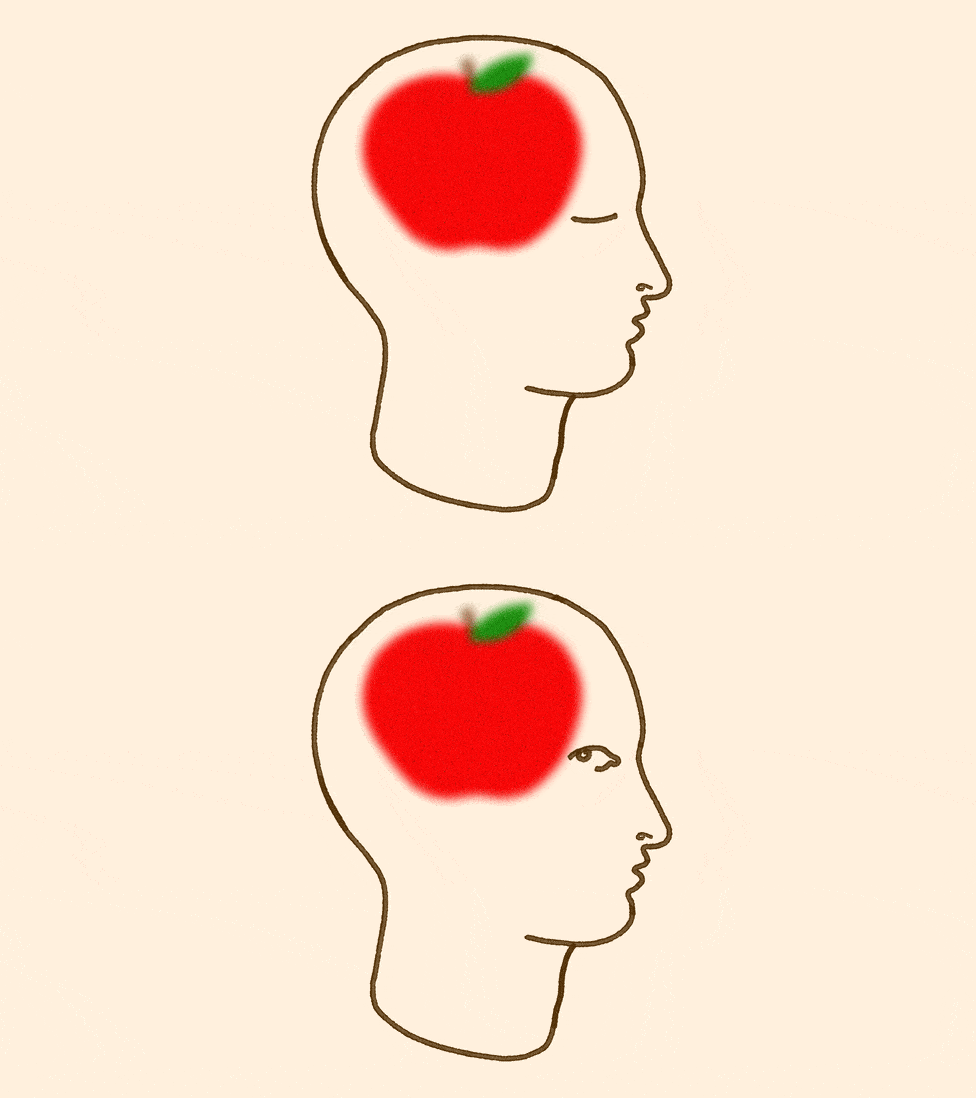
Как ΠΆΠΈΠ²ΡƒΡ‚ люди Π±Π΅Π· Ρ„Π°Π½Ρ‚Π°Π·ΠΈΠΈ?

Π£Π·Π½Π°Π», Ρ‡Ρ‚ΠΎ, оказываСтся, Π΅ΡΡ‚ΡŒ люди, ΠΆΠΈΠ²ΡƒΡ‰ΠΈΠ΅ Π±Π΅Π· Ρ„Π°Π½Ρ‚Π°Π·ΠΈΠΈ. Π­Ρ‚ΠΎ Π½Π΅ Π·Π½Π°Ρ‡ΠΈΡ‚, Ρ‡Ρ‚ΠΎ Ρƒ Π½ΠΈΡ… Π±Π΅Π΄Π½ΠΎΠ΅ Π²ΠΎΠΎΠ±Ρ€Π°ΠΆΠ΅Π½ΠΈΠ΅ ΠΈΠ»ΠΈ Ρ‡Ρ‚ΠΎ-Ρ‚ΠΎ Π² этом Ρ€ΠΎΠ΄Π΅. Π­Ρ‚ΠΎ мСдицинский Ρ‚Π΅Ρ€ΠΌΠΈΠ½, ΠΊΠΎΡ‚ΠΎΡ€Ρ‹ΠΉ ΠΎΠ±ΠΎΠ·Π½Π°Ρ‡Π°Π΅Ρ‚, Ρ‡Ρ‚ΠΎ Ρ‡Π΅Π»ΠΎΠ²Π΅ΠΊ просто Π½Π΅ ΠΌΠΎΠΆΠ΅Ρ‚ ΠΌΡ‹ΡΠ»ΠΈΡ‚ΡŒ ΠΎΠ±Ρ€Π°Π·Π°ΠΌΠΈ: Π½Π΅ ΠΌΠΎΠΆΠ΅Ρ‚ ΠΏΡ€Π΅Π΄ΡΡ‚Π°Π²ΠΈΡ‚ΡŒ Π² Π³ΠΎΠ»ΠΎΠ²Π΅ ΠΊΠ°Ρ€Ρ‚ΠΈΠ½ΠΊΡƒ, ΠΌΡƒΠ·Ρ‹ΠΊΡƒ. ΠŸΡ€ΠΈ словС стол, Π½Π°ΠΏΡ€ΠΈΠΌΠ΅Ρ€, вспоминаСт Π΅Π³ΠΎ Ρ€Π°Π·ΠΌΠ΅Ρ€Ρ‹ ΠΏΠΎ ΡˆΠΈΡ€ΠΈΠ½Π΅ ΠΈ Π΄Π»ΠΈΠ½Π΅, Π·Π½Π°Π΅Ρ‚ Π΅Π³ΠΎ Ρ†Π²Π΅Ρ‚, Π½ΠΎ Π½Π΅ ΠΌΠΎΠΆΠ΅Ρ‚ ΠΏΡ€Π΅Π΄ΡΡ‚Π°Π²ΠΈΡ‚ΡŒ Π² сознании, ΠΊΠ°ΠΊ этот стол выглядит. Π”Π°ΠΆΠ΅ Ссли ΠΎΠ½ стоит Π΄Π°Π²Π½ΠΎ Π½Π° ΠΊΡƒΡ…Π½Π΅. Π£Π΄ΠΈΠ²ΠΈΡ‚Π΅Π»ΡŒΠ½ΠΎΠ΅, ΠΊΠΎΠ½Π΅Ρ‡Π½ΠΎ, Π΄Π΅Π»ΠΎ. ΠŸΡ€ΠΎΡ‡ΠΈΡ‚Π°Ρ‚ΡŒ ΠΎΠ± этом ΠΌΠΎΠΆΠ½ΠΎ Π½Π° [Atlantic](https://www.theatlantic.com/science/archive/2024/08/aphantasia-visual-imagination/679427/), Π½Π° [PsyPost](https://www.psypost.org/aphantasia-linked-to-abnormal-brain-responses-to-imagined-and-observed-actions/) ΠΈ Π² [Π½Π°ΡƒΡ‡Π½ΠΎΠΌ ΠΆΡƒΡ€Π½Π°Π»Π΅](https://www.cell.com/trends/cognitive-sciences/fulltext/S1364-6613(24)00034-2?_returnURL=https%3A%2F%2Flinkinghub.elsevier.com%2Fretrieve%2Fpii%2FS1364661324000342%3Fshowall%3Dtrue) > Афантастики прСкрасно Π²ΠΎΡΠΏΡ€ΠΈΠ½ΠΈΠΌΠ°ΡŽΡ‚ элСмСнты Ρ€Π΅Π°Π»ΡŒΠ½ΠΎΡΡ‚ΠΈ ΠΈ Π½Π΅ ΠΈΠΌΠ΅ΡŽΡ‚ ΠΏΡ€ΠΎΠ±Π»Π΅ΠΌ с ΠΏΠ°ΠΌΡΡ‚ΡŒΡŽ ΠΈ языковой ΠΎΠ±Ρ€Π°Π±ΠΎΡ‚ΠΊΠΎΠΉ. ΠœΡ‹ считаСм, Ρ‡Ρ‚ΠΎ ΠΈΡ… ΠΎΡΠΎΠ±Π΅Π½Π½ΠΎΡΡ‚ΡŒ связана с нСбольшим Π΄Π΅Ρ„Π΅ΠΊΡ‚ΠΎΠΌ Β«Ρ„Π΅Π½ΠΎΠΌΠ΅Π½Π°Π»ΡŒΠ½ΠΎΠ³ΠΎ сознания». Π’ΠΎ Π΅ΡΡ‚ΡŒ ΠΎΠ½ΠΈ ΠΈΠΌΠ΅ΡŽΡ‚ доступ ΠΊ ΠΈΠ½Ρ„ΠΎΡ€ΠΌΠ°Ρ†ΠΈΠΈ ΠΎ Ρ„ΠΎΡ€ΠΌΠ°Ρ…, Ρ†Π²Π΅Ρ‚Π°Ρ… ΠΈ пространствСнных ΠΎΡ‚Π½ΠΎΡˆΠ΅Π½ΠΈΡΡ…, Π½ΠΎ эта Π²ΠΈΠ·ΡƒΠ°Π»ΡŒΠ½Π°Ρ информация Π½Π΅ прСвращаСтся Π² Π·Ρ€ΠΈΡ‚Π΅Π»ΡŒΠ½Ρ‹ΠΉ ΠΎΠ±Ρ€Π°Π·. Π˜Ρ… ΠΌΠΎΠ·Π³ ΠΌΠ΅Π΄Π»Π΅Π½Π½Π΅Π΅ Π°Π½Π°Π»ΠΈΠ·ΠΈΡ€ΡƒΠ΅Ρ‚ Ρ„ΠΎΡ€ΠΌΡ‹ ΠΈ Ρ†Π²Π΅Ρ‚Π°, ΠΊΡ€ΠΎΠΌΠ΅ Ρ‚ΠΎΠ³ΠΎ, ΠΎΠ½ΠΈ ΠΌΠ΅Π½Π΅Π΅ ΡƒΠ²Π΅Ρ€Π΅Π½Ρ‹ Π² точности своих ΠΎΡ‚Π²Π΅Ρ‚ΠΎΠ², ΠΊΠ°ΡΠ°ΡŽΡ‰ΠΈΡ…ΡΡ Π²ΠΈΠ·ΡƒΠ°Π»ΡŒΠ½ΠΎΠΉ ΠΈΠ½Ρ„ΠΎΡ€ΠΌΠ°Ρ†ΠΈΠΈ. [Π˜ΡΡ‚ΠΎΡ‡Π½ΠΈΠΊ](https://aqinstitute.ru/materialyi/stati/kak-zhivut-lyudi-bez-voobrazheniya.html) Π½Π° русском языкС