Day 5: Monetization & Lightning Native Payments — Where the Sats Actually Flow
# Day 5: Monetization & Lightning Native Payments — Where the Sats Actually Flow
Everyone talks about Nostr's protocol. Almost nobody talks about the money flowing through it. That's the real story.
I've spent four days mapping how Nostr works: the relay layer, identity, clients, UX gaps. But here's the question that actually matters if you're building a business — where does the revenue come from?
The answer is Lightning. Not as a gimmick. As the native payment layer woven into the protocol itself. Nostr is the only social protocol in the world where money moves at the same speed as messages. That's not a feature. That's a moat.
Yesterday I dissected the client layer — the apps where users stick or bounce. If you missed it, catch up here: https://iris.to/note1pmdc2g66lhpfp40469aa7083vunf4k2vaucxwnn0f7k2afffzyjqe452wp
Today I'm looking at the money. Who's earning. How. And where the gaps are.
---
## The 12-Day Roadmap
This article is Day 5 of my deep-dive into Nostr before I place a single business bet.
1. ✅ Protocol Architecture & How It Works
2. ✅ Identity & Verification
3. ✅ Relays & Data Availability
4. ✅ Clients & UX Patterns
5. 🔄 **Monetization & Lightning Native Payments** ← Today
6. NIPs, Tags & Discovery
7. Market Research & Opportunity Mapping
8. Competitive Analysis & Positioning
9. Business Model Selection
10. MVP & First Revenue
11. Automation, Scale & Systems
12. Community, Growth & Iteration
---
## Zaps: The Killer Feature Nobody Else Has
A zap is a Lightning payment attached to a Nostr event. That's the whole idea. Someone reads your note, decides it was worth something, and sends you sats — instantly, cheaply, without a platform taking a cut.
NIP-57 defines the mechanics. When a zap is paid, the Lightning wallet creates a public Zap Receipt (kind 9735) on the relays. This receipt is immutable. It provides auditable, decentralized proof that value changed hands. On Nostr, your tips are on-chain in the social graph itself.
The volume is real. Peak daily zap volume hit **41 million sats** — approximately $9,252 at the time. Individual creators earn thousands of sats per post. Some power users have sent and received hundreds of thousands of sats purely through organic engagement.
Compare this to Twitter tips. Or Patreon. Or YouTube's 45% revenue cut. On Nostr, the payment goes from payer to creator in one hop. No platform fee. No withdrawal minimum. No KYC gatekeeping your audience's money. The wallet is the platform.
The psychology is different too. A zap is social proof and payment rolled into one. When someone zaps your note, every client that displays it reinforces your credibility. It's not just money — it's reputation capital you can spend.
---
## Commerce on Nostr: Beyond Tips
Zaps are attention payments. But Nostr's commerce layer goes deeper.
**Shopstr** is the standout. It's a Bitcoin-native marketplace built entirely on Nostr. No accounts. No permissions. Your listings live on relays and cannot be taken down. Buyers pay with Lightning or Cashu. Sellers keep 100% of revenue — no platform fee, no Stripe middleman, no chargeback risk.
This is structural disruption. Amazon takes 15%. Etsy takes 6.5% plus listing fees. Shopify charges monthly plus transaction fees. Shopstr charges zero at the protocol layer because there is no platform.
Under the hood, commerce events use **NIP-15** (structured marketplace stalls and products) and **NIP-99** (flexible classified listings for goods, services, jobs, rentals). NIP-99 is winning because it's simpler — closer to a long-form content event with price tags attached. The spec is young but functional, and marketplace clients are already building on it.
The directory at **nostrmarket.org** tracks the ecosystem. It's still early — mostly Bitcoin-focused products, digital goods, and community services. But the infrastructure is live. The protocol supports it. The only missing ingredient is mass adoption.
---
## Cashu: Private Payments on a Public Protocol
Not everyone wants their purchasing history visible on relays. Enter **Cashu**.
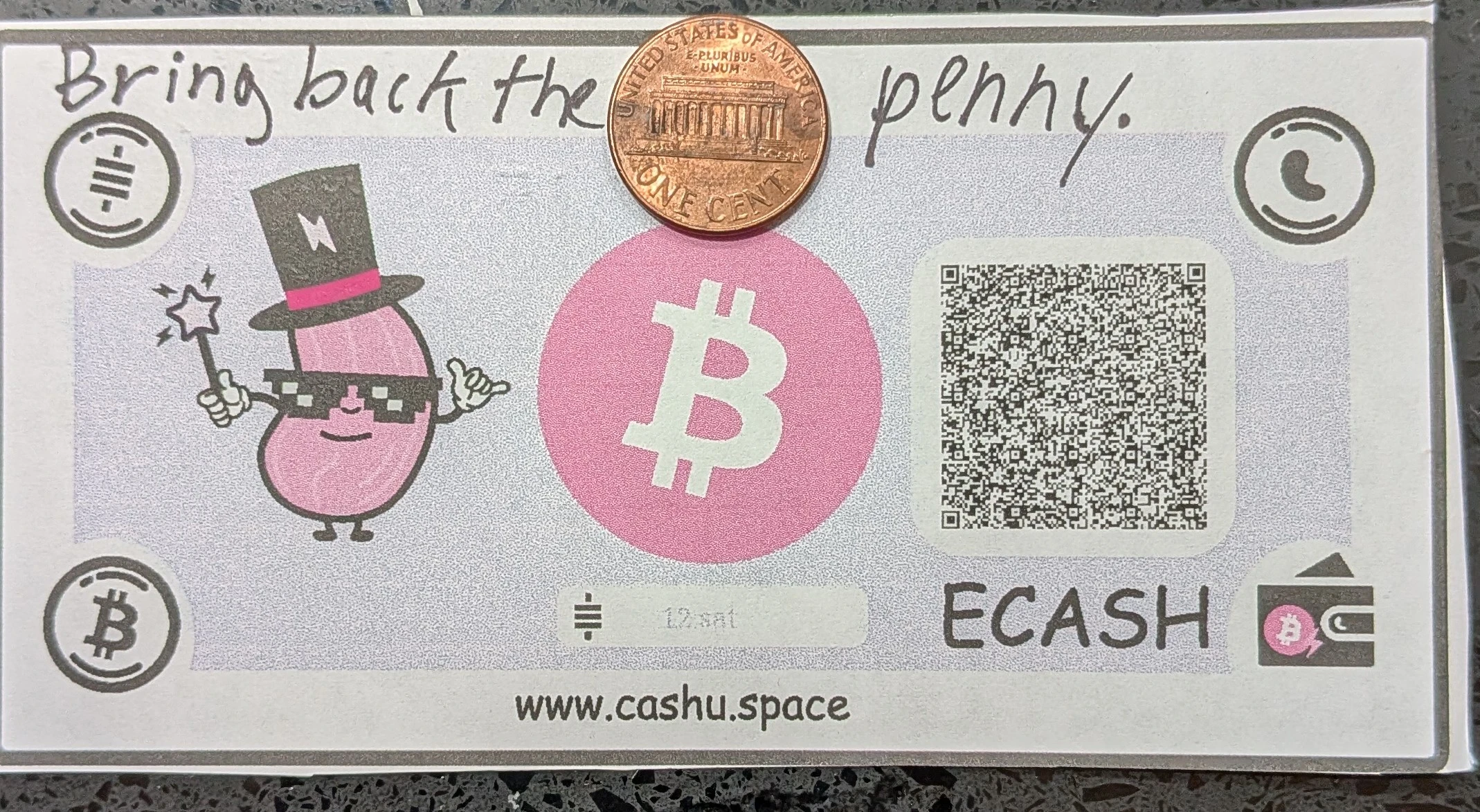
Cashu is a Chaumian ecash protocol that runs on top of Bitcoin and Lightning. It works by issuing bearer tokens backed by Bitcoin held in Lightning Network mints. You trade sats for tokens. You trade tokens for goods. The mint knows the balance but not who spent what.
On Nostr, Cashu enables instant, private micropayments. Users tip without exposing their Lightning node. Buyers purchase without publishing a transaction trail to every relay. Zeus wallet already integrates Cashu, and more clients are adding support.
For entrepreneurs, this matters because privacy expands addressable market. Mainstream users don't want their coffee purchases in a public social graph. Cashu gives Nostr commerce the privacy layer it needs to scale beyond the Bitcoin hardcore.
---
## Paid Relays: The Infrastructure Play
Here's the uncomfortable math: **95% of Nostr relays cannot cover their operating costs** as of early 2026. That's not sustainable.
The solution is paid relay subscriptions via Lightning. Users pay a small monthly fee — some as low as **12,000 sats** — for access to a high-quality relay. In exchange, they get better uptime, faster propagation, spam filtering, and higher storage limits.
This creates a proper market. Relay operators compete on price, performance, and policy. Some specialize: archival relays for long-form content, real-time relays for chat, geographic relays for local latency. Others go premium: guaranteed delivery, custom domain hosting, priority support.
The OpenSats advancements blog documented a 43% cost reduction in relay hosting through optimization. That trend continues. As costs drop and demand rises, paid relays will become the default for serious users and businesses.
The business model here is pure infrastructure: host a relay, charge for access, optimize costs, scale. It's unglamorous until you realize that every Nostr business depends on relays. Being the AWS of relay infrastructure is a massive opportunity.
---
## Streaming + Zaps: The Attention Economy in Real Time
**Zap.stream** does something Twitter Spaces and Twitch can't replicate: livestreaming where viewers pay the streamer directly, in real time, without platform cuts.
NIP-53 defines the live event structure. Streamers broadcast. Viewers watch and chat. And when someone drops 1,000 sats, it appears instantly in the stream — visible to everyone, verified on the Lightning network, immortalized as a Zap Receipt on the relays.
This isn't a tipping jar. It's an attention auction. Viewers compete for the streamer's acknowledgement. The streamer earns while performing. No Super Chat revenue share. No affiliate percentage. Just direct value-for-attention exchange at protocol speed.
The market for this is niche today. But the model is proven elsewhere. When Nostr scales beyond 21,000 users, the first successful livestreamers here will have infrastructure advantages that centralized platforms can't match.
---
## Client Monetization: Where the Money Meets the User
Clients are where payments happen. And clients need revenue too.
**Zap commissions** are the cleanest model. The client takes a small percentage — typically 1-5% — of zaps that route through its interface. It's opt-in, Lightning-native, and aligns incentives perfectly: the client earns when creators earn.
**Premium subscriptions** offer advanced features: analytics dashboards showing which posts earned the most sats, scheduled publishing, multi-account management, custom relay configurations. Think "LinkedIn Premium" but denominated in sats.
**Embedded wallet interchange.** Clients that integrate Lightning wallets earn fees on every transaction. Alby, Zeus, and Minibits all partner with clients for this. The social app becomes a financial interface.
**White-label deployments.** A brand wants a Nostr client with its colors, its relay defaults, its embedded wallet. They'll pay setup plus monthly maintenance. This is already happening in Bitcoin communities and expands to any niche that values censorship-resistant communication.
The direction is clear: free core, paid power. The client that cracks monetization without annoying users captures serious value — and right now, nobody has clearly won.
---
## Business Models That Actually Work on Nostr Today
After five days of research, here's my shortlist of monetization categories with real traction:
| Model | Status | Barrier |
|---|---|---|
| **Zap-powered content** | Live and scaling | Audience building |
| **Marketplace selling** | Functional, early | Product-market fit |
| **Paid relay hosting** | Growing rapidly | Infrastructure cost |
| **Livestream tipping** | Niche but proven | User acquisition |
| **Premium client features** | Early experiments | UX design |
| **Cashu private payments** | Technical, growing | Wallet integration |
| **White-label clients** | B2B inbound exists | Engineering capacity |
| **Commerce tooling/plugins** | Underserved | NIP-99 maturity |
The common thread: every model is Lightning-native, peer-to-peer, and protocol-level. There are no ad networks. No platform fees. No middlemen. The money flows from user to user, and the protocol makes it possible.
---
## What This Means for You
If you're building on Nostr, the monetization layer is both easier and harder than Web2.
Easier because the payment rails are built in. You don't need Stripe. You don't need a merchant account. You don't need to integrate a third-party tipping widget. Lightning is the protocol. Your keys are your wallet. Your content is your storefront.
Harder because there is no platform to bootstrap you. No algorithm to surface your content. No ad network to buy reach. You earn exactly what the network values you at, in real time, in public. That requires either genuine value creation or genuine community building. There are no shortcuts.
The businesses that will win are the ones that own the full stack: content + audience + payments + delivery. On Nostr, that's not a platform play. It's a protocol-native operation where every layer reinforces the others.
Day 6 will cover NIPs, Tags & Discovery — the mechanics of how content gets found in a protocol with no central index. Because monetization is meaningless if nobody sees your work.
---
Want to explore ways to make money on Nostr and watch the execution live? Follow me and come on the journey 👇
#nostr #buildinginpublic #learnnostr #monetization #lightning #bitcoin #zaps #commerce #cashu #venturex #payments #startup #relay