Defending the Blockchain: How Bitcoin Cash is Pioneering Post-Quantum Asset Protection
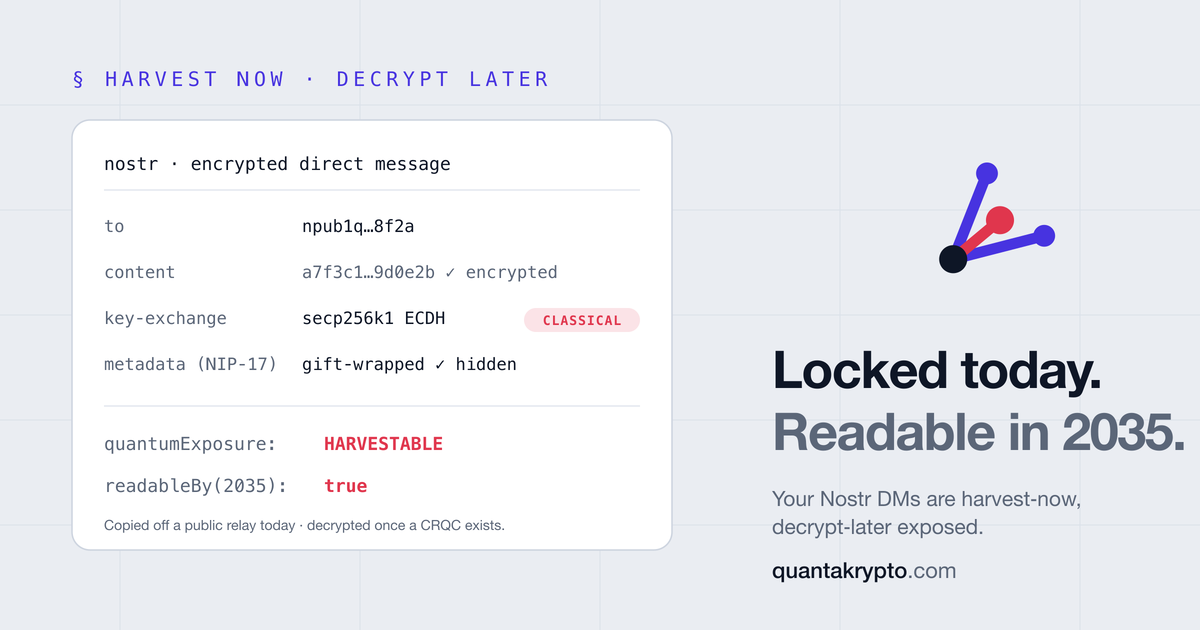
As quantum computing accelerates from a theoretical milestone to an imminent reality, the cryptographic foundations of the cryptocurrency world face an unprecedented existential threat. If a Cryptographically Relevant Quantum Computer (CRQC) becomes operational, it will easily break Elliptic Curve Cryptography (ECDSA)—the exact security mechanism guarding billions of dollars in legacy Bitcoin (BTC) and Bitcoin Cash (BCH) addresses.
While both networks face this looming "Q-Day," the Bitcoin Cash development community has recently stepped forward with an innovative proposal: a Challenge-Based Transition Protocol designed to securely salvage and migrate vulnerable funds even after the underlying cryptography has been compromised.
The Quantum Threat: The "Burn or Steal" Dilemma
The primary quantum vulnerability doesn't lie in blockchain mining, but in wallet addresses where the public key has been exposed (such as legacy P2PKH addresses or reused inputs). Using Shor’s algorithm, a quantum adversary could effortlessly derive a private key from an exposed public key, granting them full control over dormant or unmigrated funds.
For years, the broader crypto ecosystem has debated two harsh solutions to this problem:
1. Steal: Do nothing, allowing quantum attackers to plunder early wallets (including Satoshi Nakamoto’s estimated 1.1 million coins).
2. Burn: Hard-fork the network to make all unmigrated legacy addresses permanently unspendable, destroying billions in wealth to protect network stability.
Bitcoin Cash researchers have introduced a third path—a cryptographic rescue mission.
The BCH Strategy: Challenge-Based Transition Protocol
Published on the Bitcoin Cash Research platform, the proposed protocol allows users to safely move funds from quantum-vulnerable addresses to quantum-resistant (QR) destinations, even if ECDSA has already been broken by an attacker.
The protocol operates through a unique, cost-asymmetric commitment mechanism divided into four phases:
1. The Commit Phase
Long before an attacker strikes, a user creates a hidden, unlinkable on-chain commitment using a one-way hash function:
pk: The vulnerable public key.
• secret: A secret value known only to the wallet owner (deterministically generated from their seed phrase).
• qr_address: A new, quantum-safe destination address (e.g., a Quantumroot vault).
Because it is hashed, observers and quantum computers cannot see which public key or funds this commitment is protecting.
2. The Reveal Phase
When the user is ready to migrate their funds to the quantum-safe address, they reveal the secret and the destination qr_address.
3. The Challenge Window
Once the reveal happens, a time-locked challenge window opens. If a quantum attacker attempts to counterfeit the transaction or claim the funds using a stolen private key, they must submit their own commitment.
This creates a Cost Asymmetry:
• The legitimate owner can prove ownership using an older, aged commitment that pre-dates the attacker's visibility of the keys.
• The system uses a priority mechanism where older commitments displace newer ones, effectively neutralizing the quantum attacker's ability to spoof ownership in real-time.
4. Finalization
If no older, valid commitment challenges the claim within the specified block window, the funds are safely routed to the user's new quantum-resistant vault.
Why This Matters for the Broader Crypto Space
The Bitcoin Cash approach highlights a key advantage of its architectural philosophy: flexibility. By utilizing on-chain dust limits, smart contracts, and flexible transaction parameters, BCH can test and implement complex recovery protocols that would be politically or technically gridlocked on the main Bitcoin (BTC) network.
If successful, this challenge-based architecture could serve as a blueprint for the entire blockchain industry, proving that legacy crypto assets don't have to be abandoned or left to hackers when the quantum age arrives.