#

web3

(47 articles)

The Future of Money Meets Freedom of Speech: BCH + BCHnostr

Ever feel like traditional finance costs too much and traditional social media controls too much? It’s time to look at a decentralized alternative. Here is a quick breakdown of two tools built to give you total control over your funds and your voice: 1. Bitcoin Cash (BCH): True Peer-to-Peer Cash Bitcoin Cash is digital money designed to work exactly like physical cash, but for the internet. • Ultra-Low Fees: Send money globally for a fraction of a cent per transaction. • Instant Payments: No waiting around for bank approvals or dealing with heavy network congestion. • Financial Freedom: You hold your own keys, meaning no middleman can freeze your account or tell you how to spend your money. 2. BCHnostr: The Social Platform You Own Built on the revolutionary, censorship-resistant Nostr protocol, BCHnostr is a social platform where your audience belongs to you, not a tech corporation. • No Algorithms, No Bans: There is no central authority to shadowban your content or manipulate your feed. • Value for Value: It seamlessly integrates with the BCH ecosystem, allowing you to earn micro-tips (zaps) in Bitcoin Cash directly from your followers for your posts. • Native Tokens: It supports advanced features like CashTokens, opening up a whole new world of digital ownership right inside a social space. 💡 The Big Picture When you combine BCH and BCHnostr, you get an ecosystem where you can speak freely without fear of censorship, and get paid instantly by anyone in the world without a bank. Drop a comment below if you want a step-by-step guide on how to set up your account and get started! 👇 #BitcoinCash #BCH #BCHnostr #DecentralizedSocial #Crypto #Web3

Staying Safe in Web3 - A Guide to Wallet Security and Scam Prevention.

Web3 has opened the door to decentralized finance, digital ownership, NFTs, and new earning opportunities. The remote work getting deep roots and financial empowerment by crypto is lesson for the day. However, with freedom comes responsibility. Unlike traditional banking, there is usually no customer support to recover stolen funds or reverse bad transactions. This makes wallet security and scam prevention extremely important. Understanding how to protect yourself onchain can help you avoid costly mistakes and enjoy Web3 safely. **How to Stay Safe on the Internet in Web3**The first rule of Web3 safety is simple, never trust blindly. Scammers often create fake websites, impersonate well-known projects, and trick users into connecting wallets. Always double-check URLs before visiting a website and avoid clicking suspicious links shared in direct messages, emails, or random social media comments. **Use strong and unique passwords** for exchanges and enable two-factor authentication (2FA) whenever possible. Keep your devices updated and avoid installing unknown browser extensions, as some may steal wallet information. Most importantly, never share your private keys or seed phrase with anyone. No legitimate project or support team will ever ask for them. **What to Check Before Connecting and Signing Your Wallet** Connecting your wallet to a site or decentralized application (dApp) may seem harmless, but signing transactions without reading them carefully can be dangerous. Before connecting your wallet ♦️Check the website URL and ensure it is the official one. ♦️Check if the project has official social media channels and active communities. ♦️Avoid connecting your primary wallet to unknown platforms. ♦️Before signing any transaction, Read what permission you are giving. ♦️Be cautious if the transaction requests unlimited token access. ♦️Watch out for vague or suspicious messages asking you to sign without explanation. Many wallet drainers work by tricking users into signing malicious approvals. One careless click can result in losing your assets. **What Is a Burner Wallet and Why Do People Use It?** A burner wallet is a secondary crypto wallet used for testing unknown dApps, claiming free mints, or interacting with risky websites. Think of it as a disposable wallet that only contains a small amount of funds. People use burner wallets because they reduce risk. If a suspicious website compromises the wallet, only a limited amount of funds is affected, while your main wallet remains safe. How to Create a Burner Wallet Step by Step. Install a wallet app such as MetaMask or another trusted wallet. Create a new wallet separate from your main one. Save the seed phrase securely and offline. Transfer only a small amount of crypto needed for transactions. Use this wallet for testing new dApps or unknown projects. Never store large holdings in a burner wallet. **How to Check If a Site or Project Is Legit.** Before interacting with any project, do basic research , like ♦️A professional website with consistent branding. ♦️Verified social media accounts and active engagement. ♦️Clear documentation or a whitepaper explaining the project. ♦️Community discussions on platforms like Discord, Telegram, or X. You should also search for reviews and warnings from other users. If multiple people report suspicious behavior, stay away. Common Red Flags of Scam Projects Scam projects often follow predictable patterns. Be careful if you notice: Anonymous teams: While anonymity exists in crypto, completely hidden teams with no reputation can increase risk. **Copied Websites.** Fake sites often imitate popular projects to steal wallet access. Fake urgency , Messages like “Act now or lose rewards” are designed to pressure users into making rushed decisions. Too-good-to-be-true rewards , Guaranteed profits, massive airdrops, or unrealistic returns are major warning signs. If something feels suspicious, trust your instincts and investigate further before interacting. **Why You Should Revoke Old Wallet Approvals** When you connect a wallet to dApps, you often give permission for contracts to access tokens. Over time, forgotten approvals can become security risks, especially if a protocol gets hacked. Revoking approvals removes unnecessary permissions and limits exposure. You can review and revoke permissions using trusted wallet management tools. Make it a habit to check approvals regularly, especially after using new or temporary dApps. **Final Thoughts** Web3 offers exciting opportunities, but security should always come first. By using burner wallets, checking projects carefully, avoiding suspicious links, and regularly revoking wallet approvals, you can reduce risks significantly. In crypto, protecting yourself is not optional , it is essential. Stay informed, stay cautious, and always think twice before connecting or signing your wallet. Thanks for your valuable time till here. like , upvote and leave comment for feedback. Also read here, https://wurk.fun/blog/staying-safe-in-web3-a-guide-to-wallet-security-and-scam-prevention Cheers, Amjad

The Algorithm and the Wave: Why Nostr Separates What Life Holds Together

The protocol presents itself as an immaculate square. A place where voices, reduced to cryptographic signatures, intersect without the weight of flesh, without the geography of the body, without the history written on a face. It promises an ancient purity: mathematical certainty instead of wavering trust, a horizontal network instead of a hierarchical tower, autonomous identity instead of a bound subject. **Nostr is not just a technical tool; it is the latest, extreme incarnation of a centuries-old philosophical dream**. The dream of separation. Of the mind freeing itself from the ballast of the body, of the subject rising as a neutral observer and master of an object-world. It is the dream that Descartes sealed in the “cogito ergo sum,” founding existence not on being-in-the-world, but on thought itself, on a thinking ego that objectified its own body and reduced creation to “res extensa,” to mere measurable and dominable extension. That dualism was not an academic error. It was the founding act of a civilization. Ours. The one built on domination, extraction, and a rationality that believed itself disembodied. **What we call technological “progress” today often does nothing but dig that original furrow deeper**. Nostr, in its formal elegance, digs toward the abyss. It mistakes freedom for isolation, neutrality for indifference, certainty for alienation. It sows wind in a field already too arid. > “Most of those who have written about the emotions and human conduct seem to deal not with natural phenomena that follow the common laws of nature, but with phenomena outside nature. They seem to conceive man in nature as a kingdom within a kingdom...” These words by Spinoza, the great adversary of Cartesian dualism, resonate as a warning. Man as a “kingdom within a kingdom” is the lethal illusion. It is the subject who believes himself sovereign over a territory called body and a colony called world. But the body is not a territory. It is ourselves. And the world is not a colony. It is the substance of which we are a part. **The protocol that promises to free us from bodies and places (“onlife,” as they say with a sinister neologism) does not elevate us: it amputates us**. It delivers us to an eternal digital present, to a floating consciousness that has lost its sensory, emotional, communal anchor. Morality, uprooted from teleology (from the “end” proper to an embodied and relational being), becomes a consensus algorithm or a private preference. Solidarity, separated from the physical community of destiny, turns into a like, an ephemeral retweet. Human beings, uprooted from the living Earth, become nodes in a network, ghosts in a machine. ### The Body that Knows: The Spinozist Revolt against the Empire of the Mind To understand the scale of this amputation, one must listen to the forgotten voice of Baruch Spinoza. While Descartes started from hyperbolic doubt about the world to arrive at the certainty of the thinking self, Spinoza started from the world, from Nature (Deus sive Natura), of which man is a small part. A part, not an emperor. In this radically monist vision, mind and body are not two heterogeneous substances that mysteriously interact (the unresolved puzzle of Cartesian dualism). They are the same thing, conceived under two different attributes: thought and extension. **The order and connection of ideas is identical to the order and connection of things**. The body is not the prison of the mind, nor its machine. It is its way of being in the world, its constitutive interface. Without the body, the mind would not even know it exists. Spinoza placed the body at the center of his philosophical investigation, a revolutionary act in a tradition that had despised it. He wrote: “No one has yet determined what the body can do”. It is an admission of ignorance that sounds like a prophecy. Our hyper-rational civilization, obsessed with mapping the mind and surveilling data, has systematically ignored the wisdom of the body. Its environmental intelligence, its cellular memory, its *conatus*: the intrinsic striving to persevere in its own being, which is desire, appetite, vital energy. The algorithm cannot encode the *conatus*. It can only stimulate or inhibit it, as it does with every “affect,” increasing or decreasing our power to act. **Nostr, in wanting to transcend the body, transcends the human**. It creates a soulless abstraction, or rather, one without true affects. Because affects – joy, sadness, wonder – are first and foremost *affections of the body*. They are our anchor to the real. A post can describe a sunset, but it is not the breath taken away before it; it can declare love, but it is not the warmth of a hand. The network, without the body, is a desert of signs. And we, within it, are like the waves of the sea Spinoza spoke of: “agitated in many ways by external causes… tossed about here and there, ignorant of our outcome and our destiny”. Nostr does not calm this sea. It merely makes it virtual, deluding us into thinking we govern its currents. ### The Trace and the Ghost: Social Ontology in the Age of Abstract Documentality The problem deepens when moving from the philosophy of mind to social ontology: how is our shared reality constituted? What is a historical fact, a document, a promise? Here too, the protocol plays with the fire of separation. Thinker John Searle explained social reality through “collective intentionality”: “X counts as Y in context C”. A rectangular piece of paper (X) counts as a twenty-dollar bill (Y) in the context of the United States (C). It is an act of collective faith, sustained by institutions. Searle’s theory, however, is based on background beliefs and speech acts, elements that are by nature variable and interpretable. What happens when this process becomes purely algorithmic and decontextualized? When the “context C” is no longer an embodied culture, but the immutable rules of a protocol? Contemporary thought on Documentality offers a different key, more resistant to nihilistic drift. Social reality is constituted not only in intention, but in the **trace**, the material or digital inscription of an act. The document (in a broad sense) precedes and binds interpretation. It has its own opacity, its own inemendability. The yellowed parchment, the notarial register, even the post on a federated server: they are traces that bind us to a fact. Nostr, in theory, is a gigantic system of documentality: every note is a signed, immutable trace. Yet, in radically separating the trace from the body that produced it, from the place where it was conceived, from the physical community that gives it meaning, it risks emptying it. It reduces it to a ghost of itself. Searle’s “status function” could, in such an ecosystem, iterate infinitely in uprooted contexts, until losing all contact with the original reality of the acts. An agreement, a declaration of love, a piece of news become semantic strings floating in a sea of other strings. **Truth is no longer an adequation to shared reality, but a coherence with the ledger of the chain**. It is a triumph of nominalism that kills the thing. This touches the heart of the historical and political question. A realist historian, a certain line of thought reminds us, believes that the process of historicization must bring out the objective connotations of a fact, freeing them (as much as possible) from the emotional involvements of the present. But this process requires confrontation with traces in their concreteness and their *relationality*. It requires a body that looks, a brain historicized by intersubjectivity. An abstract, de-historicized brain is a dangerous illusion. Nostr, by proposing a square where everyone is present only as uprooted intelligences, constructs the perfect condition for a *non-history*. An eternal and flat chronicle, where everything is recorded and nothing ever truly happened, because it happened outside the world. The “neutrality” of the protocol risks being the indifference of the digital cemetery. ### Towards a Digital Pananthropology? The Embodied Brain and the Rooted Network Is there a way out, then? Or are we doomed to dig the Cartesian furrow until ecological and social collapse? The answer, perhaps, lies in refusing the question itself, which is still dualist. It is not about “integrating” the body into the digital, as one adds an accessory to a machine. It is about recognizing that **every technology is already an extension of our social and cognitive body**, and as such, it absorbs and amplifies its pathologies or virtues. The neuroscientist and the philosopher of mind who ignore the intersubjectivity and historicity of the brain commit the same error as the Nostr designer who ignores the user’s corporeality. The brain becomes mind only in the encounter with the other, in the interiorization of language and culture. A disembodied mind is an oxymoron. The challenge is not technical; it is ontological and ethical. It requires what has been called a “pananthropological” approach, which rejects disciplinary separations just as it rejects the mind-body separation. We must imagine protocols that, instead of uprooting, *root*. That, instead of abstracting, *embody*. That, instead of the blind certainty of the cryptographic signature, promote *trust* nurtured by shared vulnerability and proximity. We must relearn Spinoza’s lesson: freedom is not the absence of determinations (the libertarian dream of every crypto-anarchist), but the **active understanding of the determinations that constitute us**. To be free is not to be isolated nodes in a network, but to understand that we are part of Nature, and to act in accordance with this understanding, increasing our power to act and that of others. The Nostr protocol, as it is conceptualized, represents the apex of a reason that has forgotten it is in the world. It is the latest expression of that will to power which, after declaring God dead, made Technology its new idol, also transcendent and separate. But an idol does not save. It burns. It burns bonds, burns meaning, burns the very earth we tread. Building a civilization on these metaphysical grounds is not progress. It is a slow suicide. A suicide committed with the cold, impeccable logic of one who has mistaken life for its map, the body for its ghost, and the living Earth for a database from which to extract value until the last bit. #nostr #philosophy #dualism #spinoza #descartes #socialontology #documentality #web3 #critique #technology #civilization #alienation
The Shop and the Black Hole: The Attention Economy in the Digital Age

There exists a social physics, as hard and inexorable as that which governs the stars. Its laws are not written in books, but in the daily wear and tear of the mind, in the fatigue that follows hours of vain scrolling, in the strange feeling of emptiness after an interaction that consumed words without generating warmth. It is the law of the **relational black hole**. A phenomenon that, from the hyperlight of social media to the impersonal concrete of shopping malls, defines our age: entities that absorb energy—attention, time, fragments of the self—without returning light. Without creating bonds. One approaches, drawn by the promise of something—a connection, a product, recognition—and is sucked into a gravitational field of algorithmic loneliness. The scientific discovery that cosmic black holes may be intrinsically linked to the dark energy accelerating the universe's expansion offers a disturbingly perfect metaphor. These celestial monsters are not just tombs of matter; according to new studies, **they accumulate mass in a way that cannot be explained by gas accretion or mergers alone**. They grow *by changing with the universe itself*, in a phenomenon called "cosmological coupling". Their mass increases as the cosmos expands, and it is suspected that the vacuum within them directly contributes to that mysterious force pushing galaxies apart. They are, in essence, devourers whose appetite shapes the very fabric of reality, turning matter into a form of energy that dilutes closeness. Similarly, social black holes—from the infinite timeline to the e-commerce showcase—do not just consume our minutes. They alter the very ecosystem of our attention, stretching the space between individuals, replacing proximity with isolation. They create a **hyperconnected loneliness**. The energy they steal—our psychic energy—becomes the fuel for their economy, leaving behind a colder, more scattered social universe. ### The Anatomy of Fatigue: When Interaction Becomes a Debt The most evident symptom of this predatory extraction is a condition psychiatric research now classifies with precision: **social media fatigue**. It is not simple tiredness, but a subjective, multidimensional phenomenon encompassing "tiredness, annoyance, anger, disappointment, caution, loss of interest, or low need/motivation to interact with others". It is the warning signal of an overloaded mind. Studies link this fatigue to precise triggers: **social comparison**, **fear of missing out (FOMO)**, and above all, information overload and compulsive use. The latter point is crucial. We are no longer mere users; we are **compulsive consumers of interactions**, driven by neuroscientific reward mechanisms to seek a like, a notification, a digital glance that quells an anxiety. The parallel with material consumption is direct and unsettling. Consumer psychology shows that cognitive fatigue—the depletion of our reserve of energy for making decisions—makes us profoundly vulnerable. Drained by a day of choices, we yield to the ease of impulsive purchase. E-commerce giants build entire empires on the **law of least mental effort**, eliminating all friction between desire and transaction. "Buy Now with 1-Click" is not a convenience feature; it is a neuroeconomic leash. In the same way, traditional social media eliminate all friction between our need for connection and the offer of a stimulus: the scroll is infinite, the reward unpredictable, the exit designed to be difficult. Both in the digital and physical shopping mall, the result is the same: **an action that exhausts without nourishing**. One exits the online shopping session or the social media stream with a sense of emptiness, sometimes guilt, and with one less resource: fresh attention, the capacity for concentration. > "The price of mass anonymity is loneliness. One screams in an arena full of people doing the same, and the resulting din is the exact equivalent of silence." This extractive economy finds its ideal opposite in an ancient, human institution: **the neighborhood shop**. It is not just a store; it is a relational node. The owner knows you, advises you, sometimes extends credit. The economic exchange is clothed in a social context: a chat about the weather, advice, a shared memory. Trust is mutual, built over time, and **every interaction has a face**. The value produced is not only in the transfer of a good, but in the repetition of a ritual that strengthens the community fabric. The shopkeeper's "margin" is not just financial; it is social. It is trust capital. The central question for our age thus becomes: is it possible to build a **digital neighborhood shop**? An online space where interaction is not a product to be extracted, but a common good to be cultivated? ### Nostr: The Promise of a Square and the Risk of New Bastions It is in this relational desert that **Nostr** emerges, like a mirage. The acronym stands for "Notes and Other Stuff Transmitted by Relays". It is not a company, not an app, but an **open protocol**, a set of rules—comparable to those that allow different emails to communicate—that aims to decentralize social interaction. Its promise is radical: to return control to the user. Your identity is not an account on a corporation-owned server, but a pair of cryptographic keys: one public (your "name" on the network) and one private (your unassailable seal, your sovereignty). Messages, called "notes," are digitally signed and transmitted through independent servers called **relays**, which anyone can run. You can change clients (the app you use to interface) and relays without losing your identity or contacts. The protocol is, in intention, an open and neutral field. **The architectural model is a powerful defense against centralized black holes.** No secret algorithm universally decides what you see; it is you, through the clients and relays you choose, who builds your information flow. You can "zap" (send micro-payments in Bitcoin via the Lightning Network) directly to a creator of value, establishing a direct support economy, without advertising intermediation. It seems the blueprint for building those digital shops: small communities, thematic groups, trust networks (Web of Trust) where reputation is built with verifiable actions, not empty likes. And yet, even in open territories, social gravity exerts its force. One risk is tangible: that on Nostr, **new hierarchies, new elitist black holes** are recreated, in miniature. Attention could concentrate around a few highly-followed figures, the protocol's so-called "influencers," recreating digital entourage dynamics. Paid or highly exclusive relays could become closed clubs, replicating the sense of exclusion one feels before a luxury store window. **Technical decentralization does not automatically guarantee a fair distribution of social capital**. The protocol provides the tools to build shops, but it is up to the community to decide whether to build welcoming squares or ivory towers. ### Building Your Shop: A Relational Survival Manual The transition from consumer to citizen of digital space requires an act of conscious will. A paradigm shift from being a *user* to being a *participant*. Here is a possible path, a draft strategy: - **Diagnosis and Detox**: The first step is a ruthless audit. What are the **black holes** in your digital life? Those apps, those groups, those timelines that after half an hour leave you feeling you've wasted time and mood? Use the research data: if it causes constant social comparison, FOMO, compulsive use, or information overload, it's a candidate. Eliminating them is not a loss. It is an **investment**. You free up cognitive energy. - **Choosing Tools with Intention**: On Nostr, this means exploring different clients not based on popularity, but on the **experience they foster**. Are you looking for long conversations? Clients for "long-form" exist. Do you prefer tight-knit thematic groups? Look for clients that implement group protocols (NIP-29) well. Your client is the furnishings of your digital shop. - **Cultivating the "Backyard" and Not Just the "Square"**: Don't just seek followers. Seek **responders**. People who comment, ask questions, build upon your thought. Interact in depth with a few instead of superficially with many. Use replies and shares to evaluate the quality of a contact, not their number. - **Implementing a Personal Web of Trust**: Begin to mentally classify (or use tools some clients offer) your contacts. Who is a reliable source? Who always enriches the conversation? Who, instead, tends only to extract attention? **Direct your energy toward the nodes of your future shop**. Signal and share their content. Build a virtuous circle. - **Practicing Real Value Exchange**: Use "zaps" not as a super-like, but as a **meaningful thank you** for advice, analysis, or support received. Participate in discussion groups with the intent to contribute, not promote. Be the shopkeeper who offers a sample, disinterested advice. The social capital you accumulate will be your true wealth on the network. - **Managing Boundaries**: Even in the most welcoming shop, at some point, the shutter comes down. Learn to use mute and block tools not as censorship, but as **protection of your community's perimeter**. A healthy environment requires defined boundaries. Set times for digital "closing," just as you would with a physical business. In a few weeks, if this transition is undertaken with rigor, your network may be smaller. But every notification will have a face. Every interaction a flavor. The frustration of endless extraction will have transformed into the satisfaction of an **authentic exchange system**. You will have stopped feeding black holes and started cultivating a garden. It is not a utopia. It is a technical possibility and, above all, an ethical choice. The protocol provides the infrastructure, but the brick of the shop—trust, reciprocity, the face—must still and always be yours. #digitalgarden #socialmediafatigue #attentioneconomy #community #web3 #mentalhealth #cyberpsychology #NostrCritics #Algorithm #AskNostr #Decentralization #CensorshipResistance #Nostr #Moderation #Fediverse #Bitcoin #wotathon #FreeSpeech #OpenProtocol#NostrGrowth #NostrAdoption #WoT (Web of Trust) #NostrFeedback #NIP (Nostr Implementation Possibility) #NostrCritique

📚Social Graph Control and Manipulation Mechanisms in Decentralized Networks📢

Control over visibility and influence within a social network represents a form of structural power that persists even in decentralized architectures. While traditional platforms consolidate this power in proprietary algorithms controlled by single entities, decentralized protocols like **Nostr** redistribute control mechanisms through the interaction of technical components and social dynamics. This analysis examines how social graph control - the map of connections and influences between users - can be strategically manipulated despite the absence of central authority, using the very tools intended to promote freedom and censorship resistance. ## Technical Architecture and Vulnerability Points The Nostr protocol establishes a minimal framework for publishing and distributing cryptographically signed events. Its architecture rests on three fundamental components: cryptographic identities (public/private key pairs), standardized events (signed JSON), and independent relays. This structure eliminates centralized control points but creates new surfaces through which systemic influence can be exerted. **Relays as Visibility Infrastructure** Relays function as a critical infrastructural layer, operating as selective gateways for information diffusion. While in theory any user can host or connect to any relay, concentration dynamics emerge in practice: a limited subset of public relays becomes dominant through network effects, default accessibility in popular clients, or technical advantages like reduced latency or higher reliability. This creates a structural contradiction: a system designed to be distributed tends to develop informal aggregation points that become strategic targets for control operations. **Social Graph as Emergent Layer** Above the infrastructural layer of relays develops the social graph, built through user actions represented as events: follows (kind:3), reactions (kind:7), reposts (kind:6), and mentions. This graph is not controlled by any central entity but emerges from the aggregation of individual choices. Precisely this emergent and distributed nature makes it vulnerable to coordinated manipulations that, by exploiting the mathematical properties of networks, can produce significant distortions in collective perception. ## Network Theory Applied to Social Control Social network analysis provides a quantitative framework for understanding how specific positions within a graph confer influence power. These theoretical principles manifest concretely in decentralized environments like Nostr. **Centrality as Influence Measure** Degree centrality simply measures a node's number of direct connections. On Nostr, this corresponds to follower count. Manipulating this metric is technically trivial: a coordinated group can create numerous ghost accounts that follow a target profile, artificially inflating its apparent popularity. Clients implementing popularity-based recommendation algorithms will amplify this distortion, presenting the manipulated profile as organically influential. Betweenness centrality identifies nodes that function as bridges between otherwise separate communities. These nodes control information flow between distinct clusters. A sophisticated manipulation strategy deliberately positions accounts in these strategic positions, selectively following opinion leaders in different communities to then serve as privileged channels for targeted narrative diffusion. **Cluster Dynamics and Coordinated Amplification** Cliques - completely interconnected subgroups - represent the fundamental unit for coordinated manipulation operations. A clique of even modest size (50-100 accounts) acting synchronously can produce disproportionate amplification effects. When all clique members interact simultaneously with the same content (likes, reposts, comments), they create the illusion of a much broader organic consensus, triggering social proof mechanisms that influence genuine users. Granovetter's "weak ties" theory proves particularly relevant in this context. While strong ties (repeated connections within cohesive communities) maintain group cohesion, weak ties (occasional connections between communities) enable information diffusion to new audiences. The most effective manipulation operations strategically create weak ties between operative cliques and target communities, maximizing penetration while minimizing coordination visibility. ## Operational Mechanisms of Graph Manipulation **Social Engineering** This category comprises techniques exploiting predictable human behaviors to distort perceptions. Astroturfing - creating the impression of spontaneous "grassroots" support - is implemented by coordinating interactions from accounts mimicking genuine profiles (varying age, diversified interests, irregular behavior) to avoid detection. A more sophisticated variant, called "thread hijacking," involves identifying already popular conversations on related topics and inserting contributions subtly redirecting the narrative toward predetermined objectives, exploiting the existing audience. **Structural Isolation** The opposite of amplification: instead of promoting content, this strategy aims to suppress target voices through coordinated social isolation. Implemented by requiring all members of a manipulation group to abstain from any interaction with certain accounts or hashtags, this technique exploits the fact that in the absence of a central algorithm, visibility depends entirely on interactions. A completely ignored account becomes invisible to most users, as its content appears neither in interaction-based feeds nor gains viral diffusion. An extension of this technique is "confining relay": if the group controls popular relays, it can simply omit events from target public keys from distribution. Users of those relays will experience an informational universe where those voices don't exist, while being technically active on other relays. This creates a fragmentation of perceived reality between different subnetworks. **Client Algorithm Gaming** Although Nostr lacks centralized algorithms, many clients implement local algorithms for "global," "trending," or "recommended" feeds. These algorithms typically consider metrics like interaction volume, diffusion speed, source diversity, and zap volume (micropayments). A coordinated group can: 1. **Manipulate diffusion speed**: Coordinating an interaction peak concentrated within a short time span (minutes) to mimic organic viral diffusion curves. 2. **Simulate diversity**: Using accounts with apparently unrelated social graphs (following different sets of main accounts) to interact with the same content, deceiving algorithms seeking coordination patterns. 3. **Engineer economic support**: Coordinating many small zaps from different accounts to make content appear "community-supported," a strong quality signal for many algorithms. ## Infrastructural Control Strategies **Relay Dominance Through Saturation** A long-term strategy involves controlling not just diffusion but the infrastructure itself. A group with sufficient resources can host multiple high-performance public relays, strategically positioning them as default options in beginner guides or popular clients. Once reaching a critical mass of dependent users, these relays can apply subtle filters: favoring distribution of events from certain public keys, delaying propagation of others, or applying differential retention policies making some content less accessible historically. **Graph Poisoning** This advanced technique aims to corrupt discovery mechanisms. Creating thousands of interconnected accounts strategically following a mix of genuinely influential accounts and manipulation group accounts distorts the "who follows who follows" algorithm (similar to Twitter's follow graph) used by many clients for recommendations. Genuine accounts end up recommended in proximity to manipulative ones, creating undue associations and facilitating infiltration into genuine circles. **Information Asymmetry Exploitation** In a network where different users use different relay sets, informational asymmetries naturally arise: what's visible to some is invisible to others. A group systematically monitoring multiple subnetworks can identify these asymmetries and exploit them to introduce differentiated narratives to different network segments, maximizing impact while minimizing contradictory coherence that would lead to detection. ## Structural Defenses and Intrinsic Limitations **Multipolar Verification** The fundamental defense against graph manipulation lies in awareness that any perception of consensus or popularity is potentially manipulable. Users should actively seek independent information sources through different relays, preferring clients explicitly displaying which relay each content originates from. Cross-verification between subnetworks (non-overlapping relay groups) can reveal discrepancies indicative of manipulation. **Meta-dynamic Analysis** More than analyzing content, effective manipulation pattern analysis examines meta-dynamics: interaction timing (synchronized temporal clusters), graph topology (clusters of accounts interacting only with each other and common targets), and statistical anomalies (implausible ratios between followers, interactions, and zaps). Elementary network analysis tools applied to one's local graph can reveal suspicious structures. **Fundamental Limitations of the Decentralized Model** The central paradox is that the same characteristics making Nostr censorship-resistant - absence of central authority, permanent identities, distributed replication - also make it vulnerable to sophisticated forms of social manipulation. While a centralized platform can (in theory) identify and remove coordinated campaigns using global data access, in a decentralized system no privileged observation point enables this complete analysis. Manipulation thus becomes a distributed cat-and-mouse game, where effective counter-strategies must themselves be implemented at individual client or voluntary community level. ## Conclusion: Power in Decentralization Social graph control on decentralized platforms represents a more subtle but no less effective form of power than centralized algorithmic control. It transforms the battle for influence from a confrontation with an identifiable authority to a diffuse competition between distributed actors manipulating perceptions through systematic exploitation of network mathematical properties and human cognitive vulnerabilities. Decentralization doesn't eliminate power but **democratizes** it in the most literal sense: makes it accessible to any group with sufficient coordination, resources, and technical understanding, rather than reserving it for the platform operator. This transfer presents paradoxical risks and opportunities: on one hand, breaks information control monopolies; on the other, creates an environment where manipulation operations can proliferate without clear accountability or global corrective intervention possibility. Effective resistance therefore requires not only technical tools but a fundamental shift in approaching social information: moving from passively receiving algorithmically ranked content to actively and critically navigating an informational ecosystem where every signal of popularity, trend, or consensus is potentially a social engineering artifact. Ultimately, true power decentralization requires not only distributed architectures but also a distribution of critical literacy and epistemological responsibility among all network participants. #socialgraph #decentralization #manipulation #nostr #networktheory #socialnetworks #censorshipresistance #web3 #decentralizedsocialmedia

The Road to Beyond Banking Conference: What to Expect on May 30

The countdown is nearly over. On **May 30, 2025**, the **Beyond Banking Conference by WeFi** will go live — gathering thinkers, builders, and innovators from across DeFi, Web3, AI, and FinTech. Whether you're a founder, developer, investor, or just exploring the space, this is where ideas meet momentum. ## Four Tracks, One Shared Vision ### At the heart of the conference are four thematic tracks, each offering a lens into where finance is heading: - **DeFAI** — Where AI meets DeFi. From autonomous lending to smart liquidity, this track dives into machine-powered finance. - **GameFi** — Not just play-to-earn. Think social-first gaming, fast sessions, on-chain assets, and frictionless onboarding. - **AI + Web3** — Explore a future shaped by trustless AI agents, generative content, and decentralized governance systems. - **FinTech AI** — See how financial services are evolving with AI: from compliance and identity to intelligent asset management. --- ### Who You’ll Hear From Among the voices leading the conversation: - **Vít Jedlička**, President of Liberland, on digital sovereignty and blockchain-powered governance. - **Tigran Hakhunts**, HTX Ambassador, on how exchanges are navigating and accelerating decentralized adoption. And that’s just the beginning — expect DeFi founders, Web3 infrastructure teams, AI policy researchers, and the next generation of financial technologists. --- ### What’s Beyond the Keynotes This isn’t a day of passive watching. You’ll see: - **Live product demos**, including WeFi’s own onchain banking tools. - **Multilingual Q&A sessions** where your questions drive the conversation. - **Real-time translation** in 8 languages to keep everything accessible. - **And yes — a Ferrari giveaway.** Registered attendees automatically enter a lottery to win big. --- ### One Day. A Global Experience. No flights, no paywalls, no exclusivity. This is finance without borders. Whether you’re tuning in from São Paulo or Seoul, you’ll be part of a shared global moment. To join, just connect through the **[official bot](https://t.me/deobank_conference_bot)**. *The future of finance isn’t happening behind closed doors. It’s unfolding in the open — and you’re invited. See you May 30.*

Why the Future of Finance Is Open: Inside the Rise of Permissionless Innovation

In the early days of the internet, openness was a foundational value. Today, as the financial world undergoes its next great evolution, that same principle is making a powerful return — this time through open-source code, permissionless protocols, and user-owned ecosystems. The future of finance isn’t just digital. It’s open. ## Beyond the Institution: A Shift in Trust Traditional finance has always been built around institutions — banks, central authorities, and regulatory bodies. While these structures offer stability, they also limit access, enforce gatekeeping, and concentrate power. Permissionless innovation flips this model. Instead of asking for approval, builders create protocols that anyone can use, fork, or improve. In DeFi, anyone with an internet connection can lend, borrow, or trade without relying on a centralized intermediary. ## Composability: Financial Lego for the Internet Age Open protocols don’t just stand alone — they connect. In Web3, composability means developers can build on top of each other’s code like financial Lego blocks. This accelerates experimentation and reduces duplication of effort. You can build a lending protocol that integrates with a decentralized exchange, which in turn connects to a stablecoin, creating a rich, interoperable financial ecosystem — all without closed APIs or licensing fees. ## DAOs and the Redefinition of Governance Openness is not only about access — it’s about control. Decentralized Autonomous Organizations (DAOs) allow communities to govern protocols, allocate resources, and shape development roadmaps. In contrast to top-down decision-making, DAOs are built on transparency, collective voting, and participatory ownership. As financial systems move on-chain, governance itself becomes programmable. This allows for more adaptive, responsive institutions that can evolve with user needs — not just boardroom mandates. ## More Than Code: A Philosophical Shift Open finance isn’t just a stack of protocols. It reflects a deeper belief: that financial systems should be inclusive, interoperable, and transparent by design. This philosophy challenges legacy ideas of exclusivity and control. It opens space for local currencies, niche communities, experimental markets, and user-first financial design. It treats users not as passive consumers but as co-owners and co-builders. ## How Beyond Banking Conference by WeFi Embraces Openness This vision of open finance is a central theme of the **[Beyond Banking Conference by WeFi](https://t.me/deobank_conference_bot)**. Taking place online on May 30, 2025, the conference brings together pioneers from DeFi, AI, Web3, and FinTech to discuss permissionless technologies, composable architecture, and the human values behind them. Speakers will explore how openness fuels innovation, and how protocol design shapes access, governance, and trust. From DAOs to AI-powered DeFi, the program emphasizes tools that scale freedom — not just efficiency. *In the future, finance won’t just be smart. It will be open. And that changes everything.*

Beyond the hype: Web3 is in dire need of a rebrand | Opinion

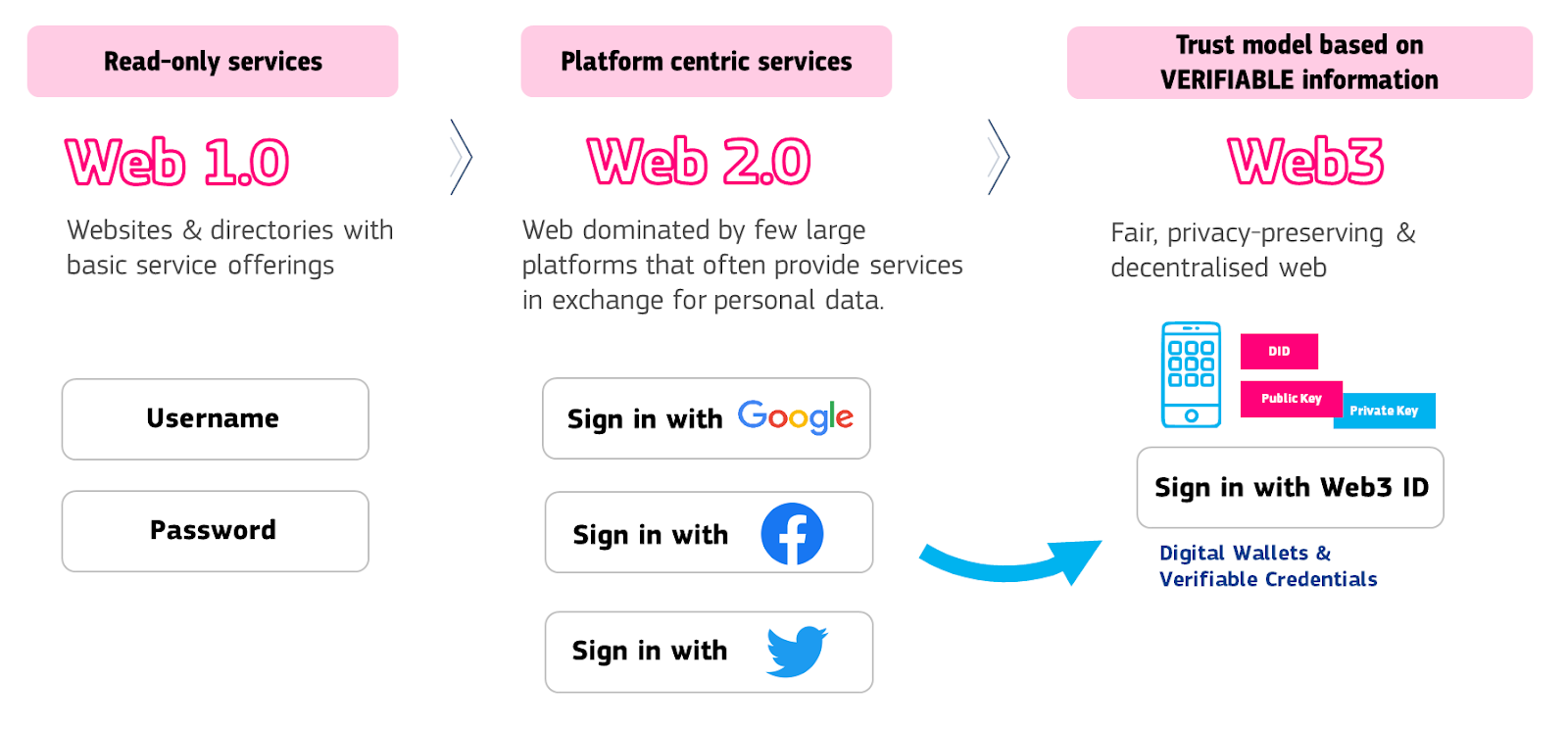
[Stay updated on the latest developments in Crypto , follow me on Yakihonne.com. ](https://yakihonne.com/users/nprofile1qqsdyek62drrrwaqmphkcp0yls2ehpqwf6cjzag9kcrmjnc9wgjdsdqpr3mhxue69uhkummnw3ez6vp39eukz6mfdphkumn99e3k7mgpremhxue69uhkummnw3ez6vpj9ejx7unpveskxar0wfujummjvuq3gamnwvaz7tmjv4kxz7fwv3sk6atn9e5k7vg76ry) Let’s be honest: whenever people discuss matters related to the blockchain or web3, their minds immediately gravitate toward cryptocurrencies. However, it is the complex digital infrastructure pervading these assets that is actually transforming how we do things in everyday life. Take food safety, for instance. When we go to a store and pick up a pack of organic strawberries, we’re often left wondering if they’re genuinely organic. You might also like: [Cryptocurrency awareness vs knowledge: To educate to empower | Opinion ](https://crypto.news/cryptocurrency-awareness-vs-knowledge-to-educate-to-empower-opinion/) Thanks to the power of the blockchain, it is possible to scan a QR code and voila! The entire life cycle of the pack—from where it was grown, how it traveled, and so on—can be seen with the touch of a screen. Similarly, in healthcare, the medical records of most people are all over the place. Blockchain, in this regard, can be the missing link that brings all of one’s data together in a secure, transparent manner. And it’s not just these sectors; we’re talking energy, governance, royalty management, you name it, web3 has the potential to transform a whole host of digital paradigms. So, while cryptocurrencies are doing their thing, it’s best not to lose sight of blockchain’s true potential. ## The skepticism surrounding web3: Unfounded or not? Despite the use cases outlined above, issues of volatility, hacks, and scams currently pervading the web3 sector have resulted in people writing off the industry—thanks to its close ties with digital assets. To this point, a sizable $3.8 billion was lost to cryptocurrency hacks last year, which is 15% up on 2021 ($3.3 billion) and dramatically up on the $0.5 billion stolen in 2020. ![image](https://lh7-us.googleusercontent.com/MpnJ6XBOoRhJgXqiZWCMh-kY9O0Dr3S5SYl7kecGgVnPFQuKw5SwQKEpjP_8Qtxx543UXPToXc8NAUTlHRhJaVSQ4eIU4M8r-yxZDDe5fjTCd7aRJ0Jxljc71D5jCldX8kGF3X-oDnLWiDxoNIgkXnw) Crypto hacks, 2016 – 2022 | Source: Chainalysis However, dismissing web3 based on its association with crypto alone is a mistake because its scope extends well beyond the realm of financial transactions. Web3 seeks to decentralize the internet, making it more secure, transparent, and user-centric. Its applications are far-ranging and extend into areas like secure voting systems, transparent supply chains, and even tamper-proof academic credentials. As per a study by UC Berkeley, the influence of blockchain is already being felt across the board. For example, financial giants like Bank of America and JP Morgan Chase have deployed smart contract systems to streamline payments, loans, cross-border transfers, etc. Within the realm of agriculture, the U.S. Department of Agriculture and major companies like Walmart and Nestlé are using blockchain to fortify their food supply chains, boosting consumer confidence. Similarly, retailers such as Home Depot and Target are implementing blockchain in their logistics to resolve vendor disputes and verify product authenticity, while companies in the supply chain sector, including Ford, UPS, and FedEx, are utilizing the technology to trace components from production to delivery, aiding in sustainability and food safety. ## User experience is the key to increased adoption Web3 is fundamentally about shaking up the status quo, right? It’s all putting the power back into the hands of the people, whether we’re talking finance, healthcare, or data storage. But there’s one major bottleneck—there’s no “Help Desk” to call, no tech guru to bail you out in case of an emergency. Therefore, if web3 is going to be the next iteration of the World Wide Web, it’s got to be as user-friendly as scrolling through your social media feed. ![image](https://lh7-us.googleusercontent.com/hW4DXH_c2ufbhcK0OODPjkr_3HlCvtmBHRtTkl3mh8pqUPbZyQ5eS5YEOxxAWSE9qVbDlHP4NFcIN_DaZcAKBvoGeGiTwuAMyRfUx5EPe_wHpe0gakqApXYe5QBblF8dOpWGBcCZrdGpyiST1d7RW98) Evolution of web | Source: European Commission To elaborate, the user interface and overall experience one has while browsing these apps has to be impeccable. If someone dives into web3 and bumps into apps that feel like they’re from the 2010s, i.e. buggy, clunky, or just plain confusing, they’re going to have second doubts and maybe never give the technology a fair chance. There is also a lot of data that suggests this as well. For example, studies show that 94% of all first impressions are tied to how an app looks and feels. Therefore, it is imperative that web3 devs step up their games and focus on providing the best possible experience. The design has to be sleek, intuitive, and attractive. Users should feel at home while also getting a taste of what makes web3 revolutionary. It’s a fine line, but that’s the challenge at hand. Moreover, let’s not forget the “why switch?” question. Forget about the regulatory drama and the shaky exchanges for a moment. If web3 apps don’t come across as easier or at least as convenient as what people are already using, why would they make the jump in the first place? Therefore, improving the user experience of dapps isn’t just a “nice-to-have” feature; it’s mission-critical. And it starts and ends with UI/UX. This is where innovations like Koris come into play. This first-of-a-kind operating system is designed specifically for decentralized autonomous companies (DACs)—a specific dapp implementation where an entity has no central leadership—allowing them to deliver a highly streamlined user experience governance and operations-wise. ## The future is decentralized For the average person who’s not well-versed in blockchain technology, the web3 landscape can be a labyrinth of confusing terminologies, complex processes, and counterintuitive interfaces. Whether it’s the daunting task of setting up a digital wallet, understanding how to manage private keys, or even just navigating through a decentralized application (dapp), the UX of most dapps in the market today often leaves much to be desired. This complexity acts as a barrier to entry, discouraging people from fully engaging with web3 platforms. It’s like having a revolutionary new type of car that’s incredibly fuel-efficient and environmentally friendly but requires the driver to understand the intricacies of automotive engineering just to start the engine. The result? Most people stick to their old gas-guzzlers because they’re easier to operate. Therefore, if web3 is to reach its full potential and achieve widespread adoption, it’s imperative that developers and designers prioritize UX. Simplifying the onboarding process, making interfaces more intuitive, and providing clear instructions and support can go a long way in making web3 accessible to everyone, not just the tech-savvy. By:Elena Sinelnikova Link:https://crypto.news/beyond-the-hype-web3-is-in-dire-need-of-a-rebrand-opinion/