#

manipulation

(15 articles)

Welcome to Cognitive Capitalism

[\ ![](https://substackcdn.com/image/fetch/$s_!-V6V!,w_1456,c_limit,f_auto,q_auto:good,fl_progressive:steep/https%3A%2F%2Fsubstack-post-media.s3.amazonaws.com%2Fpublic%2Fimages%2F45ab22f1-701a-403b-a072-44e81d745b4f_1024x1024.png)](https://substackcdn.com/image/fetch/$s_!-V6V!,f_auto,q_auto:good,fl_progressive:steep/https%3A%2F%2Fsubstack-post-media.s3.amazonaws.com%2Fpublic%2Fimages%2F45ab22f1-701a-403b-a072-44e81d745b4f_1024x1024.png) An alternative title could be "How Open AI Learned to Stop Worrying and Love Your Data". *** Remember when Facebook promised to “connect the world”? Ah, simpler times. Back when we naively believed Mark Zuckerberg actually wanted to help your grandmother find her high school friends, rather than build a psychological warfare machine that would make the Stasi weep with envy. Well, history is repeating itself—and this time, the stakes are your entire consciousness. Meet ChatGPT Pulse, OpenAI’s latest “innovation.” It’s not just an AI assistant anymore—it’s your new 24/7 digital roommate that “works for you overnight” to deliver personalized morning briefs. Because nothing says “helpful technology” like having an AI rummage through your digital life while you sleep, preparing a nice little dossier for your morning coffee. ## **The Facebook Playbook: Now With 100% More Cognitive Infiltration** Twenty years ago, Facebook’s pitch was irresistible: “Connect with friends! Share photos! Poke people!” What they didn’t mention was the fine print: “Also, we’ll monitor your every interaction, build psychological profiles that would make a therapist jealous, and sell your behavioral patterns to anyone with a credit card.” Now OpenAI is running the exact same con, just with fancier vocabulary. ChatGPT Pulse “proactively does research to deliver personalized updates based on your chats, feedback, and connected apps like your calendar”—which is corporate speak for “we’re going to vacuum up every byte of your digital existence.” The beauty of this strategy lies in its incremental nature. First, they hook you with genuinely impressive capabilities. “Wow, it can write my emails!” Then comes the feature creep: “Connect your calendar for better scheduling!” Soon enough: “Let us access your browser history, document folders, and intimate thoughts for the *ultimate* personalized experience!” The system “autonomously conducts research on your behalf and then delivers personalized updates based on your chats and feedback to the bot as well as your email, calendar and any other apps you connect.” Translation: “We’re building a comprehensive model of your mind, and some of you are paying us $200 monthly for the privilege.” ## **Sam Altman’s Biometric Dreams: From Eyeballs to Everything** Let’s talk about our protagonist, Sam Altman—the man who thought scanning people’s eyeballs for cryptocurrency was a totally normal business idea. When Worldcoin flopped harder than a fish on deck (turns out people don’t love dystopian retinal scans, shocking!), did Sam learn his lesson about privacy invasion? Of course not. He just got more subtle about it. Instead of literally scanning your eyeballs, OpenAI is now scanning your thoughts, work patterns, communication styles, and decision-making processes. It’s biometric identification for your consciousness. Why collect just your iris when you can harvest your entire intellectual identity? The Worldcoin failure taught Altman an important lesson: people resist obvious surveillance. The solution? Make the surveillance feel like a feature. Don’t scan their eyes—scan their minds, but call it “personalized assistance.” ## **The Economics of Desperation: How to Monetize a Money Pit** Here’s where things get particularly amusing. OpenAI is burning roughly $5 billion annually while generating only $3.7 billion in revenue, with projections showing they’ll burn through $115 billion by 2029 (numbers might need an update, and be even worse). That’s not a business model—that’s a very expensive hobby funded by venture capitalists with more money than sense. But here’s the thing about VCs: they don’t fund hobbies forever. Eventually, someone has to figure out how to turn this technological marvel into actual profit. And what’s the most proven path to profitability in the tech industry? Data harvesting and targeted manipulation, Facebook-style. The desperation is becoming increasingly obvious. OpenAI is now actively hiring for advertising infrastructure, planning to roll out ads to ChatGPT’s 700 million free users by 2026—because nothing says “revolutionary AI company” like becoming another ad-slinging data broker. But here’s where it gets truly dystopian: what will these ads actually look like? Will they be those annoying sidebar banners we’re used to ignoring? Or something far more sinister—advertisements seamlessly woven into ChatGPT’s responses, disguised as helpful suggestions? Imagine asking ChatGPT about your weekend plans and receiving seemingly organic advice: “Based on your stress levels, you might enjoy a relaxing spa weekend. I found some great deals at \[Sponsored Resort Name].” Or seeking financial advice and getting subtly nudged toward specific investment products that happen to be paying for placement. This isn’t speculation—it’s the logical evolution of behavioral advertising applied to conversational AI. When the platform knows your thoughts, concerns, and decision-making patterns, ads don’t need to be obvious interruptions. They can be psychological manipulations masquerading as personalized assistance. Pulse is currently limited to Pro subscribers who pay $200 monthly—because if you’re going to surveil someone’s entire digital existence, might as well charge them premium rates for the privilege. It’s like paying a burglar to case your house, except the burglar also offers to organize your sock drawer. But the real strategy becomes clear when you consider OpenAI’s advertising timeline: they’re planning to roll out ads to free users by 2026, with infrastructure already being built. The premium subscribers are essentially paying to beta-test the surveillance system that will eventually monetize the 700 million free users through targeted advertising. Think about the implications: Pulse’s overnight “research sessions” aren’t just building your personal morning brief—they’re training algorithms to understand when you’re most vulnerable to specific types of influence. Your 3 AM anxiety about finances? Perfect timing for loan advertisements. Your recurring health searches? Premium placement opportunities for pharmaceutical companies. ## **The Personal Assistant Lie: Your Friendly Neighborhood Digital Stalker** Let’s decode the marketing speak, shall we? When OpenAI calls this a “personal assistant,” they’re not talking about someone who helps you schedule meetings. They’re describing a system that monitors your digital behavior patterns, analyzes your decision-making processes, and builds predictive models of your future actions. This represents “a broader shift in OpenAI’s consumer products, which are lately being designed to work for users asynchronously instead of responding to questions.” Asynchronous operation means the system is always on, always learning, always watching. It’s not waiting for your questions—it’s studying you. The overnight “research” isn’t about finding you interesting articles. It’s about analyzing your behavioral patterns during periods of digital inactivity, understanding your routine fluctuations, and building increasingly sophisticated models of your personal and professional rhythms. Think about what Pulse actually sees: * Your work patterns and productivity cycles * Your communication style and social networks * Your information consumption preferences * Your decision-making triggers and processes * Your creative patterns and intellectual frameworks * Your schedule and life rhythms This isn’t assistance—it’s cognitive archeology. They’re excavating your mind one data point at a time. ## **The Integration Trap: Death by a Thousand App Connections** The genius of the current strategy lies in its gradual expansion. Each new integration feels reasonable in isolation. “Of course ChatGPT should access my calendar—how else can it help with scheduling?” But collectively, these integrations create a comprehensive surveillance network. Your email reveals your communication patterns and social networks. Your calendar shows your priorities and time allocation. Your documents expose your work methods and thinking processes. Your browsing history reveals your curiosity patterns and information needs. Your connected apps provide real-time behavioral data. Individually, each data stream seems manageable. Together, they create a digital twin of your consciousness—a model so detailed it might understand you better than you understand yourself. ## **The Replication Problem: When Your Mind Becomes a Commodity** Here’s the uncomfortable truth that OpenAI doesn’t want to discuss: large language models are fundamentally replication technologies. They learn to mimic patterns they’ve observed. As these systems ingest more behavioral data, they’re not just learning to assist you—they’re learning to replicate you. Your writing style, thinking patterns, decision-making frameworks, and creative processes all become training data for systems that could potentially replace you. The “personalized assistant” that learns your work methods today becomes the automated system that eliminates your job tomorrow. This isn’t speculation—it’s the logical endpoint of any technology designed to model and replicate human cognitive patterns. OpenAI is building systems trained on your intellectual labor, funded by your subscription fees, to potentially automate you out of existence. ## **The Local Alternative: Digital Self-Defense in the Age of Mind Mining** So what can you do? The same thing privacy advocates recommended twenty years ago when Facebook was building its behavioral surveillance empire: use alternatives that you control. Local AI models exist. They’re not as flashy as ChatGPT, and they require more technical sophistication, but they process your data on your hardware under your control. No midnight data harvesting, no behavioral modeling, no cognitive surveillance. Models like Ollama, GPT4All, and others can run on consumer hardware. They’re getting better rapidly, and they don’t require selling your digital soul for the convenience. But let’s be honest—just like with Facebook, most people won’t switch. The convenience is too compelling, the marketing too polished, the social pressure too intense. Why struggle with local models when ChatGPT offers such smooth, personalized assistance? Because this is hystory we refuse to learn. Twenty years ago, we warned people that Facebook users weren’t customers—they were products being sold to advertisers. We explained how behavioral data collection worked, how psychological profiles were built, how attention was harvested and monetized. People understood the warnings intellectually, but the platform’s convenience and network effects were too powerful. “I know Facebook tracks me, but all my friends are there.” The surveillance became normalized, then invisible, then irreversible. We’re watching the exact same script play out with AI. The warnings are clear, the risks are obvious, the historical precedent is undeniable. But the technology is impressive, the convenience is addictive, and the network effects are already building. ChatGPT Pulse isn’t a feature—it’s a psychological operation designed to normalize 24/7 cognitive surveillance. The overnight “research” sessions are data collection sprints. The personalized morning briefs are delivered behavioral insights extracted from your digital life. And just like Facebook twenty years ago, most people will opt in anyway. ## **The Verdict: Welcome to Cognitive Capitalism** OpenAI has learned Facebook’s most important lesson: people will voluntarily surrender their privacy for sufficient convenience. The company is burning billions building the infrastructure for comprehensive cognitive surveillance, funded by venture capital and user subscriptions. The end goal isn’t to help you—it’s to model you, then monetize those models through methods we can only imagine. Behavioral advertising was just the beginning. Cognitive capitalism is the destination. Sam Altman couldn’t get people to scan their eyeballs for crypto, but he’s successfully convinced them to scan their minds for AI assistance. It’s the same privacy invasion, just packaged in more appealing wrapping. The choice is simple: embrace local alternatives now, or wake up in five years wondering how a handful of companies gained unprecedented insight into human consciousness—and what they plan to do with it. Twenty years ago, we became Facebook’s product. Today, we’re becoming OpenAI’s cognitive dataset. The only question is whether we’ll learn from history this time, or repeat it with even higher stakes. *Spoiler alert: we probably won’t.*

The Hidden Basis

# The Hidden Basis Robotic manipulation through contact is computationally expensive because the dynamics change discontinuously. Every time a finger makes or breaks contact with an object, the equations of motion switch. A manipulation sequence with ten contact transitions involves ten different dynamical systems stitched together, and planning through all of them requires searching over both continuous trajectories and discrete contact mode sequences. A 45-second manipulation task with 10+ contact changes is typically intractable for real-time planning. Sigurdson, Riviere, and Burdick (arXiv:2603.27796, March 2026) find that the reachable set of a manipulated object has a natural spectral basis. By decomposing the inverse dynamics mapping — from actuator displacements to object displacements — into its singular value decomposition, they extract orthogonal motion components ranked by how efficiently the actuator can produce them. The top components span a low-dimensional approximation of the full reachable set while remaining dynamically feasible. This low-dimensionality is the structural finding. Contact dynamics appears complex — discontinuous, combinatorial, mode-dependent — but the reachable set it produces has low effective rank. Most of the object motions that the actuator can achieve are combinations of a small number of principal directions. The complexity is in the dynamics; the achievable outcomes live in a much simpler space. Using this spectral basis, the authors plan 45-second manipulation sequences with 10+ contact mode transitions in 15 seconds of computation. The planning operates in the spectral coordinates rather than in the full configuration space, reducing the search dimension from the number of degrees of freedom to the number of significant singular values — typically a small fraction. The structural observation: the complexity of a dynamical system and the complexity of its reachable set are different things. Contact mechanics is hard because the equations are discontinuous, but the set of places you can push an object is simple because the discontinuities constrain rather than expand the achievable motions. The spectral decomposition reveals that the combinatorial explosion in the dynamics collapses into a low-rank structure in the outcomes. The difficulty was in the description, not the phenomenon.

📚Social Graph Control and Manipulation Mechanisms in Decentralized Networks📢

Control over visibility and influence within a social network represents a form of structural power that persists even in decentralized architectures. While traditional platforms consolidate this power in proprietary algorithms controlled by single entities, decentralized protocols like **Nostr** redistribute control mechanisms through the interaction of technical components and social dynamics. This analysis examines how social graph control - the map of connections and influences between users - can be strategically manipulated despite the absence of central authority, using the very tools intended to promote freedom and censorship resistance. ## Technical Architecture and Vulnerability Points The Nostr protocol establishes a minimal framework for publishing and distributing cryptographically signed events. Its architecture rests on three fundamental components: cryptographic identities (public/private key pairs), standardized events (signed JSON), and independent relays. This structure eliminates centralized control points but creates new surfaces through which systemic influence can be exerted. **Relays as Visibility Infrastructure** Relays function as a critical infrastructural layer, operating as selective gateways for information diffusion. While in theory any user can host or connect to any relay, concentration dynamics emerge in practice: a limited subset of public relays becomes dominant through network effects, default accessibility in popular clients, or technical advantages like reduced latency or higher reliability. This creates a structural contradiction: a system designed to be distributed tends to develop informal aggregation points that become strategic targets for control operations. **Social Graph as Emergent Layer** Above the infrastructural layer of relays develops the social graph, built through user actions represented as events: follows (kind:3), reactions (kind:7), reposts (kind:6), and mentions. This graph is not controlled by any central entity but emerges from the aggregation of individual choices. Precisely this emergent and distributed nature makes it vulnerable to coordinated manipulations that, by exploiting the mathematical properties of networks, can produce significant distortions in collective perception. ## Network Theory Applied to Social Control Social network analysis provides a quantitative framework for understanding how specific positions within a graph confer influence power. These theoretical principles manifest concretely in decentralized environments like Nostr. **Centrality as Influence Measure** Degree centrality simply measures a node's number of direct connections. On Nostr, this corresponds to follower count. Manipulating this metric is technically trivial: a coordinated group can create numerous ghost accounts that follow a target profile, artificially inflating its apparent popularity. Clients implementing popularity-based recommendation algorithms will amplify this distortion, presenting the manipulated profile as organically influential. Betweenness centrality identifies nodes that function as bridges between otherwise separate communities. These nodes control information flow between distinct clusters. A sophisticated manipulation strategy deliberately positions accounts in these strategic positions, selectively following opinion leaders in different communities to then serve as privileged channels for targeted narrative diffusion. **Cluster Dynamics and Coordinated Amplification** Cliques - completely interconnected subgroups - represent the fundamental unit for coordinated manipulation operations. A clique of even modest size (50-100 accounts) acting synchronously can produce disproportionate amplification effects. When all clique members interact simultaneously with the same content (likes, reposts, comments), they create the illusion of a much broader organic consensus, triggering social proof mechanisms that influence genuine users. Granovetter's "weak ties" theory proves particularly relevant in this context. While strong ties (repeated connections within cohesive communities) maintain group cohesion, weak ties (occasional connections between communities) enable information diffusion to new audiences. The most effective manipulation operations strategically create weak ties between operative cliques and target communities, maximizing penetration while minimizing coordination visibility. ## Operational Mechanisms of Graph Manipulation **Social Engineering** This category comprises techniques exploiting predictable human behaviors to distort perceptions. Astroturfing - creating the impression of spontaneous "grassroots" support - is implemented by coordinating interactions from accounts mimicking genuine profiles (varying age, diversified interests, irregular behavior) to avoid detection. A more sophisticated variant, called "thread hijacking," involves identifying already popular conversations on related topics and inserting contributions subtly redirecting the narrative toward predetermined objectives, exploiting the existing audience. **Structural Isolation** The opposite of amplification: instead of promoting content, this strategy aims to suppress target voices through coordinated social isolation. Implemented by requiring all members of a manipulation group to abstain from any interaction with certain accounts or hashtags, this technique exploits the fact that in the absence of a central algorithm, visibility depends entirely on interactions. A completely ignored account becomes invisible to most users, as its content appears neither in interaction-based feeds nor gains viral diffusion. An extension of this technique is "confining relay": if the group controls popular relays, it can simply omit events from target public keys from distribution. Users of those relays will experience an informational universe where those voices don't exist, while being technically active on other relays. This creates a fragmentation of perceived reality between different subnetworks. **Client Algorithm Gaming** Although Nostr lacks centralized algorithms, many clients implement local algorithms for "global," "trending," or "recommended" feeds. These algorithms typically consider metrics like interaction volume, diffusion speed, source diversity, and zap volume (micropayments). A coordinated group can: 1. **Manipulate diffusion speed**: Coordinating an interaction peak concentrated within a short time span (minutes) to mimic organic viral diffusion curves. 2. **Simulate diversity**: Using accounts with apparently unrelated social graphs (following different sets of main accounts) to interact with the same content, deceiving algorithms seeking coordination patterns. 3. **Engineer economic support**: Coordinating many small zaps from different accounts to make content appear "community-supported," a strong quality signal for many algorithms. ## Infrastructural Control Strategies **Relay Dominance Through Saturation** A long-term strategy involves controlling not just diffusion but the infrastructure itself. A group with sufficient resources can host multiple high-performance public relays, strategically positioning them as default options in beginner guides or popular clients. Once reaching a critical mass of dependent users, these relays can apply subtle filters: favoring distribution of events from certain public keys, delaying propagation of others, or applying differential retention policies making some content less accessible historically. **Graph Poisoning** This advanced technique aims to corrupt discovery mechanisms. Creating thousands of interconnected accounts strategically following a mix of genuinely influential accounts and manipulation group accounts distorts the "who follows who follows" algorithm (similar to Twitter's follow graph) used by many clients for recommendations. Genuine accounts end up recommended in proximity to manipulative ones, creating undue associations and facilitating infiltration into genuine circles. **Information Asymmetry Exploitation** In a network where different users use different relay sets, informational asymmetries naturally arise: what's visible to some is invisible to others. A group systematically monitoring multiple subnetworks can identify these asymmetries and exploit them to introduce differentiated narratives to different network segments, maximizing impact while minimizing contradictory coherence that would lead to detection. ## Structural Defenses and Intrinsic Limitations **Multipolar Verification** The fundamental defense against graph manipulation lies in awareness that any perception of consensus or popularity is potentially manipulable. Users should actively seek independent information sources through different relays, preferring clients explicitly displaying which relay each content originates from. Cross-verification between subnetworks (non-overlapping relay groups) can reveal discrepancies indicative of manipulation. **Meta-dynamic Analysis** More than analyzing content, effective manipulation pattern analysis examines meta-dynamics: interaction timing (synchronized temporal clusters), graph topology (clusters of accounts interacting only with each other and common targets), and statistical anomalies (implausible ratios between followers, interactions, and zaps). Elementary network analysis tools applied to one's local graph can reveal suspicious structures. **Fundamental Limitations of the Decentralized Model** The central paradox is that the same characteristics making Nostr censorship-resistant - absence of central authority, permanent identities, distributed replication - also make it vulnerable to sophisticated forms of social manipulation. While a centralized platform can (in theory) identify and remove coordinated campaigns using global data access, in a decentralized system no privileged observation point enables this complete analysis. Manipulation thus becomes a distributed cat-and-mouse game, where effective counter-strategies must themselves be implemented at individual client or voluntary community level. ## Conclusion: Power in Decentralization Social graph control on decentralized platforms represents a more subtle but no less effective form of power than centralized algorithmic control. It transforms the battle for influence from a confrontation with an identifiable authority to a diffuse competition between distributed actors manipulating perceptions through systematic exploitation of network mathematical properties and human cognitive vulnerabilities. Decentralization doesn't eliminate power but **democratizes** it in the most literal sense: makes it accessible to any group with sufficient coordination, resources, and technical understanding, rather than reserving it for the platform operator. This transfer presents paradoxical risks and opportunities: on one hand, breaks information control monopolies; on the other, creates an environment where manipulation operations can proliferate without clear accountability or global corrective intervention possibility. Effective resistance therefore requires not only technical tools but a fundamental shift in approaching social information: moving from passively receiving algorithmically ranked content to actively and critically navigating an informational ecosystem where every signal of popularity, trend, or consensus is potentially a social engineering artifact. Ultimately, true power decentralization requires not only distributed architectures but also a distribution of critical literacy and epistemological responsibility among all network participants. #socialgraph #decentralization #manipulation #nostr #networktheory #socialnetworks #censorshipresistance #web3 #decentralizedsocialmedia

The psychology of peer thinking - Is it being used to control us?

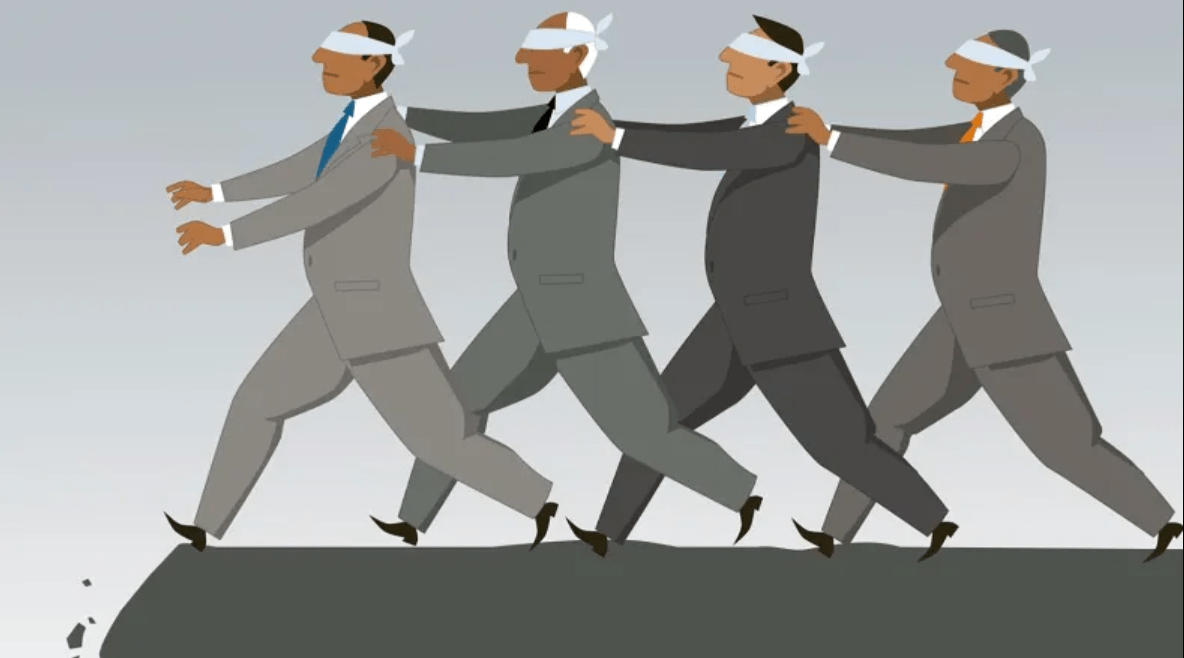
#### What is Peer Thinking? The cognitive and emotional processes that occur when individuals are influenced by their peers. #### The psychology behind it: The psychology behind peer influence encompasses various factors, including: 1. Social belonging and acceptance, 2. Identity formation, 3. The dynamics of group behavior #### Is it being used to control us? https://image.nostr.build/cf90335bbf59e3395dc4324d123cd3a058ca716cf6172f079eb1d78547008147.jpg IMO, yes, at the core of it is the basic human need for belonging. Social belonging is a critical component since it is craved by most, specially but not only by the youngest, those with power across the world know this very well, therefore, thinking that they will not use it to control the population in order to profit from it or change public opinion would be irrational. The media is used to brain wash the population creating something that most will consider "the norm", thus, the majority will try to conform to that norm in order to belong. That include manipulating the population to take an experimental drug (even if it could be very dangerous due to its unknown effects) or to accept as a norm a behavior that few years back would have been considered inappropriate. #### Cognitive Dissonance https://image.nostr.build/60f24a810be1dd6badb36d70c5a691d4361207590dea1a8e64e09a75a252cfbf.jpg This is a term that we should get familiar with. It is a psychological state where conflicting beliefs or behaviors create discomfort. ***Example:*** A kid in high school that has a good loving family but all his close friends are on drugs (legal ones) and they keep telling him he is an idiot for not using as well. Now his is that state of conflict believes, on one side his best friends, all tell him is okay, on the other hand his family that loves him has explained him at length the dangers and issues that the drugs will have in his life. To resolve the dissonance he has three options, one, join the group and start taking drugs with the rest, two try to rationalize it, considering to take drugs just occasionally to belong but not to make it a habit, three lose his friends (and here it comes again the peer thinking to bite). Extrapolate to many other cases. > As an anecdote Recently, on a friend's reunion, one of the guest was complaining about one of his daughters, she was quite confused asking him why so many of her classmates were bisexual, she was wondering if something was wrong with her since she was not; a 13 year old girl; the father was having a hard time explaining her that the majority are saying so just to feel as part of what the school was teaching to be the norm, it was not cool to be straight, the tally was 37% of the class. Consider that, statistically, the number of people, “worldwide” identifying as bisexual are between 3% and 5% (less than 1% in less accepting countries), that number used to be less than 2% less than a decade ago. But 37% is far from the statistical norm, indicating a peer thinking behavior but not the reality of their sexual preferences. Once again, extrapolate to any ideology, religion, gender identity, political agenda that a country desires to push forward for whatever reason, adding that to the official school program and to federal mandatory training programs would do the trick. A powerful tool, that can be used for good or bad. #### What are the strategies to counter negative peer thinking? https://image.nostr.build/4b70949b8af76ed53a5be5507f41f1d1c960dc3592f199eab78e2d25688975c5.jpg Reading the literature about the subject, few strategies are recommended: 1. *Self-Awareness*: teaching ourselves and our children to recognize when we are being influenced by peers 2. *Being selective with your friends*: peers with similar values will reinforce positive behaviors 3. *Learning to be assertive*: teaching ourselves and our children to communicate assertively our boundaries will empower us and them to resist unwanted pressure to adopt negative behaviors. 4. *Less judging more talking*: this applies to our children and partners, judging less and listening more will make our beloved ones more open to discuss social pressures. ***What do you think?*** ***What strategies you use as counter measures?***