#

social media

(39 articles)

We Deserve Better: A New Social Media Bill of Rights

*by Evan Henshaw-Plath — aka Rabble* Earlier this year, I was a part of a CNN documentary, [*Twitter: Breaking the Bird*](https://www.cnn.com/2025/03/15/tech/twitter-x-history-breaking-the-bird/index.html), which gave me much pause for reflection about the state of social media and how we got here. This year alone we’ve witnessed an unprecedented wave of disruption across these platforms. Government workers, locked out of their jobs, struggled to organize securely. Protestors seeking to plan No Kings marches, wondered which app could be the most trusted. Inbound international travelers have been deleting their social apps for fear that immigration officers will search their phones. And during major disasters, like the tragic Texas floods and the LA fires, emergency responders and volunteers find their critical updates buried by algorithms that prioritize engagement over urgency. On a daily basis, countless online communities face arbitrary deplatforming, surveillance, and loss of their digital spaces without recourse or explanation. These aren’t isolated incidents: they’re symptoms of a fundamental crisis in how we’ve allowed our digital communities to be governed. We’ve unwittingly accepted a system where massive corporations control the public sphere; algorithms optimize for advertising revenue rather than human connection, and we the people have no real agency over our digital existence. # **We’ve Lost Our Way** I’ve spent decades building social technologies, including working at Odeo, the company that ultimately pivoted to become Twitter. There I was the social app’s first employee and de facto CTO until late 2006; and have since built numerous other community organizing platforms. I’ve watched with growing concern as our digital spaces have become increasingly toxic and hostile to genuine community needs. The promise of social media as we defined it in the early days — to connect and empower communities of people — has been subverted by a business model that treats human connection as a commodity to be monetized. Today, if you run a Facebook Group with thousands of members, you have no real authority — your community exists at the whim of corporate policies you cannot influence. This is fundamentally at odds with how real-world communities have always operated. Your local gardening club, bowling league, or neighborhood association, has democratic processes for leadership and decision-making. Why should our digital communities be any different? # **It’s Time For a New Social Media Bill Of Digital Rights** I believe that the time has come for a new Social Media Bill of Digital Rights. Just as the original Bill of Rights protected individual freedoms from government overreach, we need fundamental protections for our digital communities from corporate control and surveillance capitalism. So what could such a [*Social Media Bill of Rights*](http://revolution.social/) include? 1. **The right to privacy & security:** The ability to communicate and organize without fear of surveillance or exploitation. 2. **The right to own and control your identity: **People and their communities must own their digital identities, connections and data. And, as the owner of an account, you can exercise the right to be forgotten. 3. **The right to choose and understand algorithms (transparency):** Choosing the algorithms that shape your interactions: no more black box systems optimizing for engagement at the expense of community well-being. 4. **The right to community self-governance**: Crucially, communities of users need the right to self-govern, setting their own rules for behaviour which are contextually relevant to their community. (Note: this does not preclude developer governance.) 5. **The right to full portability — the right to exit: **The freedom to port your community in its entirety, to another app without losing your connections and content. To determine whether these are the appropriate “Rights”, I’ve just launched a new podcast, [*Revolution.Social*](http://Revolution.Social) where I invite my guests, including the likes of Jack Dorsey, Cory Doctorow, Yoel Roth, Kara Swisher and Renee DiResta, to share their feedback and debate where we need to head next. # **Architecting For A Better Future** The good news is that the technical foundations for a better future already exist through open protocols that work like the web itself — interconnected and controlled by no single entity. * The Fediverse, powered by ActivityPub, enables platforms like Mastodon to create interconnected communities free from corporate control. * Nostr provides a foundation for decentralized, encrypted communication that no one can shut down. * BlueSky is pioneering user choice in algorithms. * Signal demonstrates that private, secure communication is possible at scale. Unlike the walled gardens of Meta, TikTok, and Twitter (now X), these open protocols allow communities to connect across platforms while maintaining control of their spaces. When you use email or browse the web, you don’t worry about which email provider or browser your friends use — it just works. Our social spaces should function the same way. What’s missing is the bridge between these technical capabilities and the tools communities actually need to thrive. We need to move from closed, corporate platforms to open protocols that communities can shape and control. This isn’t just a technical challenge — it needs to become a social movement. We need to build systems that are co-designed with communities, that respect their autonomy, and that enable their authentic purposes. This isn’t a utopian vision — it’s an extension of how human communities have always worked. The gardening club raises money for soil and seeds. The sailing club maintains boats for teaching kids. Communities have always had the ability to self-organize, self-govern, and self-fund. We simply need to bring these proven models into our digital spaces. # **How You Can Begin To Make Change Happen** The path forward begins with understanding that we are not passive consumers of social media — we are active participants in shaping its future. Start by exploring and supporting open protocols and platforms. Join communities on Nostr, Mastodon or BlueSky. Demand transparency and control from the services you use. Join the growing movement of technologists, activists, and community leaders working to build better digital spaces. We deserve better than what today’s social media platforms offer. We have the technical knowledge, the social understanding, and the urgent necessity to build something better. The question is no longer whether we can create more equitable and empowering digital spaces — it’s whether we will choose to do so. The moment for this transformation is now. As our lives become increasingly digital, we cannot afford to leave our communities at the mercy of corporate platforms and profit-driven algorithms. We must reclaim our digital spaces and establish the fundamental rights that will allow our communities to truly thrive in the digital age. Watch this space: I’m actively working with other community leaders to build better tools for our digital communities, as [*this recent article in Techcrunch*](https://techcrunch.com/2025/07/16/jack-dorsey-pumps-10m-into-a-nonprofit-focused-on-open-source-social-media/) describes. *Note*: this article also appears in Techdirt.

Nostria’s Big Leap: How a Social App Raised Funds with Angor?

Hello all :) Something pretty exciting just happened in the world of decentralized tech. A new social network project called Nostria successfully wrapped up its pre-seed funding round. It raised the funds through Angor, a crowdfunding platform built on Bitcoin and Nostr that aligns perfectly with the project’s decentralized mission.This post is all about what Nostria is doing, why it matters, and how Angor made it all possible. #### What is Nostria? nostr:npub16x7nxvehx0wvgy0sa6ynkw9c2ghuph3z0ll5t8veq3xwm8n9tqds6ka44x is a social network app that’s built to make the Nostr protocol easy to use. If you're not familiar with Nostr, it's an open protocol for decentralized social networking. It gives users more control and privacy, without relying on big platforms. Nostria makes all that feel less like a tech experiment and more like a real social network. The app is simple, elegant, and beginner-friendly. It is available across iOS, Android, and web so you can jump in from anywhere. Think of it as the easiest way to start using Nostr without needing to understand all the technical stuff under the hood. https://www.nostria.app/assets/screenshots/nostria-01.jpg #### The Problem Nostria is Solving: One of the challenges Nostr faces right now is scaling. The network relies on relays to pass messages around, but many of these are centralized and getting overloaded. That creates serious bottlenecks and makes the whole experience less reliable. Just to give you an idea: * Damus relay has around 646,000 users * * Nos relay has 601,000 users * * Snort sits at 417,000 users When so many users depend on just a few relays, it puts a huge strain on the system and limits how far the network can grow. #### Nostria’s Clever Fix Nostria introduces a smarter way to scale Nostr without losing its decentralized core. Instead of relying on a few overloaded relays, it uses: • Regionally deployed Discovery Relays – Think of these as local hubs placed in different parts of the world. When users connect, they are matched with a nearby relay, which keeps things faster and spreads the traffic out so no single relay gets overwhelmed. • Pooled User Relays – Instead of each person depending on just one relay, users are connected through a shared pool. This means messages are sent and received more efficiently, especially when more people join the network. All of this happens behind the scenes. The app keeps things simple and intuitive, with automation that handles the complexity for you. Whether you're posting, reading, or connecting with others, the experience stays smooth. ##### Nostria has bold ambitions. Here’s what they’re going for: * A goal of 1 million daily active users * Competing with platforms like Bluesky, Mastodon, and even X (formerly Twitter) * A long-term plan to support both free and premium services to drive adoption As of now, the Nostr network as a whole has: * 15,000 daily active users * 42.7 million total users * 552 million total events So the market is already there. It just needs the right tools to grow. https://www.nostria.app/assets/screenshots/nostria-02.jpg #### Meet the Team Nostria is led by nostr:npub1zl3g38a6qypp6py2z07shggg45cu8qex992xpss7d8zrl28mu52s4cjajh, a software engineer with deep experience in distributed systems. He has been involved with the Nostr protocol since its early days in 2021 and is deeply passionate about decentralization and open-source tech. https://www.nostria.app/assets/team/sondre.jpg He’s joined by nostr:npub1e0krp2gr3l5nfd2jw2cydh68adxjpmcqdhs2e0jxkrqd4crwt4dslwrk0k, a thoughtful full-stack developer focused on simplicity and sovereignty, and nostr:npub10c4sn723akd7fqegfe6xntpq43p86vnyvv7j2ryaq8jzvhyea4pq72c5ul, a junior dev who’s already contributed to open source and is finishing up her studies. https://www.nostria.app/assets/team/kosta.jpg https://www.nostria.app/assets/team/lu.jpg #### The Funding Round To bring Nostria to life, the team aimed to raise $30,000 during their pre-seed round. This funding would help them: * Complete their MVP (Minimum Viable Product) * Deploy global infrastructure * Start building their user base * Get ready for a full Seed round in late 2025 #### How Angor Helped? Angor is a decentralized crowdfunding platform built on Bitcoin and the Nostr protocol. It’s designed exactly for projects like this. The team at Nostria launched their campaign on Angor between May 12 and May 31, and it was a success. What made the campaign stand out? 1. The whole process was decentralized and transparent. 2. Backers could fund the project directly, without intermediaries. 3. Nostria aligned perfectly with Angor’s vision of empowering projects that push decentralization forward. The campaign served as both a fundraiser and a real-world example of how decentralized infrastructure can power decentralized ideas. And it worked. #### Inside the Funding Terms As part of this funding round, Nostria offered contributors a post-money SAFE (Simple Agreement for Future Equity). This is a modern, flexible way for startups to raise money early without the complexity of traditional equity rounds. In simple terms: •Investors contributed funds now, and in return, they will receive equity in Nostria during a future priced equity round. When Nostria raises its next round, most likely a Seed round, then those SAFE contributions will convert into actual shares. •The SAFE includes a valuation cap, which sets a maximum company valuation for conversion. This guarantees that early backers receive shares at a better rate than future investors. While the exact cap isn't publicly listed, this feature ensures early supporters are rewarded for their trust. •There is no interest or maturity date, which is a major benefit over traditional convertible notes. There’s no ticking clock or repayment obligation. Investors simply wait until the next funding event. •The SAFE also features a Most Favored Nation (MFN) clause. This ensures that if the company issues another SAFE later with better terms, early investors will automatically receive the same improved terms. It’s designed to keep things transparent and equitable. •Jurisdiction and legal terms: While the full legal text isn’t included in the note, SAFEs typically specify the legal jurisdiction governing the agreement. Nostria’s approach suggests a commitment to following standard legal frameworks, further underlining their seriousness and professionalism. You can read Nostria’s public SAFE summary here: nostr:npub16x7nxvehx0wvgy0sa6ynkw9c2ghuph3z0ll5t8veq3xwm8n9tqds6ka44x And you can view the full campaign hosted on Angor here: https://hub.angor.io/project/angor1qwdgxjuzhjykgpn5q8p3l2q9vyrgqdlrkfp5sjr By sharing these details openly, the team added a strong layer of transparency and trust to the entire campaign. It is a clear signal that they are building something serious and thoughtful, with long-term commitment and care instead of shortcuts. #### What’s Next? With the funding secured, Nostria is sprinting ahead. The roadmap includes: * June: Deploying media and relay servers * July: Adding premium features and full cross-platform support * August: Growing the user base and preparing for the next funding round If all goes well, Nostria is on track to become one of the most accessible and user-friendly Nostr based platforms out there. With a clear roadmap and a team focused on long-term decentralization, the journey is just getting started... <iframe width="672" height="378" src="https://www.youtube.com/embed/a38kcmvi_9E" title="Nostria: Pre-Seed Funding Round" frameborder="0" allow="accelerometer; autoplay; clipboard-write; encrypted-media; gyroscope; picture-in-picture; web-share" referrerpolicy="strict-origin-when-cross-origin" allowfullscreen></iframe> Got an idea of your own? You can launch your project on Angor, just like Nostria did, and start your own funding round with the support of a like-minded community. Thanks for reading. See y’all next week with another story from the world of open, decentralized innovation. Ciao

Algorithmic Complacency in Social Media

Watched an awesome [video](https://youtu.be/QEJpZjg8GuA?si=ceYEbMeFO-Ind6KO) from one who I subscribe on YT. I've been trying to put my finger on what it is that I don't like about the major social media platforms. Alec Watson gave me the answer in one of his latest videos: "Algorithmic Complacency". TLDR: Rather than read, watch, and collaborate with those I follow online, modern social media platforms like to tell me what content I should consume. Nostr, Bluesky, and Mastodon don't do this - I can see what I want and what I don't, without relying on a computer algorithm to tell me. This got me thinking about my own use of social media platforms and my recent adoption of the Fedi-verse to circumvent the machine telling me how I should consume online content. I don't subscribe to any one platform. I've not found one that addresses all my online social needs, nor one that feature the diverse audiences I follow. Here's a rundown of what I use: YouTube - the easiest of the bunch. YT has become my new binge TV. Initially a frequented site for learning how to replace a garbage disposal or to learn some of the tricks with Davinci Resolve, YT quickly became my platform of choice for learning and entertainment content. Yes, YT has an algorithm and provides recommendations - it's how I found Technology Connections - but I like that I can use the subscriptions feed to just see content that I follow in addition to that which YT recommends. Facebook - the favorite with the old guard. TBH, I've never liked big tech owning my voice on the Internet. I'd have deleted my FB account along with X and Instagram, long ago, except that it's the one platform that my family uses. My mother uses Facebook, so do my distant cousins, but only a subset use the other platforms, and none use the Fedi-verse. FB remains as the one platform for me to post the occasional vacation photo and to find out that my cousin got married last week - and no I didn't get an invite. Vero - I'm a photographer and love to post some of my more interesting art pieces online for feedback, so I can improve my craft. I used to use Instagram, until it went over to the algorithm dark side and filled my feed with short-form video. Vero maintains to be what Instagram used to be. I've not checked out Pixelfed (yet). Mastodon - After Musk took over Twitter and rebranded it to X, I swiftly left and moved to Mastodon. I hate the idea of a single business entity owning my content and right to free speech online. Like many, I have my own issues with Musk and his business practices and shouldn't have to deal with them as part of my online presence. Mastodon was and still is, the place where I get to collaborate with people I've never met in person on likeminded topics of interests. Mastodon relies on federated servers, which people own; so, there's that to consider. I've managed to find a server that caters to my interests and fulfills my desire to collaborate online. Then comes Nostr... My friend \_@briangreen.net introduced me to Nostr. As a long-term orange-pill advocate, I was thrilled to join Nostr to collaborate on the latest Bitcoin and Crypto news. I will say that Nostr appears less diverse in topics but that's rapidly changing as I am now seeing a lot of posts on photography, meshtastic, and other personal interests of mine. I love that Nostr is not so much a platform, but a federated protocol. I don't have to subscribe to any one app and web site to post and read content. For now, I use both Mastodon and Nostr to scratch my online collab itch. A nice thing about the Fedi-verse is that there's plenty of cross-posting apps. I use [OpenVibe](https://openvibe.social/) to post and consume content in one place. Their app is slick and works as advertised. How do you use social media? Is Nostr your only platform, or do you still use the traditional ones?

Confessions of a Screen Zombie

There was a time when I was a real person. I touched grass, read books made of actual paper, made eye contact with fellow humans, and didn’t panic when my pockets felt empty. Then came the screens. They infiltrated my life like a well-meaning but overly clingy houseguest who never leaves. It started innocently enough: a quick email check, a couple of YouTube videos, and a little light doomscrolling. And then, before I knew it, my posture resembled a shrimp’s, my eyes had the dull glaze of a microwaved marshmallow, and I had unknowingly memorized the entire algorithm’s playlist of “Obscure Facts You’ll Never Need.” I knew things had gone too far when I caught myself attempting to *swipe left* on a paperback book. Or when I instinctively tried to pinch-zoom on a restaurant menu, only to find it was printed. On paper. It's like some kind of ancient relic from the Dark Ages. The worst part? I didn’t even know what I was doing half the time. One moment, I’d be looking up a recipe for lasagna. The next thing I knew, I was 47 minutes deep into a documentary on the mating habits of Alaskan walruses. And did I stop? Of course not. I needed to *know* how it ended! (Spoiler: The walruses were fine. My dinner was not.) And don’t even get me started on notifications. Those little digital gremlins have mastered the art of ambush just as I’m about to put my phone down, *DING!* A breaking news alert! (Something mildly inconvenient happened in a country I can’t locate on a map.) *DING!* An email! (From a store I haven’t shopped at since 2014, reminding me they exist.) *DING!* A friend liked my post! (The one from three days ago. Thanks, Todd.) So, I made a vow. I would reclaim my life. I would be strong. I would resist! I would—oh wait, just one more video. Then, for sure, I’ll log off. Probably. Maybe. Okay, fine, I need help. Until then, I’ll be here, scrolling away, living my best shrimp-postured, screen-addicted life. If you need me, send a text just… not after 9 p.m. That’s when I’m deep in my nightly ritual of watching cooking videos I will never actually attempt. I hope you enjoyed this sort of funny (in my own head) attempt at wittiness humor. I hope to make some aware of the actual real-life dangers though of too much screen time. We honestly have no idea of all the harm we are causing to our children. To our society. What happens when we all who have actually grown up playing in creeks, skipping rocks, or sitting outside and falling asleep while reading a real book pass away? What happens when those left have only known this screen-diseased life? I pray we can go back, go way way back!

Writers - Do You Really Own What You Publish?
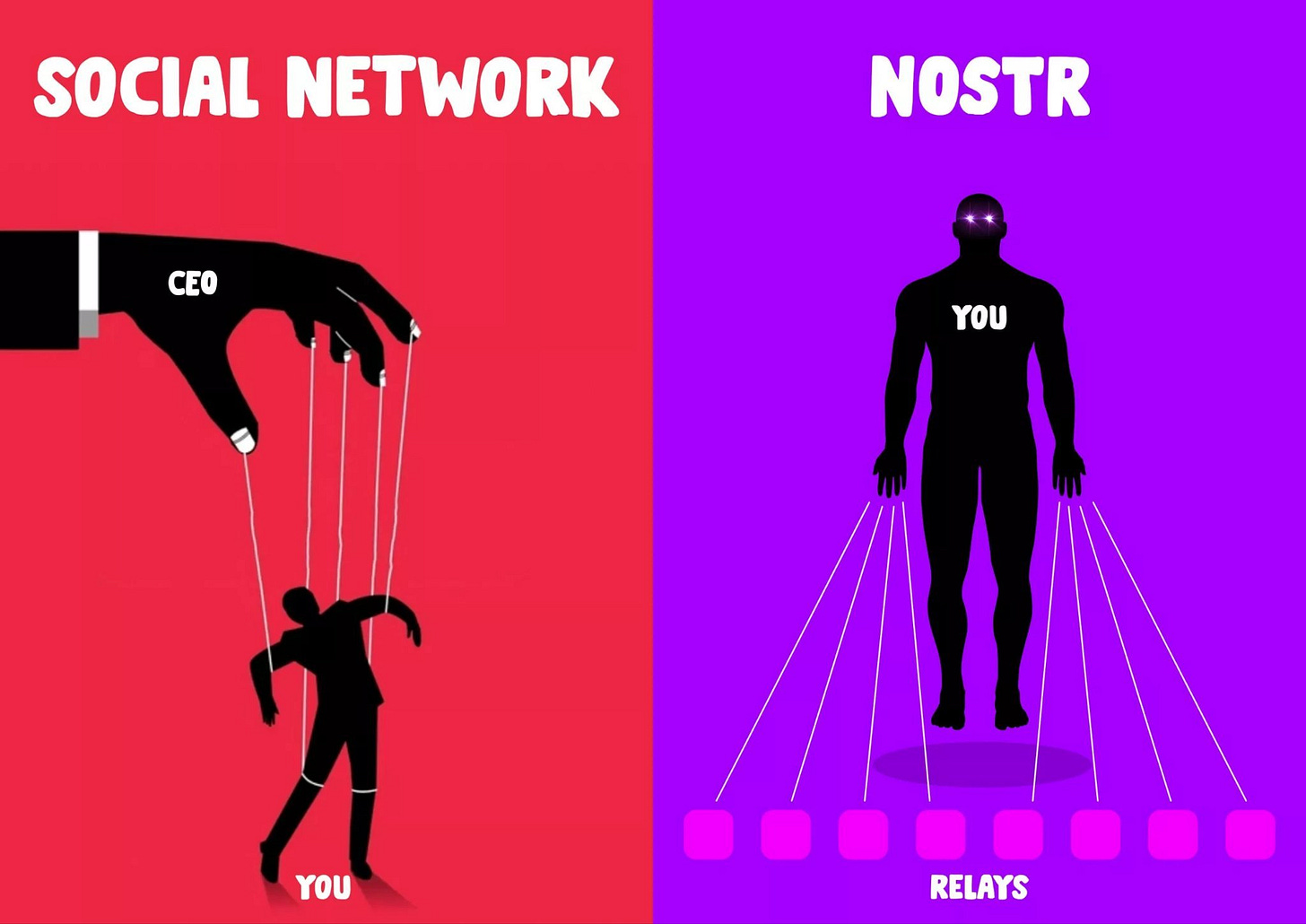
![](https://substackcdn.com/image/fetch/w_1456,c_limit,f_auto,q_auto:good,fl_progressive:steep/https%3A%2F%2Fsubstack-post-media.s3.amazonaws.com%2Fpublic%2Fimages%2F862b33d8-d279-443a-936c-3ec4337dd7dc_6016x4016.jpeg)*Photo by [Pavel Danilyuk](https://www.pexels.com/photo/a-woman-holding-a-placard-8553778/)* In the last four years, I’ve ridden the wave of social media. I’ve amassed thousands of followers, and my posts were read by millions. It’s empowering… until it isn’t. This year, I chose to stop publishing on LinkedIn, Medium, Facebook, Instagram, and Threads. My reach on each of these platforms dropped from 100% of my follower base to around 10%. My voice was being suppressed. I wasn’t writing anything particularly controversial. This is all just part of the social media life cycle. Platforms offer attractive terms to lock in users. They distribute our articles, posts, and thoughts widely to attract eyeballs for advertisers. Writers learn to play the algorithm to maximise reach and engagement. Maybe they even manage to monetize their writing. But when the platforms reach what they deem to be maximum usage and membership, they begin to reduce the benefits on offer. They ask writers to focus on specific topics, suppress non-mainstream opinion, or punish or ban any writers who don’t follow new rules. Big tech companies always eventually turn on the money tap by forcing users to suffer endless adverts and even make writers pay to reach the audience they have built. Newsflash: there is no company too big to fail. Digg, Google+, Myspace, Vine and many more socials have died. Self-reported active user numbers cannot be trusted. Meta recently trialed AI profiles to prop up falling usage projections on Instagram and Facebook. X is now a dumpster fire of bots, scammers, and rage bait. It has been co-opted by a megalomaniacal oligarch to spread his own worldview. And LinkedIn feeds are drowning in unsolicited AI-generated business twaddle. The social giants are entering the death spiral. # What happens in a social-media death spiral? Users don’t see the value in posting, so they move elsewhere. I wasn’t feeling rewarded for the thousands of hours I spent on LinkedIn, so I quit. I went from earning $20+ an article on Medium to pennies. Literal pennies. Bye bye, Tony Stubblebine. I learned that if you don’t own the distribution mechanic, you get left writing into the wind. Ultimately, writers will dedicate their energy to where they see a benefit. They should spend time and create value in the place most similar to their ideal world. For writers in 2025, that place seems to be Substack. Open rates are high and the platform is adding social features to generate more engagement in app. Substack is [experiencing massive growth](https://backlinko.com/substack-users) in active (and paid) subscriptions. Yet, it is following the same pattern as Medium in and LinkedIn in become self-cannibalising. Many of the most popular accounts write about ‘how to grow’ or ‘how to make money’ on Substack. Queue the eye rolls. For me, it’s not the promised land where writers can earn a living. Of course, it’s no walk in the park to earn paid subscribers. Further, Substack users can only receive payment via Stripe. This excludes writers from 149 of the World’s countries. Does that seem open and fair to you? Even with all this going on, there is a much bigger factor that should influence your choice of platform — ownership. # Do writers really own their words? Who reads the terms and conditions? Nobody. That’s who.Writers (including me) rush to all platforms which promise to give us benefits such as pay, distribution, and audience growth. In exchange, companies request access to and shared ownership of our content. They can use our words to train LLMs, analyse trends, repurpose, and to spy on us. Governments can and will request access to social media profiles. They seek to control the use of those platforms. Founders and CEOs who refuse to comply may be held personally accountable and put on trial, just as [Telegram founder, Pavel Durov, was](https://www.bbc.com/news/articles/c78lgzl919go) in France. Big tech owns our content, and governments threaten platforms into obedience. As much as it benefits society to suppress harmful or dangerous content, companies simply can’t be censors 24/7. Growing platforms like [Bluesky are already struggling to moderate content effectively](https://www.theregister.com/2024/12/02/bluesky_growing_problems/). Without a strong economic incentive to moderate, companies will simply refuse to do it (as long as the threat of criminal charges does not prevail). To sum up: No privately owned social media network offers writers the opportunity to own and distribute their work in order to receive a fair and equitable benefit. Enter NOSTR… # Decentralizing Social Media ![](https://substackcdn.com/image/fetch/w_1456,c_limit,f_auto,q_auto:good,fl_progressive:steep/https%3A%2F%2Fsubstack-post-media.s3.amazonaws.com%2Fpublic%2Fimages%2Fc3ae90de-a6c9-46b2-9a80-6e352ab002a1_2048x1449.jpeg)**Notes and Other Stuff Transmitted by Relays** (NOSTR) is not a platform; it’s an open protocol. By signing messages with their private keys (a long string of characters), users generate “events”. These events (messages/updates/media/transactions) are then broadcast through a series of “relays.” Developers can use the protocol to build various applications that retrieve and distribute these events to other users. These ‘clients’ can range from microblogging sites like X and long-form distributors like Substack to visual media platforms like Instagram. Plus, NOSTR is also a whole lot more than that (but this is a topic for another day). Decentralized tools offer the only hope against the dominance of AI and big tech in a top-down autocratic system designed to control us more than the thought police ever could. <img src="https://blossom.primal.net/93a44d9bfe3c768e41d8bfef52415131af3ca21814a23870a029f1a947288cc8.webp"> *Diagram courtesy of River.* So why should writers opt out of their big audience pool to write on some ‘protocol’? **Ownership, fair rules, and fair value.** - **Ownership**: While privately run corporations can suppress the ideas they want, NOSTR provides a censorship-resistant alternative. No individual actors can restrict content or accounts. Your private keys provide **permanent access** to the messages you have signed. No one else has access to them. And while some clients provide a delete function, there is no way to force all relays to respect a delete request. Not only do writers own what they publish, but it’s a permanent record. - **Rules:** Traditional social media platforms use proprietary algorithms to curate and order our feeds. **NOSTR has no algorithm**. NOSTR clients display messages chronologically or based on user-defined criteria, removing the influence of opaque algorithms that could manipulate user engagement and visibility of posts. Put simply, distribution and consumption is down to the user, not to the creator or the platform. And everyone works to the same rules. - **Value:** Harmful content and spam affect all of us. There is no way to stop malicious content from being published on NOSTR, but two factors control its consumption. 1. Clients are experimenting with strategies such as requiring proof-of-work with each note or requiring verification badges. 2. Quality control is enforced by the value transferred by the protocol. Bitcoin micropayments have become the monetary lifeblood flowing in the decentralized world. The ability to ‘zap’ users actual monetary value (e.g. a few cents) provides a clear display of which messages are valuable and which are unwanted. In time, as more users adopt the mechanic of value transfer, spammers will see their approach is not bearing fruit. The beauty of using bitcoin in this way is twofold. Firstly, it is truly equitable — anyone in the world can receive it instantly and it cannot be stopped. And the system of frictionless micropayments offers content creators (artists, podcasters, musicians, writers) a way to earn money for the value they produce. Put simply, this could save creativity from doom. Think people still want all content for free? Think again. Try zapping a writer from the Philippines, an artist from Peru, a Congolese musician, or a poet from Poland to show them you enjoyed what they produced. THAT is truly empowering. Not convinced? The best thing about NOSTR for writers is that **you are early**. By being an early adopter with a low time preference, you can build a sizeable audience as new users discover the protocol. Of course, topics like bitcoin, freedom tech, and privacy are well covered, but if you write in another niche, you could be ‘quids in’. # Conclusion: By adopting a long-term strategy and sticking to their principles, readers, writers and all other creatives can build a better world on social media. It doesn’t matter that it is imperfect. There will always be flaws in any society. But decentralized protocols like NOSTR can offer writers what they truly want — ownership, fair rules, and fair value. --- Philip Charter is a totally human writer who helps bitcoin-native companies and clients stack major gains through laser-focused content. Find out more at [totallyhumanwriter.com](https://totallyhumanwriter.com) He is also the editor of the cypherpunk and freedom fiction project, [21 Futures](https://21futures.com).
Big Techs, Censorship and Manipulation

Companies like Meta (formerly Facebook) and Twitter (now X) control platforms that have become the main channels of communication for millions of people worldwide. At the center of this discussion are figures like Mark Zuckerberg and Elon Musk, whose recent actions raise serious questions about freedom of speech, censorship, and political manipulation. --- <https://fountain.fm/episode/VzJItfySZ8z6417prHyD> --- Recently, a public letter written by Mark Zuckerberg revealed how the U.S. government, under Joe Biden’s administration, pressured Facebook to censor information during the COVID-19 pandemic. The controversy involves, among other topics, the censorship of content related to Biden’s son, Hunter Biden, during the height of the laptop scandal. This revelation raises questions about the role these platforms play in spreading or withholding information, as well as the direct impact this has on democracy. ## **Meta and Censorship: Zuckerberg's Letter** In his letter, Zuckerberg admitted that Facebook was pressured by the Biden administration to suppress information about the pandemic and the Hunter Biden case, something he now claims to regret. This has sparked heated debate about how far social media should go in yielding to governmental pressure. Many see this as a threat to freedom of speech, while others argue that this censorship was necessary to control misinformation. The issue here is not just about government pressure, but the fact that Facebook, as a global platform with billions of users, holds unparalleled power to shape narratives. When a platform decides what is “acceptable” or “truthful,” it directly influences public perception and opinion formation, especially during critical moments like an election. Zuckerberg, in his letter, seems to be trying to salvage his image, but the damage has already been done. The admission that Facebook collaborated with the government to suppress certain information raises doubts about the platform’s impartiality and its commitment to free speech. ## **Elon Musk and Free Speech on X** Meanwhile, Elon Musk, now in control of Twitter, renamed X, has promised to transform the platform into a space for free expression. However, the reality seems more complex. Musk claims that X should be a place where all voices can be heard, regardless of political or ideological alignment. Yet, this promise has proven difficult to fulfill in practice. X continues to ban users and censor content, especially in countries with authoritarian governments like India and Turkey. This creates a dichotomy: on the one hand, Musk advocates for unrestricted free speech, but on the other, he complies with censorship requests from these regimes. This raises questions about Musk’s true intentions and the extent to which he is willing to uphold his principles when the platform faces international pressure. Moreover, Musk has used X as a political platform, especially in support of former President Donald Trump. The reinstatement of Trump’s account, banned during the Capitol insurrection, has raised further suspicions that Musk is turning X into a tool of political power. For many, this represents a significant risk to the neutrality of digital platforms. ## **The Cambridge Analytica Scandal and the Risk of Political Manipulation** The discussion of censorship and free speech on social media brings up a case that shocked the world a few years ago: the Cambridge Analytica scandal. In 2015, this British company was accused of using personal data from millions of Facebook users to manipulate elections, including the Brexit referendum and Donald Trump’s 2016 presidential election. Although Cambridge Analytica was dissolved after the scandal, its legacy remains. Big Tech companies still have access to vast amounts of user data, and the power this grants them is alarming. Companies like Meta and X could, in theory, directly influence election outcomes by manipulating algorithms to promote certain narratives or suppress others. This scenario raises crucial questions: to what extent can we trust these platforms to act impartially? Are they truly committed to free speech, or are they using their power to shape the political future of the world according to their own interests? ## **The Pablo Marçal Case and Manipulation in Brazil** In Brazil, a recent example that illustrates the complexity of the relationship between social media and political power is the case of coach Pablo Marçal. Marçal, who built a considerable following, became involved in controversies related to using his influence to manipulate public opinion. Recently, it was revealed that X hired the renowned law firm Pinheiro Neto to defend Marçal’s continued presence on the platform, even after controversies. This move raises concerns about the selective enforcement of social media’s own rules. Why are some influencers protected while others are summarily banned? Marçal’s influence, particularly among conservative voters in Brazil, is undeniable, and the public defense of his account on X suggests that more is at stake than just free speech. ## **The Future of Social Media and Democracy** What we are witnessing is the rise of a new era where social media plays a central role in global politics. Control over the flow of information lies in the hands of a few giant companies, and the decisions of their leaders—whether Mark Zuckerberg, Elon Musk, or others—can have a profound impact on elections, governments, and democracies. This raises legitimate concerns about the future of democracy in a world where private platforms have the power to control public discourse. Big Tech censorship, often disguised as “misinformation control,” can easily become a tool for manipulation. For citizens, this means being vigilant and critical about the information they receive on social media. Freedom of expression must be defended, but we also need to question who is behind these platforms and what their true motivations are. Trust in social media is at stake, and the future of democracy may depend on how we decide to deal with this unprecedented power. ## **Conclusion** Recent revelations about Zuckerberg’s involvement in censorship and Musk’s use of X to promote a political agenda highlight the urgent need for transparency in social media platforms. As these companies become increasingly influential in the global political arena, the public must be aware of the risks and actively engage in the debate about the future of free speech and democracy.