Bitcoin over Gold: An Ethical, Ideological, and Strategic Case
*Orginally published via [The Progressive Bitcoiner](https://progressivebitcoiner.org/bitcoin-over-gold-an-ethical-ideological-and-strategic-case/) on October 16, 2025*
I hold and spend Bitcoin, not gold. This choice is not about speculation or short-term financial returns, although Bitcoin does appreciate significantly in value over time, making it a powerful savings tool. It is more so about my commitment to the liberal democratic principles that underpin a free and open society. In an era of growing authoritarianism and geopolitical instability, gold has become the favored reserve of regimes that seek control, opacity, and self-protection from accountability. Bitcoin, by contrast, embodies an open-source, decentralized, and censorship-resistant system that aligns with property rights, civil liberties, human rights, and free markets.
Bitcoin is more than a digital asset; it is the technological heir to four decades of cryptographic innovation and the political philosophy of the cypherpunk movement, which sought to defend individual liberty in the digital age. In this essay, I explain why, for ethical and ideological reasons, I choose Bitcoin and not gold—supported by historical context, case studies, and an examination of Bitcoin’s alignment with the values of liberal democracy.
**I. Historical and Ideological Foundations: From Cryptography to Cypherpunks**
Bitcoin did not emerge ex nihilo. It is the culmination of more than forty years of research and activism in computer science, cryptography, and digital rights.
Beginning in the 1970s, the invention of public key cryptography by Whitfield Diffie and Martin Hellman (1976) and the RSA algorithm by Rivest, Shamir, and Adleman (1977) introduced the possibility of secure, private communication without centralized authority. These discoveries laid the mathematical groundwork for decentralized trust.\[1\]\[2\]
By the 1990s, a loose coalition of activists, programmers, and privacy advocates calling themselves the cypherpunks—including Timothy C. May, Eric Hughes, John Gilmore, Hal Finney, and Judith “St. Jude” Milhon—extended these ideas into the social and political domain. They argued that cryptography was not merely a technical discipline but a tool for human freedom. As Hughes wrote in A Cypherpunk’s Manifesto (1993):\[3\]
“Privacy is necessary for an open society in the electronic age… We cannot expect governments, corporations, or other large, faceless organizations to grant us privacy out of their beneficence.”
Among this group, Judith Milhon (St. Jude) stands out as a visionary figure who fought to make computing inclusive and liberating for all—especially women and marginalized groups.\[4\] As one of the first female hackers and a co‑founder of the cypherpunk movement, Milhon helped ensure that digital rights were framed not only in terms of technical liberty but also of social empowerment and human dignity. She envisioned the internet as a space where everyone, not just elites, could speak, create, and transact safely.
Bitcoin’s open, permissionless, and borderless architecture is a direct extension of that vision. Its cryptographic security ensures ownership without trust in intermediaries; its consensus mechanism enforces fairness and transparency; and its global accessibility fulfills Milhon’s ideal of technology as empowerment.
**II. The Political Nature of Gold: Control, Confiscation, and Authoritarian Accumulation**
Gold has long been a symbol of wealth and power—but its historical and modern use reveals its deep entanglement with state control and suppression of property rights and civil liberties.
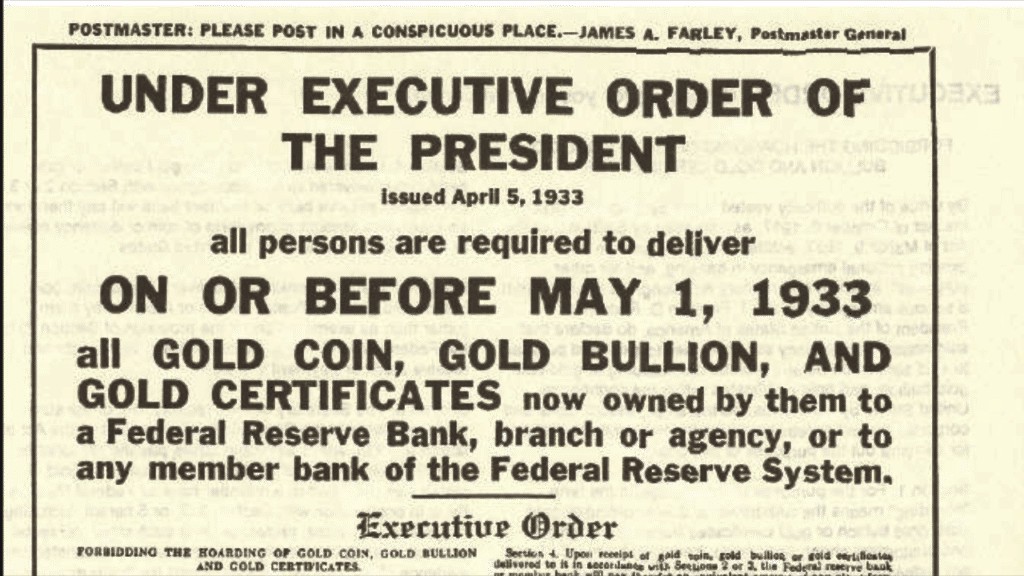
In 1933, for example, U.S. President Franklin D. Roosevelt issued Executive Order 6102, criminalizing most private gold ownership and forcing citizens to surrender their gold to the Federal Reserve under threat of imprisonment.\[5\] This episode demonstrates that even states more generally considered “democratic” will violate private property rights under fiscal duress. Gold’s physical nature makes it an easy target for confiscation, centralization, and both manipulation and obfuscation since it is much more difficult to audit and account for.
Today, authoritarian and semi-authoritarian governments are the world’s largest net buyers of gold. According to the World Gold Council, global central bank gold purchases have hit record highs, led by China, Russia, Turkey, and India—countries seeking insulation from U.S. financial dominance and the U.S. dollar-based global order.\[6\]\[7\]\[8\]
For these regimes, gold functions not as a guarantor of citizen liberty, but as a geopolitical hedge against accountability, both internal and external. China’s People’s Bank has increased its gold holdings for extended periods, while Russia has used domestic gold to bolster sanctions resilience. Some European governments have also repatriated gold reserves as symbols of nationalist sovereignty.
The appeal of gold to authoritarian states lies precisely in its centralizability. It can be stored, guarded, and controlled—ensuring that the power to issue, move, or redeem it remains with the state, not the individual. The fact that it can be hidden and its amount(s) kept from full disclosure make it very difficult to audit without the consent of the centralized authority.
**III. Bitcoin and the Architecture of Liberal Democracy**
Liberal democracy rests on several key principles: private property, freedom of association and mobility, rule of law, open competition, and accountability of power. Bitcoin’s structure mirrors and reinforces these ideals.
1. Property Rights and Self-Custody Ownership of Bitcoin is cryptographic rather than strictly legal. Whoever holds the private keys controls the asset. This is “self-sovereign property”—ownership guaranteed not by government decree but by mathematics. It eliminates dependence on intermediaries and reduces the risk of expropriation.
2. Transparency and Rule of Law Bitcoin’s public ledger provides a universal audit trail. Every transaction on-chain is transparent, timestamped, and immutable. Unlike central bank gold reserves, which are often opaque, Bitcoin’s supply (capped at 21 million BTC) and monetary issuance are verifiable by anyone. The protocol operates under predictable, rule-based governance—a digital analogue to the rule of law.\[9\]
3. Censorship Resistance and Free Markets Bitcoin transactions are permissionless. No authority can exclude participants on the basis of ideology, geography, or identity. This openness fosters competition and protects free exchange—core tenets of liberal democratic and economic philosophy.
4. Global Equality and Inclusion Because Bitcoin operates over the internet, access requires no bank account or socio-political affiliation. This levels the playing field for the unbanked, for people living under repressive regimes, and anyone facing forms of social exclusion. This echoes Milhon’s vision of technological inclusion.
**IV. Human and Civil Rights: Bitcoin as a Shield for Freedom**
Preservation of wealth is not separable from human and civil rights. In many authoritarian regimes the state seeks to control resources, speech, dissent, and property. Financial tools are among the most powerful levers.
Freedom of expression and association: Critics, journalists, and dissenters often need funds—to pay legal fees, to maintain communications, to support activism. If the state controls or bans intermediaries, or freezes accounts, the ability to dissent and resist is starved. Bitcoin allows fundraising, saving and payments without intermediaries tied to state actors.\[10\]\[11\]\[12\]
Protection from arbitrary seizure: In many jurisdictions, property can be expropriated, especially assets that are easy to trace or seize. Physical assets (gold, real estate, physical currency) can be physically confiscated or blocked. Bitcoin, with private keys kept secret and properly backed up, is far more difficult to seize.
Privacy rights: While Bitcoin is not perfectly anonymous, it is pseudonymous; identity is decoupled from addresses. Analytical tools can de-anonymize in some cases—but there is ongoing work to improve privacy, and careful usage can preserve it. This is vastly better than traditional bank accounts with strict KYC/AML regimes and surveillance.
Rule of law and equality before the law: Because the Bitcoin protocol is consistent, public, rule-based, and globally decentralized, it does not discriminate between jurisdictions, races, or creeds.
***::: Case Studies: Human and Civil Rights :::***
Russia’s Opposition Movements: After the 2022 invasion of Ukraine, the Russian state intensified repression of domestic opposition. Dissident groups reported widespread bank account freezes and surveillance of donors. Many activists turned to Bitcoin to receive funds and continue their activism, and without exposing donors to harassment.\[12\]
Nigeria’s EndSARS Protests: During the 2020 #EndSARS movement against police brutality, the Nigerian government froze protest organizers’ bank accounts. Feminist Coalition, a leading group in the protests, turned to Bitcoin donations to sustain operations.\[10\]
Ukraine’s Defense and Relief Efforts: When Russia invaded Ukraine in February 2022, the Ukrainian government and NGOs raised significant funds in Bitcoin quickly—faster than traditional banking channels allowed. Individuals and families also used Bitcoin to protect their savings and property when fleeing the country for refuge elsewhere.\[11\]
**V. Strategic Superiority in a World of Instability**
In a world of rising authoritarianism and fragile alliances, Bitcoin’s key characteristics—digital portability, incorruptibility, and transparency—make it far superior to gold for preserving wealth, freedom, and liberal democratic society.
1. Mobility Across Borders: Gold is cumbersome, detectable, and subject to customs controls. Bitcoin can cross borders as data, stored in encrypted files or wallets. This makes escape and preservation of assets faster and less detectable.
2. Protection from Seizure: Governments can confiscate gold, but they cannot seize Bitcoin without private keys (unless they coerce disclosure).
3. Divisibility: Unlike gold with is not easily divisible into smaller amounts, at will, for use as a means of exchange, Bitcoin is highly divisible, allowing it to be used as a means of exchange for very large or very small transactions, at will. This divisibility and digital nature enable Bitcoin to be used for a much wider range of individual and collective purposes, even when individuals are separated by vast geographies and other barriers.
4. Resistance to Debasement: Bitcoin’s supply schedule and issuance rules are protocol-enforced and public. Unlike gold which is only relatively scarce and has an inflationary supply, Bitcoin is absolutely scarce (a fixed total supply of 21 million BTC, enshrined in code) and has a deflationary supply schedule (less new Bitcoin is released into the network over time, also enshrined in code).
5. Global Liquidity: Bitcoin can be transacted 24/7 worldwide, providing continuous liquidity even in times when banks and other centralized institutions are closed or restricted.
6. Alignment with Democratic Values: Bitcoin enforces equality before the protocol—no privileged users, no opaque decision-makers.
**VI. Environmental and Economic Implications of Gold vs. Bitcoin Mining**
Gold Mining’s Social and Ecological Toll: Artisanal and small-scale gold mining (ASGM) remains a leading source of global mercury emissions, contaminating waterways, harming ecosystems, and causing profound public‑health damage in vulnerable communities.\[13\] Industrial gold mining has also been linked to deforestation, toxic tailings, and forced displacement.\[14\]
Bitcoin Mining’s Grid and Climate Synergies: By contrast, Bitcoin mining—an interruptible, location‑agnostic electricity consumer—can improve grid stability, monetize stranded energy, and help scale renewable generation by acting as a flexible buyer of last resort.\[15\]\[16\] Miners colocated with wind and solar can absorb excess generation during periods of over‑supply and curtail instantly during peak demand, supporting reliability and unit economics for clean energy projects.
Methane Mitigation and Flaring: Bitcoin mining can be sited at oil fields, landfills, and wastewater plants to combust methane that would otherwise be vented or flared. Because methane’s near‑term warming impact is many times that of CO₂, destroying it yields substantial climate benefits; using it to generate electricity for mining turns a liability into revenue that incentivizes mitigation.\[17\]\[18\]
Energy Abundance in the Age of AI: As data center demand surges with AI and digitalization, flexible compute loads like Bitcoin mining can complement inflexible compute by soaking up off‑peak energy, financing new generation, and providing ancillary services. This dynamic can accelerate the build‑out of firm, clean power while maintaining affordability for communities and industry.\[15\]\[16\]
**VII: Financial Inclusion and Growth of Circular Economies**
An estimated 1.4 billion adults worldwide remain unbanked, lacking access to even the most basic financial services. Barriers such as cost, distance, and identification requirements continue to exclude vulnerable populations from the formal economy. Meanwhile, remittances—a vital income source for many low-income households—remain costly, with average global fees around six percent to send $200. Expanding financial inclusion requires not only new institutions but also new infrastructure. Bitcoin, as an open-source, borderless monetary network, offers the best pathway ever known.
Bitcoin’s design allows anyone with a mobile device—or even a basic feature phone—to store, send, and receive value without reliance on banks or intermediaries. It provides a decentralized, censorship-resistant means of exchange and savings, accessible globally at near-zero cost. Layer-two innovations such as the Lightning Network have made Bitcoin transactions nearly instantaneous and inexpensive, opening doors for small-value payments, day-wage transfers, and micro-commerce. For many excluded individuals, especially in fragile economies or under strict capital controls, Bitcoin serves as both an entry point to digital finance and a resilient savings option.
Bitcoin’s openness directly addresses the structural barriers that keep people outside the formal financial system. Initiatives such as Machankura in Africa enable users to send and receive Bitcoin via USSD codes, requiring no internet access.\[19\] This empowers individuals with basic phones to transact, save, and even receive remittances directly. In communities where traditional banks are absent or mistrusted, Bitcoin facilitates peer-to-peer payments and micro-business activity, reducing reliance on costly intermediaries.
Around the world, local circular economies have emerged to translate Bitcoin’s potential into daily utility. Bitcoin Beach in El Zonte, El Salvador, pioneered a community model in which residents earn, spend, and save in Bitcoin, supported by education and merchant adoption. \[20\] Similar initiatives—Bitcoin Ekasi in South Africa, Bitcoin Jungle in Costa Rica, and Lago Bitcoin in Guatemala—have replicated and adapted this model to local contexts. These projects prioritize financial education, trust building, and accessible technology, ensuring that Bitcoin serves as a tool for empowerment rather than speculation. Close to one hundred local Bitcoin Circular Economies are now operating in communities around the world.\[21\] By closing the loop between earning and spending, they reduce dependence on volatile fiat systems and external exchanges.\[22\]\[23\]\[23\]
These circular economies demonstrate Bitcoin’s utility as money in places with limited banking access, high remittance costs, and low incomes—aligning with liberal‑democratic values of property rights, free association, and open markets.
**Conclusion**
In choosing Bitcoin over gold, we make an ethical, ideological, and strategic statement. Gold has become the refuge of states seeking control. Bitcoin, born of cryptographic rebellion and liberal ideals, is the refuge of individuals and groups seeking autonomy and participation in a system characterized by transparency and truth. It carries forward a tradition begun by the cypherpunks and pioneers like Judith Milhon, who believed the digital age should expand—not erode—human freedom.
In an age where authoritarianism and financial repression are resurging, Bitcoin is more than money. It is peaceful resistance, democratic infrastructure, and a promise of sovereignty for all who choose to hold their own keys.
**Endnotes**
1. Whitfield Diffie and Martin E. Hellman, “New Directions in Cryptography,” IEEE Transactions on Information Theory 22, no. 6 (1976): 644–54.
2. Ronald L. Rivest, Adi Shamir, and Leonard Adleman, “A Method for Obtaining Digital Signatures and Public‑Key Cryptosystems,” Communications of the ACM 21, no. 2 (1978): 120–26.
3. Eric Hughes, “A Cypherpunk’s Manifesto,” 1993.
4. Judith Milhon (St. Jude), “Hacking 101,” Mondo 2000 (1995).
5. United States of America, Executive Order 6102, April 5, 1933.
6. World Gold Council, Gold Demand Trends (various issues, esp. 2025 Central Banks).
7. Bloomberg Opinion, “Gold’s Rally Is Helping China Build a World Less Dependent on the US Dollar,” October 9, 2025.
8. Reuters, “Central Banks Favor Gold over Dollar Reserves, WGC Survey Finds,” June 17, 2025.
9. Satoshi Nakamoto, “Bitcoin: A Peer‑to‑Peer Electronic Cash System,” 2008.
10. Freedom House, Freedom on the Net 2024: The Repression of Digital Dissent (2024).
11. Elliptic, “Crypto Donations to Ukraine Exceed $100 Million,” 2022.
12. Alex Gladstein, Check Your Financial Privilege (San Francisco: BTC Media, 2022); and selected essays on Bitcoin and human rights.
13. United Nations Environment Programme (UNEP), Global Mercury Assessment; Minamata Convention on Mercury (ASGM).
14. Human Rights Watch, “Toxic Toil: Child Labor and Mercury Exposure in Tanzania’s Small‑Scale Gold Mines,” and related reports.
15. Cambridge Centre for Alternative Finance, various reports on Bitcoin mining economics and energy.
16. Bitcoin Policy Institute and industry/academic analyses on demand response, grid services, and renewable integration for mining.
17. Daniel Batten and research on methane mitigation via Bitcoin mining; see also studies on flare gas generation for compute loads.
18. Environmental Defense Fund (EDF) and IPCC reporting on methane warming potential and mitigation pathways.
19. Machankura documentation on USSD Lightning wallets enabling feature‑phone access.
20. Bitcoin Beach, “Whitepaper,” and related field reports.
21. Federation of Bitcoin Circular Economies, repository of Bitcoin Circular Economies around the world.
22. Bitcoin Jungle community resources and case write‑ups.
23. Bitcoin Ekasi educational materials and community reports.
24. Bitcoin Lake community reports and educational programs.
**Bibliography**
Bitcoin Beach. “Whitepaper.”
Bitcoin Ekasi. Educational materials and community reports.
Bitcoin Jungle. Community documentation and field notes.
Bitcoin Lake. Community reports and educational programs.
Bloomberg Opinion. “Gold’s Rally Is Helping China Build a World Less Dependent on the US Dollar.” October 9, 2025.
Cambridge Centre for Alternative Finance. Reports on Bitcoin Mining Economics and Energy. Cambridge Judge Business School.
Diffie, Whitfield, and Martin E. Hellman. “New Directions in Cryptography.” IEEE Transactions on Information Theory 22, no. 6 (1976): 644–54.
Elliptic. “Crypto Donations to Ukraine Exceed $100 Million.” 2022.
Environmental Defense Fund (EDF). Research and reporting on methane mitigation.
Freedom House. Freedom on the Net 2024: The Repression of Digital Dissent. 2024.
Gladstein, Alex. Check Your Financial Privilege. San Francisco: BTC Media, 2022.
Hughes, Eric. “A Cypherpunk’s Manifesto.” 1993.
Human Rights Watch. “Toxic Toil: Child Labor and Mercury Exposure in Tanzania’s Small‑Scale Gold Mines.”
IPCC. Climate Change reports on methane’s global warming potential.
Machankura. Documentation on USSD Lightning wallets.
Minamata Convention on Mercury. Secretariat publications and guidance for ASGM.
Nakamoto, Satoshi. “Bitcoin: A Peer‑to‑Peer Electronic Cash System.” 2008.
Reuters. “Central Banks Favor Gold over Dollar Reserves, WGC Survey Finds.” June 17, 2025.
Rivest, Ronald L., Adi Shamir, and Leonard Adleman. “A Method for Obtaining Digital Signatures and Public‑Key Cryptosystems.” Communications of the ACM 21, no. 2 (1978): 120–26.
UNEP. Global Mercury Assessment reports.
World Gold Council. Gold Demand Trends, Central Banks (2025).